
“A border / was placed upon / land and dermis”
A Q&A with author Raquel Gutiérrez on art, the apocalypse, Interstate 10, and their new poetry book, Southwest Reconstruction.
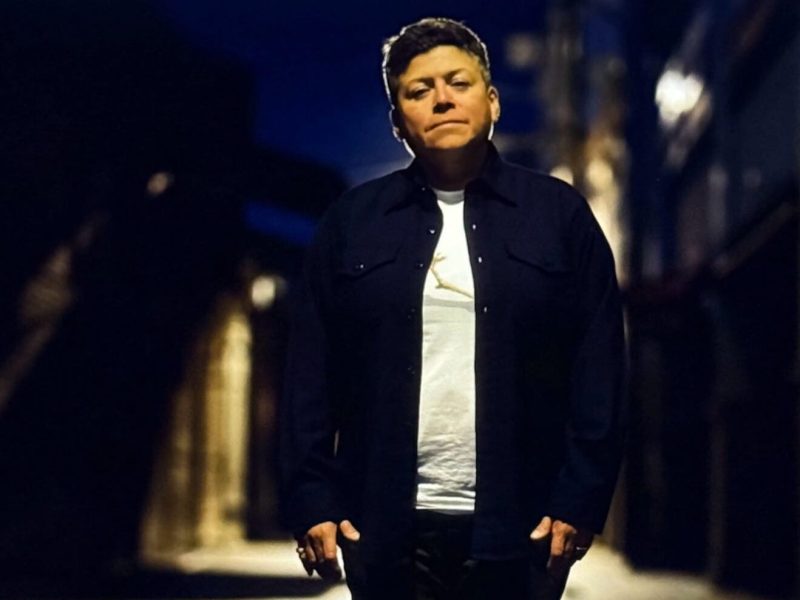
Raquel Gutiérrez was born and raised in Los Angeles to parents who immigrated to California from Mexico and El Salvador. For the last 10 years, they have called Tucson, Arizona, home while working as a writer, educator, and performer across the Southwest.
Their first book, Brown Neon (Coffee House Press, 2022), collects 10 essays on art and culture from Tijuana to San Antonio, particularly queer and Latinx photography, music, and performance. “Everything about this collection advocates for borderlessness, including its refusal to fall into simple categorization,” wrote Rachel León in the Los Angeles Review of Books.
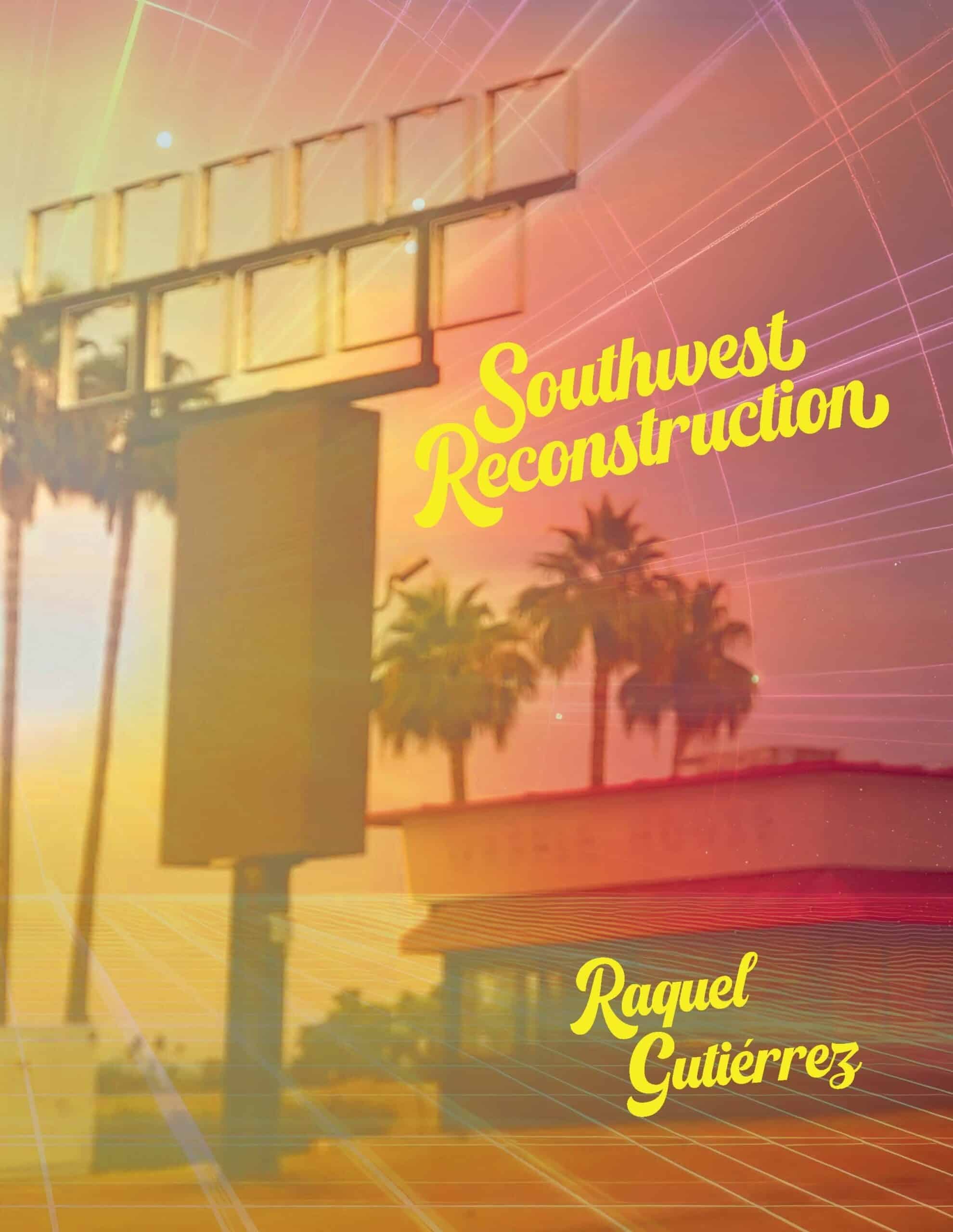
Gutiérrez’s debut poetry collection, Southwest Reconstruction—out December 2 from Noemi Press—deepens their engagement with this landscape. It travels from the 1859 Sonoita Massacre and the 1871 Camp Grant Massacre to the Airbnbs and Food Cities of the contemporary borderlands. Gutiérrez shared a Saturday-morning coffee with The Border Chronicle to discuss poetry, art, politics, and finding inspiration from Interstate 10.
For Border Chronicle readers who don’t know your work and don’t read much poetry, how would you introduce them to Southwest Reconstruction? What should they know before they open it and try to make sense of it?
Trust yourself, trust yourself. I’m not in the business of trying to force people into poetry. But poetry is amazing. When I’ve taught “Intro to Poetry,” I try to instill in the students, you might not ever write a poem after this class. But it’s great to know how to write a poem because sometimes a baby will be born, or a parent or a good friend or a good mentor will die, or a good friend will get married. And these occasions inspire some lyrical observation about these cycles, about how we witness beautiful milestones. Language is there, poetry is there, to help us ease into these once-in-a-lifetime things.
I was really interested in this one line in the poem: “I am mourning what / I began to articulate—/ a queer brown / future. I let go, / heave hostility / in its stead.” To me, it felt like it referred back to Brown Neon and the ideas you were working with there. How do you see the relationship between the two books?
I would say that this poetry collection is a companion piece to Brown Neon. They are two modes of articulating the observations I’ve made in the last 10 years—almost 10 years of living in southern Arizona and traversing the space of the Southwest as it intersects with Interstate 10.
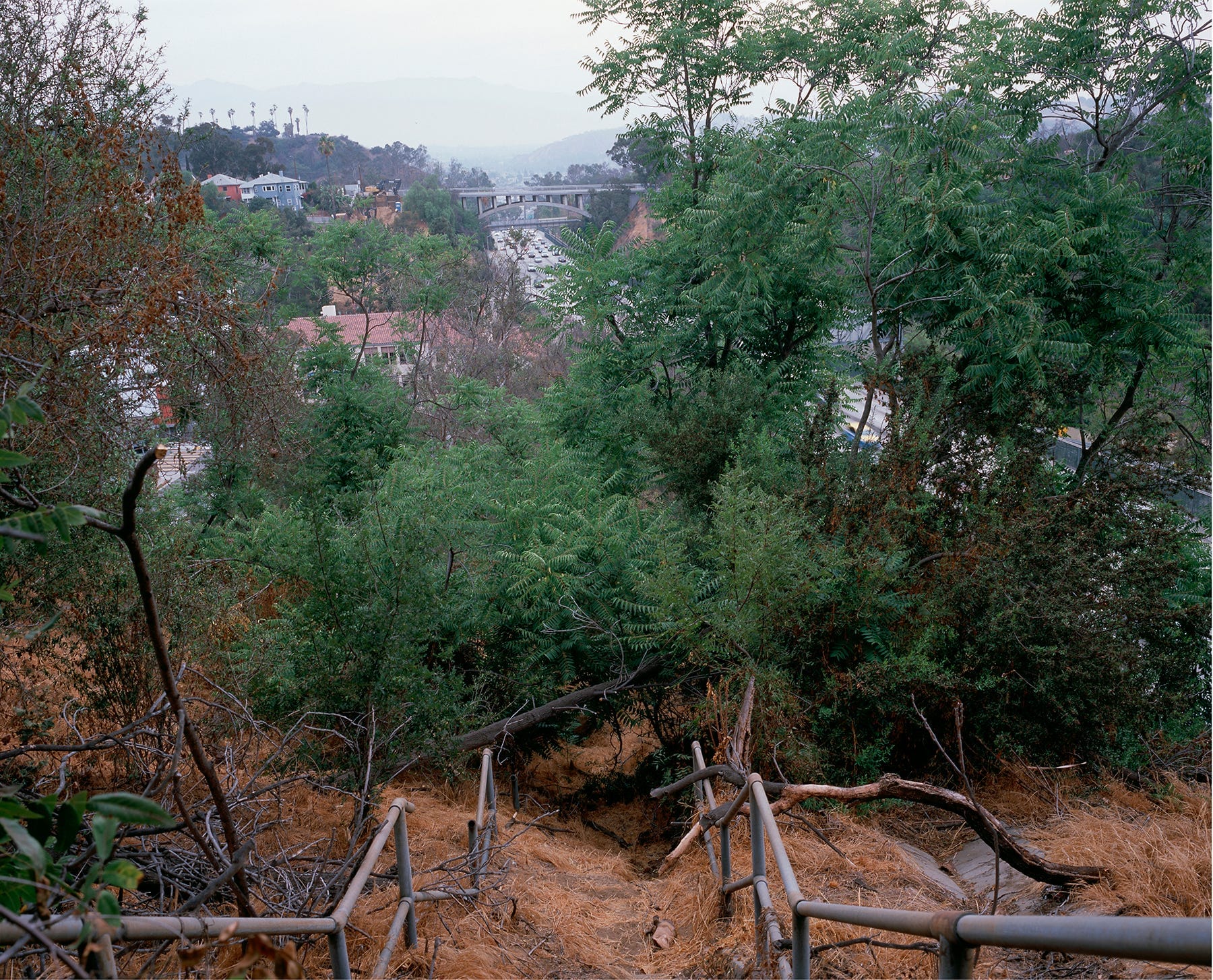
I’m from Los Angeles, and the freeway is imprinted on me in ways that I’m still sort of working through. And so I feel like that will always show up in my work. Poetry is a way to capture the passing image. The two works, I think, also bring this feeling of moving through time and space and wanting that experience to somehow be transposed onto the reading experience.
Do you think you’ve changed in your thinking about the Southwest between the two books?
I think I’ve just elaborated. There were a few things seeded in Brown Neon that have now kind of come to maybe a fuller articulation—as full as poetry can articulate, just because poetry also is a way for the associative leap, the oblique gesture toward whatever aesthetic feelings are being worked out on the page. The more time you have, your ideas will have the space to spill their secrets.
There are things that have been kind of staring me dead in the face about identity and about my relationship to the lands that I live on, the lands that allow me a livelihood. The last few years, I’ve been working in different parts of the interior West at different low-residency writing programs. I’ve been at IAIA [Institute of American Indian Arts] for almost three years.
Those gatherings center Indigenous thought and culture. So the way that we all sort of introduce ourselves is that people who come from different tribal affiliations say hello in their Indigenous language, and then you have white students who come in and introduce themselves as settlers, and I was like, oh, that’s really powerful.
And then you have Latino, Chicano, Mexican American people who say that they’re mestizo. And in having to reflect on these sort of identity modes, I thought the most true identity for the space I inhabit is to say, I’m a settler mestizo, settler mestizx. That was eye opening. Indigenous artists and writers have given me a lot of generosity—referring to me as “cousin,” for instance—and I’m just like, hold up, that is way too generous, because I have a feeling that I have a very violent ancestral situation that needs to be interrogated before I can sort of feel welcomed into any sort of fold.
Who were the poets that you were reading while you were working on this book?
I was reading John Wieners and Sandra Cisneros. Paul Celan, [Muriel] Rukeyser, Layli Long Soldier. Also, Jayne Cortez. Jayne Cortez is the bomb. Larry Levis, Angel Dominguez, Roque Salas Rivera, Roberto Tejada, Brandon Som, and Brandon Shimoda.
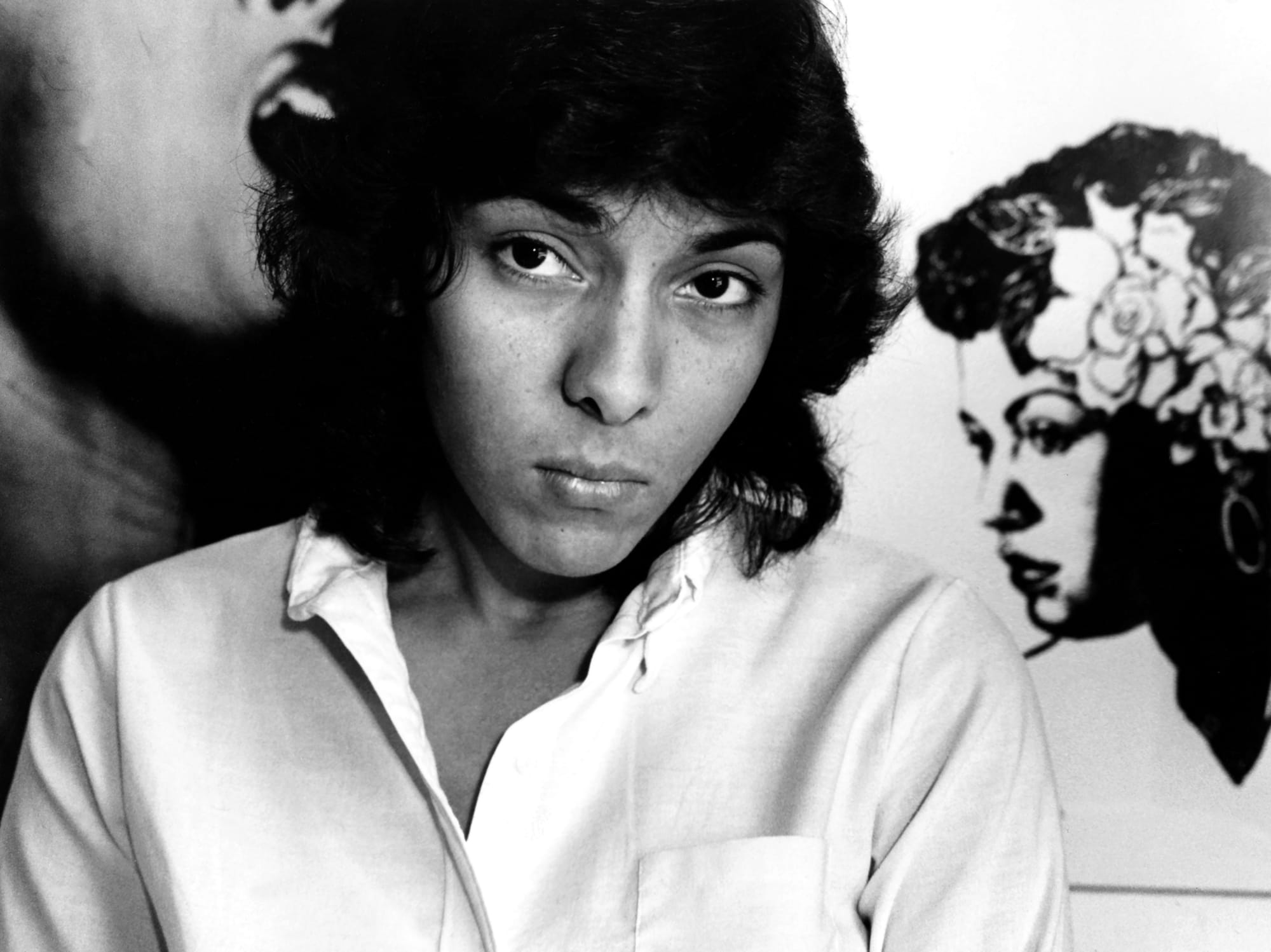
One direct connection between Brown Neon and Southwest Reconstruction is photographer Laura Aguilar’s work. Other artists are present in the books too. How do you see art figuring into your writing?
Art is always going to be a thread that runs through my thinking, and thinking about writing and feeling, it’s always about trying to capture or frame the image. And so a lot of the art that moves me is just perfect images. Speaking to them and speaking to their own provocations is key.
Some of the poems came from a partnership with the Center for Creative Photography. How did that partnership come about?
I had five poems commissioned with the CCP on the occasion of the Chicana Photographers LA! exhibition curated by Sybil Venegas that was running concurrently with the Louis Carlos Bernal retrospective.
The exhibition was another way to think about settler mestizaje, especially around Los Angeles. Sandra de la Loza’s work has a really beautiful series of landscape images that ran in that exhibition, engaging histories of Chavez Ravine, [the Mexican American community] where the city had promised affordable housing that never materialized, and where then the Brooklyn Dodgers organization expressed interest [and the area was razed to build Dodger Stadium]. The whole trauma of displacement happening there in the early 20th century had always been this really powerful myth.
De la Loza’s work prompted me to ask, Who was [Julian] Chavez [the first recorded owner of Chavez Ravine]? Doing a deep dive into that, it was like, oh, well, duh, this dude was a New Mexican, a nuevomexicano. Somebody well versed in settlement and settling. And so in Southern California he went in front of the equivalent of a city council, the ayuntamiento, and was like, basically, “Let’s eminent domain the shit out of that region,” and just sort of took it over. And that became Chavez Ravine. So it’s interesting to see these troubling marriages of settler colonialism and mestizaje sort of play themselves out in different regional registers.
From your current vantage point—having finished Southwest Reconstruction and considering the current political moment—what do you think living in the borderlands should look like? What should efforts to make the borderlands a better place entail?
Caroline, that’s kind of a terrible question. I don’t know if I would traffic in that mode of toxic optimism.
Fair enough, fair enough.
I don’t know if anyone’s making the borderlands a better place. In the sense that I say “borderlands,” I think it’s just as a synonym for the Southwest. “Borderlands” is always, like, a [Gloria] Anzaldúa–tinged genre category. So it feels like I’m in conversation with her work and in some ways, of course, I am.
But I think I’m just speaking as someone who lives here and is just witnessing what every day is like. It’s amazing that this is happening, and this is the perch that we get to see this from. Like the fact that the data center activism made it to More Perfect Union. I’m like, Oh my God, yay! Now people are going to see Tucson doing this really cool, powerful work that we should all be thinking about.
But also, when I reread Brown Neon, I think, I never would have thought things would be so bad that I would have to carry my own passport when I step out of the house to walk the dog. It’s like after Brown Neon came out, they went back to the laboratory, to the drawing board. And they’re just like, has everyone taken their steroid?
So you know, in that sense now I’m just like, fuck. The apocalypse has already come. The end of the world has already happened for so many people. So in terms of the borderlands or the Southwest, I’m just interested in it being livable. And not totally cruel and dehumanizing.
This interview has been edited for length and clarity.
Southwest Reconstruction and Brown Neon are both available at The Border Chronicle’s new Bookshop.org store, where a portion of each sale supports our work!
Support independent news from the U.S.-Mexico border. Become a paid subscriber today for just $6 a month or $60 a year.
Author
Related Articles
The Accidental Revival of José Revueltas
How a prolific Mexican writer, all but unknown in the United States, became the patron saint of some of this year’s most important borderlands books.
In a Mexicali Novel, a Secret and an Unraveling Childhood Friendship
Elma Correa’s award-winning Donde termina el verano follows two girls from the working-class outskirts of Mexicali whose friendship, guilt and memories are shaped by a childhood disappearance and the borderlands around them.
The Sonoran Desert’s Endemic Psychedelic: A Q&A with Writer Kimon de Greef
A new book tells the scandal-ridden tale of Sonora’s toad-smoking neo-shaman.
