Shipping Containers and Environmental Destruction on the Arizona Border: A Q&A with Emily Burns
The wildlife conservationist talks about what’s at stake as Arizona builds a shipping container wall through a 10-mile stretch of critical border habitat.
There was a time when shipping containers were used for shipping goods across the ocean. Then they were repurposed for hipster coffee shops. Now they’ve become the latest prop for Republican governors to defy federal authority and portray the border as a lawless region under “invasion.”
In November 2021, Texas governor Greg Abbott lined shipping containers along the Rio Grande in the town of Eagle Pass, in defiance of international treaties with Mexico over managing the floodplain.
In August 2022, Arizona governor Doug Ducey got into the act, stacking shipping containers in gaps along the border wall in Yuma, where asylum seekers often arrive to present themselves to authorities, since ports of entry have been closed under Title 42 since 2020. The federal government had already announced it would close those gaps. But Ducey said he couldn’t wait.
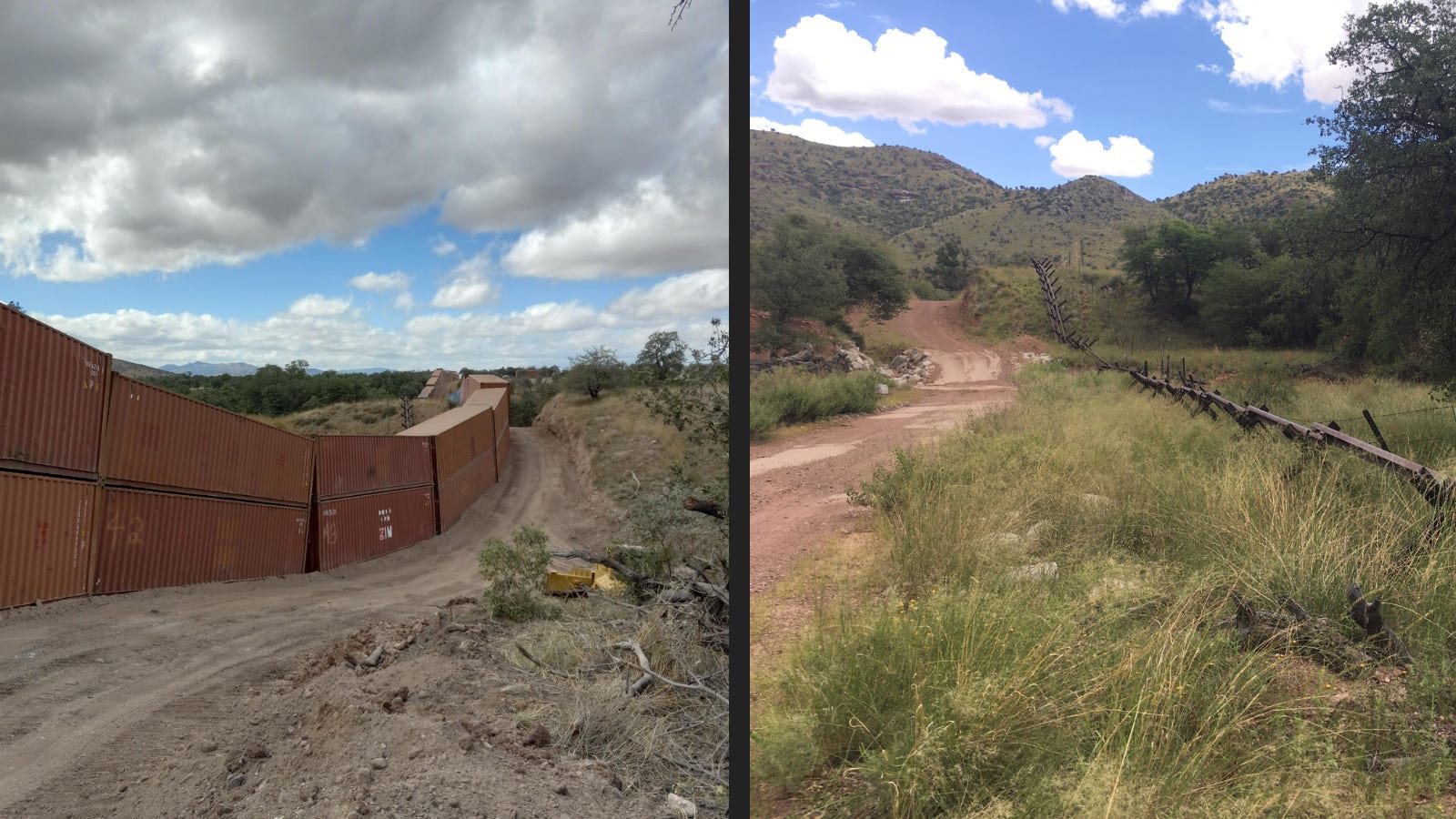
Then in October, Ducey took the shipping container spectacle to the next level. Contractors are now placing hundreds of these steel shipping containers through a 10-mile stretch of the Coronado National Forest, a critical habitat for endangered species such as jaguars and ocelots, in defiance of federal law and the Endangered Species Act.
Ducey’s directive, according to legal and environmental experts, is not only unconstitutional but also devastating for wildlife and the environment. In mid-October, the federal Bureau of Reclamation sent a letter to Arizona saying that, by placing shipping containers in Yuma on federal and Cocopah tribal land, the state was trespassing and violating federal law. Ducey countered by suing the federal government, claiming that Arizona has the right to protect itself and citing an “invasion” of migrants at the border. He argued, furthermore, that the federal strip of land along the border called the Roosevelt Reservation, established in 1907, shouldn’t be under federal jurisdiction.
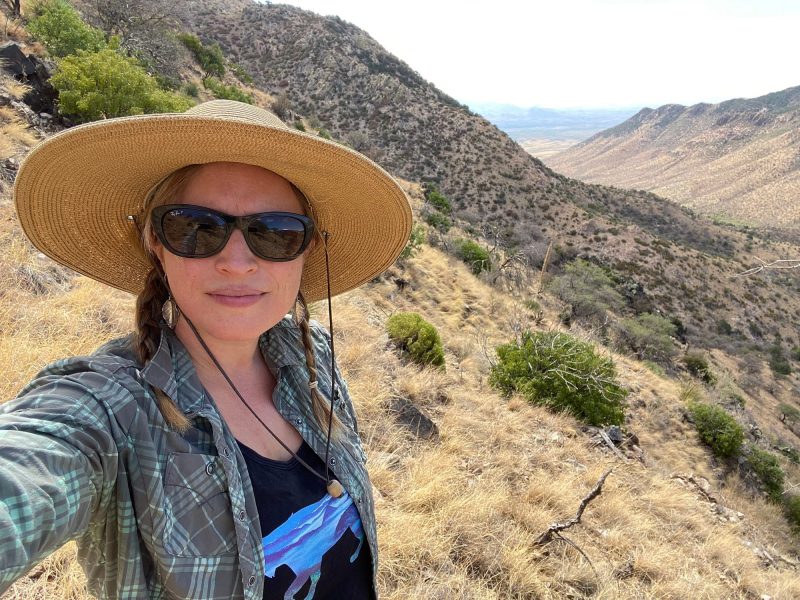
Meanwhile, conservation groups are rushing to do what they can both through the courts and in Congress to save this critical habitat. One of these groups is Sky Island Alliance, which promotes conservation through research and education. The binational nonprofit has been tracking and studying the migration of wildlife in the Coronado National Forest since March 2020. Emily Burns, program director for Sky Island Alliance, talks about what’s at stake in Ducey’s shipping container spectacle and what could be irretrievably lost for wildlife if it continues.
For those unfamiliar, what is the sky island region?
The sky island region is a fairly large area in northern Mexico and Sonora, in southeast Arizona, and southwestern New Mexico. And it’s characterized by 55 mountain ranges that are covered in forest. And they’re isolated from one another, by these large, expansive grasslands and desert habitats. So, the sky island name really comes from this idea of isolated forests high up in elevation. And the sky islands form these habitat stepping stones of higher elevation, cooler and often wetter habitat that serves a whole variety of species, between the Sierra Madre in Mexico and the Colorado Plateau.
The change in climate from the bottom of a sky island to the top is like driving from the border with Mexico to the border of Canada. It’s that significant of a difference in temperature and habitat change as you go up in elevation.
And what about the wildlife in this area? Is it diverse?
This region has the highest diversity of mammal species in the United States [excluding Hawaii and Alaska]. We have 1,300 species of bees. So we have more native bees than anywhere else in the world. And it’s really because you have this variety of habitats on the mountains. So there are so many different niches for both subtropical species and temperate species to mix here.
Since it’s such a special and diverse region, I imagine the animals there depend a lot on migration, which takes us to the shipping containers that are being placed there by Arizona governor Doug Ducey. Can you talk about the containers?
Starting on October 5, we saw the first shipping containers arrive. Then suddenly, on October 26, they started being placed along the border road in the Coronado National Forest. To date, the makeshift border wall has reached 110 containers in length. They’re stacked double high. So they’re approaching about a mile of wall already. And they are welding the containers together to block any gaps between the shipping containers, probably to make it more difficult for them to be removed. And they’re adding razor wire to the top of the containers.
And this is right in the middle of a place where your organization is conducting a wildlife study, right?
Yes, this section was designated for border wall under the Trump administration. So we set up our project, out of this threat of border wall coming through the southern Huachuca Mountains. The section of wall was paused last year by the Biden administration, and then the contract canceled. The contract was canceled because the source of funding from the Department of Defense was found to be illegal and a misuse of funds.
This area is a major wildlife corridor between Sonora and Arizona, and our concern is that there was no environmental review or planning or mitigation that was done as part of that border wall project. We want to try to fill that massive gap of information and at least document which species are in this area, which ones are migrating through so that we measure the impact of the border infrastructure. And we’ve kept the project going because, as you can see, the threat of border wall is just evolving. It really hasn’t gone away.
What kind of animal species have you detected in this area?
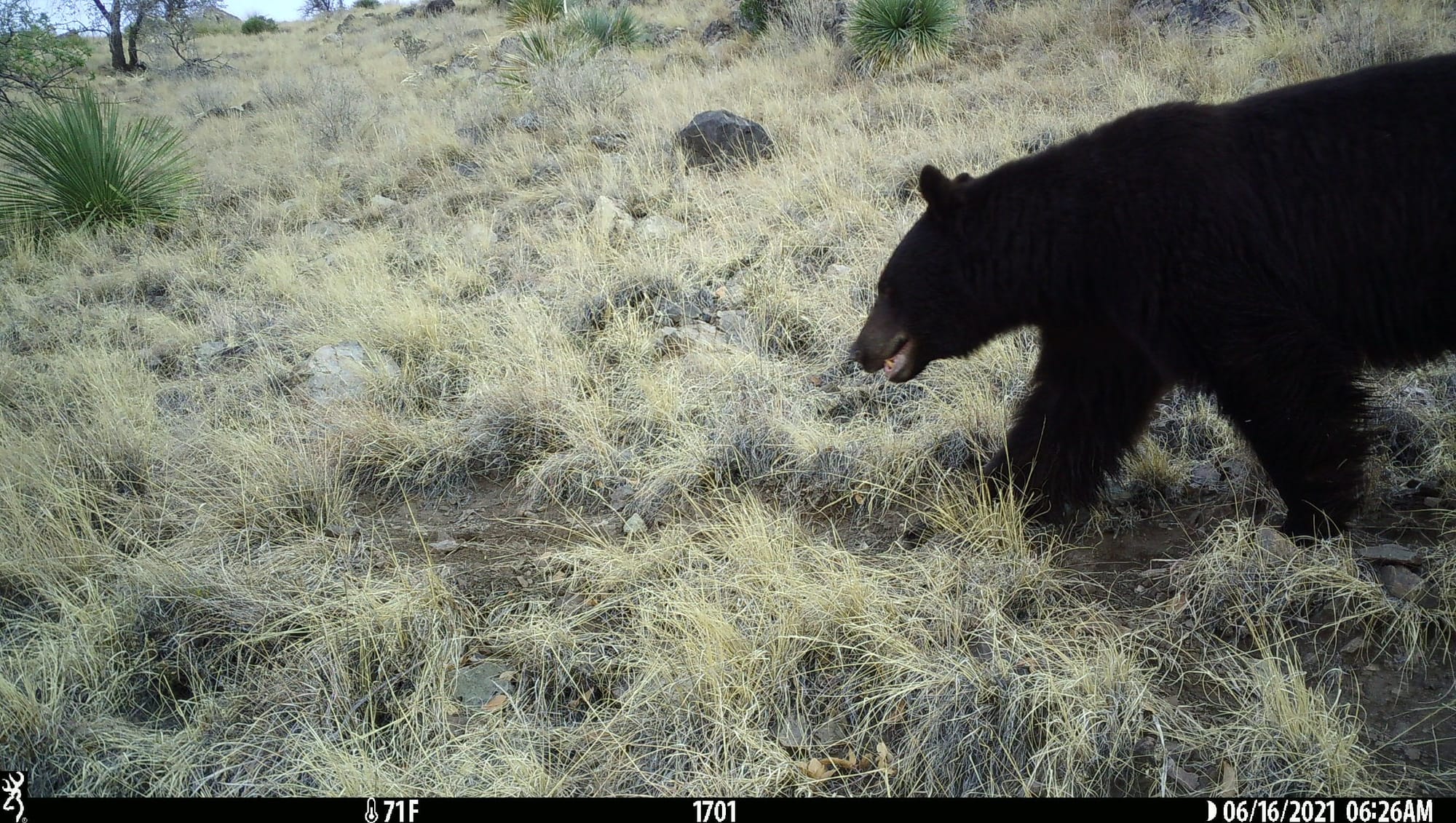
We’ve detected 130 species along 30 miles of the border in this area. Specifically in the location where the shipping containers are going in, we’ve documented mountain lions, bobcat, coyote gray fox, and four different species of skunk. We’ve also seen deer, javelina, and rabbits. In addition, we’ve also seen 27 species of birds. This is an important flyway for many of those migratory bird species that every year move up and down North America.
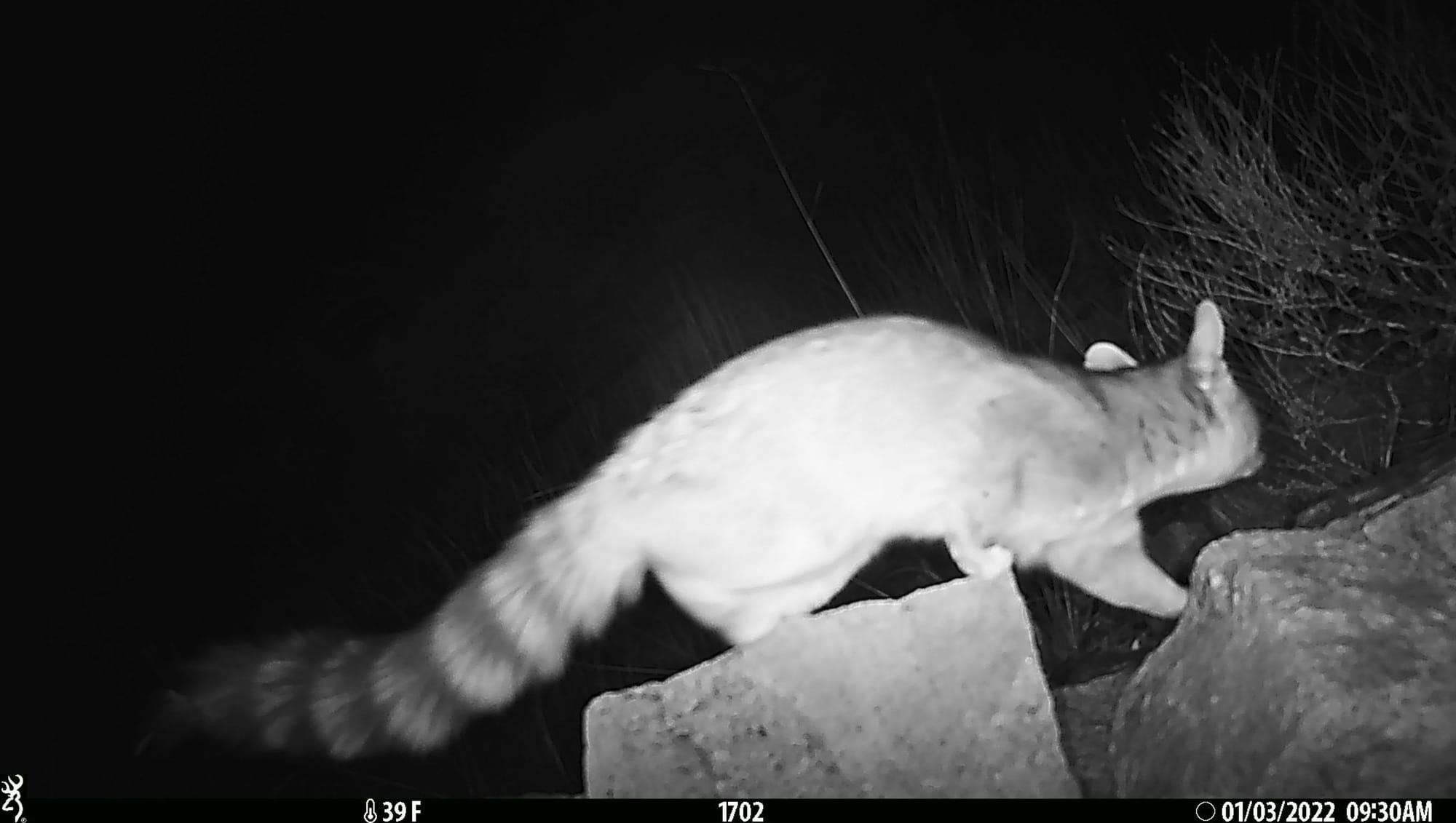
And how do you track the animals? How do you monitor their travel?
Our project relies on motion-and heat-activated trail cameras, and they’ve been recording which animals are moving through these habitats, continuously since March 2020. We have about 70 cameras in this stretch of border. So our goal is really to understand the community of species, which species are present in these places and how their activity levels change over time, with the different seasons and with changes to the border infrastructure.
Why would Ducey target this expanse of border? Are there people coming through there regularly?
This is an area where we get very few people on camera. Over 75 percent of all the human detections we have on camera are Border Patrol or construction vehicles. So why are they doing this here? That’s the big question. This is designated critical habitat, and they are directly violating the Endangered Species Act.
So what is happening at the legal level? Has the federal government filed anything to stop them?
The state has sued the federal government [after the federal Bureau of Reclamation sent a letter to Ducey saying the state’s actions are illegal]. Governor Ducey is questioning [federal jurisdiction] over the Roosevelt Reservation, and they’re asserting authority over the land along the border here. Also, the Center for Biological Diversity has filed an intent to sue over the violations to the Endangered Species Act.
What impact will this shipping container border wall have on wildlife in the meantime, while all this works through the court system?
Well, part of that’s gonna depend on the duration of this trespass, and how long these containers are here, and if they complete the 10-mile project. The longer the containers are in place, and the more that they do, the impact will be greater. They are welding sheets of metal between the gaps in the shipping containers. So they’re going to be impossible for terrestrial wildlife to pass through. Small animals, they can get through the gaps in the bollards in the border wall. But that’s not going to be possible in this area. They’re also blocking washes and places where, when it starts raining, it’s going to cause damming and flooding. And if these containers start to move, they’re going to get washed into Mexico and take out oak forest with them as they go.
Are there any other stretches along the border in Arizona where Ducey is planning to build more shipping container wall?
Not that I’m aware of, but there’s a large stockpile of containers near the Whetstone Mountains, which is probably the source for the containers that are coming down to Coronado National Forest. There’s also been some staging east of Nogales, which leads us to believe that it’s possible they’re gonna try to put in containers in the Patagonia Mountains as well.
This Q&A has been lightly edited for length and clarity.
To learn more about Sky Island Alliance’s conservation work and contribute to their border wildlife monitoring research, click here.
Author
Related Articles
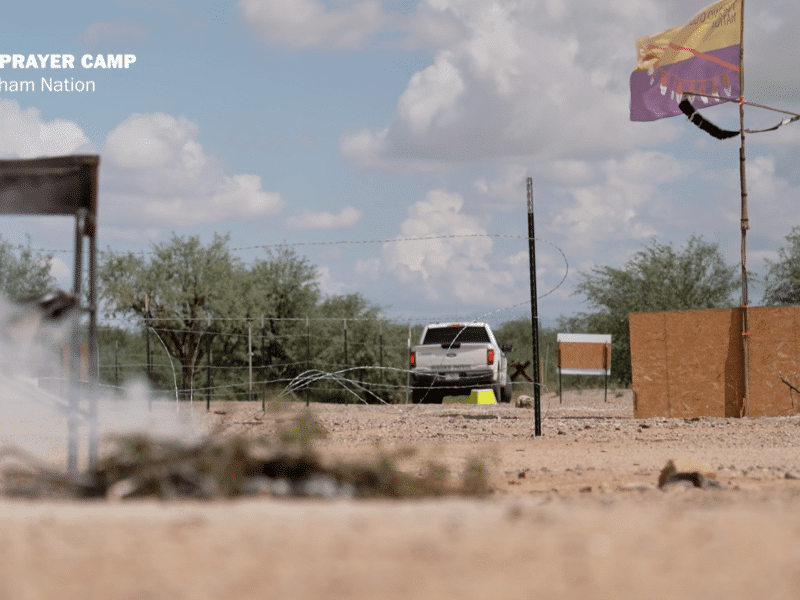
“We See No Border”: The Tohono O’odham Fight Against the Border Wall
The irreparable harm that has already been done, says tribal chairman Verlon Jose, you can feel it, hear it, in the people.
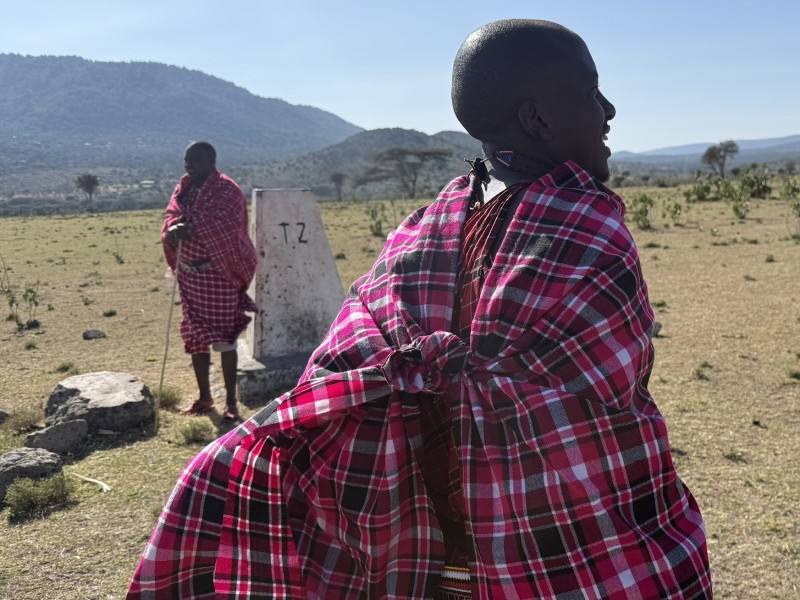
Swarm Intelligence: A Reporter’s Notebook on the Freedom of Movement in the Maasai Borderlands
Could solutions to climate woes such as drought be found in the freedom of mobility? This on-the-ground report from the Kenya-Tanzania border examines that question and more.
Wall Watch: Mapping Trump’s $46 Billion Border Mega-Project
In this week’s podcast, Melissa del Bosque and Geographer Dugan Meyer explain how the Border Chronicle’s new project, Wall Watch, helps residents document and understand the massive construction project underway at the U.S.-Mexico border.