
“Whoever Saves a Life, Saves a World”: On the Death of Carlos Spector, El Paso Immigration Attorney
He saved numerous lives by winning Mexican asylum cases that many said would be impossible to win.
He saved numerous lives by winning Mexican asylum cases that many said would be impossible to win.

The personal, financial, and environmental costs of a border wall in Big Bend, locals revive opposition after Trump's announcement of a refinery in Brownsville and the Rio Grande Valley fights back after ICE shooting and raids, plus The Border Chronicle is seeking new paid subscribers!
“We love Big Bend the way it is. It does not need to change. We do not feel any danger, and we don’t want it to look like other places. And nothing makes a person who lives out here more mad than the idea of looking at a damn fence.”

DHS has begun installing its massive floating buoy barrier which could include more than 500 miles.

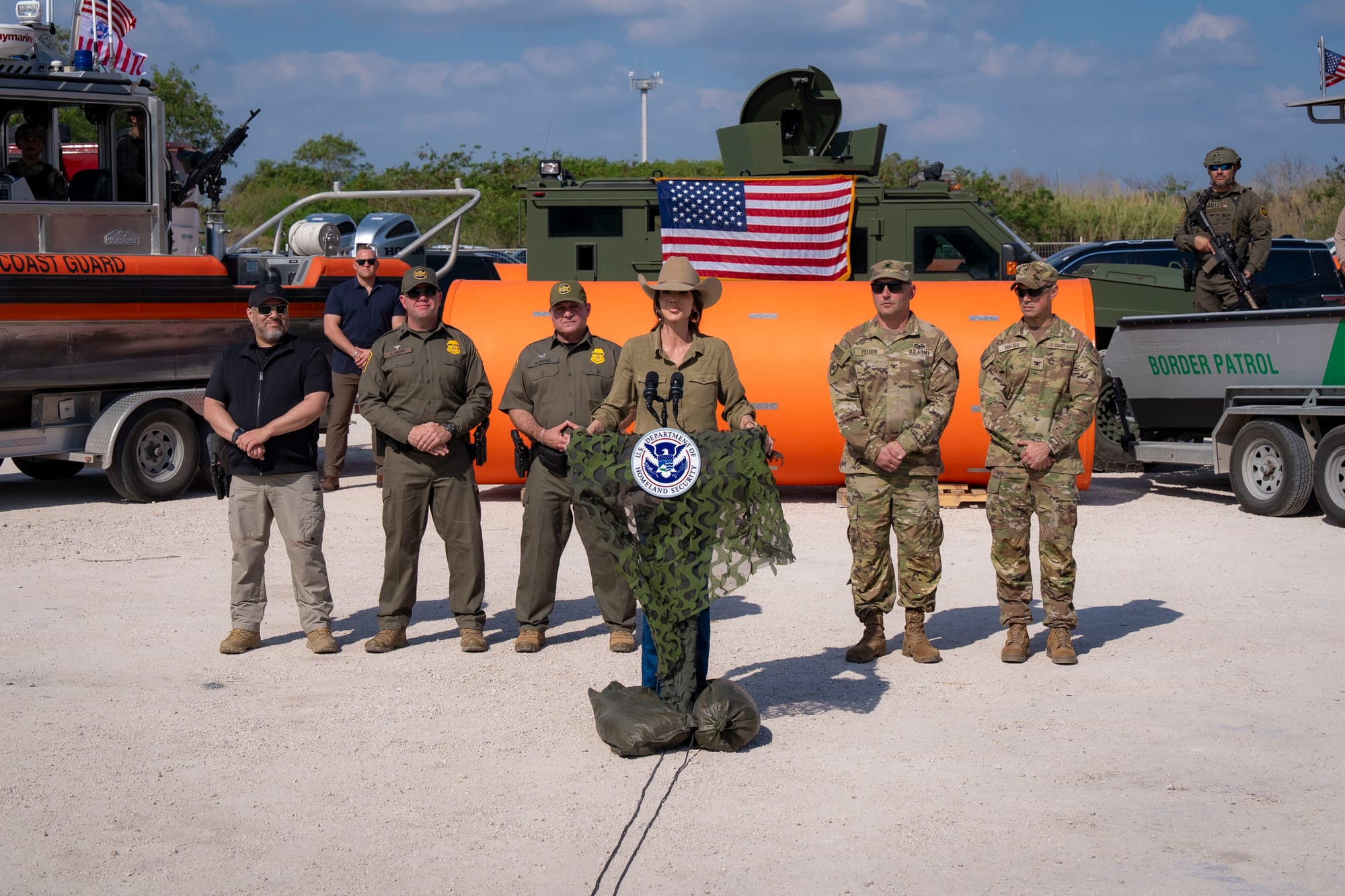
Yesterday, the Department of Homeland Security began installing the first mile of more than 500 miles of floating buoy barriers on the Rio Grande.
The installation took place between the Veterans International Bridge and Monsees Road in Brownsville, Texas. The segment will be at least 17 miles long, according to a CBP press release. The Border Chronicle captured drone footage of the installation yesterday from the Mexican side of the river.
Kristi Noem, Secretary of the Department of Homeland Security, held a press conference on January 7 in Brownsville, Texas, announcing the installation of the floating barriers. The Trump administration said it will install more than 500 miles. Each cylindrical buoy is approximately 15 feet long and 5 feet tall and are being anchored with steel cables to the river’s floor by a floating barge. The company constructing the barriers is Gibraltar Perimeter Security based in Burnet, Texas, at a cost of $96 million — approximately $5.6 million a mile.
The installation of the floating barrier is in clear violation of the U.S.-Mexico water treaty, which requires both countries to agree to any structure that can potentially divert the course of the river. For years, Mexico has filed diplomatic protests regarding violations of the U.S.-Mexico binational treaty as more wall barriers, shipping containers and other construction has taken place in the river’s floodplain.
In 2023, the Biden administration sued Texas after it installed a different chain-like type of buoy barrier near Eagle Pass, claiming among other violations in the lawsuit, that the installation had damaged diplomatic relations with Mexico.
Last week, The Border Chronicle requested access from DHS to fly a drone to film the installation from the US-side of the Rio Grande and was denied by the agency, which said it was placing “a media hold” on requests. The entire section of the river was placed under a National Defense Area designation, and military control in September 2025. The only way to document the U.S. government’s actions on the binational river was from Mexico. Several stories were published yesterday and today in the Mexican media about the installation of the barriers.
The Border Chronicle will have more on this story in the coming days. Drone footage credit: Victor Loera
For more context:
 Elsa Hull

“We love Big Bend the way it is. It does not need to change. We do not feel any danger, and we don’t want it to look like other places. And nothing makes a person who lives out here more mad than the idea of looking at a damn fence.”

Environmental advocates and residents say the long-proposed refinery threatens air quality and public health in a region already ringed by heavy industry.


ICE raids and detentions, together with a high-profile killing, have led Rio Grand Valley residents to mobilize—including even some local Republicans.

Walking from a blasted mountain top--a planned site for new border wall construction--to a makeshift military camp along the border in a remote part of southern Arizona led to a tense yet revelatory moment.
Independent news, culture and context from the U.S.-Mexico border.