From a Park to a Prison

For more than two decades, San Diego resident Pedro Rios has documented the gradual walling off of the binational International Friendship Park. Now the Trump administration is sealing the rest of California’s border with Mexico.

From a Park to a Prison
The Raza Rights Coalition organized a Marcha de Silencio at Friendship Park on December 7, 2008, as a way to say, we’ve said all that needs to be said about stopping border wall construction, and now we are putting our bodies on the line in silence, to demonstrate our repudiation against destructive border wall construction—photo, text by Pedro Rios.

Under the second Trump administration $46.5 billion has been slated for border wall construction through September 2029. The funding, already appropriated, is unaffected by government shutdowns. In a year, more than 37 percent of the funding has already been awarded. As the construction unfolds at a rapid pace, we asked longtime border residents to reflect on what the wall means for their communities. Pedro Rios is director of the U.S.-Mexico Program for the American Friends Service Committee. His essay and photos from San Diego are part of a border-wide series, including South Texas, southern Arizona and the Big Bend. — Melissa

Help support our independent, community-based journalism from the U.S.-Mexico border. Become a paid subscriber today for just $6 a month or $59 a year.

Support The Border Chronicle

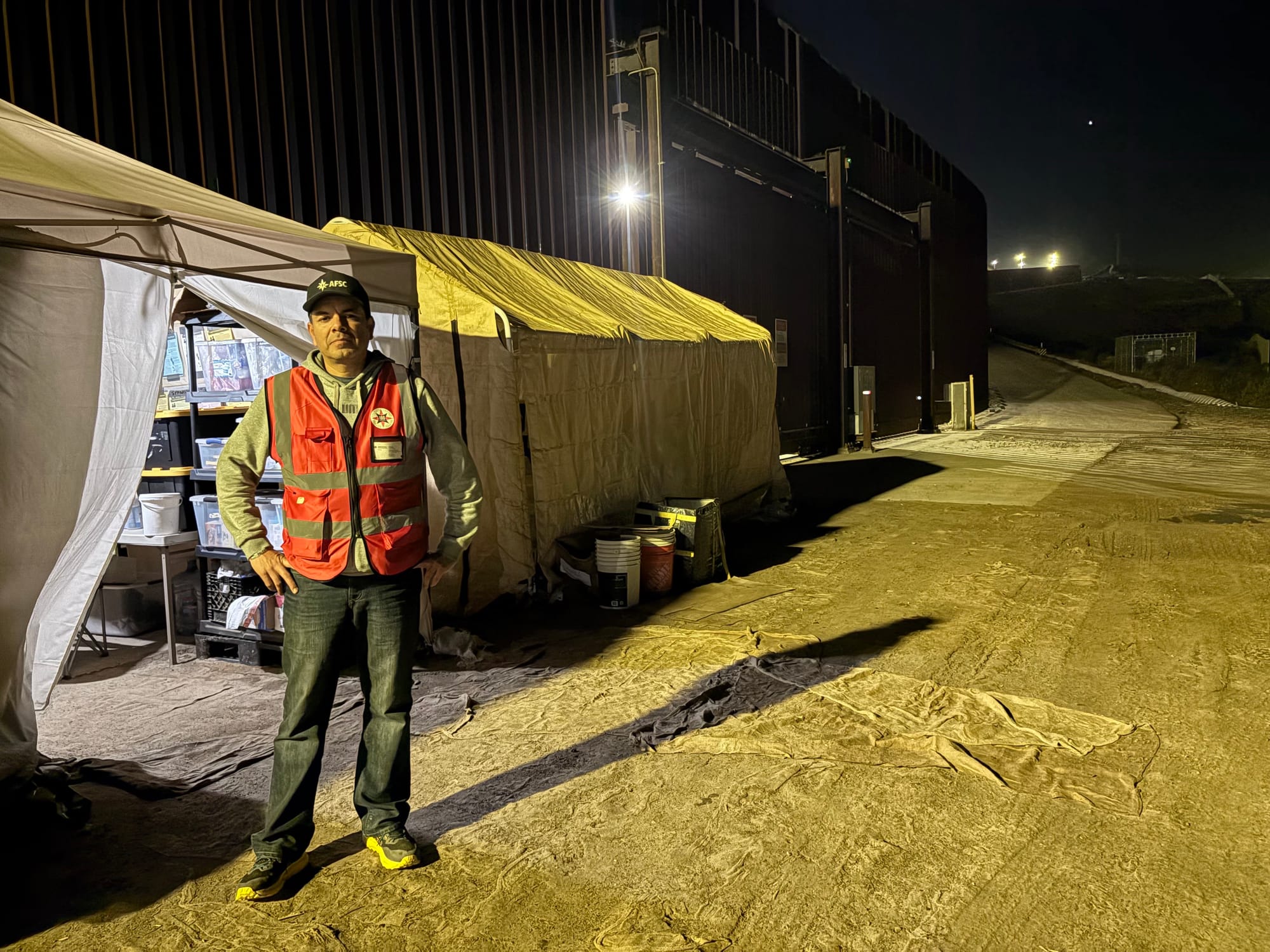
Pedro Rios at Whiskey 8 in February 2025, staffing the solidarity aid station for asylum seekers run by the American Friends Service Committee. (Photo credit: Melissa del Bosque)

For much of my adult life, I’ve documented the gradual walling off of the International Friendship Park, which was inaugurated in 1971 as a gesture of friendship between Mexico and the United States.

The binational Friendship Park, located six miles west of the San Ysidro Port of Entry, sits atop Monument Mesa and overlooks a 30-foot wall that extends into the Pacific Ocean. It has truly become a dystopian landscape—one that, for me, signifies decades of bloated government budgets for border enforcement and a lack of significant immigration law reform since 1986.

Now the Trump administration plans to seal off California’s remaining borderlands with Mexico.

The San Diego–Tijuana corridor has long been a testing ground for the rest of the southern border. There, the government has constructed not one but two 30-foot walls, along with “enforcement zones” between them. What we have is not a wall but a “wall system” of surveillance towers, stadium lights, roads, and sensors, which the Trump administration is pledging to expand across the remaining southern border.

This latest round of construction will be funded through Trump’s massive spending bill, signed on July 4, 2025. Already, the Border Patrol’s San Diego Sector is posting videos on social media boasting about its progress to wall off the entire California border. As of February, border barriers already covered about 85 percent, or 120 of 140 miles, of California’s border with Mexico, according to the Wildlands Network.

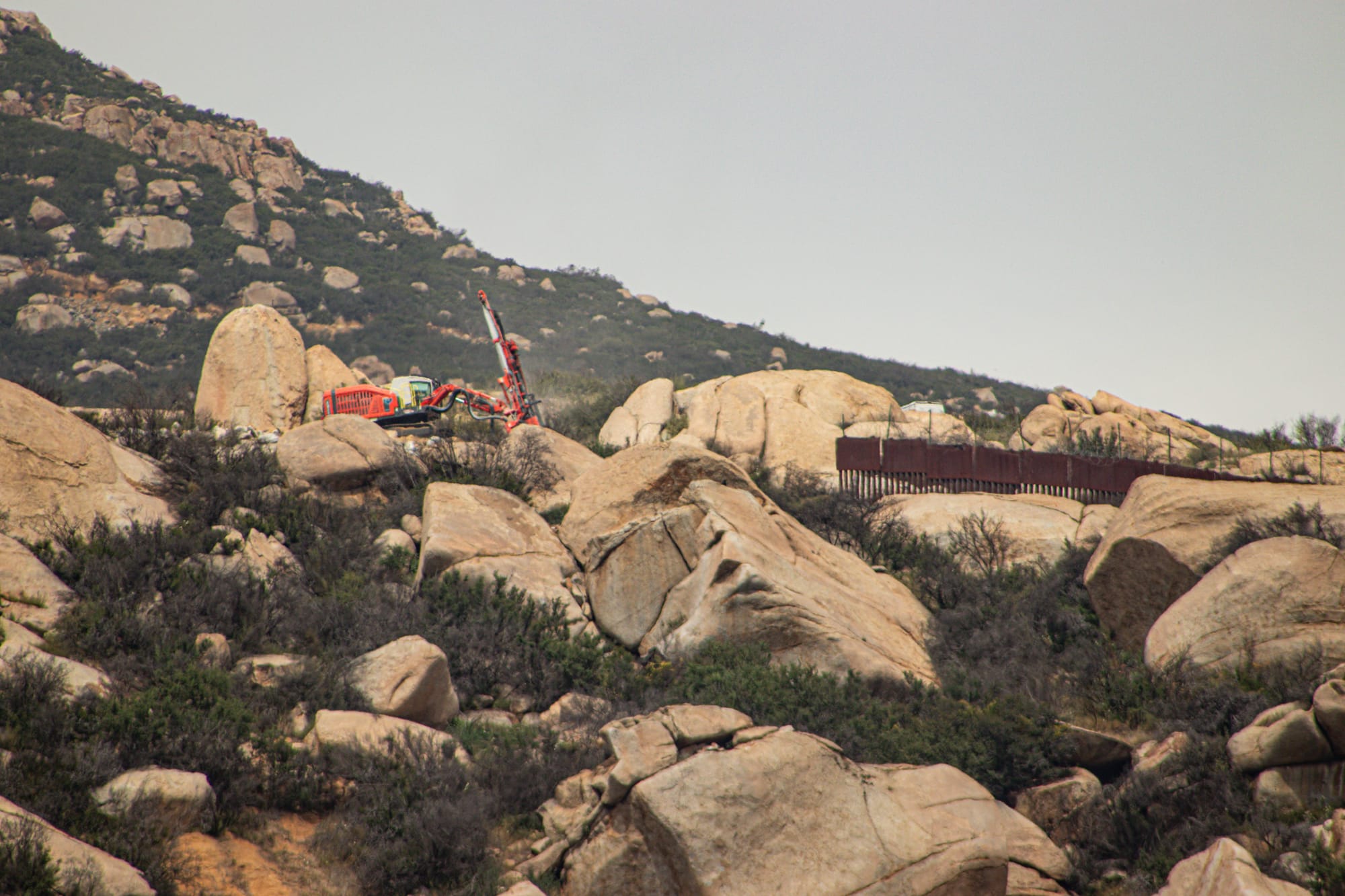
 On March 31, 2026, new border wall construction proceeds along the US-Mexico border near Tecate, BC, Mexico. The wall will cross the Kuuchamaa Mountain (Tecate Peak), a place sacred to the Kumeyaay Nation. (Photo credit:Pedro Rios)

Since 2005, DHS secretaries have had the unprecedented authority to waive legal requirements to allow the construction of barriers and roads along the U.S. border. In April 2025, former DHS secretary Kristi Noem issued waivers “to cut through bureaucratic delays,” greenlighting the construction of about two and a half miles of new border wall; in September, more waivers were issued for wall construction in an unspecified “project area … starting at the Pacific Ocean and extending east to Border Monument 231.”

Thanks to these waivers, the project will proceed without abiding by at least 50 federal laws, including the Endangered Species Act, Clean Water Act, the Otay Mountain Wilderness Act, and the Native American Graves Protection and Repatriation Act.

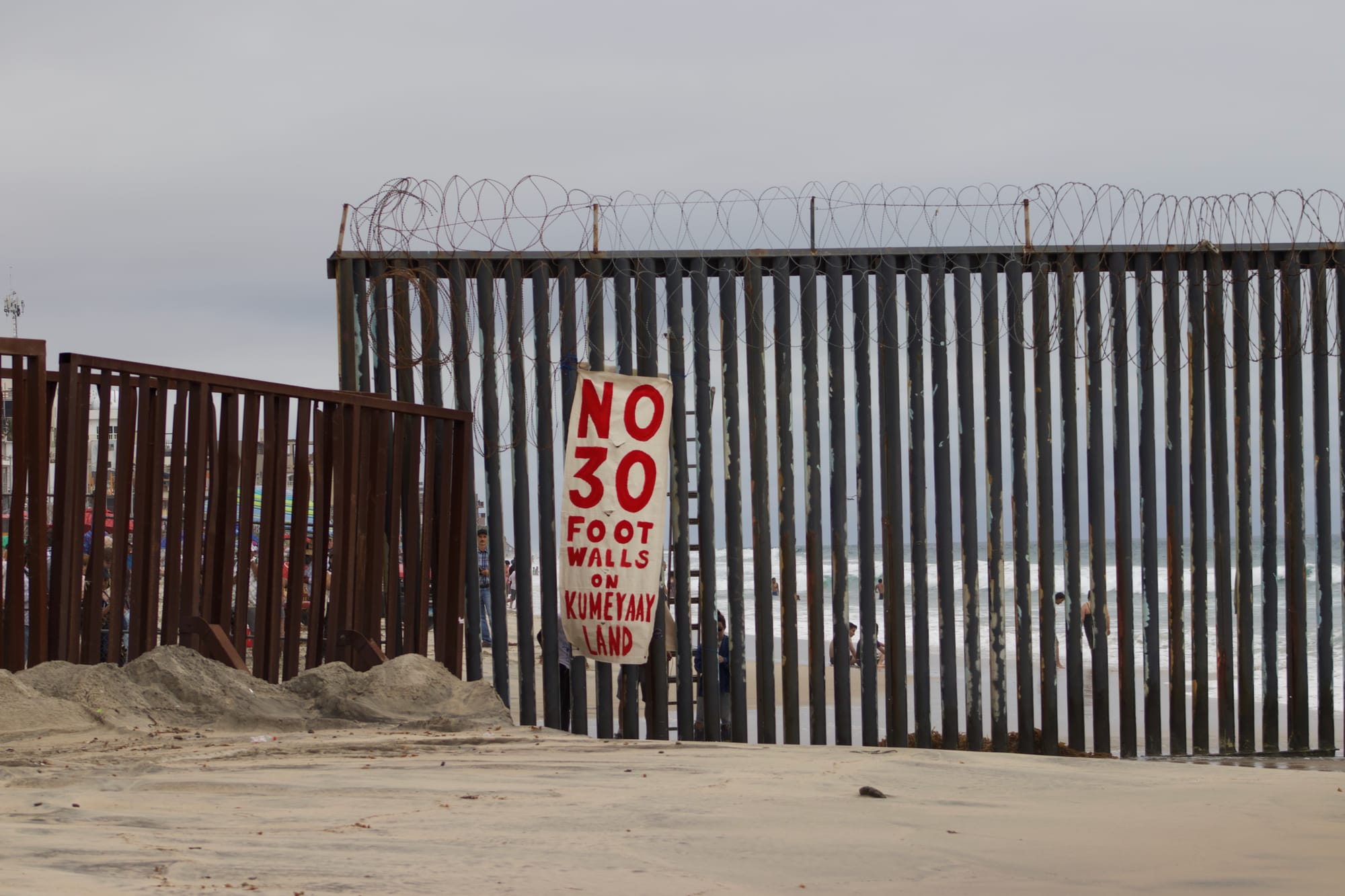
Artists with the Friends of International Friendship Park hung a banner in August 2023, against the installation of 30-ft border walls at Friendship Park. (Photo credit: Pedro Rios)

In 2020, under Trump’s previous administration, money from the Department of Defense was reallocated for border wall construction along a 14-mile stretch of land in the Laguna Mountains. The administration failed to alert local bands of the Kumeyaay Nation, who have lived on both sides of the California-Mexico border for over 12,000 years, long before the dividing line existed. Members of the Kumeyaay bands found that the border wall project’s contractors were desecrating sacred burial grounds.

In Trump’s second administration, border construction is again targeting lands sacred to the Kumeyaay Nation, including Tecate Peak, the sacred mountain known as Kuuchamaa. The Otay Mountain Wilderness, just east of the Otay Port of Entry, is also slated for more walls. 

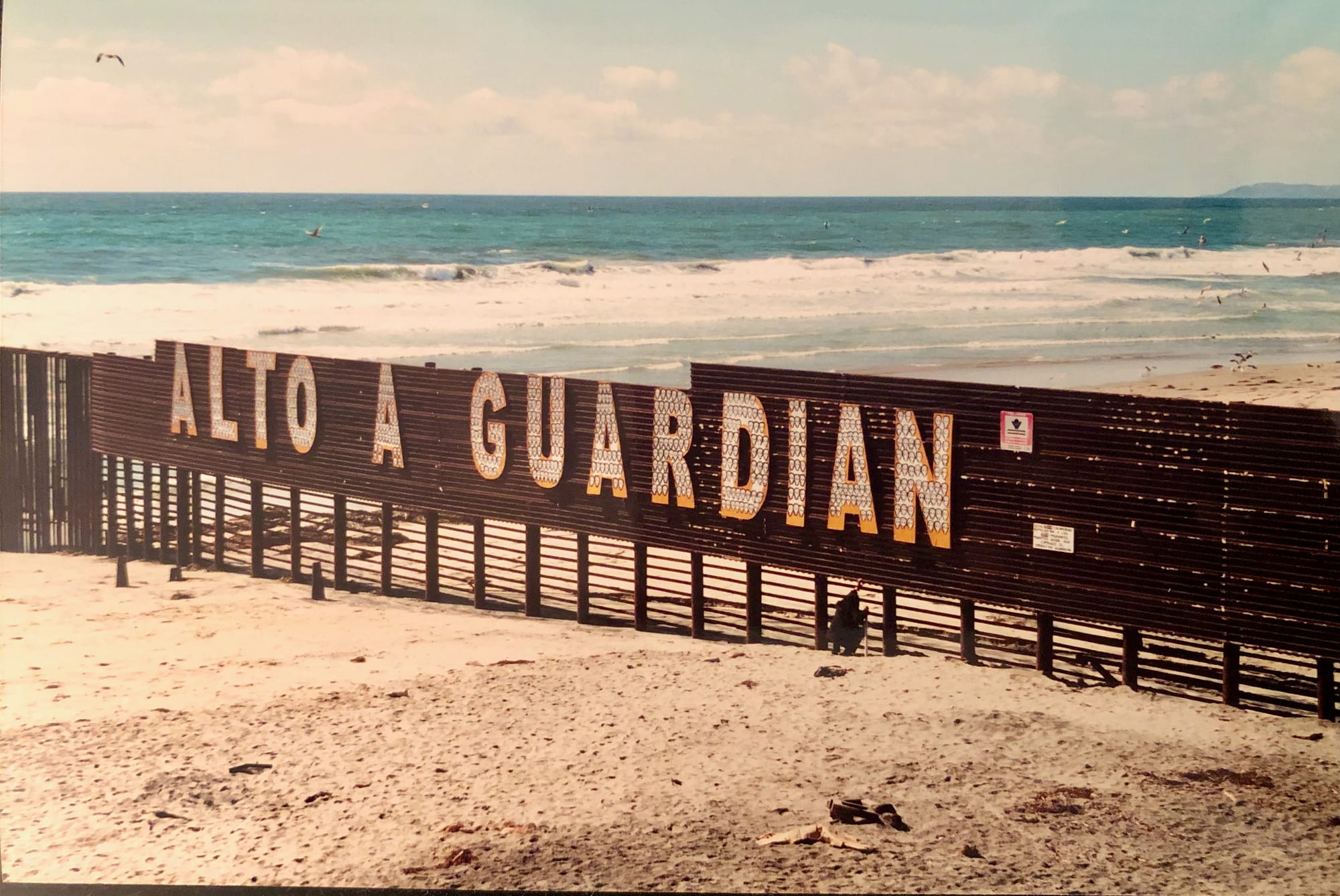
In October 1999, religious and human rights organizations installed skulls embedded in letters spelling out, “Alto A Guardian,” on the 5th anniversary of Operation Gatekeeper. Playas de Tijuana, BC, Mexico, Friendship Park. (Photo credit: Pedro Rios)

 In October 1999, I began photographing the border wall along the San Diego–Tijuana corridor. Religious and human rights organizations had placed hundreds of painted calacas (skulls) on the Mexican side of the border wall in Playas de Tijuana, Mexico, forming the phrase “Alto a Guardian” (Stop Gatekeeper), a reference to Operation Gatekeeper, the first phase of the “prevention through deterrence” strategy undertaken during President Bill Clinton’s consecutive terms. The strategy aimed to push migrants away from urban centers toward treacherous crossing routes, where extreme weather and unforgiving terrain augmented Border Patrol’s goal of “territorial denial.”

The powerful installation was an artistic declaration against an evolving human rights catastrophe on Operation Gatekeeper’s fifth anniversary. The activists lamented that the United States had turned its borderland communities into an immense graveyard, populated by the remains of people who had intended to migrate north.

Other phases Operation Gatekeeper were replicated in Arizona’s and Texas’s border communities. It was promoted at the highest echelons of the U.S. Border Patrol and the now-defunct Immigration and Naturalization Service (INS). The loss of human life was an intended part of this militarized strategy. Doris Meissner, the INS commissioner at the time, later said, “We did believe that geography would be an ally for us. It was our sense that the number of people crossing through the Arizona desert would go down to a trickle once people realized what [it’s] like.”

Each painted skull on that border wall in 1999 represented a person found deceased along the border, from San Diego to Brownsville, Texas—about 473 people in the first five years.

Border policies today still rely on deterrence, and the border wall is the most visible manifestation of this deadly strategy. Its legacy is ever present at International Friendship Park, which was home to the skull installation 27 years ago.

Since then, the walls have multiplied and grown higher. In 2023 the Department of Homeland Security (DHS) under President Joe Biden replaced a set of 18-foot border walls at International Friendship Park with double-layered 30-foot walls. Flanked by a tower with surveillance cameras, they are a militarized contrast to the vibrancy just a foot south in Mexico.

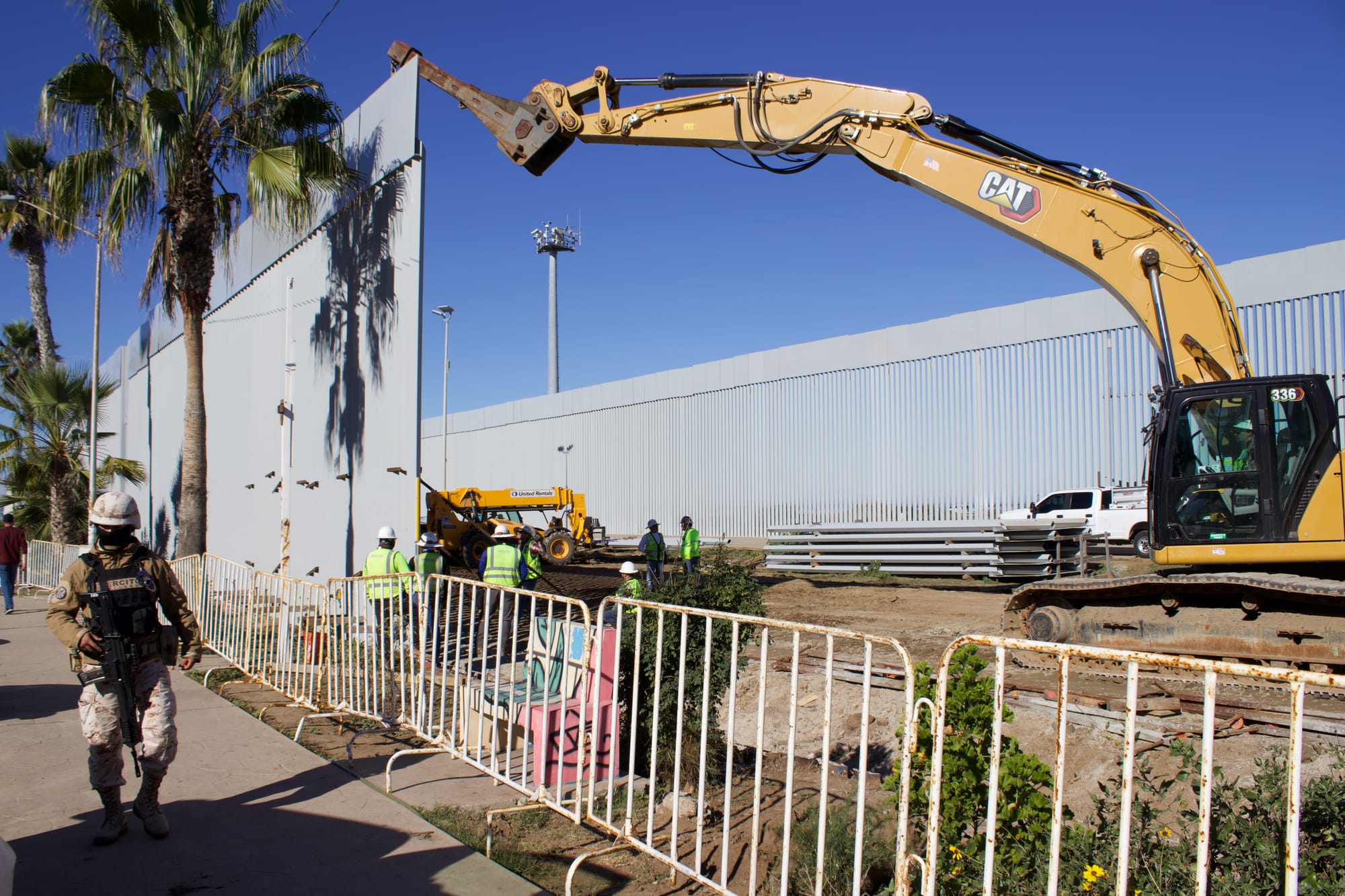
A crane places a segment of the new 30-ft border wall at Friendship Park on November 30, 2023. (Photo credit: Pedro Rios)

In Tijuana, rancheras play in restaurants. Quinceañeras and their entourages arrive for photos. Tourists contemplate the Pacific Ocean and the colorful murals on the primary border wall. And attendees of Border Church—a weekly ecumenical celebration of communion meant to bring the peoples of both countries together—gather for worship. It’s all part of the city’s daily bustle. Meanwhile, in San Diego, Border Patrol agents sit bored in their vehicles guarding against fabricated threats.

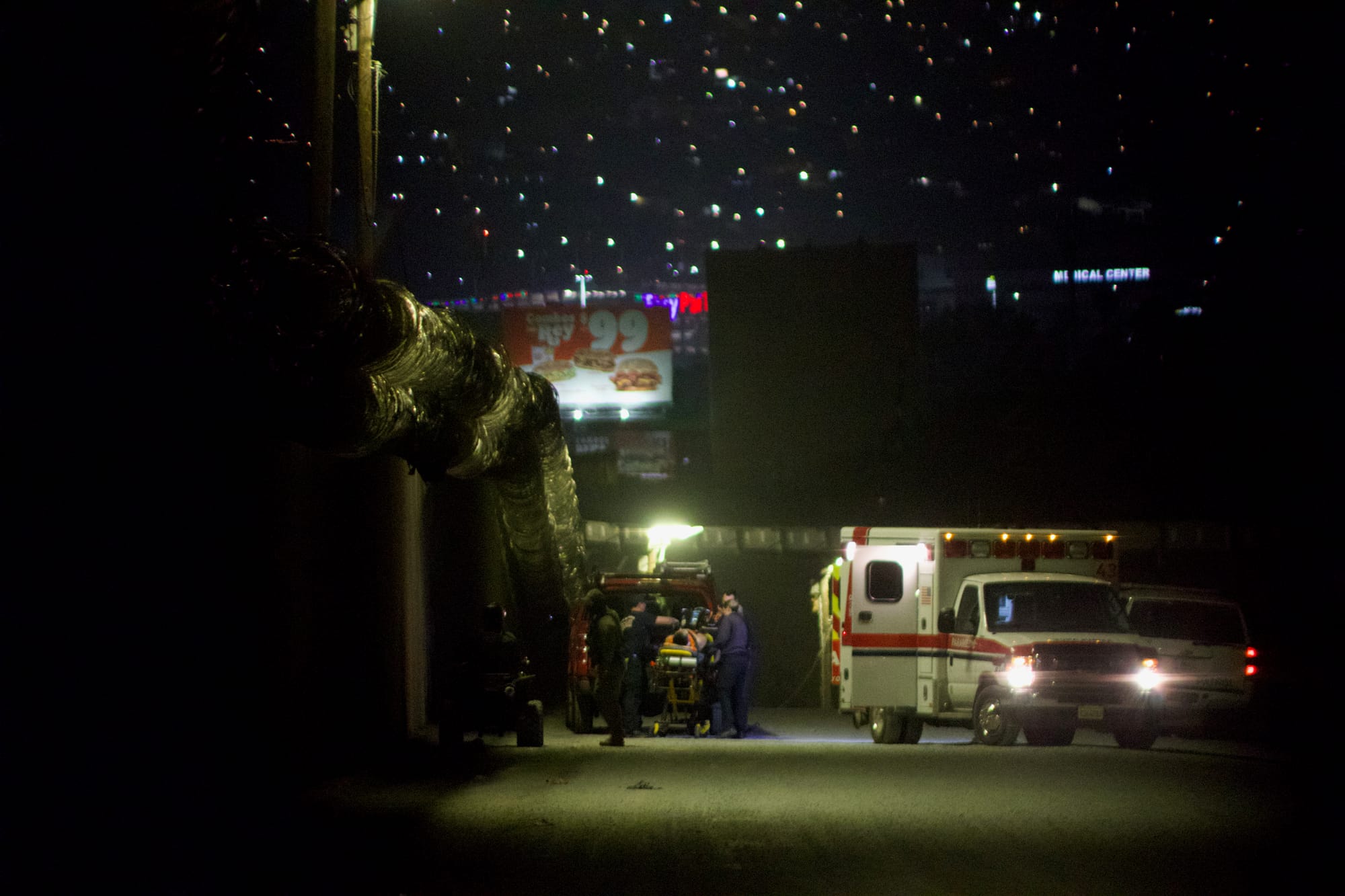
EMS paramedics attend to a migrant who fell from the border wall on January 7, 2025, at Whiskey 8 in San Diego CA. (Photo credit: Pedro Rios)

In 2019, I asked Customs and Border Protection commissioner Rodney Scott, then chief of the San Diego Border Patrol Sector, how the government determined that 30 feet was the appropriate height for border walls. His response alarmed me. He said Border Patrol had conducted psychological field tests that determined a normal person would become disoriented at heights of 18 to 22 feet. Since then, 30 feet has become the new border wall’s established height—revealing the expectation that people will fall, serving as another layer of deadly deterrence.

As the walls multiply, residents’ ability to move freely along the border is being stripped away. In February 2020, Border Patrol restricted access to the International Friendship Park, claiming the walls were too fragile and the Mexican side too violent. The agency said it lacked the resources to guarantee public safety. When the pandemic struck a month later, the Border Patrol used it as a pretext to close the park indefinitely.

Then, in 2022, Border Patrol agents began using the “enforcement zones” between the border walls as open-air detention sites. Ironically, the first place Border Patrol forced families with small children to wait in the open air, exposed to the elements, was at the park. Forcing asylum seekers to endure these hazardous conditions between border walls was part of normalizing their dehumanization. It should also serve as a warning to other border communities as this administration races to build more double walls and enforcement zones.

From 2023 to 2025, at an open-air detention site that Border Patrol refers to as Whiskey 8, I witnessed many occasions when emergency services arrived to attend to someone who had fallen from the border wall. I also saw many people entangled in the concertina wire now draped over the wall, suffering severe lacerations that required immediate medical attention.

Today, Friendship Park looks more like a prison than a park.

After more than two decades of visiting and documenting this stretch of border, I have seen the disappearance of many shared binational cultural events I once enjoyed. These included the yearly Fandango Fronterizo, which brought musicians playing traditional son jarocho from the Mexican state of Veracruz. The closure of the park has displaced the San Diego participants of Border Church. The annual Posada sin Fronteras, which I help organize, remains fractured. Those in San Diego wishing to commemorate the Nativity have been unable to do so with their friends in Tijuana because the park remains closed. Dozens of other events, and more importantly, the reunions of families who for years gathered on weekends to share precious time together, albeit divided by the border wall, are no longer possible.

But we haven’t given up hope. Years of deadly deterrence have not stopped our community from protesting the construction of walls that disrupt important cultural activities and harm sensitive ecological areas. Where attempts to engage in dialogue with Border Patrol’s San Diego Sector have ceased, public actions—including weekly silent marches, physically blocking construction, and artistic interventions—have embraced the genuine spirit of International Friendship Park. It is that spirit that will endure beyond the lifespan of corroding metal bollards that make up the 30-foot border walls at International Friendship Park and elsewhere, guiding us to insist that international shared spaces should exist without harmful and destructive barriers.

Great! You’ve successfully signed up.

Welcome back! You've successfully signed in.

You've successfully subscribed to The Border Chronicle.

Success! Check your email for magic link to sign-in.

Success! Your billing info has been updated.

Your billing was not updated.