
Greetings From the Northern Border
The Border Chronicle is in Montreal this week. Also, gratitude to our readers for their inspiring work, and we hope you’ll subscribe to The Border Chronicle, too.
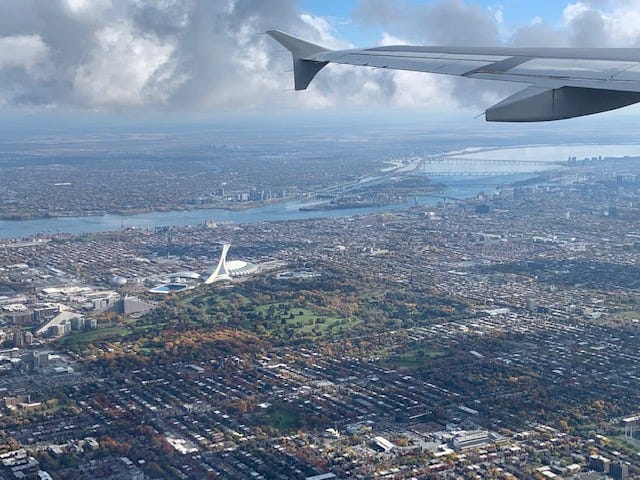
A brief missive from Montreal, where it is beautiful and cold—especially if you live in the Sonoran Desert. Todd and I are here this week to talk about border journalism and The Border Chronicle. We’ll be giving the keynote on Thursday morning at the “Border Walls and Borderlands” conference at the University of Quebec in Montreal.
We’re honored to be invited and excited to fly the flag for border journalism. We’re also looking forward to learning from the various folks attending from around the globe who will be discussing their research on migration, border walls, and surveillance, among other topics. And we’ll have more for you later on what we learn while we’re here.
Today, however, I want to take the opportunity to thank you, our readers, who have supported us so that we could make it this far—all the way to Montreal and now into our second year of The Border Chronicle. This venture has been a lot of hard work, but it’s been very rewarding. You can read all about our struggle to become a self-sustainable publication here.
One of our greatest hopes in creating this newsletter is to build a community of readers and podcast listeners who can learn from one another, be inspired, and share ideas from the borderlands.
One of those readers is Susan Lyman, who is a paid subscriber to The Border Chronicle—thank you, Susan! She sent us a photo of one of her recent paintings inspired by a story I’ve been following for several months on the Border Patrol throwing away the personal items of asylum seekers, including religious items, family heirlooms, and (at times) their passports and birth certificates. Even crueler, some Border Patrol leadership took photos of those items and then put out a message on Earth Day that it was “the trash and litter left behind by illegal immigration.” (It still puzzles me that this isn’t a bigger story and covered by mainstream media outlets.)
Since publishing my first story in May, a coalition of nonprofit groups started a campaign to lobby legislators and Border Patrol to stop trashing peoples’ personal possessions. They’ve already had some success in the Yuma Sector but still have a lot of work (and the rest of the border) ahead of them. And more recently the ACLU also got involved and requested a meeting with Border Patrol leadership to stop the unnecessary and cruel practice, which strips people of their humanity.
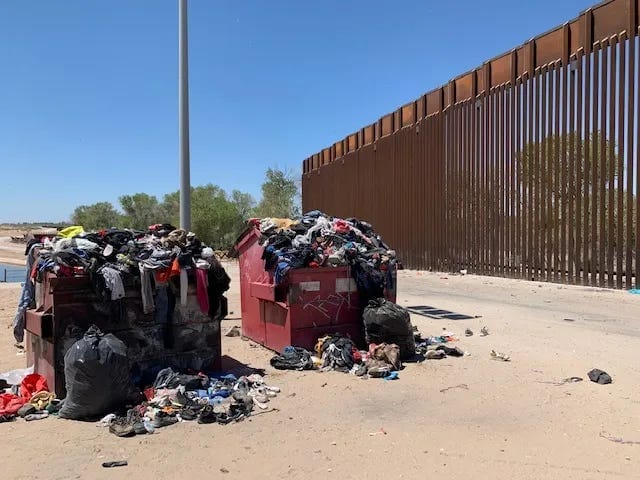
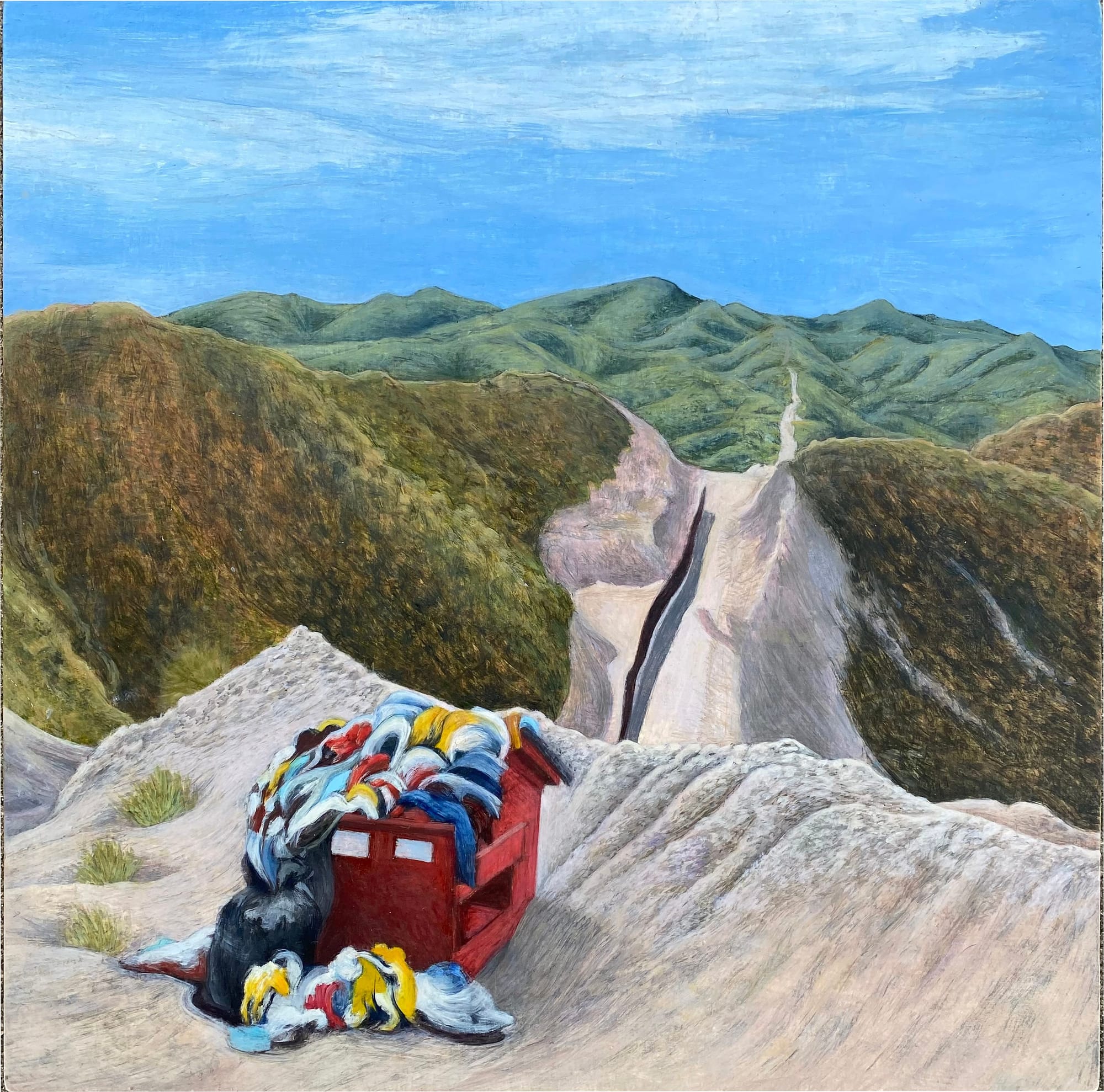
I asked Susan if it would be all right to publish her painting here, and also why she’d decided to become a paid subscriber to The Border Chronicle. Susan said that her painting was inspired by my photograph of migrants’ belongings, and by the very excellent work of John Darwin Kurc, who has painstakingly documented, through drone photography, the environmental damage of the border wall in remote regions of Arizona.
Susan added in her email,
I have been following The Border Chronicle since I attended a panel discussion on the border that included Todd Miller (author of Build Bridges, Not Walls, 2021) at the 2022 Tucson Festival of Books.
Since then I count on co-writers Melissa del Bosque and Todd Miller (and invited experts from around the world) to bring forward real-time and fact-based investigative reporting directly from border communities.
Their work explores in depth the impacts of borders as physical barriers and deterrents to the migration and survival of animals, plants, and humans affected by violence, fire, war, climate change, and lack of economic opportunity in their home country.
This painting is just one in her Postcards from the Border series which she will be exhibiting in Tucson in the coming year. (Location to be announced on her website.) I look forward to attending Susan’s exhibition and thank her for sharing her work with us, and for supporting The Border Chronicle.
And finally, we’re getting some big props for The Border Chronicle podcast from none other than the sheriff of Santa Cruz County, Arizona, who sent us a complimentary email after listening to our September 27 podcast interview with Zachary Mueller on the history of the GOP’s embrace of white supremacist messaging.
In his email, Sheriff David Hathaway thanked us and wrote: “I really enjoy your podcast. Finally, some true coverage about the border minus the hype.”
And also a big thanks to reader and border scholar David Álvarez, who has supported us with a paid subscription from our first launch, and who responded to Todd’s recent podcast interview with anthropologist Gabriella Sanchez with this tweet:
If you know anything about Todd’s work, it is that borders cannot contain him. Throughout his journalism career (and four books!), Todd has traveled the world documenting border communities, taking both a hard unflinching look at the growing border fortification and surveillance industry, climate change and migration, and a hopeful stock of the grassroots and community-based coalitions, which have formed to overcome the dehumanizing industry and make their communities more resilient. Thanks to Todd, The Border Chronicle has set its sights even beyond the U.S.-Mexico border, to Montreal and onward.
Help us continue our work with a paid subscription today!
You bet I want to support The Border Chronicle!
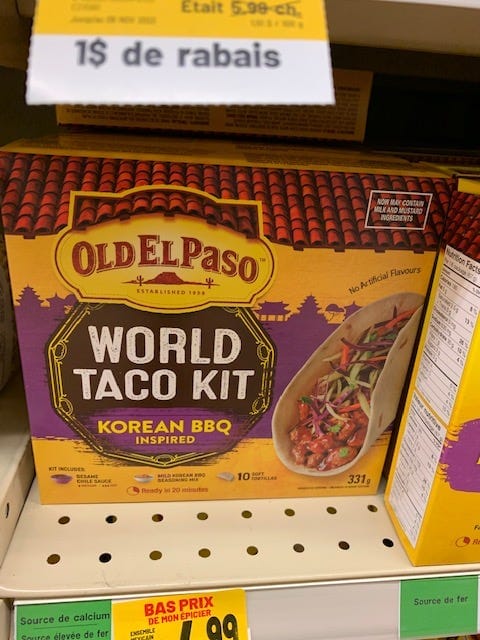
And finally (yes, I know, but I really mean it this time), let me leave you with this photo to ponder. Truly a wonder of transnational marketing in a Canadian grocery store. There are no borders when it comes to the World Taco Kit. You’re welcome!
Author
Related Articles
The War Always Comes Home
While menacing Venezuela and Greenland, an “unbound” Trump has unleashed the empire on itself in Minneapolis.
How New Mexico Learned to Love Its Ephemeral Waters
Rollbacks to the Clean Water Act may have affected the borderlands more than any other region. States are stepping up—but there’s still more to do.
The Nature of Violence
Legado de Fieras, an exhibit by Sonoran artist Miriam Salado, reflects on the natural world and the artifacts of human violence.