The Everywhere Border: A Podcast with Mizue Aizeki
As widespread election border theater kicks in, the director of the Surveillance Resistance Lab talks about smart borders, border externalization, “identity dominance,” and what can be done about it.
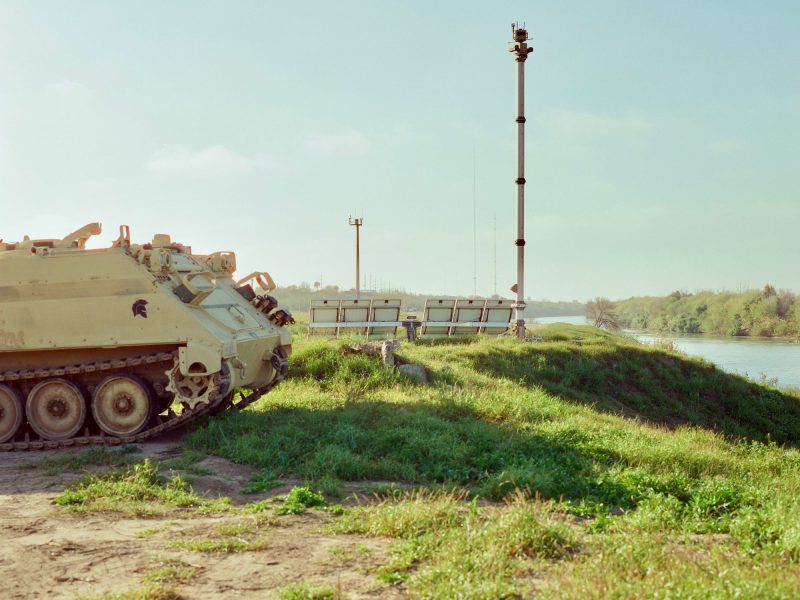
Well, this week has been a doozy on the U.S.-Mexico border. There is the continued Texas standoff between the federal government and Operation Lonestar; the “Take Back the Border” convoy (also known as “God’s army”) and their political backers annoying and intimidating border communities such as in Eagle Pass; the failed impeachment of Department of Homeland Security secretary Alejandro Mayorkas; and a shot-down so-called border bill, to name a few things. If you were wondering if border theater was going to kick in to overdrive this election year, you were correct. Border theater’s problem, of course, is that it tends to be myopic, based on distorted narratives, and ahistorical.
So often the result of this theater is a reductive conversation in the media: While some aspects of the border receive hyper attention, others—such as the massive border surveillance apparatus and its corporate sponsors—do not. Luckily, today we are joined by the founder and executive director of the Surveillance Resistance Lab, Mizue Aizeki, to help us see the bigger picture. The Surveillance Resistance Lab is a think and act tank that builds research, strategy, campaigns, and networks of collaboration to scale up people’s ability to take on the threat of surveillance. Mizue is also coeditor of the book Resisting Borders and Technologies of Violence (out this month from Haymarket Books), as well as coauthor of many reports, such as The Everywhere Border: Digital Migration Control Infrastructure in the Americas and Smart Borders or a Humane World? Mizue mentions all these works in our conversation—as we look at the border, its digitization, its externalization and expansion, and omnipresence in an election year that by all indications will put the border front and center.
Throughout the conversation, Mizue flips the border theater narratives on their head. She asks, “What if we acknowledge that borders are a form of state violence that enforce global inequality and unequal access to life? … What if the rules people are being asked to follow are fundamentally unjust, exclusionary, and punitive? … Just like most reasonable people wouldn’t see Jim Crow or apartheid as neutral legal regimes, we have to start seeing the U.S. immigration regime in the same way.”

The Border Chronicle is a reader-supported publication. To receive new posts and support our work, consider becoming a free or paid subscriber.
Author

Related Articles

Swarm Intelligence: A Reporter’s Notebook on the Freedom of Movement in the Maasai Borderlands
Could solutions to climate woes such as drought be found in the freedom of mobility? This on-the-ground report from the Kenya-Tanzania border examines that question and more.
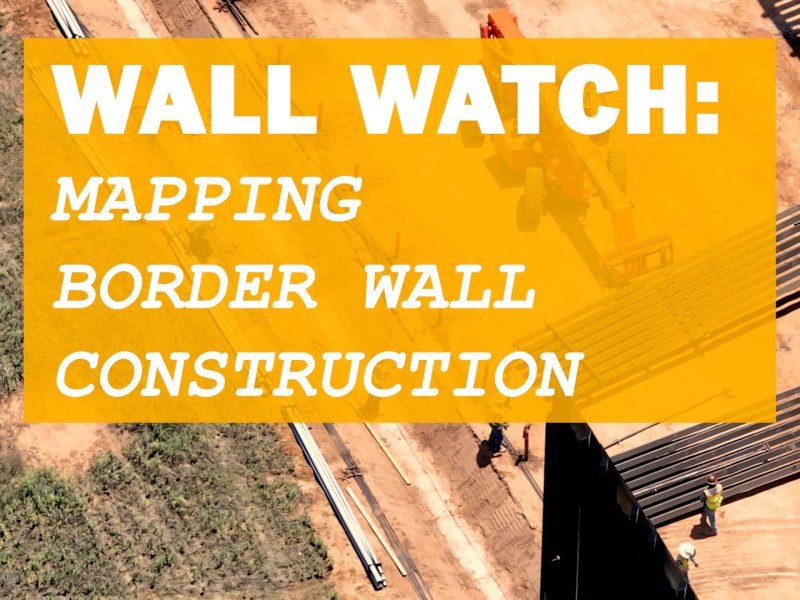
Wall Watch: Mapping Trump’s $46 Billion Border Mega-Project
In this week’s podcast, Melissa del Bosque and Geographer Dugan Meyer explain how the Border Chronicle’s new project, Wall Watch, helps residents document and understand the massive construction project underway at the U.S.-Mexico border.
Protecting the Last Grandmother Cottonwood: A Podcast with Kate Scott
A vivid depiction of what has been happening during the last eight weeks of resistance against border wall construction in southern Arizona’s San Rafael Valley.