Thou Shall Not Pray for Peace: The Bombing of Iran and the U.S.-Mexico Border

A few days after the United States launched Operation Epic Fury in Iran, the Border Patrol changed its policy on visits to the border wall, denying a church group permission to pray there, “for their own safety.”

Thou Shall Not Pray for Peace: The Bombing of Iran and the U.S.-Mexico Border
A cross against the border wall Agua Prieta, Sonora says "Let's live like brothers and sisters" and "We are all migrants." A butterfly in the corner symbolizes the importance of mobility and migration. (Photo credit: Todd Miller)

On March 3, in the late afternoon, Joca Gallegos arrived at the border wall in Douglas, Arizona, in a van with a small group from Phoenix. The plan was to conduct a devotional, as the Presbyterian border ministry Frontera de Cristo has done with groups from across the country for decades. For many participants, this would be their first encounter with the border wall, and they were encouraged to reflect on their impressions.

In many ways, it was a prayer for peace. But this time it was going to be different. Much to their surprise, this time it wasn't going to happen at all.

Gallegos, Frontera de Cristo’s Mexico coordinator, approached a nearby Border Patrol vehicle and told the agent—one of the few women on the force—that the group was going to conduct a devotional. She assured the agent it would be quick because they had another activity planned: the Healing Our Borders Prayer Vigil, a weekly event to honor those who have died crossing the border and to pray for their families. This vigil has been held every Tuesday for 25 years.

“Do you know that you can’t be in this area?” Gallegos recalled the agent asking her. Surprised, Gallegos replied that she had conducted devotionals at this exact spot for years. She was unaware of any new restrictions. No changes had been announced.

“This is a road,” the agent explained, “that has been very busy.” She cited the potential for shootings and stray bullets, adding, “This road is for Border Patrol.”

The agent suggested they return to town, where a double fencing structure provided more safety. “With the situations happening,” Gallegos recalled the agent saying, “there could be a shooting at any time.” 

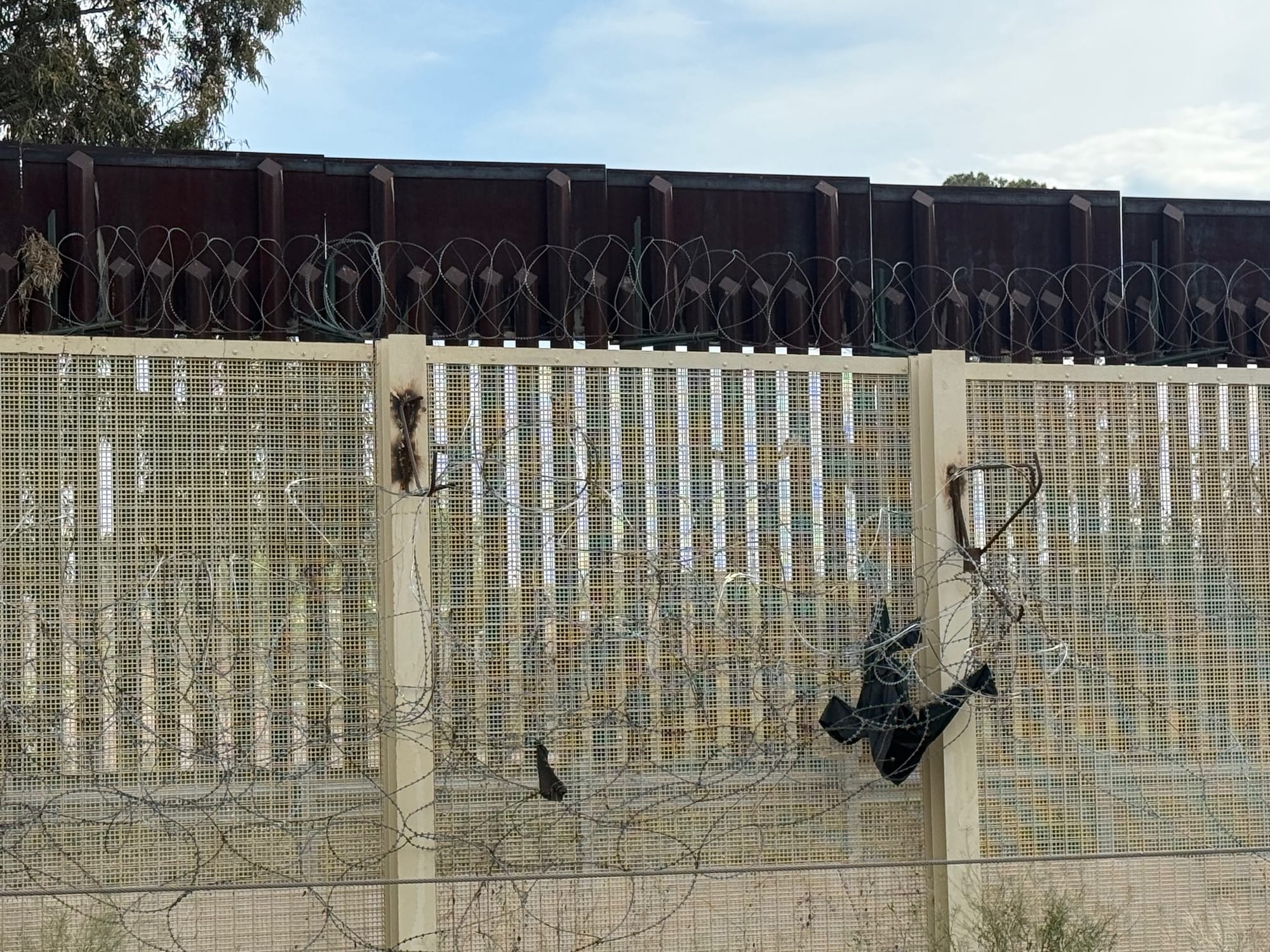
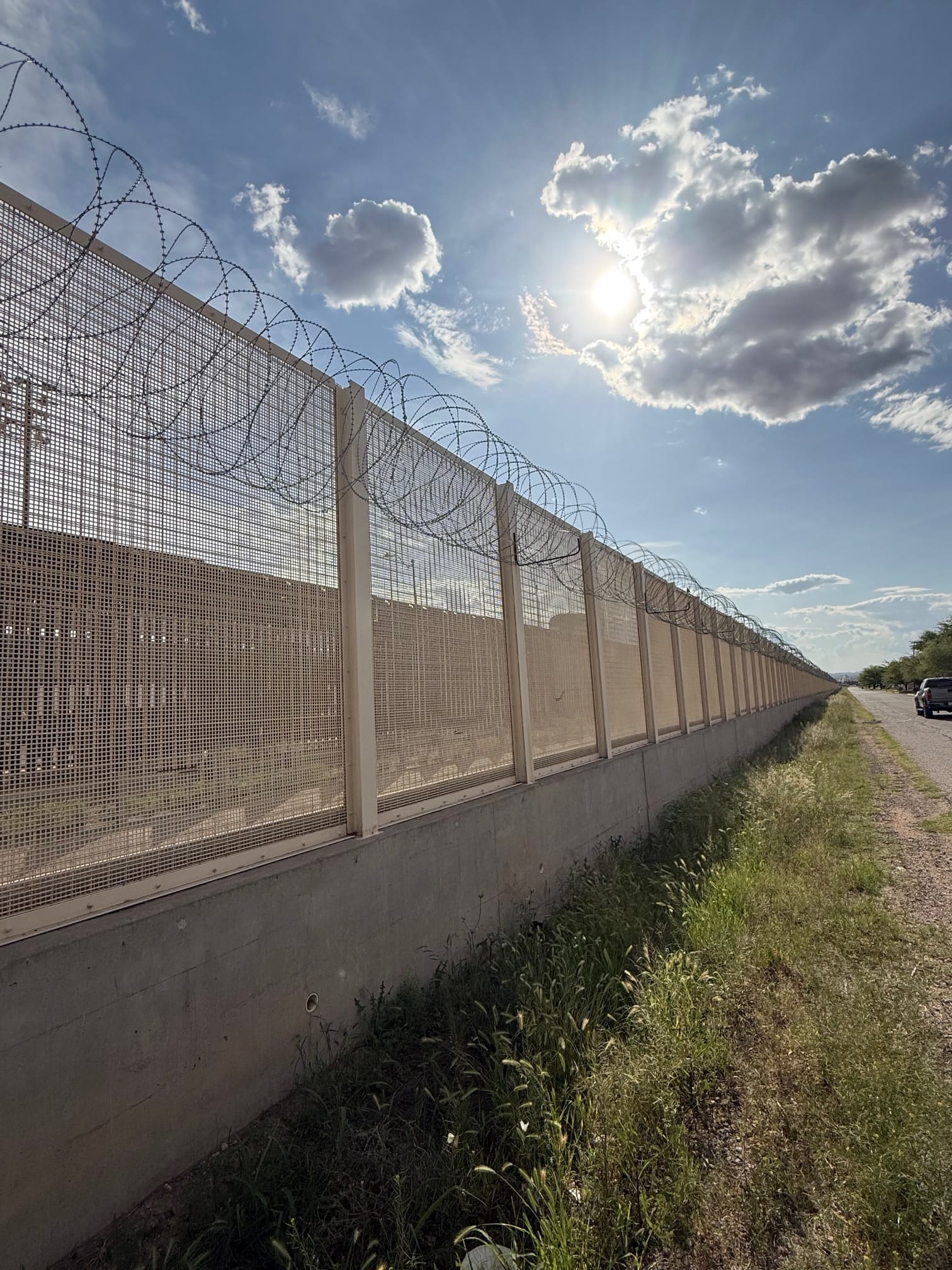
Just a few hundred feet away, a double-wall structure bisects the town of Douglas, setting it off from Agua Prieta, Mexico. The wall consists of 20-foot-tall rust-colored bollards and another of yellow mesh, both draped with coiling razor wire. In the area where Gallegos and the agent spoke, the wall lacked the secondary barrier, featuring only one wall and the dirt border road. The opposite side of the road was lined with Normandy vehicle barriers, also covered in coiling razor wire.

The double wall in Douglas, Arizona. (Photo credit: Todd Miller)

“It is for your safety,” the agent explained. Safety from what? Gallegos wondered. The last gunshot she remembered was in 2011, when the Border Patrol killed 19-year-old Carlos LaMadrid as he climbed the wall to return to Mexico. And at that moment, the road “wasn’t busy,” Gallegos told me. Very few people were crossing the border.

For years, Frontera de Cristo had routinely communicated with Border Patrol about their activities. While their relationship was often strained and complicated, the agents had been relatively cordial. But this time, Gallegos told me, there was a new sharpness and rudeness in the agent’s tone.

“We’re going to be fast,” Gallegos said.

“I don’t think you understand me,” the agent replied. “You can’t be here. You need to move,” she said, to where the second wall is. Gallegos explained to the group that the government’s policies had apparently changed.

They moved behind the vehicle barriers off the road and started the devotional. They read from Ephesians 2:11–22, which speaks of destroying the “dividing wall of hostility” and finding peace. The idea was to touch the wall, pray, and contemplate the border as a “space of encounter.”

As they did this, another agent arrived. He was louder, more direct, and ruder, almost shouting.

“Ma’am, you cannot be on this road, not even here,” he said. “This has been under surveillance from the Department of War. So move your vehicle from here.”

Gallegos was stunned. “I didn’t know what was happening,” she told me. “It was aggressive.” The reference to the Department of War caught her attention. This was less than a week after the U.S.-Israeli attack on Iran, known as Operation Epic Fury.

The double wall in Douglas, Arizona. (Photo credit: Todd Miller)

Later, when asked about this policy shift, a Border Patrol supervisor said “escalations worldwide” were creating a “new norm.” “We have all been asked not to let any individuals near the wall who do not have jurisdiction to be there,” the supervisor said. “Basically, the only individuals allowed near the wall for the foreseeable future will be law enforcement, military, or construction personnel.”

The war in Iran had seemingly arrived on the U.S.-Mexico border.

Up to this point, Trump-era border militarization had focused on establishing National Defense Areas—in which the Roosevelt Reservation, a 60-foot buffer zone around the international boundary, becomes a military restricted zone. Now over 40 percent of the U.S.-Mexico border—in Texas, New Mexico, and around Yuma, Arizona—has been declared an NDA. But at the time of this failed devotional, no such declaration had been made for the Douglas area.

Most notably, a militarized restricted area appears to have been declared with no formal announcement based on U.S. foreign policy, a U.S. war.

Around when the Frontera de Cristo incident took place, Douglas resident David Clark told me that Border Patrol had stopped him on his bicycle and told him he couldn’t ride on the border road. When he asked why, the agent cited “recent events,” which Clark connected to the bombing of Iran and drug war violence in central Mexico. Unlike Gallegos, Clark said the agent was pleasant, a demeanor that reminded him of Hannah Arendt’s concept of the “banality of evil,” in which atrocities are committed not by fanatics but by ordinary people who unthinkingly follow orders.

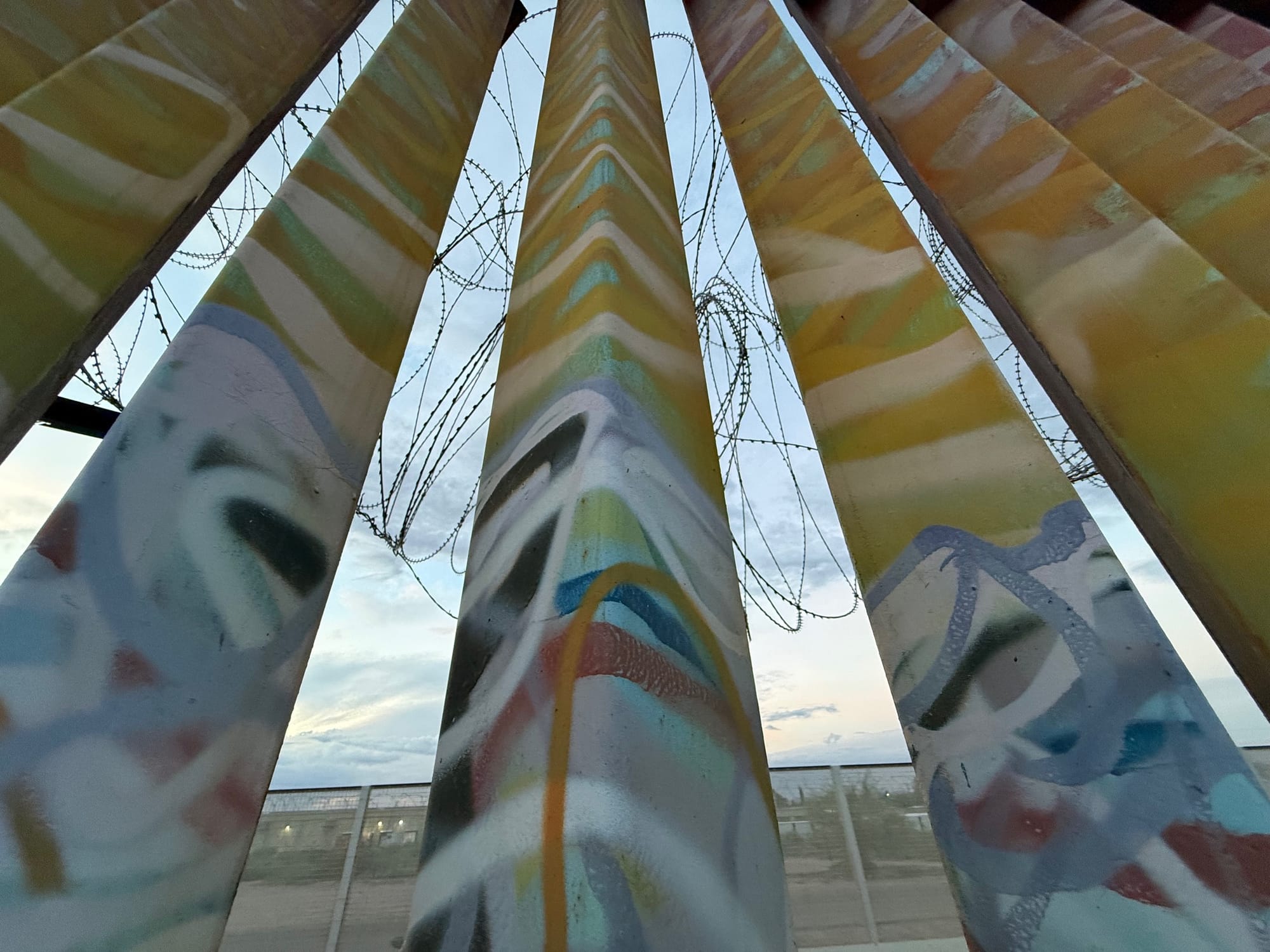
A view of the double wall from the Agua Prieta, Sonora side. (Photo credit: Todd Miller)

On March 31, Frontera de Cristo’s U.S. coordinator, Mark Adams, and I drove along the border road. Adams wanted to show me Douglas’s Jewish cemetery located near the international boundary. I also wanted to witness the new policy firsthand. As we entered the contentious area, Adams expressed surprise at the policy shift. “They didn’t tell anybody, and we’re here all the time,” he said. He mentioned speaking with a city council representative who was a former Border Patrol agent, and “even he didn’t know about it.”

This was three days after U.S. Department of War secretary Peter Hegseth announced the “Greater North America” strategy, redefining regional security. Hegseth described a “great neighborhood” extending from “Greenland to the Gulf of America to the Panama Canal.” He made it clear that the United States “will bolster its military posture and presence across the Northern Hemisphere in coordination with regional partners.”

Hegseth added, “In the north, the United States must enhance posture and presence in cooperation with our sovereign partners to defend our shared immediate security perimeter.”

Where the paved road ends in residential Douglas, there is a dry wash, the exact place where the Frontera de Cristo group was told to leave. We passed a Border Patrol vehicle, which appeared in my rearview mirror about 30 seconds later. We were about to be pulled over. Another Border Patrol vehicle ahead of us entered the road, blocking our way and flashing its lights.

As with Clark’s experience, the agent was friendly. He asked where we were going, and we told him the Jewish cemetery. We asked him about the new policy and its origin, and he said it came from the chief, from someone high up in Washington. He recognized Adams as part of the “church group” (Frontera de Cristo) and said no vehicles were allowed on the road, but people could walk up to the wall.

This seemed to contradict what the supervisor had said. Would civilians be allowed to approach the wall and pray for peace or not? I contacted a Border Patrol public information officer with questions, but as of publication, I have not received any clarification.

The notion of a more restricted U.S.-Mexico border as a consequence of the U.S. bombing of Iran seemed extreme, even absurd, yet that appeared to be the reality. A war occurring 7,000 miles away was impacting this border. But perhaps this was indeed the new normal in "Greater North America."

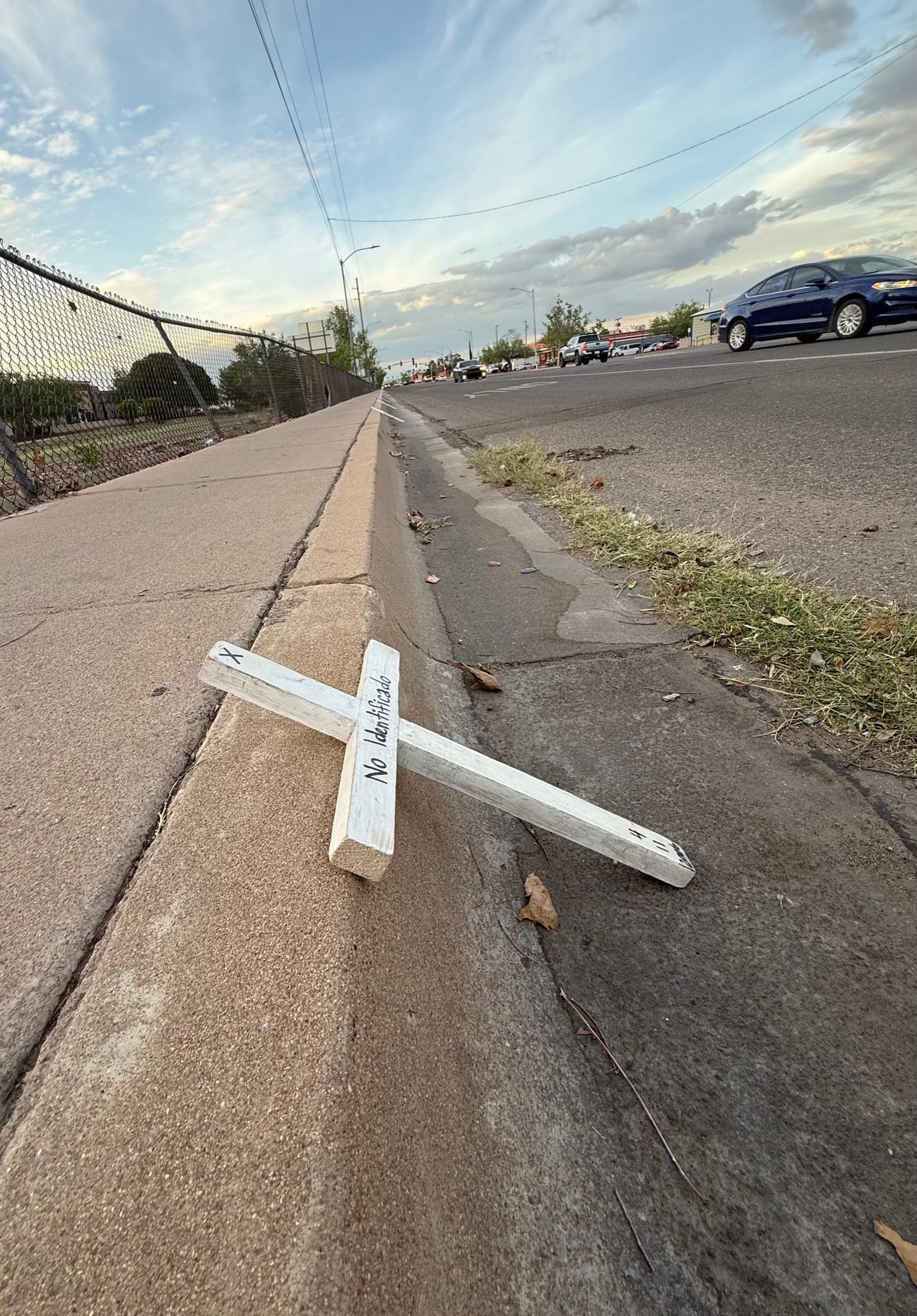
A cross that says "No Identificado" placed on a curb during the Healing Our Borders Prayer Vigil. (Photo credit: Todd Miller)

After returning from the Jewish cemetery, I attended a Healing Our Borders vigil held every Tuesday for decades by Frontera de Cristo, the same one Gallegos’s group was scheduled to attend on March 3. It is a meditative walk to the Douglas port of entry along the Pan American Highway. Everyone carries crosses inscribed with the names of people who have died crossing the border in Cochise County. Participants carry the cross, say the name inscribed on it, and place it along the road. With each name, everyone responds “presente.” As we did this, I recalled the first vigil I attended with Frontera de Cristo during a rainstorm in August 2001, just a month before the September 11 attacks would change everything. Then and now, this vigil felt like both a powerful prayer for peace and an act of defiance. Policy or no policy, they weren’t going to stop anytime soon.

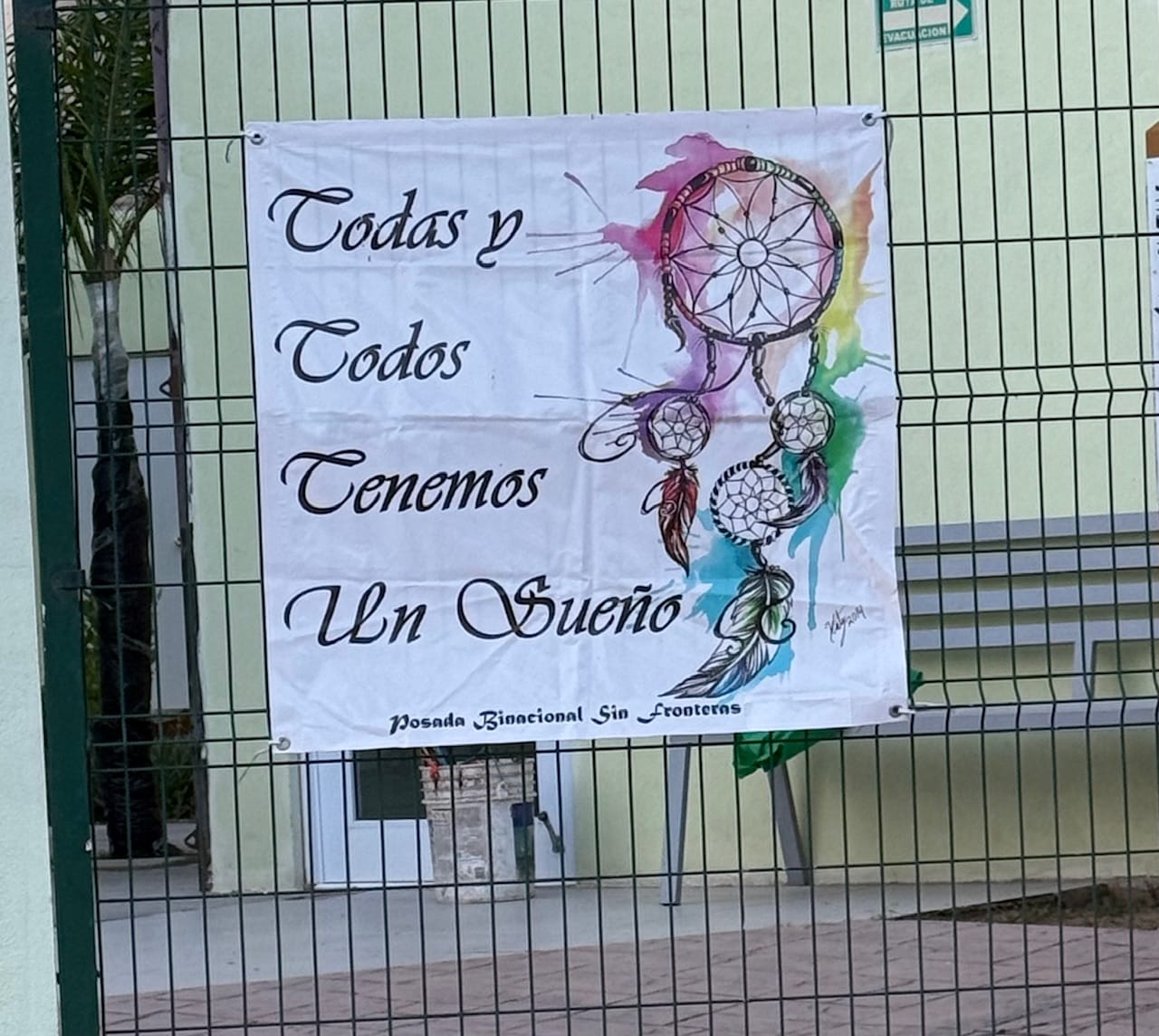
"We all have a dream" from the Posada Binational Sin Fronteras in Agua Prieta, Sonora. (Photo credit: Todd Miller)

Great! You’ve successfully signed up.

Welcome back! You've successfully signed in.

You've successfully subscribed to The Border Chronicle.

Success! Check your email for magic link to sign-in.

Success! Your billing info has been updated.

Your billing was not updated.