
“Whoever Saves a Life, Saves a World”: On the Death of Carlos Spector, El Paso Immigration Attorney
He saved numerous lives by winning Mexican asylum cases that many said would be impossible to win.
He saved numerous lives by winning Mexican asylum cases that many said would be impossible to win.

The personal, financial, and environmental costs of a border wall in Big Bend, locals revive opposition after Trump's announcement of a refinery in Brownsville and the Rio Grande Valley fights back after ICE shooting and raids, plus The Border Chronicle is seeking new paid subscribers!
“We love Big Bend the way it is. It does not need to change. We do not feel any danger, and we don’t want it to look like other places. And nothing makes a person who lives out here more mad than the idea of looking at a damn fence.”

He saved numerous lives by winning Mexican asylum cases that many said would be impossible to win.

I first met immigration attorney Carlos Spector in 2011 in El Paso. At that time, Mexico’s president, Felipe Calderón, had unleashed the military into the streets of Ciudad Juárez to combat the cartels. To the east of the city, in the small agricultural towns of the Juárez Valley, families were being massacred and their homes razed, even though the military had established a barracks and a checkpoint on the highway leading there. Ciudad Juárez had been branded the “most violent city in the world,” and the Juárez Valley had become a cemetery.
I was the self-appointed border reporter for The Texas Observer, a scrappy, underfunded nonprofit magazine. I had no training for reporting in hostile environments or any infrastructure to protect or support me. Mexican reporters, my colleagues, were being killed at a horrific rate, and I struggled to understand the violence. How could so many people be killed in plain sight of the military and police? Why were there no investigations, no justice? Who benefited from the killings? When would it stop?
As the killing spiraled, it felt like peering into a dark, bottomless well. No one could fully articulate what was happening or why. Much of the reporting, including my own, focused on the death toll, tallying the carnage like a soccer match and discussing which kingpin had been slain and who was retaliating with beheadings, placards, and car bombs.
To make matters worse, the U.S. had long deterred Mexicans from applying for political asylum, granting it to less than 16 percent of Mexican cases—nearly the lowest of any country. U.S. asylum law had been created in response to people fleeing Communist regimes during the Cold War, not heavily armed criminal groups. People were fleeing for their lives only to be jailed in the U.S. or turned back. In response, Carlos and his wife, Sandra, devised a plan at their El Paso law firm, Spector & Spector.
Carlos was uniquely positioned to do this because he had won high-profile Mexican asylum cases in the 1990s, representing a Chihuahuan opposition politician and an Army captain who refused to kill detained Zapatistas during the uprising. He was also the son of an American Jewish father and a Mexican Catholic mother. A student of the Holocaust, he characterized the mass killings of families of social justice activists in Chihuahua as genocide. His Mexican grandfather had been the mayor of Guadalupe, the largest town in the Juárez Valley. Carlos maintained close family ties there and had watched violence hollow out the town. Only a handful of residents remained—many of them elderly, hunkered down, and hiding in their homes.
He set out to prove that Mexican asylum cases could be won. He focused on journalists, environmentalists, and human rights activists, showing that they had been targeted by the cartels and the state for assassination. What we now call “narcopolitics,” the fusing of government with organized crime, created what Carlos, along with his friend Samuel Schmidt a political scientist, called “authorized crime.” With so much killing and so little justice, it became clear that government officials were often the perpetrators. In some cases, as in the Juárez Valley, the military Calderón had deployed was not fighting the cartels but working on their behalf, specifically for the Sinaloa Cartel. With these explanations, we reporters began to grasp the proportions and depths of that dark well. Meanwhile, Carlos held press conferences, spoke to media from around the world, and organized campaigns to free Mexican asylum seekers from U.S. detention. Essentially, Carlos became the mayor of Guadalupe in exile, taking on the cases of many families who had fled.
In 2011, I met one of those residents in exile, Saúl Reyes Salazar, who had taken shelter at the Annunciation House in El Paso. Saúl was the youngest son of a formidable family of social justice campaigners from Guadalupe. The family ran a bakery and organized residents for environmental and human rights causes. It was the Reyes Salazar family that helped organize a successful binational campaign against the Sierra Blanca toxic waste dump in Texas. Saúl’s older sister, Josefina, had protested the rising number of femicides, the military takeover of their town, and the increasing murders and disappearances. By the time I met Saúl, Josefina had been murdered by a masked gunman, and he’d lost five other family members, including two of his brothers. At age 42, he had lost everything: his country, his siblings, and his business. He showed me a notebook where he had carefully cataloged the missing and the dead from Guadalupe. In a spidery script, he had noted 180 dead, 26 disappeared, and eight unidentified bodies abandoned in what had been a town of at least 17,000 people but was now seemingly populated only by gunmen and ghosts.
Carlos had taken up Saúl’s case pro bono, and he, his wife, and three sons, along with other extended family members, including his mother, had been allowed to remain in the U.S. to pursue their asylum cases. “We are alive thanks to his goodwill,” Saúl told me.
In journalism school, I was taught that a good practitioner of the craft is a dispassionate observer. You take notes, report the facts, and move on to the next story. But sitting in that cramped room with Saúl at Annunciation House, as he showed me his notebook of the dead, I could not move on. This was when I got to know not only Carlos but also his family, which was his not-so-secret arsenal. His wife, Sandra, had been an immigrant labor organizer, and his daughter, Alejandra, was training to become a licensed clinical social worker and is now a psychotherapist specializing in trauma counseling, and his stepdaughter Monica, is a licensed professional counselor. In Mexico, Carlos’s cousin Leticia Calderón is a brilliant academic who works on migration issues. They worked as a team, and in 2010 they formed the nonprofit Mexicanos en Exilio in El Paso to help their clients organize and exert pressure on the Mexican government from abroad to stop the killing and demand justice. I volunteered to help, which meant anything from writing press releases to finding housing for people. In one case in 2012, Alejandra and I received a message from Carlos and Sandra that a Mexican journalist and his wife would be arriving any minute in Austin. His parents and brother, who were also journalists, had been murdered in Veracruz, and the couple needed a place to stay while Carlos worked on their case. We scrambled to find somewhere for them to land. Luckily, a generous attorney and activist in Austin offered a room in her home. Today, the couple has a child, U.S. citizenship, and still lives in Texas.
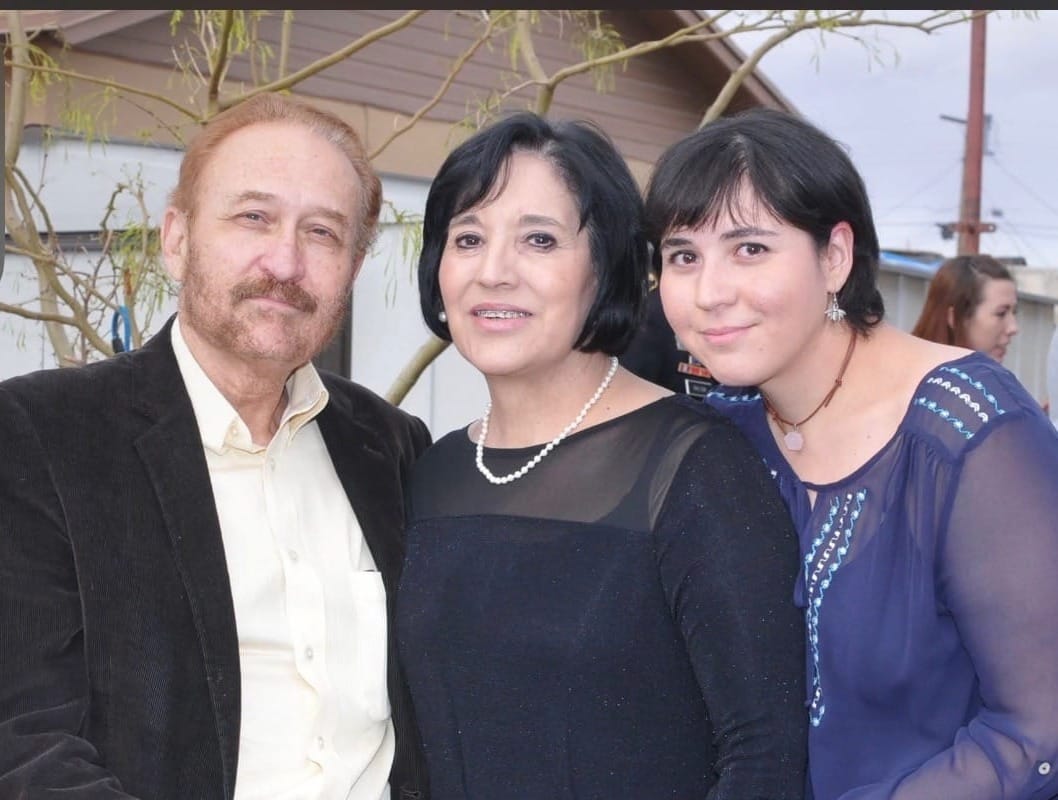
We quickly learned, however, that it wasn’t just material things that people needed. The families we were trying to help were deeply scarred by their experiences. So Alejandra and Leticia pioneered a binational program to provide online trauma counseling by Mexican therapists for families living in exile in the U.S. While the family addressed material and emotional needs, Carlos, with invaluable help from Sandra, worked on winning their asylum cases. He won many cases while holding press conferences and speaking out publicly and forcefully against the corruption and killing in Mexico.
For his efforts, Carlos began to receive death threats; a sicario showed up outside his El Paso law office. But he refused to remain silent. For a time, he no longer traveled to Mexico after another gunman showed up at an office in Ciudad Juárez, where he sometimes consulted, asking about his whereabouts.
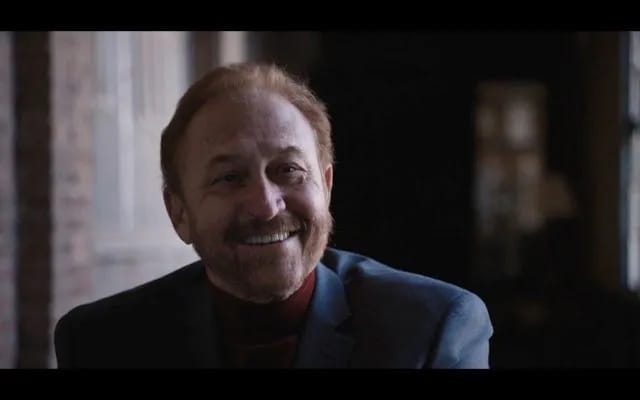
Despite his anger at the Mexican government, no one loved Mexico more than Carlos, and being unable to return must have felt like a cruel punishment. Thankfully, after several years, he was able to go back. I met him and his family in Mexico City in 2020 for the premiere of El Guardián de la Memoria, a moving and haunting film by filmmaker Marcela Arteaga, shown at La Cineteca Nacional, which featured Carlos and the former residents of Guadalupe.
At the screening, surrounded by his family and in Mexico, Carlos was absolutely in his element. At heart, he was truly an artist practicing law, with a flair for drama and storytelling that made him a favorite among journalists, authors, and filmmakers. Today, he lives on in several documentaries, books, and countless news articles, as well as through his mentoring of younger immigration attorneys on Mexican asylum cases.
As the United States entered its own dark period, deploying militarized federal agents and soldiers into the streets, Carlos was searching for ways to use the legal system to protect those who needed it most. We now see deaths instigated by the government, and impunity, just as we’ve seen in Mexico. At the same time, the U.S. is further closing its doors to people seeking protection.
Recently, when I visited Carlos on his deathbed in El Paso, I noticed several books scattered around the house, each one marked by a pen holding the place where he had left off after underlining the pages. One of the books was a biography of a German Jewish lawyer who had used the law to resist the Nazi regime. Another was about authoritarianism and how to combat it through the legal system.
On March 1, Carlos died of cancer at age 71. It’s especially cruel that he should be taken at a time when we need him the most. “I loved Carlos,” wrote Beto O’Rourke, the former El Paso congressman, reflecting on his legacy. “He was incredibly kind and patient as he helped me understand human rights in El Paso and the border, through my years on city council and in Congress,” he wrote. “He was an incredible man: tenacious, and a relentless fighter for people.”
His friend, Samuel Schmidt, remarked, “Carlos was a true humanist, a true human rights advocate. He stood up to criminals and two governments. But more than anything, Carlos was inspired by, I believe, two Jewish principles: The first is tikkun olam, repairing the world, which stems from the idea that whoever saves a life saves the world. Carlos saved many worlds. The second is tzedakah, which means doing good. And doing good without seeking a reward. Carlos did that and more in his life.”
Before Carlos passed at home, surrounded by family, books, and music, a hospice worker arrived one evening and remarked with surprise at the number of us assembled in the living room, drinking wine and listening to Carlos’s favorite music, Lila Downs and Santa Cecilia. “Who is this guy?” he asked, eyes wide. “Is he famous?”
“Not exactly,” we told him. “But he saved a lot of people."
Today, the extended Reyes Salazar family lives in Texas, has legal status in the U.S., and no longer fear for their lives. Before meeting Carlos, Saúl Reyes Salazar and his wife, Gloria, wrote, “We felt hopeless, fear overwhelmed us, and everything seemed dark. He was the light in our lives. Thank you, attorney Carlos Spector. Rest in Peace.”

ICE raids and detentions, together with a high-profile killing, have led Rio Grand Valley residents to mobilize—including even some local Republicans.


Walking from a blasted mountain top--a planned site for new border wall construction--to a makeshift military camp along the border in a remote part of southern Arizona led to a tense yet revelatory moment.

"I understand what people are going through because I lived it myself."

Border Walls and Buoy Barriers Are Killing the Rio Grande. I Have a Front Row Seat.

Independent news, culture and context from the U.S.-Mexico border.