
La Junta de los Ríos: Reporter’s Notebook from Presidio and Big Bend
It is false that a river is a good political border. It is the opposite. A river attracts, creates, and foments life. This includes bears.
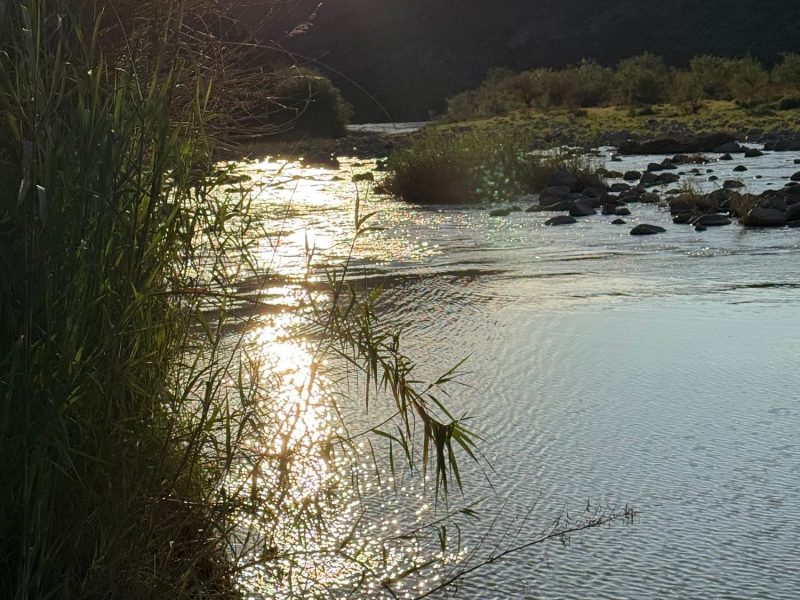
As I was leaving my hotel in Marfa, Texas, the front desk clerk asked me where I was headed next. “Presidio,” I told him. Perhaps he expected me to say something else, like Big Bend (I was going there too), Alpine, or Terlingua. “Too bad for you,” he said. He immediately backtracked when he saw my dismay, but his comment reflected a broader impression of Presidio, Texas, as a backwater. Presidio is, in fact, a sacred place with a rich history. For centuries it has been a hub for many people and peoples. It is the place where the Rio Grande connects with the Río Conchos, transforming the Mexican river into the international border by an act of geographical chicanery.
I was going to Presidio to finish my final reporting trip for a book I have been working on for nearly three years about water, the river, and the border. I began my reporting there in December 2022, and now I was concluding it in the same place. The following is a photo narrative about this trip, highlighting how this area is crucial for understanding the border today.
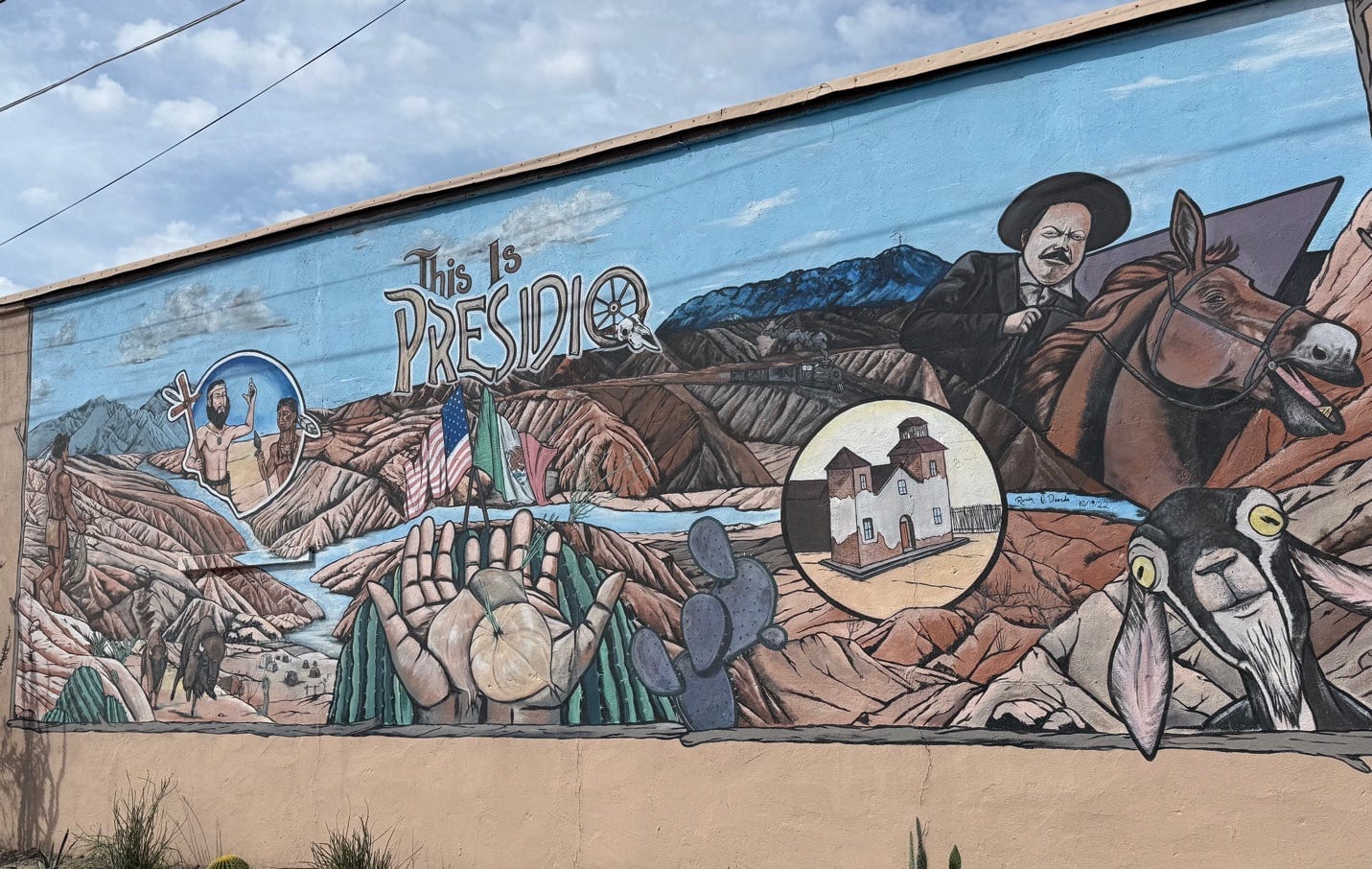
This mural is on the city’s main street. Presidio (population 6,000) borders Ojinaga, Chihuahua, which has about 25,000 residents. In the center of the mural, you can see the confluence of the Río Conchos and the Rio Grande, the Junta de los Ríos. As you’ll see in some photos below, one river is much larger than the other when they converge.
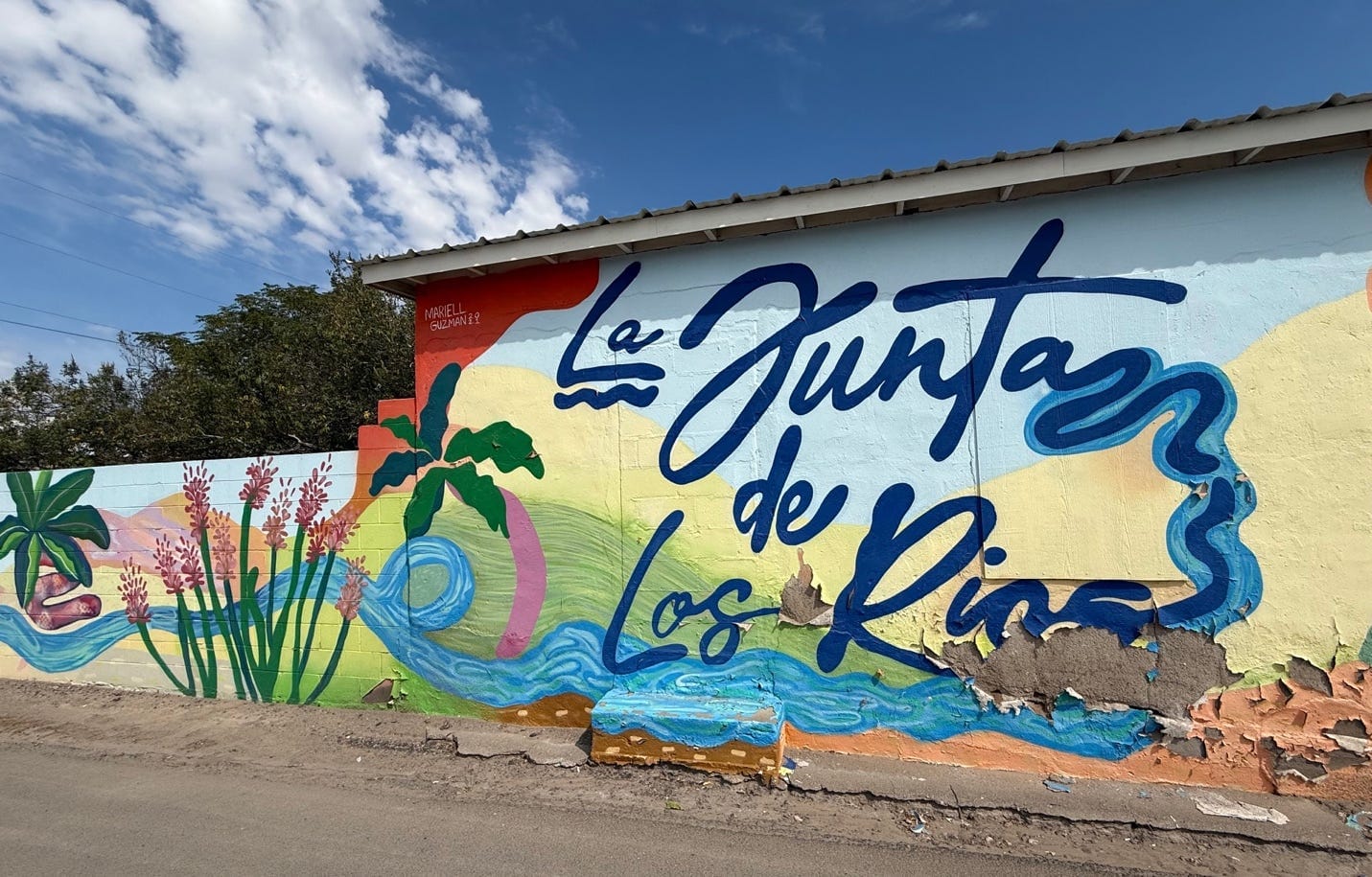
This is another mural on Presidio’s main street. The People of la Junta Preservation, an indigenous organization in Presidio seeking to preserve regional sacred and historical lands, write about the confluence on their website: “Waters merge in a dance of convergence, indigenous communities perceive a sacred union of elements—a divine harmony that mirrors the balance of life itself. Here, amidst the gentle flow of waters, there exists a palpable presence, an energy that resonates with the heart of the earth and the spirits of ancestors who have walked these lands since time immemorial.”
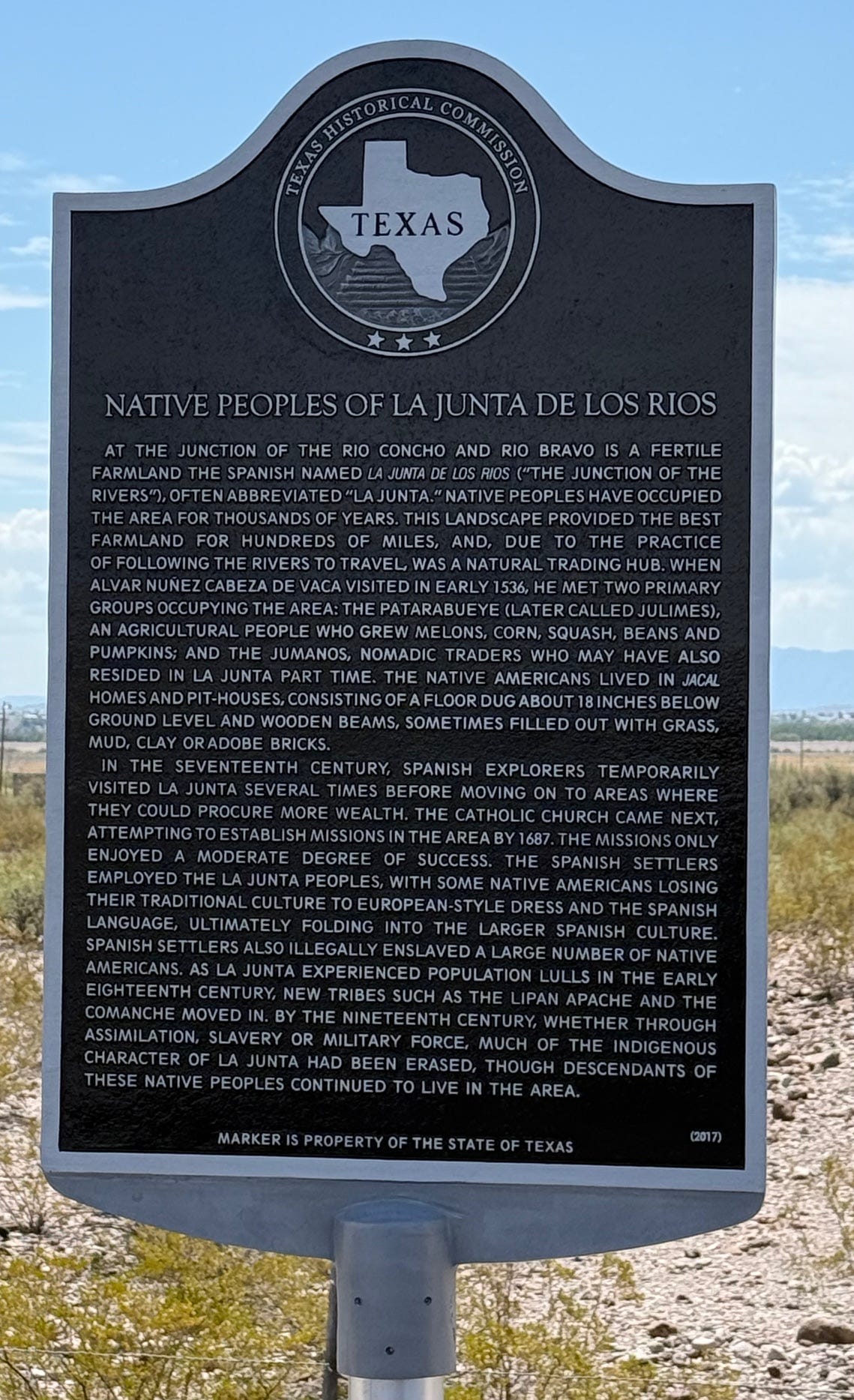
A historic marker, unveiled in August in Presidio, recognizes the Junta de los Ríos and its significance.
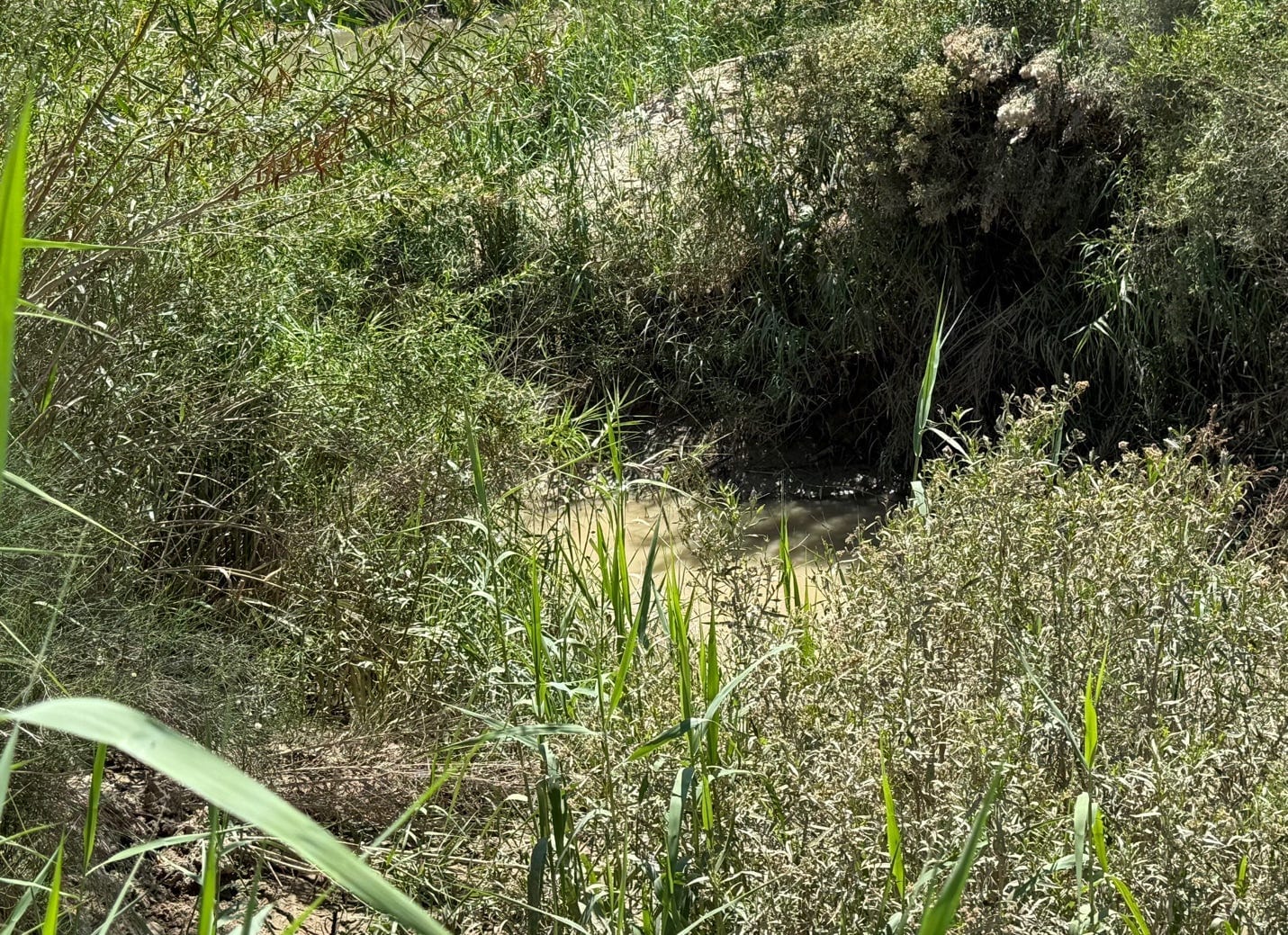
By the time the Rio Grande meets the Río Conchos in Presidio, it resembles a muddy irrigation ditch. Terry Bishop, a farmer who took me to this precise place where the rivers converge, was surprised that there was even this much water. Usually, the endangered river runs dry for the 150 miles from El Paso.
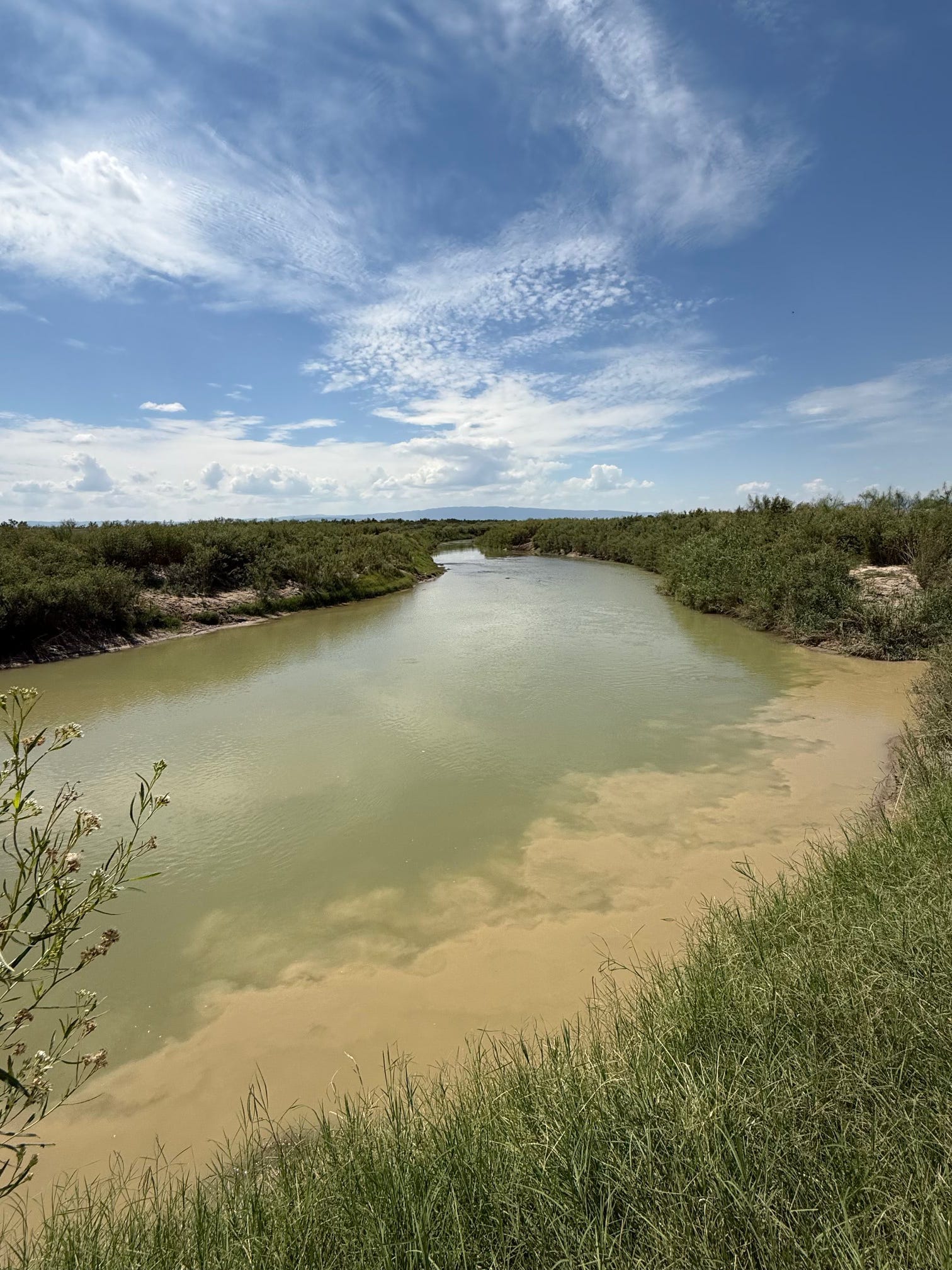
The Río Conchos, coming from the Sierra Tarahumara in Chihuahua, is the larger river. In the above photo, you can see the transition from the Río Conchos as it becomes the U.S.-Mexico border, exactly where the river bends. The blur of mud off the southern bank shows the meager contribution of the Rio Grande, whose name the river maintains as it flows on.
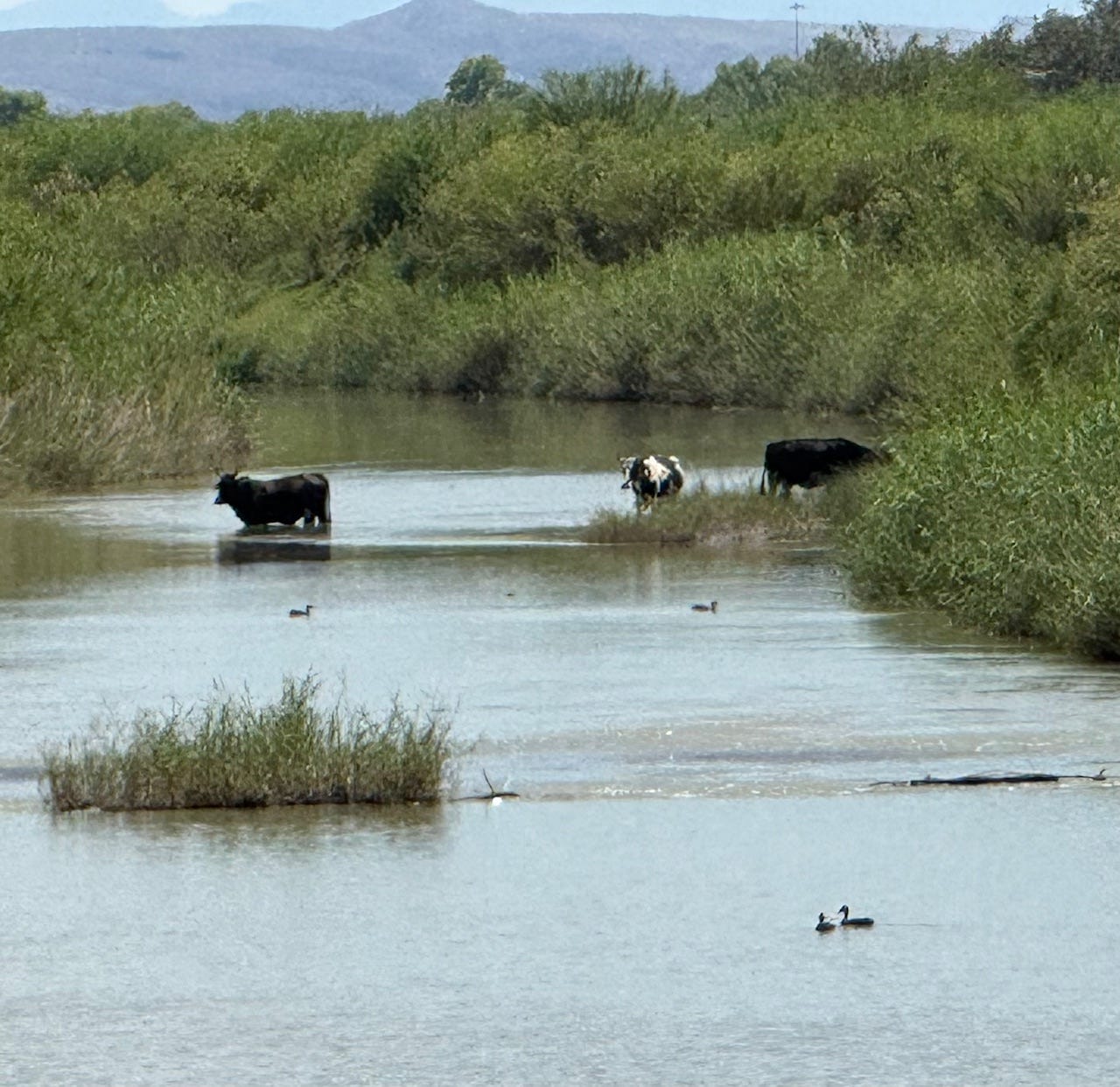
The river’s sudden change in name, and its designation as one of the world’s most politically charged borders, did not impress the cows and ducks, who saw it merely as a source of water and a place to cool off on a hot day.
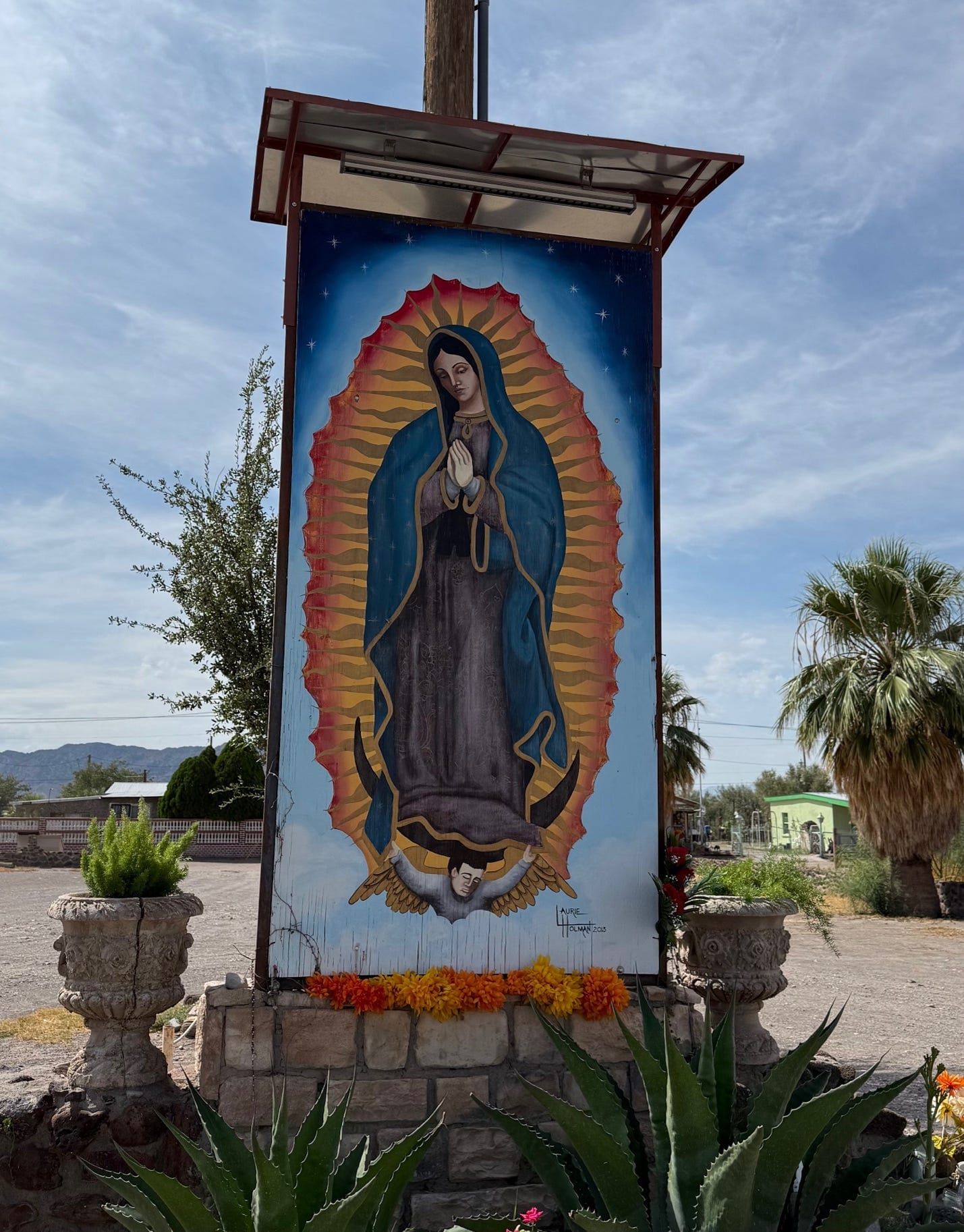
The Virgen Guadalupe oversees Presidio’s main street before the border crossing.
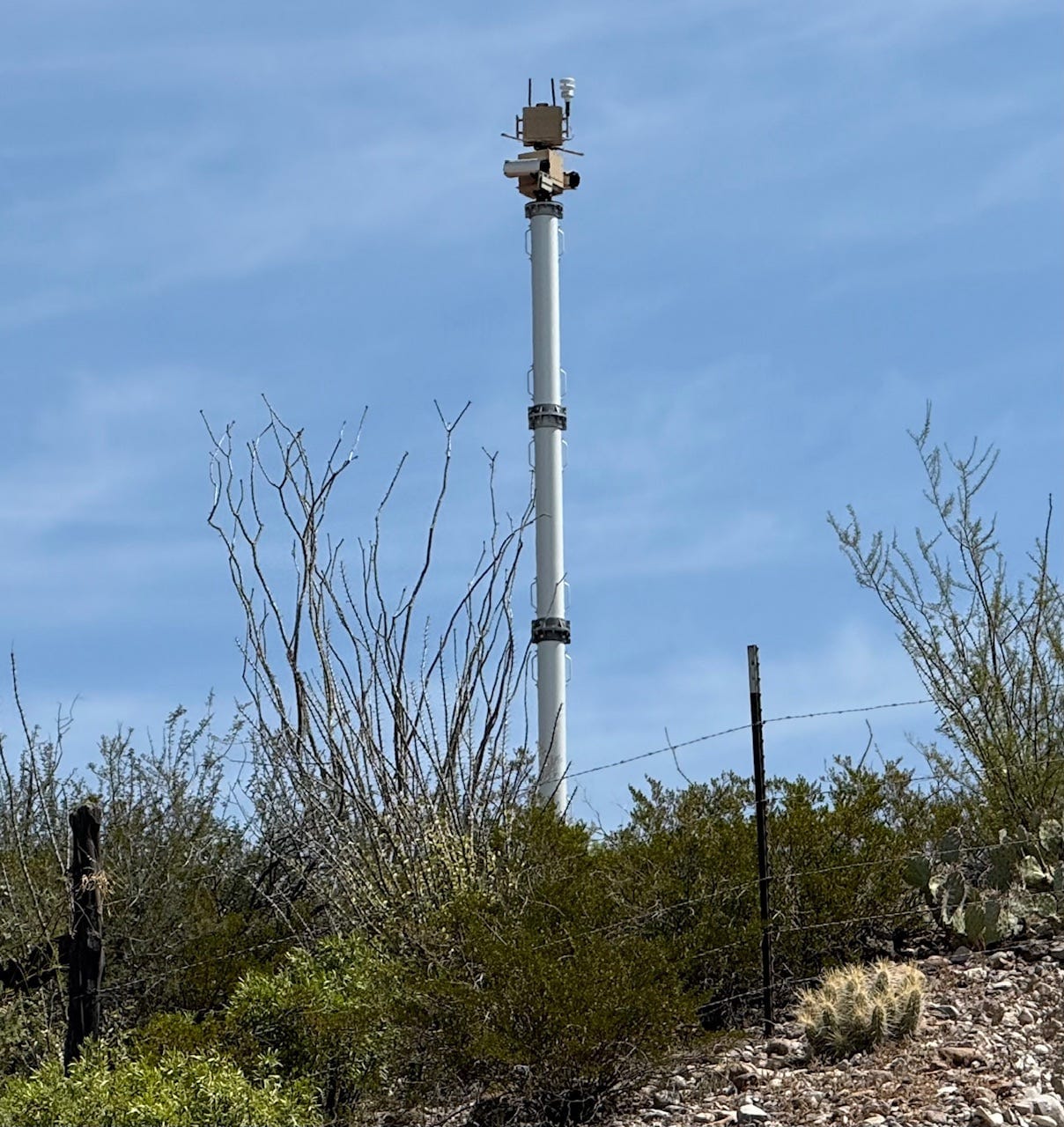
On this trip, I saw many Anduril autonomous Sentry Towers in the Presidio borderlands, including two far north. One was 60 miles from the international boundary, just outside a Border Patrol checkpoint in Marfa. I also saw plenty of Border Patrol and the usual aerostat between Marfa and Van Horn—still deployed despite occasional knockdowns due to wind gusts, which have shredded the surveillance balloons into pieces. According to locals, there had been a Stryker just outside Big Bend Ranch State Park. It has since been replaced by a scope truck staring into Mexico like an intrusive neighbor with high-powered binoculars. I saw it on my way to camp along the Rio Grande.
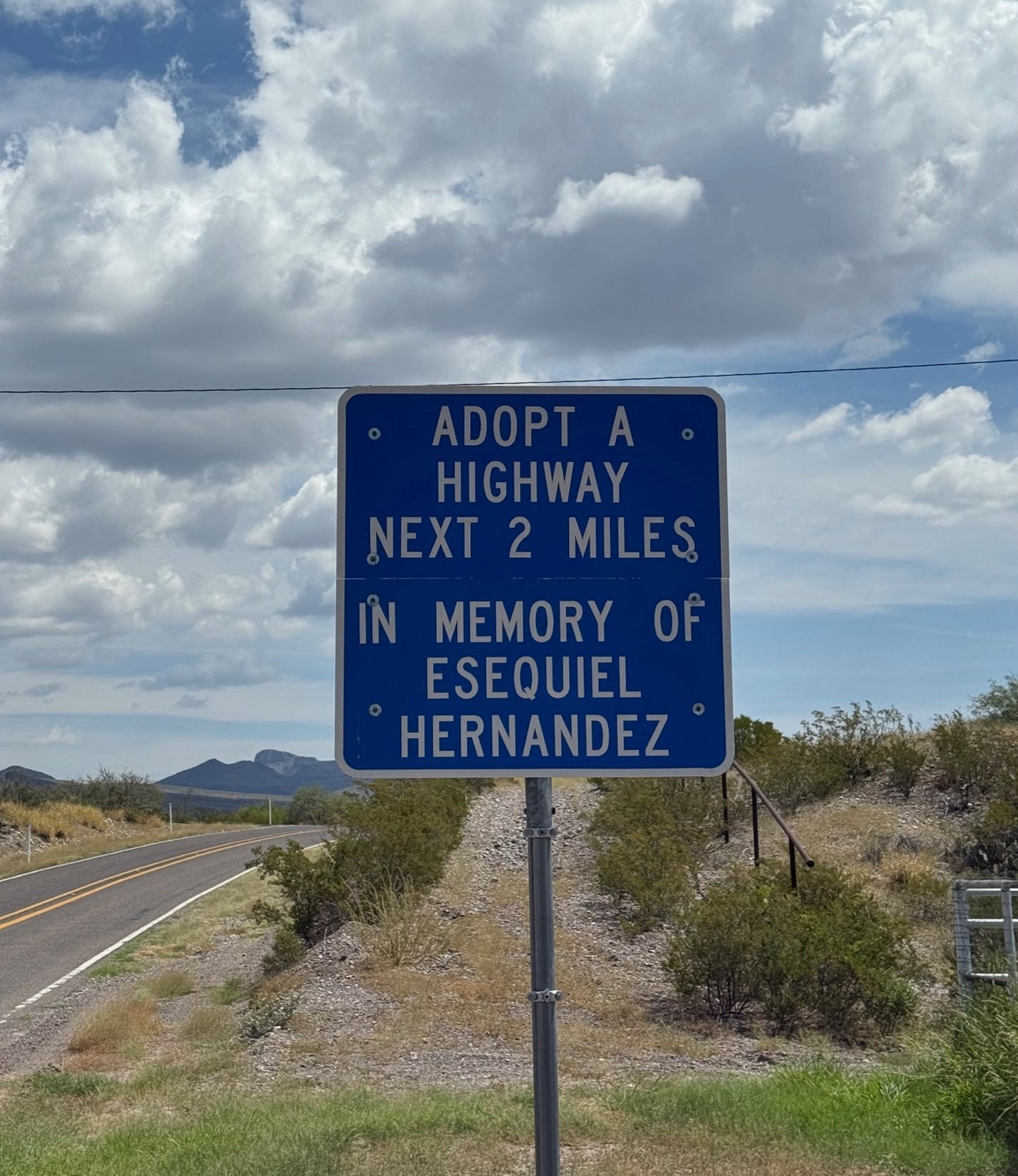
The first town on the way out of Presidio toward Big Bend on Highway 170 is Redford, Texas. In May 1997, 16-year-old Esequiel Hernandez, a student at Presidio High School, was shot and killed by a covert joint task force of U.S. Marines during an anti-drug operation. Two miles of road through his hometown are dedicated to Esequiel’s memory.
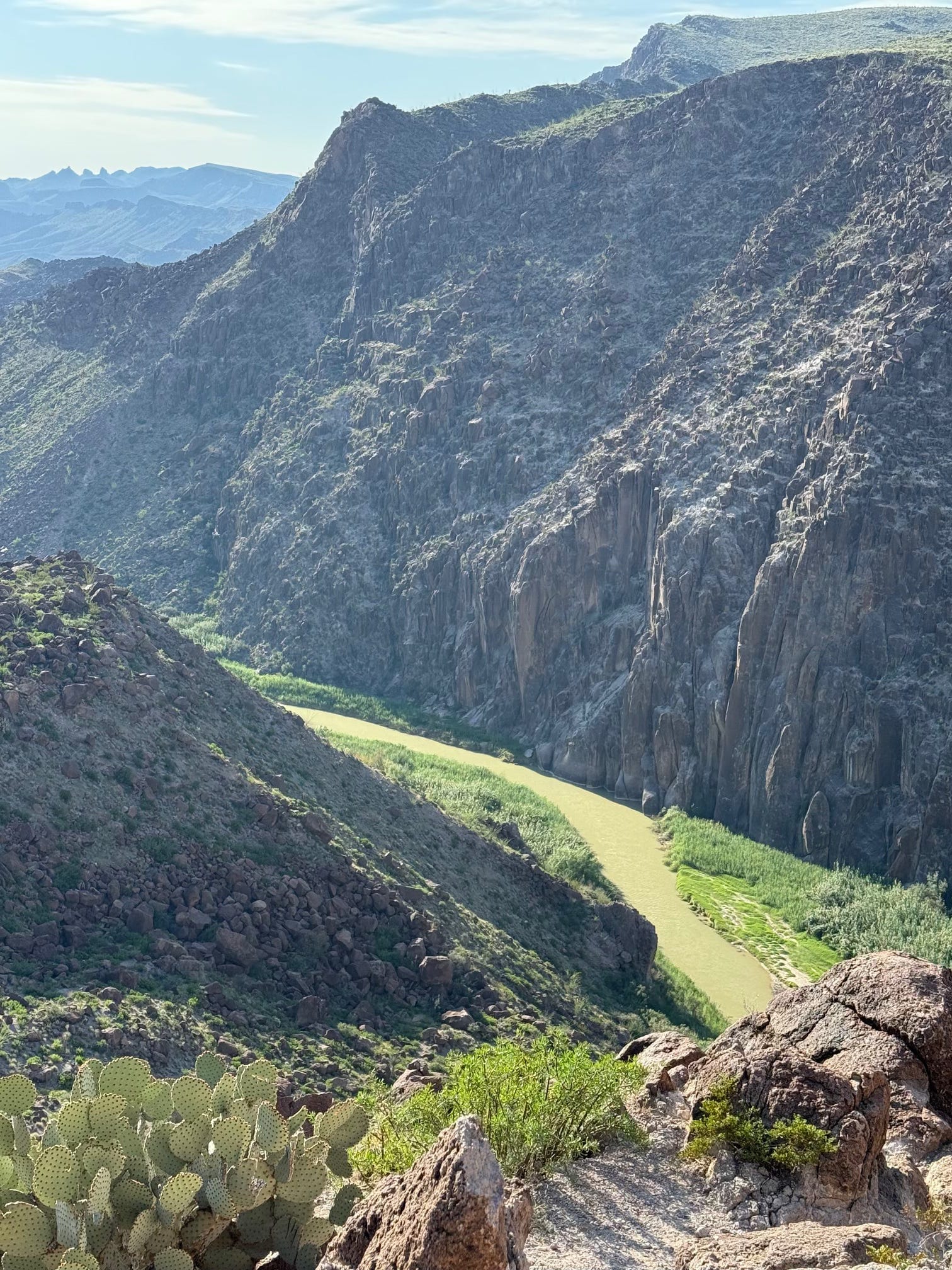
The Rio Grande from La Cuesta at Big Bend Ranch State Park.
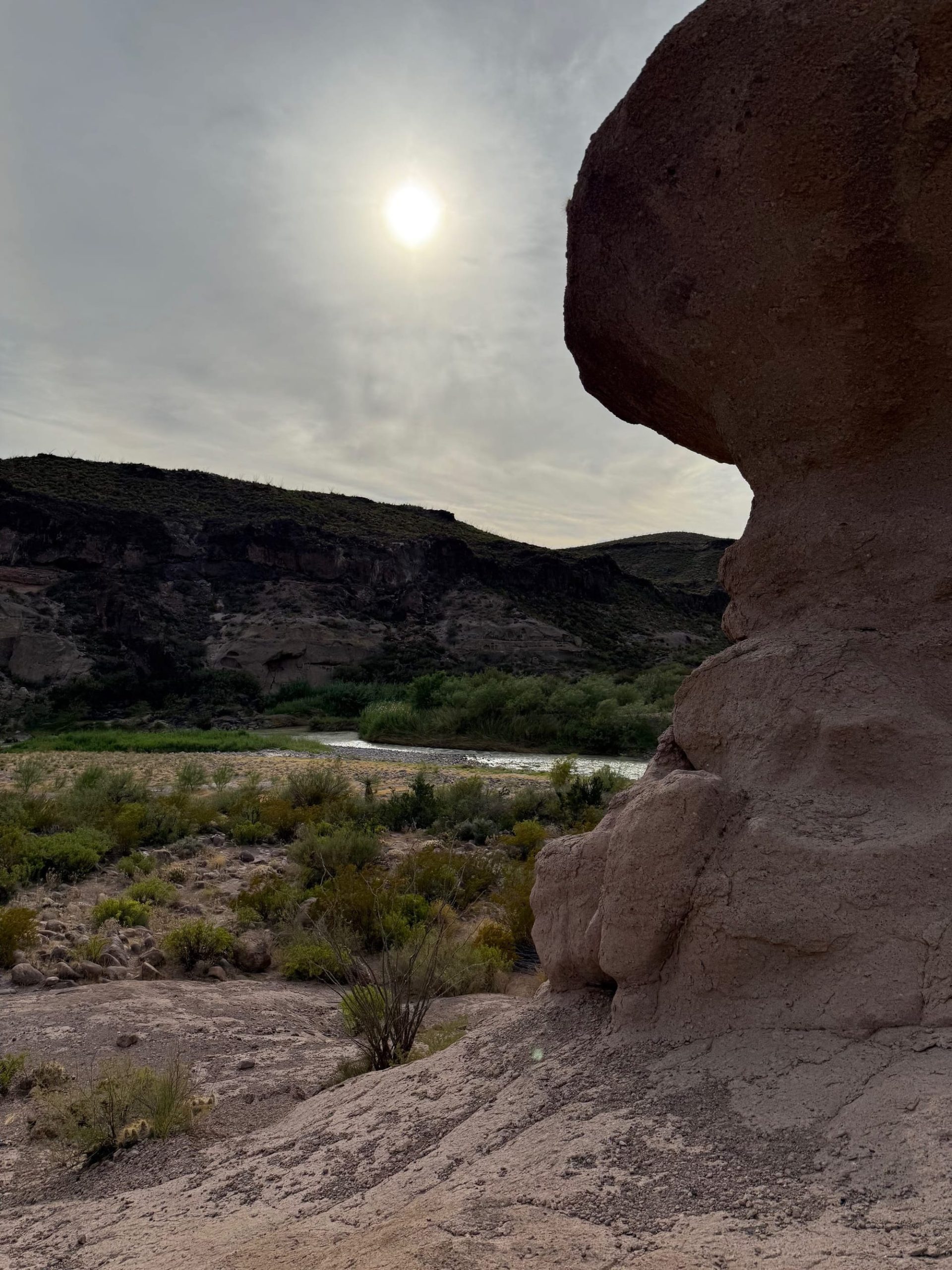
The Rio Grande at the Hoodoos hiking trail at Big Bend Ranch State Park. Hoodoos are rock formations created by volcanic eruptions over 20 million years ago. Standing before the one pictured above, I contrasted its age with the international border below at the river, established in 1848.
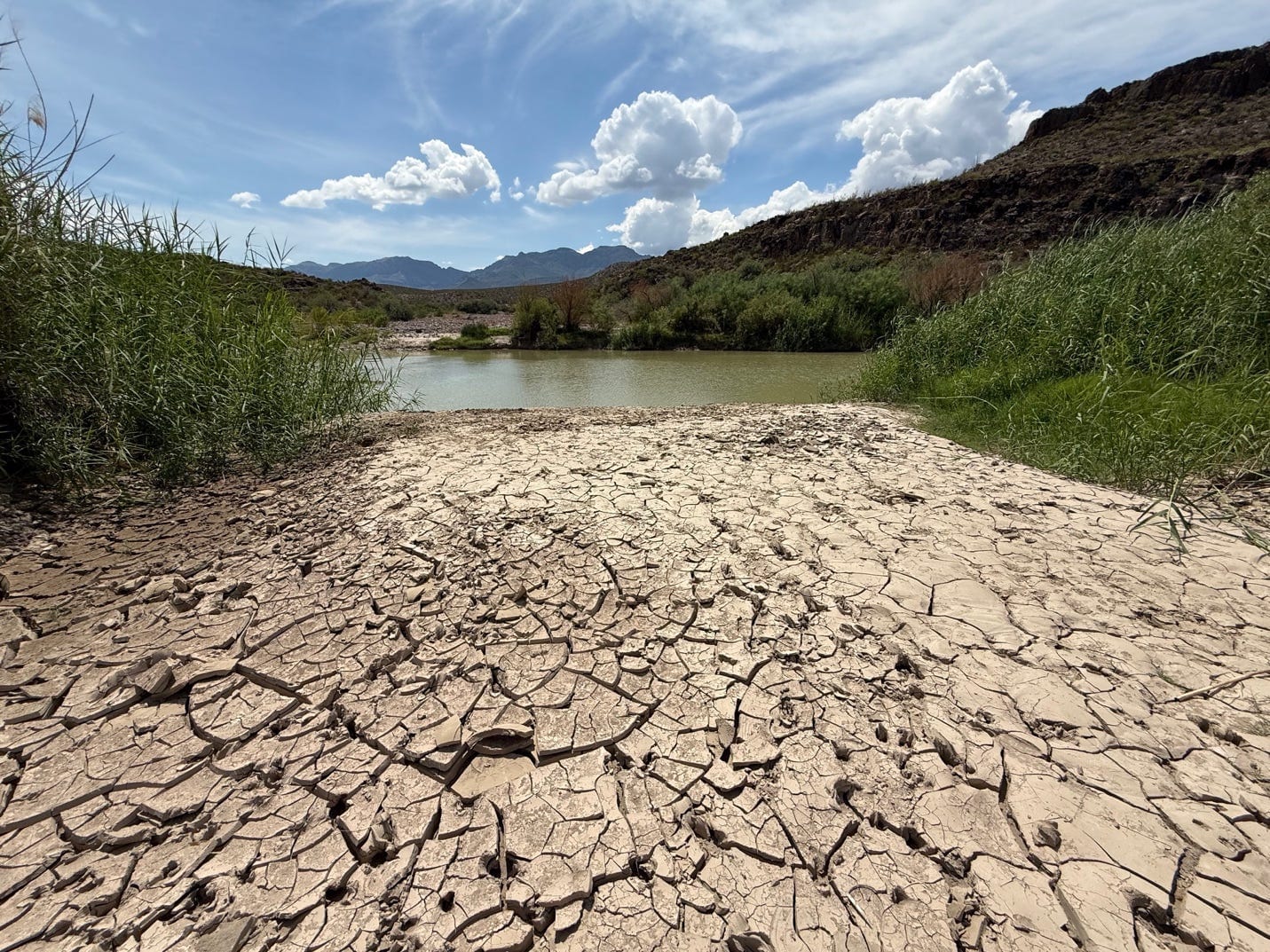
This is me walking the 25 yards from my campsite to the Rio Grande. The crackled earth reflects the long borderlands drought, even though the river has more flow thanks to summer rains in Chihuahua.
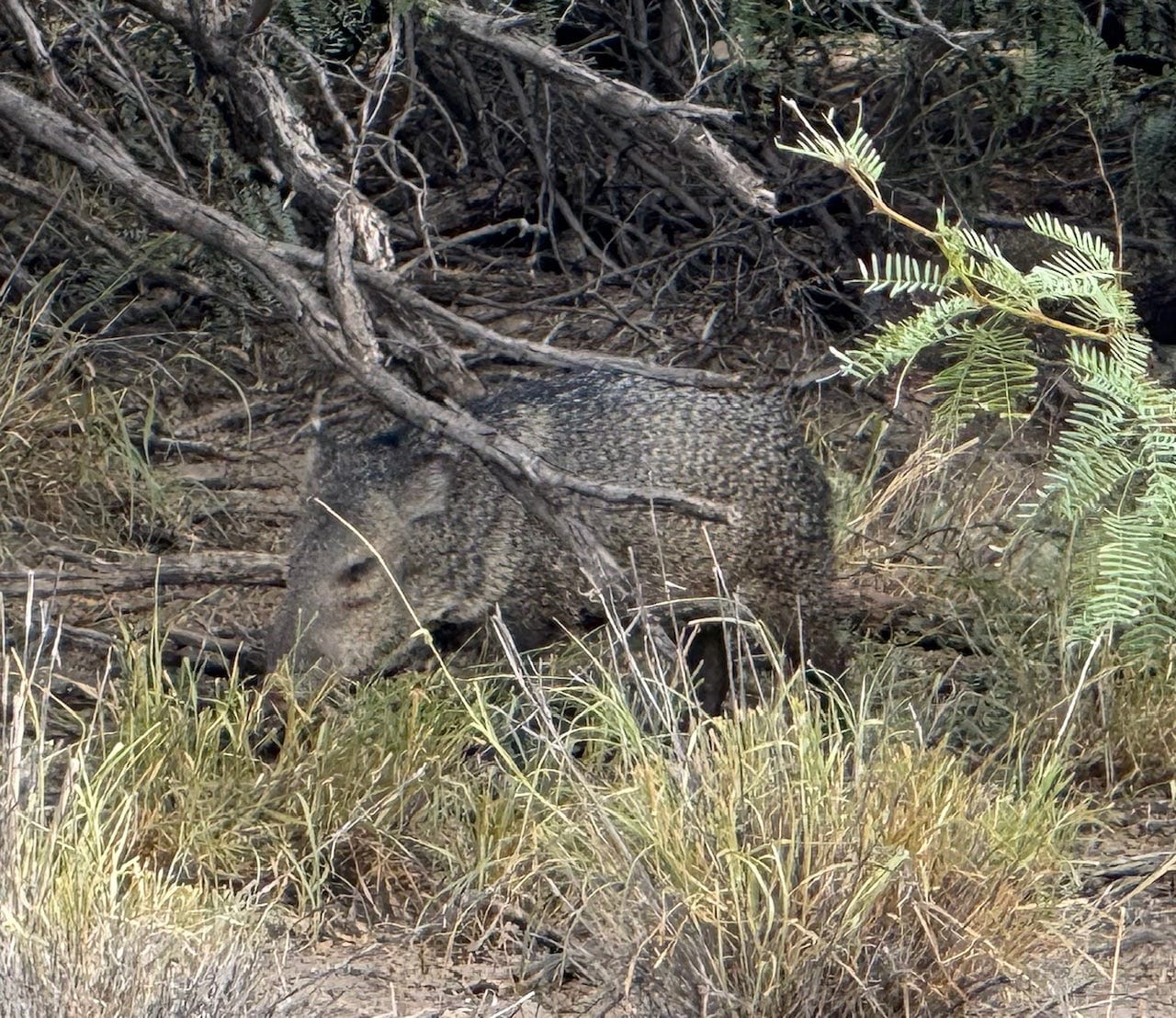
Here is a javelina foraging near my campsite. I also encountered a skunk, tail upright, in full spraying position, that had strategically placed itself between me and my belongings. I waited it out. During this moment of minor tension, I recalled my conversation with a park employee about a sign warning of bear activity in the area. Does this pertain to my campsite?, I asked. Uh, yes, this includes the campsite where you’re staying, the employee responded. Even in this heat? Yes, even in this heat, he said. The bear, he continued, comes down to the river.
This added an extra layer of concern as I camped along the Rio Grande that night in my flimsy tent. Despite this, I thought about what Presidio resident Arian Velazquez-Ornelas, of Jumano and Apache descent, had told me earlier: the river attracts life; it doesn’t repel it. She showed me a book titled The River Has Never Divided Us: A Border History of La Junta de los Rios, by Jefferson Morgenthaler. The river is not a border but an entity that attracts, creates, and foments life. This includes bears.
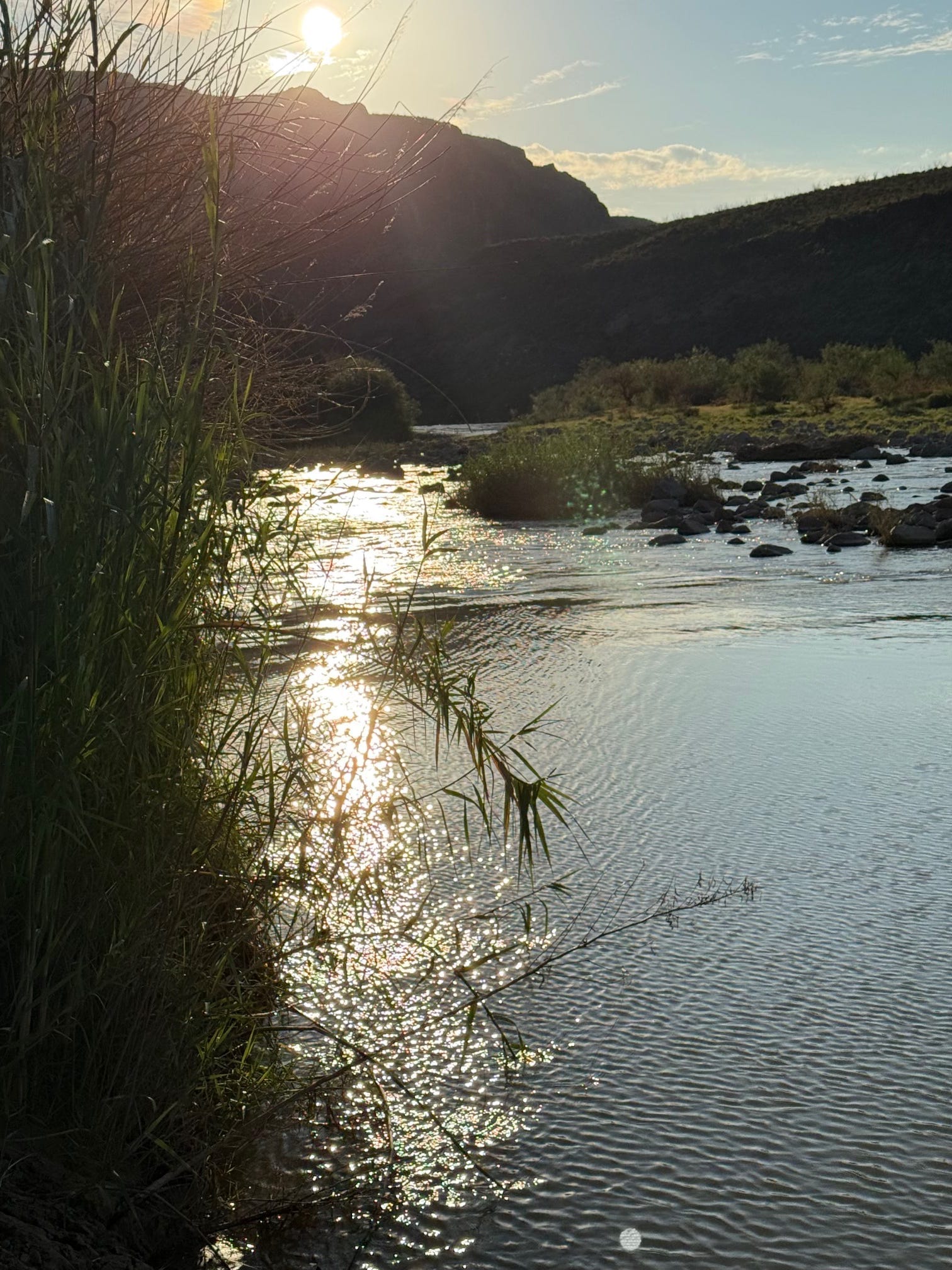
The next morning, there were no bears to report. I got up from my campsite and walked to the river. For a moment, I imagined how it was before Spanish conquistador Alvar Nuñez Cabeza de Vaca arrived, before colonization, before there was an international border.
I sat and watched the river for a long time, sipping bad instant coffee, and thought of British writer Robert MacFarlane’s new (highly recommended!) book Is a River Alive? As I drank my coffee, the answer to his question seemed obvious.
Support independent journalism from the U.S.-Mexico border. Become a paid subscriber today for just $6 a month or $60 a year.
Author

Related Articles

Banishing the Elders: How Southern México Has Become Part of the U.S. Deportation Regime
The United States is deporting Cuban seniors by the hundreds to southern México where they have little hope of return.
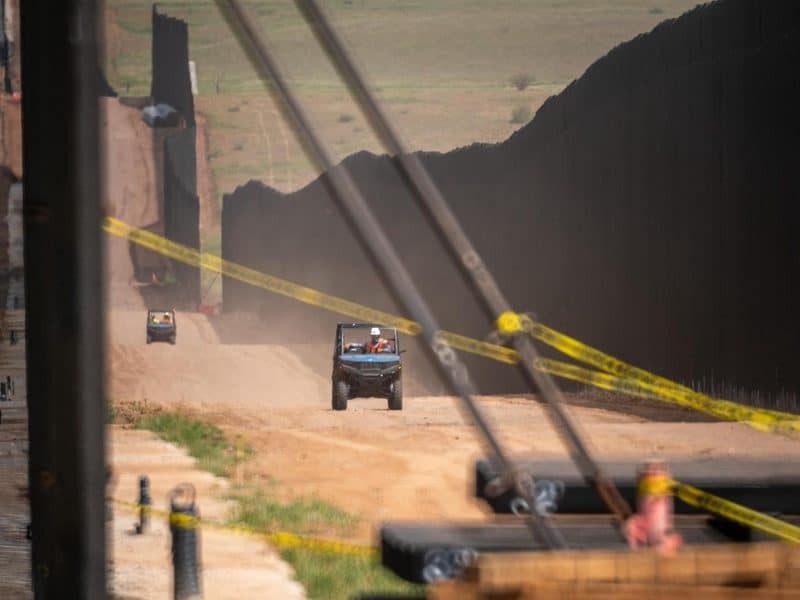
Introducing the Wall Watch Project and Contractor Database
Explore the companies, contracts, and construction projects reshaping the U.S.–Mexico border—and get ready for a new series of Wall Watch Dispatches.
Before the Wall: The Last Stand at Lochiel
As a double border wall rises through Lochiel, protesters gather to defend the ancient cottonwoods and the San Rafael Valley.