
Banishing the Elders: How Southern México Has Become Part of the U.S. Deportation Regime
The United States is deporting Cuban seniors by the hundreds to southern México where they have little hope of return.

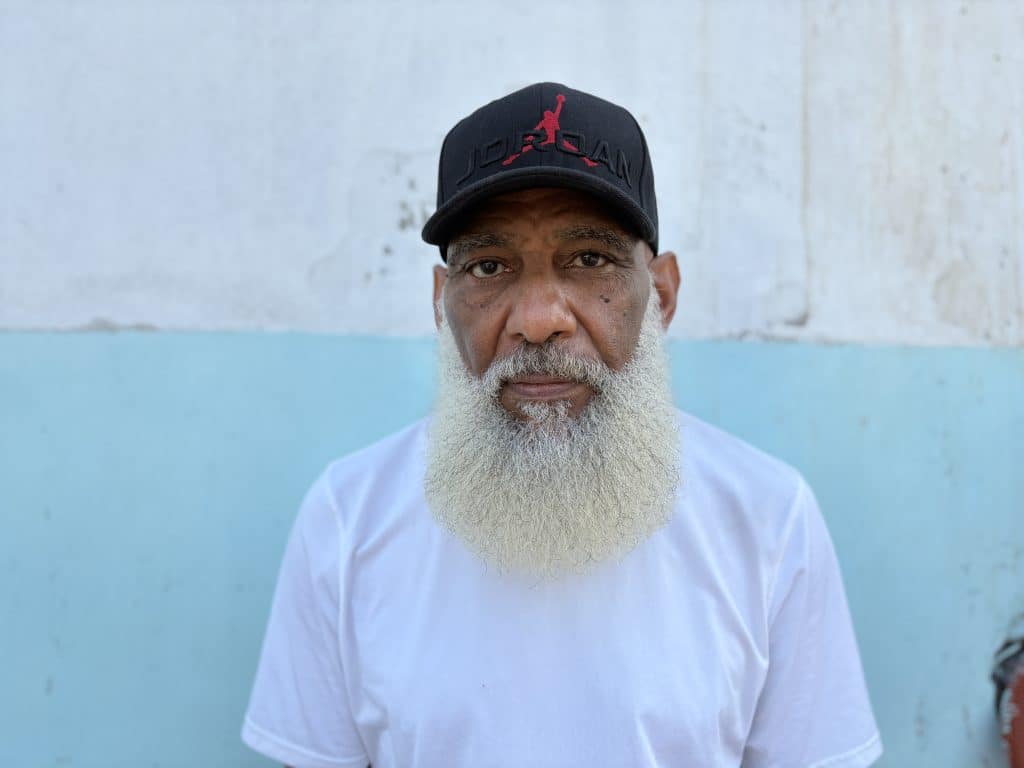
The first thing I noticed about Fidel Forten García was his long white beard, which adds serious gravitas to his already solemn face. We met on a Friday in February in front of a shelter for migrants and the infirm in Villahermosa, Tabasco, a southern Mexican City known for swampy humidity and sweltering heat.
Forten García, who is 66, is one of 427 Cuban nationals over the age of 60 that the U.S. government deported to México between June 2025 and July of this year, according to information obtained by the Deportation Data Project via the Freedom of Information Act.
He spent more than 40 years in Phoenix, where he worked as a mechanic. His two children were born in the city, the first in 1987 and the second in 1989. He was found guilty of various criminal offenses and spent time in prison, but had been living a normal life since his last release in 2016.
Forten García had to check in with Homeland Security once a year, but in every other way his life was just like those around him. He had just begun his retirement, though he had not yet collected Social Security.
But his daily routine came to an abrupt end in June of last year, when he was arrested at the intersection of Camelback and 39th following an interaction in a parking lot. Local deputies accused him of carrying a baggie with cocaine residue, he told me, after which he spent a week in Maricopa County Jail before the judge tossed the case.
Instead of walking free, Immigration and Customs Enforcement (ICE) agents cuffed Forten García inside the jail and brought him to the Central Arizona Florence Correctional Complex, where he spent 90 days, during which time, he told me, he didn’t see a judge.
He was told to gather his things and sign a form agreeing to be deported to México, which he refused to do. Shackled at his feet and hands, Forten García was loaded into a van with a group of men in chains.
One of the men, he said, was struggling to breathe, chained naked by his hands, feet and chest to a metal tube. “He was chained up like a pig on a spit,” Forten García said. The men were taken to the border at Nogales, where officials removed their chains and let them out of the van. Once in México, migration officials put them on buses that took them over 1,800 miles south to Villahermosa.
Deported seniors, stranded
During the first Trump administration, México began accepting deported migrants from Cuba, Haiti, Nicaragua, and Venezuela, all of them previously protected by humanitarian parole. Tens of thousands of people removed to México found themselves living in squalid conditions without access to support, and started working as informal laborers, tried to get back to the US, and sought to return to their home countries.
In June of last year, the Mexican government began to receive a steady stream of deported Cubans over 60, most of whom had been in the States for decades. Some of them have chronic illnesses or other medical conditions that prevent them from earning a living. Few of them have any ID. I interviewed a dozen such men in February, and all told me their U.S. bank accounts had been canceled, or they had lost access to them.
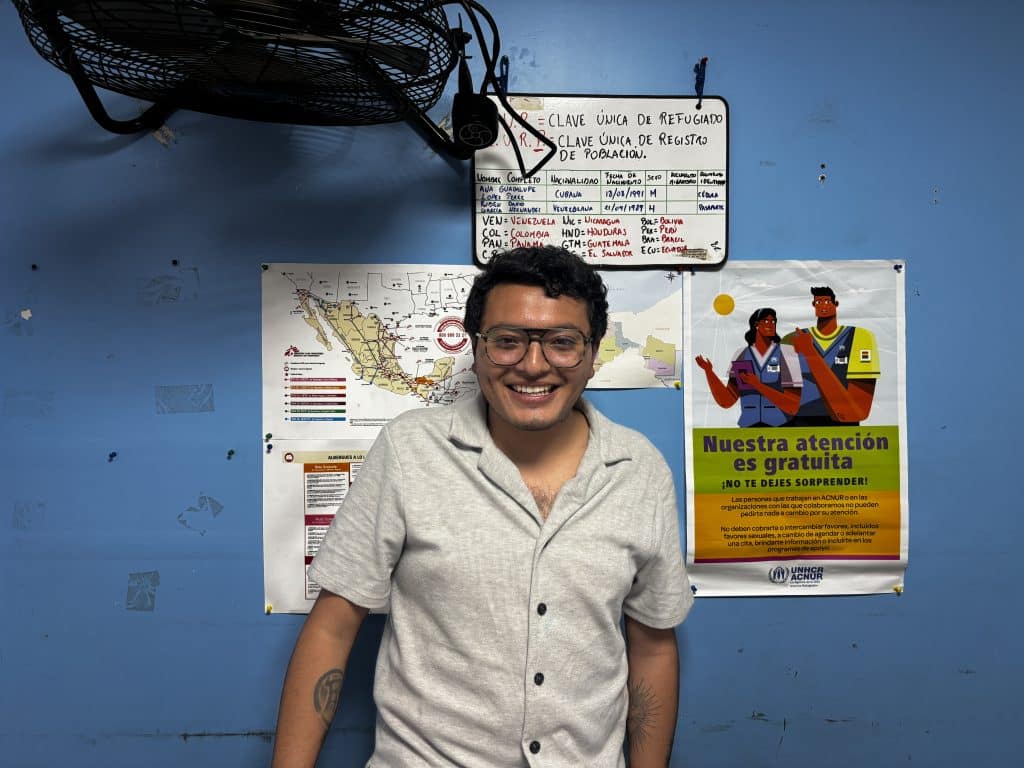
“The arrival of older Cubans is new, and after attending to children and families in previous years, it came as a shock,” said Josué Martínez Leal, who manages a shelter known as Amparito in Villahermosa. According to his count, Amparito has attended to 294 Cuban seniors since March of last year.
Cuts to migrant services and USAID mean already sparse services in México have been reduced to almost nothing. “I don’t know what’s going to happen to them,” he told me in his tiny, fluorescent-lit office at the shelter in February.
Last year, a Cuban elder arrived in Amparito with pancreatic cancer. It took months before he was able to access medical treatment, which is systematically denied to non-Mexicans. When he died in the hospital on February 24, it was Martínez Leal who let the man’s family know.
“How can Claudia Sheinbaum accept so many disabled Cubans?” asked José Alejandro Aponte Delgado, a 65-year-old Cuban who was deported from the U.S. last fall. “Instead of helping them, they’re left in the streets on their own.”
After being detained at a traffic stop, Filiberto García, who is 61 and who told me he suffers from bipolar disorder, depression, and high blood pressure, was taken to the Krome Detention Center in Miami. He had a stroke while in detention, he said, and arrived in México pushing the wheelchair he was provided in Florida.
Some among the Cuban men I interviewed in Villahermosa had lost access to their Social Security payments.
“They know when someone is about to retire, it’s an expense,” said García, who has been unable to access his bank account or Social Security payments following his deportation to México. “I’m here because of racism, because Donald Trump is rich and he doesn’t understand life for the poor, the sick or the elderly.” Like others I spoke with in México’s south, García felt he’d been targeted for deportation to avoid paying out his Social Security and Medicare benefits.
García’s experience is consistent with what happens when one’s name is added to the “death master file,” as took place last year when Elon Musk’s Department of Government Efficiency and the Department of Homeland Security pushed the Social Security Administration to mark living people as dead, ending their access to the benefits earned over decades working in the U.S. The New York Times reported 6,300 names were added to the “death master file” in April of 2025. Trump’s spokespeople said those whose names were added were migrants who were convicted criminals and “suspected terrorists.”
The manipulation of Social Security benefits and declaring U.S. residents financially dead sets a terrifying precedent for further repressive action on the part of the Trump administration. Many of the men I spoke with went from living normal lives in Florida or Arizona to being unable to contact their families or access their own financial resources, all while stuck on the streets of a country they’d never visited.
Theirs is a powerful lived testimony of how México’s southern border has become the U.S. southern border, another manifestation of the everywhere border, a concept developed by the team at the Collaborative Research Center for Resilience and our partners, and explored in previous articles in this series with The Border Chronicle.
Lives marked by upheaval
Major historical events have shaped Forten García’s life more directly than most. He was born in Havana months after the Cuban Revolution, the second of six siblings.
New educational programs created by his namesake, Fidel Castro, let him access training as an auto electrician, but the lack of jobs left newly minted tradespeople without work. Forten García made the mistake of expressing his discontent. His complaints, he told me, soon reached the government, which opened an investigation against him and labeled him a counterrevolutionary.
He was 19 years old and in hiding when the Mariel Boatlift began. He decided to join around 125,000 other Cubans who left on boats for Florida in 1980.
Historian Alexander M. Stephens describes how the Boatlift Cubans who arrived together with Forten “entered a United States with a growing anti-immigrant movement that contributed to a largely hostile reception.” Stephens traces how these migrants were subjected to “exclusionary and punitive dynamics” and were part of an early campaign “that ultimately made ‘criminals’ out of a much broader group of people who crossed U.S. borders in the 1980s and beyond.”
From Miami, Forten was sent to Fort Indiantown Gap in Pennsylvania and then to Tennessee. Eventually he made his own way to Los Angeles and on to Miami, where he was arrested in 1984. After his release, authorities sent him to immigrant detention in Atlanta. In 1985, he moved to Phoenix.
Throughout the 1980s and 1990s, the so-called war on crime and migration control merged, culminating in 1996 reforms that effectively obliterated due process for immigrants with criminal convictions.
But for decades, Cuba refused to accept the return of its citizens who had been convicted of a crime while in the U.S. That meant that, unlike migrants from countries with normalized diplomatic relations with Washington, Cubans could remain in the States legally after serving their sentences.
Many of the Cuban seniors deported to southern México have criminal records. And though some—like Forten García—were classed by the U.S. Bureau of Prisons as “minimum/moderate risk,” their names and photos were added to the DHS’s “Worst of the Worst” list. This list smears and slanders U.S. residents to justify their detention and deportation. It creates a category of people who are positioned as deserving of perpetual punishment.
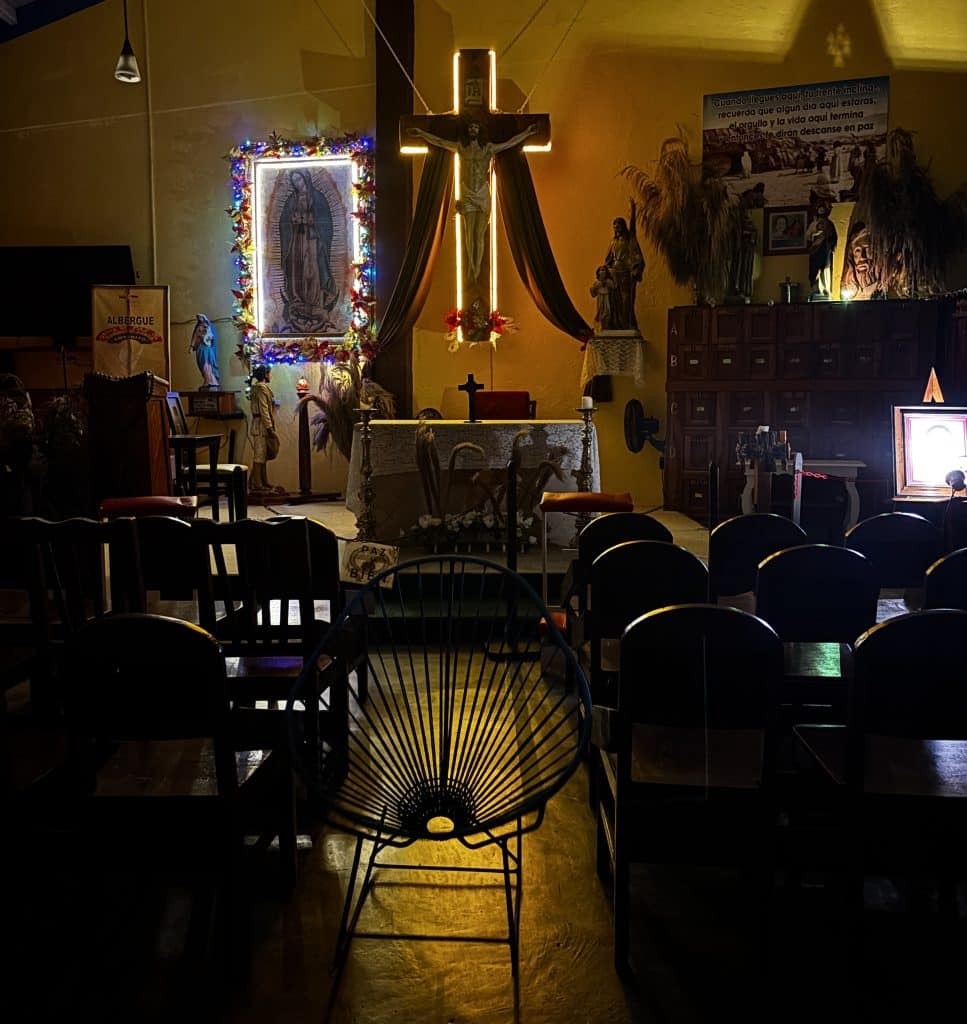
Without his children’s support, who send him money so he can rent a small room near the Amparito Shelter, Forten García would likely be sleeping on the street. It’s because of their help that he can buy the medication he needs after having his thyroid removed in 2009.
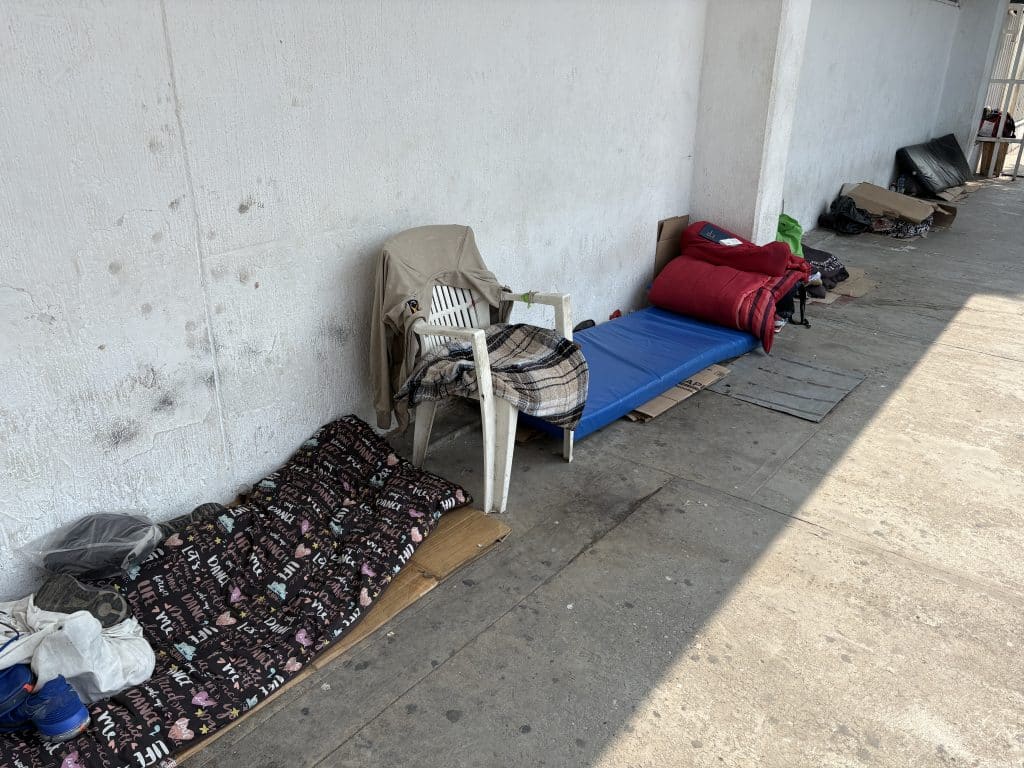
Once in México, people deported from the US must begin an asylum claim, a years-long process that requires weekly check-ins and forbids them from leaving the state where they file it. Government data suggests only three percent of asylum claims in México lead to permanent residency. Transiting north is out of the question: México’s highway system is militarized, and migration checkpoints surround Villahermosa.
“México is doing the U.S.’s dirty work,” said Martínez Leal, the shelter manager. Though no official agreements have been made public, México is under pressure due to tariff threats and Washington’s renewed interventionist bent.
That was the context in which the Sheinbaum administration began accepting longtime U.S. residents and transferring them to the southern states of Tabasco and Chiapas. The last time I spoke with Martínez Leal, he told me an 83-year-old Cuban had just arrived at the shelter. “We’ll put our hands to the fire for our neighbor to the north,” he said.
Today, Forten García hopes to regularize his migration status in México and move closer to the US-México border, where he could visit with his two sons. But regularization in México presents another major challenge for people deported from third countries.
A Human Rights Watch report released in May notes that “Mexican law… does not provide a specific avenue for permanent residency for Cuban and other third-country nationals who it has accepted for removal to Mexico, nor does it guarantee that they will be granted some form of status in Mexico.” In addition to struggling to survive, these men are navigating a byzantine migration system designed to wear them down before anything is resolved.
As he posed for a photograph against the exterior wall of the Amparito shelter, I asked Forten García about his beard. “I started growing it the day I was detained,” he told me. The striking feature that first drew my attention was a measure of the long months he has been stripped of everything except life itself.

This article continues the series with the Everywhere Border Project and the Collaborative Research Center for Resilience (CRCR), which focuses on the harms of border processes. The CRCR works in partnership with communities and movements. Through documentation, technological analysis, and legal and political strategies, its interventions are meant to help communities resist, reimagine, and renegotiate systems and digital infrastructures that threaten human rights and democratic futures.
Comments (2)
Leave a comment
Related Articles
Introducing the Wall Watch Project and Contractor Database
Explore the companies, contracts, and construction projects reshaping the U.S.–Mexico border—and get ready for a new series of Wall Watch Dispatches.

Before the Wall: The Last Stand at Lochiel
As a double border wall rises through Lochiel, protesters gather to defend the ancient cottonwoods and the San Rafael Valley.

Border Patrol Deploys Tactical Unit Against Protesters Blocking Arizona Border Wall
“I said, with due respect, sir, they are standing here with pepper spray artillery and gas masks on. They are not talking to us; they are assaulting us.”
Forten García’s words–“I’m here because of racism, because Donald Trump is rich and he doesn’t understand life for the poor, the sick or the elderly”–speak volumes about the inhumanity of the U.S. deportation regime. Big thanks to Dawn Paley for her incisive and illuminating reporting.
The cruelty of the current administration is something that will take decades to overcome.