
Tech, War, and the Everywhere Border
Going “back to normal” won’t end structural violence in the U.S. or anywhere else.

This article is the first in a series from the Everywhere Border Project and the Collaborative Research Center for Resilience (CRCR), which focuses on the harms of border processes. The CRCR works in partnership with communities and movements. Through documentation, technological analysis, and legal and political strategies, its interventions are meant to help communities resist, reimagine, and renegotiate systems and digital infrastructures that threaten human rights and democratic futures.

In May, “anti-tech extremism” surfaced as a new target for the U.S. intelligence apparatus, opening the door for pervasive domestic surveillance and the further criminalization of critics and activists.
Documents obtained by Wired reveal that the Department of Homeland Security and law enforcement agencies have begun scrutinizing anyone who might organize against data centers as a potential threat. They are doing so under a continually expanding federal “counterterrorism” dragnet.
Given that the administration has promoted militarized AI as key to U.S. dominance, and that its use has proliferated in DHS, it’s unsurprising that the administration has developed “anti-tech extremism” as a means of targeting those who oppose data centers and the unbridled proliferation of AI.
Here is the conundrum: collectives and residents fighting for a healthy planet and an opportunity to have a say in our collective future are deemed enemies of the state, while corporate tech power grows thanks to government deregulation of AI and the acceleration of data center construction.
In this context, the state’s focus on the “anti-tech extremist” serves an obvious agenda: to ramp up social control and limit political possibilities.
This agenda has long animated the homeland security state’s construction of threats. Precursors to the “anti-tech extremist” include the “terrorist,” the “illegal,” and, more recently, the “worst of the worst.” In creating categories of people deemed to present an existential threat, DHS has used a well-worn tactic to legitimate repressive state power. And on a broader scale, it is using this tactic to extend the border everywhere.
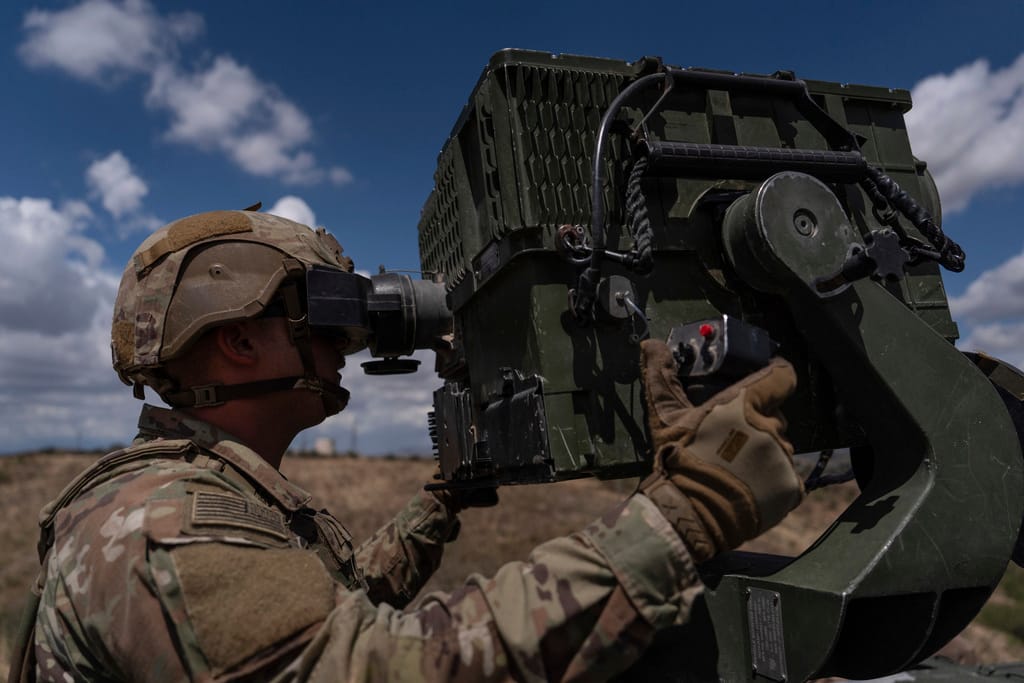
Deaths in detention, children separated from parents, the violent suppression of protests, widespread intimidation, combat troops deployed along the border—these are just snapshots of what “homeland security” looks like in the post-9/11 era of DHS. This “security” can trap anyone, anywhere, in a zone of rightlessness.
In its infancy, the homeland security state wrongfully and collectively targeted the U.S. Arab and Muslim population, subjecting tens of thousands to “special registration,” widespread surveillance, and detention. None were charged with terrorism, but thousands were deported. Today, a better-resourced and densely embedded DHS deports people, under the guise of fighting “terrorism,” to torture prisons in totalitarian regimes.
Drug prohibition has long been an important ingredient in creating threats, both in the U.S. and elsewhere, and DHS operations are increasingly intertwined with its enforcement. A January 2025 executive order, which purports “to protect the American people against invasion,” grants new authority to DHS, including to investigate “criminal cartels,” a role previously played by the Drug Enforcement Administration.
The 2026 National Drug Control Strategy confirms the involvement of DHS in narcotics control in the Caribbean Sea, where at least 200 people have been killed in bomb strikes since last year. The document puts the Department of War at the helm of foreign drug control strategies, promising more violence and pain in producing and transit countries. The militarization of the war on drugs is also being weaponized at home, such as when authorities invoke the 18th-century Alien Enemies Act, which today casts a broad net for Venezuelan migrants in the U.S. by speciously connecting them to cartel activity.
The roots of autocratic power run deeper than one administration. The core logic of the DHS—blended civilian-military defense of an all-encompassing border as a national security mission to rid the world of continually expanding threats—has been used to justify the militarization of civilian policing, mass surveillance, racial profiling, exile, and state-sanctioned murder. This has been the case since its implementation in 2003, not just domestically but around the world.

DHS’s mission has been undertaken in concert with the corporate technology and weapons-manufacturing sectors, which have come to fully embrace the violent homeland security state that bankrolls “innovation” and facilitates the accumulation of wealth and anti-democratic power. While dramatically on display in the most recent federal budget, these features of the U.S. economy are hardly new.
Tech enables the logic of DHS to flow through digital infrastructures within and beyond the boundaries of the U.S., enabling what we call the “everywhere border.”
In recent years, Immigration and Customs Enforcement has developed an expansive domestic surveillance network using new tools, techniques, and partners, including automated police biometric sharing, data brokers, and license plate readers, to name a few. Under the current administration, ICE has unlawfully tapped into Medicaid and IRS databases to surveil and target immigrants for arrest, ignoring privacy and confidentiality obligations in place since the post-Watergate era. And ICE is ramping up funding so that local police can act as immigration agents, further extending its reach deep into communities across the country.
Globally, Washington has used national security prerogatives to embed DHS policing power in a range of digital infrastructures, such as biometrics.
To further investigate this, CRCR and our colleagues at the Temple University Institute for Law, Innovation & Technology (iLIT), started the Everywhere Border Project in 2023.
Our collective work explores how tech-enabled border externalization has severely undermined rights. We combine research, network building, and organizing in an effort to make visible how the harms of the technologies used to track, repress, and deter people on the move in the Americas can impact civil society more broadly. The article you’re reading is the first in a series from our collaborators, which will be published here at The Border Chronicle over the next few months.
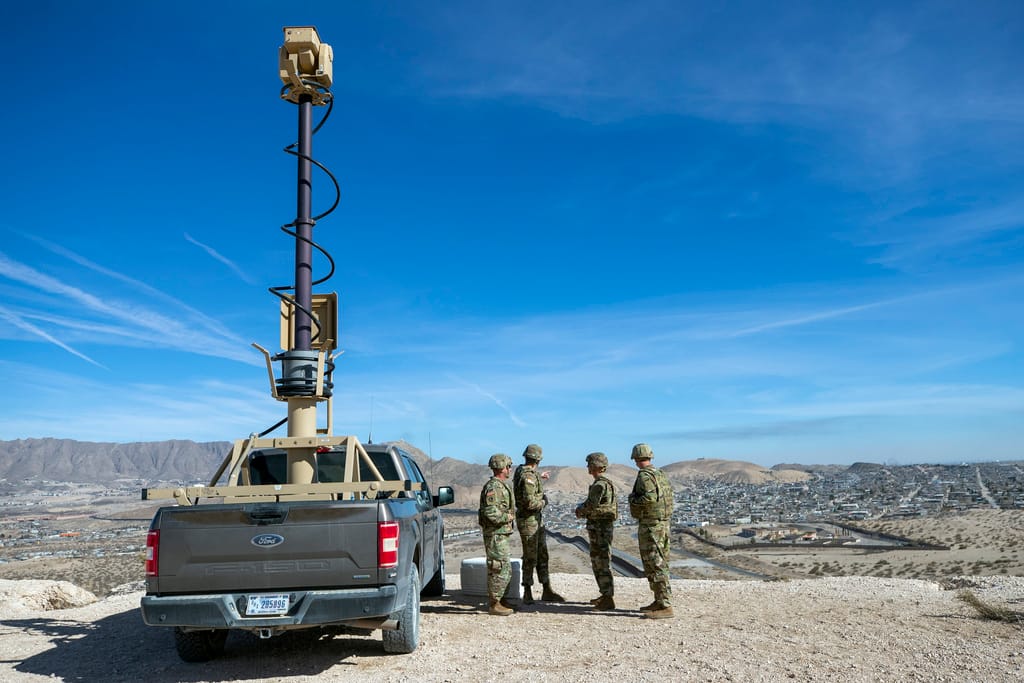
Since Donald Trump’s return to the White House, we’ve intensified our documentation of the human rights impacts of the Everywhere Border at its brutal end points, with a particular focus on third-country removal and the transfer of migrants detained in the U.S.
As part of our work, we have documented the postdeportation experiences of non-Mexican nationals transferred from the U.S. to southern Mexico, a population that disproportionately includes Cuban elders who were longtime U.S. residents.
We document the impacts and legality of third-country transfer agreements between the U.S. and African states, through a program that integrates migration control with U.S. foreign policy priorities—from critical mineral extraction to America-first health data deals—using visa restrictions, tariffs, and foreign aid swaps as cudgels.
And we reach southeast Mexico, where communities are fighting to protect their lifeways in the face of militarized megaprojects that are undertaken in the name of national security but that in reality serve to expand the U.S. southern border.
Regimes of bordering have long been about sorting: who has freedom to thrive, who must live in precarity, who has the right to live, and who must die. This is a time-tested formula for generating wealth, power, and ideological supremacy. Colonialism, slavery, and genocide have all been justified by those who benefit from them based on similar ideas of denying life and extracting land and production from those deemed a “threat.”
What if, rather than accepting the notion that borders exist to provide “security” and “safety,” we acknowledge that borders exist to enforce global inequality and unequal access to life? Just as most reasonable people wouldn’t see Jim Crow or apartheid as neutral legal regimes, we must challenge the U.S. immigration regime in the same way.
Of course, we should be alarmed by what is beyond the pale, like the CECOT mega-prison in El Salvador, the third-country deportations to countries such as Eswatini, and the targeting of peaceful political protesters for exercising well-established rights. But we must be careful not to get comfortable with the idea of going “back to normal”—of embracing the homeland security state as it existed before Trump came to office.
If today the DHS can inflict wide-scale exclusion, detention, and deportation with impunity, this is so thanks to the rule of law—facilitated by changes made to immigration laws in 1996 that are fundamentally unjust, exclusionary, and punitive.
The Trump administration’s list of threats is growing alongside the unprecedented power of the U.S. government to enact lethality and wide-scale repression at home and abroad. And now it is extending its power even more rapidly with the aid of technology. This is what makes our work so urgent. Together, we must figure out how to dismantle the homeland security state and reimagine security in a world where all can thrive.
Support independent news, art and culture from the U.S.-Mexico border. Become a paid subscriber today for just $6 a month or $59 a year.
Related Articles

A Continuum of Control, from CBP One to CBP Home
Although they appear to be opposites, CBP One and CBP Home are two apps of the same digital border system that manage and control migrants regardless of the presidential administration.

“Forever Followed by ICE”
Long after they are deported, people are subjected to the Everywhere Border of surveillance, stigma, and economic hardship.

Inside the Sentinel Surveillance Tower in Ciudad Juárez: A Podcast with Investigative Journalist José Olivares
Torre Centinela, a Mexican surveillance hub that will share intelligence with U.S. and Texas law enforcement is slated to open soon. Olivares discusses his investigation on Torre Centinela and the private corporation running it.
