
“Forever Followed by ICE”
Long after they are deported, people are subjected to the Everywhere Border of surveillance, stigma, and economic hardship.
This article continues the series with the Everywhere Border Project and the Collaborative Research Center for Resilience (CRCR), which focuses on the harms of border processes. The CRCR works in partnership with communities and movements. Through documentation, technological analysis, and legal and political strategies, its interventions are meant to help communities resist, reimagine, and renegotiate systems and digital infrastructures that threaten human rights and democratic futures.
For more resources, research, and documentation about border externalization policies and practices of multiple countries in the region, and the ever-growing tech and data infrastructure that supports them, please visit everywhereborder.org.

“My deepest depression took place in the two years ICE made me wear an ankle bracelet. I almost lost my mind,” said Julian, not his real name. After living in the United States for over 40 years, he was deported to a country he had left as a child. Julian first arrived in Washington, DC, at the age of six with his sister and his parents in the late 1970s. The memories he has of being tracked by ICE are still vivid.
“I still remember it, and it sounds incredible to say it, but I still feel it on my ankle sometimes,” he says.
After struggling with substance use disorder in his youth, Julian ended up spending years in prison for drug-related offenses. After completing his sentence, he reconnected with his daughter, found steady work, and felt ready to rebuild his life. Three years after his release from prison, ICE detained him in 2012, even though he was a legal permanent resident. He spent two years in ICE detention in Virginia, and after his release, still under ICE supervision, he was forced to wear an ankle bracelet. In July 2019, he was deported.
Julian is one of many U.S. residents who have been subjected to mandatory deportation owing to a criminal conviction. I spoke with him in January as part of the Collaborative Research Center for Resilience’s documentation and storytelling work with people who have faced deportation or who have been deported.

His case is one among thousands in which the DHS used the criminal legal system to identify and arrest people with convictions, who are vilified as “the worst of the worst,” in order to legitimize their deportations. Our work seeks to challenge and disrupt the normalization of perpetual punishment and the exclusion of people who are stigmatized in this way.
“The machine [works] to keep track of you, to watch you, to know where you go, when you’re coming home,” Julian told me. “Your life would be forever followed by ICE.” He was deported after attending what he believed to be a routine check-in with ICE in 2019.
At the CRCR, we call “the machine” Julian refers to the Everywhere Border, a term that describes the digital border infrastructure that reaches well inside the U.S. while facilitating the U.S. border’s extension into other countries. But the Everywhere Border goes beyond infrastructure. It is a system of ideas, policies, and practices designed to control the movement of the majority of humans, reserving free movement for a select few. It relies on public narratives, laws, and politics that reinforce hierarchies of belonging and disrupt the social fabric of origin, transit, and destination countries. The result is that communities are surveilled, policed, and made unsafe. This “machine” keeps working well after people are formally deported.
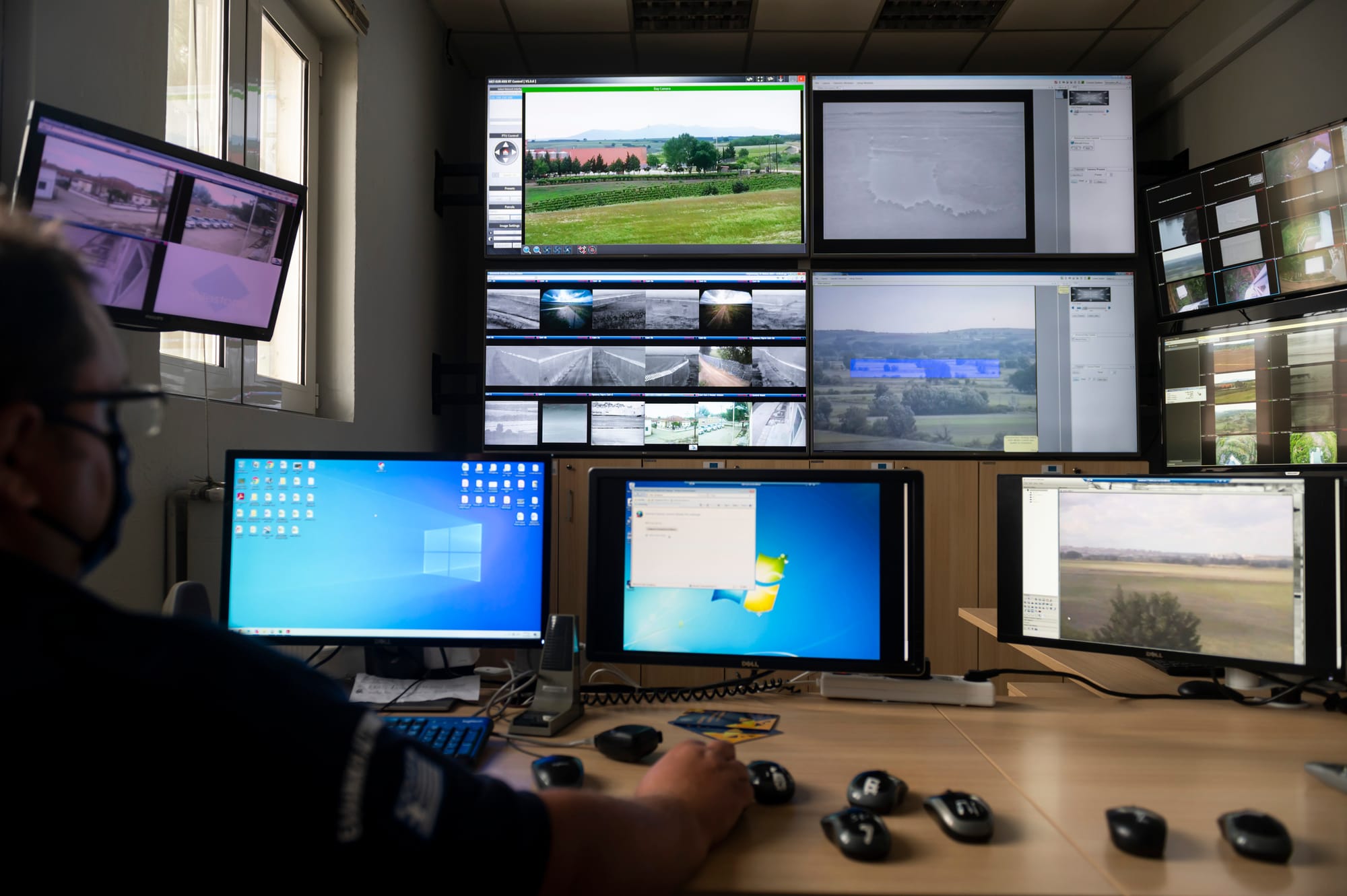
The infrastructure that sustains the Everywhere Border has led to the expansion and deepening of surveillance domestically and abroad, which can produce state violence and undermine the rights of immigrants and people on the move. Technologies that enable this infrastructure include automated data sharing across governmental agencies, the implementation of so-called smart borders, the collection of biometric data, and agreements with data brokers.
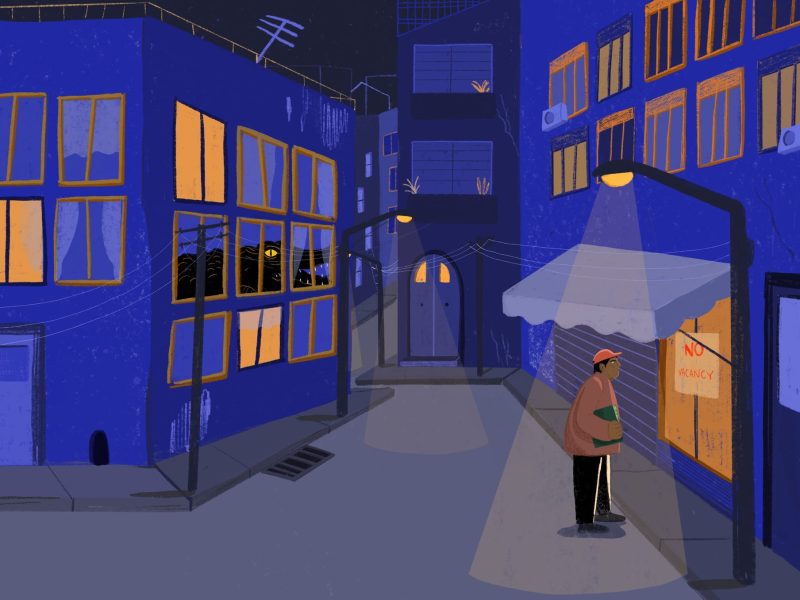
For the people we interviewed as part of this project, experiences with the Everywhere Border have long-lasting effects. Many described feeling subjected to a system, a machine, that follows them around in their lives after prison in the U.S. and, in many cases, even after deportation. Many, like Julian, end up dealing with the psychological effects of surveillance for years.
A System of Permanent Exclusion
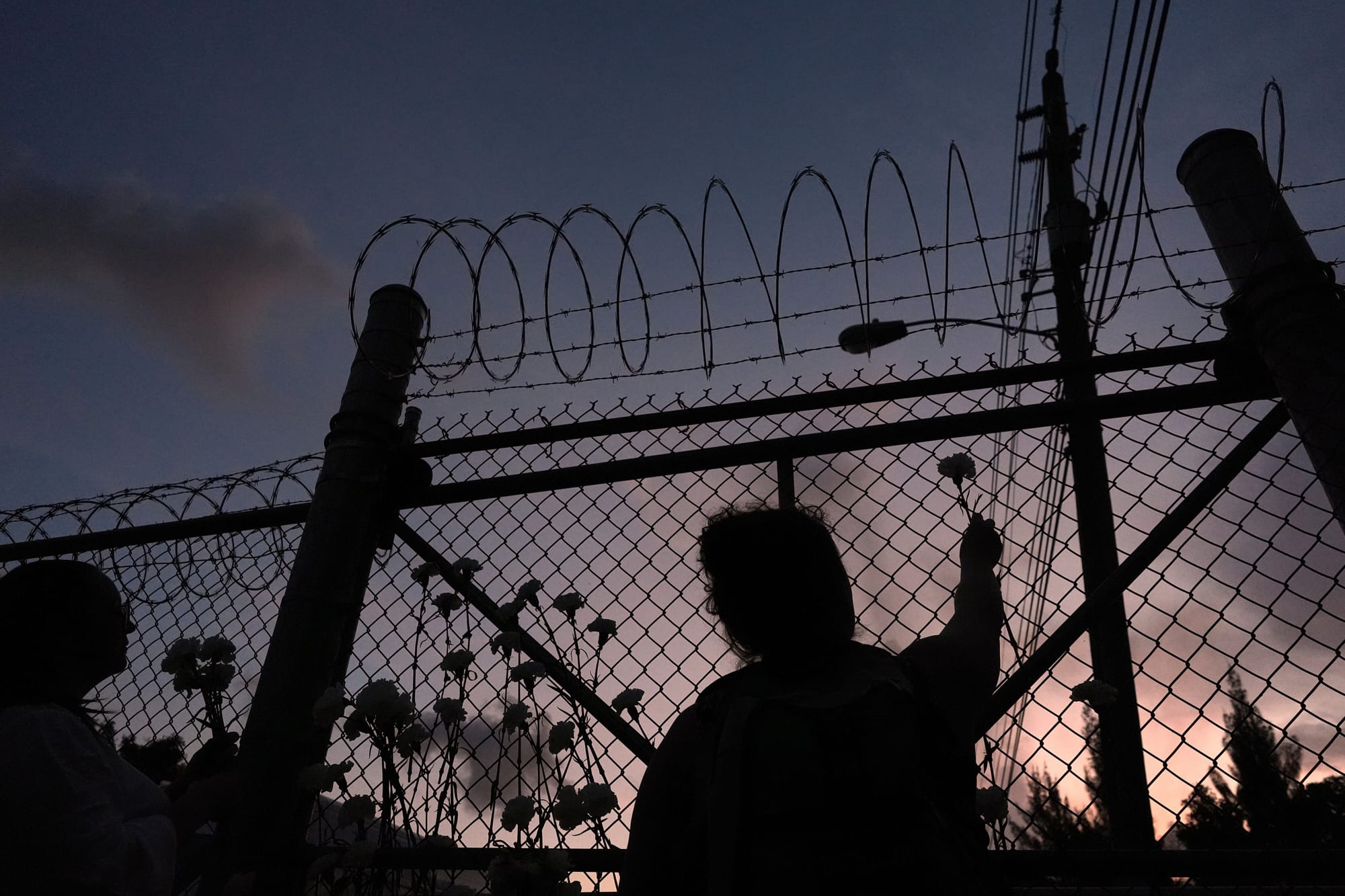
The people we interviewed told us the experience of deportation follows them throughout their lives, including in the countries they were deported to.
After he was released from prison in 2023, Daniel, a Jamaican citizen in his 60s who had been living in the U.S. since early adolescence, chose to accept deportation to avoid the stigma he knew would follow if he stayed in the U.S.
“I realized that for my class or my ethnicity or my race or my economic status, the double penalization would have followed me to the street,” Daniel told me via video call in December. “I was unwilling to have that accompany me back into the society.”
The double penalization he feared in the U.S. ended up following him to Jamaica. “What’s sad to say is that, to some degree, that lifelong penalization has accompanied me to Jamaica,” he said. “When I came back, I learned that the vast majority of the deportees here hide the fact that they have been deported.”
In Jamaica, the Dominican Republic, Cambodia, and El Salvador, local media often use criminalizing narratives to portray deportees, creating barriers to employment. The “worst of the worst” narrative used to justify deportation from the U.S. has become part of the social imaginary in the countries that people are deported to.
Daniel said that in Jamaica, if it becomes known that you have been deported, you’ll face discrimination in access to jobs, housing, and government resources.
Today, Daniel has strong ties with other people who have been deported from the U.S. to Jamaica. In his experience working with deportee communities, as he calls them, those who have been deported—regardless of whether they have a past criminal conviction—face similar forms of societal exclusion.
“There is no difference between someone who was deported due to a civil matter and one who was deported because of criminal proceedings,” said Daniel. “You get the same scrutiny, the same denial.”
These narratives reinforce hierarchies of belonging that sustain the stigma of deportation. They cannot be decoupled from the material, life-limiting consequences of the Everywhere Border in the lives of folks who have been deported.
Julian, for example, shared that “when you come back home, you don’t have a place to stay, you don’t have the finances you thought you were going to have by this stage in your life.” In certain countries, he told me, people who have been deported cannot rely on social security or government services. “You need money,” he said. “Without that resource, you can’t make it. People see you as a foreigner.”
For people deported to Mexico, the Dominican Republic, and Guatemala, among other countries, arrival does not automatically allow for access to an identity card, or to health care and education. Some have reported being under surveillance, receiving threats of violence and police extortion.
Even for people who have family ties or strong social connections in their country of origin, adaptation can take several years. For many, deportation is a process that does not end but is prolonged via the systems of exclusion and the ideas, policies, practices, and infrastructures that make up the Everywhere Border.
Researchers looking at the experiences of people who have been deported owing to criminal convictions find feelings of loss, depression, and anxiety can persist for years, even among those who successfully rebuild their lives. The “consequences of being banished from the country people consider home extend far beyond the moment of deportation,” writes anthropologist Ines Hasselberg.
“Luckily for me, I can live in the house that my mom and dad built,” said Julian. “But still, because I’ve never stepped foot on this ground since I left as a child, it’s been difficult. Culture-wise, communication-wise, just my everyday living.”
Support independent news, art and culture from the U.S.-Mexico border. Become a paid subscriber today for just $6 a month or $59 a year.

If you’re longtime readers of The Border Chronicle you will know our friends at the Arizona Agenda, whom we have collaborated with in the past. They’re an independent media outlet founded by veteran journalists with the best political reporting in the state of Arizona. Sign up for free today, by clicking the button below, and if you like what they do support them with a paid subscription.

Related Articles

A Continuum of Control, from CBP One to CBP Home
Although they appear to be opposites, CBP One and CBP Home are two apps of the same digital border system that manage and control migrants regardless of the presidential administration.
Tech, War, and the Everywhere Border
Going “back to normal” won’t end structural violence in the U.S. or anywhere else.
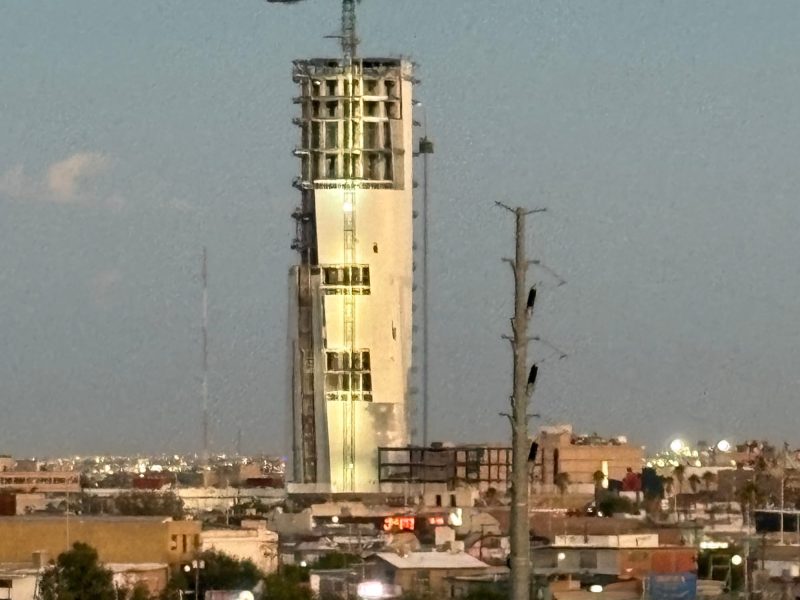
Inside the Sentinel Surveillance Tower in Ciudad Juárez: A Podcast with Investigative Journalist José Olivares
Torre Centinela, a Mexican surveillance hub that will share intelligence with U.S. and Texas law enforcement is slated to open soon. Olivares discusses his investigation on Torre Centinela and the private corporation running it.
