
Welcome to Indian Country: 250 Years of Democracy and Authoritarianism in the U.S.
Worried about the future of democracy in the United States? Look to Indigenous histories; they have much to teach us about the struggle between liberty and empire.
Worried about the future of democracy in the United States? Look to Indigenous histories; they have much to teach us about the struggle between liberty and empire.
A new book tells the scandal-ridden tale of Sonora’s toad-smoking neo-shaman.

Do you have questions about the recent buoy debacle on the Rio Grande? Our reporting has you covered, plus an important new hire at The Border Chronicle, and our new project Wall Watch.

Worried about the future of democracy in the United States? Look to Indigenous histories; they have much to teach us about the struggle between liberty and empire.

As the United States marks 250 years since its founding, there is great anxiety about the state of our democracy. The growing authoritarian tendencies are perhaps most clear regarding the workings of ICE and Border Patrol agents, not just on the U.S.-Mexico border but across the country. To understand the roots of this authoritarian threat, however, we need to think about immigration and a more foundational anxiety that appears in the Declaration of Independence itself: a settler preoccupation with “merciless Indian savages.”
If Americans want to understand the future of democracy, they should pay closer attention to the histories of Indian Country.
In recent public conversations with Tohono O’odham activist and filmmaker Mike Wilson about our book What Side Are You On?, which explores his experiences with authoritarian politics on his reservation and across the Americas, we often hear concerns about the contemporary rise of a police state in the United States. Many people are understandably concerned about the recent actions of Border Patrol and ICE. In response, Mike often offers a simple phrase: “Welcome to Indian Country.”
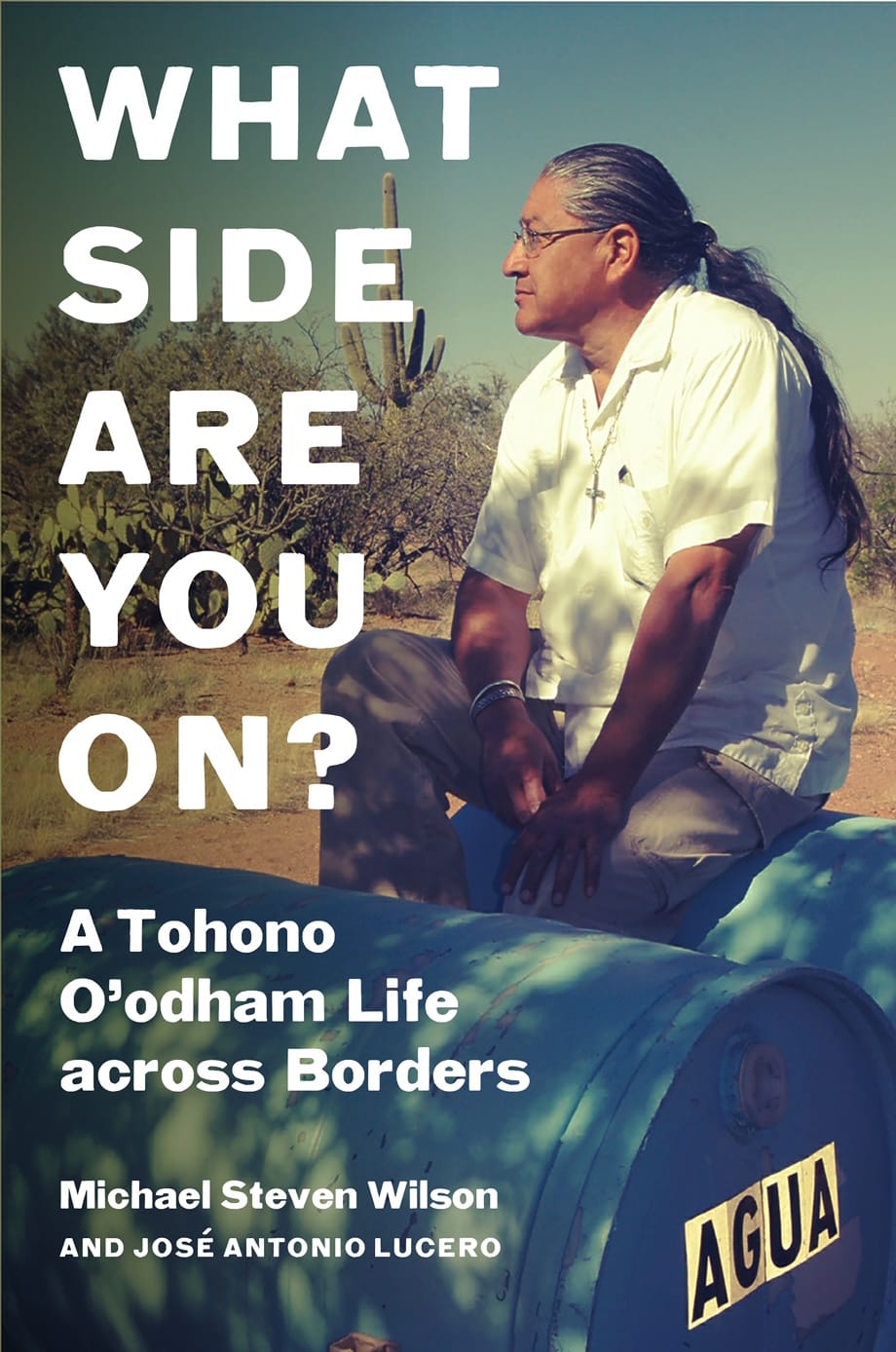
Many political observers have noted that the U.S. is slipping into a “new” kind of authoritarian politics, a moment of danger in which state power grows increasingly unaccountable while our “inalienable” rights feel ever more uncertain. For those who live in and know Indigenous communities in the Americas, this feeling is anything but new. Foregrounding Native history and politics can provide insight into the current resurgence of authoritarian politics in the U.S. What some observers describe as “democratic backsliding” has, for Native peoples, been the structure of everyday life.
Indigenous communities in the Americas have long lived under forms of rule that combine military occupation, extractive capitalism, racial surveillance, and paternalistic governance. If the core ideal of democracy is rule by the people, a system based on political equality, Native peoples have been a constant exception to that rule. Institutionalized as “domestic dependent nations” and infantilized as uncivilized “wards,” Native peoples have often been treated by U.S. law as anything but equal to those whom some conservatives describe (without irony) as “heritage Americans.” In times of crisis (real or imagined), the deployment of this kind of “exceptional” power expands beyond reservations and threatens the liberties of others who are perceived as unruly subjects.
Central to the history of violent “solutions” to the so-called Indian problem is that the frontier has always been authoritarian. Despite the remarkably cheerful historical imagination of Frederick Jackson Turner, who saw the frontier as a front of freedom and individualism, it is much closer to the truth to note, as Greg Grandin has, that “the state always preceded the frontier.” With the weapons of debt, infrastructure development, and the U.S. Army, an expanding U.S. empire took countless Indian lands and lives. While some may see this history of anti-Indigenous violence as a distant memory, in reality, the Indian Wars never really ended. Reservations were and continue to be laboratories of control.
U.S. policy toward Native peoples provided inspiration for some of the most notorious authoritarian regimes in world history. In Hitler’s American Model, legal historian James Whitman documents how Nazi jurists studied U.S. federal Indian law, segregation strategies, and anti-miscegenation statutes as they developed the legal architecture of the Third Reich. Nazi officials viewed the U.S. system of racial ordering, territorial conquest, and differentiated citizenship as evidence that a modern state could govern certain populations through permanent exceptions to democratic norms. This does not mean that the United States became or will become Nazi Germany. It means that settler colonialism in North America helped normalize forms of racial governance that others would later radicalize and emulate.
Despite the trappings of democratic proceduralism, federal Indian policy was never simply about “inclusion” in the American project. Treaties were repeatedly broken. The reservation system isolated and concentrated populations. Boarding schools criminalized culture and language. Federal agents monitored political activity and punished dissent. The architecture and history of federal Indian law are about containment, discipline, and resource extraction. Native nations have long been told that they possessed sovereignty while simultaneously being denied the practical ability to exercise it.
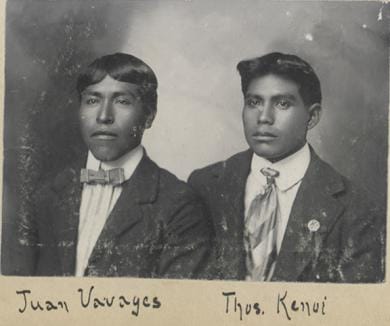
As we have written elsewhere, the Carlisle Indian Industrial School stands as one of the clearest examples of the way that Native peoples were subject to authoritarian control. Carlisle was founded under the infamous logic of “Kill the Indian, save the man.” Mike’s grandfather, Juan Vavages, was among the first O’odham students at Carlisle, which was not simply an educational institution but a carceral project designed to sever Indigenous children from family, language, spirituality, and land. While Native children found ways to resist and survive, they were nevertheless subject to the violence of a militarized form of education in which they were renamed, beaten for speaking their own languages, and hired out to white families to perform uncompensated labor. The architecture of authoritarianism was explicit. Today, as politicians debate the erosion of civil liberties, Native communities remember that the U.S. state has been experimenting with techniques of unfreedom for a long time.
Authoritarianism reproduced itself at smaller scales through what Quinault scholar Ashley Lewis calls “little dictators”: local federal agents who exercised sweeping control over Indigenous life on reservations. Lewis describes how, in the early 20th century, Bureau of Indian Affairs officials regulated fishing, labor, movement, and access to resources on the Quinault Indian Nation, often acting as authoritarian overseers rather than public servants. One federal agent prohibited Quinault people from fishing for salmon, a central source of subsistence and identity protected by treaty rights, until they completed forced road-building labor. The reservation became a proving ground for forms of governance that treated Indigenous peoples as populations to be managed rather than nations with inherent rights.
This dynamic continues in contemporary forms. On the Tohono O’odham reservation, the militarization of the U.S.-Mexico border has transformed Indigenous lands into zones of constant surveillance and occupation. Border Patrol checkpoints, armed agents, surveillance towers, drones, and vehicle stops carve through Native land where O’odham communities long predate the existence of the border itself. Residents are routinely questioned while moving within their own territory. Sacred sites have been destroyed, and tribal citizens have been killed, all in the name of “national security.” These Indian Country experiences have become normalized elsewhere through the expansion of policing powers, the suspension of rights, and the treatment of certain populations as permanently suspect.
Yet this long experience with “little dictators” and security forces has also meant that Native peoples have generations of experience in anti-authoritarian struggle. Early 20th-century Quinault leaders resisted through petitions, legal appeals, and demands for greater self-governance, strategically pushing authority away from these federal agents and back toward the community itself.
Similarly, Salt River Pima-Maricopa scholar Fantasia Painter reminds us of a crucial tribal court case in 1938, in which an O’odham jury considered the case of Serafino Conde, an O’odham citizen who had been handed over by the Indian police to U.S. immigration officials for deportation to Mexico. The jury found that Conde was an O’odham citizen and that the Indian police force had acted illegally. It called for the abolition of the Indian police force. Despite being staffed mostly by O’odham tribal members, the police force had operated as an extension of the federal Bureau of Indian Affairs. The court case highlighted the need for a tribal police force that worked for the O’odham people, not the federal government. That historical lesson echoes across the decades as the Tohono O’odham Nation today struggles to contest another moment of federal overreach, this time not by the Bureau of Indian Affairs but by the Department of Homeland Security.
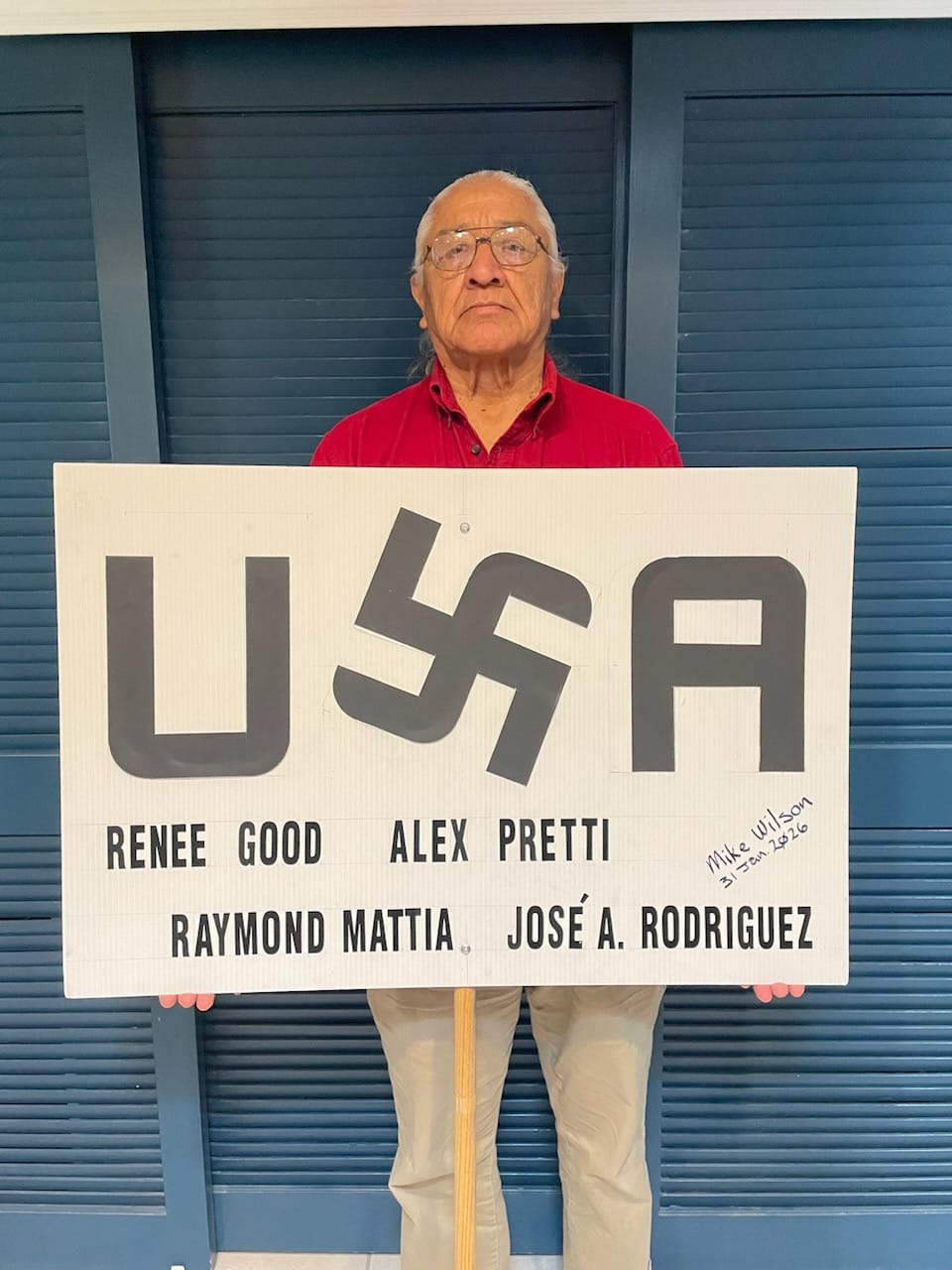
On May 18, 2023, U.S. Border Patrol agents shot and killed O’odham tribal member Raymond Mattia. Tribal police called U.S. Border Patrol to help investigate a disturbance close to Mattia’s home. Mattia was unarmed, holding only a cell phone, when he was shot nine times by Border Patrol agents. No agents have ever been charged or even disciplined for this fatal shooting. This is, of course, not a new story either. The Border Patrol has operated with a staggering level of impunity since its founding in 1924, when active Ku Klux Klan members were part of its ranks. Mattia’s family continues to call for justice, as does the family of José Antonio Elena Rodríguez, a Mexican teenager shot and killed by a Border Patrol officer in 2012 as he was walking home on the Mexican side of the Arizona-Sonora border. In a case ultimately decided by the U.S. Supreme Court, a 5–4 majority effectively ruled that a U.S. Border Patrol officer could shoot an unarmed minor across an international boundary and face no legal punishment. This history of impunity continues today. It now includes the homicides of Renée Good and Alex Pretti, killed in 2026 in the streets of Minnesota by masked ICE and Border Patrol agents.
This history matters because what is described today as an alarming new political turn in the United States is better understood as an expansion of practices long imposed on Indigenous peoples, migrants, Black communities, and colonized peoples more broadly. Border surveillance expands inward. Exceptional powers become normalized. Entire communities become framed as threats to order.
Indian Country offers not only warning signs but also traditions of resistance. Native nations have survived military conquest, land theft, forced assimilation, resource extraction, and political erasure. Indigenous organizers, elders, writers, and youth have continually defended collective life against systems designed to fragment it. They have preserved languages, defended treaty rights, fought pipelines and mines, challenged police violence, and articulated forms of governance grounded not in domination but in relational responsibility.
While the democratic aspirations in the founding documents of the United States may be admirable, there is a need to be vigilant about the ways in which the fear of “merciless Indian savages” (and other perceived threats) continues to shape our political debates. Fear builds walls, prisons, and deportation centers, not freedom. If democracy is to have a future in the Americas, we must learn from those who have endured and resisted its cruel exclusions the longest. Welcome to Indian Country.

Do you have questions about the recent buoy debacle on the Rio Grande? Our reporting has you covered, plus an important new hire at The Border Chronicle, and our new project Wall Watch.

As floodwaters swept hundreds of one-ton border buoys downstream, international bridges closed, commerce slowed, and officials struggled to get answers from DHS about a project advancing despite local opposition, environmental concerns, and treaty questions.

Hundreds of massive orange buoys staged for a controversial DHS floating barrier project broke free near Eagle Pass and are now drifting toward Laredo, threatening bridges, commerce, drinking water supplies and downstream communities.

In February, the country broke an ominous record: over 68,000 people were being held in detention by Immigration and Customs Enforcement, more than ever before.
Independent news, culture and context from the U.S.-Mexico border.