
School of Welcome: Doors Open for Immigrant Students on Mexico’s Southern Border
Prepa 2 in Tapachula, Chiapas, has become a model of inclusive education by helping immigrant students overcome barriers, find community, and pursue their futures with dedicated educators.
by Liliana Frankel
When Lauriz, 18, arrived in Mexico from Haiti last year, she didn’t speak much Spanish, but she dreamed of returning to school and eventually attending university to study international business.
In Mexico, Lauriz’s right to enroll in public school is protected by expansive and complementary legal frameworks. According to Mexican lawyer Luis Armando Pérez, local immigration legislation (article 8), children’s rights (article 57), education policy (article 9), and the Constitution (articles 1 and 3) itself prioritize kids’ best interests—their right to receive an education—over other concerns, regardless of their immigration status.
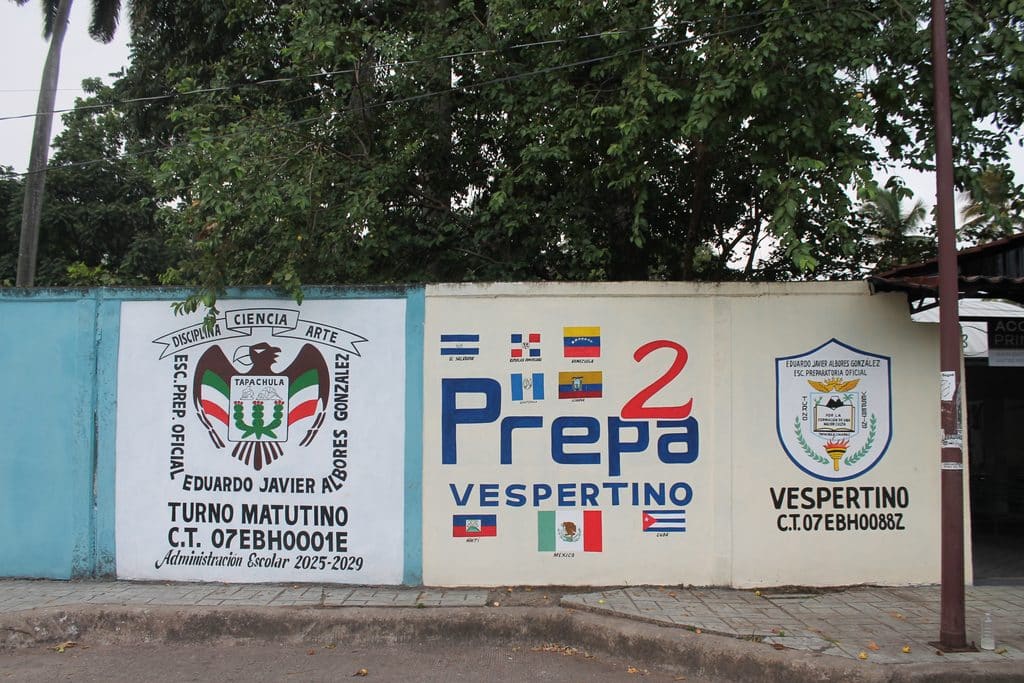
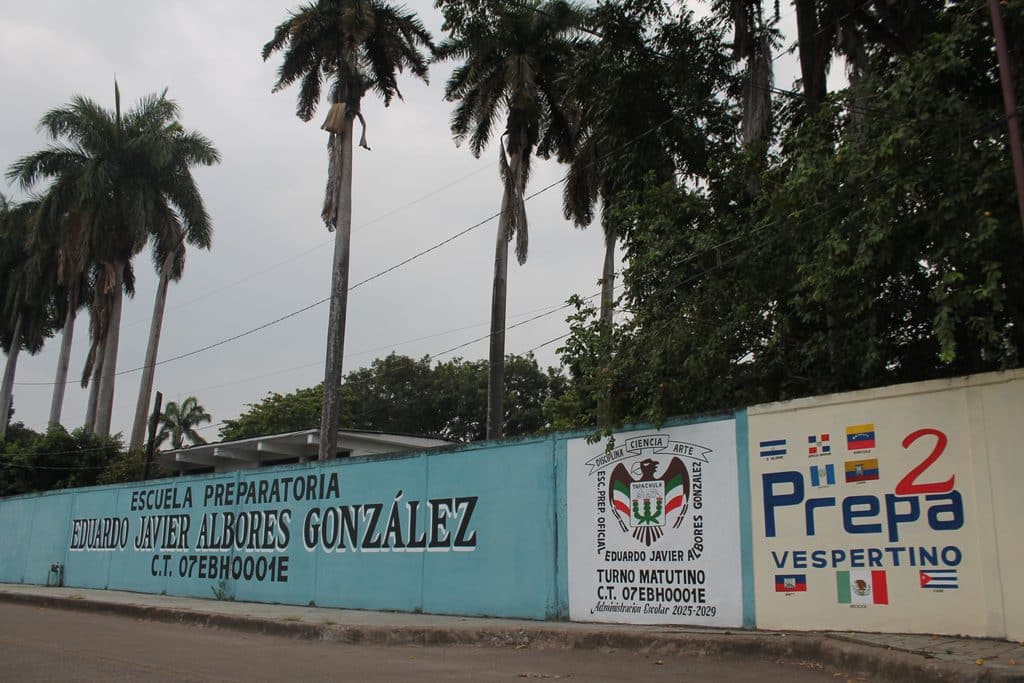
Yet in practical terms, it took Lauriz six months to find her way to the evening program at Preparatoria 2 “Eduardo Javier Albores González,” Tapachula’s first public high school with a majority Black and immigrant student body.
Mexican schools require all families to provide extensive paperwork to enroll their children, so gaining access to education for immigrant kids becomes highly dependent on staff training and resources.
Tapachula’s schools have historically enrolled small numbers of Central American students without too much trouble; they share a language and a similar academic history with their new peers. But there has recently been an influx of students from farther afield, and many of them have faced challenges trying to continue their education in Mexico.
Prepa 2’s evening program has taken a welcoming approach. Staffers guide families through the process, and their outreach efforts have led to rapid demographic change at the school.
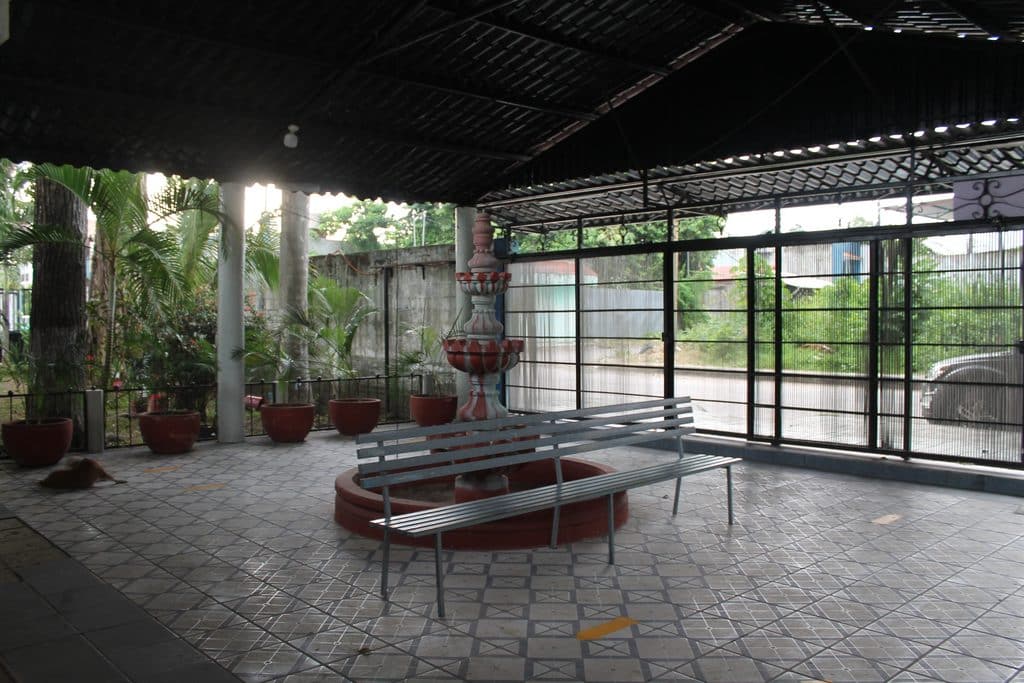
The school’s facilities are spread across a complex of spacious mid-century buildings flanked by rows of palm trees. The campus entrance opens onto a bubbling fountain, with a well-kept multipurpose sports field across the courtyard. Despite the school’s grandeur, enrollment in the evening program was flagging two years ago; there were only 60 students across all grades when two siblings from Nigeria approached staff to see if they could study there.
Now there are about 150 students enrolled, about 80 percent of whom are immigrants, according to Martha Ingrid Gutiérrez Román, the principal. Haitians are the largest national group among about seven nationalities, including Mexicans, who study in Prepa 2’s evening program.
While southern border cities like Tapachula, Chiapas, have hosted migrant families in increasing numbers since being transformed into containment zones by the Mexican government in response to U.S. pressure, most families used to assume that they wouldn’t be stuck there for long. But since the right to seek asylum in the U.S. was virtually eliminated at the U.S.-Mexico border last year, thousands of would-be transit migrants, including many families, have been waylaid in Mexico.
A large floating foreign population, up to a third of the city’s original size, has called Tapachula home since before the pandemic, but its members used to rotate in and out as they found ways to continue their journeys north. Now there are more families thinking about Tapachula in the medium term and integrating into local institutions.
Enforcement actions in the city are intermittent and seem to respond largely to externally imposed political imperatives. Being an immigrant resident of Tapachula involves constant uncertainty.
For children and teens who hoped to secure a better future by leaving home, the chance to study at a local school has become an emotional lifeline, providing them with community, new skills, and a sense of direction.
“I wanted to study here because I can’t sit around doing nothing,” said Noelia [name changed for privacy], 16, who is from Haiti but previously attended school in the Dominican Republic. She loves her science classes and hopes to study medicine in college.
Meanwhile, for the staff, creating a welcoming school has helped them revitalize a low-enrollment program while strengthening their vocation as educators.
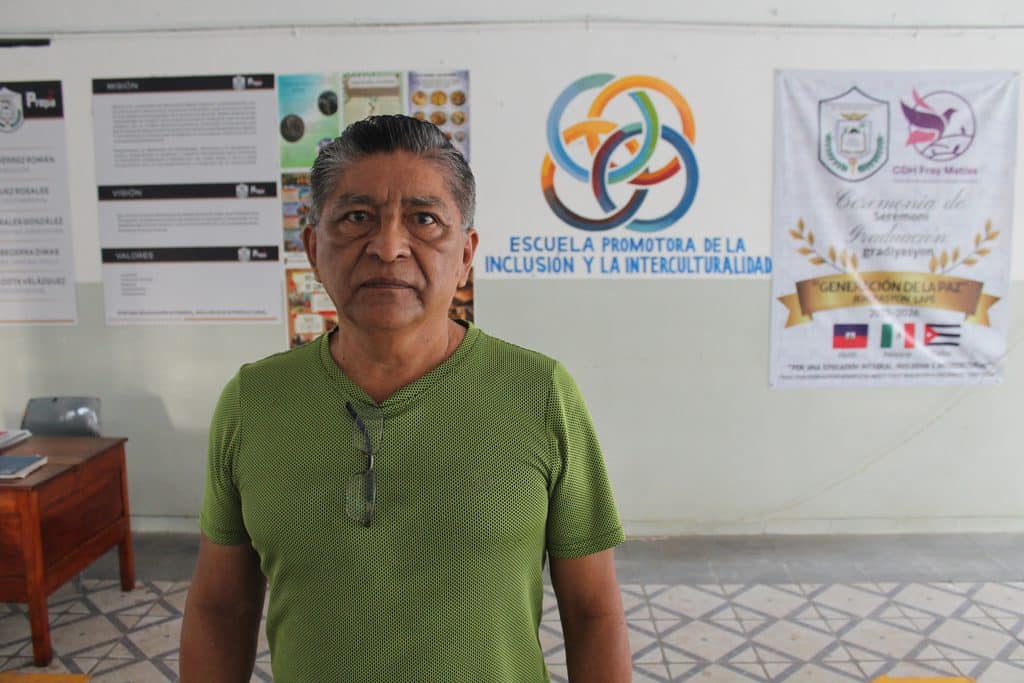
“I found my life’s purpose at this school,” said Álvaro Aguilar Domínguez, who has taught chemistry at Prepa 2’s evening program for the past 22 years. “The purpose of being at this school is these kids.”
Burnt Birth Certificates and Borders
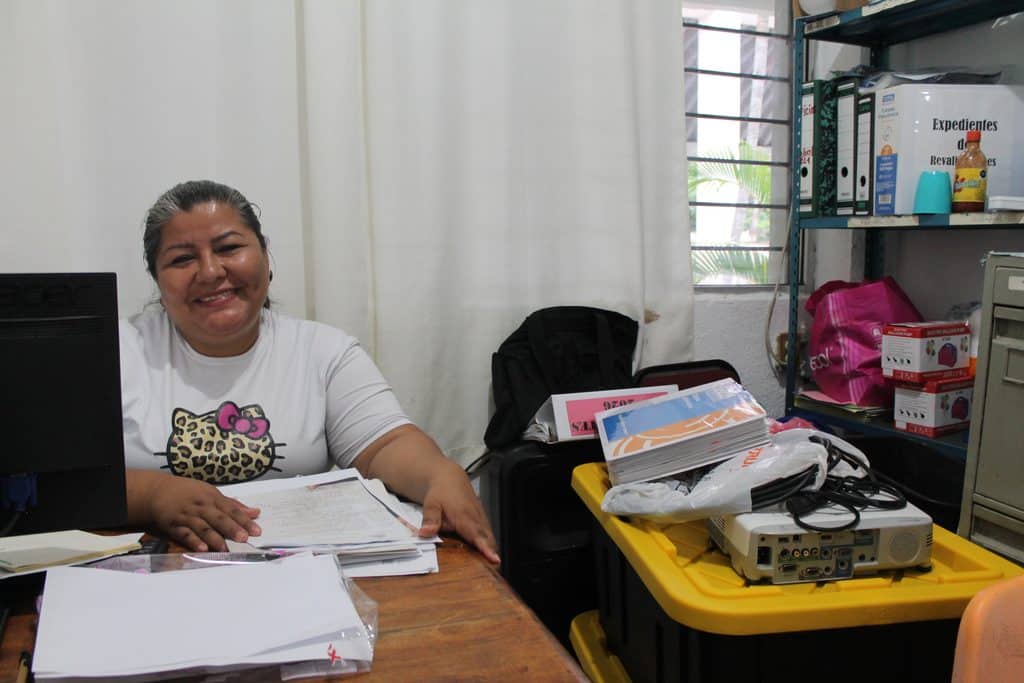
Cindy Roxana Morales González is the administrator responsible for revalidating students’ previous studies. Now in her second year on the job, she has helped dozens of kids missing their school records present affidavits in the state capital explaining why. What González thought would be a relatively straightforward bureaucratic assignment has proved quite emotionally demanding.
“Sometimes we’ve had kids come in with just the burned pieces of their birth certificates,” González said. “The violence they’ve been through is what made it so they have to leave, and they just have burned pieces of paper. But even burned, those documents are important to be able to enroll them. I take note of their names, their birthdays, and what grade they were in before they left home, and that’s enough.”
Prepa 2’s staff began to manage their students’ paperwork in part because the process involves a trip six hours north to the state capital. For the majority of students whose families are still applying for asylum, it would be very difficult to leave Tapachula without being apprehended by immigration authorities.
Tapachula is Chiapas’s second city, a regional hub of commerce and agribusiness. It sits less than an hour from both the international border with Guatemala and from Puerto Chiapas, a busy port that receives cargo and cruise ships. But local development plans have been plagued by organized state abandonment, the after effects of a devastating hurricane, and a series of political decisions that successive Mexican governments, capitulating to U.S. interests, have made to instrumentalize the territory for immigration control.
In 2006, what was then the country’s largest immigrant detention center was opened in Tapachula. It was intended in part as a last stop for Central American transit migrants being apprehended and deported from Mexico. The militarization of Mexico’s immigration policy continued through the implementation of Programa Frontera Sur in the 2010s and reached its apogee after huge caravans drew Donald Trump’s threats in 2018. The Mexican government responded by militarizing its immigration enforcement, putting the newly formed National Guard at dozens of checkpoints throughout the country’s south. Tapachula’s detention center began to receive thousands of internally “deported” migrants, who were sometimes trapped at short distances from the city and other times sent from as far away as the U.S. border. As it became harder to leave Tapachula, the city’s population of asylum seekers grew.
Despite Tapachula’s long trend toward greater diversity, some folks here are only now getting to know their immigrant neighbors. Before last year, the inequalities of income and perspective between Tapachula’s robust humanitarian sector and its hometown businesses were a sore point for many locals. But since UN and USAID funding was withdrawn in 2025, many humanitarian organizations have reduced their ranks in the city, creating significant service gaps for its immigrant residents.
As the dire situation has become more apparent to Tapachulans, a new groundswell of local empathy has emerged. In defiance of hateful Facebook commenters, Prepa 2’s evening program is sustained by a community of concerned local staff, most of whom did not come to their roles with any previous experience in multilingual or intercultural education but who have come to see these children as their own.
A Chance to Belong
Gutiérrez Román, Prepa 2’s principal, has been a key force in transforming the school. She’s from Tapachula and began her career as a biochemical engineer before continuing her scientific research through a master’s and doctorate. Later, she earned a second doctorate in education. An exchange program she participated in at a bilingual high school in Arizona was a formative experience for her.
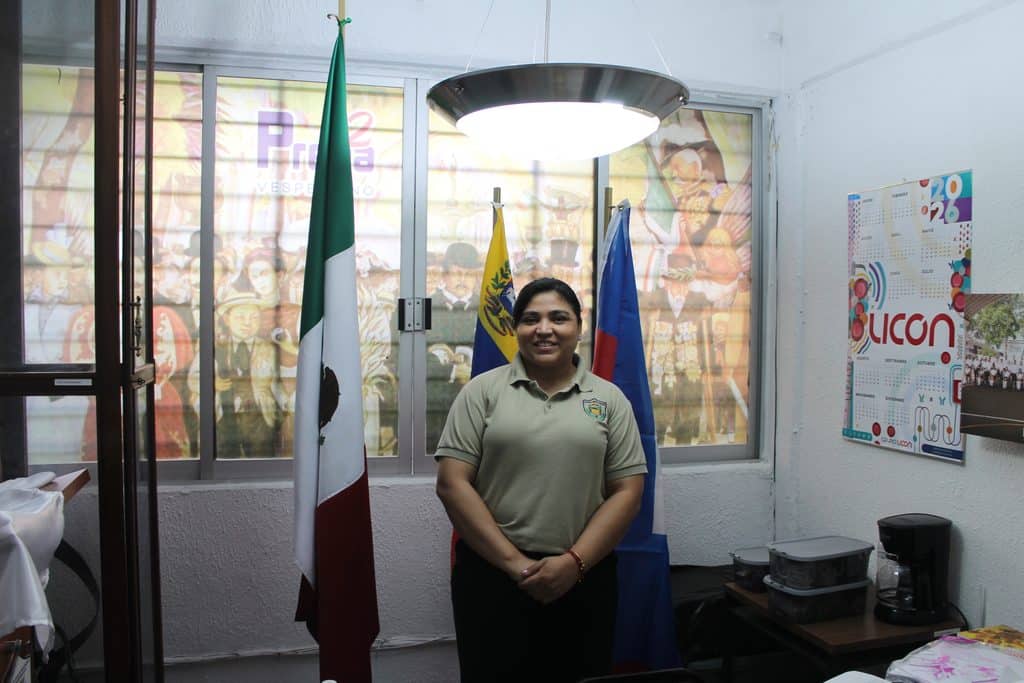
“Everyone jokes that I came at the right time,” she said with a laugh from her office, the flags of three of the school’s nationalities mounted behind her.
Gutiérrez Román’s first teaching assignments in Chiapas’s public school system took her to Frontera Comalapa, a rural community almost 100 miles northeast of Tapachula. During her tenure, the town was unexpectedly overpowered by border disputes between organized crime factions.
As the stress began to affect her health, a friend suggested that she apply to become an administrator. Her high scores on the qualifying exam meant that she would have her pick of schools to lead. Gutiérrez Román, however, was determined to return to Tapachula, so she chose Prepa 2’s evening program, which was the only local option available. When she announced the decision two years ago, her mentors and colleagues were shocked.
Many Mexican middle and high schools have evening programs meant to meet the needs of student learners who may work to support their families during the day. In popular culture, “evening kids” are seen as less serious students, perhaps from troubled backgrounds.
This negative association helps explain why Prepa 2’s evening program enrollment was previously so low and why its staff showed such care for a new student population with distinct needs.
When Aguilar, the veteran chemistry teacher, began teaching at Prepa 2 well before the enrollment of immigrant students, he said many students would commute to the school from the surrounding rural municipalities, citing its convenient location on the city’s edge. “It’s interesting to note that our school has always maintained this level of commitment to our students,” he said. “We’ve been able to deliver a more personalized education because of our smaller classes.”
Now that students in the evening program come from even farther away, “they realize that they can have a community where their interests are shared,” Aguilar said.
He described a few of his pedagogical strategies for integration: group work, games, and, above all, staying present with the material and the students’ interests.
“The local kids don’t perceive their presence as an invasion of the space. They give them the chance to belong,” Aguilar said. “We teachers also have a very important role to play there by always ensuring their equal treatment.”
Chiapas’s First Intercultural High School?
Though Gutiérrez Román insists that her plans for Prepa 2 are still far from complete, the school has already come a long way in her first two years of tenure.
Noelia said she had been pleasantly surprised by the opportunity to take computer programming courses at Prepa 2. Her friend Damián, 19 [not his real name], hopes to build on this coursework by continuing his studies at the UNAM in Mexico City when he graduates.
Both students are improving their Spanish, with classes sometimes accompanied by a community interpreter whom Aguilar said enjoyed his lessons as much as the students. The local human rights center, Centro de Derechos Humanos Fray Matías de Córdova, recently connected Prepa 2’s students with a Haitian university that is providing them with online Spanish classes facilitated in Haitian Creole. Some of the non-Haitian students have picked up a few Creole phrases as well.
Now Gutiérrez Román continues to seek specialized training for her staff with the goal of certifying Prepa 2 as Chiapas’s first intercultural high school.
“I’m very invested because I feel like I watched this school be born,” Gutiérrez Román said. “When I see the involvement of our staff and students, I say, Well, we’re getting there with all of us.”
“I know there are still problems,” she said. “But I can assure you that this is not the same school it was. We aren’t earning anything extra. There are no incentives, nothing like that. But I’ve always told my team: We’re getting the emotional compensation of knowing we’re contributing, we’re ascending. We’re adding our grain of sand [making a modest contribution], because no matter where our youth are from, they’re the future. They are our next citizens.”
Comments (1)
Leave a comment
Related Articles
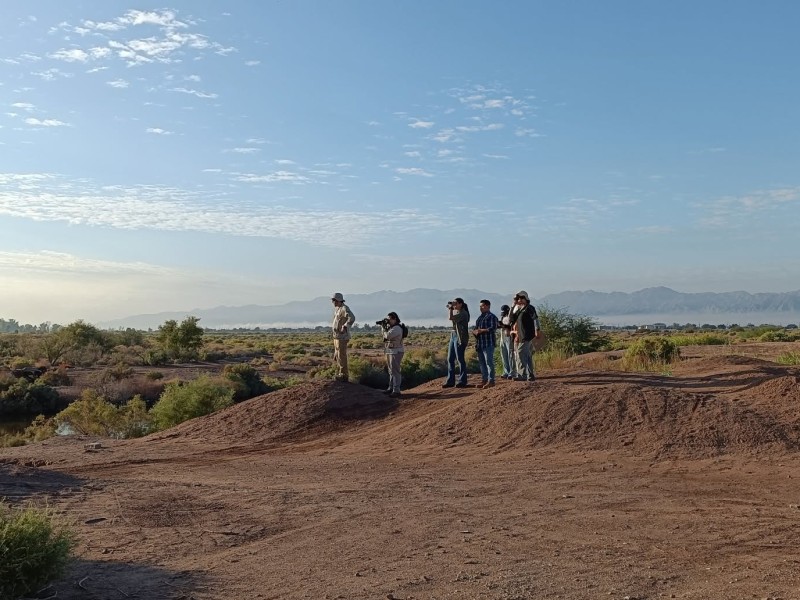
Salvemos Las Lagunas: A Morning with the Collective Working to Save Mexicali’s Last Urban Wetlands
The New River flows north across the US-Mexico border, where its lagoons provide vital habitat for hundreds of birds. For a decade, a community organization has worked to protect these crucial waterways.
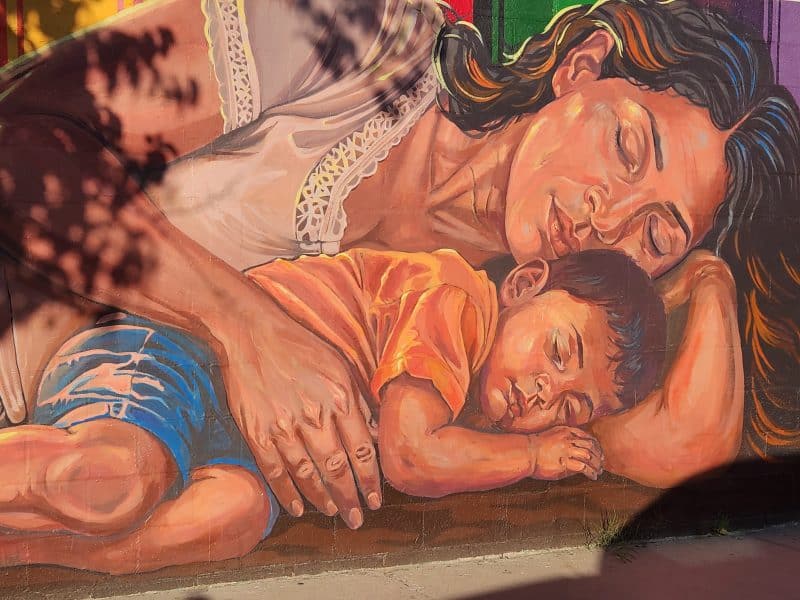
Immigration Policy Is Maternal Health Policy
Research in Texas confirms what border communities already know: that harsh immigration policies harm maternal health. As border-style enforcement spreads across the United States, its consequences for mothers and infants will spread with it.

Wall Watch: Mapping Trump’s $46 Billion Border Mega-Project
In this week’s podcast, Melissa del Bosque and Geographer Dugan Meyer explain how the Border Chronicle’s new project, Wall Watch, helps residents document and understand the massive construction project underway at the U.S.-Mexico border.

Liliana,
This article well portrays the humanity of the town of Tapachula and its efforts to be inclusive of immigrant families from Latin America and the Caribbean. It is heartening to hear the dedication of the teachers at the night school and the accepting learning environment built for them in the school. Thank you for giving us tan informed view of the situation of immigrant families at that border crossing community. We have common experiences with migrant populations and the needed educational services to assist them in Tucson, but the solidarity offered is our common bond.