
In “Blexas,” How Much Can Really Change?
Experts discuss what scaling back enforcement at the Texas border might look like.
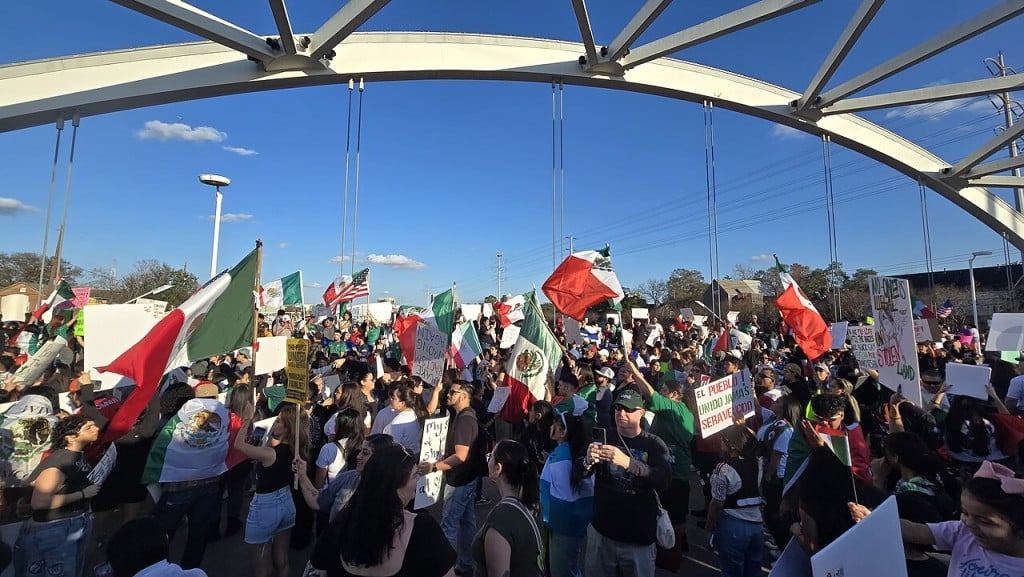
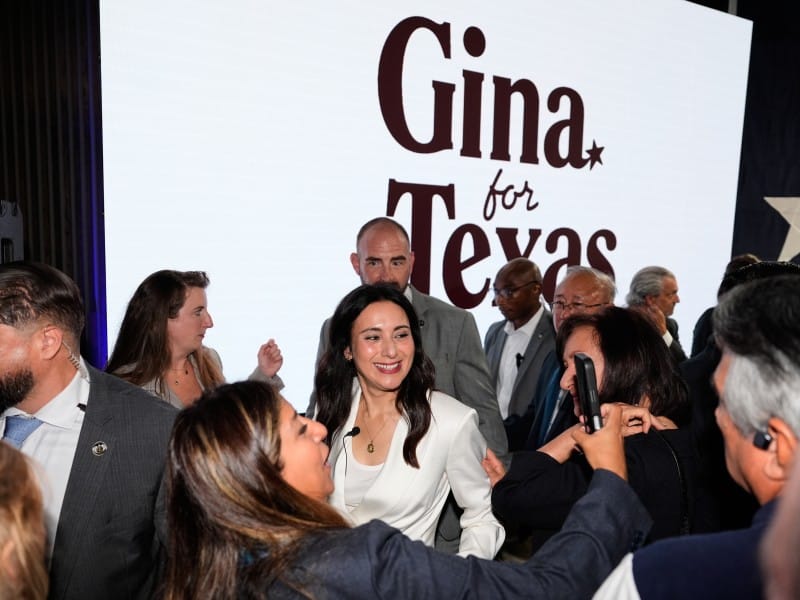
This Election Day, Texas voters achieved what was, for many, a long-held dream. They transformed their long-standing Republican stronghold into a blue state — one that quickly took on the nickname of “Blexas,” a portmanteau of Blue Texas. They elected Democrat Gina Hinojosa for governor, Vikki Goodwin for lieutenant governor, and Nathan Johnson for attorney general, and they won majorities in the Texas House of Representatives and the land, agriculture, and railroad commissions. At the federal level, they also sent Democrat James Talarico to the U.S. Senate.
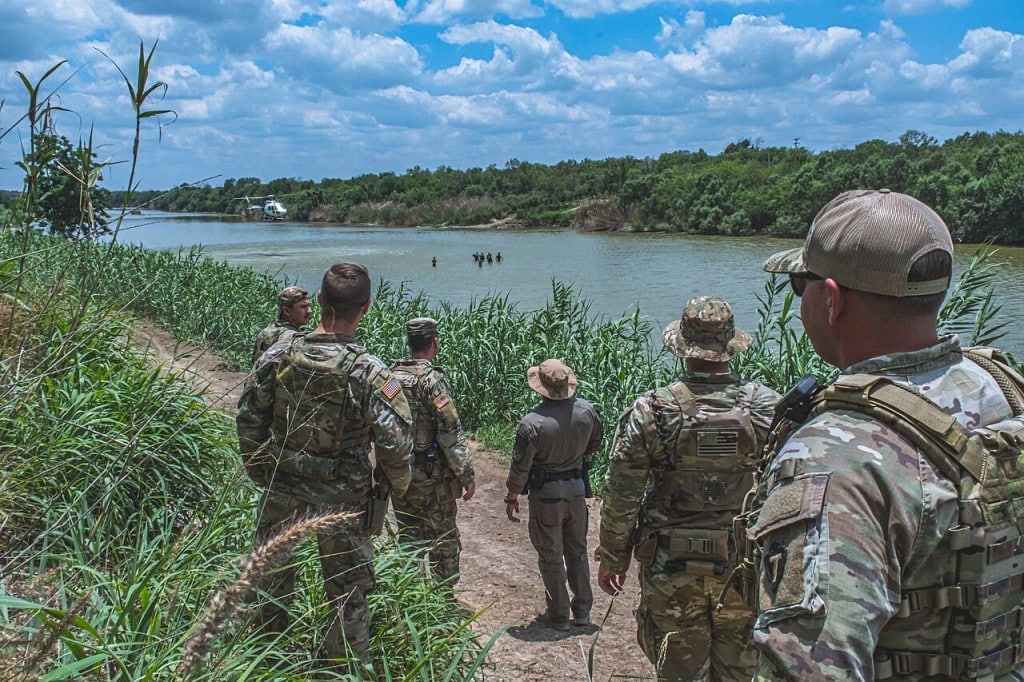
The U.S.-Mexico border was one of the key issues that drove this change. During his 12 years in office, Governor Greg Abbott dramatically escalated immigration enforcement in Texas. Starting in 2021, his $18 billion Operation Lone Star channeled state funds to law enforcement agencies in border counties and deployed thousands of National Guard members to police the international line.
On the campaign trail, Governor-elect Hinojosa, who is originally from the Rio Grande Valley, called Operation Lone Star a “dog-and-pony show to achieve nothing.” Yet she has not spoken concretely about what her own border policies will look like.
To understand what types of change Texans are likely, and unlikely, to see at the border, The Border Chronicle spoke with three experts: Jon Taylor, a political scientist at the University of Texas–San Antonio; Amy Kimpel, a professor at California Western School of Law; and Kristin Etter, director of policy and legal services at the Texas Immigration Law Council.
In broad strokes, what do you expect to change in Texas with so many Democratic elected officials?
Jon Taylor: Texas is no longer going to be at the forefront of the aggressive immigration enforcement agenda. The argument is going to be that state and local governments have other things to do. Immigration enforcement is not a state issue. It’s a federal issue. There may be some sheriffs who continue to engage in ICE cooperation agreements, but the major cities are backing away.
Still, if people think Democrats and Hinojosa are going to be able to do anything quickly, they’re not. Hinojosa is not going to be able to repeal all of Abbott’s executive orders. We’ll see some major policy shifts, but not a complete unwinding. We still have a Republican-controlled state senate, so there may be some issues of compromise.
How did immigration enforcement change during Abbott’s tenure?
Kristin Etter: I think of it as a 10-year project that Texas has undertaken to make our state the most anti-immigrant state in the country.
It starts with Senate Bill 4 from 2017, which prohibited local jurisdictions from adopting policies that limit or prohibit federal immigration enforcement. It took away local control and essentially got state and local law enforcement ready to be ICE agents. I think of that as the initiation of Operation Lone Star, even though technically it predates it.
Operation Lone Star was started by executive order in May 2021 and has been renewed every month since that time, every 30 days.
Then there’s 2023’s SB4, which criminalized illegal entry, reentry, and failure to return to a foreign country, and created a state criminal scheme for immigration enforcement.
In 2025 there was Senate Bill 8, which is the mandatory 287(g) compliance. [287(g) refers to partnerships in which local law enforcement officers participate in federal immigration enforcement.]
So it was layer upon layer. There were also a number of executive orders, such as GA46, which was a way for hospitals to ask for people’s immigration status, and executive orders GA-50 through GA-54 that essentially repurposed state agency employees to be ICE agents.
And then, of course, there was the task force agreement with DPS [Texas Department of Public Safety], which turned approximately 4,000 DPS officers statewide into ICE agents.
The task force agreements are what have caused communities all over Texas, not just border communities, to be terrorized. These allow any task force agency officer — and again, that’s currently all of DPS — to stop, interrogate, detain, arrest, and transport an immigrant to detention. We have an interactive map of 287(g) agreements, and of 553 agreements active in Texas, 339 are task force agreements. That’s because the task force agreements are the ones paid for by the feds — the Department of Homeland Security will pay for any task force agent’s full salary, overtime benefits, and individual performance bonuses, and they’ll also give a ton of money for vehicles and other equipment. Those counties have become reliant on that money, sadly, because that is money that counties do need. They’re very strapped for financial resources. It’s just being spent on the wrong things. It’s being spent to tear communities apart rather than build them up.
What would Hinojosa have to do to scale back Operation Lone Star?
Amy Kimpel: Operation Lone Star was started, and has continued, as a disaster proclamation at the border. Hinojosa could say there’s no longer an invasion at the border, there’s no longer a disaster, and that would take away a lot of the resources and gubernatorial power over that region.
Taylor: The Texas Disaster Act has existed since 1975, but Abbott made it an art form. What’s funny is that since the election, Brian Harrison, a Republican, has been demanding that Abbott call an emergency session to curtail some of the emergency powers that the Texas governor has. [Harrison told Dallas Fox station KDFW, “If Governor Abbott wants to do one final good thing for the state of Texas … he will immediately convene the Texas legislature to make sure that Gina Hinojosa does not inherit what are effectively all the powers of a dictator in the state of Texas.”]
Would the fact that there is legislature-approved funding limit her ability to scale back Operation Lone Star, though?
Etter: There are so many components to Operation Lone Star. The executive order is one. Another is obviously the legislature-appropriated money, $6.5 billion. But I believe there will be a real opportunity to redirect those funds to other issues that are much more important to border regions.
Kimpel: The legislature has passed a lot of funding for Operation Lone Star, but a lot of its procedural pieces are tied to the disaster proclamation. She could roll back those irregularities and make the program a lot more difficult to maintain.
For example, an order from the Supreme Court of Texas allowed people who were charged with misdemeanors for illegal entry to have legal representation that wasn’t barred in the state of Texas. The prosecutions will become impractical if you stop allowing lawyers to Zoom in because there aren’t enough attorneys to handle these cases in the border region.
The other thing that’s really weird about Operation Lone Star is that the state provides bed space. Localities can charge many more people than could fit in their local jails because they’re allowed to use state prison facilities. Usually, people charged with misdemeanors aren’t housed three hours away in a state prison. I imagine the governor and attorney general would have a certain amount of sway to say the counties can’t use state bed space, DPS personnel, or judges who are not local to the jurisdiction, making it impractical for counties to continue complying even if they wanted to.
How hard will it be to end 287(g) agreements in Texas if SB8 makes them mandatory?
Etter: SB8 only applies to sheriffs who operate a jail. It doesn’t apply to state agencies. The Department of Public Safety, the Texas National Guard, and the Texas Attorney General’s Office have 287(g) agreements, and all of those can go away. It also doesn’t apply to local police departments like the Austin Police Department and the Houston Police Department [which have already announced that they will cease or modify their compliance].
Even the sheriff’s offices can be in compliance with SB8 by designating one officer in the jail as a warrant service officer, which is the lowest level of compliance — it’s just somebody in the jail who is serving ICE warrants to people who are already in jail for whatever reason.
Kimpel: There have been some groups pointing out that enforcement of SB8 is up to the attorney general, and so now that we no longer have Paxton in that office, the enforcement of compliance may also go away. If there were massive noncompliance, that would become resource intensive for the attorney general even if the office were inclined to enforce it.
What is the likelihood of 2023’s SB4, which criminalizes illegal entry, coming to an end?
Etter: 2023’s SB4 is very problematic. The law didn’t go into effect until May of this year because it was paused during litigation. Still, we have found 49 cases of people who were prosecuted under the law before it went into effect in counties like Hidalgo.
Aside from the fact that it’s clearly unconstitutional, the [crime the law enforces] is legally almost impossible to commit. The legislature chose the wrong definition of “port of entry” when they passed the law — they chose a definition that falls under customs rather than immigration. So in Maverick County, for instance, almost 40 miles of the southern border is considered a port of entry for customs purposes, meaning that if you entered in any of those 40 miles, even if it was through the river, you entered through a port of entry because they used the wrong definition.
We’re going to be requesting that the attorney general issue an opinion on this aspect of it — nobody should ever be arrested for this, not only because it’s unconstitutional but because it is almost legally impossible to commit given the legislature’s error.
Kimpel: There’s been a lot of litigation about SB4. A lot of people find it unconstitutional. Texas might have less of an appetite to defend it now, in which case the court would appoint someone to argue on behalf of that law. It comes down to resources and how hard Texas is going to fight to defend the legality of SB4, and I think we can intuit that the answer is not very hard. The result may be a court order finding it unconstitutional if Texas decides not to appeal. That would make it unenforceable and render it moot.
Finally, given that the border wall is federal, is anything likely to change with regard to it in a Democratic Texas?
Taylor: The encroachment on Big Bend has been, I think, a classic example of overreach and one of the drivers of opposition to Republicans in this election cycle, and I expect [Attorney General–elect] Johnson and others will be fighting it. They are still building, destroying one of the most beloved national parks in the state, for an area where both Republicans and Democrats said a wall is not necessary.
The border wall is federal, but Abbott also spent Operation Lone Star money on a border wall and border buoys [near Eagle Pass]. One thing I expect is that those floating buoys are going to go bye-bye almost immediately.
These interviews have been transcribed and edited for length and clarity.

Author

Related Articles

The Blue Wave Hits the Border Wall: An Election Dispatch from the Borderlands
An on-the-ground post-election report from the Columbus, New Mexico borderlands.
The Borderlands Reject MAGA’s Politics of Fear
With Democrats now governing every border state, a historic election opens the door to a different vision for the U.S.-Mexico border.
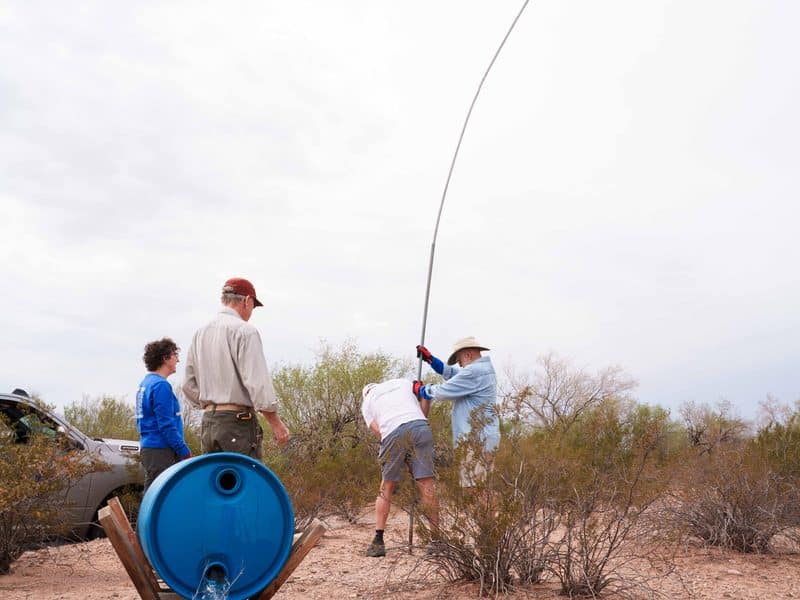
What the Election Means for Humanitarian Aid: A Q&A with Humane Borders
Political scientist Brad Jones of Humane Borders breaks down the midterm elections and why they matter for the continuation of aid work on the border.


Comments (0)
There are no comments on this article.