
What Laredo Can Learn From El Paso and Tucson about Water Conservation: A Q&A with Martin Castro
“We believe Laredo is setting the stage to potentially become the next pioneer in resilient water management for South Texas,” says Castro.
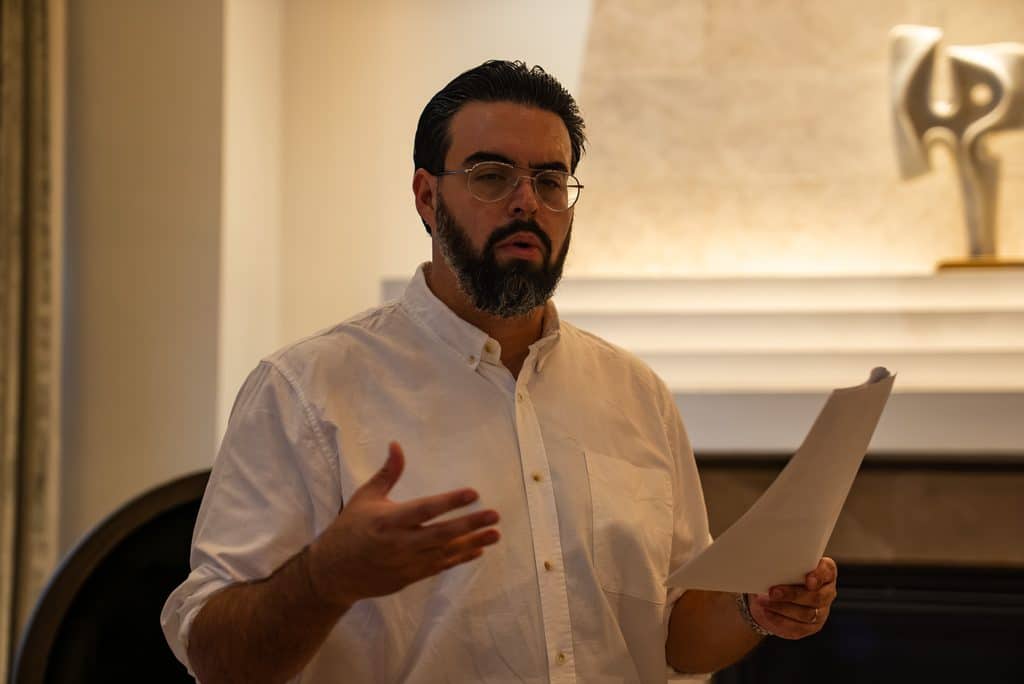
As climate change takes its toll, the city of Laredo, Texas, is increasingly vulnerable, since it relies solely on the shrinking Rio Grande for its water. Now it’s learning from El Paso and Tucson how to take its first steps toward a more sustainable future. “If Laredo is going to see itself through the next 30, 40, or 50 years of climate change, it’s going to need a really solid conservation program,” said Martin Castro, watershed science director for the Laredo nonprofit Rio Grande International Study Center, which has the primary mission of preserving and protecting the Rio Grande.
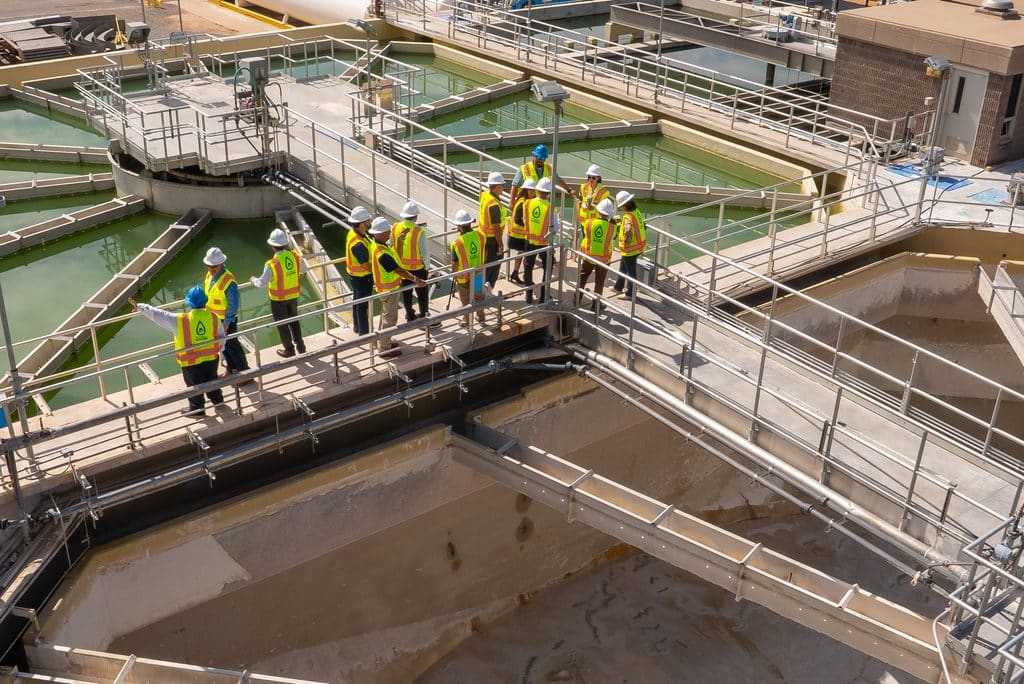
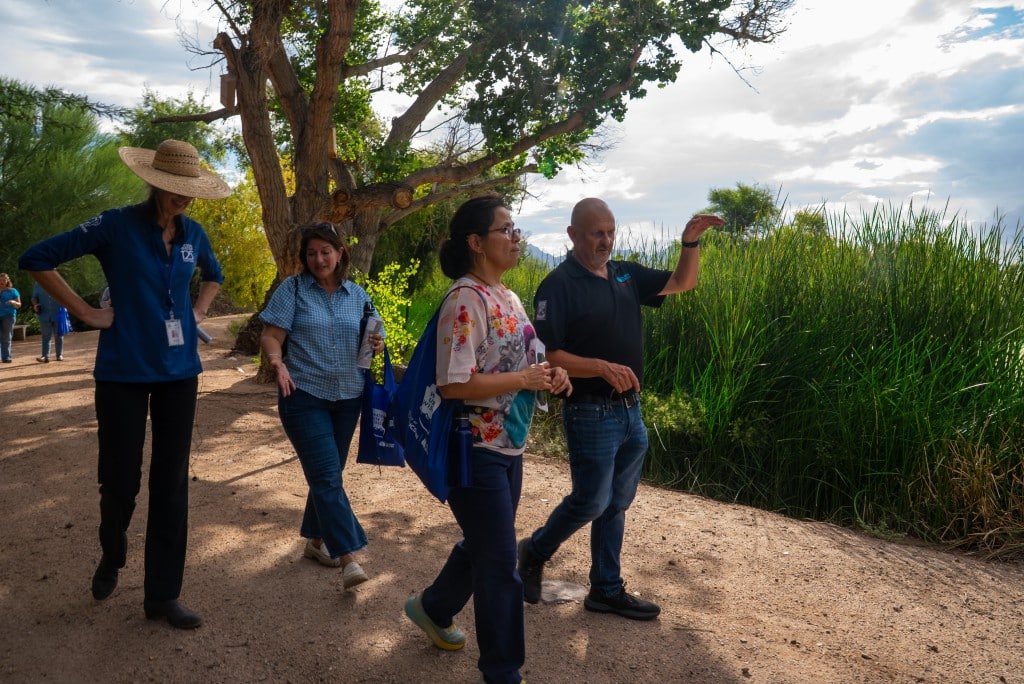
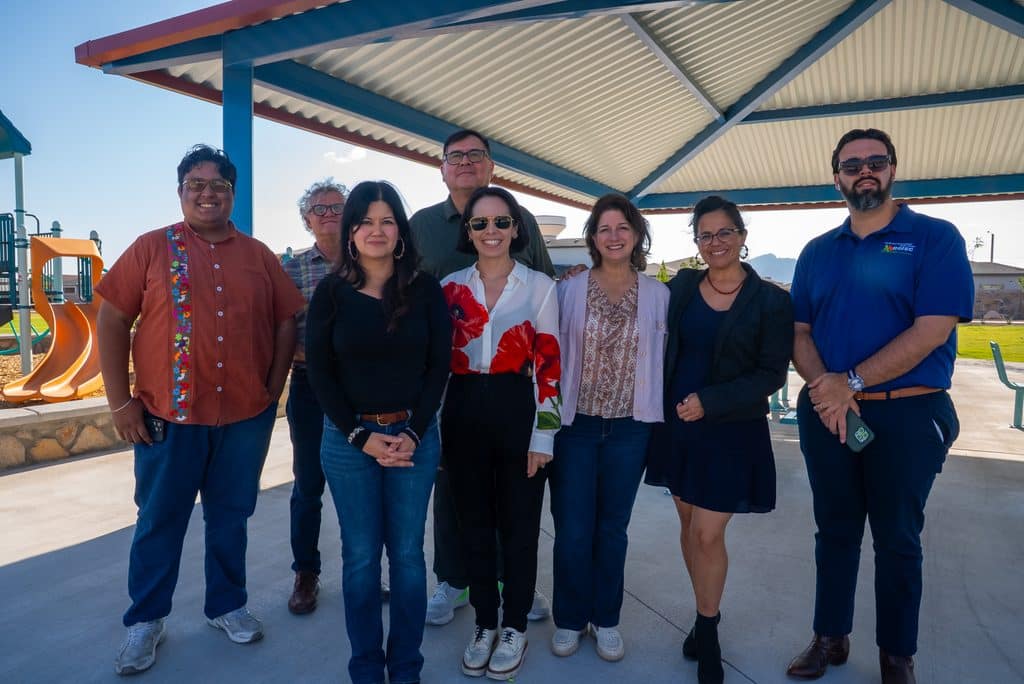
Castro recently led a group of Laredo city officials and NADBank experts on a trip to El Paso and Tucson to learn how they manage their water resources in desert climates that receive a fraction of Laredo’s annual rainfall. Castro also has advice for other cities that are starting at ground zero in creating a sustainable water plan. City leadership has to be on board, Castro said, “and open to the idea that there are alternative strategies and solutions out there.”
How did the idea for Laredo’s water leadership exchange develop?
This project is 100 percent supported by the Water Foundation. They’ve been working with us for about three years, and over the last couple of years, they’ve moved more into developing their Texas program. In 2024 we were introduced to one of their program officers as they were developing the Texas Wellspring Fund. We had several meetings, and they said, “We really like what you guys are working on. Why don’t you come up with a proposal?” At that time, we had become really familiar with the concept of One Water.
What is One Water?
Very briefly, it’s the idea that all water in a community has value. Everything from wastewater to stormwater to drinking water. Everything is seen as a holistic system.
Water isn’t just seen as a commodity. It can provide environmental benefits, recreation, drinking water, and so on. That’s basically at the core of what One Water is. The first time I heard about it was at a U.S. Water Alliance conference in Milwaukee in 2022. At the time it seemed like a very new, innovative concept. But as I’ve since learned, One Water has actually been around for more than a decade and is catching on rapidly in communities across the country. Tucson is a great example. El Paso and Austin, Texas, are also applying it.
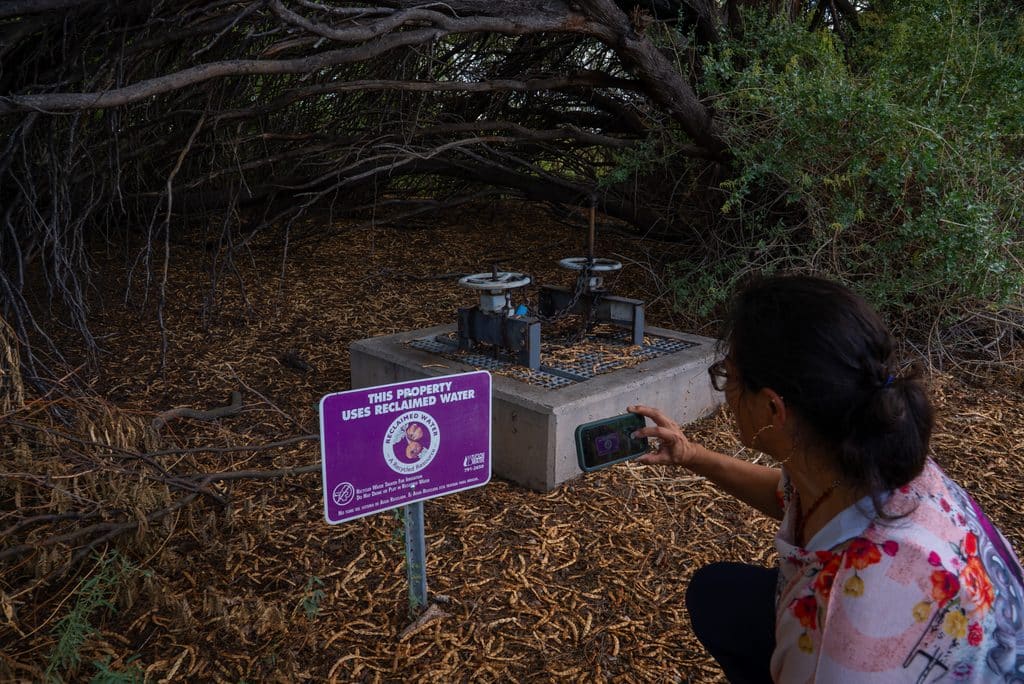
Why did the Water Foundation decide to work in Texas?
They wanted to strengthen and grow a network of Texas-based organizations already working on water issues affecting Texas communities. They also wanted to encourage collaboration and knowledge sharing.
At the time, we were dealing with concerns about a potential new secondary water source and the possibility of privatizing Laredo’s water supplies. We used that as part of the impetus to propose developing a One Water framework for Laredo.
We said, “What if we start working on developing a One Water framework for Laredo? And if we do that, what would that look like?” One thing we wanted to do was take a delegation of local leaders to communities that had been doing incredible work in the One Water space.
We knew from the beginning that we wanted to go to El Paso and Tucson because they were the two cities we had visited that were most similar to Laredo, not only in climate but in the challenges they faced. They’re Southwest communities dealing with very similar water challenges, and some of those challenges they had overcome decades before.
Here in Laredo, elected officials and city staff don’t get frequent opportunities to go and visit and see new things because of the nature of how our utilities and systems operate. They’re very much operational in nature. We thought, “If we can encourage people to go and see these things, we can help support their travel.”
The Water Foundation was very excited about the idea, and it supported us with a $200,000 investment, which helped cover the travel and other needs of the leadership exchange.
Why was NADBank interested in participating?
With the launch of their Water Resiliency Fund, they’re looking at putting Laredo on the same level as other border communities and supporting water-resiliency projects here. They were interested because they want to see Laredo succeed and want local leadership to see what other communities are doing.
They’ve worked extensively with El Paso Water and have helped finance some of its projects, so it was a natural fit. They’ve also been supporting our feasibility study for wastewater reuse. So there was already a basis for saying, “We’ve been looking into wastewater reuse as a potential way to make our water supplies more resilient.”
What surprised you? What did you learn that you could take back to Laredo?
There were so many things. We’re still synthesizing a lot of the key takeaways, but the central lesson was very clear. Laredo has to move quickly toward a comprehensive, long-range water strategy that treats water as a connected system through the concept of One Water rather than a single commodity or a single supply source.
El Paso and Tucson showed that creating a resilient water system is built over decades. It requires diversifying your supplies, seriously investing in conservation, looking at alternative strategies like wastewater reuse and reclamation and aquifer storage and recovery, and doing a tremendous amount of public education.
It also requires affordability planning and, especially in Tucson, equity in that affordability planning. Another thing that really stood out was strong, consistent local governance. In both cities, we heard almost the same thing: “I’ve been here 30 years, and the guy who came before me was here for 30 years. When I came in, we were trying to execute the vision that the guy before him was trying to execute.”
There’s been consistency in governance over the years, and that’s helped. They also had very transparent decision-making with their communities. These are valuable lessons that we saw firsthand. If you want to replicate the success these communities have had, this is basically how they did it.
Were wastewater reuse and aquifer storage and recovery the main projects you focused on?
They weren’t the only things. Wastewater reclamation and reuse were a focus, as well as aquifer storage and recovery, or ASR. But we also learned about Tucson’s nature-based solutions, including its Storm to Shade program and green infrastructure.
In El Paso they’re constructing an advanced direct potable reuse facility that will be the largest and most advanced of its kind in the country. One of the most interesting things was a graphic that Scott Reinert, a water-resources manager for El Paso Water, showed us. It was basically the evolution of man, from Neanderthal to modern human, but underneath it was the stages of how El Paso Water’s system evolved over time.
He was showing us that you can start with baby steps in wastewater reuse and eventually get to advanced direct potable reuse. It was a clever analogy. He was basically saying, “You can get to this point. We’re about to get to this point, and it took a long time.”
So Laredo is at the beginning of that process?
Yeah, so to speak. We really want to see Laredo become the next pioneer in becoming a more climate-resilient community. These other communities took really big leaps forward because they understood the challenges they were facing, but they also had the foresight to say, “Hey, 30 years from now, this is going to be a major problem.”
Tucson was a great example. They said, “Thirty years from now, this is going to be a major problem, so we’re going to figure this out now.” We believe Laredo right now is setting the stage so it can potentially be the next pioneer in resilient water management for South Texas.
How did El Paso and Tucson achieve a significant reduction in daily water consumption?
Education. Tremendous amounts of education. El Paso Water has had a very strong education program for decades. They go into schools, colleges, and institutions to educate people about water. You need that. You can have a very efficient system, but if you’re not educating your public about how and why they should conserve water, the system is only going to be as efficient as the education. That has been a very large part of their success.
What are you hoping to implement now that you’re back in Laredo?
First, we want to invite leaders from El Paso and Tucson to come to Laredo and present on things we didn’t get a chance to cover, including financing models and community-engagement strategies.
We also see value in conducting a water-resources assessment for Laredo. One thing El Paso and Tucson showed us is that they have a very solid grasp of their water resources. They know exactly where their water comes from, how much is available, what they’re tapping into, the health of the supply, and future forecasts.
I think Laredo needs that. After that, we can develop a roadmap for how Laredo is going to become water resilient. That roadmap would be built over decades, with defined goals, strategies, timelines, responsibilities, and metrics, as well as an understanding of what financing we need and where it will come from.
We also want to build a really solid conservation program. Laredo once had one water conservation plan for the entire city, with one person doing everything. Public education on water is severely lacking here.
And we want to keep exploring wastewater reclamation and aquifer storage and recovery. It’s the practice of storing treated surface or potable water in an aquifer so it can be protected from evaporation and seepage, and reclaimed later. There have been studies of ASR in Laredo decades ago, but we think it probably needs a new, updated study to determine whether it’s feasible.
What would you recommend to another city that wants to do something similar?
The leadership of a community that wants to make its system more water resilient has to be open to the idea that there are alternative strategies and solutions out there. There isn’t a one-stop solution for everything. There has to be a paradigm shift. You have to be open to looking toward innovation in how your water supplies are managed.
Then you can go with open eyes, learn from other communities, and hopefully come back inspired. Without that visionary, open-minded thinking, you’re not going to convince a community or utility to consider investments in technology or conservation, or to stop and say, “Just because we’ve been doing something the same way for 50 years, maybe that’s not the same way we can keep doing it if we’re going to overcome these climate challenges.”
That’s why I give our council members a lot of credit for being willing to go on this exchange trip. It’s really taken new leaders to come in and say, “Hey, you know what? Let’s look into this.” That’s a huge leap forward because that wasn’t even possible for us a few years ago.
Author
Comments (2)
Comments are closed.
Related Articles

The Border Around the Negotiating Table: A Report from the UN Climate Summit
A bureaucratic wall determines who can and cannot participate in the world’s most important conference on climate change, and who has and doesn’t have a say in climate policy.
A Second Wall, Expanding Surveillance, and an Oasis Under Threat: A Dispatch from Arizona’s Organ Pipe National Monument
From bulldozed saguaros to new surveillance cameras, The Border Chronicle’s Wall Watch is tracking the expanding footprint of border militarization in the Sonoran Desert.
Introducing the Wall Watch Project and Contractor Database
Explore the companies, contracts, and construction projects reshaping the U.S.–Mexico border—and get ready for a new series of Wall Watch Dispatches.


This is encouraging!
We like to print good news, too! So great to see border communities working together to find solutions.