
The Sonoran Desert’s Endemic Psychedelic: A Q&A with Writer Kimon de Greef
A new book tells the scandal-ridden tale of Sonora’s toad-smoking neo-shaman.
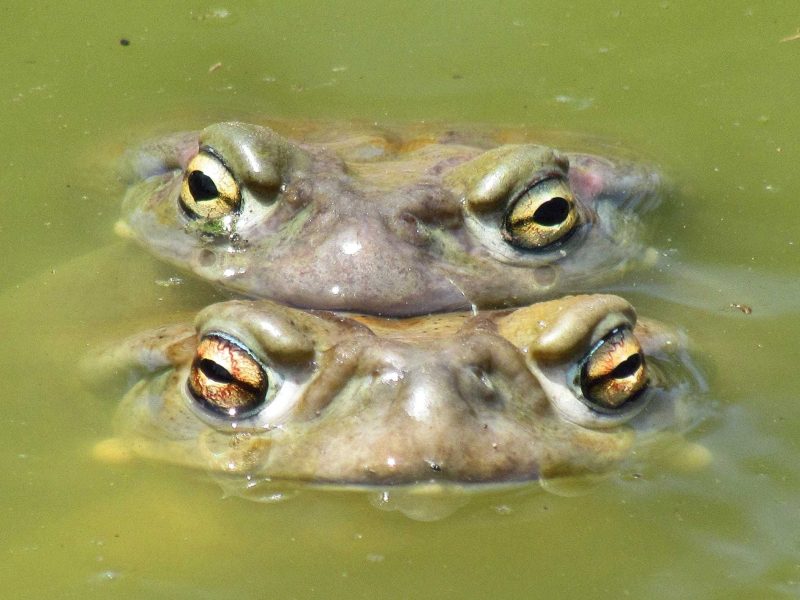
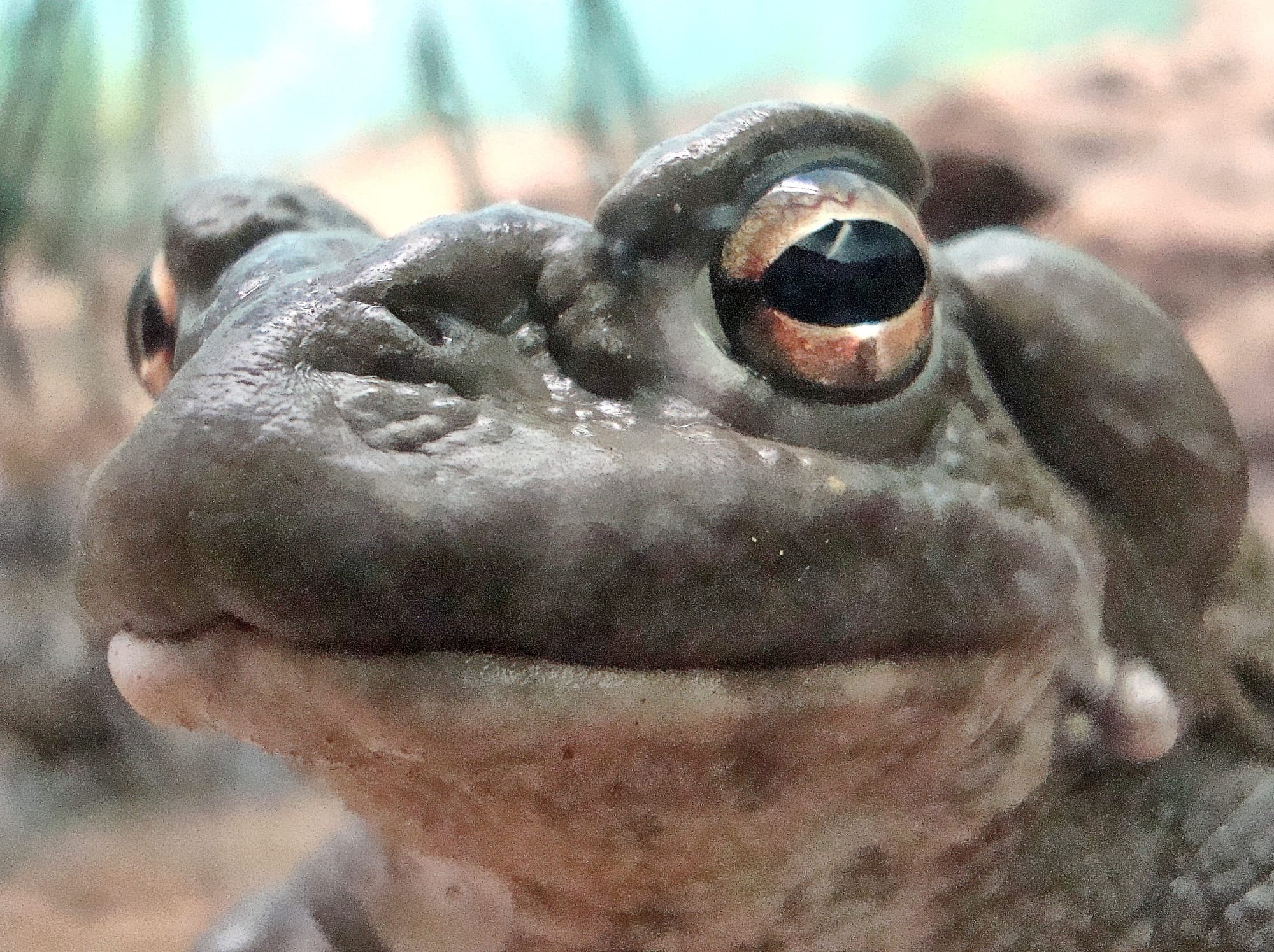
When the U.S.-Mexico border was surveyed, one of the creatures that was collected, euthanized, and sent back to the Smithsonian Institution for inspection was the Sonoran Desert toad, originally known as Bufo alvarius and now called Incilius alvarius. The border survey was the animal’s entry into Western science and taxonomy. But the surveyors could not have anticipated what would become of the species. The Sonoran Desert toad secretes 5-MeO-DMT, a powerful psychoactive substance that became known to small groups of practitioners during the 20th century. In the early years of this century, the practice exploded in popularity thanks to a self-styled shaman named Octavio Rettig Hinojosa, who claimed to have recovered an ancient tradition of “toad smoking” by the Seri, or Comcáac, an Indigenous community in Sonora.
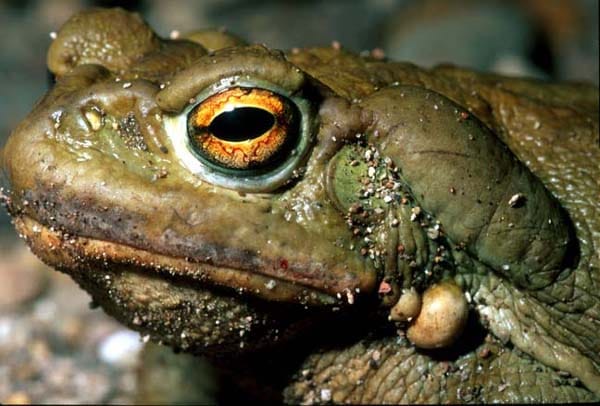
Writer Kimon de Greef’s new book, The Ego Trip: Psychedelic Toads, a Trail of Deaths, and the Guru who Peddled Transcendence, follows Rettig Hinojosa through the crest of his popularity—and through waves of scandal. As de Greef writes,
For more than a decade, he demonstrated a recurring pattern of recklessness, refusing accountability for traumatic trips and deaths alike. He bullied clients during ceremonies. He presented himself as having the support of the Seri tribe when in reality he leveraged—and often paid for—a handful of strategic relationships.
De Greef spoke with The Border Chronicle’s Caroline Tracey about Rettig Hinojosa’s rise to fame and about the environmental and social impacts of toad smoking. They will also be in conversation at Tucson’s Desierto Books on the evening of September 3.
What is the Sonoran Desert toad?
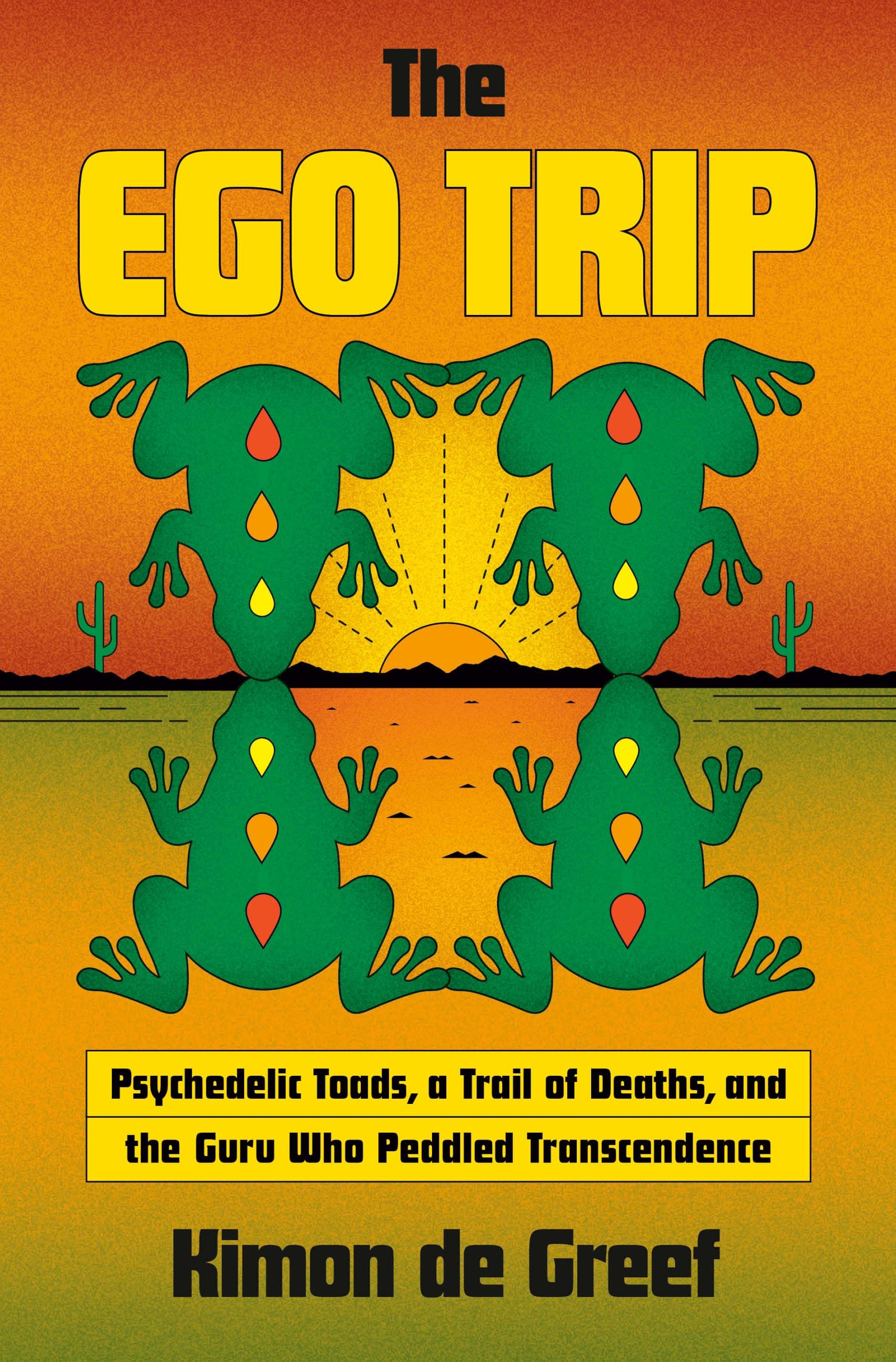
The Sonoran Desert toad is a leathery-skinned amphibian that is remarkable in multiple ways. One is that it lives in a desert environment. It wasn’t always the desert, but when the Sonoran region became dry, the species of toad adapted to live there. So it spends nine months of the year underground hiding out, and then, when the monsoons happen, it bursts out of the ground and has this extremely short window of opportunity to eat for the whole year and mate to make the next generation of toads.
Another is that they’re probably the only true psychoactive animal on the planet. Like all toads, they secrete powerful defense toxins for repelling predators. But their particular defense toxins contain a molecule called 5-MeO-DMT, which is a powerful and fast-acting psychedelic compound. And these toads, after sort of happily existing for a very long time, are now at the center of this spiritual, psychedelic economy.
How did you get interested in the toad?
I was working on a story about white sage, the Californian herb that has been used ceremonially by some tribal communities for a long time and is now a sort of wellness product. While I was reporting on that story, I spoke to a guy who was a major wholesaler. And halfway through, he said, “I’m surprised you’re not talking to me about psychedelic toads.” He claimed to have invented the practice of toad smoking.
I looked up toad smoking and saw that there was concern about the overexploitation of the Sonoran Desert toad. People used to have them, you know, barging in through the doors and clogging up the swimming pool and used to drive over them on the roads, and were now saying they didn’t see that many anymore. So I connected with [Tucson-based naturalist] Robert Villa, who was sounding the alarm about the possible impact of this global market for toad medicine on the total population.
Then, I found out that there was a kind of prime mover in this world—a charismatic neo-shaman who had taken an obscure psychedelic practice and turned it into a global phenomenon.
Tell us about this toad shaman, Octavio Rettig Hinojosa.
It probably helps that he looks straight out of central casting as a messiah. He’s handsome, with long, tousled brown hair. His grandfather was an immigrant to Mexico, so his surname is German and he holds a German passport. He grew up in a middle-class family in Jalisco and was a gifted schoolboy, but in his teens, he started experimenting with substances and ended up with a pattern of addictive behavior that culminated with him getting hooked on crack cocaine while he was studying medicine. He graduated as a doctor, but then his life went off the rails. In his telling, he was living on the streets and peddling drugs to support his habit.
In 2006, when Octavio was at rock bottom, a friend from his medical studies learned about toad smoking from some American hippies. He and Octavio set off to Sonora to harvest some toads for themselves. Over the next year, Octavio smoked a ton of toad, multiple times a day, sometimes in combination with other drugs—and kicked his crack habit.
Then, in 2012, he connected with the Seri, an Indigenous community in Sonora, and locked in his story: that by smoking toad he had healed himself of a debilitating crack cocaine addiction, and he had gone on to use the substance to treat addiction in the Seris’ extremely impoverished, marginalized community. The Seri were facing a wave of addiction because their lands are in a trafficking corridor: the meth and fentanyl that moves to the United States goes through Sonora, through communities like theirs, and it had spilled over and found a market there. Octavio said he had discovered a lost Indigenous sacrament, and that the Seri had historically made use of the toad, but that the tradition had been violently stamped out during the centuries when the tribe was taken close to the brink of extinction.
It took off. He would dress in traditional attire. He would sing songs that he claimed were traditional Seri chants. And he carried these documents issued by a tribal council of sorts that designated him as an authorized practitioner of Indigenous medicine. Within a few years, he was touring the world offering shamanic toad sessions, like a traveling ayahuasca facilitator.
But he wasn’t the most careful trip-sitter.
He was completely reckless and wild. His approach was to do almost zero preparation for people to understand what kind of experience they were going to have, to dose many people at the same time, and to offer basically zero support afterward for them to integrate what had happened.
He gave toad to drunk people at beach parties without telling them what it was. People would be demonically screaming. Ripping off their clothes. Because the experience is so extreme, many people have a very bodily kind of panic reaction: people sometimes would stop breathing or turn blue in the face. He would pour water down people’s throats to provoke a gag reflex or a breathing response. Video footage of him doing this circulated, and it looks like people being waterboarded, just having like gallons of water poured over their faces while they’re in the grips of, like, the most ferocious psychedelic experience imaginable. He blew aggressive tobacco snuff at people’s nostrils during their trips to stun them into some kind of breakthrough state. He used a Taser-like electric shocker to get people to listen to him. He has been recorded on video kicking and slapping and manhandling people to force them to take more, saying that if you’re having a bad reaction, it’s because of your ego defenses. You need to have more toad and, like, blast through so that you can get to this divine, transcendent goal.
Then it turned out that a girlfriend of his had disappeared and been found drowned in an underground cenote in the Yucatán Peninsula in 2012. They had smoked toad together before she disappeared. I don’t want my reporting to imply that he did anything, but just to point out that this freewheeling approach might not be appropriate for a substance in which people’s sense of self completely dissolves and they become completely oblivious to their surroundings. But in 2013, a man died in a ceremony with him. Someone else died in 2016. Another died in 2018. And these deaths, unlike his girlfriend’s, were during ceremonies where some of his methods seem likely to have contributed.
Over the next few years, there were many attempts at intervening, and he basically refused to listen to any of the feedback. Eventually, an anonymously compiled open letter circulated that laid out the deaths in his care and the reckless facilitation practices. All this had happened before I met Octavio in 2021. I was expecting him to be guarded or cautious, but it didn’t seem like he had changed his facilitation practices at all.
Did he show any remorse after these allegations came to light?
His line is that he’s treated tens of thousands of people, so four deaths isn’t a large number. That people die in the hospital all the time, and what he’s doing is for people who have been failed by conventional rehab, and there are risks and that society has to be willing to take them on. He has also said some really distasteful things before about people dying in these ceremonies, like that he considers it a blessing for them to have died at this moment of love and light, and about the death as a blessing for him personally—this kind of woo-woo language that evades accountability.
When I asked him about this, he became defensive and refused to take any responsibility at all for what had happened, saying there were preexisting conditions and pointing to the fact that he’s been charged with homicide twice but never found guilty, which is true, though I would say that also points to Mexico not having the most effectively functioning justice system in the world. I would sum him up as having an enviable but terrifying degree of self-belief and a messianic sense of conviction that his duty is to share this substance with as many people as possible.
What is synthetic 5-MeO-DMT?
It turns out that 5-MeO-DMT is a fairly straightforward molecule to synthesize compared to other psychedelics. Apparently, there’s a research lab in the United States that has a license to manufacture it for clinical research, and because of the efficiency of their machines, they make it in five-kilogram batches. This is a drug you take by the milligram. So you could make an entire world’s supply of 5-MeO-DMT, enough for everyone to have the biggest trip of their life and then do it again a week later, without involving any toads. People who have done both the synthetic and natural versions say that the effects are identical.
Are people still flocking to Seriland to smoke toad?
As far as I know, yes. There are many seekers in the world. There are many people who want to feel something deeper. Who want to have a more meaningful connection to the universe. I mean, this is true of me and of just about everyone I know, especially in the age that we live in, where people are so atomized and screen addicted and polarized and numbed—that’s the engine of this whole story. That’s why any of this happens. Some of those people feel the tug to go look for what they’re told is the original source, and they end up smoking toad in, like, an impoverished fishing camp where many households have guns under the bed to, like, whip out in in times of need because this is cartel land. The overlay of those two geographies, the spiritual “seeker” geography and the socioeconomic reality of contemporary Sonora, was one of the weirdest overlays I’ve ever witnessed.
My one activist message is that the supply chain for toads is grim—not only for the toads but also for the people collecting them, because the center of gravity for this economy is in Sonora, where there’s a lot of impoverished migrant laborers who get paid per bag of toads that they collect, and they’re running around in cartel territory and can get beaten up and reportedly even killed. Anyone who’s participating is contributing to this nightmarish economy that is completely at odds with the experience they are seeking of transcendence and unity.
This interview has been edited for length and clarity. The Ego Trip is available from The Border Chronicle’s Bookshop.org storefront.
Author
Related Articles
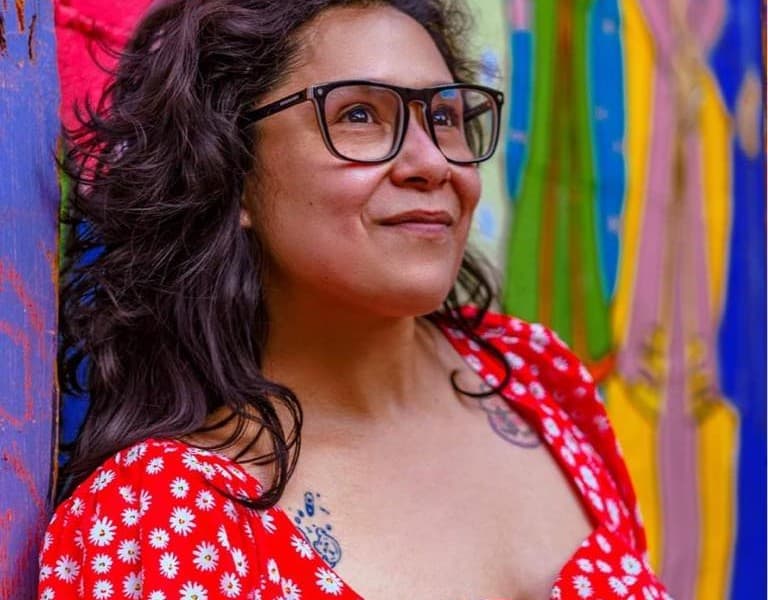
In a Mexicali Novel, a Secret and an Unraveling Childhood Friendship
Elma Correa’s award-winning Donde termina el verano follows two girls from the working-class outskirts of Mexicali whose friendship, guilt and memories are shaped by a childhood disappearance and the borderlands around them.
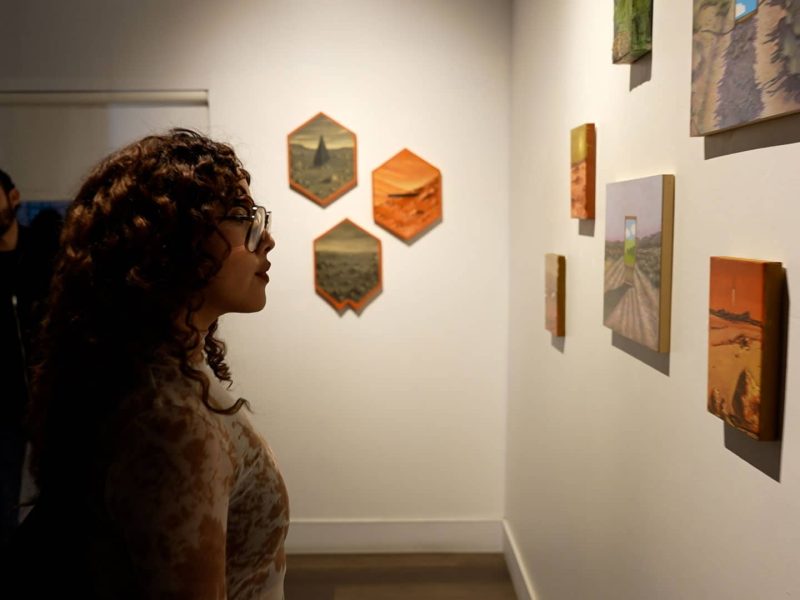
Reporter’s Notebook: NAFTA, Tijuana Art Week, and the Built Environment of the Baja Borderlands
A road trip through Baja California reveals how free trade, migration, and border policy have reshaped Tijuana’s landscape, and why the uncertain future of the USMCA invites new questions about what comes next.
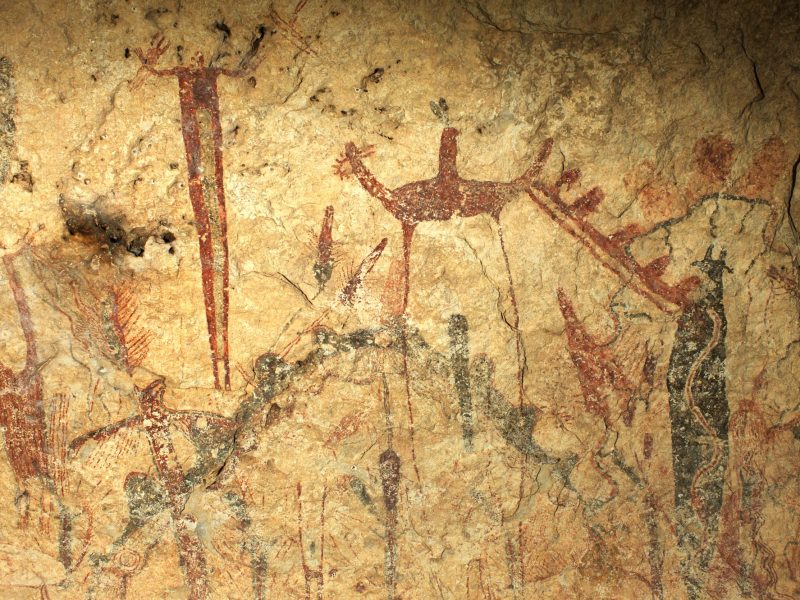
Trump’s Border Wall Is Coming for Some of the Oldest Murals in North America
A $2.6 billion border barrier through Texas’ Lower Pecos Canyonlands has archaeologists warning that irreplaceable indigenous rock art and sacred sites could be destroyed.