
The Accidental Revival of José Revueltas
How a prolific Mexican writer, all but unknown in the United States, became the patron saint of some of this year’s most important borderlands books.
The 1943 novel El luto humano (Human mourning) opens with the death of a child, Chonita, on a stormy night. With rain pouring down, the ordinarily thin local river has swelled into a flash flood. The few inhabitants of the area have gathered at the home of the girl’s parents. To reach the local priest for her funeral rites, they must go by boat, navigating the menacing current in the dark. As he follows the characters during the long night that follows, author José Revueltas (1914–76) narrates the history that has brought them to this moment: the Mexican Revolution, the anticlerical Cristero War, and the failed postrevolutionary project of building irrigation districts for smallholder farmers in arid regions, where the characters now eke out their existence.
Since first reading it, I’ve considered El luto humano one of my favorite novels, in part because among its literary ambitions is something I considered my own existential mandate: to understand and portray how water infrastructure shapes human sensibilities. So I was both pleased and astounded to notice that three of this year’s most consequential books about the U.S.-Mexico border all chose epigraphs by Revueltas. Why does he suddenly preside over and knit together the contemporary conversation about the borderlands?
Revueltas was born in 1914 in Santiago Papasquiaro, Durango, a small city in the semiarid folds of the Sierra Madre Occidental. In 1920 his family relocated to Mexico City. After the death of his father three years later, they faced, in his words, “the extreme maximum of precarity.” He dropped out of school at age 11, becoming instead an autodidactic devotee of the country’s national library and, soon, a committed leftist.

In 1929, after attending a political meeting, he was sentenced to a year and a day in jail for rebellion and sedition, the first of multiple stints behind bars. After being released on bond after six months, he joined the Mexican Communist Party, which had been outlawed by the country’s president five years earlier. Soon he was back in jail for the first of two terms at the penal colony on the Islas Marías, off Mexico’s Pacific coast. His second term there was punishment for participating in a cotton workers’ strike in Estación Camarón, Nuevo León, an event that laid the groundwork for El luto humano.
Revueltas spent the rest of his life participating fervently in activism—including the famous student protests of 1968, even though he was by then in his 50s—and writing prolifically. (For this mixture of literary ambition and leftist moral compass, one of his cellmates compared him to French existentialist and novelist Jean-Paul Sartre.) His complete works, which include novels, short stories, crónicas, letters, plays, and other works, take up 26 volumes; even the selected works span seven.
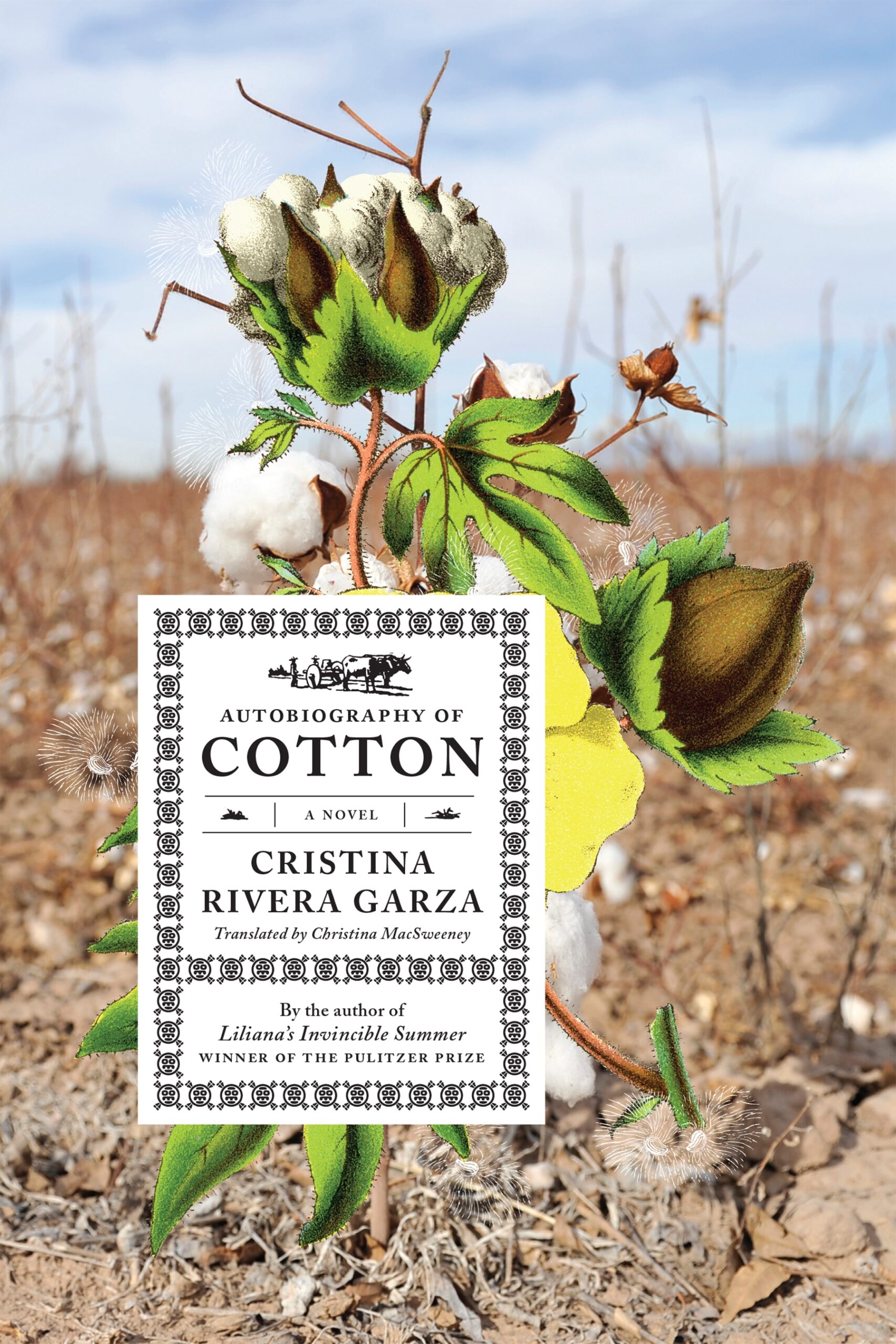
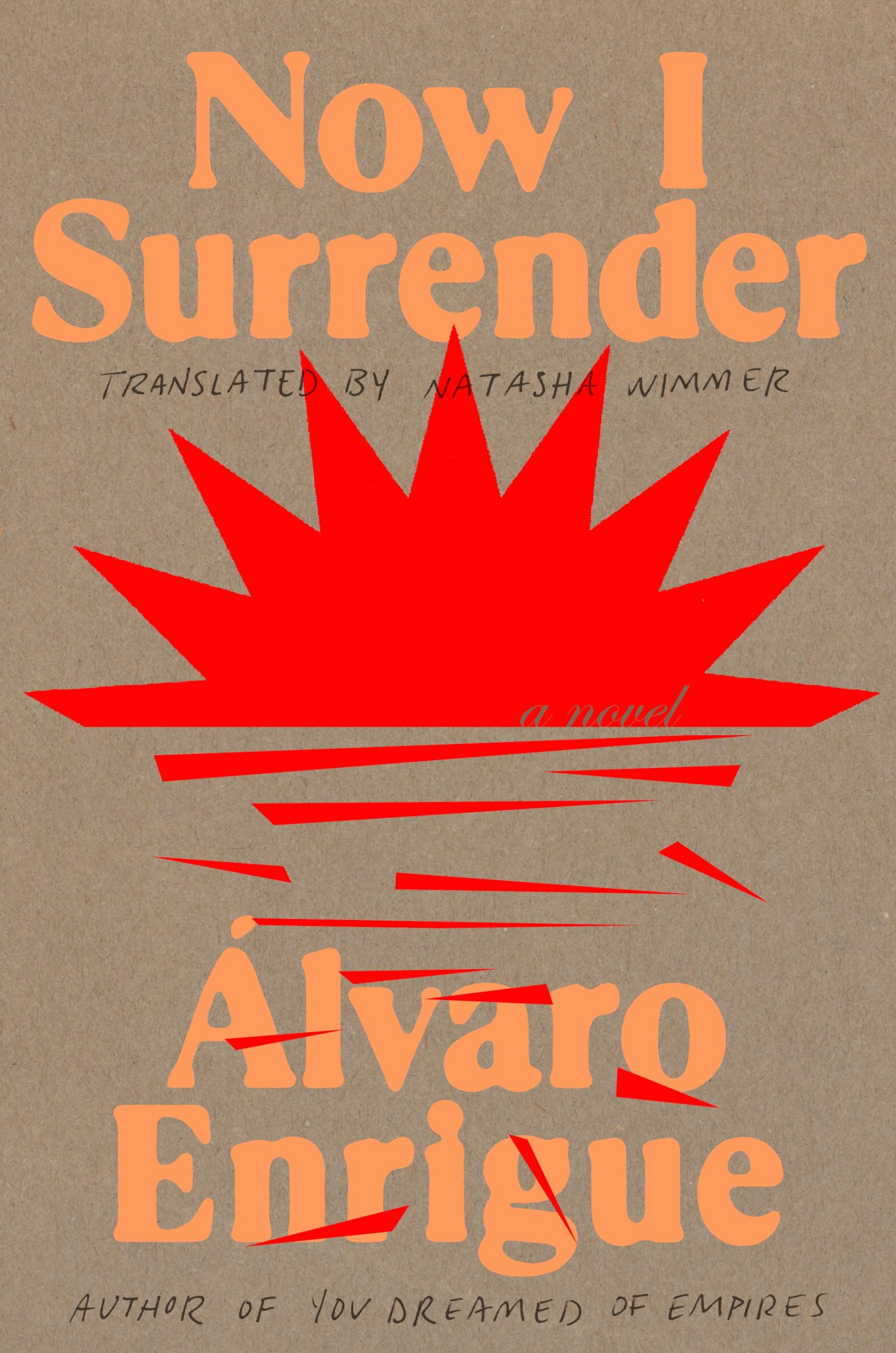
Two of the three books published this year with epigraphs drawn from Revueltas are works I’ve previously written about in The Border Chronicle. Christina Rivera Garza’s Autobiography of Cotton, published by Graywolf Press in Christina MacSweeney’s translation, novelizes the author’s family history in the cotton-growing regions of northern Mexico, including Estación Camarón, where Revueltas appears as a character. Álvaro Enrigue’s Now I Surrender, published by Riverhead in Natasha Wimmer’s translation, is a historical epic about the joint U.S.-Mexico campaign to apprehend Geronimo that draws its inscription from El apando (The hole), Revueltas’s 1969 novella about his time in Lecumberri prison.
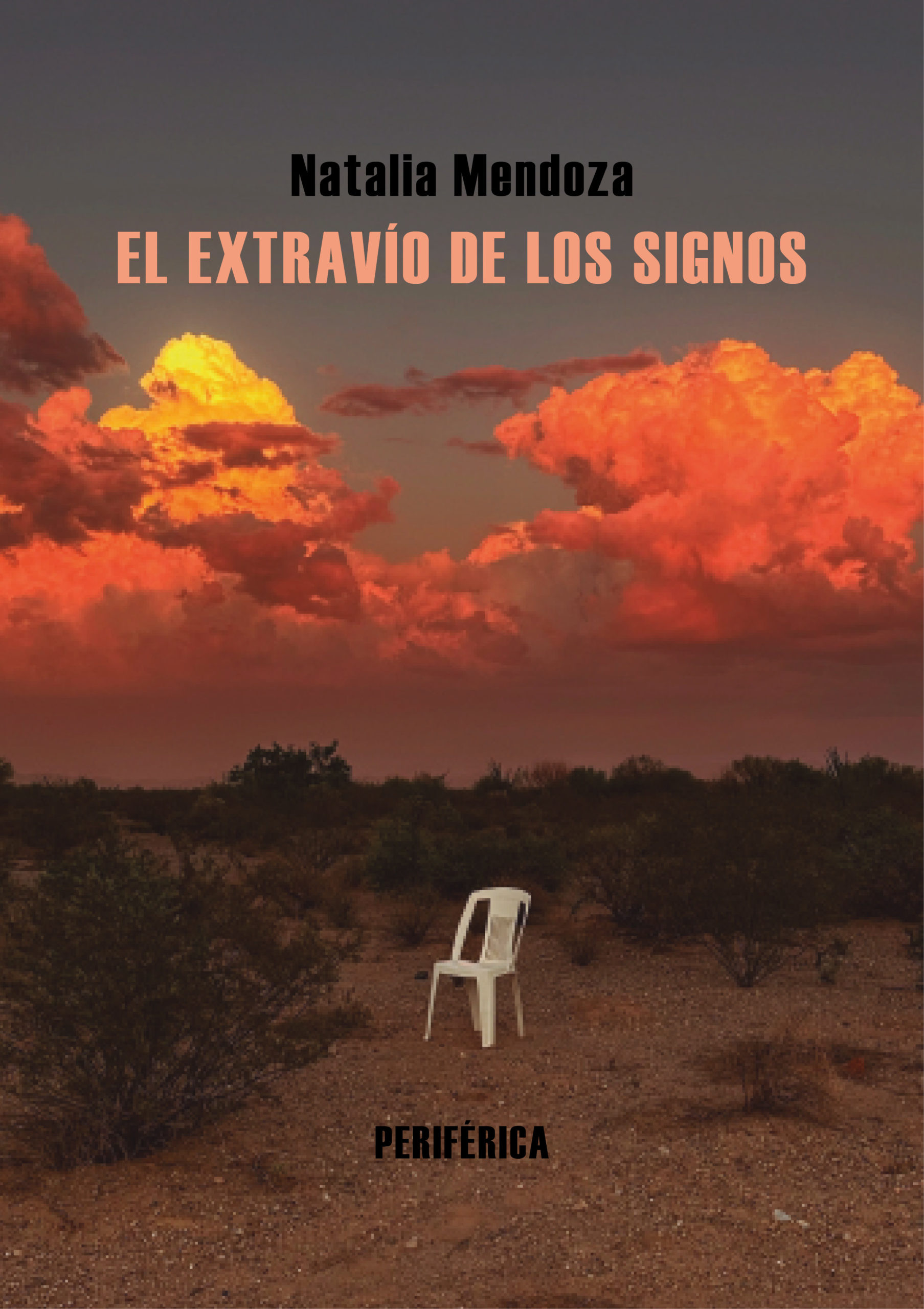
The third book is Natalia Mendoza’s El extravío de los signos (The loss of signs), a collection of essays about northern Sonora and the violence there. Mendoza, an anthropologist, lives in the town of Altar, which in recent decades has been a focal point in contestations over routes for the smuggling of both people and goods. One of her essays builds on past theorizations of contemporary violence that draw on Sophocles’ Antigone, which has frequently lent itself to Latin American adaptations, because of the way its protagonist defies the king to conduct forbidden funeral rites for her brother. Another essay follows the work of the Madres Buscadoras de Sonora, a group of women who conduct boots-on-the-ground intelligence searching for relatives who have been disappeared, explaining that they are not seeking to solve the murders—doing so would put the mothers in danger—but simply to have a site to mark the loss, “a-place-to-bring-flowers.”
It’s unsurprising that all three of these authors are Mexican, because Revueltas is largely unknown in the United States. Unlike his contemporaries Octavio Paz, whose Labyrinth of Solitude is a staple in the Spanish departments of U.S. universities, or Juan Rulfo, whose classic works El llano en llamas and Pedro Páramo have both recently been retranslated (and the latter adapted into a Netflix series), El luto humano’s 1990 translation, published by the University of Minnesota Press, has long fallen out of print. Its Publishers Weekly review was less than glowing to begin with, writing that “readers unfamiliar with Mexican history will be confused by Revueltas’s impressionistic presentation; it is sapped of literary strength by the flattening of characters into socioeconomic symbols.” Revueltas’s only work available in English is El apando, translated by Sophie Hughes and Amanda Hopkinson as The Hole and published by New Directions in 2018 with an introduction by Enrigue.
Yet Rivera Garza, Enrigue, and Mendoza have also all spent extensive periods of their careers in the United States, granting them fluency in both cultures and a dual perspective on the borderlands. So it’s also unsurprising that these epigraphs are drawn from neither the genteel, cosmopolitan Paz nor the Jaliscan Rulfo. Early on, Revueltas turned his attention to his natal north—specifically to the irrigation districts conceived for arid regions as part of the land-redistribution measures that aimed to turn former hacienda peons into yeoman farmers, with mixed results. In El luto humano, the irrigation district is depopulated after a crack in its dam renders the infrastructure useless; elsewhere, lands were distributed, but the infrastructure to make them arable was never built. Revueltas realized that these northern irrigation-district lands were not only the frontier of settlement of the moment but also the place where Mexico’s political and philosophical future was being forged.
In the three 2026 epigraphs, some of the enduring traits of Revueltas’s work are evident. Autobiography of Cotton’s epigraph is from a 1954 letter he sent to his wife while traveling in Veracruz. He describes the town of Poza Rica as “a working-class town [una población obrera] of the sort I’ve always had a fondness for, like Minatitlán, like Camarón, or Ciudad Anáhuac, that reminds me nostalgically of old episodes from the revolutionary struggle and makes me a little sad.” Perhaps chosen because it references two towns where Rivera Garza’s forebears lived, it also exemplifies how Revueltas’s understanding of political economy deepened his empathy toward Mexico and its people.
The epigraph to Now I Surrender, meanwhile, reads, “This gargantuan defeat of liberty, all the fault of geometry.” Enrigue has decontextualized the phrase from its original context of Revueltas’s discussion of prison architecture, but its new significance is immediately evident: the geometry of drawing national borders deprives people of their freedom. This is representative of another of Revueltas’s key techniques: describing how history always casts a shadow over the present. (His original title for El luto humano was Las huellas habitadas, or The inhabited traces.)
Finally, Mendoza’s epigraph comes from El luto humano itself:
Birds over the solitude of Mexico! They were birds of the era, birds of that desolate time, stupefied by the noise, the cries, and the blood of the earth. Birds that had stayed after the revolution, looking at the cadavers, the silence of the gunshots, and all the small people busy with the tasks of death.
The passage’s startling image evokes both Revueltas’s empathy and his awareness of history, and in Mendoza’s hand, it also reminds readers of his ability to transform his descriptive skill into political possibility. Mendoza connects these birds to those that appear in the plays of Sophocles, arguing that they illustrate the problems created when a society separates death from the rites that mark it. At the same time, she asks, much as Revueltas might have, why our political imagination for understanding the dynamics of our current era is so constrained—and seeks to expand it.
Though Revueltas never lived in the borderlands, he made a trip to Sonora and Baja California in 1943. Curiously, the crónicas he penned about it for the magazine Así did not make it into his voluminous collected works; instead, they were published by the Autonomous University of Hidalgo in a book called José Revueltas: Rescued Letters. Their descriptions are as rich and tender as those in his novels. Of Sonora, he writes that the names of “the mysterious small towns of the desert … seemed to have an evocative, surprising sorcery, at the same time full of loneliness: Caborca, Altar, Pitiquito, Sonoita. Something saturated with unknown adventure, of a hard-won undertaking.” Of the booming city of Mexicali, he writes that each man who arrives in the city looking to make some money at first believes that he will soon move on—“but something holds him back, something magic or strange that makes him have, in the end, a love for that unlovable, hard country. And there he remains, under the cloudless and rainless sky, on his feet in the expanses of flowering cotton.”
During the travelogue, Revueltas stops to consider the U.S.-Mexico relationship and how the countries’ intellectuals ought to perceive it. “We have never sufficiently fathomed the fact that this is a historic, forced neighborship that, barring a catastrophe, will last centuries,” he writes, adding that only a small minority in each country understands “that neither Mexico nor the United States are isolated countries and that both have …the task of creating a new world for humanity … without racial discrimination, without plutocracy, without imperialist gangs.”
What makes Rivera Garza, Enrigue, and Mendoza’s books such impressive contributions to literature about the borderlands is that they understand the region’s present as taking place in the inhabited traces of history. They center the generative and painful aspects of this long neighborship, expanding the known frameworks for borders, migration, and violence and pointing to new ways of thinking about them. Rivera Garza thinks with “the plurality of inhabited worlds,” placing human coexistence with other beings at the center of her conception of the borderlands. Mendoza writes that quelling violence must begin with “undoing the social borders established in the long project of the criminalization of drugs and smuggling.” Thinking from neighborship opens up new ways of relating that extend beyond the borderlands.

Despite his relative obscurity in the United States, Revueltas’s works have long been easily accessible in Mexico: practically any bookstore stocked some smattering of his works, whether individual novels or pieces from the 26- or seven-volume sets. The choices seemed so numerous that it was hard to know where to begin reading him. Sadly, that time may be coming to an end. In August, the publishing house Ediciones Era announced that, after 66 years, it was suspending its operations and closing its accounts with all the stores that stocked its books. “The network of bookstores that existed before the pandemic and that guaranteed our subsistence disappeared, to the point that sales dropped to barely 25 percent of what they were previously,” a press release stated.
Revueltas was far from the only keystone figure of Mexican letters published by Era. The loss of the house is a major blow to the intellectual ecosystem of Mexico and, indeed, the world. One wonders what Revueltas would have to say about what such a loss portends. In his stead, perhaps it will be Rivera Garza, Enrigue, or Mendoza, or another writer altogether who theorizes it for us.
Author

Related Articles

In a Mexicali Novel, a Secret and an Unraveling Childhood Friendship
Elma Correa’s award-winning Donde termina el verano follows two girls from the working-class outskirts of Mexicali whose friendship, guilt and memories are shaped by a childhood disappearance and the borderlands around them.
The Sonoran Desert’s Endemic Psychedelic: A Q&A with Writer Kimon de Greef
A new book tells the scandal-ridden tale of Sonora’s toad-smoking neo-shaman.
Reporter’s Notebook: NAFTA, Tijuana Art Week, and the Built Environment of the Baja Borderlands
A road trip through Baja California reveals how free trade, migration, and border policy have reshaped Tijuana’s landscape, and why the uncertain future of the USMCA invites new questions about what comes next.
Comments (0)
There are no comments on this article.