
In a Mexicali Novel, a Secret and an Unraveling Childhood Friendship
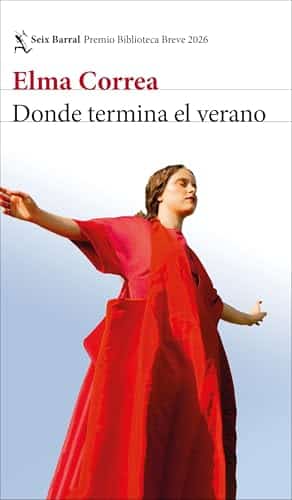
Elma Correa’s award-winning Donde termina el verano follows two girls from the working-class outskirts of Mexicali whose friendship, guilt and memories are shaped by a childhood disappearance and the borderlands around them.
“Se habían instalado en Mexicali porque era una ciudad incipiente, todavía con espíritu de pueblo,” writes Elma Correa in her 2026 novel Donde termina el verano, or Where Summer Ends. “They had settled in Mexicali because it was a city still coming into existence, one that still had the soul of a town.”[1]
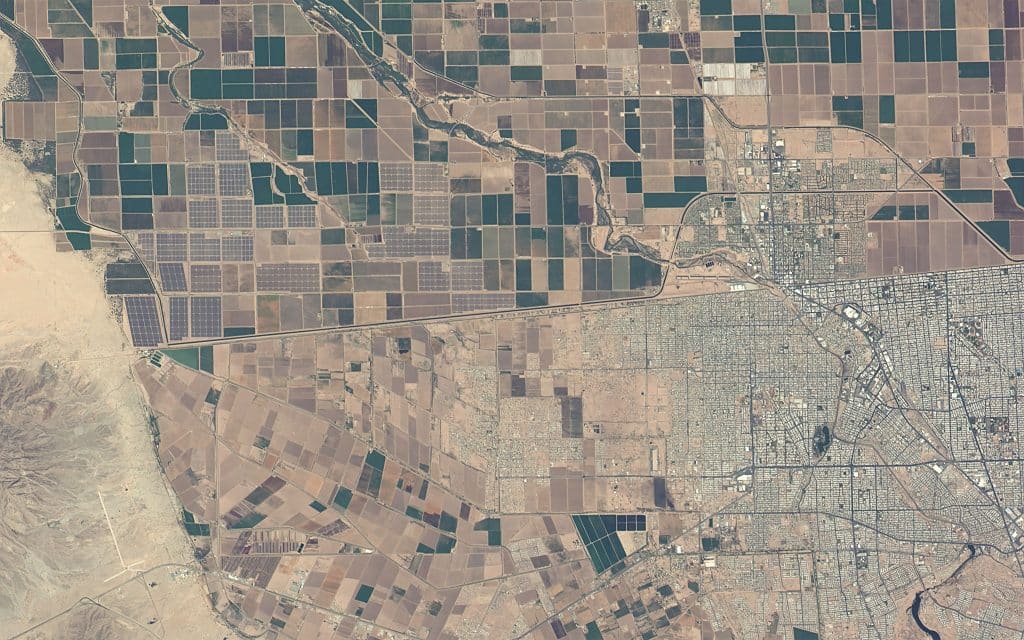
Correa’s novel is a portrait of this soul. It follows two friends, Elisa and Aimé, over two decades, illustrating divergent lives that are nevertheless indelibly shaped by their childhoods on the eastern periphery of Mexicali, Baja California. Correa was born and raised in a Mexicali neighborhood adjacent to the U.S.-Mexico border, one very similar to the novel’s fictionalized setting.
Now, her book has brought those borderlands lives into the spotlight: earlier this year, Donde termina el Verano was awarded the 2026 Premio Biblioteca Breve, one of the world’s most important Spanish-language literary prizes.
Awarded each February, the Premio Biblioteca Breve is sponsored by the publisher Seix Barral, an imprint of the Spanish media conglomerate Grupo Planeta. In addition to publication, the prize comes with an award of 30,000 euros. Since the prize’s creation in 1958, its winners have included such notable writers as Mario Vargas Llosa, Carlos Fuentes, and Elena Poniatowska. Correa is only the sixth Mexican writer to win the prize, breaking a 14-year streak of Spanish awardees.
Donde termina el verano opens in a setting familiar to Mexico’s border cities: a dusty baldío, or vacant lot. Elisa and Aimé, who are 12 years old and inseparable, are playing in its sandy dunes. Nearby, their families and others from the neighborhood are having an impromptu celebration featuring “carne asada, beer, sandwiches, Shasta sodas brought from the Korean markets in Calexico, a supermarket cake, and a speaker pumping out cumbias, corridos, and the odd pop ballad.” They are celebrating Elisa’s final night before leaving for Monterrey, where she has received a scholarship to pursue professional training as a long jumper.
The first signal that the novel is taking place in the late 1990s comes when the girls start talking about the Spice Girls. But other clues quickly reveal themselves. NAFTA was signed just a few years earlier. The city is in the middle of a crisis of child kidnappings, and the crimes have centered on neighborhoods like the characters’ own—working-class areas of the eastern periphery. “It was said that children had been stolen in those parts for years. Everyone had a story of a child, nephew, or sibling of some acquaintance who had disappeared into thin air.”
By the end of the night, amid the hubbub of the neighborhood party and the childhood competitiveness among Elisa, Aimé, and the other neighborhood kids who join them on the baldío, another child will have gone missing—Rosario, whom the friends know as the poorest girl in their school and have long ostracized for that reason. Elisa and Aimé will have been the last to see her. Together, they will guard that secret, its haunting guilt uniting them even as they grow apart.
To untangle the mystery of Rosario’s disappearance, Correa takes her novel deep into neighborhood life, observing its rhythms and waiting for clues to appear. Seemingly every layer of this daily life is shaped by the border, even as relatively few characters in the novel actually cross the line. Aimé’s family members, for instance, are internal migrants from Jalisco who never planned to settle permanently in Mexicali:
Like almost all internal migrants, they had hoped that their time in Mexicali and its insufferable summers would be temporary; their real destination was Tijuana, with its Californian climate and its options for work on both sides of the border. And yet, like many other unlucky internal migrants, they had reluctantly set themselves up in that working-class neighborhood.
Next to the girls’ vacant lot, meanwhile, is a camp of Romani people. “The Gypsy camp was right in front of the baldío where they played, on another abandoned lot whose owner no one was sure about, which was why they would come and put their motor homes and tents there,” writes Correa. The girls’ parents refer to them as gitanos (Gypsies) or húngaros (Hungarians)—even though the girls learn they are not from Hungary at all—and won’t allow them to go near the encampment. That suspicion toward the outsiders gives way to discrimination when they are accused of the kidnappings.
Though there’s scant official documentation of Romani people in Mexicali, in an interview with Qué Leer, Correa says this element of the novel is based on a real occurrence in her childhood neighborhood. “They were there three days. Only three days and they left,” she says. “But that small event caused a commotion in my neighborhood. And I got obsessed with how everyone had reacted and who the ‘húngaros’ were.”
Another feature of the girls’ neighborhood is the Protestant missionaries who cross from the United States to evangelize, hand out canned goods, and organize events for Easter and Pentecost with games and cake. The neighborhood residents disparagingly call them aleluyas—“the Hallelujahs”—but entertain their proselytizing even as they don’t take it seriously. “The neighbors,” Correa writes, “didn’t think they were failing their Catholicism; on the contrary, their faith got stronger when they listened to the strange ideas of the other religions, and there was a feeling of making fun of the Americans, of scores getting settled every time they took advantage of them.”
Finally, two nurses who are part of a government program to provide basic health services to poor communities traverse the neighborhood on foot each day, going in and out of houses, talking to residents, and discovering evidence of the violence that permeates the community. This feature of the novel, too, is drawn from Correa’s life experience: she writes in the book’s acknowledgments that her mother was a visiting nurse like those in the novel. The nurses are afforded privileged insights into neighborhood life by dint of having slowly learned its codes and gained its residents’ trust.
Donde termina el verano is simultaneously a riveting mystery and a literary account of the passage of time. Its opening sentence evokes the first line of Fernanda Melchor’s 2017 hit novel Hurricane Season (here in Sophie Hughes’s translation): “They reached the canal along the track [brecha] leading up from the river, their slingshots drawn for battle and their eyes squinting, almost stitched together, in the midday glare.” Compare Correa’s opener: “They were content as they ran toward the tallest dune of the vacant lot, raising a cloud of dust behind them.” Both sentences capture a moment of exultant childhood adventure overshadowed by the sense that something terrible is about to happen. The novels’ structures are similar too: each comprises eight chapters that gradually unspool a mystery from a different point of view, whether a new character’s lens or a new moment in time.
Meanwhile, in its close treatment of a friendship between two girls as they grow into women, and with its inextricable tension and tenderness, Donde termina el verano recalls Elena Ferrante’s Neapolitan Novels tetralogy. English-language readers looking for something similar while they wait for Correa’s novel to be published in English might also check out Dogs of Summer by Andrea Abreu, translated by Julia Sanches, which follows a friendship between two 10-year-old girls in a working-class neighborhood of Tenerife, on the Canary Islands, over a single intense summer.
Though border literature is often associated with migration and stories of the often-harrowing experiences of crossing the heavily militarized international line, the region’s quotidian textures also offer up distinctive experiences worthy of literary examination. These life experiences differ vastly from one another based on which side of the border—and which region, era, and social class—one finds oneself. Donde termina el verano powerfully captures a slice of place and time in the region and uses it to consider bigger human questions of community, care, and how lives are assigned value.
Donde termina el verano is available from The Border Chronicle‘s Bookshop.org storefront.
[1] All phrases from Donde termina el verano rendered here in English were translated by Caroline Tracey solely for the purpose of this review.
Author

Related Articles

The Sonoran Desert’s Endemic Psychedelic: A Q&A with Writer Kimon de Greef
A new book tells the scandal-ridden tale of Sonora’s toad-smoking neo-shaman.
Reporter’s Notebook: NAFTA, Tijuana Art Week, and the Built Environment of the Baja Borderlands
A road trip through Baja California reveals how free trade, migration, and border policy have reshaped Tijuana’s landscape, and why the uncertain future of the USMCA invites new questions about what comes next.

Trump’s Border Wall Is Coming for Some of the Oldest Murals in North America
A $2.6 billion border barrier through Texas’ Lower Pecos Canyonlands has archaeologists warning that irreplaceable indigenous rock art and sacred sites could be destroyed.