Countering the Negative Border Narrative: A Photo Essay on the Friends across Borders Event in Agua Prieta and Douglas
A binational gathering shows that the borderlands community seeks peace and unity, not a manufactured war zone.
A binational gathering shows that the borderlands community seeks peace and unity, not a manufactured war zone.

As DHS gaslights border communities, help document the reality on Wall Watch, our new community powered map for border wall construction, and a podcast from the resistance in Lochiel, Arizona, where protestors try to save the last ancient Cottonwood tree from bulldozers.

A vivid depiction of what has been happening during the last eight weeks of resistance against border wall construction in southern Arizona’s San Rafael Valley.
A binational gathering shows that the borderlands community seeks peace and unity, not a manufactured war zone.

When I arrived in Douglas, Arizona, on Saturday afternoon, I went immediately to where Dolores Avenue connects with the border road. That’s where I understood that people would gather for the Friends across the Border binational event, meant to counter the national narrative of fear and division. Of course, I misread the flyer. My mistake, however (and luckily), turned out to be educational. I parked in front of Calvary Cemetery and walked along the graves on a gravel road, where I could see the 20-foot wall in the distance, draped with row after row of concertina wire. Next to the wall, cameras mounted on the mast of a remote video surveillance system stared into Mexico like a Peeping Tom.
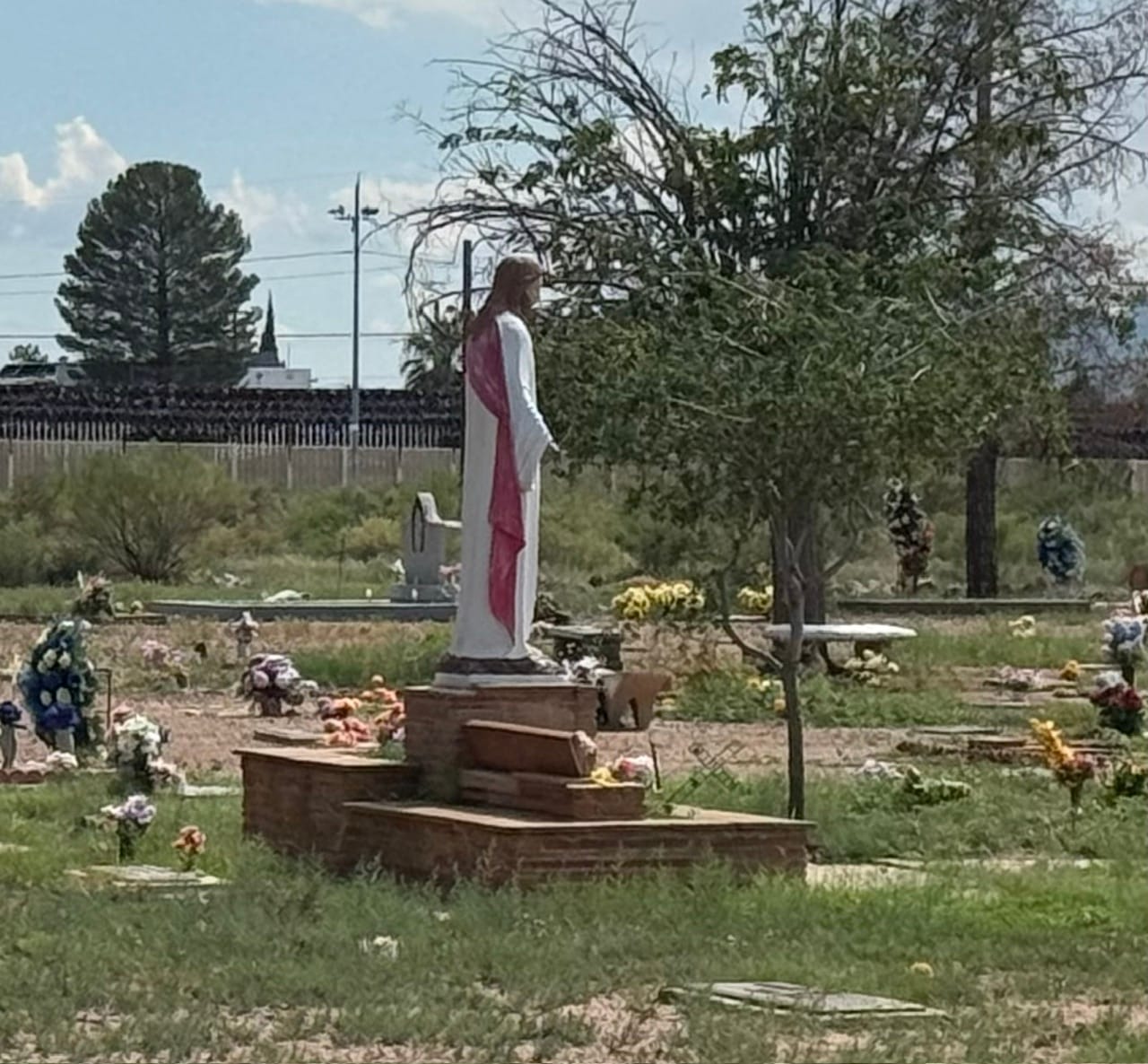
In Douglas there are two border walls: the main wall along with a secondary wall made of yellow steel mesh, which brought to mind the double-wall construction the Trump administration was undertaking in the San Rafael Valley, not too far to the west. As I walked, I saw a Border Patrol vehicle stationed near the wall, but I still could not see any gathering. I kept walking, thinking my angle might be blocked. Maybe the people were simply around the corner. But I had my doubts, and they became more intense the closer I got. This was partly because another Border Patrol vehicle came charging down the road, kicking up dust and gravel, as if it were after somebody. And then another came flying down the road, doing the same. I stopped in my tracks; things seemed volatile. Another DHS vehicle moved to the gravel road where I walked as if to blockade it. Did I misread the flyer?
I turned around. As I walked back to my car, I recalled the last time I was in Douglas, a few months earlier, when an agent stopped me on that very border road. The agent told me civilians were barred from the border road. That was just a few weeks before the military entered Douglas in April, filling up all the hotel rooms. And this was amid the looming threats of wall construction throughout the borderlands, not only in the nearby San Rafael Valley but also in the Tohono O’odham Nation, the sacred Quitobaquito Springs, Big Bend National Park, and Brownsville, where a buoy barrier now bisects the Rio Grande.
But it was beyond even that. The agent alluded to “global escalations,” as if being near the border were a national security risk, less than a week after the U.S. and Israel launched an attack on Iran known as Operation Epic Fury.
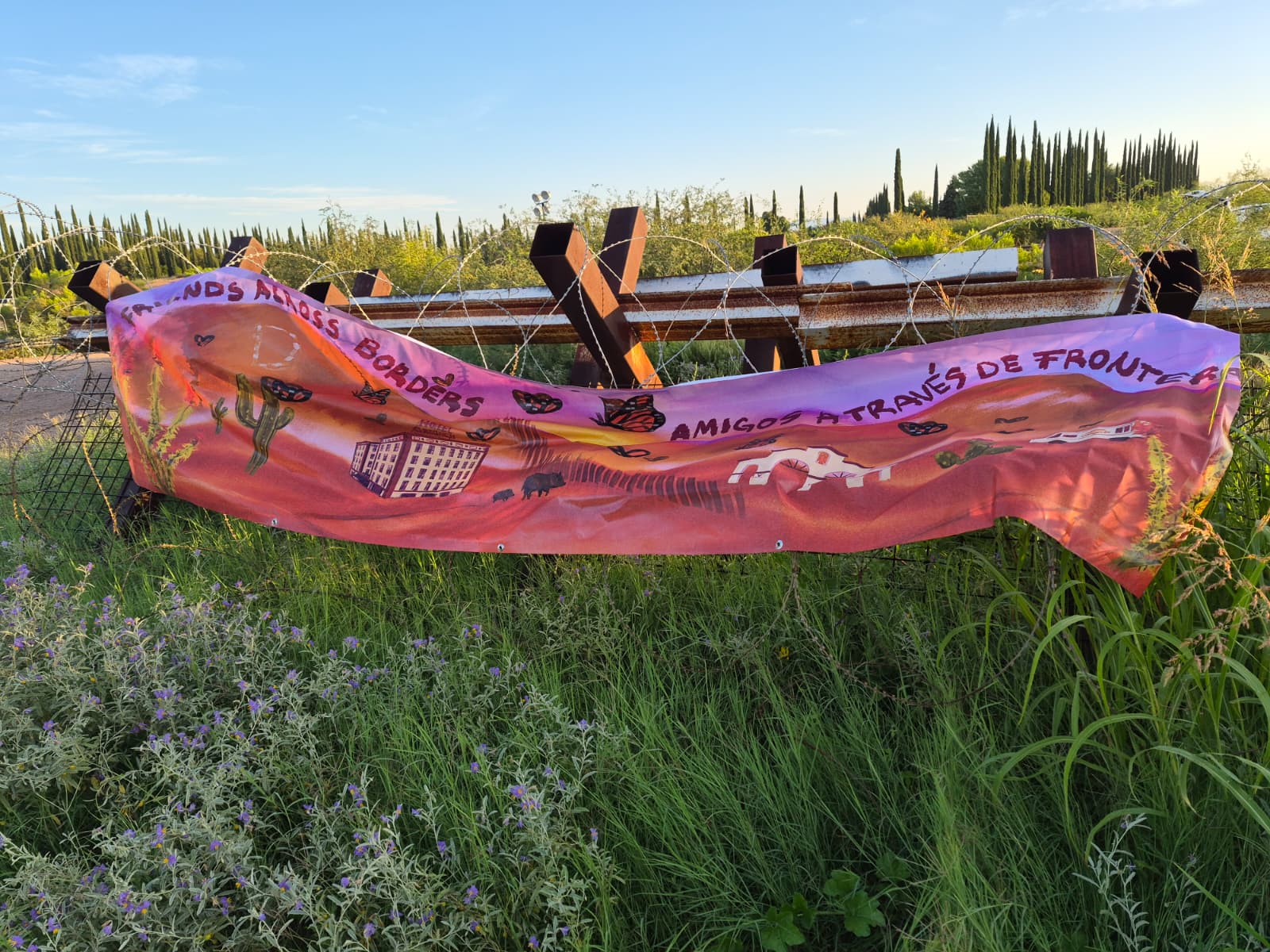
This was why my mistake was educational (at this point, the gathering was across the border in Agua Prieta; I had misread the flyer). I was reminded that this place is a manufactured war zone. But if I had gone any farther, I wouldn’t have come to the gathering; instead, I might have seen this Normandy vehicle barrier (in the photo below) with the Friends across the Border banner draped over it. The people are not just tired of the fear narrative but are ready to imagine something new altogether. The following photos show just that.
The people of Agua Prieta and Douglas did not seek war; they sought peace, unity, and friendship, a reality that in many ways already existed. As Naco, Sonora, resident Angélica López shared with me later that day, “I think it is a very important event because it is a way for our community to show how united and how blended we are. These types of events, they put us out there for other people to see. They are something tangible, and they show that this is not a war zone.”
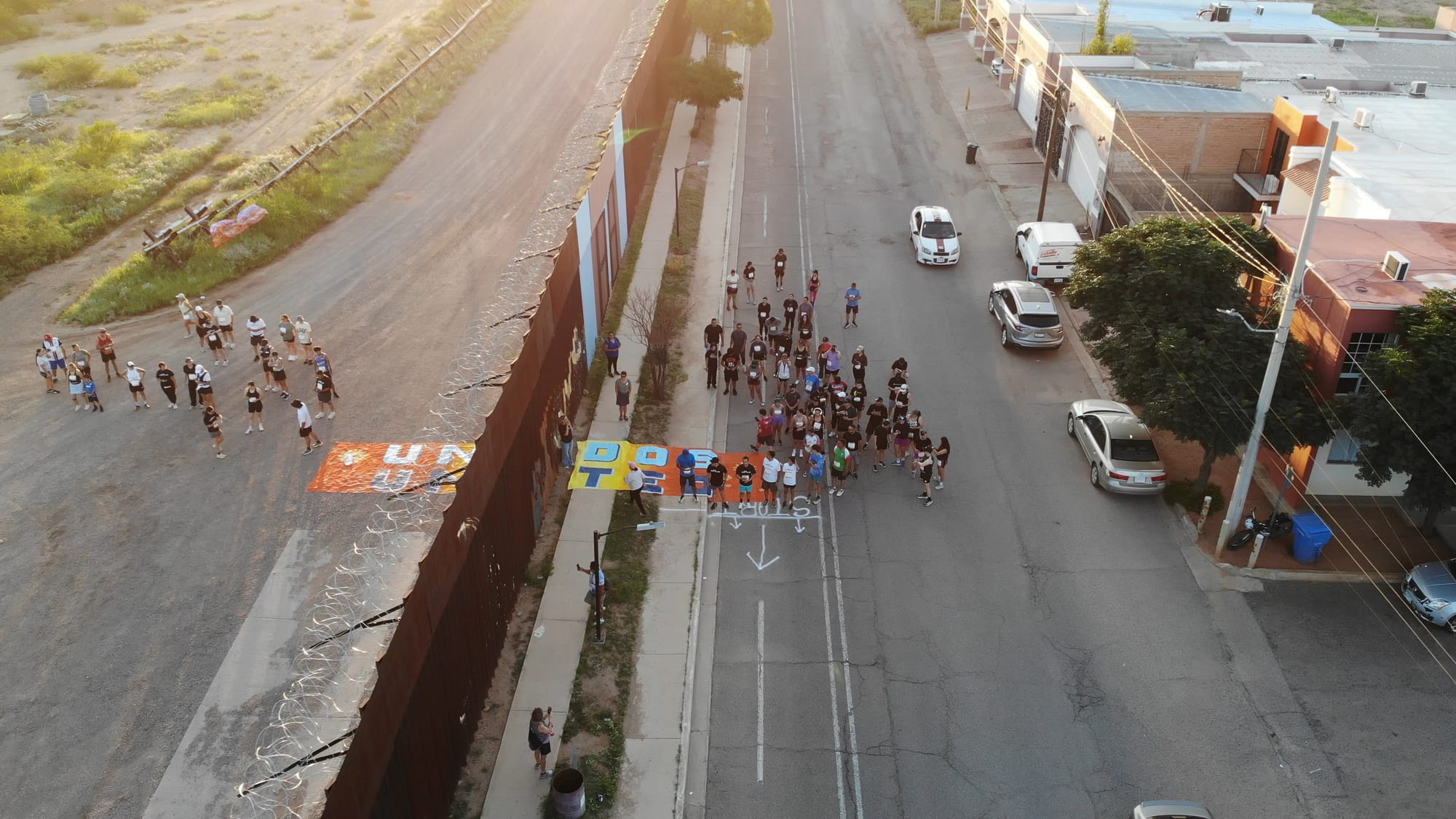
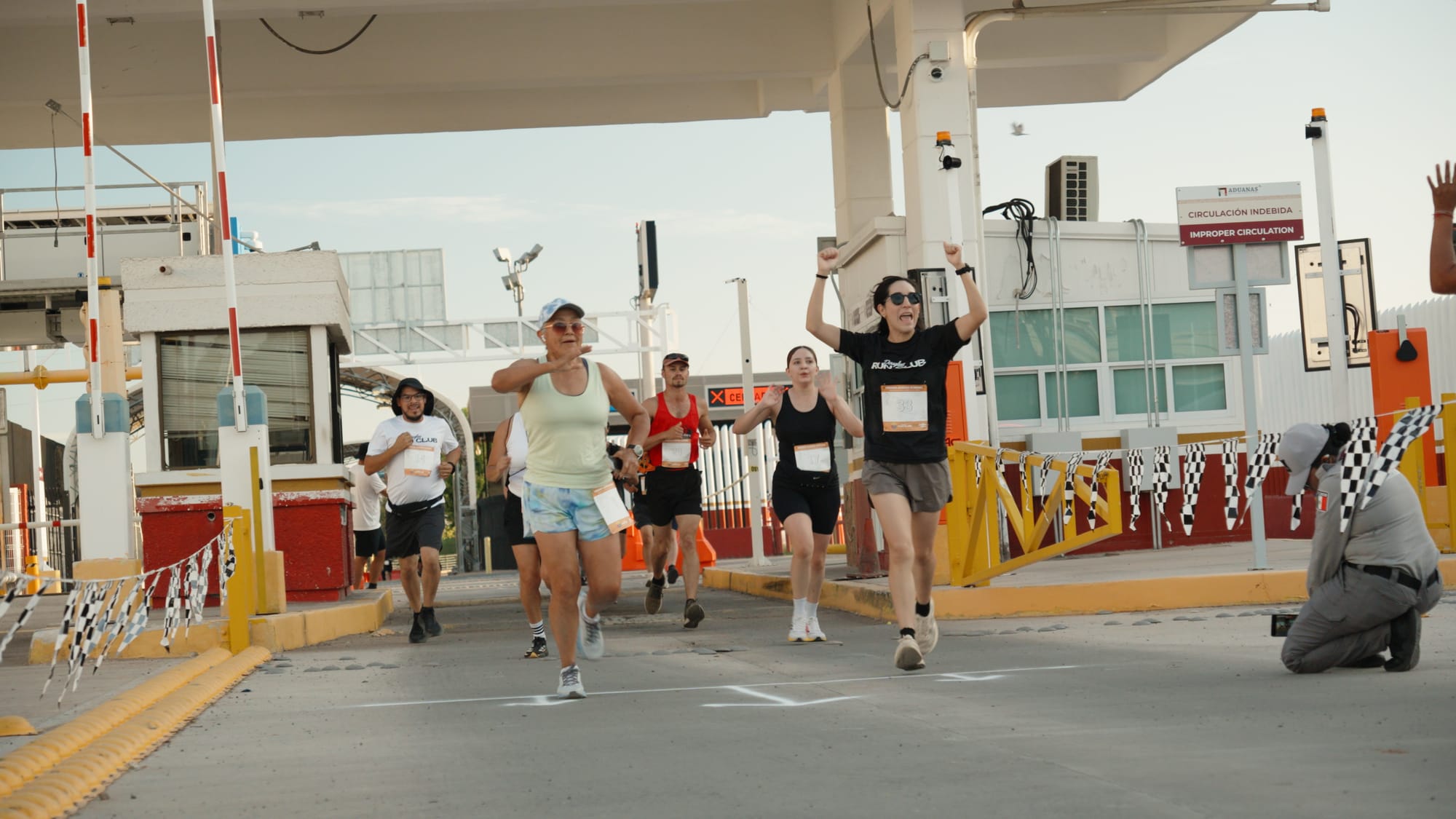
And the tangible began on August 15 at 5:45 a.m. with a binational five-kilometer run, which inaugurated the all-day event and started at the exact same spot where I would be walking later that day. I was just several hours late. I would have had to be there at the crack of dawn when dozens and dozens of runners gathered on both sides of the border to begin an event that ultimately sought peace.
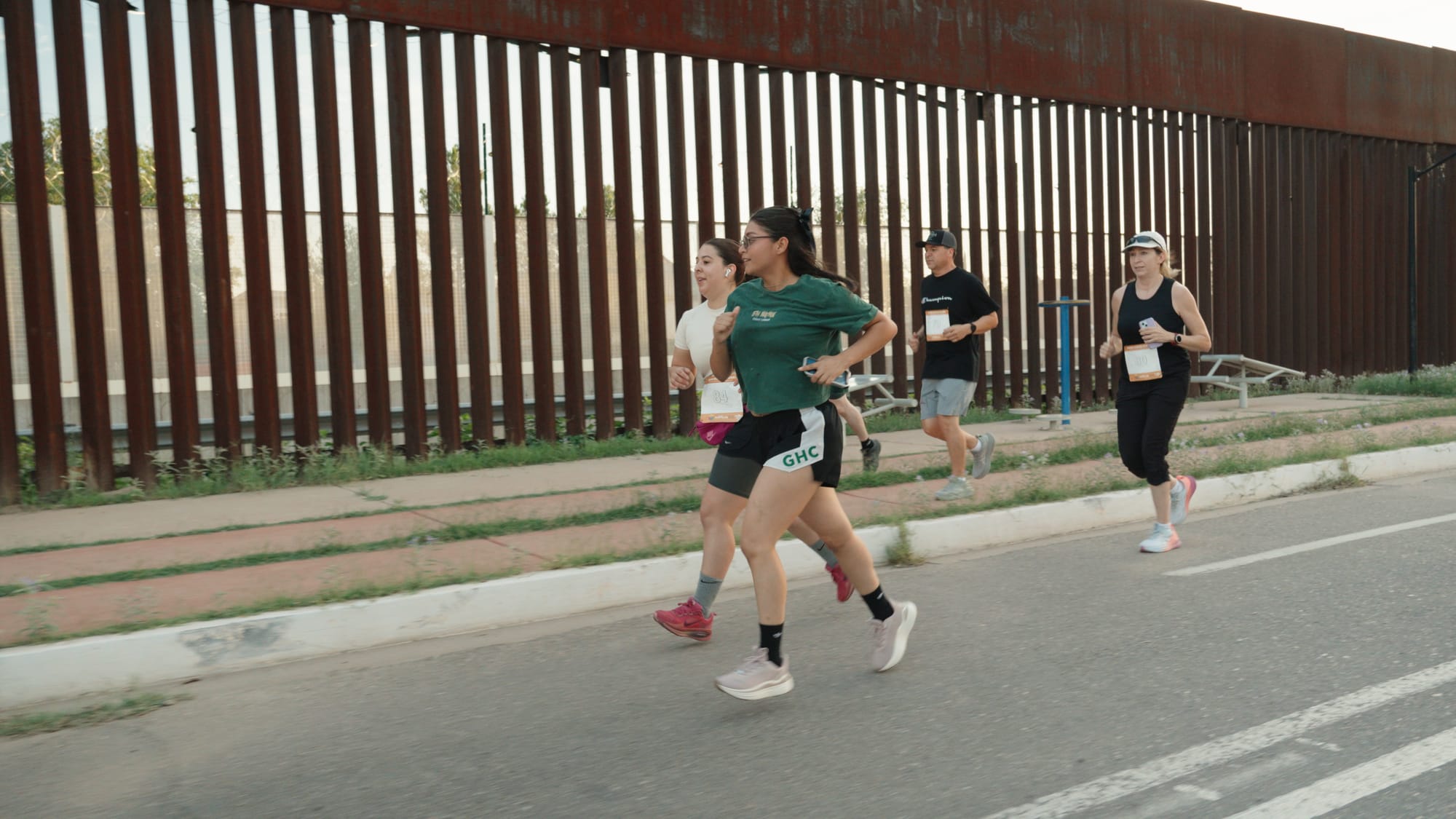
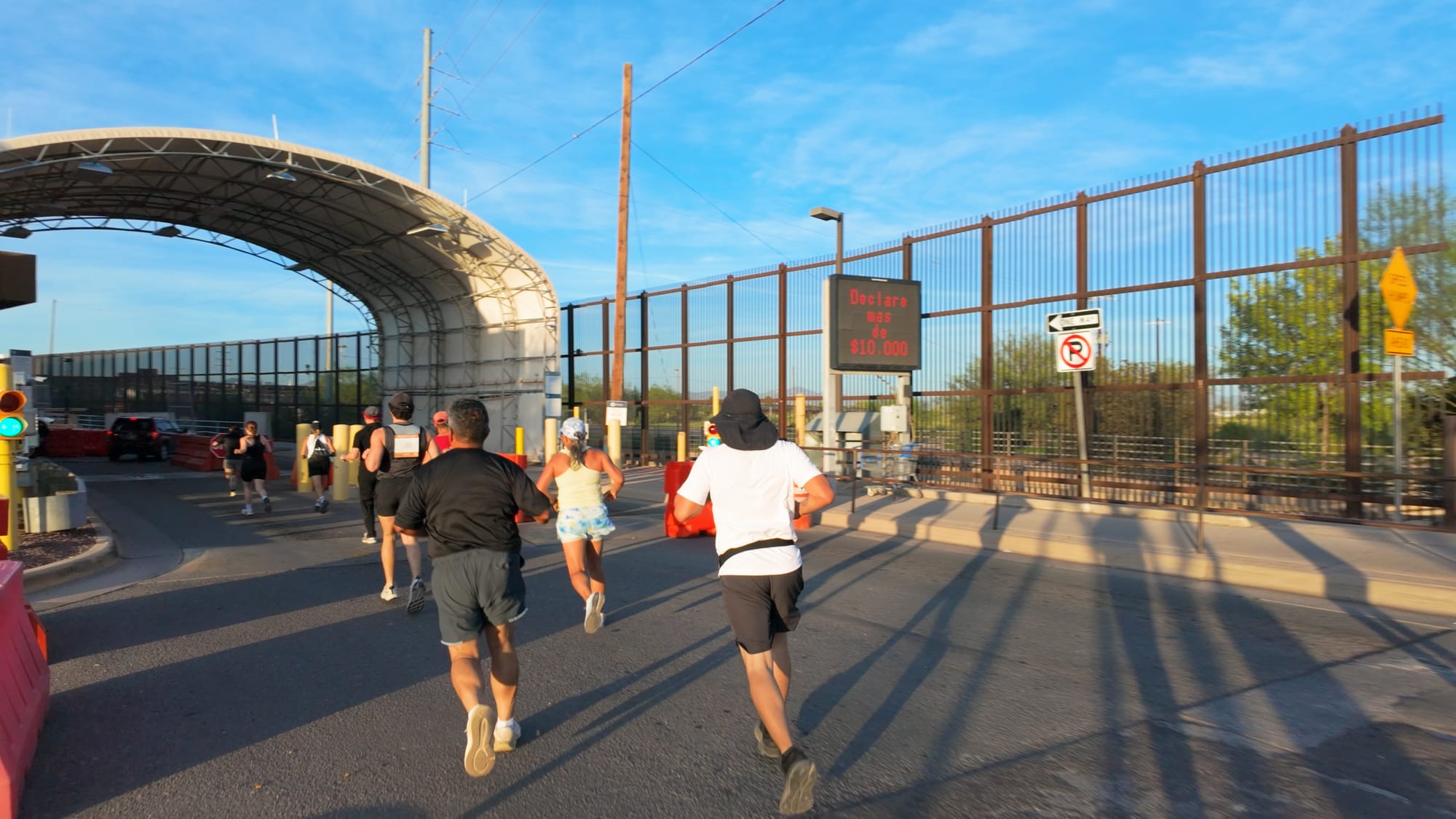
Mexico opened its port of entry so runners from the U.S. side could finish the race without stopping.
Mark Adams of the Douglas/Agua Prieta–based ministry Frontera de Cristo, and one of the organizers of the event, told me, “I think so much that is thought about the border is that it needs to be secured, militarized. It’s a place of division, fear, hatred even, and the reality is that those of us who live on the border understand the border is a place of interconnectedness and relationships across borders. So I think it’s important for our community, in the shadow of walls and concertina wire, to transform this place, return it to a place of encounter, a place of hope, a place of opportunity, so that we can counter narratives of what the federal policymakers want to make of us.
“We are not pawns. We are a community, and we need to witness who we are, so this kind of event where we run together, where we do yoga together, where we think about walls together, where we think about our shared history, which is very complex, and to celebrate together with music and dance and art. The border is such a rich place, but unfortunately it’s portrayed in such a negative light by politicians who want to use it as a political wedge and a cudgel, and something to enrich corporations with instead of vitalizing our communities.”
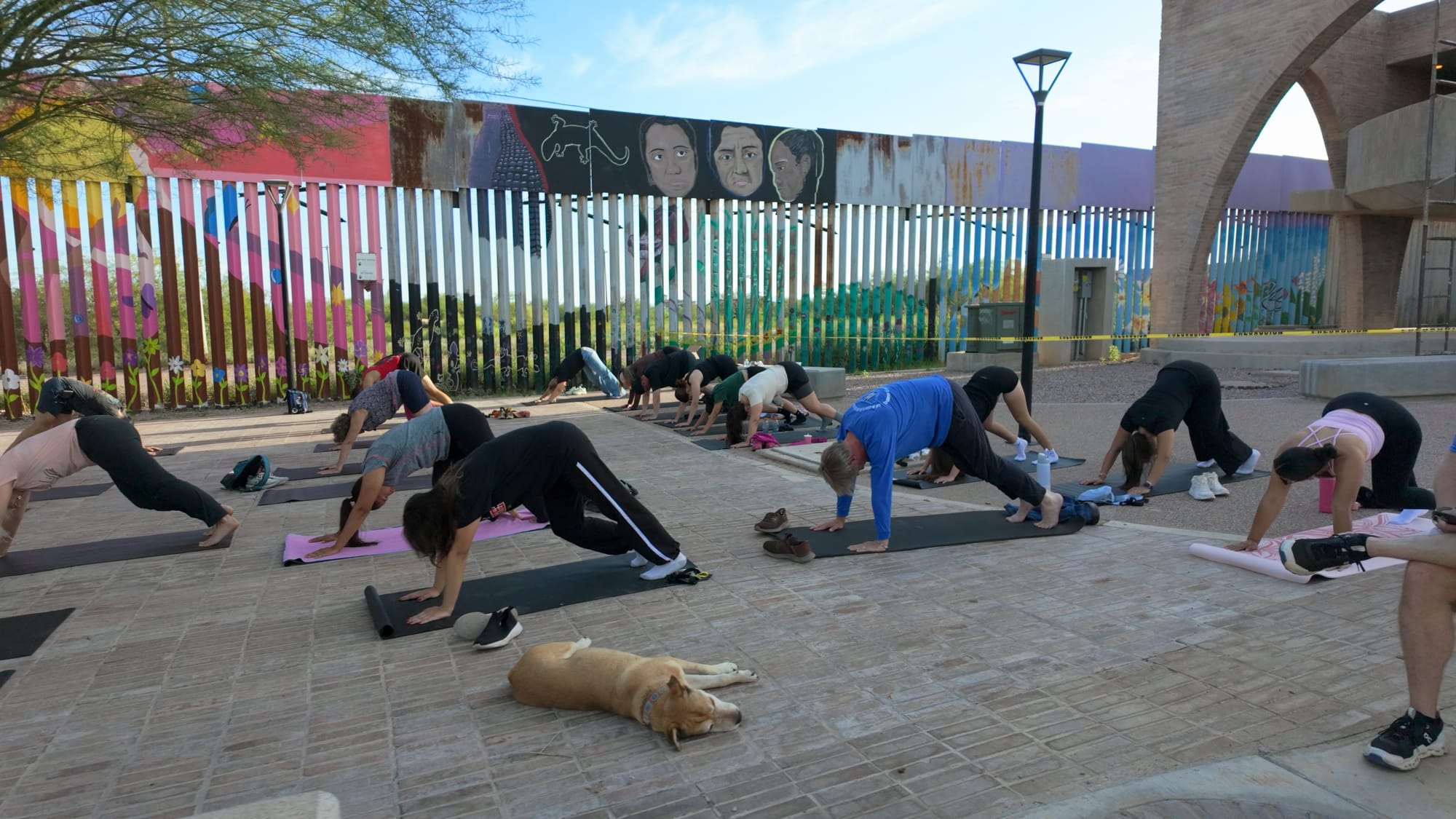
After the 5K run, a yoga session on the border was part of the programming.
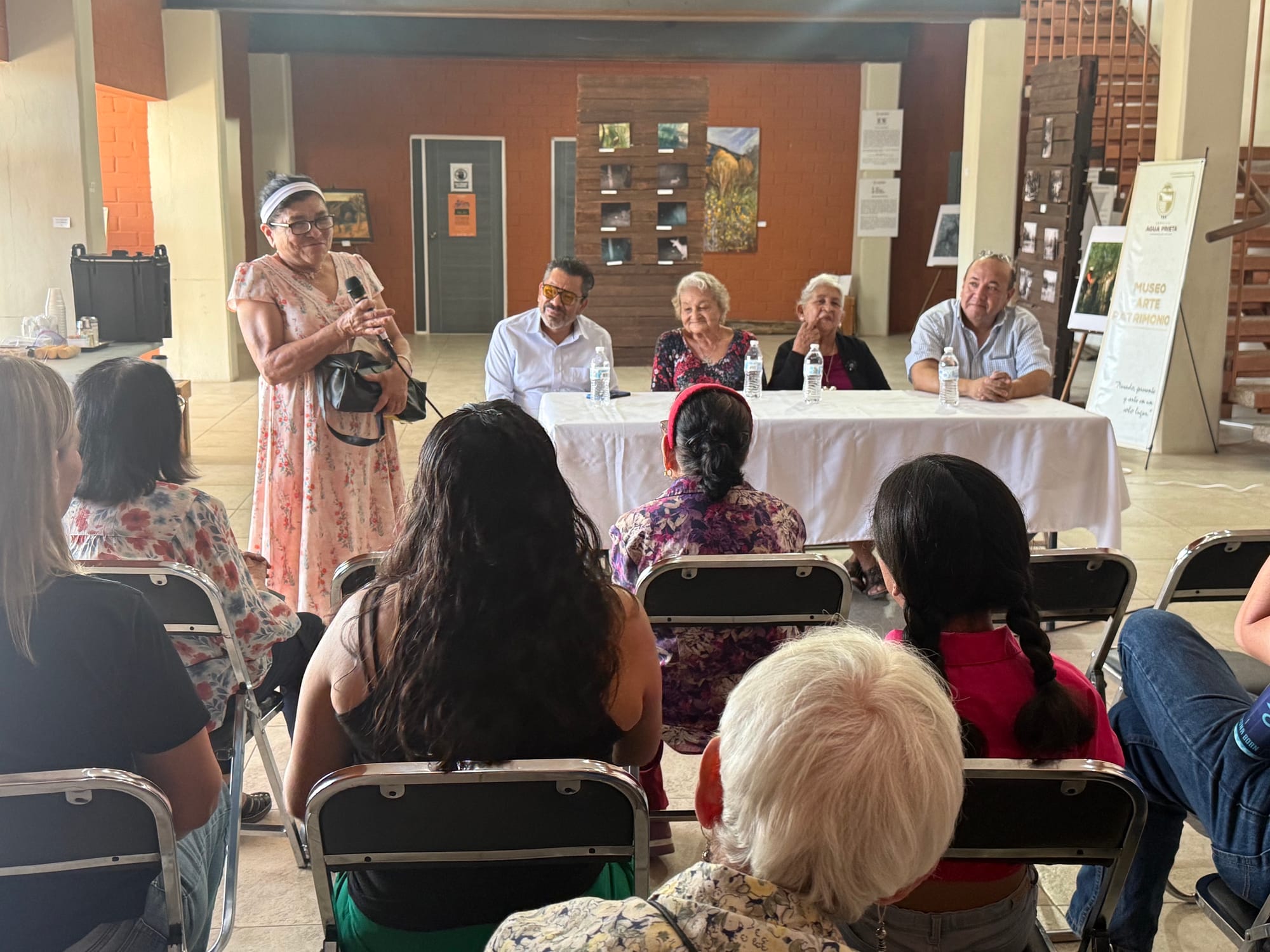
Throughout the day, there were several events, including one on migration and theology and another about alternatives and the Just Coffee cooperative. This photo is of a panel that remembered the past and discussed the deep, intertwined histories of Agua Prieta and Douglas at the Museo Arte Patrimonio.
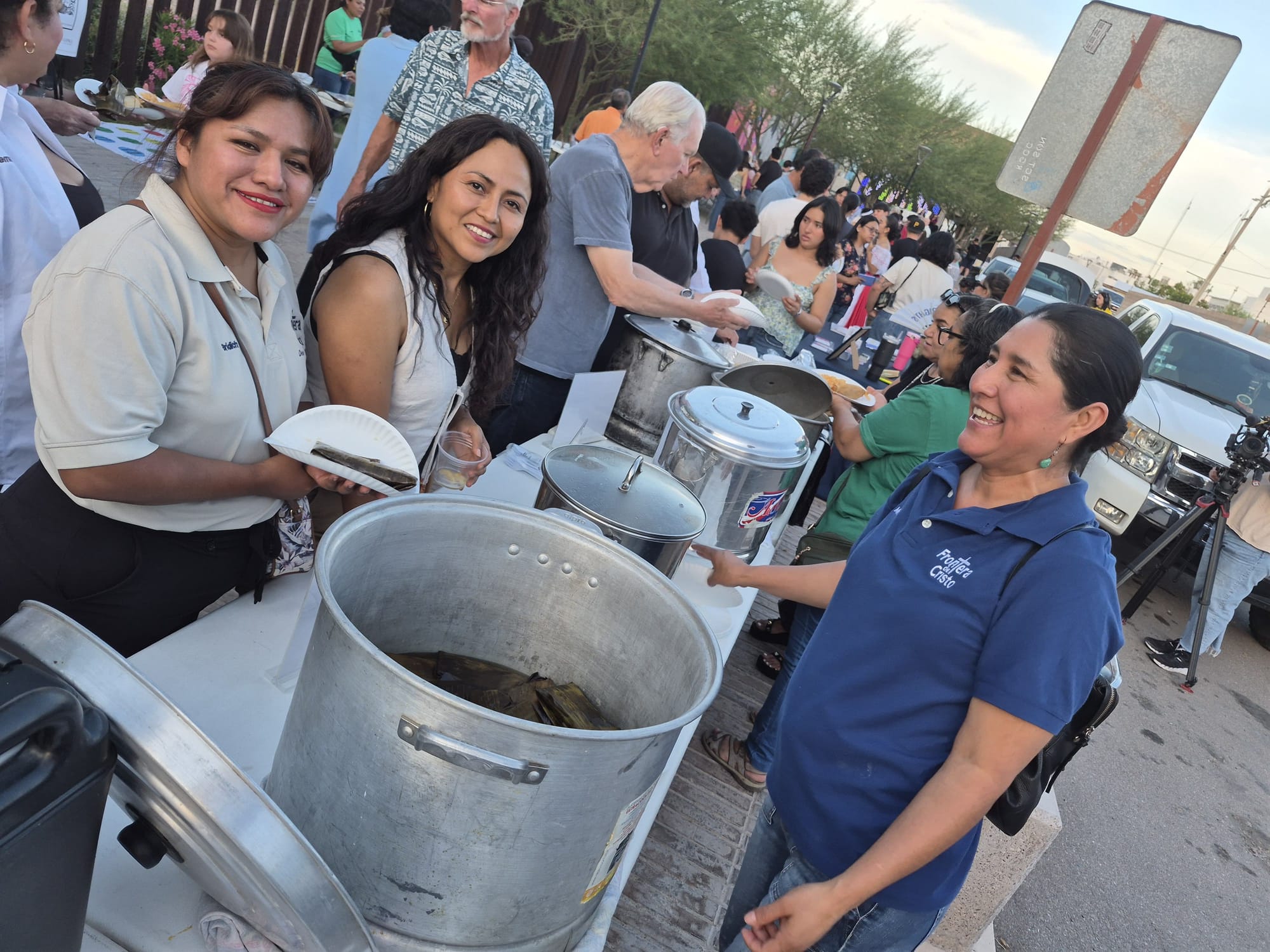
Serving tamales at the final celebration, along the border wall.
One of the organizers of the event, Alex Boneo, told me, “I think this event is important because of the meaning behind it. Of course, we are having fun. We’re together. We have music and food. But we can have those things at any other party.
“This one in specific comes with a message that no other event has. I think the message is here that we are united more than ever, we are one, we’re together. We just want to let the world know that’s how it is for us who live on the border, regardless of how other people read it on the news, and see it on the clips, this is the reality, we have fun, we laugh together, we cry together, and we eat together.”
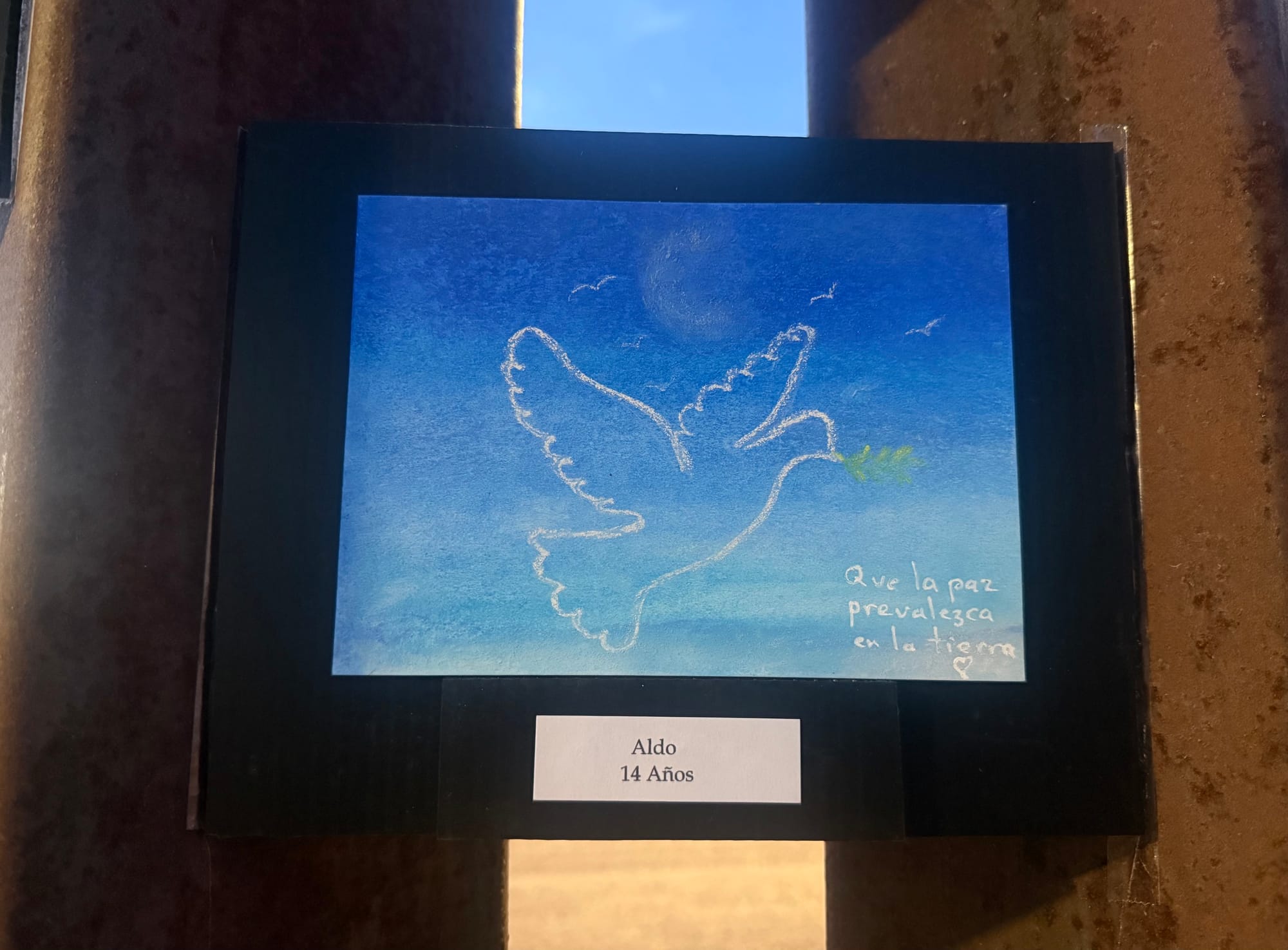
Que la paz prevalezca en la tierra, wrote a 14-year-old on a drawing placed in the bollards. This was one of many drawings asking that “peace prevail on earth,” placed on the border wall.
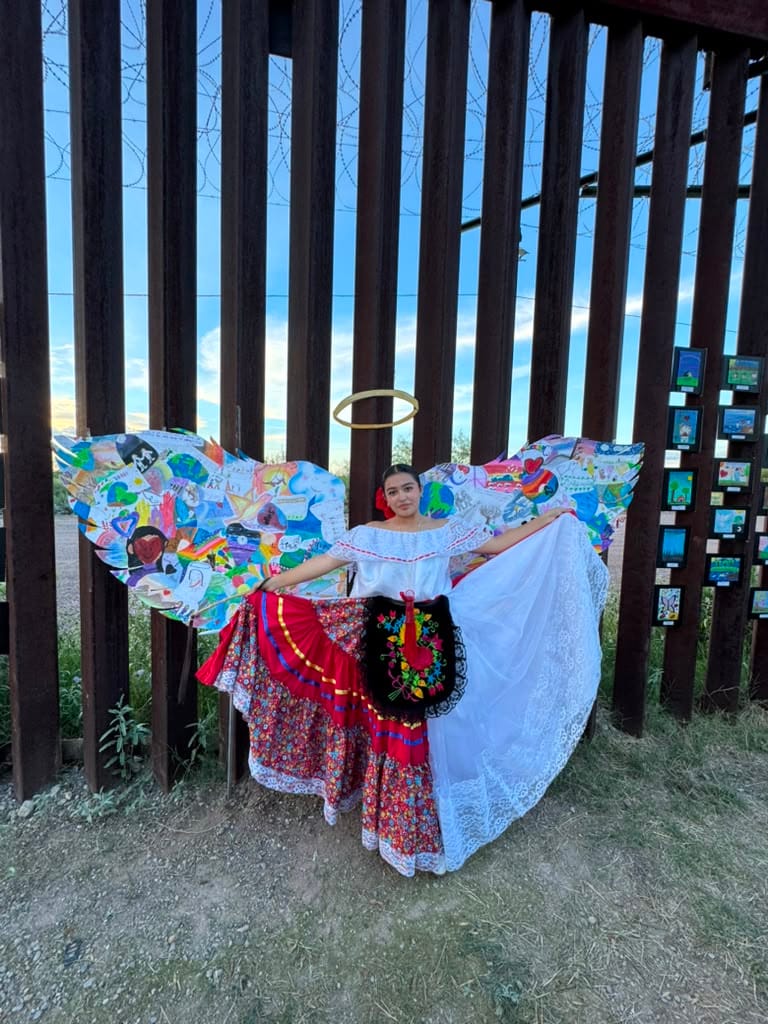
Ximena Hernández, in a traditional dress, is about to present a popurrí mexicano dance to the hundreds of people gathered. She stands with her arms spread and holding up either side of the long flowing dress. She is between the two wings, each a collage of unity, friendship, and the creation of a thriving binational community. Only 25 yards away, on the other side of the wall, a Border Patrol vehicle is stationed, idling.
Ximena’s mother, Angélica López, told me, “Yes, she performed. To her, it’s kind of like a normal thing. Oh yeah, I’m dancing by the border wall. Whatever, sure. Why not, Mom? But maybe for other kids who just moved here, maybe that’s something totally different. And I really do believe that us working with the younger generation about the border culture and making them aware of what it really is. It’s really important.”
Angélica mentioned the border lifestyle and what it’s like to go back and forth: “Sometimes it’s frustrating. It’s tiring. It takes a lot of time out of our day to go back and forth, so I didn’t want them to think about just that. So I kind of focused on the positive, because we live on the border. Some of our skills, we get them earlier in life, and others do not.”
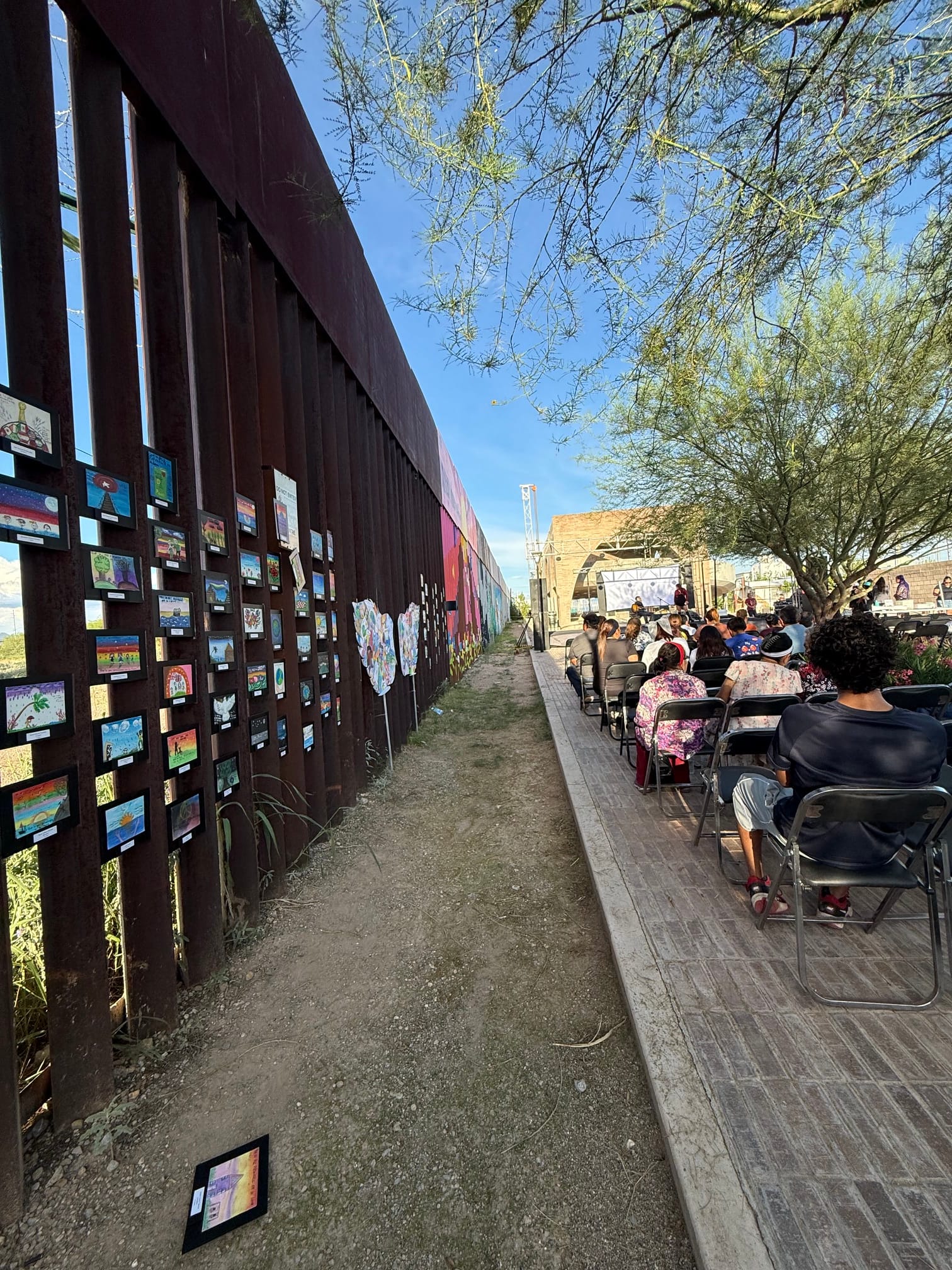
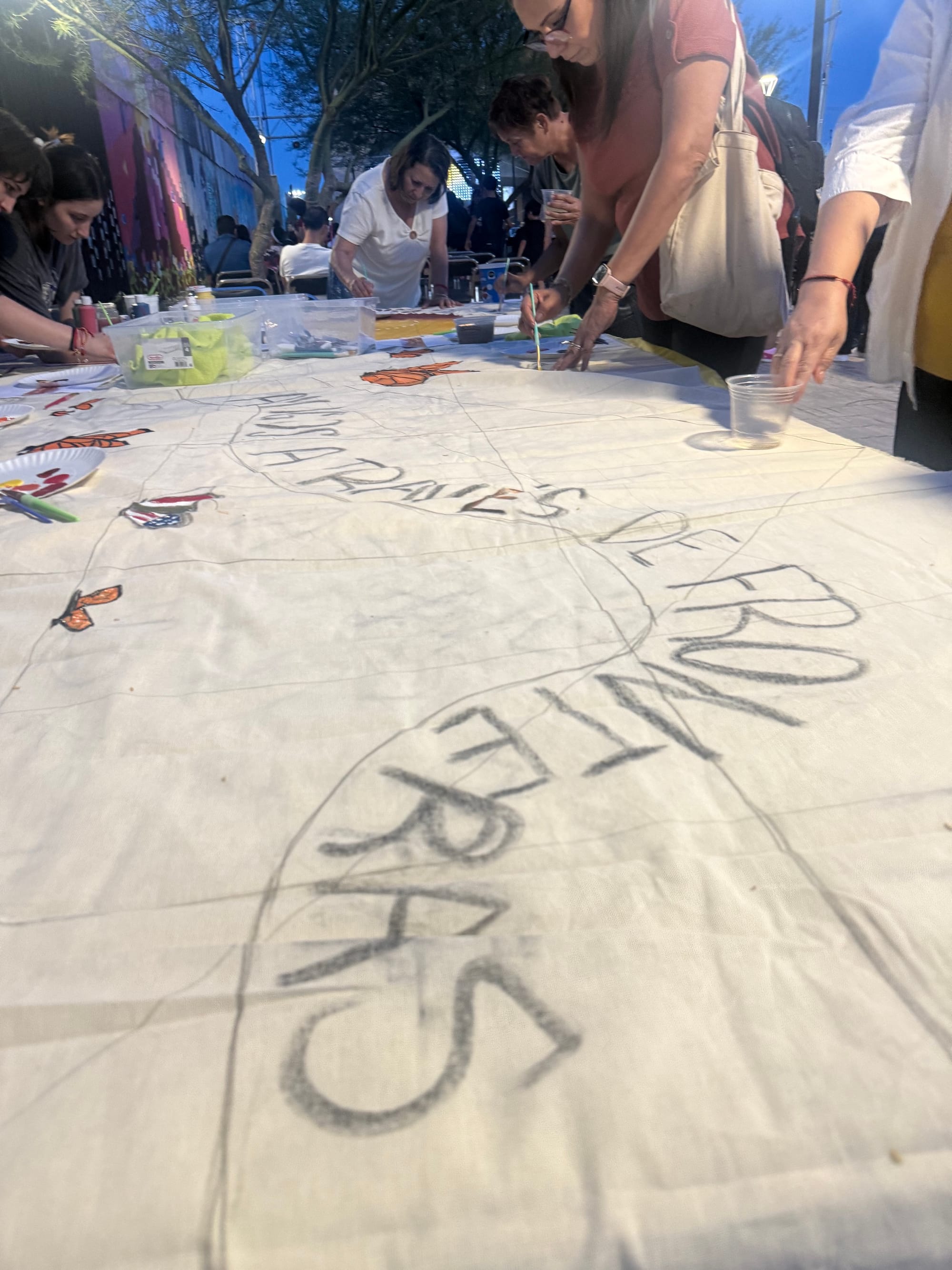
Collective community art imagines a very different border from the one we’re told about on the news.
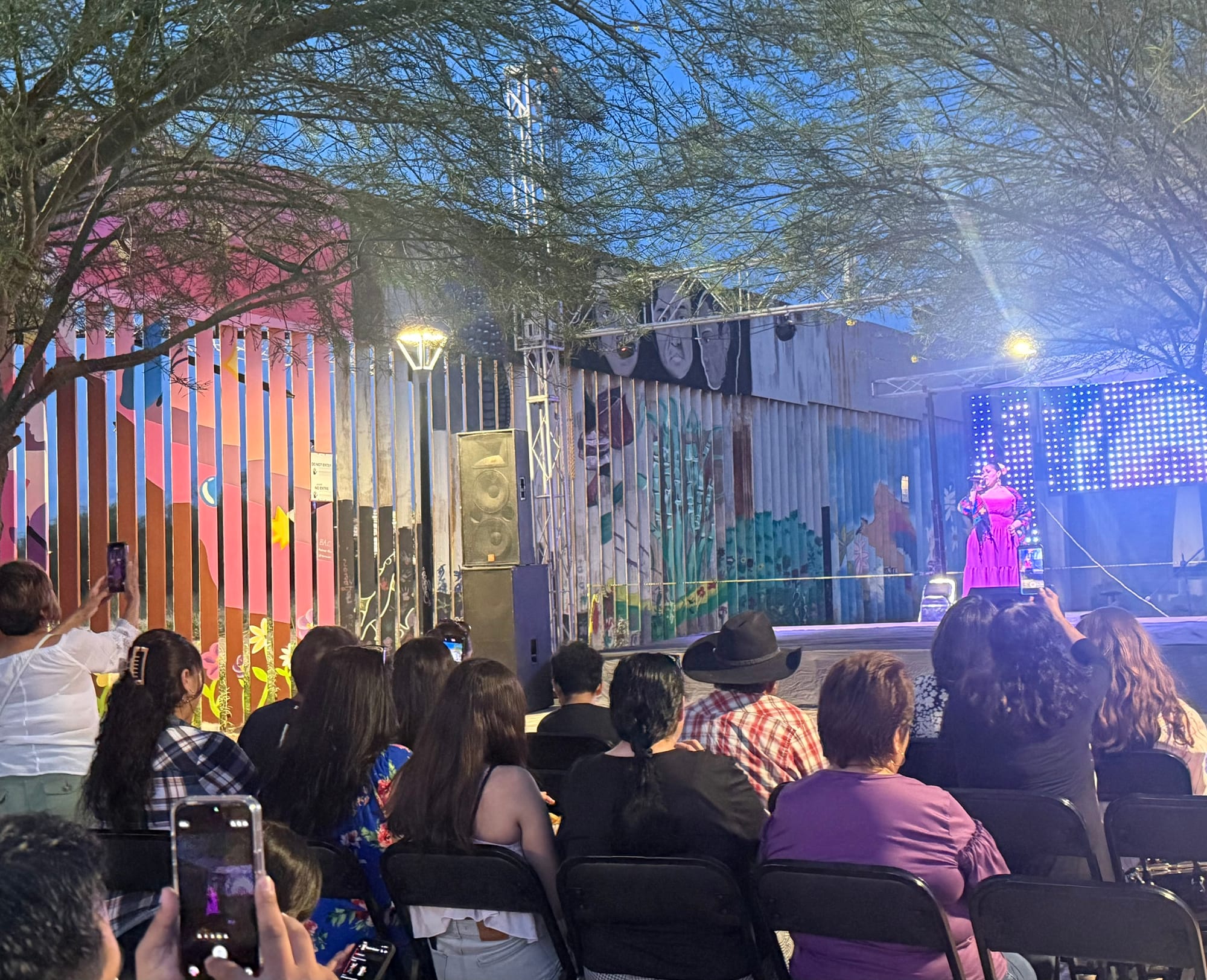
Musicians sing into the night. Organizer Alex Boneo told me that, with all this talk about border security, she felt safer in the borderlands than when she was away. I asked her to elaborate. She told me, “I think this event is the proof that safety is possible. This is what I’m talking about when I say you can navigate both worlds in both countries. You can practice them and be safe on both sides, and I just don’t see my life in any other way. There’s no place in the world that I would rather live or be.”
“This,” she said, pointing to the gathering, “is my safe space.”
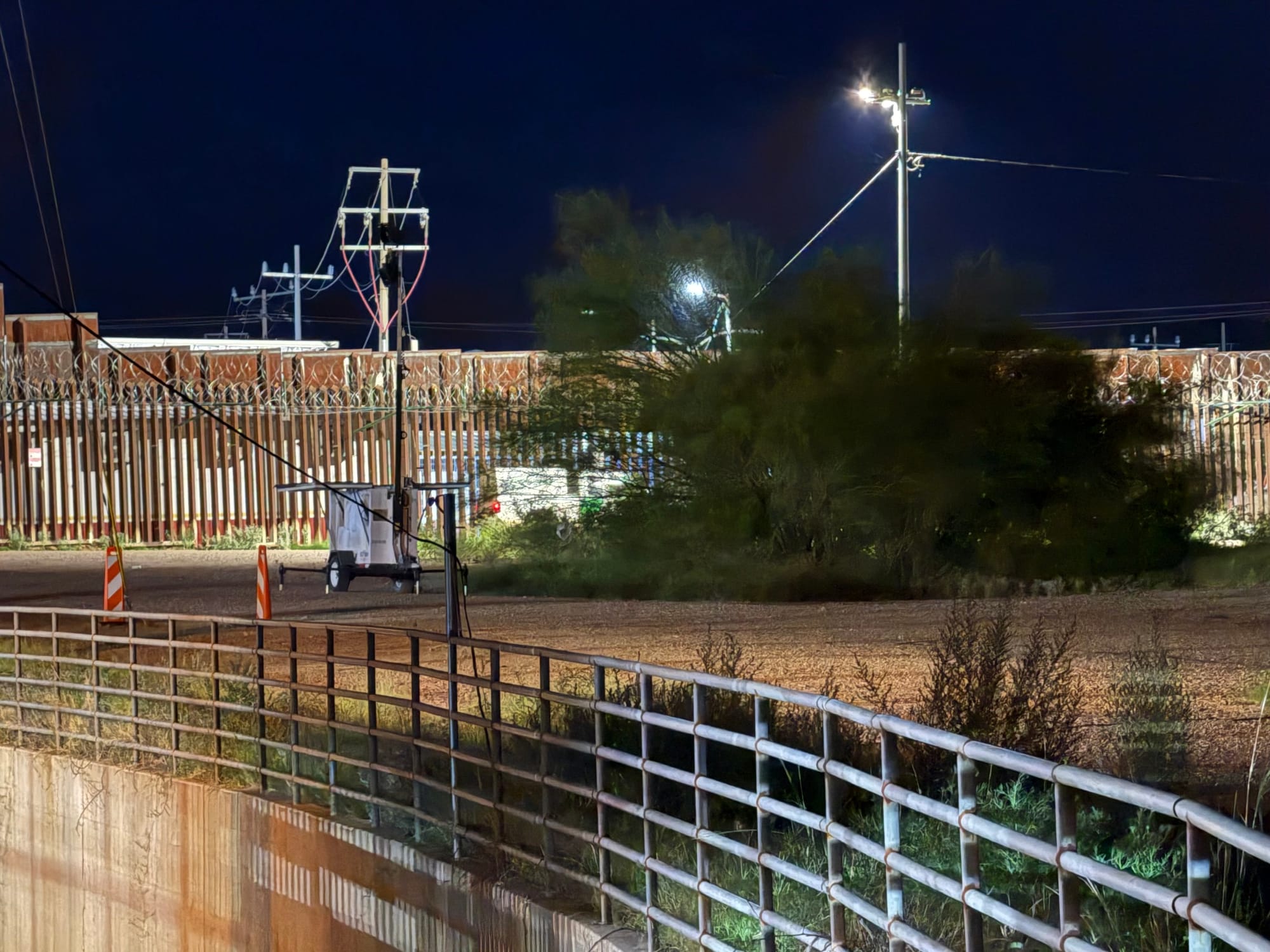
When I leave and wait in the long pedestrian line to cross the border, the music continues. Once across, on the U.S. side, I can still hear it; the music cannot be stopped, cannot be policed. But from the U.S. side, you can’t see it. In the shadowy nightfall, all I can see are several stadium lights, the bollard wall, the green-striped vehicle. In Washington, the discourse and debates about what to do about the border seem to happen only from this perspective, this side. The border wall tries to blockade not only people but also understanding, even inspiration. Not today, however. The music comes across loud and clear. I pause to listen before walking back to my car. A community has come together to show a different border, a better one that already exists.

A vivid depiction of what has been happening during the last eight weeks of resistance against border wall construction in southern Arizona’s San Rafael Valley.

Wall Watch combines geospatial mapping, archival research, and community participation to provide the public with an accurate, continually updated record of border wall construction along nearly 2,000 miles of the international border.

Worried about the future of democracy in the United States? Look to Indigenous histories; they have much to teach us about the struggle between liberty and empire.

Do you have questions about the recent buoy debacle on the Rio Grande? Our reporting has you covered, plus an important new hire at The Border Chronicle, and our new project Wall Watch.
Independent news, culture and context from the U.S.-Mexico border.