
Floods Expose Dangers of Trump’s $3 Billion Rio Grande Buoy Barrier Plan
As floodwaters swept hundreds of one-ton border buoys downstream, international bridges closed, commerce slowed, and officials struggled to get answers from DHS about a project advancing despite local opposition, environmental concerns, and treaty questions.
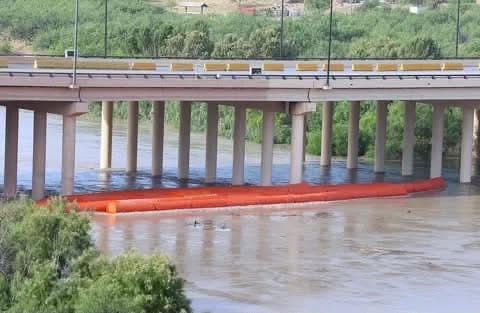
The Rio Grande floodwaters in Laredo and Eagle Pass are subsiding, but not the mess, which includes the closure of international bridges and financial losses estimated in the millions. This is all thanks to the Trump administration’s massive orange “waterborne barrier” buoys, each weighing a ton, which private contractors are still retrieving from the river. Dozens of buoys are also lodged on the Mexican side of the river.
Texas border cities from Brownsville to Eagle Pass have opposed the administration’s plan to deter border crossers by turning the Rio Grande into what will look like the world’s largest swim lane, with 536 miles of chained-together orange buoys. Border city officials oppose the plan for various reasons, including flooding hazards and a lack of environmental and safety studies. The plan also violates the binational water treaty with Mexico. But the Department of Homeland Security is moving forward with the barriers anyway, doling out $3 billion in taxpayer money to a handful of private contractors.
Thousands of these buoys are waiting to be installed, staged up and down the river in different areas, many of them on private land. At least 17 miles of buoy barrier have already been installed at the southernmost part of the Rio Grande in Brownsville, where there was no flooding over the weekend.
This weekend’s river flows were less than half of the historic flood of 2010, when Hurricane Alex dropped more than 50 inches of rain and the Rio Grande crested at 57 feet. But it was enough to demonstrate the failures, and the danger, of the administration’s plan for the “waterborne barriers.”
The buoy plan has been carried out largely in secrecy after the DHS waived more than 30 federal laws that would have required public oversight and input. In most cases, city officials don’t know where the buoy staging areas are located, given that the administration and contractors haven’t communicated any of this information. When The Border Chronicle contacted city officials in Eagle Pass and Laredo on Monday, they were still trying to obtain information from DHS on how the buoys would be retrieved from the river and where exactly they came from.
There are dozens of international bridges on the Rio Grande, each one daily carrying hundreds of thousands of motorists, pedestrians, and cargo trains. Because each buoy weighs a ton and has a heavy aluminum center, officials in Eagle Pass and Laredo were forced to suspend traffic or close the bridges entirely out of safety concerns, worrying that if a buoy crashed into a bridge’s pillar, it could cause structural damage.
On Thursday evening, Eagle Pass was the first guinea pig, as hundreds of buoys staged by the private contractor Gibraltar north of the city were swept into the river by rising floodwaters. Rodolfo Cardona, Eagle Pass’s assistant fire chief and emergency management coordinator, said he became aware of the buoys in the river at 7:45 p.m. on Thursday. “Traffic on all three bridges was suspended at about 9 p.m.,” he said.
Engineers observed and assessed the impact of the buoys against the pillars for any sign of damage. Debris, including branches and vegetation that had accumulated around the pillars, seemed to cushion the buoys’ impact. “There was no damage to the infrastructure,” Cardona said. “The bridges were reopened to traffic at 11 p.m.”
Cardona said the buoys came from two staging sites, located two miles and 12 miles north of the city, but not from Shelby Park in downtown Eagle Pass. On July 7, the city denied a proposed lease agreement with Gibraltar Construction Company to keep buoys at the riverside city park. Nonetheless, Gibraltar has hundreds of buoys stacked at the park but moved them far enough inland on Thursday to avoid the floodwaters.
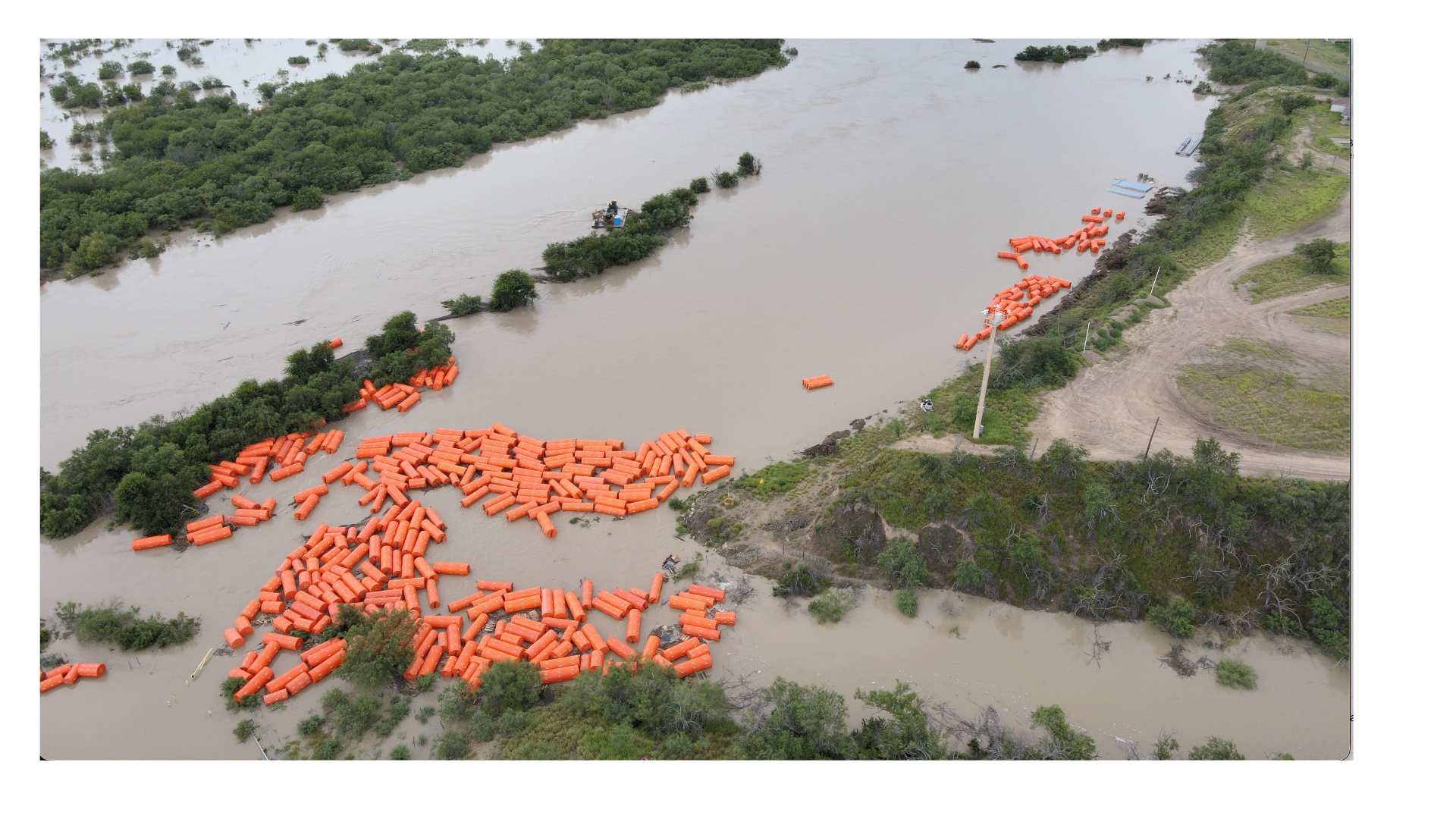
The Border Chronicle asked Gibraltar how many of its buoys were swept away, what their dimensions are, what they are made of, and how the company will handle their retrieval. Sarah Neusch, president of Gibraltar, responded in an email: “We are currently retrieving buoys out of the Rio Grande. None of the buoys that floated away were installed/anchored into the river. They were only the single buoys that were a stockpile of buoys in staging yards near the riverbank that floated away. The buoys are 8-15’ long and 5’ in diameter.”
Neusch declined to say how many buoys were lost or disclose what they are made of. Some border residents worry that the buoys could release microplastics and volatile organic compounds from the foam and paint, which could contaminate the river, the sole source of drinking water for many of the cities along the Rio Grande.
By early Saturday, hundreds of the single spherical buoys had reached Laredo, 110 miles downstream from Eagle Pass, where the river crested at 18 feet, well below the 30-foot mark for a major flood. In Laredo, the Eagle Pass buoys merged with other buoys already chained together and staged nearby. These piled up against the pillars of the World Trade Bridge—the country’s largest commercial land port—stopping commercial traffic on and off for several hours on Sunday and Monday and creating long lines of stalled semis and frustrated motorists.
On Monday afternoon, as the buoys lodged against the World Trade Bridge, Laredo mayor Victor Treviño said he was still trying to get information from DHS. Officials were forced to stop traffic on the bridge every time the buoys accumulated against the bridge’s pillars to assess whether they were damaging the infrastructure, costing the binational economy millions in losses. “We do about $1.2 million in commerce every minute here at the World Trade Bridge,” he said. “And it’s impacting business and commerce that goes back and forth between the two countries.”
Treviño said he did not know where the chained-together sections of buoys came from. “It’s very difficult to say where they dislodged from,” he said. “And the federal government has not told us.”
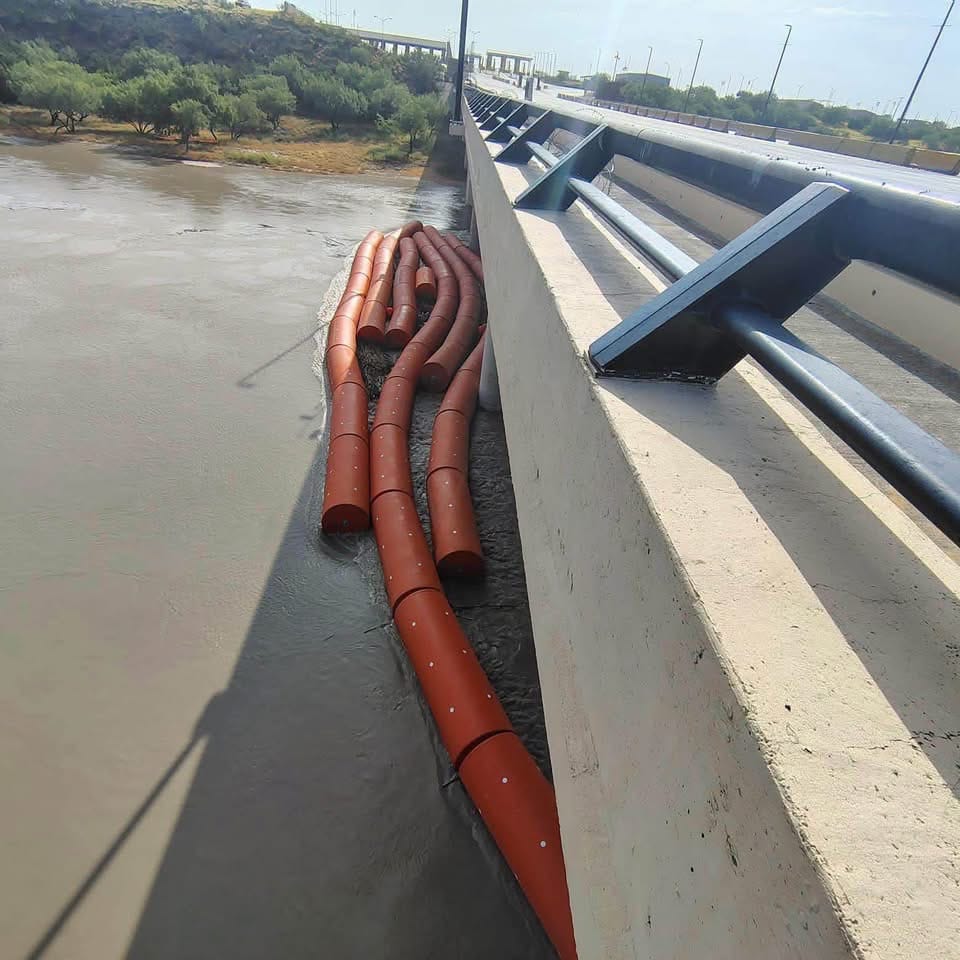
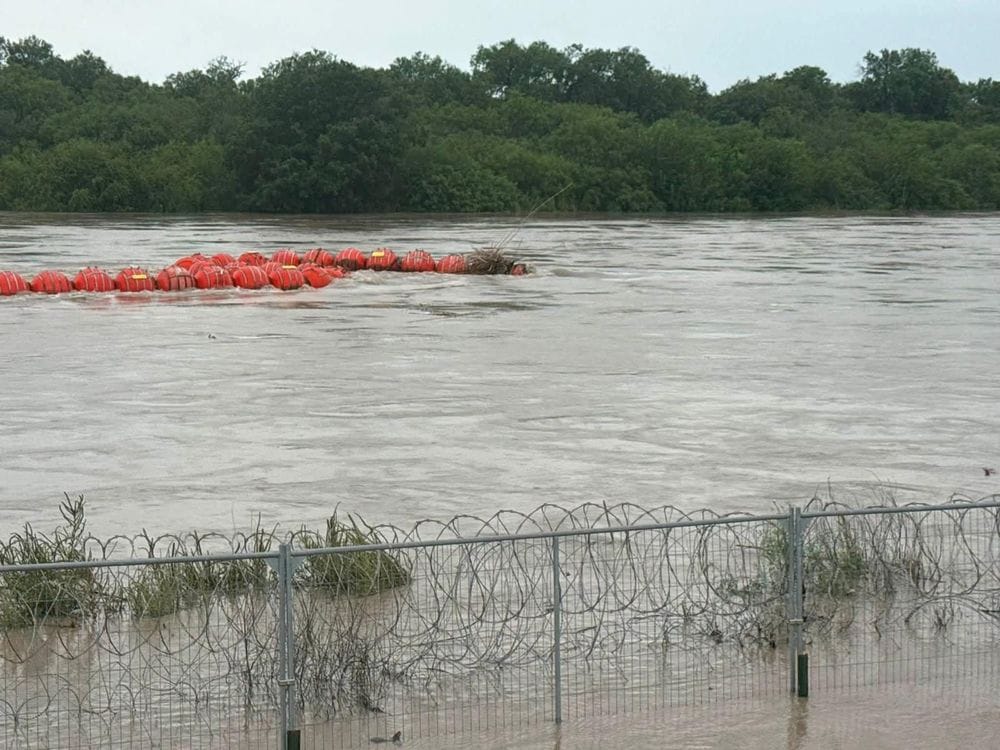
Over the weekend, some on social media posted that the chained buoys wrapped around the World Trade Bridge came from the 2,000 feet of spherical buoys with saw razors that the state of Texas installed in the river in Eagle Pass in 2023 and 2025. According to Eagle Pass resident Amerika Garcia Grewal, the end of the chain of state buoys has curled up “like a fiddlehead fern” and taken on a lot of debris, but it has remained anchored and in place.
Martin Castro, watershed science director for the Laredo-based nonprofit Rio Grande International Study Center, said he thinks he knows the answer to the mystery, and it lies within Laredo city limits. Castro said the long buoy chains came from a staging area north of the Max Mandel Municipal Golf Course in Laredo. “There’s a private landowner there that’s allowed the contractor to install the buoy chains,” he said. “Because there’s no way those chains came all the way from Eagle Pass. They would have gotten caught up on the Colombia Bridge, which comes before the World Trade Bridge.”
Congressman Henry Cuellar, who represents Laredo, also confirmed that the chained-together buoys came from a staging site near the golf course in Laredo. “They were in the river and were dislodged,” he said. “Imagine what would have happened if we had had major flooding like we had in 2010.”
The private contractor in charge of those buoys is the North Dakota–based Fisher Sand & Gravel Co., which received a $740 million contract to install 66 miles of buoy barrier. The Border Chronicle made calls and submitted questions in writing seeking information and comment, but the company did not respond.
Additional questions submitted to DHS Monday morning regarding the buoys were met with an email response with no official name or title, only “CBP spox.” According to this message, the responsibility for retrieving the buoys is the contractors’ and not the government’s. “Contractors are on scene with equipment to remove the buoys. Laredo Sector leadership and Border Patrol airboats are providing security and operational support,” CBP wrote. “CBP is also coordinating with U.S. and Mexican partners to reroute commercial traffic to the Colombia Bridge until operations can safely resume.”
Cuellar, a Democrat, said the federal government needs to take responsibility for the incident. “They have multibillion-dollar contracts with these contractors, and they’re the ones that did the bidding and the hiring, so CBP should take responsibility.”
In drone footage from July 17 obtained by The Border Chronicle, dozens of buoys can be seen stranded on the Mexican side of the river in Piedras Negras, across from Eagle Pass. The U.S.-Mexico water treaty forbids either country from placing infrastructure in the Rio Grande/Rio Bravo floodplain without the consent of both countries, which the U.S. has been violating for years as it continues to construct walls, and now buoy barriers, in the floodplain. Cuellar said he was following up with the International Boundary and Water Commission, the binational agency that oversees the treaty, to ask why it had authorized the installation of the floating barrier.
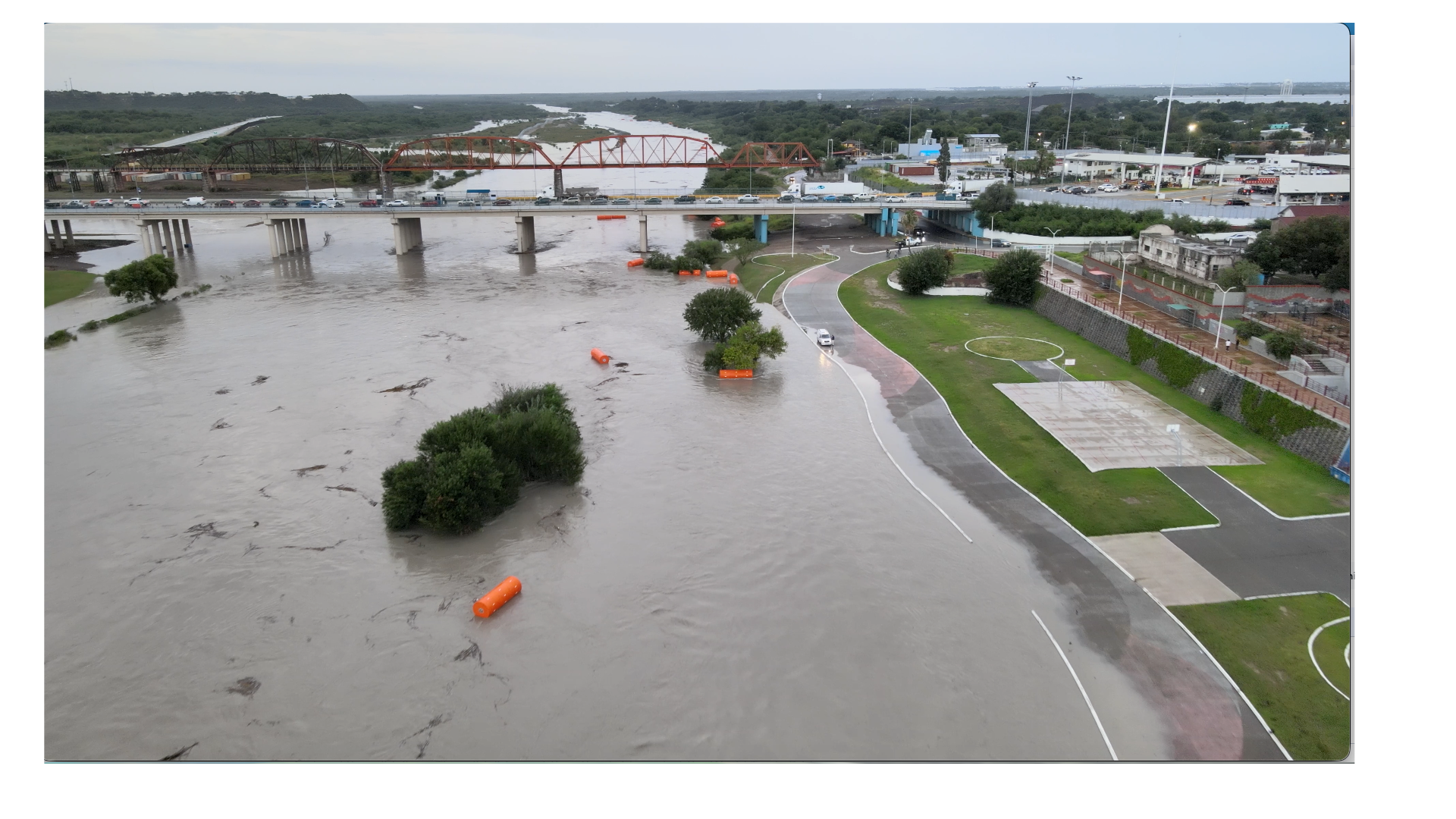
The Border Chronicle submitted questions to IBWC inquiring about its greenlighting of the buoy barriers and the binational treaty. IBWC spokesperson Frank Fisher would say only that the IBWC was monitoring the buoys in the Rio Grande and that none of them had damaged the Falcon Dam in Starr County, about 200 miles downstream from Eagle Pass, where the buoys that are not salvaged by the contractors are expected to accumulate.
On Monday, Lino Sosa, fire department coordinator in Nuevo Laredo, Mexico, said he had not yet spoken with U.S. officials about retrieving the buoys in his jurisdiction. “We’ve been waiting for the river to subside so we can conduct a search for the buoys on our side,” he said. “If we find them, we will contact Border Patrol and see if we can figure out a way to return them.”
In social media posts over the weekend, curious bystanders on the Mexican side could be seen filming the five-foot-tall buoys, and at least one man was filmed pulling one to shore with a rope. Another clip showed a torched buoy, which was reportedly scavenged for the aluminum. “I saw the video,” said Cardona, Eagle Pass’s assistant deputy fire chief, regarding the burnt buoy, “but we couldn’t verify whether it was real.”
No one that The Border Chronicle spoke with could estimate how many buoys remain floating in the Rio Grande. On Monday morning, Cardona said there were still dozens floating in the Eagle Pass area. “I’d be lying to you if I gave you an exact number, but it’s more than 50,” he said.
City and county officials in Laredo and Eagle Pass say they will spend the next two weeks assessing the damage as the floodwaters subside. The reports will be submitted to the state of Texas, they said.
Treviño said he opposes the buoy barriers and the border walls being built in his city. “There are laws, treaties, and investment that could alleviate illegal immigration,” he said. “These barriers don’t work.”
On Monday, he added that more buoys are on the way. “And we don’t know the exact amount. And when they come, here we go again, having to extract them from the base of the bridge,” he said. “Laredo is a major port of entry for the Western Hemisphere, and we can’t afford for these disruptions to continue to happen. It’s going to have a huge impact on our binational economy.”
Support independent news from the U.S.-Mexico border. Become a paid member of The Border Chronicle today for just $6 a month or $59 a year. We can’t do this without you!
Author
Related Articles
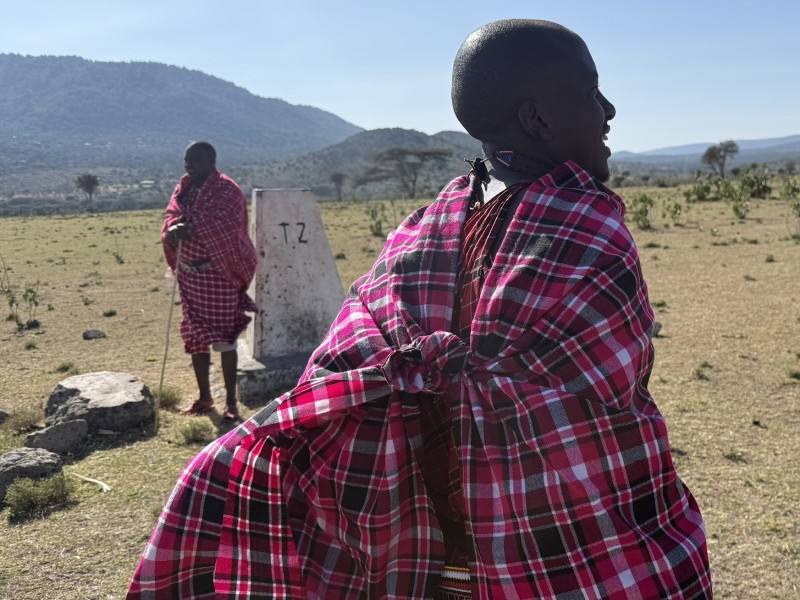
Swarm Intelligence: A Reporter’s Notebook on the Freedom of Movement in the Maasai Borderlands
Could solutions to climate woes such as drought be found in the freedom of mobility? This on-the-ground report from the Kenya-Tanzania border examines that question and more.
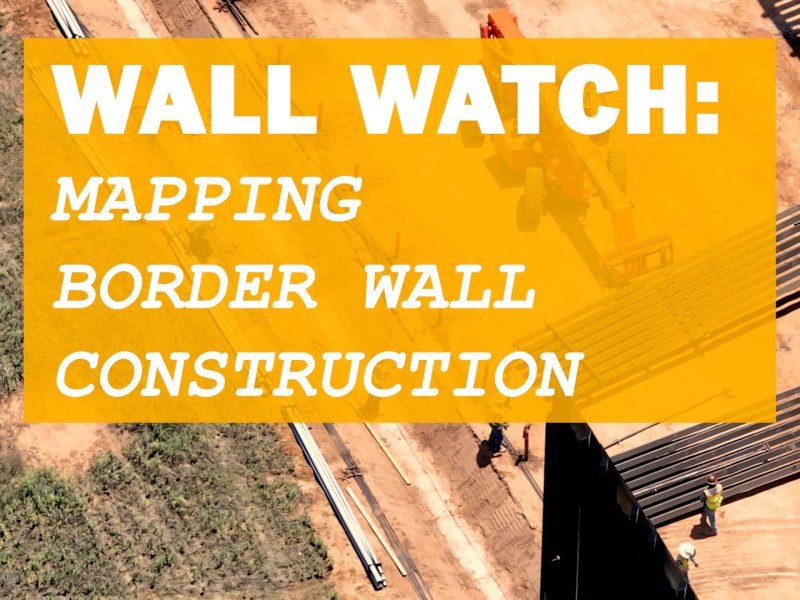
Wall Watch: Mapping Trump’s $46 Billion Border Mega-Project
In this week’s podcast, Melissa del Bosque and Geographer Dugan Meyer explain how the Border Chronicle’s new project, Wall Watch, helps residents document and understand the massive construction project underway at the U.S.-Mexico border.
Protecting the Last Grandmother Cottonwood: A Podcast with Kate Scott
A vivid depiction of what has been happening during the last eight weeks of resistance against border wall construction in southern Arizona’s San Rafael Valley.