
The San Juan Hotel Battle: A Crossroads for Mexican American Civil Rights in the Rio Grande Valley
There is a reckoning with history happening at an old hotel with a horrific past and the RGV's first and only civil rights museum.
There is a reckoning with history happening at an old hotel with a horrific past and the RGV's first and only civil rights museum.

A binational gathering shows that the borderlands community seeks peace and unity, not a manufactured war zone.

As DHS gaslights border communities, help document the reality on Wall Watch, our new community powered map for border wall construction, and a podcast from the resistance in Lochiel, Arizona, where protestors try to save the last ancient Cottonwood tree from bulldozers.

There is a reckoning with history happening at an old hotel with a horrific past and the RGV's first and only civil rights museum.

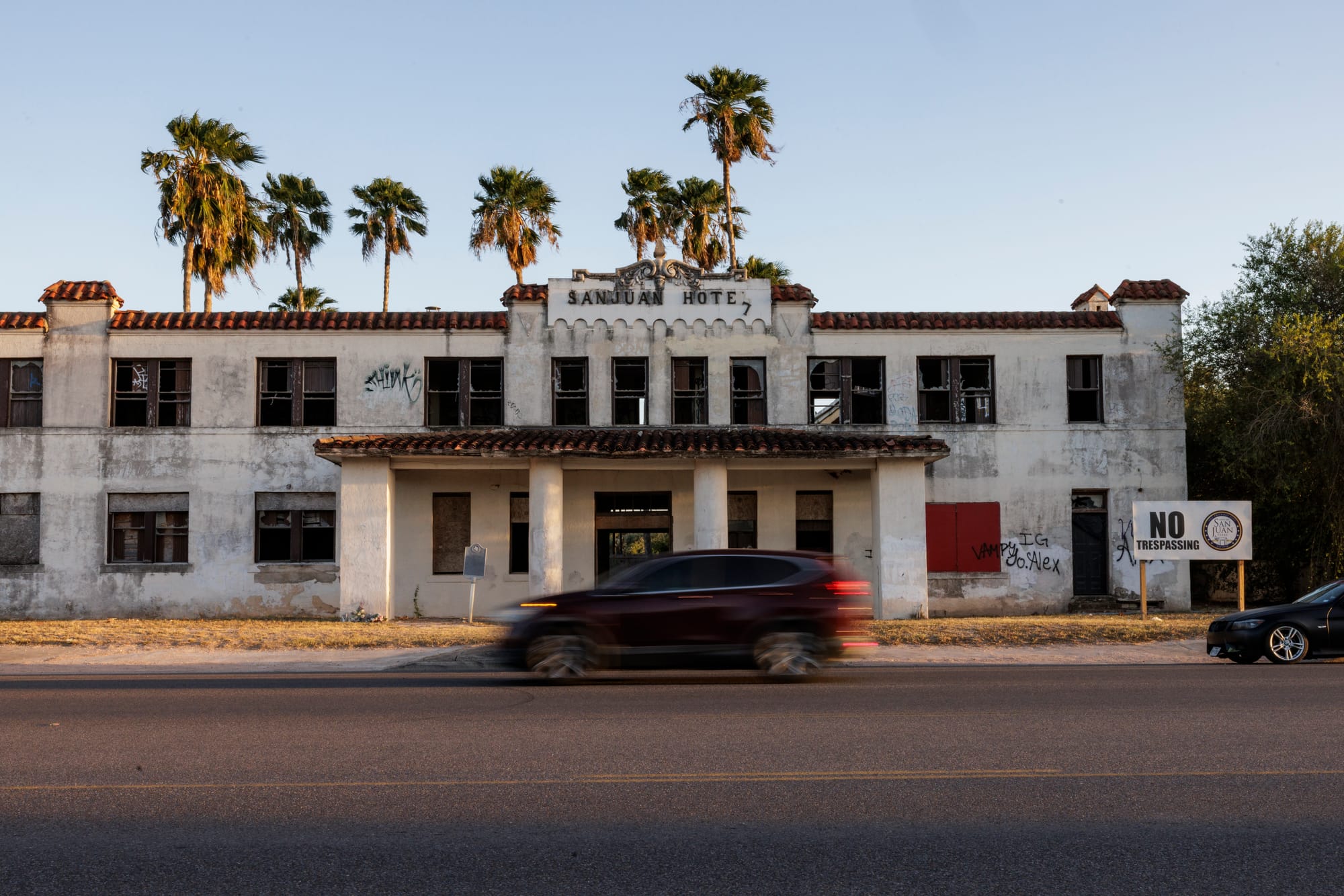
The two-story San Juan Hotel, built in 1920 along U.S. Highway 83 in Hidalgo County, Texas, once served as a social hub for white settlers in a growing border town. It also carries a traumatic history of racial violence, extrajudicial killings, and, according to oral histories, lynchings of Mexican Americans.
Today, the hotel holds deep historical significance for the city of San Juan, where Hispanics make up over 92 percent of the population. Yet in 2023, the city voted to demolish it to make way for a convention center. This was met with opposition from community members who had a different vision altogether.
“The significance of having the San Juan Hotel still standing is to remember that history, to remember all of the forces that shaped the valley and who we are today,” said Sara Azúa during an event at a Brownsville bookstore about the hotel’s importance to the region’s civil rights history.
“Having the hotel still in place and renovated, for example, as a museum or as a community space, will help younger generations, who may not ever know that history, still remember it for years to come.”
San Juan, population 36,000, is located about 15 miles from the U.S.-Mexico border. After its incorporation around 1917, it was frequented by land developers moving to the agricultural hub dubbed the Magic Valley. It quickly became a place of entrenched segregation.
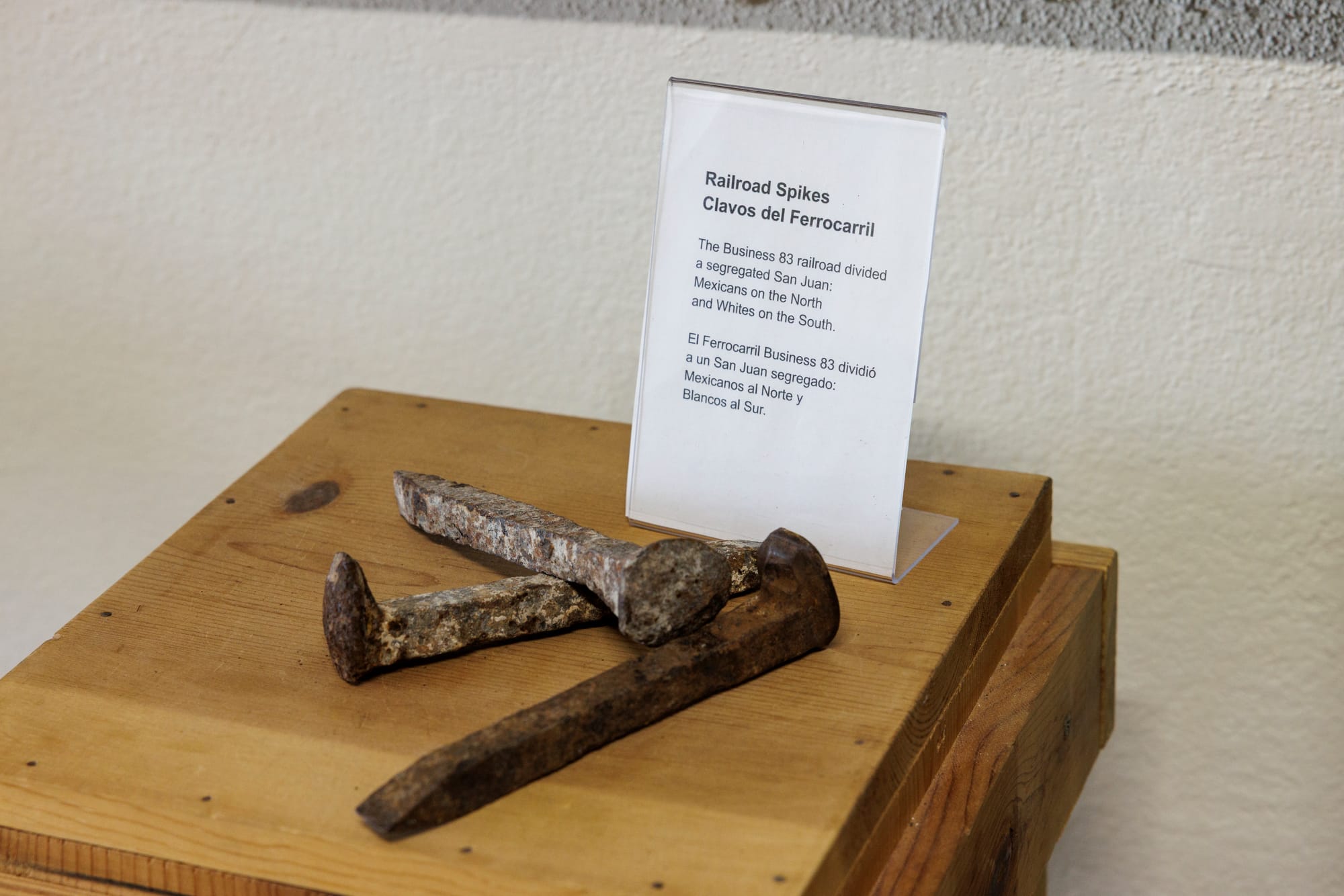
According to Stephanie Alvarez, a professor of Mexican American studies at the University of Texas Rio Grande Valley, “this hotel was more than just some beautiful old building,” given that lynchings are said to have taken place in front of it. Alvarez has spent more than a decade researching civil rights issues in the RGV. Last year, she cofounded the Museo 956 de Derechos Civiles to spread awareness of this history. (The name references the telephone area code for the RGV.)
Operating from 1920 until the early 1990s through a series of different owners, the hotel was situated on the Anglo side of San Juan, south of the railroad tracks, whereas the predominantly Mexican American neighborhoods were farther north.
The hotel was founded at the height of racial violence against Mexican Americans known as La Matanza, or the Slaughter, when at least 300 people were killed from 1910 to 1920, according to an archive managed by the University of Texas Rio Grande Valley library. Scholars, however, believe the true number stretches into the thousands.
Less than two miles down the road from the San Juan Hotel, at the site of Camp Ebenezer—which would later become present-day Alamo, Texas—is where Texas Rangers and vigilantes murdered up to 30 Mexicans and Mexican Americans in what is known today as the 1915 Ebenezer Matanza. Texas Ranger and Hidalgo County deputy sheriff Tom Mayfield, who lived at the San Juan Hotel in his later years until his death in 1966, was present at the matanza and has been accused of being partially responsible for the killings.
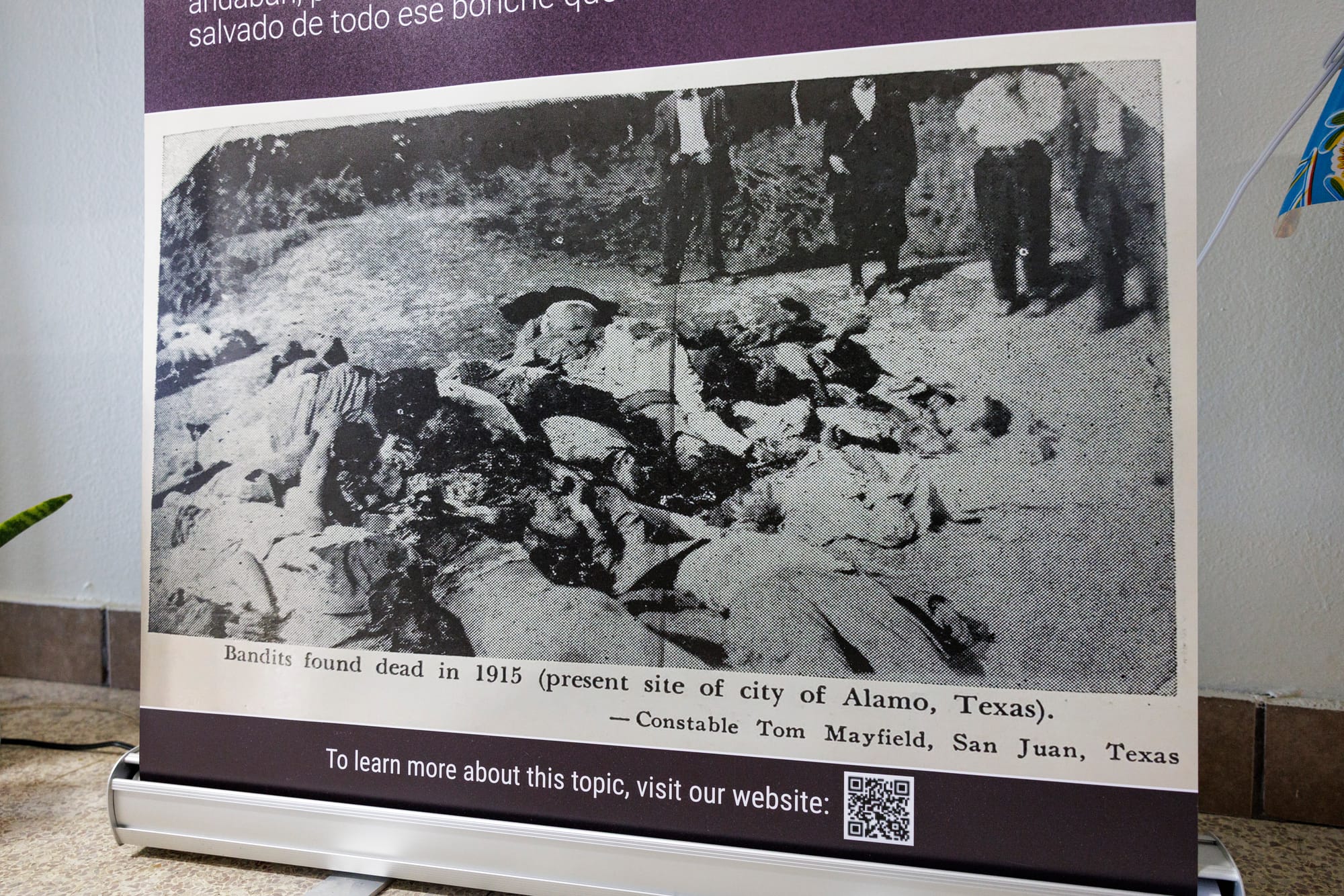
In 1919, Texas State Rep. Jose T. Canales, a prominent attorney and the sole Mexican American member of the state legislature at the time, led the charge to investigate the Texas Rangers and the allegations of violence against Mexicans and Mexican Americans, according to the Texas State Historical Association. Canales brought over 80 witnesses to testify, which included a written testimony from a farmer who found human bones near Ebenezer, legitimizing claims of racially motivated crimes committed by the Rangers against Mexican Americans.
Although the specially formed legislative committee found sufficient evidence, formal charges were never filed. The Texas Rangers force was only minimally reduced and was forced to adopt centralized leadership. In other words, the Canales inquiry legitimized the Rangers and their crimes.
“Ten years ago, when we started doing this project, one of the assignments to my students was to go home and ask your family members, ‘What do you know about Tom Mayfield?’” Alvarez said. “I remember a student coming back, and she lived with her grandmother, and her grandmother responded to her, saying, ‘You are not allowed to ever say that person’s name in this house ever again,’ and that was it.”
In April 2025, Alvarez and members of the Save the San Juan Hotel Collective, which began in 2024 and comprises over a dozen volunteers, held an event in Alamo, where about 400 people attended to learn about the hotel’s dark past and efforts to preserve the site. Two months later, Museo 956 was born. Now, a year later, they estimate that museum visitors have exceeded 1,000.
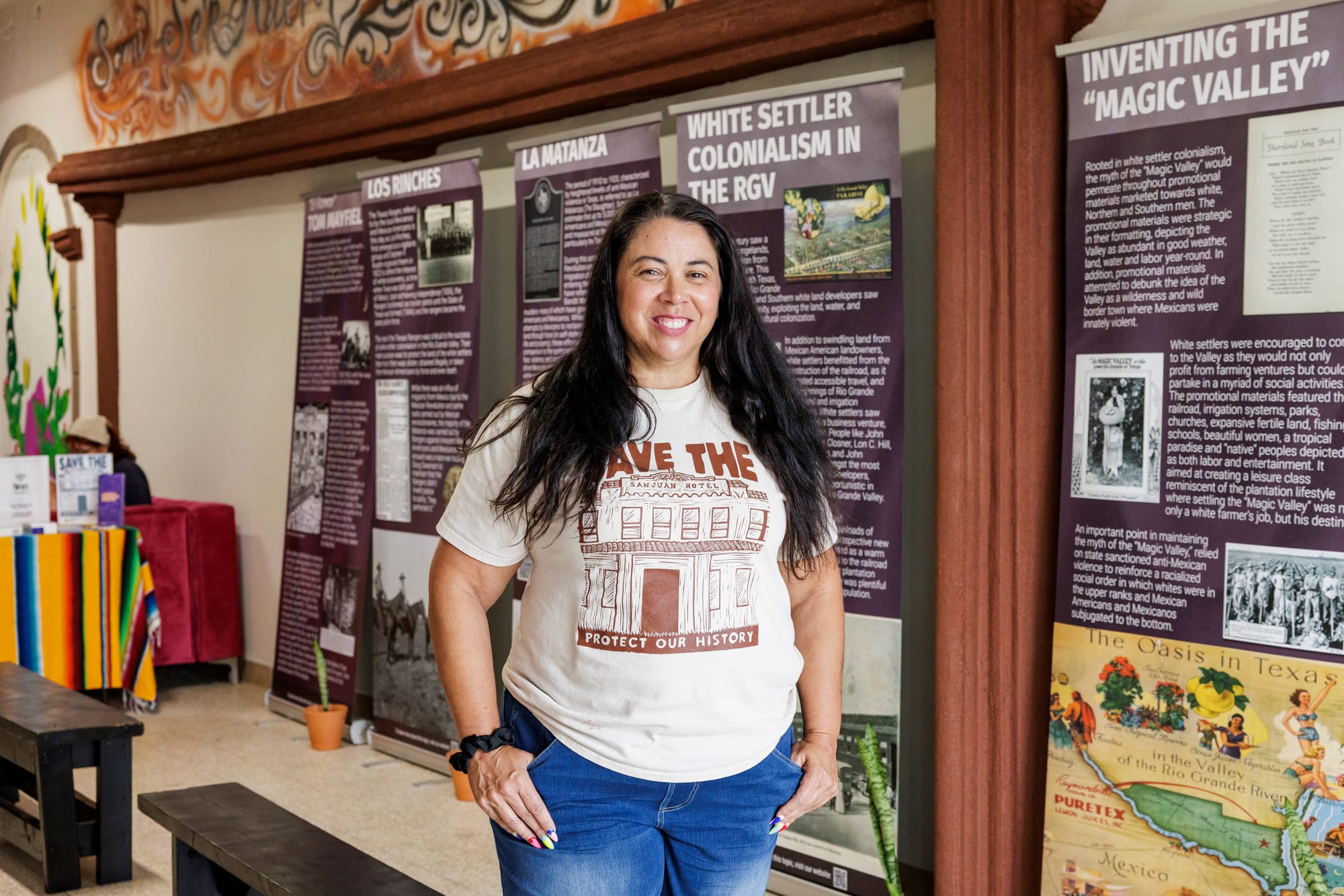
As the primary researcher behind the museum, Alvarez uses oral histories and documented research describing segregation and violent acts toward Mexican Americans. This includes the story of John Closner, who is the namesake of a major roadway in the nearby city of Edinburg and founder of the San Juan plantation. Closner, a Swiss American who moved to the RGV in the late 19th century, was one of many white settlers who acquired thousands of acres of land for pennies on the dollar before turning around and selling for a hefty profit. Keen on selling land to developers, Closner brought thousands of people to the valley.
In his book Revolution in Texas: How a Forgotten Rebellion and Its Bloody Suppression Turned Mexicans into Americans, Benjamin Heber Johnson writes that the introduction of both the railroad and irrigation system in the RGV caused taxes to skyrocket, making it difficult for Mexican American ranchers to keep up with rising costs. In some cases, ranchers would be forced to sell their land to cover legal fees to fight white settlers’ claims challenging land ownership in court. Other times, white ranchers would conquer land by force.
From 1900 to 1910, over 187,000 acres of land were transferred from Mexican American ranchers to white settlers in Hidalgo and Cameron counties.
This history forms the backdrop to Museo 956, the RGV’s first and only civil rights museum. It occupies a long suite in a commercial building a few doors down from the dilapidated San Juan Hotel. Graffiti covers the walls of the old hotel, and most of the windows are shattered. Yet the structure made from bricks crafted at Closner’s San Juan Plantation appears to be mostly intact.
At the museum, panels on the walls denote the background of the San Juan Hotel and the history behind events like the Treaty of Guadalupe Hidalgo that ended the Mexican American War in 1848. It was then that the RGV was born, and white settlers colonized the borderlands of South Texas, turning Mexicans into U.S. citizens. Some panels display atrocities committed by the Texas Rangers throughout the valley.
Alejandra Mezcua, a graduate of UTRGV’s anthropology program and now one of Alvarez’s graduate students, volunteers at Museo 956 to help educate the community on vital events in the region’s past.
“I’ve always had an interest in learning more about my own history, my culture, but also the history of my community and the place I call home,” Mezcua said.
Much like Alvarez, Mezcua researched the hotel and learned for the first time about the dark history surrounding the treatment of Mexicans and Mexican Americans in her lifelong home of the RGV.
In 2016, Alvarez worked for the city of San Juan, teaching classes on oral history and was involved in creating a mural at a city park named after and honoring Tom Mayfield. It wasn’t until Alvarez researched Mayfield that she learned how much of a role he played in La Matanza, in various law enforcement positions, including with the Texas Rangers.
When Alvarez was first researching Mayfield and the San Juan Hotel, one of the first people she stopped on the street to ask about the hotel said that Mexican Americans were hanged out front. After that initial interaction, several others shared the same thing.
Owing to the lack of official death and law enforcement records, Alvarez uses a mix of oral histories, official sit-down interviews, and casual conversations with community members to piece together bits of history that make up much of the civil rights history that exists for Museo 956 to display for visitors. “Chisme, or gossip, has been a way of survival for the community when there are no official outlets for reporting and documenting,” Alvarez said.
“We have a lot of people that come in, and they just want to chat, and we think that those are just as valuable as anybody who sits down and is willing to have a tape recorder or a video camera in their face.”
Despite multiple attempts to reach city officials and consistent attendance at city commission meetings over the past two years, Alvarez says the museum’s requests to schedule a meeting to discuss the future of the San Juan Hotel have gone unanswered. City manager Ruben Guajardo recently said in an interview with a local news outlet that the city was still deliberating over what to do with the hotel. Guajardo did not respond to an interview request with The Border Chronicle.
Museo 956 relies on donations and grants to pay its monthly rent. Even though the San Juan Hotel’s future remains uncertain, Alvarez and the collective have a vision for it: turning it into a home for the museum.
“We would love to see [the museum] as a permanent thing, and it doesn’t even have to be us that organizes it,” Alvarez said. “First and foremost, it’s a site of truth telling and reconciliation, and we do know that the valley needs a Mexican American civil rights museum.”

A binational gathering shows that the borderlands community seeks peace and unity, not a manufactured war zone.

A vivid depiction of what has been happening during the last eight weeks of resistance against border wall construction in southern Arizona’s San Rafael Valley.

Wall Watch combines geospatial mapping, archival research, and community participation to provide the public with an accurate, continually updated record of border wall construction along nearly 2,000 miles of the international border.

Worried about the future of democracy in the United States? Look to Indigenous histories; they have much to teach us about the struggle between liberty and empire.
Independent news, culture and context from the U.S.-Mexico border.