
Reporter’s Notebook: NAFTA, Tijuana Art Week, and the Built Environment of the Baja Borderlands
A road trip through Baja California reveals how free trade, migration, and border policy have reshaped Tijuana’s landscape, and why the uncertain future of the USMCA invites new questions about what comes next.
It’s summer vacation time, and I, too, am on vacation—on a road trip down the Baja California peninsula. There’s never a dull time to be traveling in the borderlands, but this week, what was on my mind was that on July 1, Donald Trump refused to renew the USMCA, the extension of NAFTA signed in July 2020. Because of the U.S.’ refusal to comply, the agreement will now be subjected to review annually and could sunset in 2036.
NAFTA profoundly re-shaped the North American economy. Perhaps the most famous example of this is its impact on smallholder Mexican corn farmers, who found their markets flooded by tariff-free corn grown on massive, subsidized U.S. farms; the agreement also facilitated the rise of industrial pork farming in Mexico and of health conditions such as Type 2 Diabetes and childhood obesity.
It also transformed Mexico’s built environment. The rise of assembly plants turned northern cities into fast-growing boomtowns; the policy change allowing communal ejido farmlands to be sold off gave rise to a fragmented landscape of housing developments. As a geographer driving through the Baja borderlands, I couldn’t stop reflecting on the visible traces of NAFTA and other aspects of border policy.
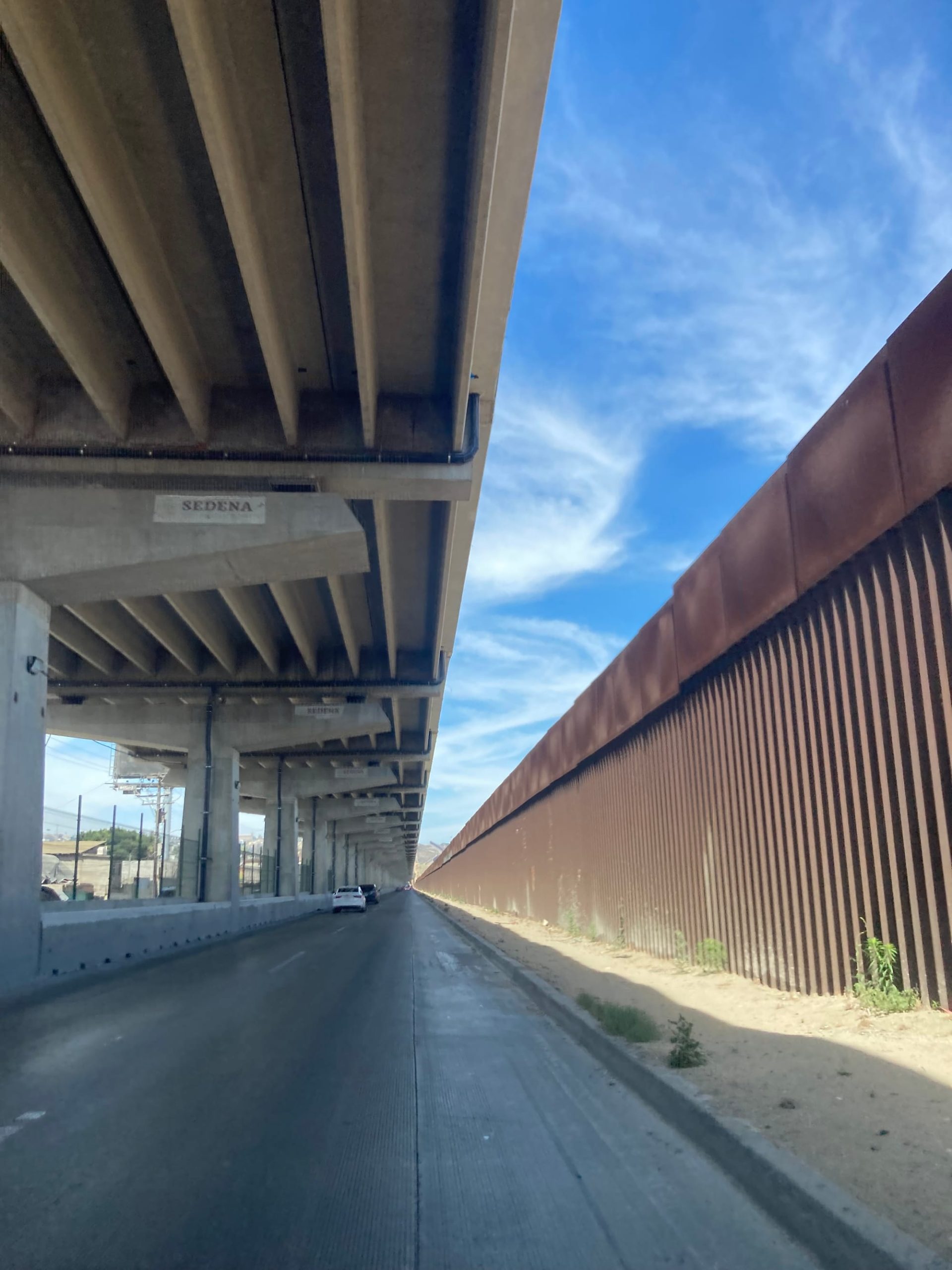
Heading west on Mexico’s Federal Highway 2, whose rugged route runs along the U.S.-Mexico border connecting nearly all the ports of entry, you enter the city from Otay Mesa. As its name suggests, the mesa is a large, flat area above the Tijuana River that includes “Industrial city,” which houses dozens of maquiladora assembly plants and distribution centers that prepare goods for shipment to the United States, as well as housing developments for those factories’ workers. The buttressed highways that move cars between the mesa and the lower, riverside part of the city feel like part of a chaotic and science-fictional world—even more so because of the dual steel walls rising up to your right and the orderly California tract homes visible through the bollards.
Historically, the Tijuana River was home to an informally settled area known as “Cartolandia” for its houses made of cardboard, or cartón. During the 1970s, when the river was channelized for flood control and urban development, Cartolandia’s inhabitants were forced to leave the riverbank. After a long protest movement, many were “reaccommodated” in developments on the mesa, as historian Marco Samaniego explained to me in a 2022 interview. “They practically threw the machinery on top of them,” he said. In recent years, informality has returned to the river: deportees with nowhere else to go live in U.S.-style tent camps near where the river meets the border wall.
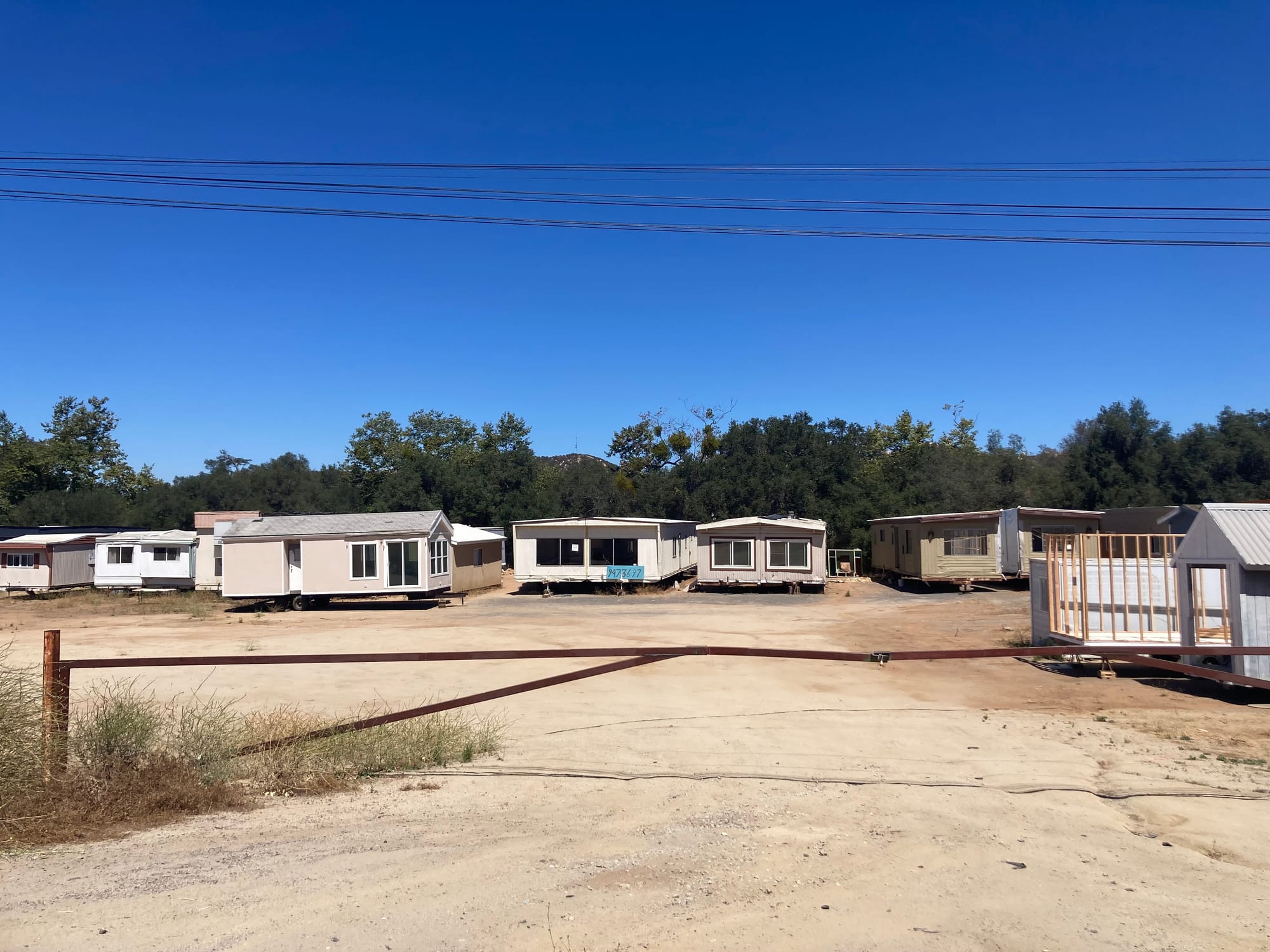
Heading to the city’s edges and farther down the coast, there are numerous businesses dedicated to importing, rehabbing, and reselling manufactured homes. In the U.S., it has been challenging to extend the life of manufactured homes that need upkeep and better insulation because trailers don’t qualify for home loans. Most are not economically feasible to restore and insulate and are sold for nominal sums. In Mexico, there is both the know-how and the economic possibility to recycle these structures.
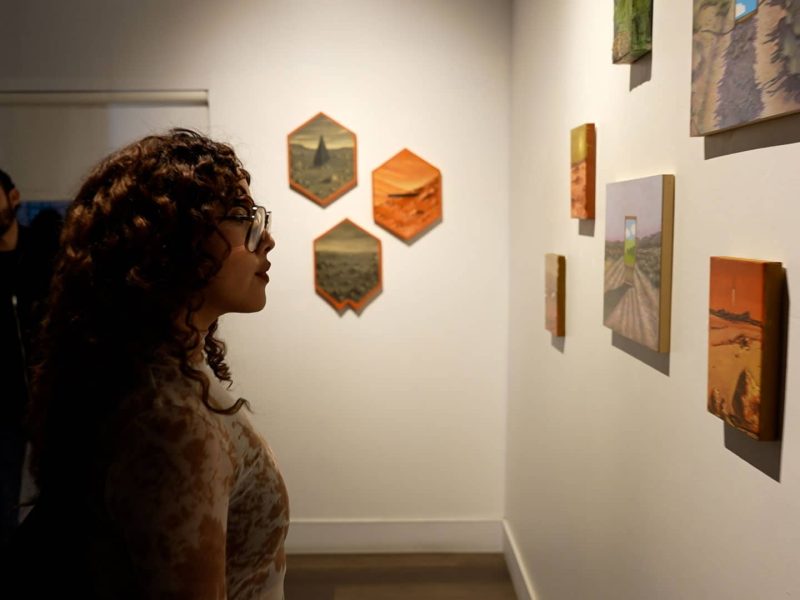
I’m far from the only person thinking about Tijuana’s unique geography and built environment. On the first night of my trip, I met up for dinner with Mónica and Melisa Arreola, twin sisters who run the gallery 206 Arte Contemporáneo and form part of the organizing committee of Tijuana Art Week, whose second edition is taking place from July 8-12. and which features panel discussions, guided visits to art shows, and studio visits.
Mónica Arreola described Tijuana art week as a five-day cultural event that serves to “connect local artists with actors from the national and international cultural worlds and to foment an exchange of ideas and discussions about contemporary art, and to position Tijuana as a cultural reference point.” This year, there will be 16 events and about 50 artists participating.

Arreola described Tijuana’s art scene as “very vibrant, very positive, very hardworking.” Though it’s hard to make any generalizations, she said, “the impact of the city is noticeable in the work…Many of the artists’ parents come from central or southern Mexico, and so they touch on topics like migration, the border, identity, the city, and the cultures that you find in Tijuana.”
One of her own recent works, Valle San Pedro, is a series of photographs of a housing development financed by U.S. companies that was abandoned mid-construction after the 2008 financial crash. The photographs show the unfinished rowhouses’ concrete facades are covered in graffiti; desert broom, a native plant that is considered a “pioneer species,” quick to return to disturbed areas, fluffily fills what would have been residents’ balconies. By focusing on one failed housing subdivision in the sprawl of a border city, the series finds a surprising and specific lens into capturing the relationship between the two countries.
Another of the city’s most distinguished photographers is Ingrid Hernández, whose images show how second-hand materials, most often from the United States, form part of Tijuana residents’ homes. Though not part of Tijuana Art Week, Hernández’s twenty-year retrospective, “Under Construction,” is on view in Mexico City at the Centro de la Imagen through August 9. Hernández writes in an artist statement:
“I grew up in a small, undivided room filled with second-hand furniture. For 25 years, my family lived in a second-hand mobile home imported from the U.S. … Today, I live with my daughter in a home that my mother constructed improvisationally, combining materials originally produced for other purposes: cardboard, tarps, plastics, industrial wood, and rocks.”
When her photographs zoom in on Tijuana’s unique binational, second-hand construction materials and home furnishings, they capture an art to the accumulation of cast-offs: the parallel lines of wooden pallets combined to make a wall look, all together, like a quilt; colored wires twist and tangle between fenceposts like an intricate spiderweb. Ways of living that, at first glance, might appear abject to a visitor from San Diego or another U.S. city become, under Hernández’s gaze, resourceful and meaningful dwellings.
Architect Teddy Cruz has celebrated these regionally inventive structures. “While the seemingly permanent housing stock in San Diego is turned disposable from one day to another, the ephemeral dwellings in Tijuana want to become permanent,” he has written. “One city recycles the ‘left over’ of the other into a sort of ‘second hand’ urbanism.”
One of the many stark contrasts between the two sides of the border wall is the contrast between profligate consumption and obligatory thriftiness. Cruz is well known for saying that the border wall turns San Diego into “the world’s largest gated community.” Inside the gated community that is the contemporary U.S., free trade has accustomed many Americans to a lifestyle of waste. In its mirror image, that waste becomes the substance of a city. Perhaps the post-NAFTA era could be an opportunity to find the conditions for a built landscape that is somewhere in the middle.
Help support our local independent reporting from the borderlands. Become a paid subscriber today for just $6 a month or $59 a year. Help us become sustainable.
Author

Related Articles
The Accidental Revival of José Revueltas
How a prolific Mexican writer, all but unknown in the United States, became the patron saint of some of this year’s most important borderlands books.

In a Mexicali Novel, a Secret and an Unraveling Childhood Friendship
Elma Correa’s award-winning Donde termina el verano follows two girls from the working-class outskirts of Mexicali whose friendship, guilt and memories are shaped by a childhood disappearance and the borderlands around them.

The Sonoran Desert’s Endemic Psychedelic: A Q&A with Writer Kimon de Greef
A new book tells the scandal-ridden tale of Sonora’s toad-smoking neo-shaman.
