
Who Pays for Brownsville’s Industrial and Tech Boom?
County leaders say tax abatements attract jobs. But some residents argue the incentives enrich billion-dollar corporations while they shoulder the costs of growth, pollution, strained public resources, and environmental loss.

In 2014, SpaceX moved to Cameron County, Texas, seeking low-cost land, a skilled workforce, and a strategic Gulf Coast location. In return, the county, historically one of the poorest in the nation, gave Elon Musk, the world’s first trillionaire, a 10-year property tax abatement.
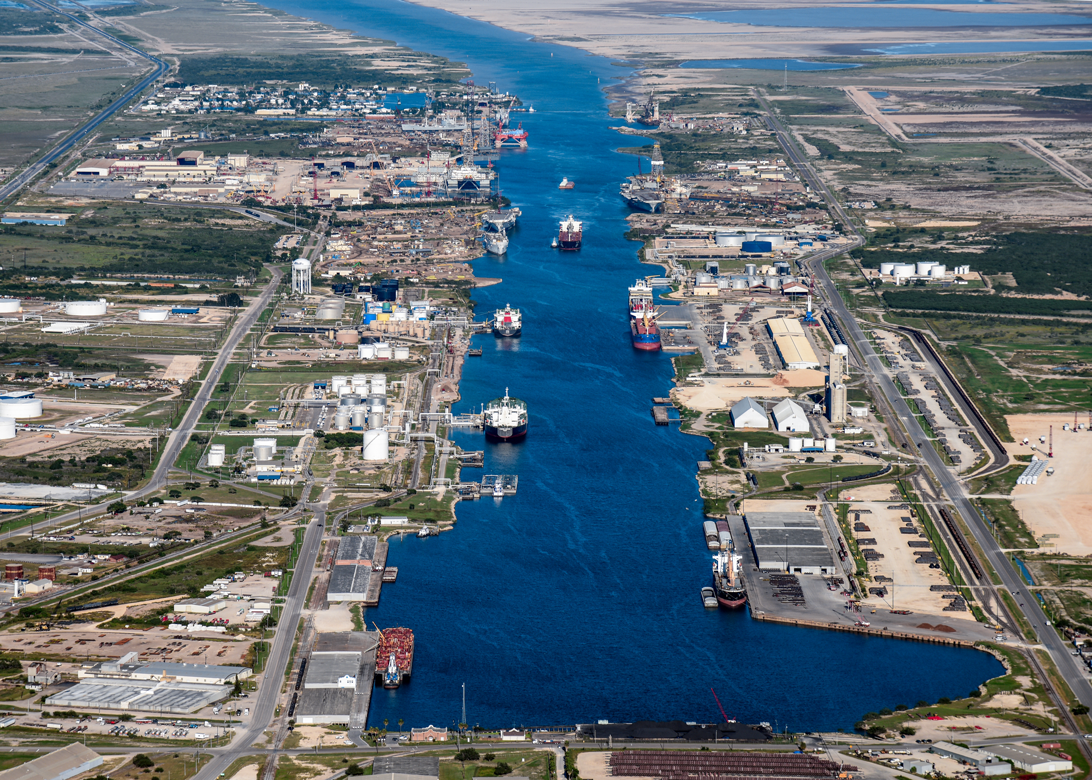
Now, another technology company, the Austin-based Saronic Technologies, which will manufacture AI-powered autonomous warships for the U.S. Navy, is seeking a 95 percent property tax abatement over 20 years in exchange for setting up a $3.2 billion shipyard at the Port of Brownsville, called Port Alpha.
The rapid expansion of industry in the region, including liquid natural gas pipelines, the SpaceX Super Heavy rocket testing site, a proposed oil refinery, autonomous warships, and other military defense production, is taking a toll on the environment and quality of life, say residents. Residents are also questioning whether multi-billion-dollar companies should be receiving tax breaks in a region where many households are barely getting by.
This growing concern was reflected in two contentious hearings last month over the Saronic tax abatement. At the final hearing on June 16, residents filled the Cameron County Commissioners’ courtroom to give public comment ahead of the commissioners’ vote. At least 40 people submitted written statements expressing their disapproval or testified at the hearing against the tax abatement. Several questioned subsidizing companies that profit from the war industry and whether handing out a tax break to Saronic, recently valued at $9.25 billion, which received a $392 million contract from the U.S. Navy was necessary.
“Does a company worth billions of dollars really need a tax abatement?” a resident, Desto Huerta, said at the hearing. “These corporations don’t do anything but exploit the land, its workers, and your constituents. The least they can do is pay their fair share of taxes.”
At least 15 others, mostly elected officials, economic development staff, and people with company ties, testified in favor. A handful of Saronic company executives sat at the back of the courtroom listening to the testimonies. Two weeks earlier, in the same courtroom, Doug Lambert, Saronic’s cofounder and chief operating officer, told county commissioners that the company had received a 25-year 100 percent tax abatement for another shipyard currently under construction in Franklin, Louisiana.
County Judge Eddie Treviño asked Lambert whether Saronic would still consider building its shipyard in Brownsville if the county didn’t approve the tax abatement. Lambert said that choosing a location is a competitive process, noting that Brownsville was up against cities in California and Virginia. He estimated that 10,000 jobs could be added to the workforce if the project was approved.
Public Money Subsidizing Private Profit
Elected officials are often eager to hand over taxpayer money to corporations because it’s an easy way for them to claim credit for a new company moving to their community, said Nathan Jensen, a professor of government at the University of Texas at Austin and co-author of the book Incentives to Pander: How Politicians Use Corporate Welfare for Political Gain. In many cases, Jensen said companies have already chosen a location based on other factors, including access to a trained workforce. Tax incentives are a way for corporations to pit one region against another for their maximum benefit.
“Many companies have already selected a location, and then they’re trying to extract maximum incentives and maximum tax treatment from the community,” he said. “To get an incentive, you have to show that you might be willing to go somewhere else.”
Jensen said that cities and counties often give away too much, too soon. “The research suggests you do not have to give full tax abatements. Even if the jobs are great, tax revenues are really valuable, and you could have probably gotten more tax revenues had you negotiated a better deal,” he said.
Tax abatements for multi-billion-dollar companies like Saronic, Jensen said, allow them to reap the benefits of expanding their operations, while residents subsidize that expansion. Big industry projects use large amounts of electricity and water and utilize the local infrastructure. As a company’s footprint grows and thousands of employees begin working, either public services get cut or residents experience higher taxes to account for the additional resources that the company and its workforce consume.
“A lot of folks are struggling with their own home property taxes,” he said. “Are they going to get tax relief from this? The research suggests no,” he said. “Because these projects are getting a huge discount on property taxes. And it often falls on residents to make up the difference.”
At the June 16th hearing, local officials argued that the promise of jobs and investment in the region was worth the sacrifice. In his testimony, Gilberto Salinas, President and CEO of the Greater Brownsville Economic Development Corporation, said the 95 percent tax abatement was necessary to persuade Saronic to come to Brownsville.
“Ever since I can remember, we have been considered one of the poorest cities, if not the poorest city in the nation,” he said. “Let me emphasize that it’s about developing our local people into talented and highly sought professionals, which in turn they become high-yield earners.”
Judge Treviño agreed that they should not let opportunities for new industry moving to Brownsville “pass us by”.
After two hours of public comment, the county judge and commissioners (two commissioners were absent for the vote) voted in favor of the 95% property tax abatement, in what they called a “landmark deal” that would give Saronic a tax break of $211 million with the Greater Brownsville EDC adding another $10 million in incentives. Additionally, the Point Isabel school district, which includes the Port of Brownsville, approved a school tax incentive of $228 million. Altogether, the company could reap $449 million in local tax breaks. Saronic has yet to give a date for when it will announce which location has been chosen for its next shipyard.
Saronic Technologies did not respond to questions submitted by The Border Chronicle regarding its bid for the tax incentives. A company spokesperson, however, did issue a written statement to the Chronicle saying that “Saronic’s nationwide search for a location to build Port Alpha remains active and ongoing.” County Judge Eddie Treviño also did not respond to requests for comment.
SpaceX Seeks More Public Money
SpaceX’s 10-year property tax abatement in Cameron County may have ended in 2025. But Elon Musk is still seeking more public money. This year, SpaceX sought $7.5 million in state sales tax refunds for hiring staff and running its operations in the region under a state program that provides tax relief for companies that create jobs in economically distressed areas, according to The Texas Tribune. “Elon Musk is like the wealthiest person alive,” said Kristan Wong Karinen, a researcher with Good Jobs First, a D.C.-based nonprofit that promotes government accountability in economic development. “… So there’s an ethical question here about — I pay my taxes … so why does Elon Musk get a pass?” she told the Tribune.
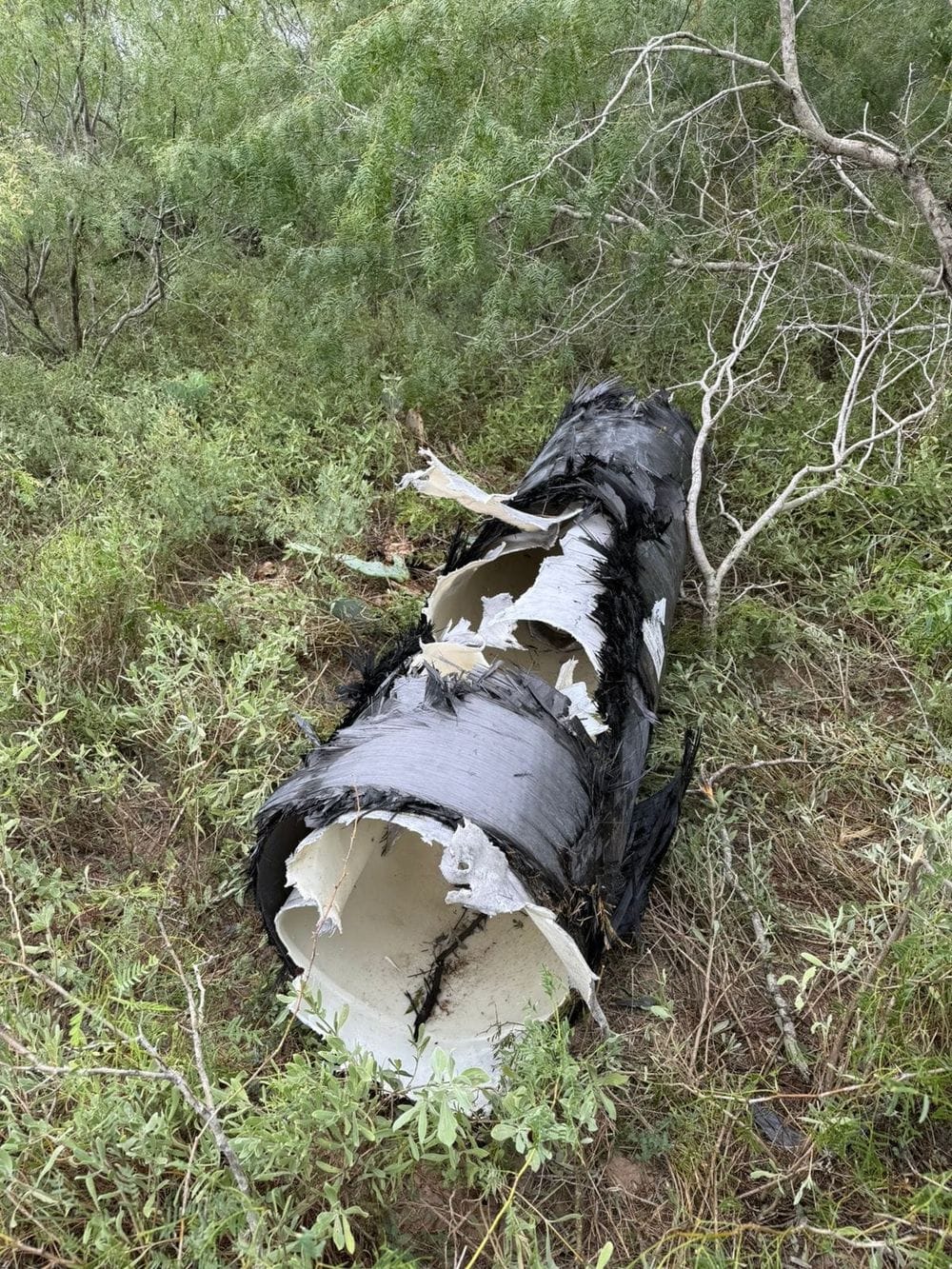
Musk’s new city, Starbase, and the continuing expansion of his rocket facility, which Musk said could eventually launch thousands of rockets a year, have residents feeling overwhelmed by billion-dollar corporations seeking to industrialize more public lands in the region. What used to be a peaceful drive on State Highway 48 connecting the city of Brownsville to Port Isabel on the route to South Padre Island is now congested with semi-trucks and construction crews working at NextDecade’s Rio Grande Liquid Natural Gas project. The project broke ground in 2023, and another LNG project, Texas LNG, is set to begin construction later this year. SpaceX also has its own pipeline project in the works called “Starpipe” to fuel its 40-story Starship rocket that requires approximately 630,000 gallons of liquid methane per launch.
Some of those launches have resulted in catastrophic explosions propelling debris over local communities, federally protected wildlife lands, and across the border into Mexico. In June, three Brownsville environmental groups and the nonprofit Center for Biological Diversity sued the U.S. Fish and Wildlife Service to stop it from handing over 715 acres of the Lower Rio Grande Valley Wildlife Refuge to SpaceX to enlarge its operations.
Christopher Basaldú, a cofounder of the local South Texas Environmental Justice Network, one of the groups that sued the U.S. Fish and Wildlife Service to stop the land transfer to SpaceX, said elected officials were thinking in the short term and giving up too many of their natural resources that would be impossible to replace. “What we have are local politicians who have completely sold out our futures so that rich anti-human corporations and the people who run them can make record profits while we suffer,” he said. “The government should be protecting our natural resources from overexploitation, destruction, or contamination.”
Support local independent news from the U.S.-Mexico border today. Become a paid subscriber for just $6 a month or $59 a year. Help us become sustainable.
Author

Related Articles
Border Walls Devastating Arizona Are a Warning for Seminole Canyon and Big Bend
Vehicle barriers are just the first step in the march to 30-foot border walls. San Bernardino National Wildlife Refuge is seeing the brutal endpoint.

American Rust: The $1.1 Billion Border Wall Built with Salvaged Materials and Few Answers
A newly constructed wall built with old, salvaged material in South Texas is probably illegal; it’s also costing twice as much as previous walls. What are taxpayers paying for, exactly?
“We See No Border”: The Tohono O’odham Fight Against the Border Wall
The irreparable harm that has already been done, says tribal chairman Verlon Jose, you can feel it, hear it, in the people.
