
Breaking News: Laredo on Alert as Trump’s Buoys Cause Chaos on the Rio Grande, Close International Bridges
Hundreds of massive orange buoys staged for a controversial DHS floating barrier project broke free near Eagle Pass and are now drifting toward Laredo, threatening bridges, commerce, drinking water supplies and downstream communities.
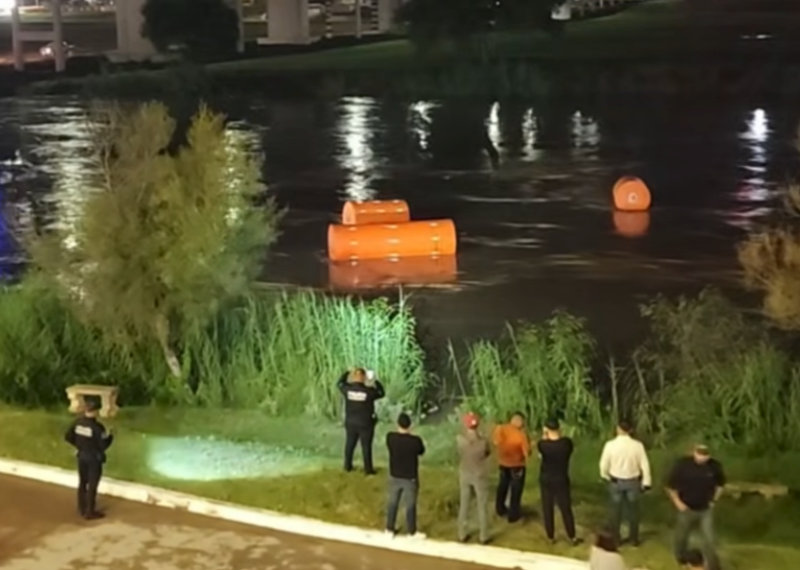
Updated news as of Saturday, Sept 18: City of Laredo announced that it will suspend traffic on international bridges when buoys and large debris are passing under the bridges.
What does millions of dollars floating away, literally, toward the Gulf of Mexico look like? Well, last night in Eagle Pass, Texas, we got our answer. Hundreds of massive orange buoys, each weighing approximately a ton, were swept into the Rio Grande shortly before midnight as the river burst its banks due to torrential rains.
As The Border Chronicle previously reported these buoys are part of an extremely dangerous plan by the Department of Homeland Security to place up to 500 miles of floating barriers on the Rio Grande, violating the binational river treaty and without any environmental or safety studies. In the last few months, private contractors including Fisher Sand & Gravel, Spencer Construction and Gibraltar Perimeter Systems have staged thousands of these massive buoys near the riverbanks in Texas border cities including Laredo and Eagle Pass. The approximately 120 buoys that were swept into the Rio Grande last night came from a staging area north of Eagle Pass, according to State Rep. Eddie Morales.
With each buoy weighing a ton, bridge operators shut down Eagle Pass’ two international bridges last night fearing damage to bridge pillars in the river as the buoys made impact, leaving border residents stranded on both sides of the river.
This morning, the city of Laredo issued an emergency declaration, and held a press conference, with the city’s emergency management coordinator, Guillermo Heard, estimating that the buoys will likely arrive in Laredo — the country’s largest commercial land port— in the next 36 hours, according to river flow and weather projections. “We’re told that we should expect them at the Colombia Bridge by mid-day tomorrow,” he said.
Heard said that local, state, federal and Mexican officials are monitoring the flooding and trajectory of the buoys as they head for Laredo with live video feeds, drones and spotters on the bridges. “We have plans to stop traffic and temporarily pause the bridges if we need to,” he said.
The closure of Laredo’s international bridges with Mexico — the country’s largest commercial land port— could potentially cost millions in commercial losses and strand thousands of people.
Laredo officials said they were hopeful that the buoys would not cause damage or bridge closures after an operational briefing at 1 a.m. last night with Eagle Pass officials, Heard said. Bridge engineers observed the impact that the buoys made with the bridge pillars in Eagle Pass, and the impact of the buoys hitting the bridges were largely “absorbed by the debris,” said Laredo’s Mayor Victor Treviño.
“Some of the buoys lodged in the riverbanks, but as the river keeps rising,
we expect them to dislodge.”
The Rio Grande in Laredo is currently cresting at 17 feet but expected to reach at least 24 feet in the next day, Heard said.
The Border Chronicle contacted the Texas Department of Emergency Management, which is coordinating the emergency response, but a spokesperson referred all questions to the Department of Homeland Security, which did not respond to requests for comment.
Amerika Garcia-Grewal, an Eagle Pass resident, and cofounder of Frontera Federation, which is advocating for the removal of the buoy barriers, said she had been warning for months of such a disaster. On July 7, after lobbying from Frontera Federation and residents, the city refused to grant a lease to Gibraltar Construction Company to stage the buoys near the river at the city’s Shelby Park. This morning she checked on their status. “They’re still there,” she said. “They just moved them further back from the river. If the river gets two feet higher, they’re
going to start floating.”
In Laredo, Martin Castro, Watershed Science Director for the nonprofit Rio Grande International Study Center, and a former Rio Grande Watermaster, worries that the rising river could carry away hundreds of more buoys from staging areas near Laredo. Castro said that it’s most likely that if the buoys “remain intact or salvageable they will end up in the Falcon Reservoir at Falcon Dam,” he said. “The debris is going to collect at the foot of the dam.”
Whether the floating buoys will damage the Falcon Dam, Castro said it would take an expert to predict the impact. But he referred to a March report commissioned by RGISC, and conducted by river scientist, Mark Tompkins, that concluded that the buoys and border wall being built in the floodplain could cause massive damage.
After the buoys pass through Laredo this weekend they will hit smaller border communities, including San Ygnacio. Elsa Hull lives just yards from the Rio Grande and was arrested in June for her nonviolent protest against the wall’s construction near her home. “Just a couple hundred yards from my home they are building a 30-foot wall in the sand, and in the floodplain,” she said. “It’s just crazy.”
For decades, Hull worked for Texas’ Commission on Environmental Quality testing the Rio Grande for harmful pollutants, before quitting in protest last year. Besides the physical damage that the buoys could cause, she also worries about the contamination that it can cause to the river, which is the sole source of drinking water for many border communities. Hull said there’s no public information on what the buoys are made of, but it appears to be expandable foam that is wrapped then painted orange. “I’m concerned about the microplastics and volatile organic
compounds from the foam and paint as this stuff breaks down and is released
into the river,” she said. “It’s going to put aquatic life at risk and our drinking water, too.”
For residents along the Rio Grande, this is a disaster foretold. “It doesn’t make me feel good at all to say, ‘I told you so,'” said Garcia-Grewal. “I am just angry. I am livid, because I told the contractors this would happen.”
And there’s more:
The Border Chronicle just received photos of a section of Texas-funded buoy barrier in Eagle Pass that was installed last year. It, too, is breaking apart now in the floodwaters.
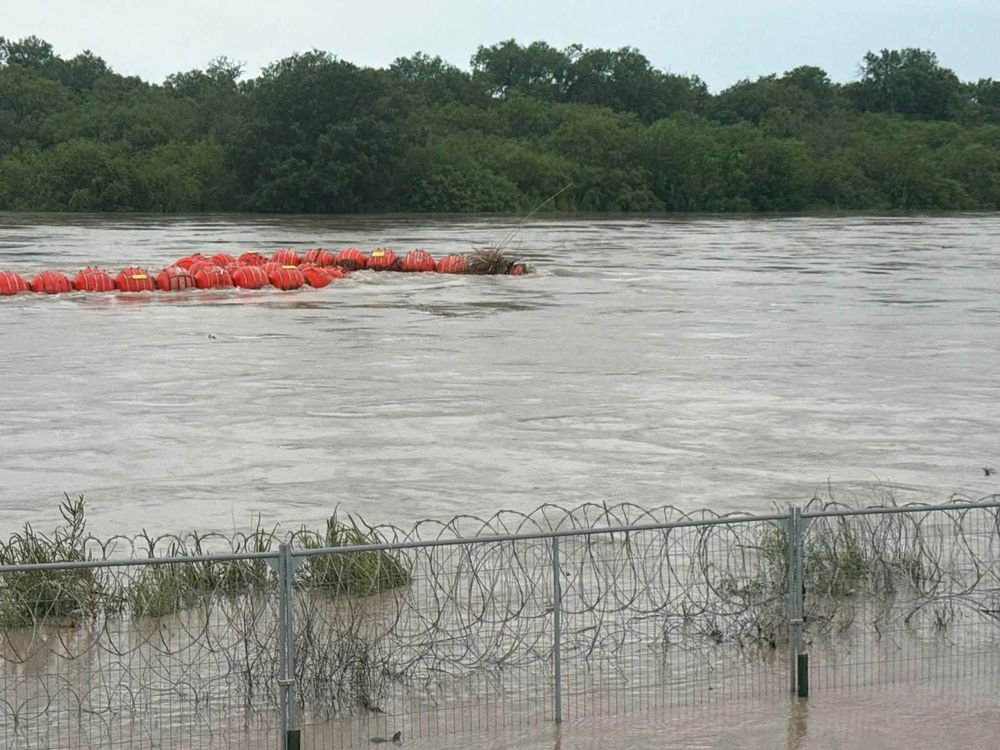
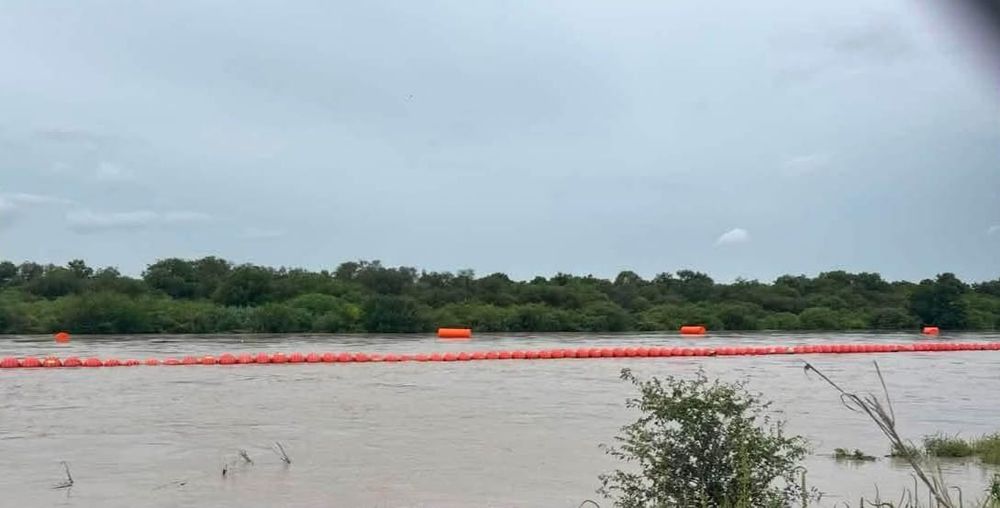
Left to right: Texas Gov. Greg Abbott’s buoys falling apart as floodwaters rise, and Trump’s buoys floating past Texas buoys near Eagle Pass, Texas. (Photos courtesy of RGISC)
Support our independent reporting from the U.S-Mexico border. We can’t do this without you! Support our work today for just $6 a month or $59 a year.
Author

Related Articles
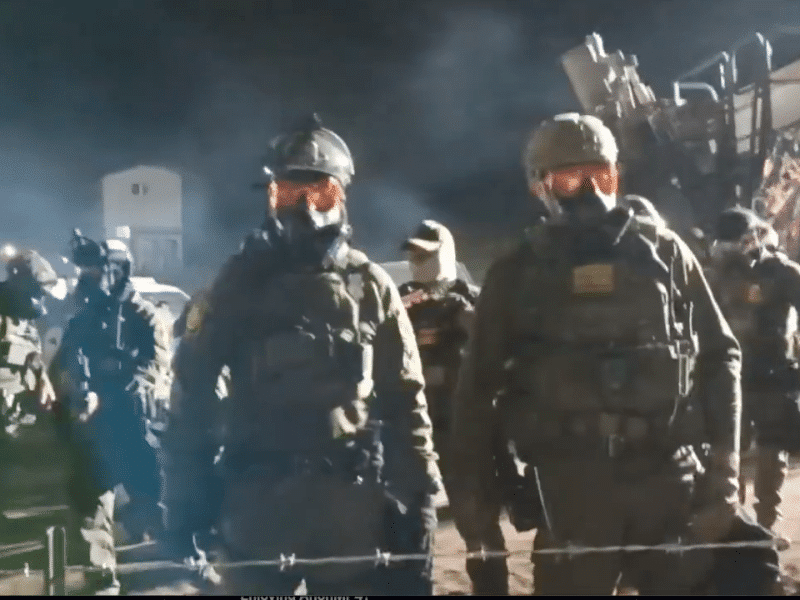
Border Patrol Deploys Tactical Unit Against Protesters Blocking Arizona Border Wall
“I said, with due respect, sir, they are standing here with pepper spray artillery and gas masks on. They are not talking to us; they are assaulting us.”
Border Walls Devastating Arizona Are a Warning for Seminole Canyon and Big Bend
Vehicle barriers are just the first step in the march to 30-foot border walls. San Bernardino National Wildlife Refuge is seeing the brutal endpoint.
American Rust: The $1.1 Billion Border Wall Built with Salvaged Materials and Few Answers
A newly constructed wall built with old, salvaged material in South Texas is probably illegal; it’s also costing twice as much as previous walls. What are taxpayers paying for, exactly?
