
Swarm Intelligence: A Reporter’s Notebook on the Freedom of Movement in the Maasai Borderlands
Could solutions to climate woes such as drought be found in the freedom of mobility? This on-the-ground report from the Kenya-Tanzania border examines that question and more.
Photos and Text by Todd Miller
In the Kenya-Tanzania borderlands, a group of wildebeest stand near the banks of the Mara River, waiting to cross. They are struggling to make a decision. Who could blame them? There are dozens of hippopotamuses sleeping in the water. And on the bank there are two crocodiles bathing in the warm sun. I would hesitate too.
The wildebeest are undertaking their yearly “Great Migration”—dubbed the “eighth wonder of the world”—in which 1 million to 2 million of these stately animals leave Tanzania and cross the international boundary into Kenya, where they stay for several months before crossing back into Tanzania. The migration is so massive that it can be seen from space. According to fossil records, these animals have been on the move for about 1 million years, long before human settlements, let alone international boundaries.
On this day, we have seen lions, elephants, buffalo, a rhinoceros, and a leopard, but this wildebeest grouping is the most interesting to me. Maasai elder Anton Keiwua, a director at the Dopoi Center, a Maasai cultural and educational institution, says they are conducting their “consultations” to determine whether they should cross.
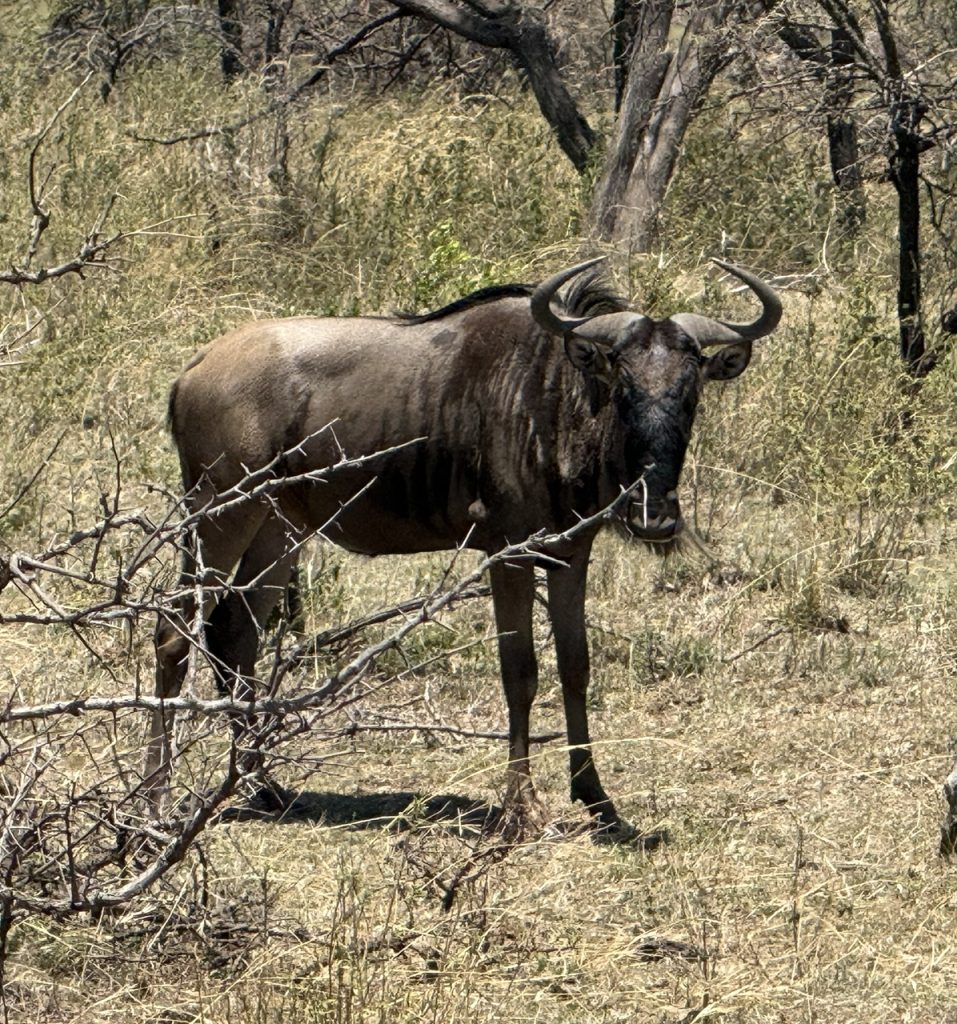
This group will return to Tanzania through the Serengeti, deciding on their route through subtle shared cues of movement, scent, and sound in what could be described as “swarm intelligence”: a sort of problem-solving through collective trial and error without a designated leader.
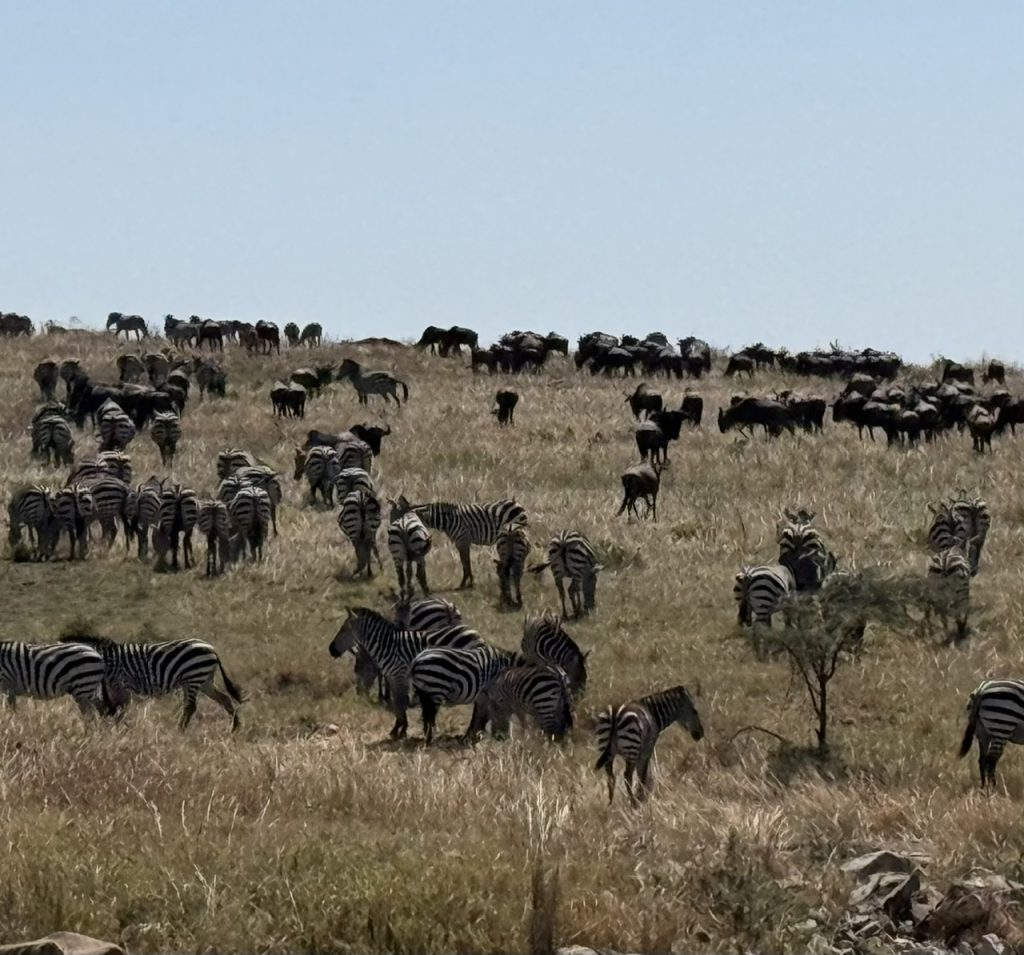
On top of this, the wildebeest have a keen sense of hearing and taste and can smell rainfall patterns up to 24 kilometers away. As Keiwua puts it to me, wildebeest don’t travel alone because they lack good eyesight, so they tag along with other animals like zebras, who can see far.
“It’s not just wildebeest migrating,” emphasizes Maasai elder and Dopoi Center cofounder Meitamei Olol Dapash. (Olol Dapash is also the coauthor of the book Decolonizing Maasai History: A Path to Indigenous African Futures.) “It’s about half a million gazelles, giraffes, and zebras. It is many species traveling together, moving together in cyclical movement,” crossing the international boundary between Kenya and Tanzania. A border wall, like the one under construction in the United States, would cut this off.
The wildebeest’s ability to smell and sense rainfall patterns can help lead them to green pastures for sustenance in places like the Maasai Mara, which has experienced more frequent and intense droughts driven by the changing climate.
We sit and watch the wildebeest for about an hour. They deliberate. They talk. They consult. But they don’t move. I find myself in contemplation. I wonder if the animals offer an alternative, a solution even, to one of the biggest crises of the 21st century, an antidote to the climate crisis that relies on the freedom of mobility, the freedom to cross borders.
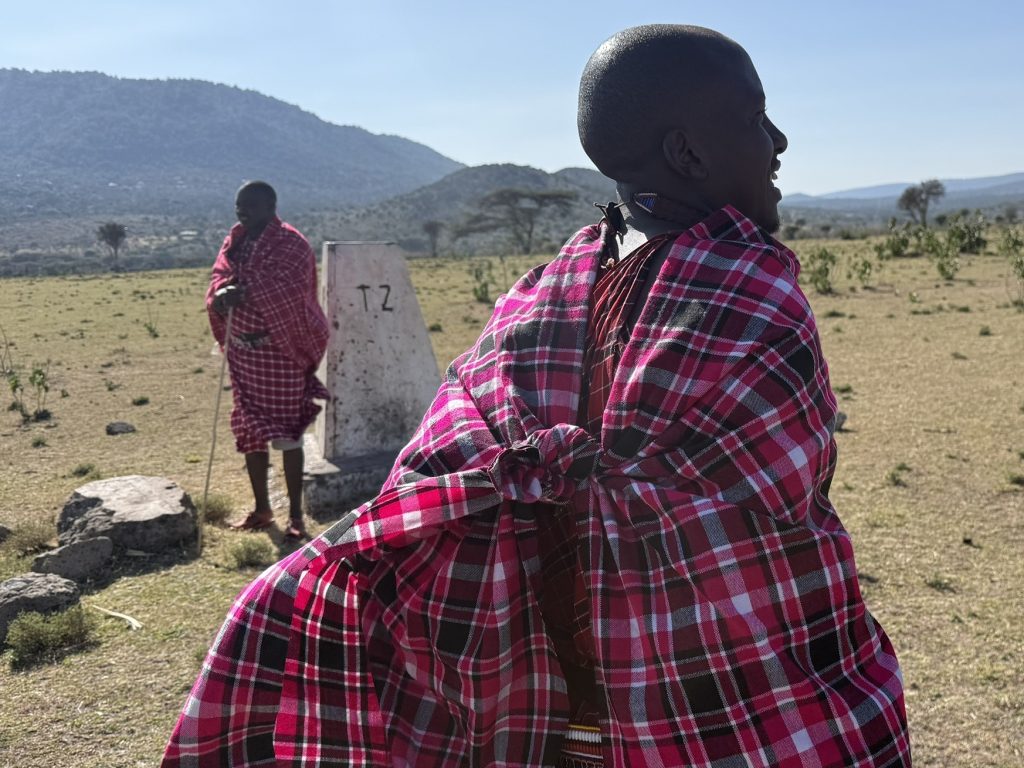
Two days later, I am standing directly on the Kenyan-Tanzanian border with Meitamei, who explains that because the Maasai are nomadic pastoralists, they are often misinterpreted as wanderers rather than as pursuing a purposeful way of life and a deliberate system of work. Like the wildebeest, the Maasai people have traditionally relied on the freedom of movement to find green pastures for cattle, goats, and sheep. The movement, by leaving one area fallow, allows that area to replenish, he says.
And the Maasai, like the wildebeest, can follow the patterns of rain.
The international border, however, impedes just that, and that is what we are talking about. We are right where I visited three years earlier for a report in The Border Chronicle on a Tanzanian Maasai community that was violently evicted by Tanzanian police forces at the behest of an international trophy-hunting company called Otterlo and the country’s tourism industry. We are there with a film crew from Brooklyn-based Transformer Films, which is working on a documentary that challenges international borders and embraces freedom of mobility. For the Maasai, the concept of no borders isn’t an argument to be deliberated or debated; it is a way of life.
After we travel several miles along the dirt border road to the Maasai community called Noonchuta, Meitamei meets a 20-year-old man who recognizes him from roughly four years before, when he came to the border on a humanitarian mission after the eviction. The young man fled Tanzania as police forced people from their homes with bayonets and burned down communities.
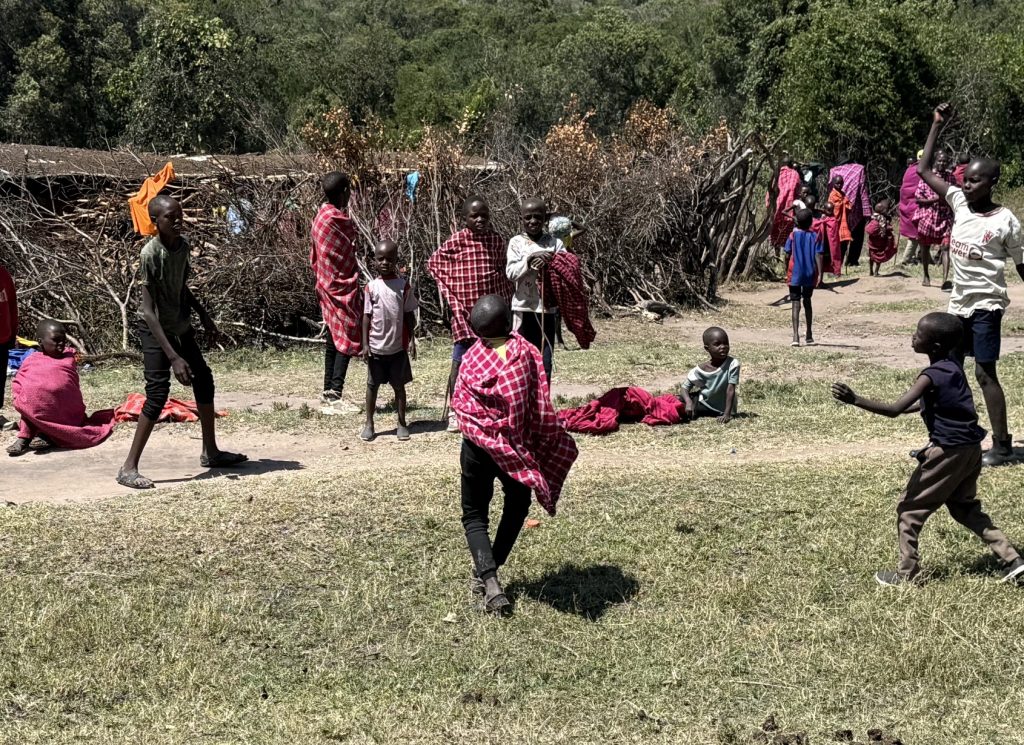
This Kenyan border community absorbed many refugees. Small, one-story houses made of sticks, mud, and cow dung form an oval around Noonchuta. The entrance gate is an arch made of branches. I think at first it might be to fend off the lions, but the community fears the Tanzanian border police more; they have been patrolling at the town’s edge. Like the Kenyan border police, the Tanzanian force has, in the past, received training from U.S. Customs and Border Protection, training that extends far beyond what most people realize. The U.S. border and its enforcement mentality have a global reach.
“If you’re found along the border, they will stop you and ask you to produce your identity card, and if it’s a Kenyan identity card, they will arrest you,” Meitamei explains. “Or they charge you $3,000 to cross the border. Even if it’s just 10 yards. If you are riding on a motorcycle, they’ll arrest you and take away your motorcycle for good. If it’s a big herd of cows, they will just drive them away completely.” That is one of the biggest complaints: the confiscation of cows. For the Maasai, he says, this is like losing a bank account.
This is, he said, “a violation of a way of life, a violation of natural justice, a violation of indigenous rights.”
This could apply to indigenous communities around the globe, anywhere colonial borders have been imposed. At that moment, I think specifically of the parallels with the Tohono O’odham Nation, where on August 25, an incursion of masked CBP agents arrived to make way for wall-building contractors who had been prohibited from entering. Like the Tohono O’odham, the Maasai—whose community extends to both sides—the border arrived without any consultation whatsoever. The straight line came directly from European powers during the 1884–85 Berlin Conference.
“It’s a violation,” Meitamei tells me, “of everything.”
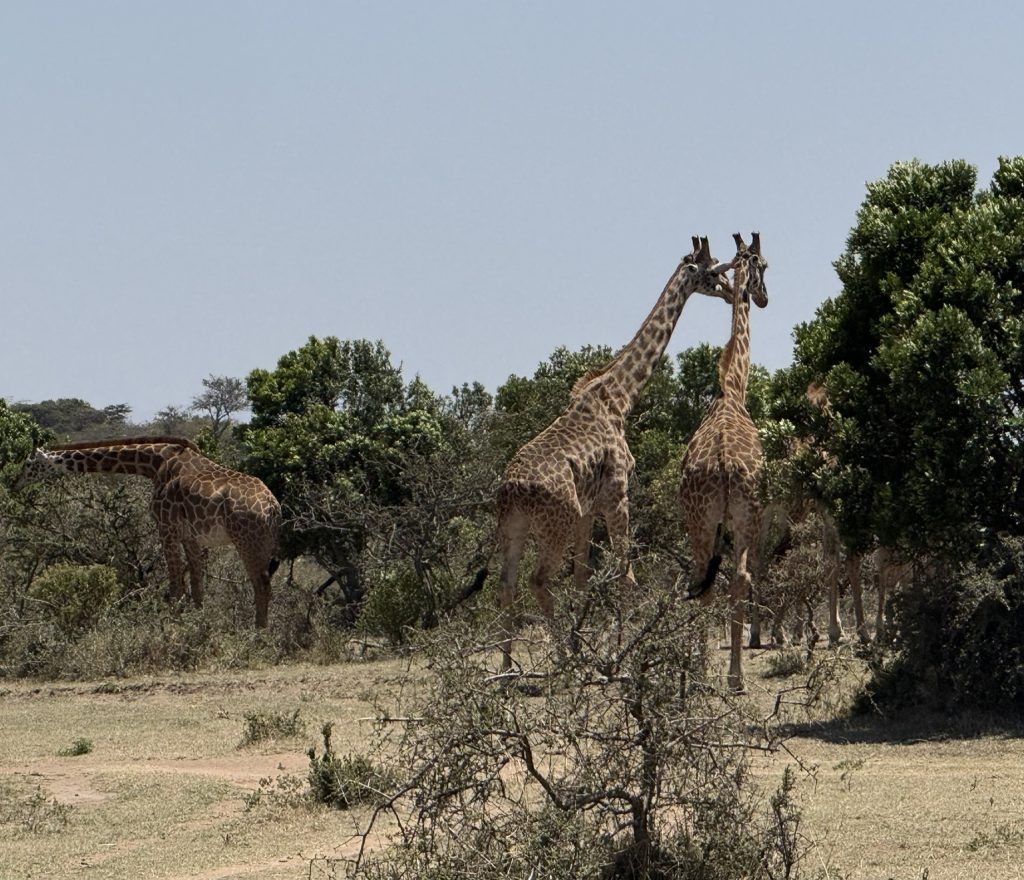
The Maasai leaders I am traveling with that day keep calling the international boundary an “artificial border.” As if to prove the point, from Noonchuta, we drive along the dirt border road that keeps crisscrossing into Tanzania, then Kenya, then Tanzania again. Back and forth, for five miles, for 10 miles, from country to country, traveling through packs of giraffes, dozens upon dozens, who straddle the border, crossing back and forth as their necks extend and crane into the trees. We see people herding goats, sheep, and cattle from one side of the border to the other.
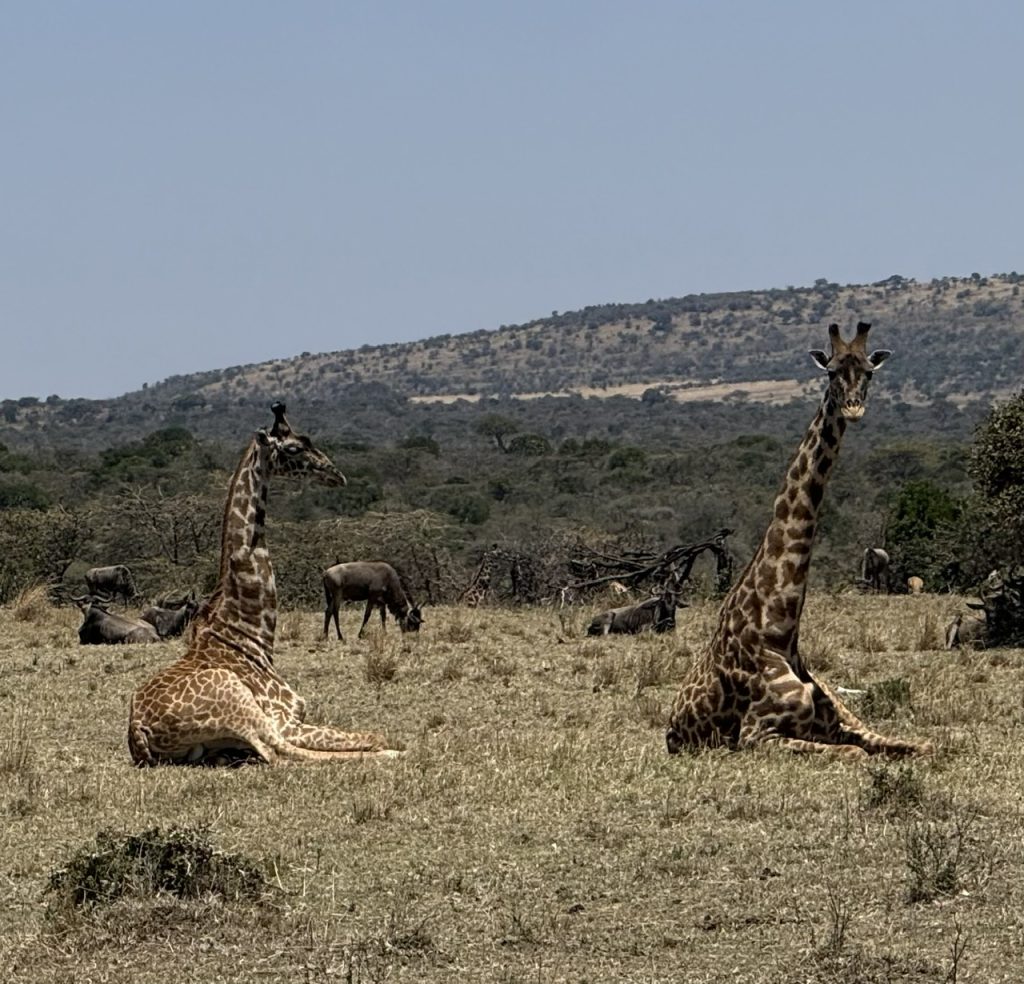
And then we come to the inevitable: the wildebeest migration, countless rain-tracking animals walking, sometimes running, sometimes grazing, sometimes resting. At one point, we come to a clearing where wildebeest rest with several giraffes, zebras, gazelles, and warthogs. That happens to be in Tanzania.
When I ask Meitamei about the significance of this Great Migration to the Maasai, he tells me, “The Maasai people recognize that wildlife, and nature in general, is the work of God. Our god is called Enkai. God created nature and placed humans in that place, and therefore the philosophy about life is that everything has the right to live. Everything has the right to move. We cannot confine anything. Animals and human beings who are born are given the freedom to move.”
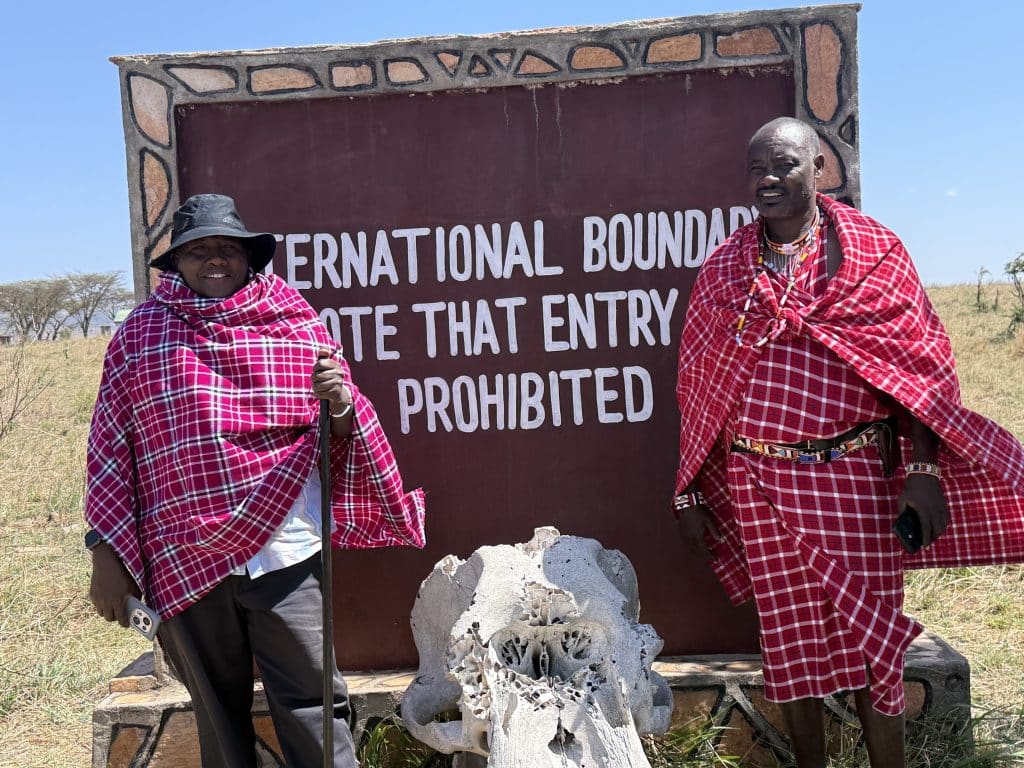
Along the border, we eat lunch in the shade of an acacia tree, looking over a beautiful, expansive savanna below, where we can see a grazing herd of buffalo stretching to the horizon. Then we reach the Tanzania border enforcement station, which has a sign that explicitly states, “Entry is prohibited” into Tanzania (see photo above).
From here, we cross the Sand River to get back into Kenya. Over this rocky, sandy river (no crocodiles that I can see), the wildebeest are crossing in huge groups, rushing into the water with zebras. I wonder if this might be the same deliberating group from two days before. We sit on the bridge and watch for quite a while. The wildebeest seem like an unstoppable force of nature, a collective whole that is more important than the individual.
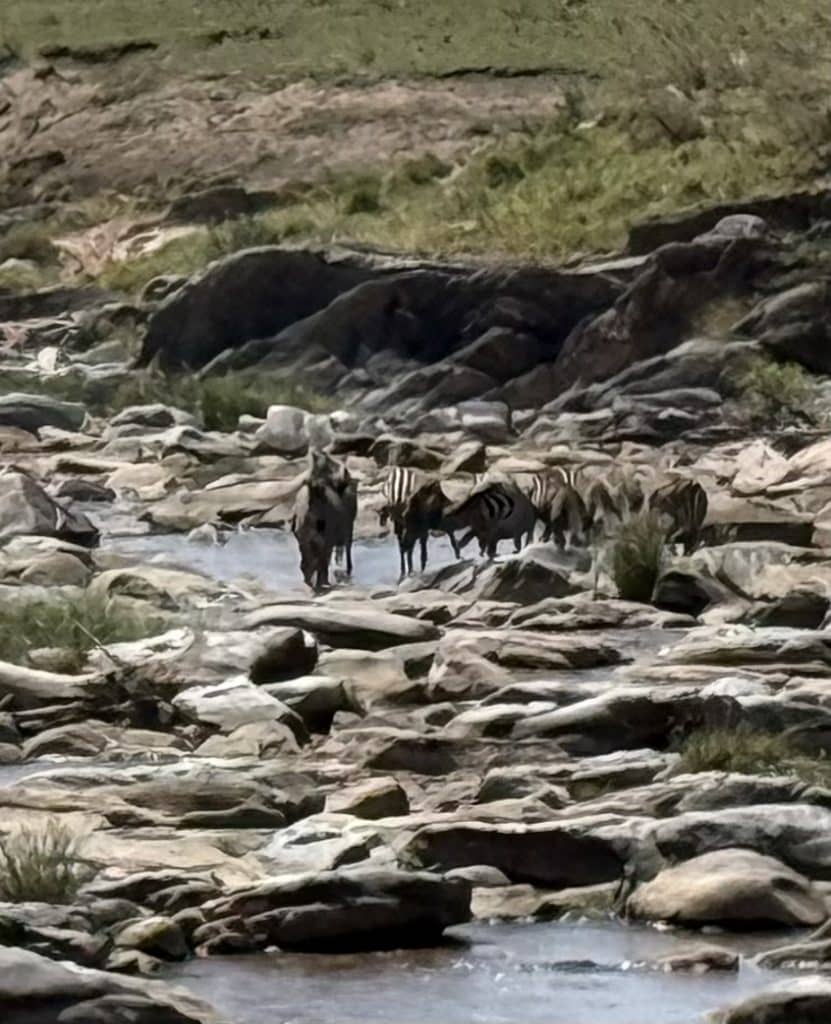
As I watch the wildebeest go into Tanzania, I can’t help but think that we are witnessing swarm intelligence. Early this morning, there was a lunar eclipse. And all day a fierce and constant wind has blown and blown. Keiwua tells me he thinks both are signs that rain is on its way. With the dry grass, there could be nothing better. And the wildebeest will go wherever this rain will fall.
It is easy to see that we are among the beings who are close to the earth’s rhythms, can sense the weather patterns, and that all this relies on our ability to move from one place to another. The hardened, enforced border is not only inherently violent but also unnatural and illogical, stopping massive flows of life, which includes impeding creative ways of thinking about climate change.
Author

Comments (1)
Comments are closed.
Related Articles
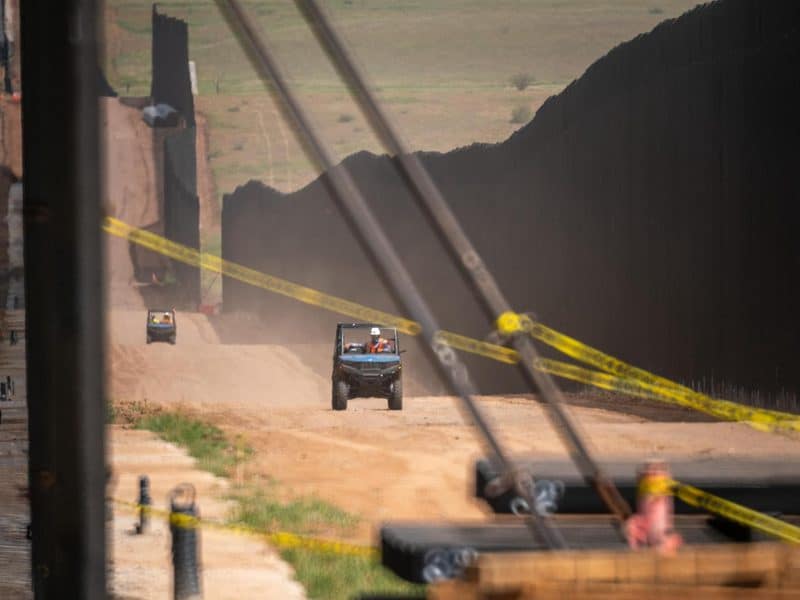
Introducing the Wall Watch Project and Contractor Database
Explore the companies, contracts, and construction projects reshaping the U.S.–Mexico border—and get ready for a new series of Wall Watch Dispatches.
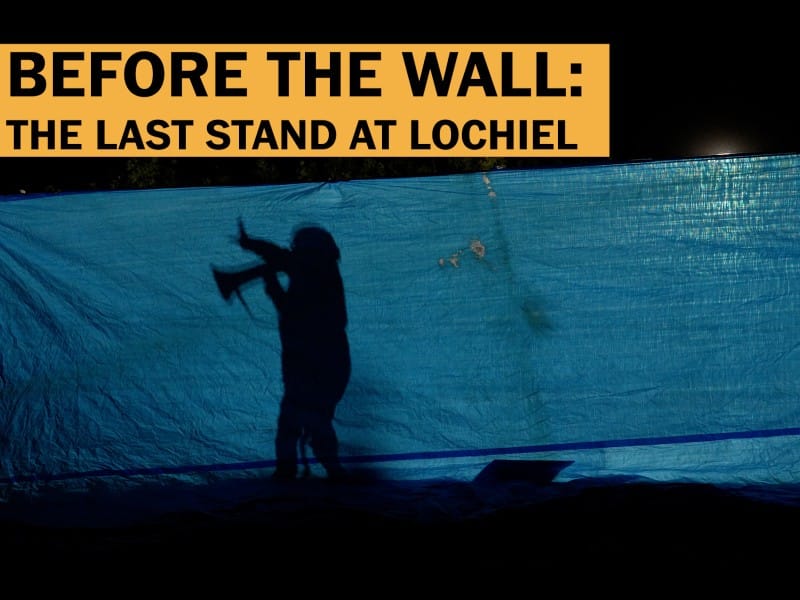
Before the Wall: The Last Stand at Lochiel
As a double border wall rises through Lochiel, protesters gather to defend the ancient cottonwoods and the San Rafael Valley.
Todd,
This is a very insightful follow up to your earlier encounter with Maasi and their border security impediments. It gets to the essence of Indigenous Peoples’ earth centered life ways. Their seasonal movements are driven by climate across the lands they inhabit and share with other beings.
The Maasi in the Kenyan / Tanzanian border move through savannah, classified as a “Aw“ for Tropical Savanna Climate with relatively dry winters and wetter summers.
The Tohono O’odham live in the Sonoran desert in a climate designated as “Bwh” for hot desert climate, also under Köppen climate classification.
The O’odham once lived in a Savannah as well. I recall the late Ascencio Antone Palma, former traditional governor of the O’odham in Mexico and member of Chedag Wahia (sp?) community in Sonora (now to be fenced off from the TON reservation at San Miguel gate by DHS) who said that when he was a child, the grass grew as high as his chest. He was answering a question I asked back then about why the O’odham named a particular feature of the terrain near the border with Mexico – as “Buffalo head / Pisin Mo’o”?
Those grasses were largely but not completely decimated from 1880-1883 during the massive cattle drives that invaded the Arizona territory grasslands given those three years suffered a sustained drought; without rain one million cattle trampled and literally ate it to its death, destroying the seeds needed to regerminate as annuals.
Deer and pronghorn as native non-invasive species then experienced a highly disturbed migration that had generally favored west to east movements across mountain skirts toward, for example, today’s Elephant Mountain. Further restrictions on their range diminished those populations.
O’odham as a people are now undergoing the colonization of their habitat through the completion of border wall building and armed agents patrolling their rural communities as you have amply reported. As a tribal member of a different tribe, it is acutely disturbing to see slow motion cultural genocide taking place; this is what the US is engaged in and has been since its inception after the colonies declared their Freedom from the British Crown.
Your contrasting stories nevertheless give us a sliver of hope. Migration is the Indigenous response to environmental change, whether it is O’odham moving up and down the river systems, from winter mountain springs to summer monsoons in the desert, moving from the arid O’odham coast inward, or ascending the Northern Sierra Madre mountains, or listening and watching the wildebeests collectively catching the scent of rain, we are taught that migration is creation.
From Dublin