
I Was a Performer In the “Spectacle” of Border Enforcement: A Podcast with Police Expert Eric Gamino
The former South Texas police officer talks about working a “surge” on the Texas-Mexico border, and playing a role in “border theater.”
In the summer of 2014, there was a large influx of unaccompanied children and mothers traveling with their children from Central America at the South Texas border in the Rio Grande Valley.
The governor at the time, Rick Perry, deployed National Guard and state police under a border enforcement initiative called Operation Strong Safety, which Perry and other lawmakers said would target drug smugglers and human traffickers at the border. Local law enforcement was offered overtime pay to participate in the operation, which would end up costing nearly $1 billion.
Eric Gamino, a police officer at the time, was working on his PhD dissertation and asked his boss at the police department whether he could participate in Operation Strong Safety and write about it. A lifelong resident of the Rio Grande Valley, Gamino wanted to know what his fellow officers thought about the border operation, and, among other things, he wondered what impact it would have on community policing.
Gamino was given the OK if he used pseudonyms for the police department and his fellow officers to protect their privacy. Last year, he published some of his findings in a study called “Border Splurge to Deter Border Surge,” which I first learned about from an informative piece by Ryan Devereaux in The Intercept about Texas’s current Operation Lone Star.
Gamino’s fellow officers nicknamed the border operation “Operation Netflix” because they spent so many hours watching movies in their squad cars, and some officers even took naps. Days would go by, Gamino wrote, when they wouldn’t do anything but stare at the Rio Grande from their squad cars for hours from their designated posts.
Now an assistant professor in criminology and justice studies at California State University, Northridge, Gamino talks to The Border Chronicle about his years policing the borderlands, working Operation Strong Safety, and his findings on how money would be better spent in border communities. “The border is often erroneously portrayed as a place of lawlessness and chaos, and that’s not the case,” he says. “I viewed myself as a performer,” he says of his time working the operation. “A tool of politicians for their own political agendas.”
Author
Related Articles
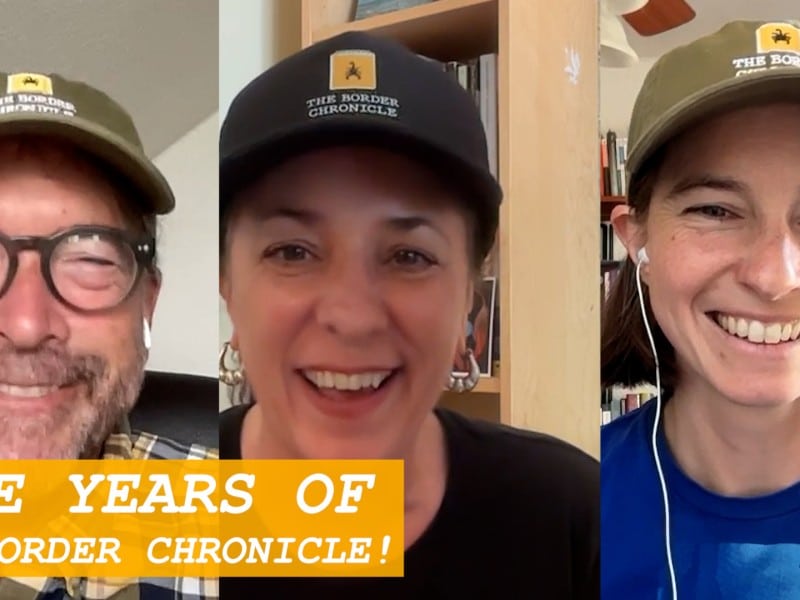
The Border Chronicle Turns Five. What’s Next?
Founders Melissa del Bosque and Todd Miller join editor and reporter Caroline Tracey to revisit the newsroom’s beginnings and the stories that have defined it, and to celebrate its next chapter.

Wall Watch: Mapping Trump’s $46 Billion Border Mega-Project
In this week’s podcast, Melissa del Bosque and Geographer Dugan Meyer explain how the Border Chronicle’s new project, Wall Watch, helps residents document and understand the massive construction project underway at the U.S.-Mexico border.