
On Deported Veterans and Life after Deportation: A Q&A with Robert Vivar
"I understand what people are going through because I lived it myself."
"I understand what people are going through because I lived it myself."

This week's collaboration exposes growing surveillance at the Arizona border, a poet comes to terms with guns and masculinity in Tombstone, and the border comes to Tennessee.
From hidden license plate readers to AI-powered cameras, federal agents have built a vast monitoring network that stretches deep into Arizona.

"I understand what people are going through because I lived it myself."

After being deported in 2013, Robert Vivar spent nearly a decade living in Tijuana. There, he worked in call centers, formed organizations to assist other deportees, and pursued his immigration case. A longtime U.S. legal permanent resident who had lived in the United States since childhood, Vivar was arrested for shoplifting over-the-counter medication to support an addiction. He chose a plea that he thought would allow him to attend a drug-rehabilitation clinic. Instead, he was deported.
After a long legal battle, Vivar eventually regained legal status and returned to San Diego in 2021. While living in Tijuana, Vivar devoted much of his volunteer time to helping deported veterans as codirector of the Unified U.S. Deported Veterans Resource Center, a role he continues to this day. While not a veteran himself, many of Vivar’s relatives serve, including his son in the California National Guard and a grandson in the Marines.
With the Trump administration fixated on mass deportation, many people are being swept up in the dragnet, including U.S. military veterans. Vivar helps deported veterans as they face many of the same challenges he once did and helps them navigate their legal cases, obtain benefits, and rebuild their lives in Mexico.
With the Trump administration ramping up its anti-immigration efforts, are you seeing more deported veterans?
In the last six months, we’ve been in contact with about five deported veterans. Usually, we don’t hear from them until after they’ve already been deported and reach out for help. Most of the time, they contact us once they’re already in Mexico and trying to figure out what to do next.
Recently, however, there have been a few cases where veterans were still in removal proceedings, and veteran organizations were able to get involved and help before they were deported. But some still ended up being deported anyway. One veteran recently told us he believed he was deported without due process, and we’re trying to verify his situation and see whether there may be legal options available.
How do most deported veterans find you?
They find us through our website or through word of mouth. They submit requests for assistance, and then we follow up with them. The first step is always verifying their military service and collecting documents such as their DD-214 and immigration paperwork. Once we have that information, we can evaluate their case and determine whether there may be any legal relief or benefits available to them.
What kind of assistance can you offer, and is the legal assistance pro bono?
Yes, we can connect veterans with pro bono attorneys and veteran service officers who can help them apply for benefits and evaluate possible legal options. Legal representation is extremely important because many deported veterans still have possible pathways to return to the United States. We work with the Immigrant Legal Defenders Law Center. They have been responsible for the majority of our veterans who have been repatriated.
We also help deported veterans obtain basic documents like birth certificates and identification. Many were brought to the United States as children and never had to use Mexican documents before. Without those documents, they can’t access health care, education, or employment.
Were most deported veterans legal permanent residents?
Yes. Almost all deported veterans were legal permanent residents. People often assume that permanent residency protects you from deportation, but that isn’t the case. If a permanent resident commits certain crimes, they can still be deported. Many veterans tried to apply for citizenship during their military service, but for different reasons, the process never got completed. Some didn’t get proper guidance, and others missed important steps in the process.
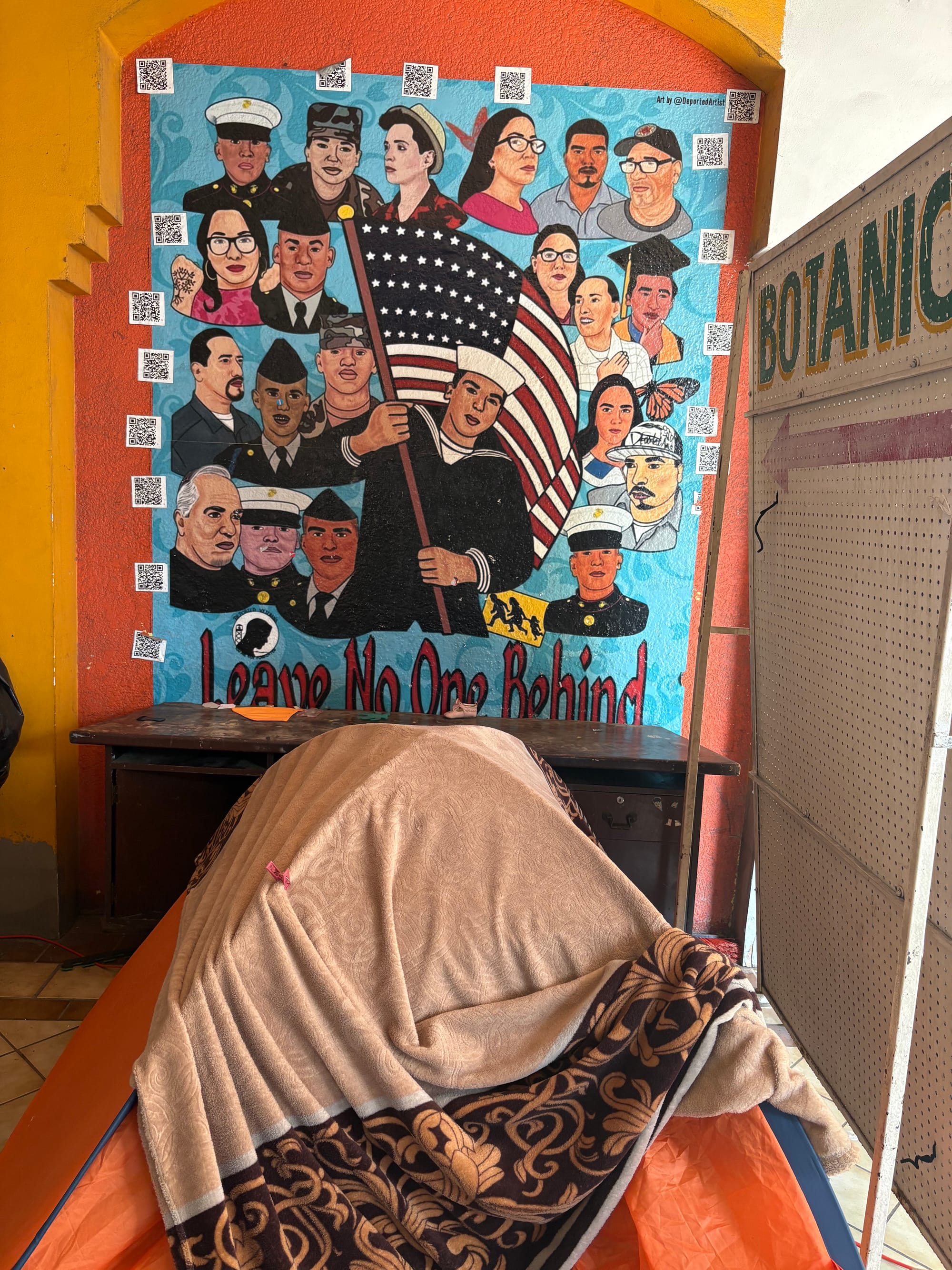
Why do veterans end up being deported?
Many veterans struggle with reintegration after military service. Some deal with trauma, mental health issues, or difficulty adjusting to civilian life. In some cases, they turn to drugs or alcohol as a way to cope. Veterans who are citizens often have access to treatment programs or veterans’ courts, but noncitizen veterans often end up in deportation proceedings after they serve their sentences. That becomes a double punishment because they not only pay for their crime but also lose the country they consider home.
What happens when veterans arrive in Tijuana?
Most arrive with almost nothing. Often, they don’t have identification, money, or a place to stay. Many haven’t lived in Mexico since they were children, so they don’t have connections or support networks. One of the first things we do is help them obtain documents and connect them with services. Without identification, they can’t access medical care, education, or employment. We also help prepare them for work and connect them with potential employers.
What kind of work is available for people who have been deported?
Call centers are one of the main employment options because deportees often speak English fluently and understand U.S. culture. Employers value those skills. The pay is low, but it can provide a starting point while people get established. Some people are able to increase their income through bonuses or by moving into better positions, but it can still be difficult to make ends meet.
One of the companies I worked for was the Avis Budget Car Group. The base pay was about $175 a week. Mainly, the way that the call centers work is that your base pay is not really that great, but your bonuses for efficiency are where you can make a little more. The average when I left in 2020 was about $300 a week with bonuses and base pay.
What support exists for deportees in Tijuana? Are there shelters where people can stay?
There is a government shelter for deportees where people can stay temporarily, usually for about 48 hours. During that time, they may receive some assistance and basic support.
After that, they have to find their own place to live. There are nonprofit shelters that offer longer-term support, and we try to connect people with those resources when possible. Some shelters also provide programs that help people become more self-sufficient by offering training, counseling, and other support services.
What concerns you most right now?
One of our biggest concerns is deported veterans who returned to the United States on humanitarian parole. Those paroles are usually temporary, and we don’t know what will happen when they expire. We’re worried that some veterans who were able to come home may once again face uncertainty about their status.
You were deported and faced a long legal battle to return home. How has that shaped your thinking?
I was deported in 2013 after living in the United States since I was six years old. It was a very traumatic experience and a major disruption in my life. Living in Tijuana for nearly nine years gave me a deep understanding of what deported people go through. I experienced the same struggles of finding work, adjusting to a new environment, and being separated from family. That experience is a big part of why I do this work today. I understand what people are going through because I lived it myself.
What advice would you give someone who has just been deported?
My advice is to stay productive and try to build a support network. Connect with people who can help you and look for positive activities that will keep you moving forward. It’s important to avoid destructive habits because deportation brings a lot of stress and anxiety. If you stay focused and keep working toward stability, you have a better chance of rebuilding your life.

Border Walls and Buoy Barriers Are Killing the Rio Grande. I Have a Front Row Seat.


For years, Flores has served as an immigration policy advisor to Democrats at the national level, including President Biden. She talks about what went wrong, and what Democrats should be doing now.

Morale is low among judges, says Johnson, as the Trump administration ignores due process and the immigration case backlog grows.

Living in Trump's Deportation America right now feels like "pure trauma" says a DACA recipient in the Rio Grande Valley, Texas.

Independent news, culture and context from the U.S.-Mexico border.