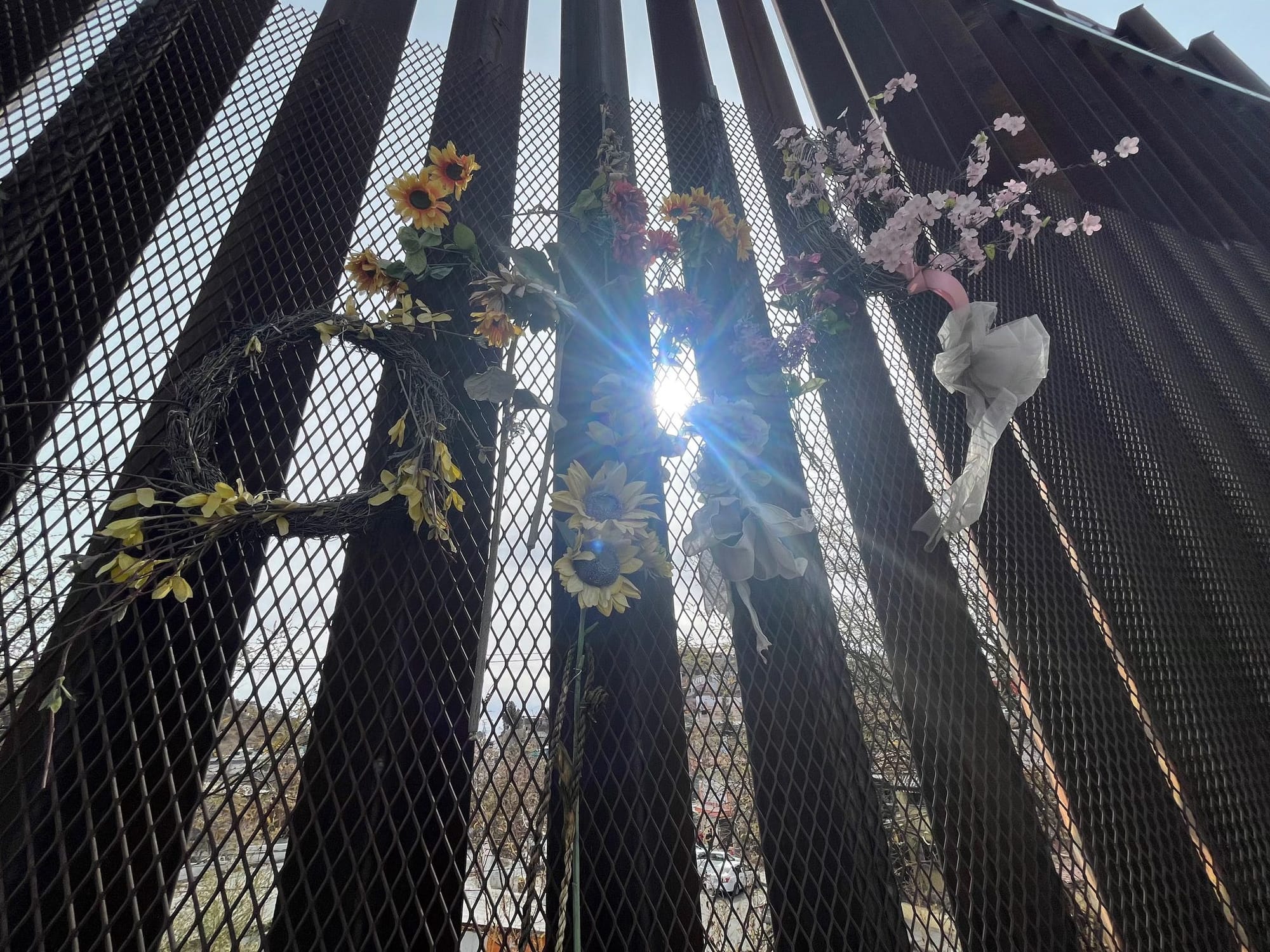
As DHS gaslights border communities, help document the reality on Wall Watch, our new community powered map for border wall construction, and a podcast from the resistance in Lochiel, Arizona, where protestors try to save the last ancient Cottonwood tree from bulldozers.
A vivid depiction of what has been happening during the last eight weeks of resistance against border wall construction in southern Arizona’s San Rafael Valley.
Wall Watch combines geospatial mapping, archival research, and community participation to provide the public with an accurate, continually updated record of border wall construction along nearly 2,000 miles of the international border.
As we approach the end of 2025, we at The Border Chronicle thank you for reading and subscribing. We are very grateful.
Since our launch in 2021, it has been our mission to report and provide context on stories from across the U.S.-Mexico border region. That’s nearly 2,000 miles to cover, and it’s no small task. We’re the only independent publication doing this, and it’s been a challenge for our small staff.
In 2025, with the help of grant funding, we were finally able to bring on two part-time reporters: Caroline Tracey and Pablo de la Rosa. They have been wonderful additions to our team. Both are experienced journalists with a deep understanding of binational border communities. We also recently hired Brenda Machado, who is helping us with social media and audience engagement—a first for us and much needed. It’s not enough to do the work if no one sees it! We also have a brand-new podcast editor, José Olivares, who is an accomplished investigative reporter.
We have big plans for 2026 to expand our coverage and provide you with more in-depth reporting that informs readers, counters disinformation, and holds elected officials accountable. To do that, we’d like to bring Pablo and Caroline on as full-time staff in 2026. But just a small portion—less than 10 percent—of our subscribers support our work with a paid subscription.
This is why we need your help today. If you believe in local independent media, we hope you will help The Border Chronicle become a bigger and better publication.
You can help us in a few different ways:
Become a paid subscriber. Or gift your loved ones a paid subscription to The Border Chronicle.
Share: If you’re unable to give today, we totally understand! It would be a great help if you could share The Border Chronicle with friends and family.
Thank you for your support and for helping us meet this critical moment with fact-based, in-depth reporting from the U.S.-Mexico border. We can’t remain independent or do this work without you! As we approach the end of 2025—what a year!—each of our reporters reflects on what the year has meant for them at The Border Chronicle. We’ve added links to some of their best work. We hope you have a very happy holiday!
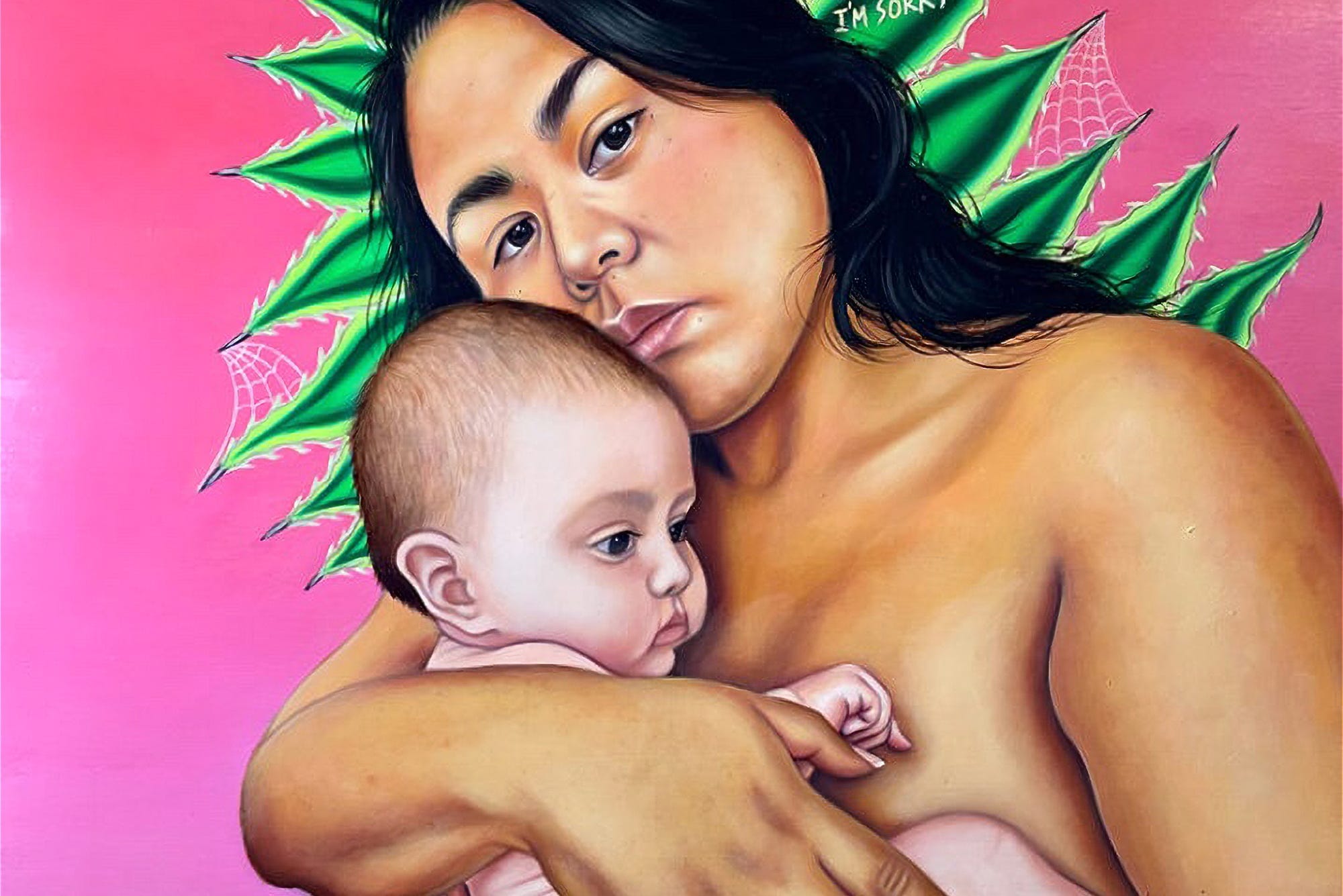
Caroline Tracey: I am grateful to have joined the team at The Border Chronicle in 2025. Here, I have the opportunity to cover my two favorite topics—the environment and arts/culture—and to do it from a unique regional perspective. I love being able to draw attention to the amazing books and art by borderlands residents that don’t always make it into the national media. Similarly, it is meaningful for me to highlight the environmental issues facing this region and help ensure that they do not go overlooked.
Finally, I’m thankful that The Border Chronicle can keep me on through 2026 to continue this work! In the coming year, I’m looking forward to covering overlooked water problems and solutions on both sides of the border and to reviewing newly translated border-related works by Mexican authors, along with small- and university-press books by U.S. borderlands residents.
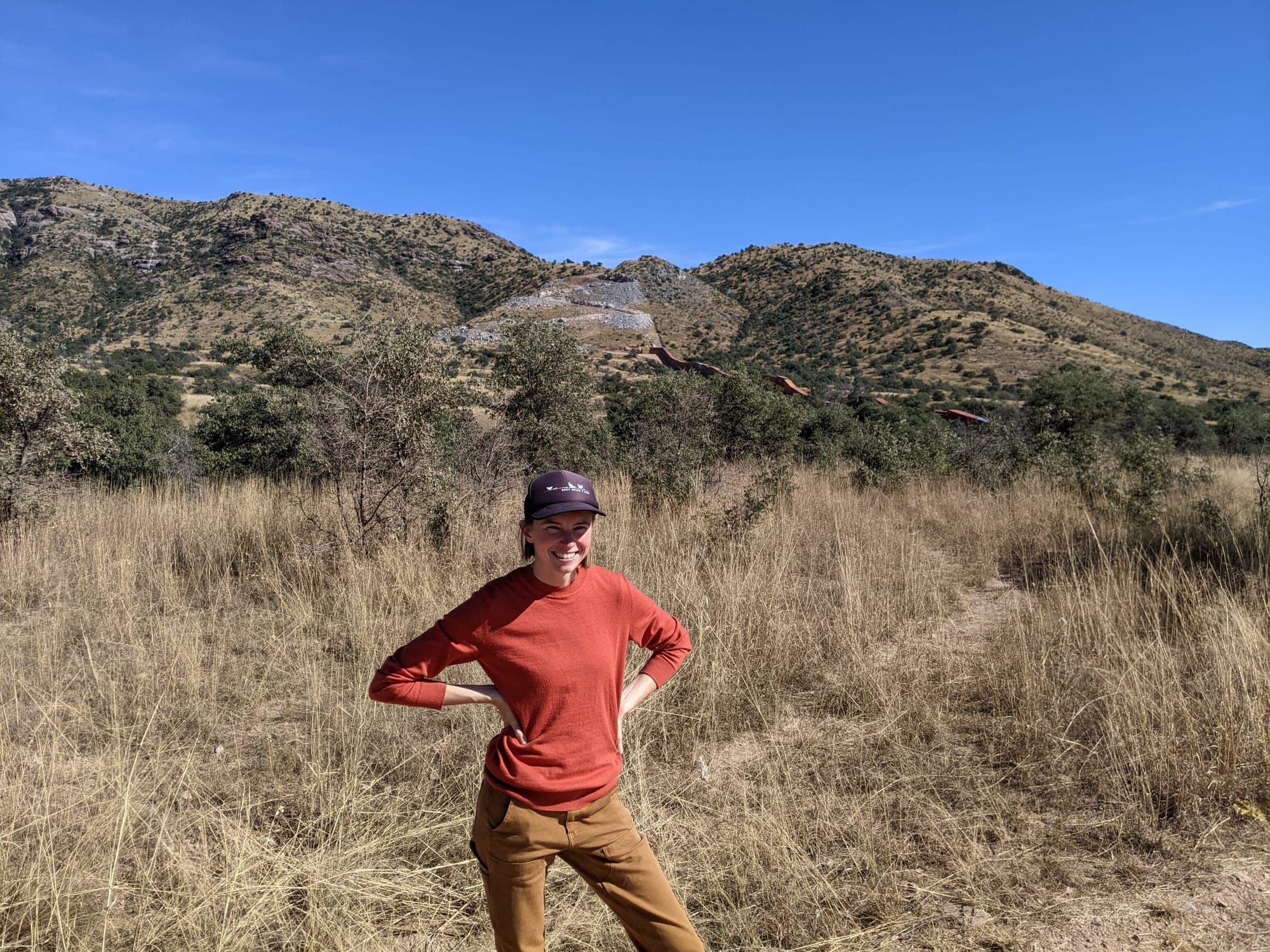
Caroline reporting on the boxcar border wall erected by former Arizona Republican Governor Doug Ducey at the Arizona/Mexico border. (Photo credit: Eliseu Calvacade)
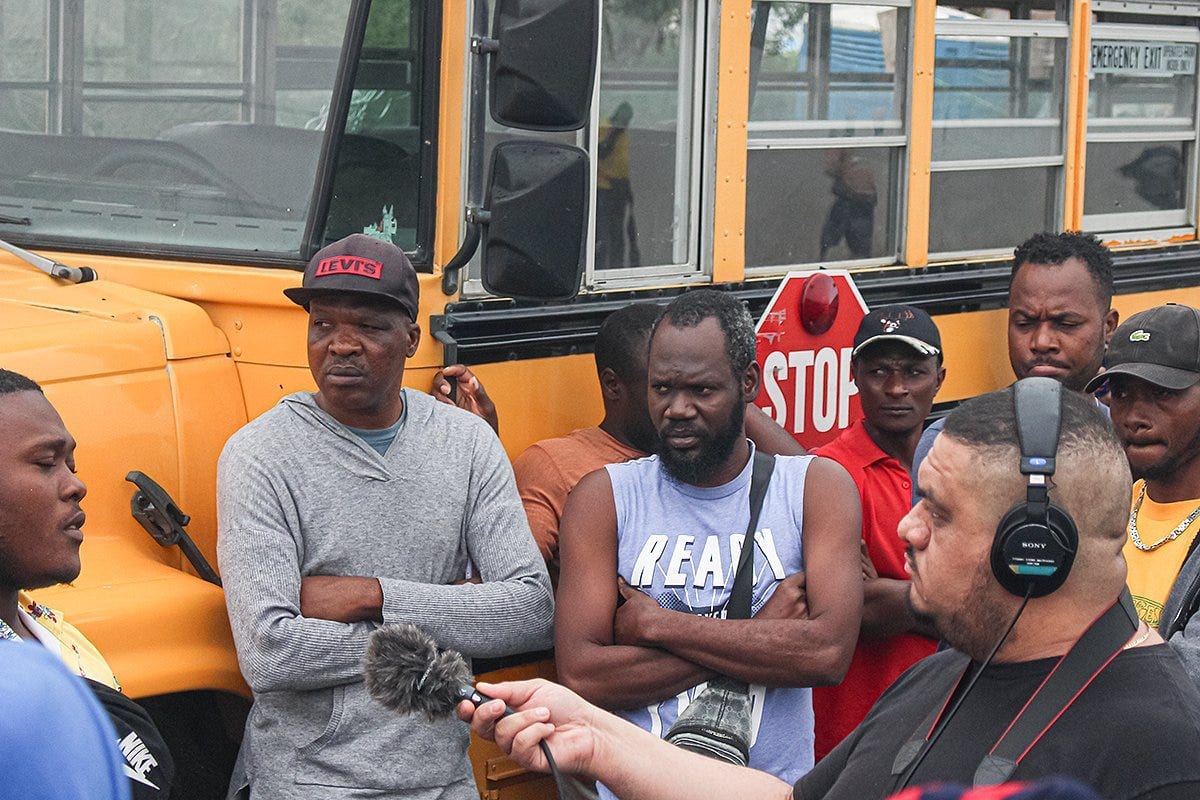
Pablo de la Rosa interviewing Haitian migrants in Tamaulipas, Mexico.
Pablo de la Rosa: As we come to the end of a tumultuous year on the border and around the world, I feel grateful to continue reporting on the communities in the Rio Grande Valley, even in a small way. I couldn’t ask for a better team than the one at The Border Chronicle to bring these stories to light. It’s a team that still believes in human-centered journalism at a time when the global news cycle, largely owned by billionaires, continues its descent into the AI tech future of programmatic mass disinformation. Despite that reality, I feel a tremendous amount of hope when I reflect on the many families and community members who trusted us with their stories this year and the readers who took the time to engage with those stories and share them in their own ways. The resilience and courage of these communities to remain open, curious, responsive, and connected to one another is a testament to their sense of identity, purpose, and self-determination. That strength and grace have been a beacon for me in my work and in my own life. I feel lucky to have documented even a small piece of that.
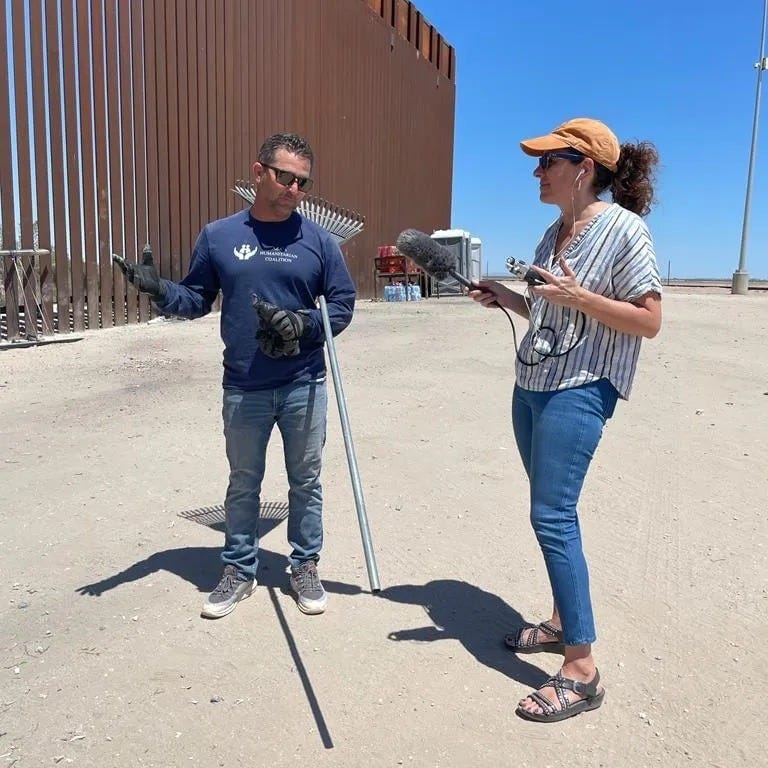
Melissa interviewing Yuma, AZ-based humanitarian Fernie Quiroz at the border wall. (Photo credit: Ana Adlerstein)
Melissa del Bosque: I am very proud of the team we’ve put together at The Border Chronicle. When Todd and I launched in 2021, it was just the two of us publishing stories twice a week and producing a podcast. We did that for three years with the help of Pablo Morales, who has been copyediting our work since the beginning. Thank God for Pablo! We’ve also had some wonderful podcast editors, including Steev Hise and now José Olivares.
I’ve been a freelance journalist since 2018, and it’s great to be part of a team again. It feels much less lonely, especially as we’ve entered such a dark chapter for freedom of speech and civil liberties in our country. At The Border Chronicle, I’ve written extensively about how disinformation and militarization have merged at the southern border. Border communities were the testing ground for many of the online propaganda techniques now being rolled out nationally by figures like DHS secretary Kristi Noem and CBP’s Greg Bovino. If you’ve read The Border Chronicle in the last four years, you shouldn’t be surprised by anything that’s happening now.
I think 2026 is going to be an incredibly challenging year. With midterm elections looming, the renegotiation of the USMCA, and conflicts heating up over water scarcity and the U.S.-Mexico water treaty, it’s going to be explosive. And then there’s the Trump administration’s ongoing antagonism toward Latin America and the rest of the world, as well as fellow Americans. I take great solace, however, from the incredible resourcefulness and ingenuity of border communities. Border residents don’t wait for the government to solve their problems. If they did, we’d be waiting forever! They rely on their communities to get things done, and ultimately that will be the only way out of this mess.
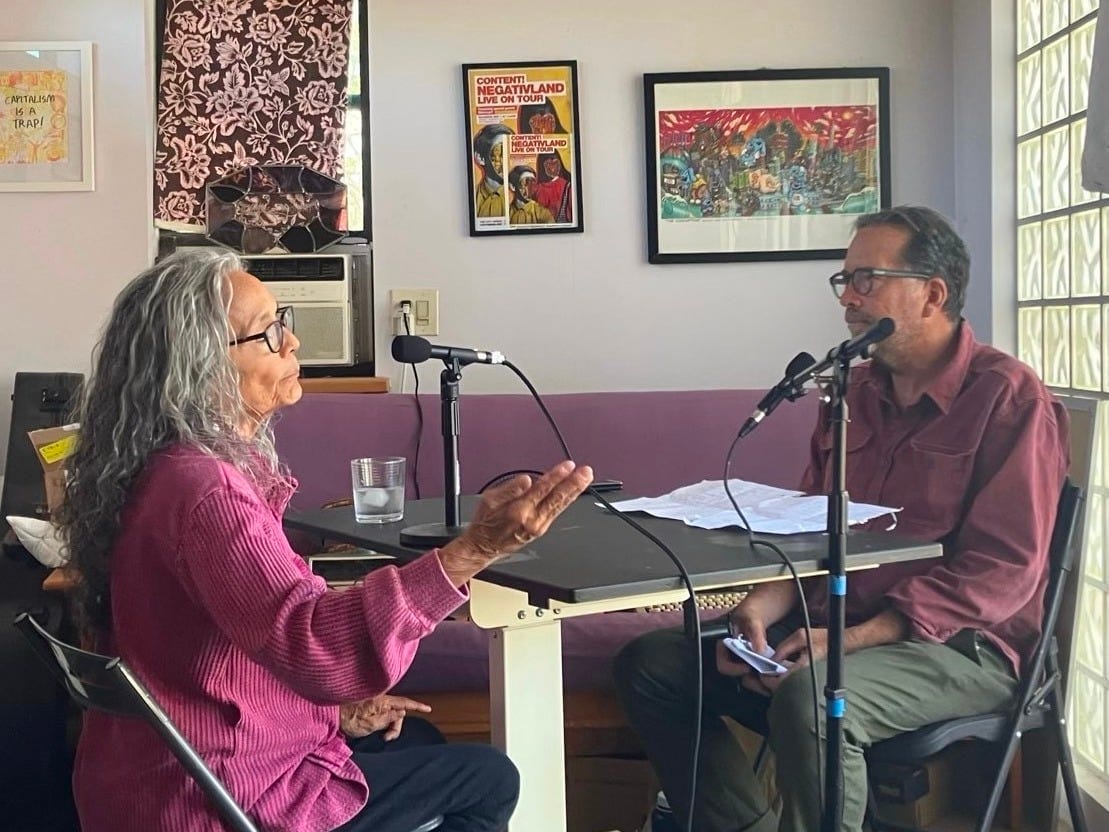
Todd interviewing Isabel Garcia, a Tucson attorney and longtime immigrant rights advocate, for The Border Chronicle podcast. (Photo credit: Steev Hise)
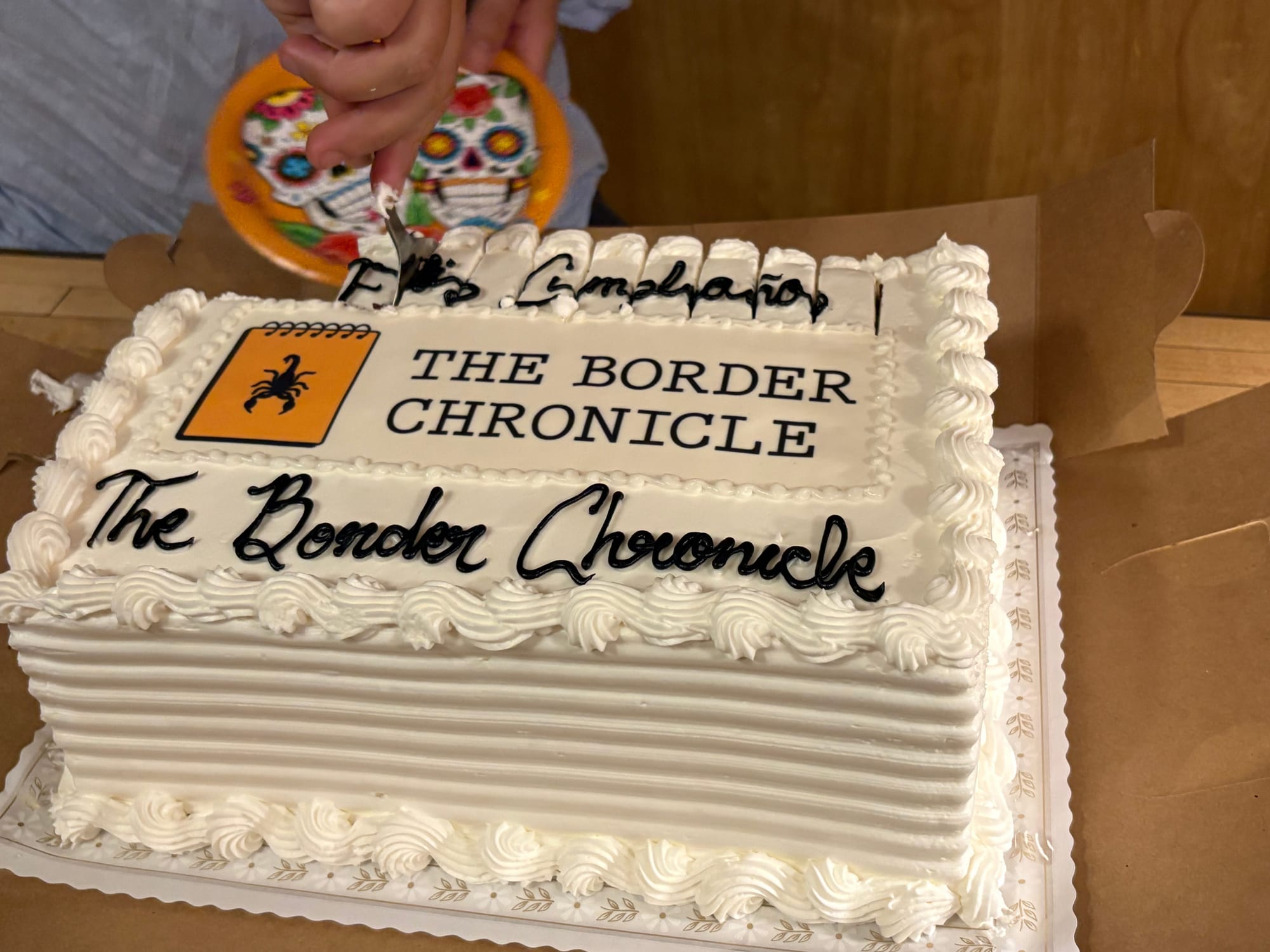
Todd Miller: In September, The Border Chronicle held its four-year anniversary party in Tucson. It was there that a few important realizations dawned on me. First, I must mention the cake, elegantly designed with The Border Chronicle’s yellow scorpion insignia. Our logo is the best, isn’t it? I’m grateful for that. But seeing that cake was proof that we had made it this far. I had to pinch myself. It seemed miraculous. But was “miraculous” the right word? Maybe “beautiful” was more accurate. Or maybe it was just the hard work, week after week. Or maybe all of the above. For four years, we have covered the border with deep context and analysis, from overlooked and underappreciated angles. For that, I am very appreciative. I looked around that room and felt grateful for fellow cofounder Melissa del Bosque—who has been the spirit of The Border Chronicle since the beginning. I’m not sure if we’d even be here without her work, dedication, and especially her brilliant, fearless journalism. Caroline Tracey was also there. Caroline has been a welcome addition, writing so elegantly about the arts and environment and bringing fresh perspectives and worldviews to the conversation. I thought of Pablo de la Rosa, who couldn’t make it to the shindig but was there in spirit from the Rio Grande Valley, where his insightful reporting even caught the attention of the Columbia Journalism Review. How impressive is it that we have a team that stretches across the country and includes editor Pablo Morales, digital media manager Brenda Machado, and audio editor José Olivares (and of course Steev Hise, our wonderful former audio editor). There are so many people who have supported us from the start—many present at the anniversary gathering—and YOU are the reason we still exist. How wonderful it is to view the border from beyond the superficial misinformation we are normally fed. And that is thanks to you.
For years, Flores has served as an immigration policy advisor to Democrats at the national level, including President Biden. She talks about what went wrong, and what Democrats should be doing now.