
Spy Blimps in the Sky: The Increasing Surveillance of the U.S.-Mexico Borderlands
A deep look with the Electronic Frontier Foundation at the fortification of surveillance on the border. As Nogales mayor Arturo Garino asked: “Would you want to have a blimp above your house?”
In southern Arizona the newest indication of increasing technological surveillance on the U.S.-Mexico border is the tethered aerostat in the middle of the border city of Nogales, about a mile north of the international boundary. As indicated by Customs and Border Protection, this aerostat will be “manned by Border Patrol agents 24 hours a day, seven days a week, to provide continuous surveillance of the border.”
On Tuesday, I saw the 22-meter “spy blimp,” as Santa Cruz County sheriff David Hathaway has called it, from Interstate 19 as I drove into Nogales to meet with the Electronic Frontier Foundation, an NGO that defends civil liberties in the digital world. The helium-filled blimp, equipped with sophisticated camera systems, looked extraterrestrial as it hovered over the city. This was exactly the type of thing the EFF was looking for. The group was in Nogales to look at the deployment of technology there and across the U.S.-Mexico border, from facial recognition and license plate readers to aerostats, towers, and ground sensors.
“We cover surveillance from local police, to NSA, to federal and national security surveillance. And the border is one of those places where it all overlaps,” EFF policy analyst Matthew Guariglia told me. “A lot of technology is being tested at the border before it makes its way into Atlanta or Chicago or New York. If you want to see where tech in the cities is starting, it’s all starting here.”
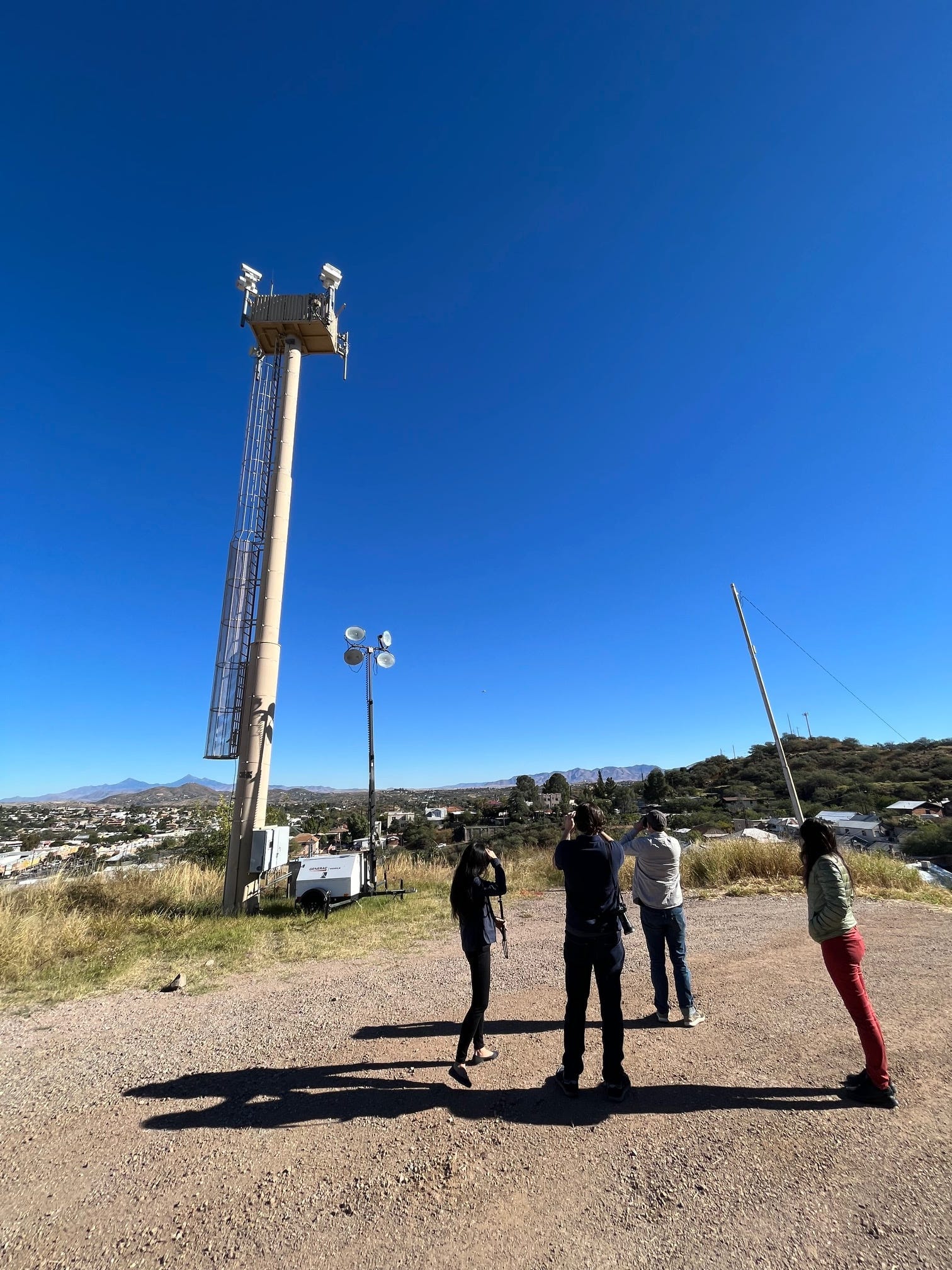
When I teamed up with the EFF, we immediately went on a mission to find the aerostat, which was first deployed in Nogales in June. CBP reported that via an agreement made with the Department of Defense, Border Patrol can now use more aerostats and will deploy 17 of them by the end of the year (including one down the road from Nogales in Sasabe). Most of the original aerostat systems are located along the Texas border, but there is one in Puerto Rico, one on the southern Florida coast, and another in Sierra Vista, Arizona as well. The additions will more than triple the number of border surveillance blimps.
As Guariglia told me, the border is one of the “most surveilled spots in the U.S.” Meaning that aerostats aren’t the only technology on the rise. On October 20, for example, the company Red Cat Holding announced a new contract to provide Golden Eagle drones to the Border Patrol, as part of a blanket purchase agreement (which CBP has with five drone companies). The deal has an estimated value of $90 million over the next five years.
“As a market leader in military-grade drones, and especially night-specific drones, we look forward to providing Teal’s Golden Eagle product to the government personnel who are responsible for protecting the American people and safeguarding our borders,” said Red Cat CEO Jeff Thompson. The Golden Eagle can fly at 50 miles an hour, and as this video suggests, it can monitor people inaudibly at certain distances. It will augment a fleet of drones (big and small) that CBP already has at its disposal.
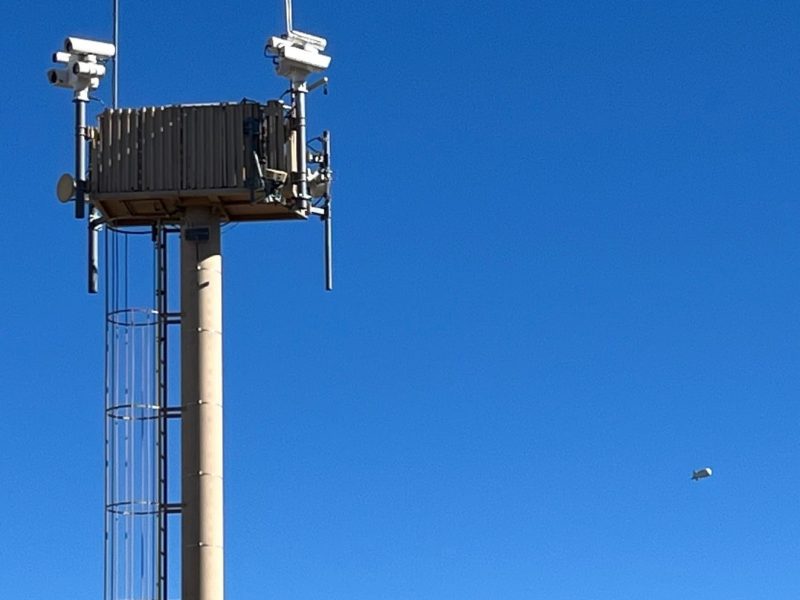
People living in border regions can also expect to see more ISTs, or integrated surveillance towers. In March, CBP started an IST program to “consolidate disparate surveillance tower systems under a single unified program structure and set of contracts.” As CBP puts it, this will be a single office for all “our surveillance tower needs.” Presumably, this includes the remote video surveillance systems, integrated fixed towers (50 of which have been deployed in Arizona, as we reported in September), and autonomous towers, such as the 175 deployed in Southern California and beyond by the company Anduril, as its representative told me in March.
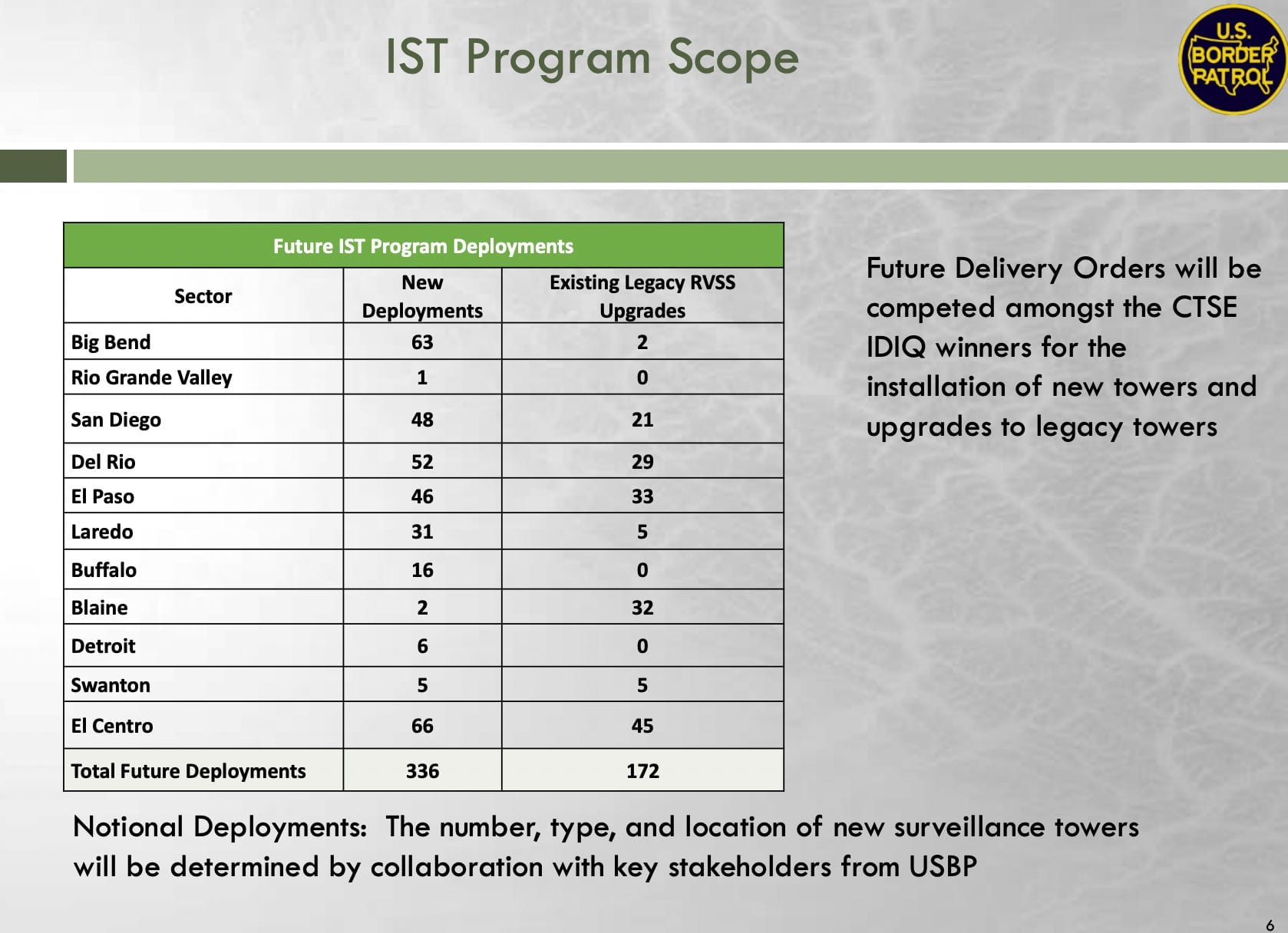
In a report to industry on October 4, CBP listed its future IST deployments, which will include 63 in the Big Bend sector, 48 in San Diego, 52 in Del Rio, 46 in El Paso, and 31 in Laredo. These are just a few of the 336 “future deployments,” which include sectors on the northern border (Buffalo, New York, will have 16).
The EFF team is looking into all of this, including biometrics. In August, The Border Chronicle reported on the sweeping and unprecedented deployment of facial recognition technology by CBP, which completes the panorama of the digitized, technological border represented by the hovering aerostat in Nogales.
At the “Border and Border Walls” conference that took place last week (organized by the University of Quebec in Montreal), during a panel on “smart borders” Italian border scholar Anna Casaglia (from the University of Trento) said that “violence is embedded in biometric border control,” which she called a “racialized epidermal policy of exclusion.”
Residents of Nogales recognized similar characteristics in the surveillance aerostat. Francisco Ramos told the Nogales International, “It’s ridiculous. It’s shameful. It’s racist. It’s gone too far. Nobody is invading.”
Sheriff Hathaway said it was “blatant spying on our community,” and went on to tell reporter Jonathan Clark, “I think it’s disgusting. I think it’s evidence of a kind of growing police state along the border, and I don’t know why Americans aren’t more upset about that.”
As Nogales mayor Arturo Garino asked another reporter, “Would you want to have a blimp above your house?”
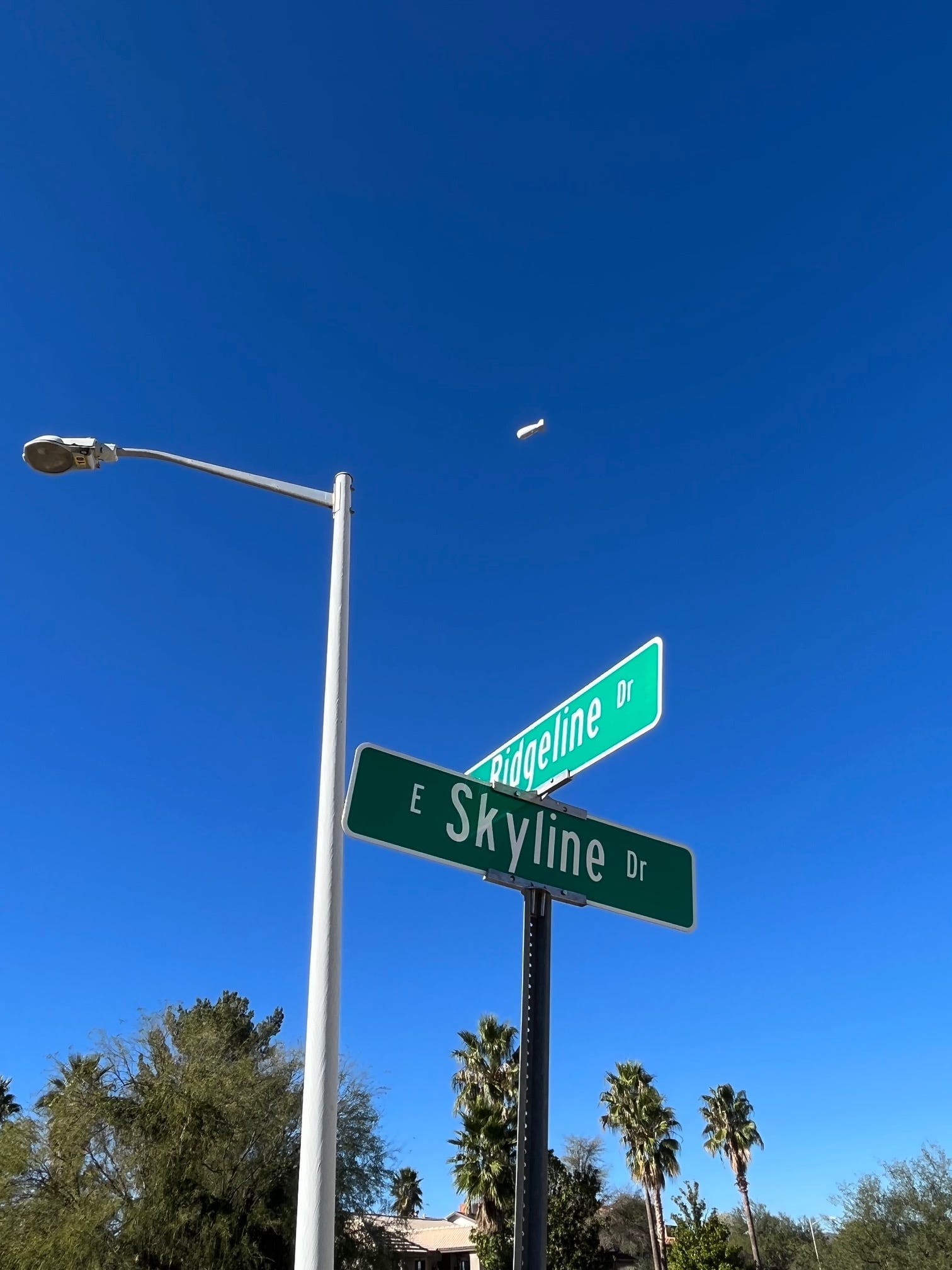
Indeed, in our pursuit of the aerostat, we found ourselves in the middle of a Nogales neighborhood, staring up at the bottom of a surveillance blimp amid a cluster of houses. In 2019, CBP awarded the company Peraton a five-year tactical aerostat systems contract worth $185 million. The company claims to be “fearlessly solving the toughest national security challenges”; “together,” the company declares, “we do the can’t be done.” With binoculars, practically in the driveway of a local resident, we could see the aerostat’s camera systems, which include night vision. It could clearly look into people’s yards and streets.
Another resident, Rafael Lopez, asked the Nogales International, “Is it a 360 view? Is it just west? Will they be able to see when I’m having a get-together with friends and family? Is this going be up 24 hours a day? Can they see at night? Will it have infrared sensors? Could that thing pop and come down on somebody’s house?” Given that one did go down onto the Texas town of La Joya in 2015, and in Sierra Vista in 2011, these are worthy questions.
And these are precisely the questions EFF seeks to get to the bottom of. As Guariglia told me, “We help to make sure that technology isn’t used to infringe on people’s rights.” CBP, meanwhile, has said it will keep its cameras pointed at the border.
The Border Chronicle is a reader-supported publication. To receive new posts and support our work, consider becoming a free or paid subscriber.
Author

Related Articles
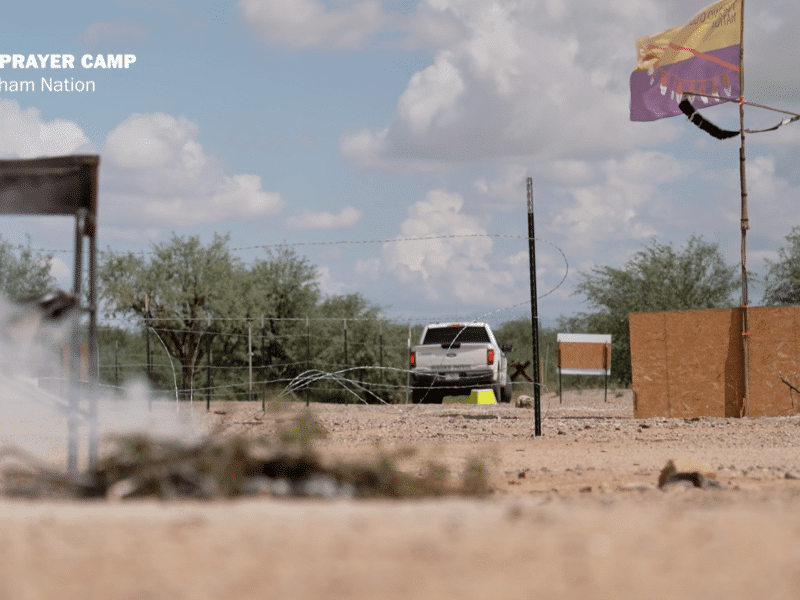
“We See No Border”: The Tohono O’odham Fight Against the Border Wall
The irreparable harm that has already been done, says tribal chairman Verlon Jose, you can feel it, hear it, in the people.

Swarm Intelligence: A Reporter’s Notebook on the Freedom of Movement in the Maasai Borderlands
Could solutions to climate woes such as drought be found in the freedom of mobility? This on-the-ground report from the Kenya-Tanzania border examines that question and more.

Wall Watch: Mapping Trump’s $46 Billion Border Mega-Project
In this week’s podcast, Melissa del Bosque and Geographer Dugan Meyer explain how the Border Chronicle’s new project, Wall Watch, helps residents document and understand the massive construction project underway at the U.S.-Mexico border.