
Racial Violence Haunts the Border
The recent fatal shooting in Hudspeth County, Texas, conjures white supremacy and vigilante violence from more than a century ago.
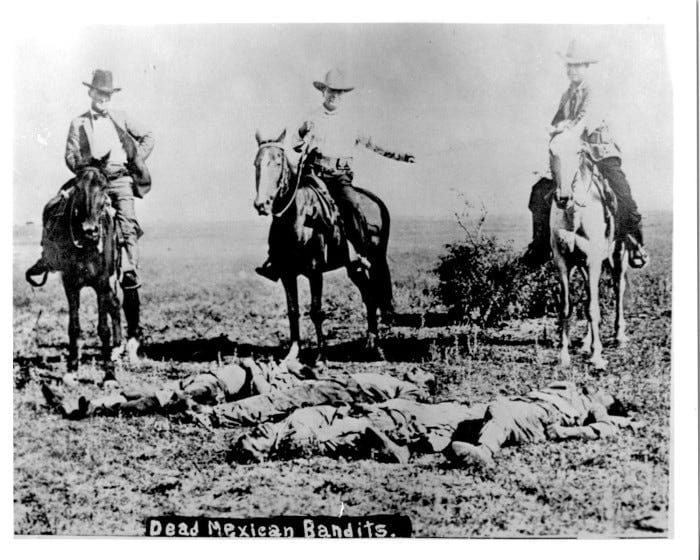
In September, a group of unarmed Mexican migrants came under attack as they crossed through Hudspeth County, Texas. One of them was shot to death, and another was seriously wounded. Covering this incident in an October 17 article, The New York Times called Hudspeth County “a new focal point in the nation’s increasingly contentious immigration debate.”
But racial violence is nothing new in the U.S.-Mexico border region. In 2019 historian Monica Muñoz Martinez was invited by a congressional subcommittee to speak about anti-immigrant rhetoric and domestic terrorism in the Trump era. Her testimony reached back more than a century. Muñoz Martinez spoke of a Texas congressman named Claude Benton Hudspeth, the rural county’s namesake, who, during a 1919 investigative hearing at the Texas Legislature, justified the Texas Rangers’ massacres and extrajudicial killings of Mexicans and Mexican Americans. “You have got to kill those Mexicans when you find them,” he told elected officials, “or they will kill you.”
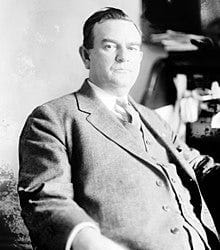
Congressman Hudspeth “incited a panic,” Muñoz Martinez testified. “He described hordes of Mexican bandits just south of the border as an ever-present threat, waiting for the right moment to attack.”
As far as Hudspeth was concerned, she said, “any Mexican on either side of the border posed a dangerous threat. The congressman’s sweeping criminalization of an entire population sanctioned the use of violence as a strategy for policing the border region.”
Sound familiar? As Muñoz Martinez pointed out in 2019, nothing much has changed.
Fast-forward to September 27, 2022. According to a Texas Ranger affidavit, 60-year-old twin brothers Michael and Mark Sheppard parked their truck at a watering hole for cattle near the county seat of Sierra Blanca, where a group of Mexican migrants had stopped for water. As the men approached, the group hid behind some bushes, and the brothers allegedly taunted them, yelling, “Come out, you sons of bitches, little asses!”
Mark told the rangers they’d mistaken the group of 13 people for javelinas, according to the affidavit. With his shotgun, Mike fatally struck one man, Jesús Iván Sepúlveda, in the head. Then he shot a woman, Brenda Berenice Casias Carrillo, in the stomach. Sepúlveda, who was just 22 when he died, left behind a common-law wife, a six-month-old baby, and three-year old toddler. Casias was hospitalized in El Paso.
Sepúlveda came from a small town in the state of Durango, Mexico, and planned to work in Austin, painting houses so that he could build a house for his family back home. “I’m shattered … by the men who took my son’s life,” Sepúlveda’s father told The Texas Tribune. “I hope those evil men get the strongest punishment they deserve.”
But if history teaches us anything, it’s that justice is rarely served, especially when it’s being meted out by the Texas Rangers and the victims are Mexican. And when the aggressors are in law enforcement, chances are even slimmer.
Michael Sheppard, the man who allegedly shot Sepúlveda and Casias, was the warden of the West Texas Detention Facility in Hudspeth County. In 2018 the immigrant advocacy nonprofit Raices, along with the Texas A&M School of Law and University of Texas School of Law, released a damning report detailing the abuse of African immigrants in Sheppard’s detention facility.
One Somali man described Sheppard repeatedly hitting him in the face. “Boy, I’m going to show you. You’re my bitch,” the warden reportedly told him.
Guards also sexually assaulted the men, pepper sprayed them, hurled racial epithets at them, and regularly humiliated them. Despite the report’s findings, Sheppard remained employed as warden. ICE left the facility in 2019 (due to water shortages, not because of the report’s findings). And the detention center, operated by the private LaSalle Corrections company, holds inmates for the U.S. Marshals. Sheppard was fired in September after charges of manslaughter were brought against him and his brother.
Bill Addington, a lifelong Hudspeth County resident who lives near the prison, said he was furious to learn about the report’s findings only after the recent murder. “I’m very politically active, but I had no idea about Sheppard and that nothing was done about it,” he said. “And now someone is dead because they didn’t act.”
Addington said he blames the county’s administrators, especially Sheriff Arvin West, because the county owns the West Texas Detention Facility. West is director of the West Texas Detention Facility Corporation, which is supposed to oversee the facility, he said, on behalf of the county’s residents. “There should have been a call to fire that guy,” he said of Michael Sheppard. “Any they didn’t do anything about it.”
Instead, West hired the warden’s brother Mark to work as a handyman around the sheriff’s office. (Michael moved to the county a few years ago from Florida, he said, and Mark joined him from Florida about a year ago.) Addington said Mark would also supervise jail trustees in the community and would bring them over to the food bank where he volunteered, and the trustees helped.
“Mark would sit on his butt,” Addington said. “He never helped and always had a sour look on his face. Once when I was speaking Spanish with some of the other volunteers, he screamed at us not to speak Spanish in front of him. I told him ‘If you don’t like it, you can always learn Spanish.’”
Addington said he’d also yell at the waitresses in the restaurant where he frequently ate with his brother. “He’d bark at them not to speak Spanish.”
On October 27, both men had a bond hearing, which was held virtually before Judge Roy Ferguson of the 394th Judicial District Court.
Both are being charged by Hudspeth County on manslaughter and assault with a deadly weapon and are being held on $250,000 bonds. At the hearing, Judge Ferguson granted bond reductions for the charges, according to the El Paso Times.
Just days after the murder, both men were released on bond and were planning to return to Florida, much to the dismay of the victims’ families. But before they could leave, Hudspeth County issued a new warrant for their arrest, adding assault with a deadly weapon. The men turned themselves in.
Sheriff West had the men transferred to jails in Marfa and Alpine. Repeated calls on Monday to locate the men and determine whether they’d been released on bond were unsuccessful. The Presidio County sheriff’s office in Marfa referred all questions about the men back to Sheriff West and Hudspeth County. The sheriff’s office in Alpine said they’d had Michael Sheppard in custody, but he’d been transferred on October 28. The office declined to say where he had been transferred or if he had been released on bail, adding that all additional information would have to be provided by West.
Repeated calls to West’s office were met with a busy signal throughout the day and Tuesday morning. The Texas Department of Public Safety and Texas Rangers, who are investigating the shooting, also declined to comment and referred all questions to Sheriff West’s office.
Sepúlveda’s body was released to his family in Mexico. Casias was released from the hospital and is now with family members in the United States, healing from her gunshot wound and the trauma of the shooting. Casias is being represented by an attorney from the Diocesan Migrant and Refugee Services in El Paso.
Zoe Bowman, supervising attorney at Las Americas Immigrant Advocacy Center in El Paso, is representing nine survivors from the shooting who were held in ICE custody in El Paso for nearly a month. “ICE was holding them against its own directive,” she said, “which weighs heavily for the release of crime victims.”
Bowman and Las Americas were able to get them out of detention and certified for U visas, which are granted to crime victims who are cooperating with law enforcement. The visas allow them to stay in the United States with family members and could result eventually in a pathway to U.S. citizenship.
After Muñoz Martinez’s book was released in 2018, The Injustice Never Leaves You: Anti-Mexican Violence in Texas in an interview with the magazine Mother Jones, the historian warned of the “striking parallels between what happened a hundred years ago and the kinds of violence that are taking place today.” She added, “We are living in the midst of another humanitarian crisis that is being fueled by political rhetoric that criminalizes racial and ethnic groups. Politicians are perpetuating the narrative that causes the public to turn a blind eye to violence.”
Several months later, a young white man would open fire in an El Paso Walmart targeting Mexicans and Mexican Americans and citing a “Hispanic invasion” and other racist rhetoric amplified by elected officials including former President Trump, Texas Governor Greg Abbott, and others.
Most residents in Hudspeth County are of Mexican origin, Addington said, even Sheriff West. He and West grew up together, and their mothers, both of whom are Mexican American, formed a social justice committee back in the 1960s to protest school segregation and the punishment of children who spoke Spanish in school. “I don’t want people to think that we don’t care in Sierra Blanca, because we do,” he said. “This murder was enabled by the racist dog whistles all the way from former president Trump on down, enabling these men to think these people are not human beings. Sheppard should have been stopped a long time ago, with the findings in 2018. And that just makes me furious.”
Author
Related Articles
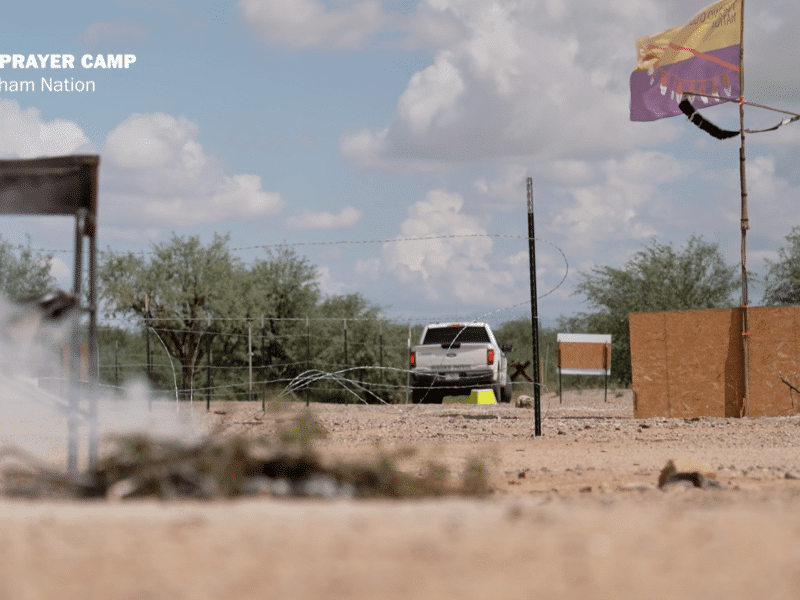
“We See No Border”: The Tohono O’odham Fight Against the Border Wall
The irreparable harm that has already been done, says tribal chairman Verlon Jose, you can feel it, hear it, in the people.
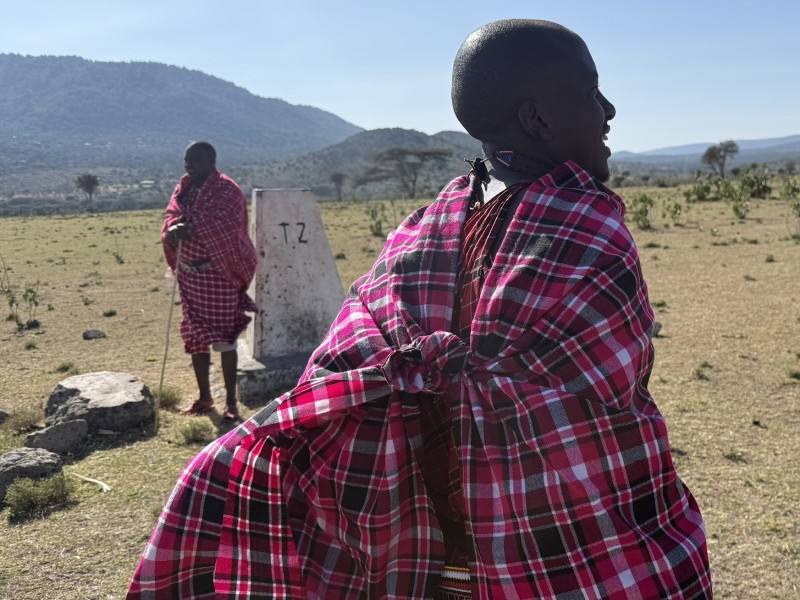
Swarm Intelligence: A Reporter’s Notebook on the Freedom of Movement in the Maasai Borderlands
Could solutions to climate woes such as drought be found in the freedom of mobility? This on-the-ground report from the Kenya-Tanzania border examines that question and more.

Wall Watch: Mapping Trump’s $46 Billion Border Mega-Project
In this week’s podcast, Melissa del Bosque and Geographer Dugan Meyer explain how the Border Chronicle’s new project, Wall Watch, helps residents document and understand the massive construction project underway at the U.S.-Mexico border.