
The Borderlands’ Lost Third Country
Mexican writer Álvaro Enrigue’s new novel, Now I Surrender, is an epic about the U.S. and Mexico’s joint erasure of Apachería.
Mexican writer Álvaro Enrigue’s new novel, Now I Surrender, is an epic about the U.S. and Mexico’s joint erasure of Apachería.

A protest against the buoy barrier in the RGV, a tense situation with military at the end of the wall in Arizona, and deported vets seek justice.

Walking from a blasted mountain top--a planned site for new border wall construction--to a makeshift military camp along the border in a remote part of southern Arizona led to a tense yet revelatory moment.
Mexican writer Álvaro Enrigue’s new novel, Now I Surrender, is an epic about the U.S. and Mexico’s joint erasure of Apachería.

“The idea is to write a book about a country that was erased,” announces the narrator of Álvaro Enrigue’s Now I Surrender. From the outset, this 450-page novel turns conventional wisdom about the borderlands on its head. While many think of the U.S.-Mexico border as settled in 1848, with the end of the Mexican-American War, Enrigue portrays the struggle over the region as a three-country conflict that lasted much longer. The third party was not Spain or England but Apachería, a nation that, as the novel begins, is slowly being extinguished.
Born in 1969, Enrigue grew up in Mexico City. Shortly after he graduated from the Universidad Iberoamericana, the Mexican peso crashed, leaving him underemployed. He used his newfound free time to write a novel, La muerte de un instalador, which won a prize that included publication. In 1998 he moved to the United States for graduate studies in literature. Now a professor at Hofstra University, Enrigue lives in Harlem and has published six novels, three collections of short stories, and one book of essays.
Enrigue gained attention among English-language readers in 2024 with his novel You Dreamed of Empires, which recounts the first hours after Hernando Cortés met Emperor Moctezuma. His newly released Now I Surrender details the exhausting attempts by Mexican and U.S. authorities to capture the Chiricahua Apache leader Geronimo. Together, these books can be viewed as a diptych, bookending the conquest of what is now Mexico. The Apache leader is described by Enrigue, in Natasha Wimmer’s translation, as a “ghost of the longest, motherfuckingest war of all time, last survivor of the bloodbath that began in Tenochtitlan in 1521: the man who ultimately lost the battle for America.”
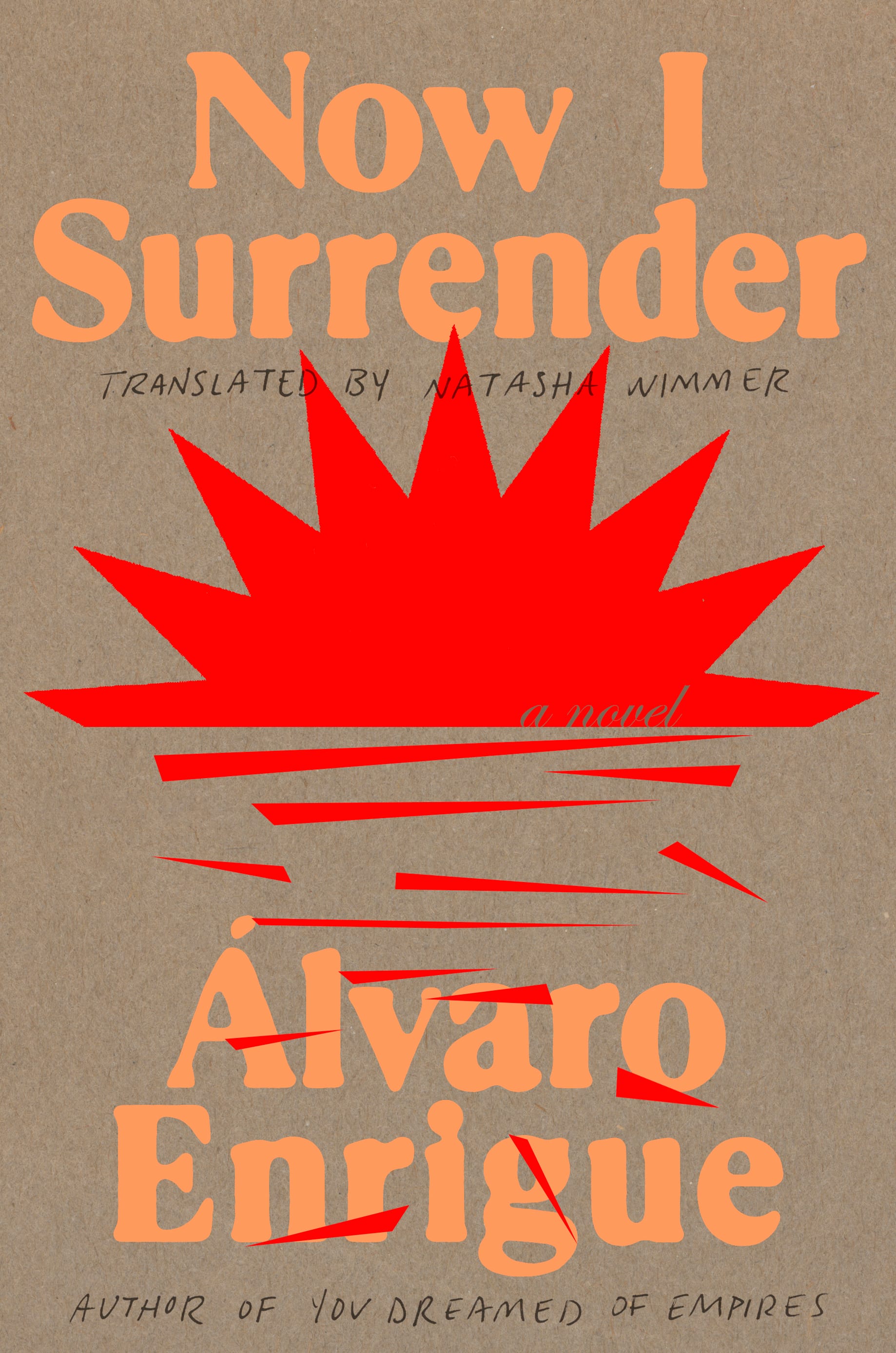
Now I Surrender largely takes place in Chiricahua Apache territory, encompassing southeastern Arizona, southwestern New Mexico, northwestern Chihuahua, and a small corner of Sonora. The novel unfolds in three sections. Book 1 follows a Mexican general searching for a young woman who has disappeared during an Apache raid. “Back then,” he narrates, “chasing a pack of Apaches was like going hunting: a chance to run wild on the prairie with some friends, with a veneer of service in defense of the fledgling republic of Mexico.” Book 2 uses fictional dispatches from real historical figures, including President Grover Cleveland and Lieutenant Charles B. Gatewood, to recount the Apache wars and the efforts to capture Geronimo. The narratives converge in Book 3, titled “Aria.” As in his previous portrayal of Moctezuma and Cortés, Enrigue gives mythic history a reality check, transforming frontier generals into bureaucrats and turning their foibles, telegrams, and administrative tasks into compelling literature.
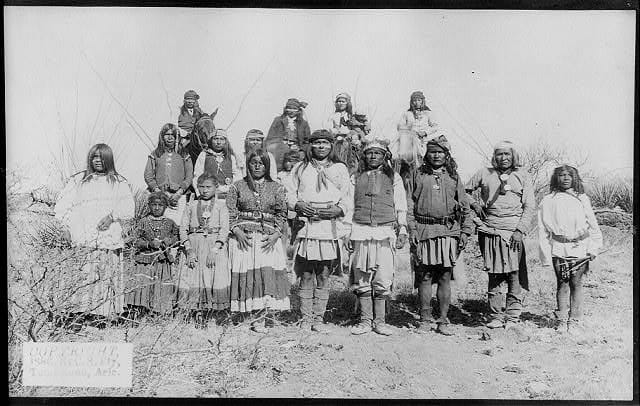
The Apache wars are generally considered to have begun in 1861 when U.S. troops blamed a group of Chiricahua Apache for a kidnapping committed by the Tonto Apache, prompting Chiricahua chief Cochise to retaliate. In 1872 the U.S. negotiated a peace treaty with Cochise. It established a reservation in the Chiricahua Mountains that would exist until his death and have no military presence. Enrigue describes this treaty as “so advantageous for [Cochise] and his people that it reads as if it’s the U.S. that’s surrendering. ... No [other] chief was able to make the U.S. Army relinquish its rights and privileges in a territory and leave them in peace.”
Cochise’s achievements were followed by those of leaders Victorio and Nana from 1879 to 1881, whose ability to evade arrest astonished U.S. and Mexican authorities. Enrigue compares them to Julius Caesar, who for centuries was “judged history’s greatest general because his legions could cover fifty miles a day. ... Nana could move seventy miles a day, battles and all. Motorized units had to be invented to beat his record.”
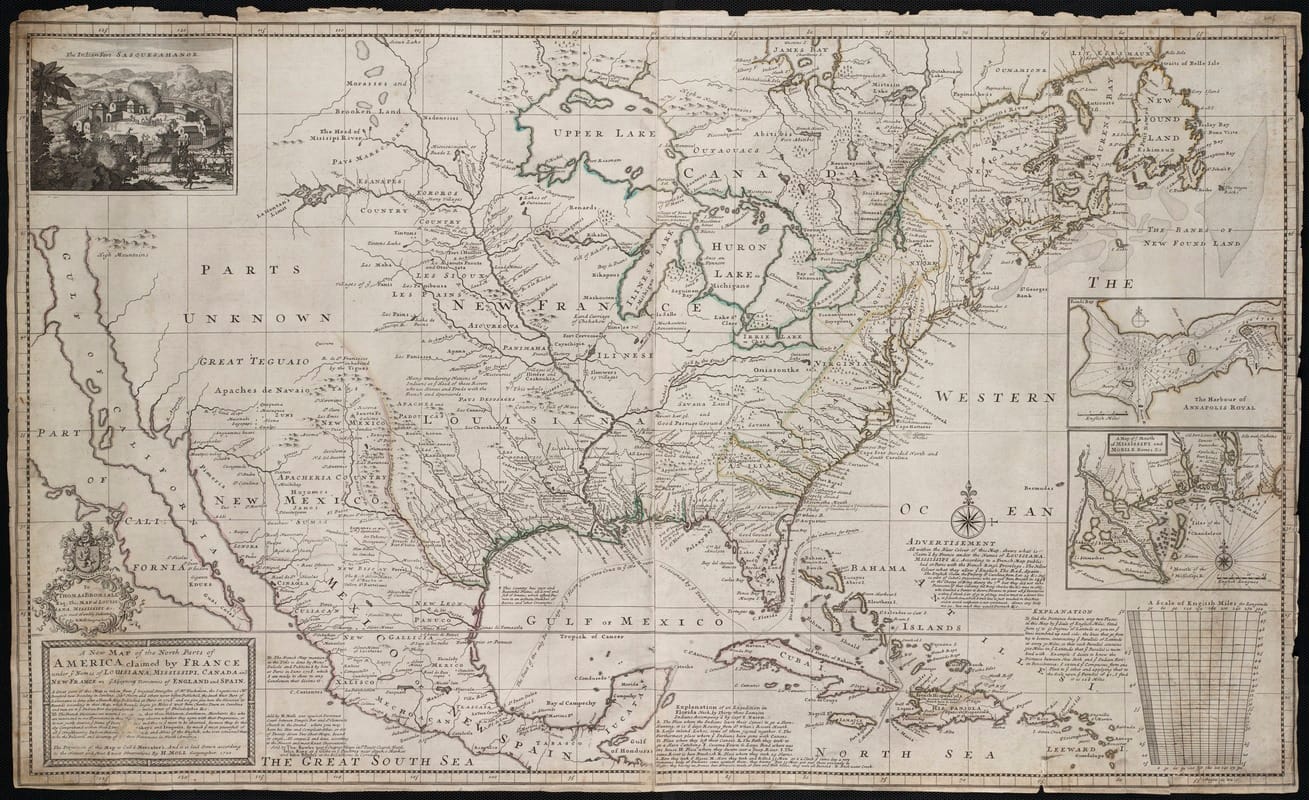
Threaded throughout the historical sections of Now I Surrender is a first-person account of a contemporary family road trip taken by an author writing a novel about Apachería. (This term for Apache territory originated in Spanish and later migrated into English.) The narrator, a writer and professor originally from Mexico, is waiting to receive his green card, and the prospect of officially becoming a permanent resident of the United States stirs ambivalence in him.
The novel’s historical characters mirror his constant reflection on the differences between the United States and Mexico. They paint a picture of the Mexican army as fighting to eradicate the Apaches, while Americans aim to deport them to reservations. In a fictional deposition, the character Estrada, a Mexican lieutenant, narrates,
To us, they were always just bandits to be stamped out, because we’d given them religion, land, and nation, and they’d rejected it all. We refused to understand that they had their own place in history, and that their history was also ours. To the gringos, these twenty-seven Chiricahuas were an enemy army. What we had to offer them was a fitting death for their warriors and assimilation for their children, absorption into the particular Mexican fabric of sorrows and joys. What the Americans had to offer was a life of humiliation, but one in which their difference would be recognized.
For Enrigue and his narrator, the two countries’ differences ultimately pale in the context of both countries’ shared role as colonizing forces. In their own ways, both governments sought to subdue their territories until no Apaches, Yaquis, or Tarahumaras remained, leaving only people who identified as “Americans” and “Mexicans.”
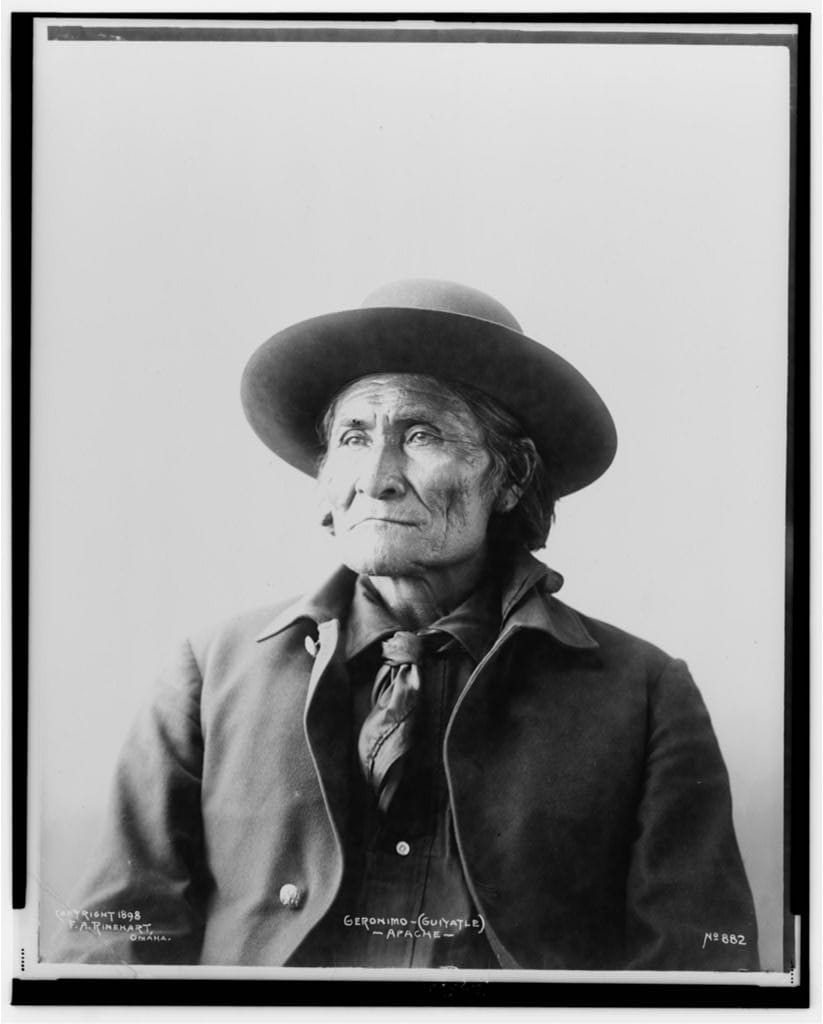
That means his narrator is also learning to see himself as a product of this joint colonial effort. “The West is the U.S. unconscious,” he reflects as the family drives across the Mississippi. Later, watching his children splash in a mineral spring that was once sacred to the Apache, he muses, “Being a criollo in America—no matter how innocent we are—is to be born an entitled pig.” While the title Now I Surrender is taken from Geronimo’s famous final words before capture—the event that ended the Apache wars and with which Enrigue concludes his book—it also carries a secondary meaning: Enrigue, his narrator, and his historical characters are surrendering to their unchosen place in their countries’ sordid history.
Once again, his generals and lieutenants take on a similar wistful affect. They are occasionally moved by a sense of wrongness in their actions but lack the agency to do anything but believe in the larger project. When the Apaches are finally captured, the American in charge of their persecution, Lieutenant Gatewood, struggles to bid farewell to Geronimo’s son, Naiche. The two men embrace, and Enrigue narrates,
The lieutenant broke the silence: This is like death, chief. I doubt we’ll see each other again; you’ll have to say goodbye to my brother Geronimo for me, too. The Indian replied with words his father had spoken on perhaps a more solemn occasion: True friends always meet again. On this side or the other, he added.
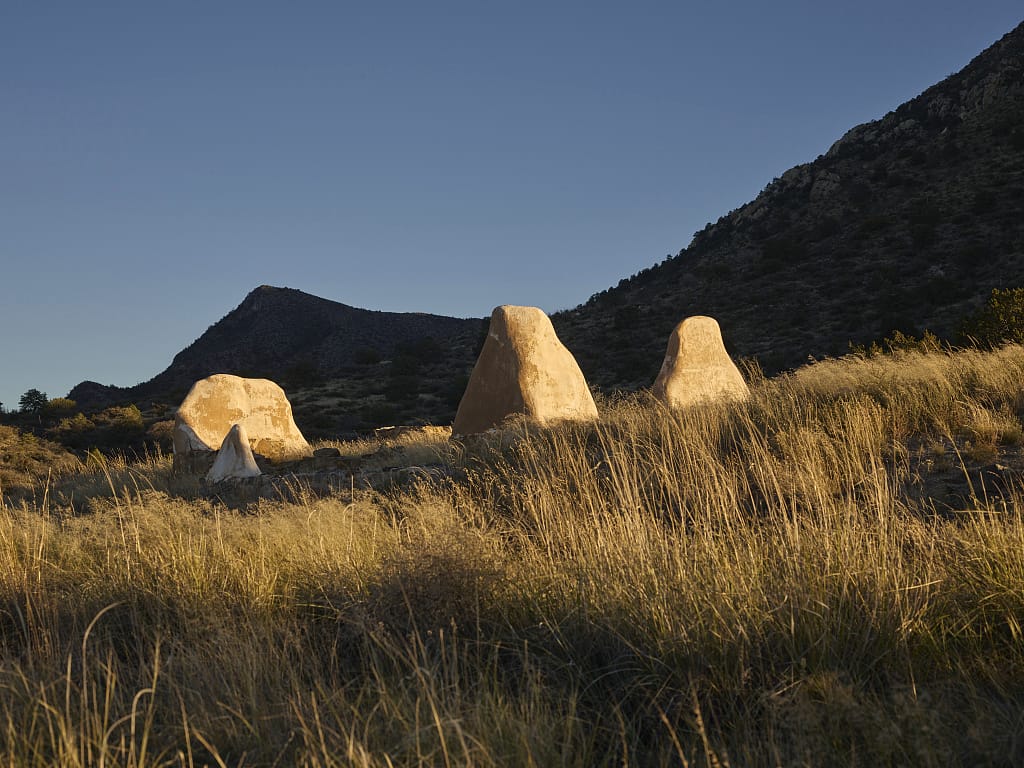
Today, the Chiricahua Mountains, where many violent confrontations between Chiricahua Apaches and U.S. forces took place, are a national monument. The site of some of the country’s most consequential resistance and violence is now marked only by friendly wooden signs from U.S. public lands agencies. The area is tranquil and wild, with coatis running across the road and acorn woodpeckers calling. It is, as Enrigue puts it in Spanish, un hermoso baldío (a beautiful wasteland).
I would wager that the historical events narrated in Now I Surrender will be unfamiliar to nearly all of the book’s readers. Although I remember memorizing battles and troop movements from the Revolutionary and Civil Wars in high school American History—Lexington and Concord, Gettysburg, Antietam—the Indian Wars received no mention. The campaign to eradicate the Apaches has even influenced how we learn history. Yet if the West is indeed the unconscious of the United States, this history is already buried within us. Every American—in the continental sense of the word—needs to learn this past.
Click here to purchase Now I Surrender from the Border Chronicle's storefront on Bookshop.com.

At Monterrey, Mexico’s MARCO, artist Teresa Margolles seeks an exit from the apocalypse.

Cristina Rivera Garza's new book, Autobiography of Cotton, traces family history through the borderlands' cotton industry.

Legado de Fieras, an exhibit by Sonoran artist Miriam Salado, reflects on the natural world and the artifacts of human violence.

Take a photographic stroll in 2025--from Inauguration Day in January to unauthorized cows crossing the Rio Grande in the fall--as we seek a “different way forward.”
Independent news, culture and context from the U.S.-Mexico border.