The View on Global Warming and Migration From Guatemala: A Q&A with Juan Jose Hurtado Paz y Paz
“In the Mayan language the word migrant does not exist. What exists is el caminante, el viajero, ‘the walker’ or ‘the traveler.’”
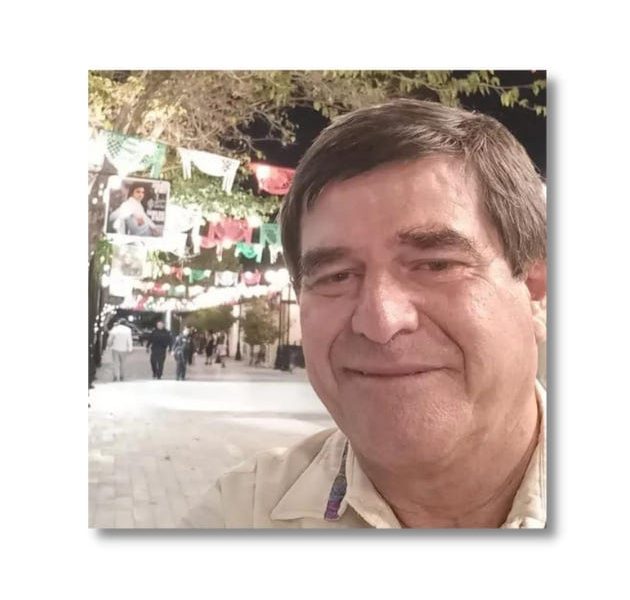
The Border Chronicle is excited to kick off this series today devoted to climate change, migration, and global borders with this insightful interview with Juan Jose Hurtado Paz y Paz, director of the Guatemalan indigenous-focused Asociación Pop No’J. Beginning today, and throughout October, we’re going to provide discussion, analysis, and reporting leading up to the United Nations Climate Change Conference in Egypt which begins November 6.
As part of this month-long series Paz y Paz will be joining us on Thursday, October 6, for a discussion thread on what to expect in the future in terms of the intersection of migration, global warming, and global borders. Joining Paz y Paz will be an amazing slate of international experts including Amali Tower, founder and director of Climate Refugees, Nick Buxton of the Transnational Institute, Diana Siller, CEO of the Mexico-based Justicia Ambiental y Derechos Humanos (JADE), and Nathan Akehurst, an independent journalist and climate researcher from the United Kingdom. It promises to be a fascinating and enriching discussion. If you’re new to discussion threads, it’s a written forum in real-time where people can post questions to the experts and make comments.
As two freelance reporters who are struggling to build this newsletter into a full fledged, sustainable publication, we are offering these discussion threads as a bonus to our paid subscribers. (You can learn more about our struggle here.) If you enjoy reading The Border Chronicle and listening to our podcast we hope you’ll sign up today as a paid subscriber. We would love for The Border Chronicle to be our full-time job (instead of having three!). We appreciate your support in making this happen!

The View on Global Warming and Migration From Guatemala: A Q&A with Juan Jose Hurtado Paz y Paz
“In the Mayan language the word migrant does not exist. What exists is el caminante, el viajero, ‘the walker’ or ‘the traveler.”
The director of the Guatemalan NGO Asociación Pop No’j talks about climate change, migration, and borders from the perspective of indigenous communities. Paz y Paz has been the director of Asociación Pop No’j for six years, during which the organization has witnessed increasing impacts of climate change in rural and indigenous communities, and an increase in migration for those who can afford it.
As the United Nations Summit on Climate Change approaches in November, Paz y Paz offers a panorama of thoughts about how to address one of the world’s most pressing issues. Paz y Paz discusses how his organization values, recognizes, and promotes “the recuperation of indigenous history, identity, culture, and ancestral wisdom, because we recognize in this a force to forge alternatives in the world.” By this he means alternatives to Western ways of thinking and models of development. The idea of political borders, that this territory is “mine and that yours,” is the antithesis of how one must think, he stresses, about solutions to the current climate catastrophe.
“Sustainable community-based development rooted in the vision of indigenous peoples,” he says, “is necessary for the conservation of the planet.”
The following interview was conducted in Spanish and translated and edited by the author.
From an on-the-ground perspective in Guatemala, what have been the impacts of climate change in the communities where your organization works? And have you witnessed an increase in displacement and migration?
In terms of climate change, there are extreme phenomena such as hurricanes, storms, heat waves, things that are happening across the world. But there are also less obvious effects.
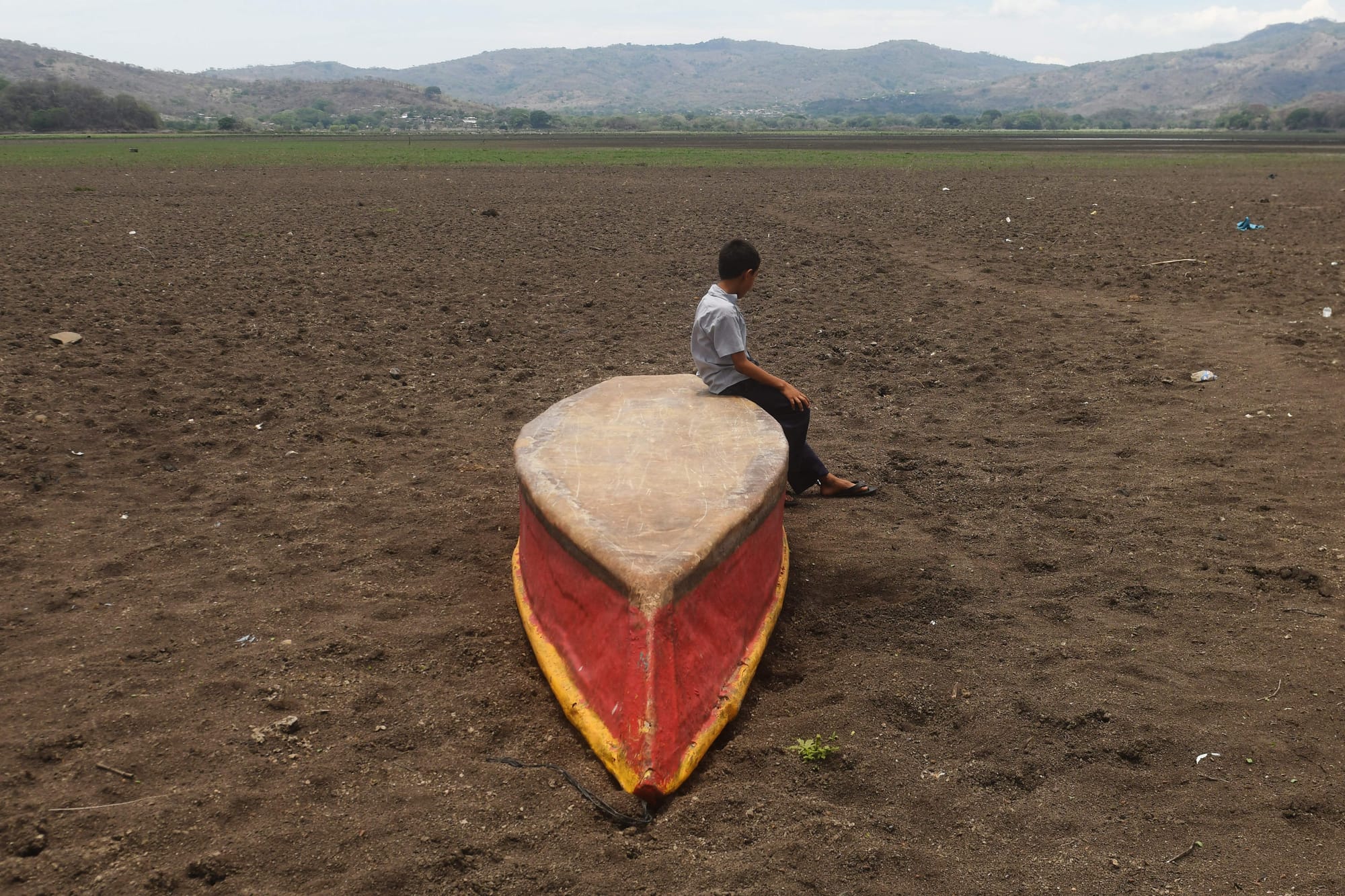
Climate change is affecting communities where we work. For example, in Guatemala rain patterns have changed. When there is a hurricane, it rains long and hard. Other times there are situations of prolonged drought. Before, the rainy season went from May to October. Now at times it starts in June and goes to November. In one day it can rain as much as what used to accumulate after one week or even one month. Also, the droughts are much longer. The average temperature has risen and is more extreme. During cold streaks, it is much colder. And in heat waves, much hotter.
The changing climate has also caused new diseases and fungi in our plants. For example, in coffee [like coffee rust]. In corn there is another disease called “leaf spot disease,” mancha de petroleo. These plagues are affecting and hampering agricultural productivity.
If there is less product, there is less income, poverty rises, and people become more motivated to migrate.
And we have to say that climate change, at least in the cases that we have studied, is not the only cause of migration. It adds to other structural problems. The population, especially the indigenous populations, in the historic sense have had their lands taken from them. They are limited, marginalized, and often live in precarious conditions.
And if you add climate change and smaller harvests to this, it becomes a dynamic that provokes migration. So we can connect climate change with an increase in migration.
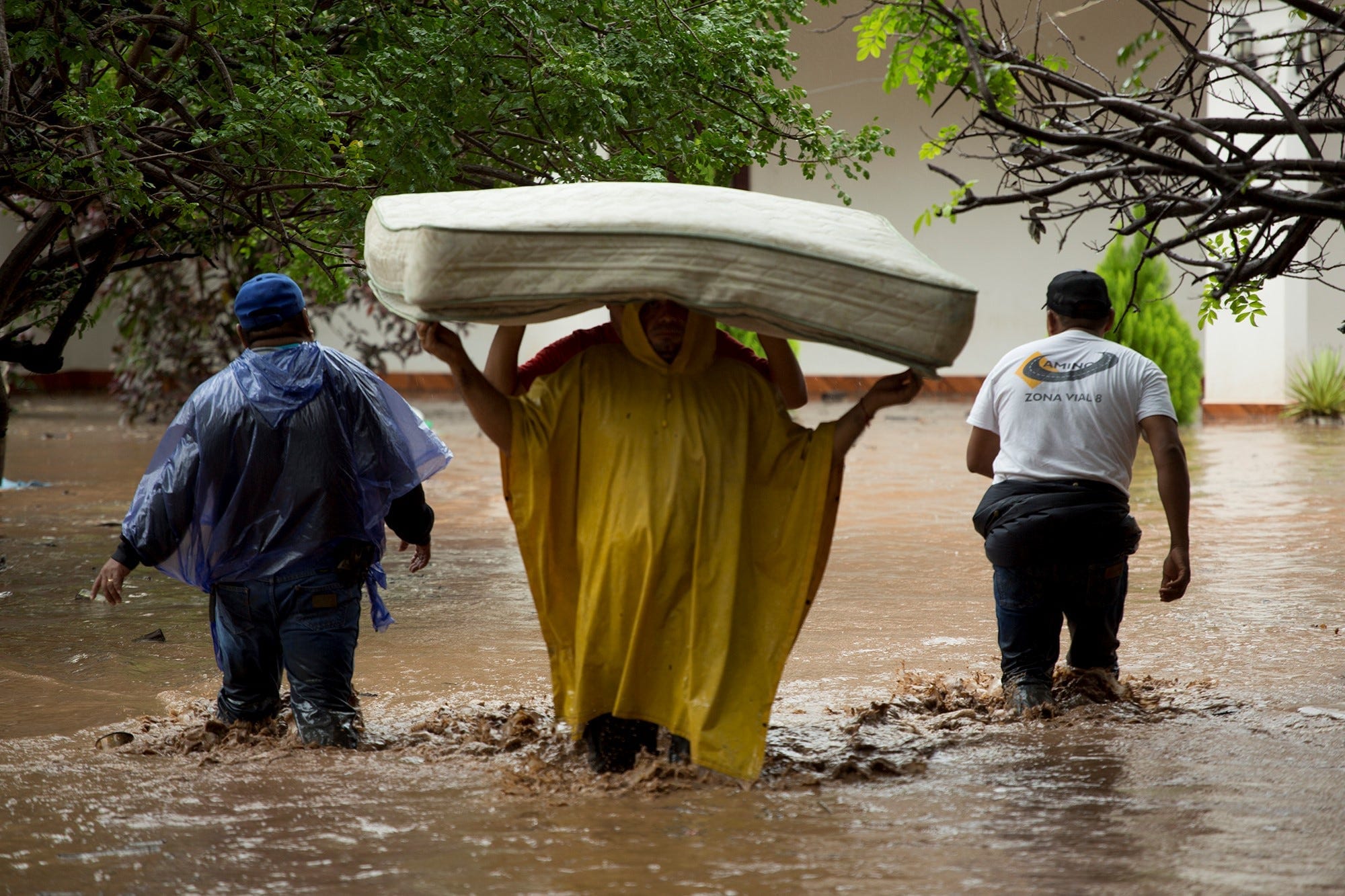
Also, to add one more nuance, one might think it is extreme events like Hurricane Iota and Eta [two severe hurricanes that hit Guatemala at the end of 2020] that provokes migration. But this isn’t always the case. For example, with Eta and Iota there was extreme flooding, and people did become displaced. But they didn’t necessarily migrate, at least out of the country. The hurricanes affected Q’eqchi communities that were very poor. When the water receded, most people went back to their homes.
For poor people, migration has become increasingly difficult. To migrate you have to invest, for example, to pay the coyotes or to pay the extortions. There are a series of expenses that are difficult to pay.
What have been the experiences of Guatemalans who do decide to migrate at the border—not only the U.S. border but also at the border with Mexico?
The first thing to say is that people turn to unauthorized migration because there isn’t an option to do it another way. There are so many complications, so many impediments, including for someone from Guatemala who wants to travel as a tourist to the U.S. They simply can’t do it. Getting a visa is increasingly difficult. You have to prove that you have economic solvency. You have to prove that you don’t intend to migrate. And now, with the pandemic, things have gotten even more complicated. If you want to get a visa to the U.S., you can’t get an interview until 2024. These obstacles are forcing people to migrate in a way that is very dangerous and risky with implications of death.
Mexico has been open to foreign refugee populations on many occasions. Now it is doing dirty work for the United States. Now we say that for Guatemalans the U.S. border extends right to the Suchiate River. And for the rest of the people in Central America, Guatemala has become the southern border of the United States. Because we are blocking the passage of Hondurans and Salvadorans, people who have the right to find refuge in Guatemala. And the same is happening with Honduras with respect to Nicaraguans, Venezuelans, Haitians.
There has been an extensive militarization and securitization of borders.
Migration in itself is not a problem. Migration is part of the development of humanity. Over history, it has benefited people, cultures, knowledge. Without migration in our collective history, we wouldn’t exist. The problem is with how states deal with the migration. And states treat migration as an issue of national security, with no consideration of human security or human rights. The state’s answer to migration is a repressive one, one of detention, deportation, and the use of force.
This includes Guatemala, which has, unfortunately, violently repelled migrant caravans from Honduras and forced people back across the border. Maybe this explains why there are fewer caravans. Now people are shifting to cross the border in smaller groups.
What role does the U.S. have in causing migration in Guatemala?
First, it’s important to point out who is responsible for climate change. First and foremost, industrialized countries are the most responsible for green house gas emissions. Nevertheless, there are strong demands coming from these same countries in the North to southern countries like Guatemala that they do all they can to mitigate climate change. But there is a contradiction here. The United States has signed the fewest number of international agreements to stop climate change. The United States has a huge responsibility. This responsibility is not only to its own citizens but also to the whole of humanity. Much more drastic measures to confront climate change are necessary.
But what has been done is a criminalization of migration, without mentioning the root causes behind why people migrate in the first place. For sure migration has to do with poverty and extreme poverty, violence. … There are a series of factors all that have to do with the United States in one way or another.
The United States has developed as it has at the expense of the exploitation of other countries, and countries and places that have been called banana republics have not become this just because. In Guatemala, the United Fruit Company [now Chiquita] both appointed and removed presidents. When Guatemala had its 10-year experience with democracy (1944–54), it was interrupted violently by a coup d’état that was promoted, organized, and orchestrated by the U.S. Central Intelligence Agency. This intervention put an end to the democratic experiment in Guatemala, stopped us from being able to leave our marginalized situation, a situation that had been the case for more than 500 years, since the Spanish invasion. And then later this situation of marginalization took a distinct form with the U.S. interventions and through this you can see the huge responsibility the U.S. has in creating the root causes of migration.
What are the alternatives you see to climate change and migration from the point of view of indigenous communities? Do you think it would be beneficial to remove political borders or that solidarity across borders is needed to confront today’s pressing issues?
It is important to consider the cosmovision of the indigenous people who believe that human beings are not owners of the earth. We are part of the earth. We are sons and daughters of mother earth and mother nature. The earth is our home, and it’s a common home for all of humanity. In the Mayan language the word migrant does not exist. What exists is el caminante, el viajero, ‘the walker’ or ‘the traveler.’ The Mayans themselves traveled extensively and ended up on the coast of Colombia or northern Mexico to exchange products.
These borders have not been made by the people. Borders are a creation of power, and the powerful. This is my territory, and that over there is yours. For people borders have been imposed on them from above. Borders have divided them. For example, there are Mam in Guatemala and Mam in Mexico. There are Q’eqchi people in Guatemala and Q’eqchi in Belize. There are Chorti people in Guatemala and Chorti in Honduras. And you can apply this to other countries. There are Gunas in Panama and Gunas in Colombia. The borders people face are not made by people at the grassroots. The borders are imposed by the powerful.
And in terms of creating alternatives, we hope that conditions can be created so people can migrate. Because migration is a right. There is a proposal, for example, to create more worker visas. If something like this would pass—an “orderly and regular” migration process, as put by the United Nation—it might slow down organized crime, extortions, and other insecurities that have become a part of the migration process.
And the other thing we have think of is development from the community perspective. One thing that could be done is that, instead of contracting U.S. companies, the government could work directly with the local communities for big development projects. This would ensure that the vision of development come from the local community and from the direction of indigenous communities.
Why is this important, especially as we tie together climate change and migration?
It’s because indigenous people have shown time and time again that they are the world’s greatest conservationists. If you put an ecological map on top of a map showing the locations of indigenous communities, it would demonstrate that there is much more biodiversity in indigenous lands. Sustainable community-based development rooted in the vision of indigenous peoples is necessary for the conservation of the planet.
The Border Chronicle is a reader-supported publication. To receive new posts and support our work, consider becoming a free or paid subscriber.
Author

Related Articles
Introducing the Wall Watch Project and Contractor Database
Explore the companies, contracts, and construction projects reshaping the U.S.–Mexico border—and get ready for a new series of Wall Watch Dispatches.
Before the Wall: The Last Stand at Lochiel
As a double border wall rises through Lochiel, protesters gather to defend the ancient cottonwoods and the San Rafael Valley.