
What Is the “Border Crisis”? A Snowstorm, Humanitarian Aid, and the Border Bill
After a week of constant media buzz about the “border crisis” and an enforcement-heavy border bill, a freezing snowstorm reveals the true crisis.
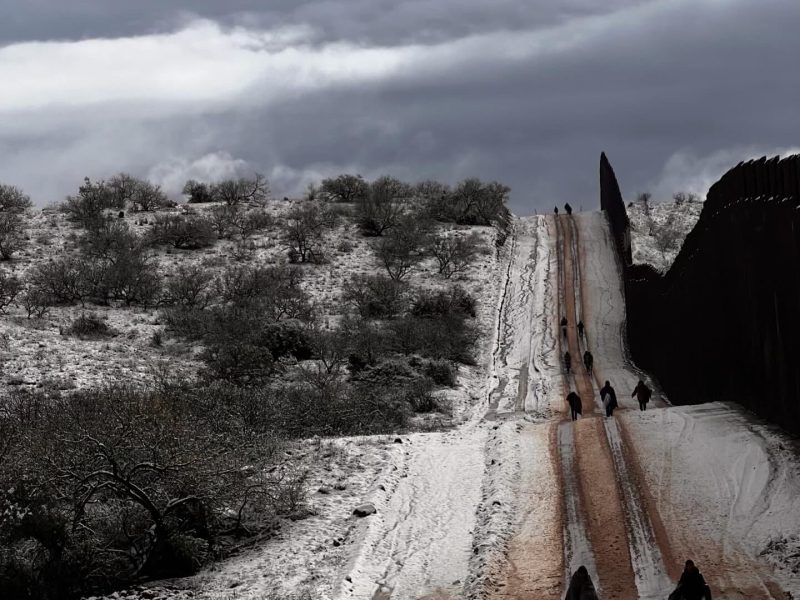
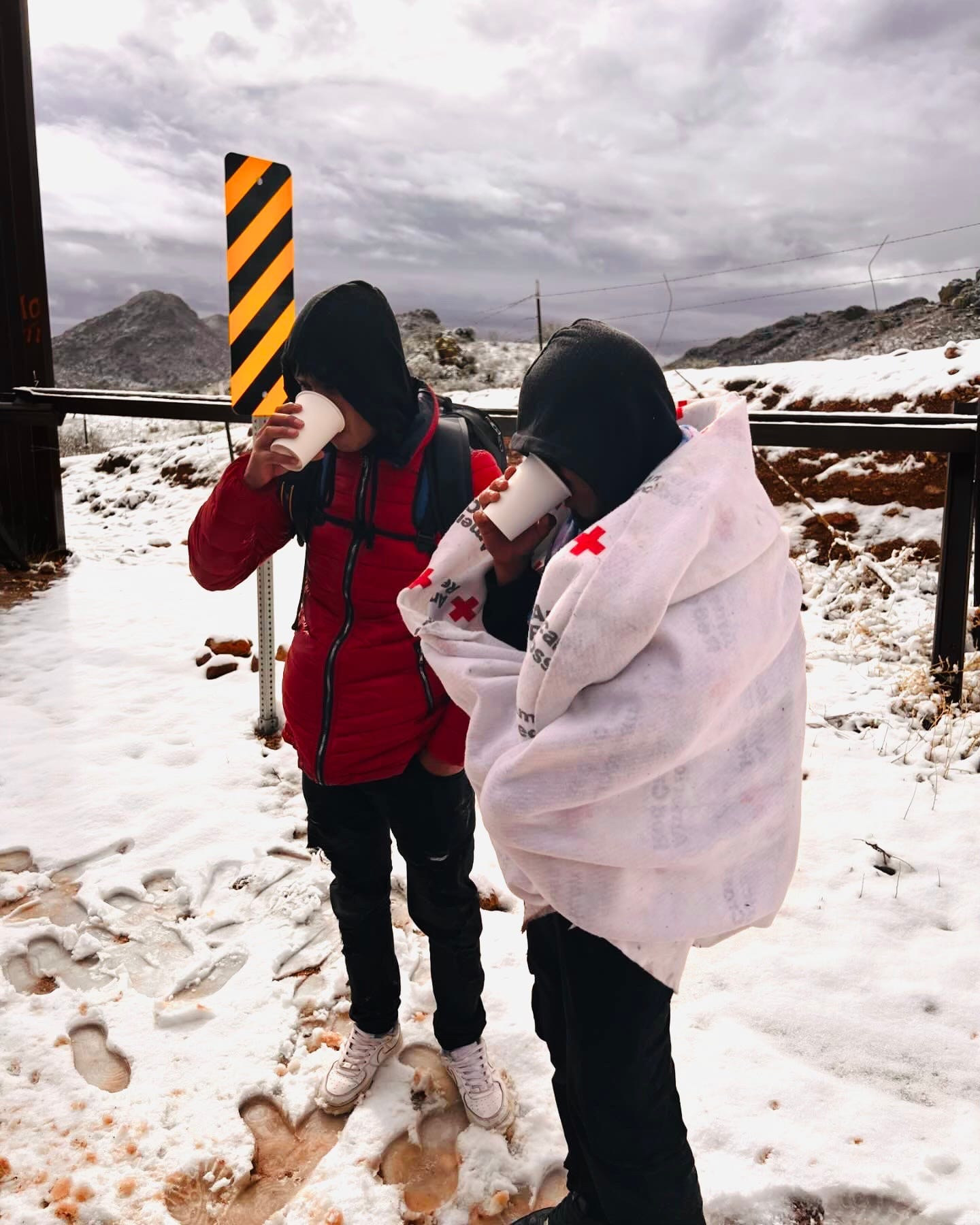
It was early Saturday when humanitarian aid volunteers arrived to the U.S.-Mexico border near the small border town of Sasabe, Arizona. The snow, sleet, wind, and rain had started overnight, and by the time people from the Green Valley Samaritans, the Tucson Samaritans, and No More Deaths (NMD) arrived, conditions were, in the words of an NMD press release, “life threatening.” It was 34 degrees. Not only was there snow, but the “mud was epic,” according to one volunteer. As a Samaritans vehicle rumbled down the border road, they encountered people who were wet, shivering, and cold—one man in only a T-shirt and a soaking sweatshirt jacket.
The day before, about 400 people crossed the border some 15 miles east of Sasabe. They were asylum seekers and wanted to turn themselves in to the Border Patrol. Most of them were from Mexico and Guatemala, according to Samaritans volunteers, but there were also people from Ecuador, Belize, El Salvador, Bangladesh, India, and Senegal. There was a winter storm advisory for southern Arizona. Many people were in a makeshift camp along the border when the rain and snow started. And by Saturday morning, medical aid workers found many cases of hypothermia. They quickly organized a transport plan to evacuate everybody, triggering a brief yet revealing battle with the Border Patrol.
This was at the end of a week in which the U.S.-Mexico border had received considerable attention from the national media. Much of the discussion was about a bipartisan “border bill” that was voted down by the U.S. Senate on February 7, although also feeding the news cycle was the standoff in Texas between the federal government and the state, as well as the attempted impeachment of DHS secretary Alejandro Mayorkas. The bill was framed as if it would establish comprehensive immigration reform, but it was actually a national security supplemental funding package, that also provided military aid for Ukraine and Israel. Most of the more than $20 billion designated for the border would have gone to the Department of Homeland Security’s enforcement agencies, Customs and Border Protection and Immigration and Customs Enforcement. There was no legalization or path to citizenship included.
During the week, the term “border crisis” was featured prominently in the national airwaves in both political rhetoric and media coverage. Perhaps the term would be appropriate and accurate if it referred to people freezing in the snow and rain, or dying crossing the desert in the summer. Yet, even though thousands have died crossing the world’s most dangerous land border—including record numbers in the past two years—this is almost never mentioned in media reports on the “border crisis.” Instead, the most prominent “crisis” is the right wing narrative of an overrun, open border. Everything else follows. The Border Patrol is overwhelmed. The enforcement apparatus is overwhelmed. Washington is overwhelmed. An NBC headline alarmingly suggested that ICE and CBP might have budget shortfalls, or entirely run out of money (spoiler: that’s not going to happen). “Border crisis” has been used so frequently that it has become both abstract and mind numbing, a term deployed either to gain political points or to justify more funding for border and immigration enforcement, which has received more than a hefty $400 billion since DHS opened its doors in 2003. “Border crisis” rarely refers to people like the injured, sick, wet, and shivering asylum seekers at the border, who on Saturday included children and pregnant women.
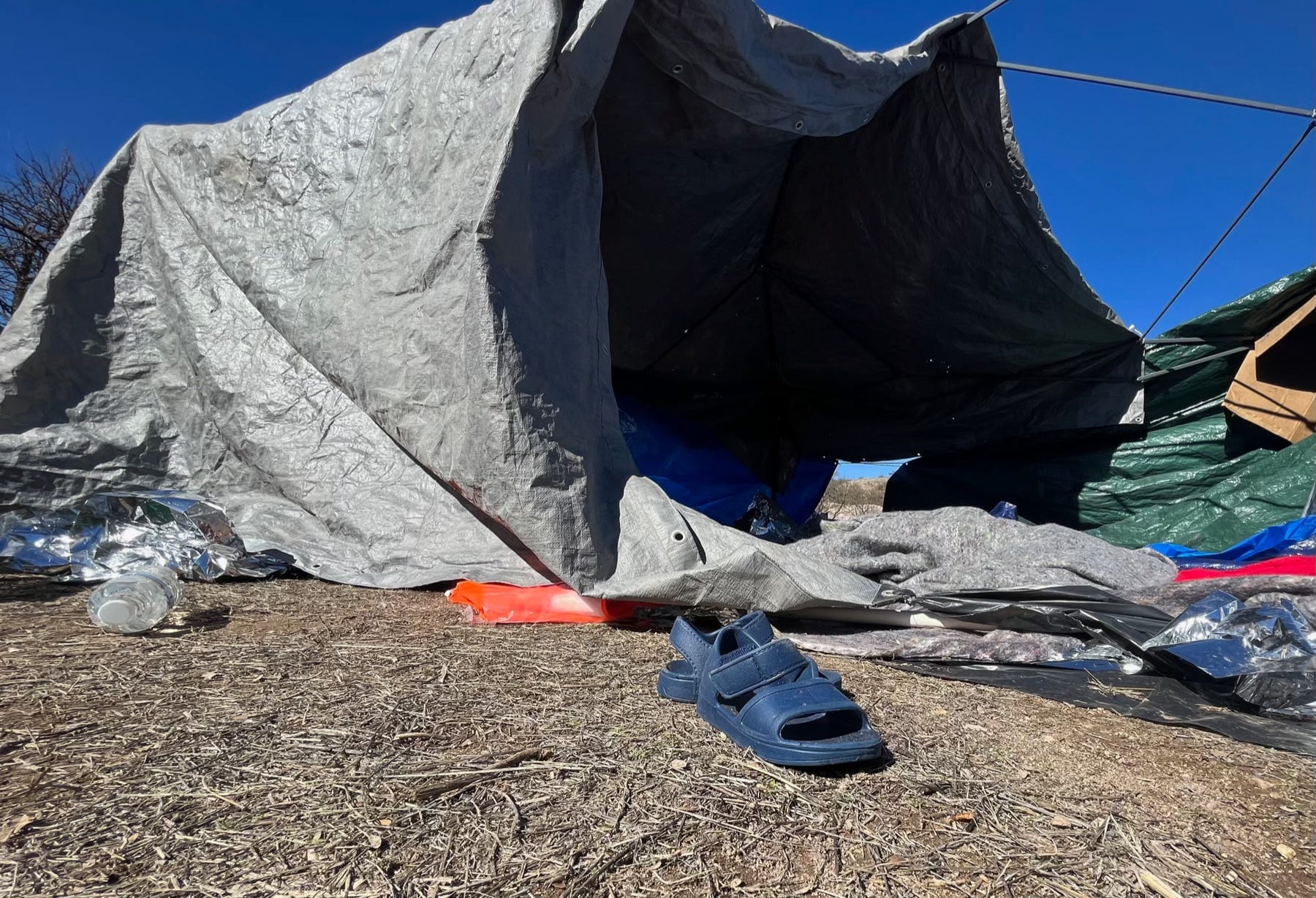
Perhaps instead of portraying the border as in crisis, we should say that the border, by its very design, creates crisis. I thought about this on Monday when I went down with a group of Green Valley Samaritan volunteers to where the asylum seekers had crossed. The snow was gone, but the mud puddles were not. The makeshift camp where many of the 400 people had stayed was empty. I kneeled by a tent made of aluminum blankets where a single kid’s sandal was on the ground. I meditated on that sandal and wondered how many times I’d seen this same scenario over the decades in Arizona—a kid’s Mickey Mouse suitcase, a stuffed animal, a small pair of pants or a shirt—in places where people had camped. How many times had I seen the electrolyte bottles, black bottles, empty tin cans in desolate places of the desert where people couldn’t possibly carry enough water to get where they were going?
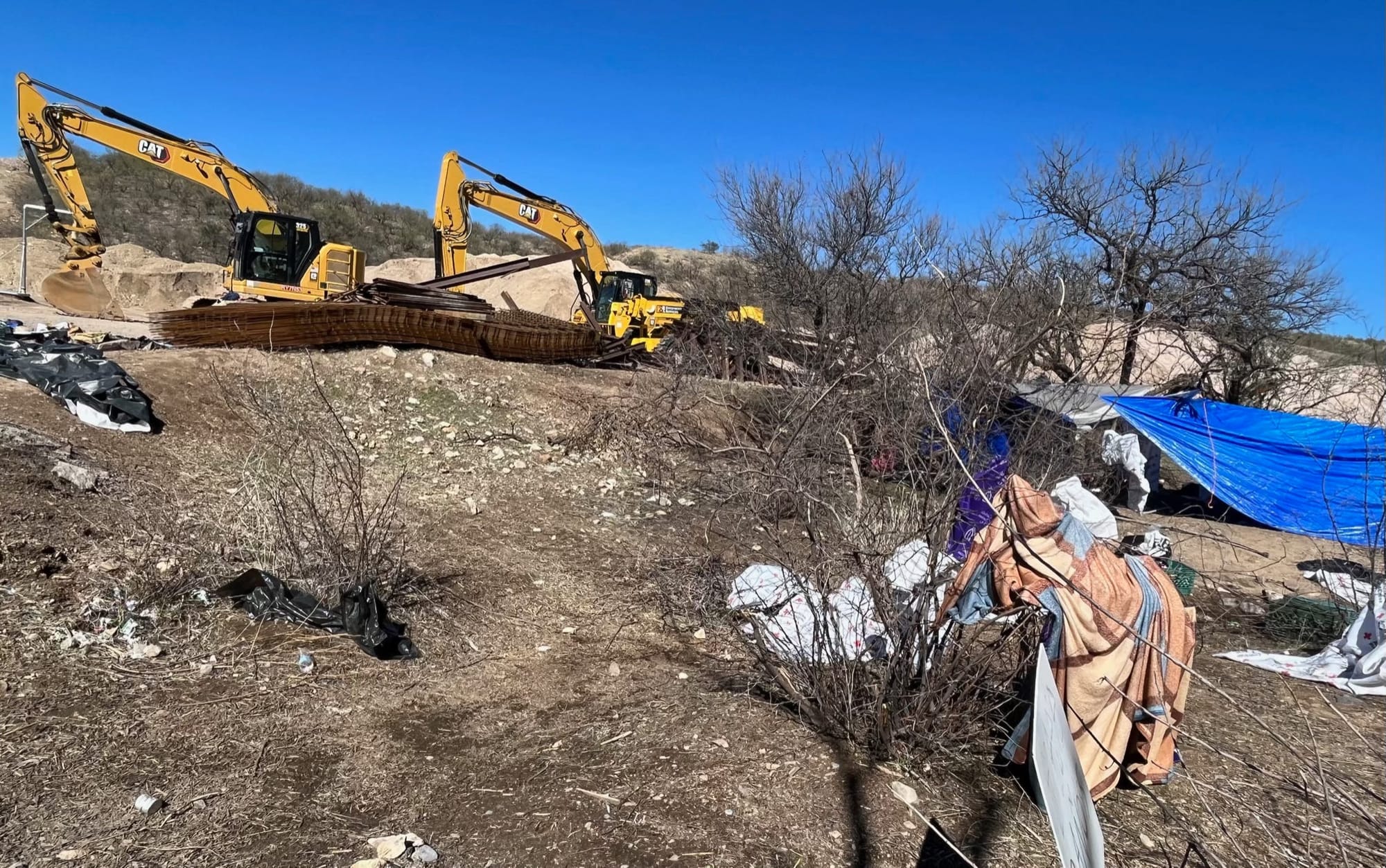
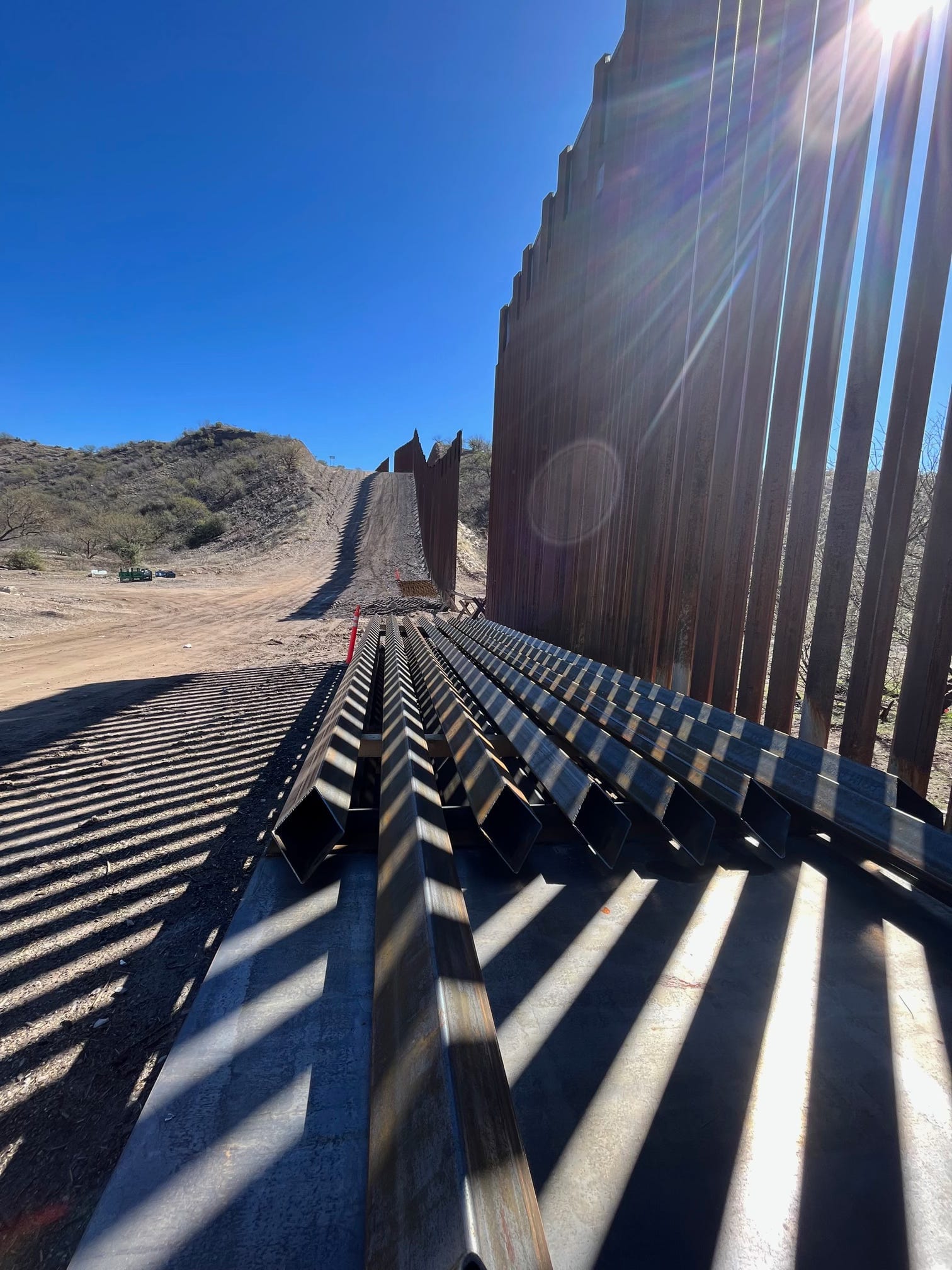
The border is designed to create crisis; that is the deterrence strategy. Right next to the camp were two idly parked Caterpillar excavators, presumably used to construct the border wall. Staring at them over the tents and makeshift shelters, I assumed that it was machinery from Spencer Construction—a company that received more than $600 million in contracts from CBP in the summer—for “border maintenance.” Now Spencer construction crews cruise up and down the border road, “filling in the gaps” of the border wall, as the Biden administration puts it. They filled in one such gap much closer to Sasabe several months ago, and now people crossed much farther away. With its focus on enforcement, the now-rejected border bill would have injected $14.4 billion into CBP and ICE (on top of a 2024 budget that was already more than $28 billion), including more funds for wall construction. Also included in the bill was money dedicated to surveillance technology, such as more autonomous towers (in addition to the nearly 400 such towers already installed), and the further digitization of the border, including systems for taking DNA samples from border crossers, and ground and maritime drone systems (yes, boat drones). Detention Watch Network describes the bill’s proposed expansion of ICE’s detention and deportation apparatus as the “largest appropriation of funds for immigration detention custody and surveillance operations in ICE’s history,” which included a daily capacity for detainment rising from 34,000 people to 50,000. Mind you, many of ICE’s detention facilities are run by private companies, so, as with surveillance, the profit motive is always lurking behind the scenes.
In short, the bill was what GOP lawmakers wanted, yet they rejected it. Democrats such as Chuck Schumer and Kyrsten Sinema (or excuse me ex-Democrat, now independent) lamented that Republicans weren’t taking the border seriously—an accurate critique, since the bill was only offering more fortification, including an unprecedented provision that gave Washington the authority to shut down the border (though it was unclear what closing the border meant exactly). Even more confusing was that Donald Trump opposed ramping up enforcement. It all makes sense, however, when the election is considered: Trump wants to run against Biden on this issue, but he can hardly do that if Biden is pounding the iron fist. As ABC News reported, “Trump probably still does benefit politically from a protracted [and manufactured!] border crisis.” However, Senator Chris Murphy, who was the chief Democratic negotiator for the bill, wrote: “Republicans can’t claim that the border is in crisis and then vote against the bipartisan bill, written by their own leadership, that would fix the problem.” He concluded, “Quite simply, we risk losing the 2024 election if we do not seize this opportunity to go on offense on the issue of the border and turn the tables on Republicans on a key fall voting issue.” The Senate Democrats took Murphy’s challenge and went on the offensive with a slick video on Twitter showing Democrats as hardline border enforcers. For his part, Biden stated, “Every day between now and November the American people are going to know the only reason the border is not secure is Donald Trump and his MAGA Republican friends.” In other words, the so-called border crisis has become a race to see which candidate can better fortify the border.
As for the people freezing and in various states of medical distress, this border cold war (and the proposed border bill) only makes matters worse. On top of that, according to a press release by No More Deaths on Saturday, Border Patrol agents told the humanitarian aid organization that they were “informed of the situation,” of people stranded in potentially life-threatening conditions, “but did not plan to drive out to address it.” Volunteers began to transport people from the border wall to the Border Patrol substation, also known as its processing center, so refugees could turn themselves in. Volunteers reported that Border Patrol agents in Sasabe detained and threatened them, and took pictures of their driver’s licenses. At one point there was a “rolling roadblock” of Border Patrol trucks. One volunteer reported a situation in which two agents spoke to them at “yelling volume” that seemed to be “backed with a bunch of anger.” The agents told the volunteers that they were “breaking the law” and threatened to arrest them and impound vehicles. But the volunteers persisted, driving the 15 miles or so back to retrieve more people. More and more asylum seekers assembled in front of the Border Patrol processing center. Eventually, a temporary shelter was set up in Sasabe for the night. By the end of the day, the humanitarian aid organizations evacuated every person from the border. On Sunday morning all migrants were in Border Patrol custody. And as Arizona Public Media reported, “Seemingly at odds with the aid workers’ account, Customs and Border Protection says they prioritized the humanitarian response to the migrants abandoned in the cold.”
By the time I arrived on Monday, the real crisis had come and gone. There was the shoe, the blankets now drying on the mesquite trees, the construction workers driving up and down the road in their vehicles, and a 30-foot border wall meant to push people further into the desert. No More Deaths and Samaritans volunteers cleaned up the mess in the aftermath. What played out was not just a battle between humanitarian aid and the Border Patrol. It was a battle over what the crisis really was.
The Border Chronicle is a reader-supported publication. To receive new posts and support our work, consider becoming a free or paid subscriber.
Author

Related Articles
“We See No Border”: The Tohono O’odham Fight Against the Border Wall
The irreparable harm that has already been done, says tribal chairman Verlon Jose, you can feel it, hear it, in the people.

Swarm Intelligence: A Reporter’s Notebook on the Freedom of Movement in the Maasai Borderlands
Could solutions to climate woes such as drought be found in the freedom of mobility? This on-the-ground report from the Kenya-Tanzania border examines that question and more.

Wall Watch: Mapping Trump’s $46 Billion Border Mega-Project
In this week’s podcast, Melissa del Bosque and Geographer Dugan Meyer explain how the Border Chronicle’s new project, Wall Watch, helps residents document and understand the massive construction project underway at the U.S.-Mexico border.