
What’s Next?
An immigration judge fired by the Trump administration searches for meaning at the southern border.
An immigration judge fired by the Trump administration searches for meaning at the southern border.
He saved numerous lives by winning Mexican asylum cases that many said would be impossible to win.

The personal, financial, and environmental costs of a border wall in Big Bend, locals revive opposition after Trump's announcement of a refinery in Brownsville and the Rio Grande Valley fights back after ICE shooting and raids, plus The Border Chronicle is seeking new paid subscribers!
An immigration judge fired by the Trump administration searches for meaning at the southern border.

Since President Donald Trump took office in January 2025, more than 322,000 federal employees have lost their jobs. One of those was Jeremiah Johnson, an immigration judge in San Francisco. We spoke to Johnson in December for The Border Chronicle podcast about the impacts on the immigration system as the administration continues to fire judges. Like many Americans, Johnson is now contemplating his next steps after losing a job he loved. —Melissa
“Welcome to the United States.”
Those were the last words I spoke from the bench.
Elevated above the courtroom floor, my black robe fell just above my ankles, where my canary-yellow clogs peeked out—a small indulgence of personality in a room built for uniformity and authority. The words I spoke instantly changed the lives of a family of four from a remote mountain village in Guatemala. Their smiles and tears reflected the gravity of the moment. This was a family of refugees, and my decision to grant their asylum was final.
Later that afternoon, on November 21, 2025, an email arrived. The attorney general of the United States had removed me from my position as an immigration judge. Less than 30 seconds after I opened the attachment, I was locked out of the court’s computer system. An hour later, I was escorted from the building. I was one of five immigration judges fired in San Francisco that day. More than 100 judges have been dismissed across the country since Trump took office. By evening, I began to ask myself, “What’s next?” It’s a reasonable question, but not easy to answer.
For years, people traveled thousands of miles to end up before me in courtroom 24. They described the hardships of that journey. For me, “what’s next?” means retracing the steps that brought so many to my courtroom.
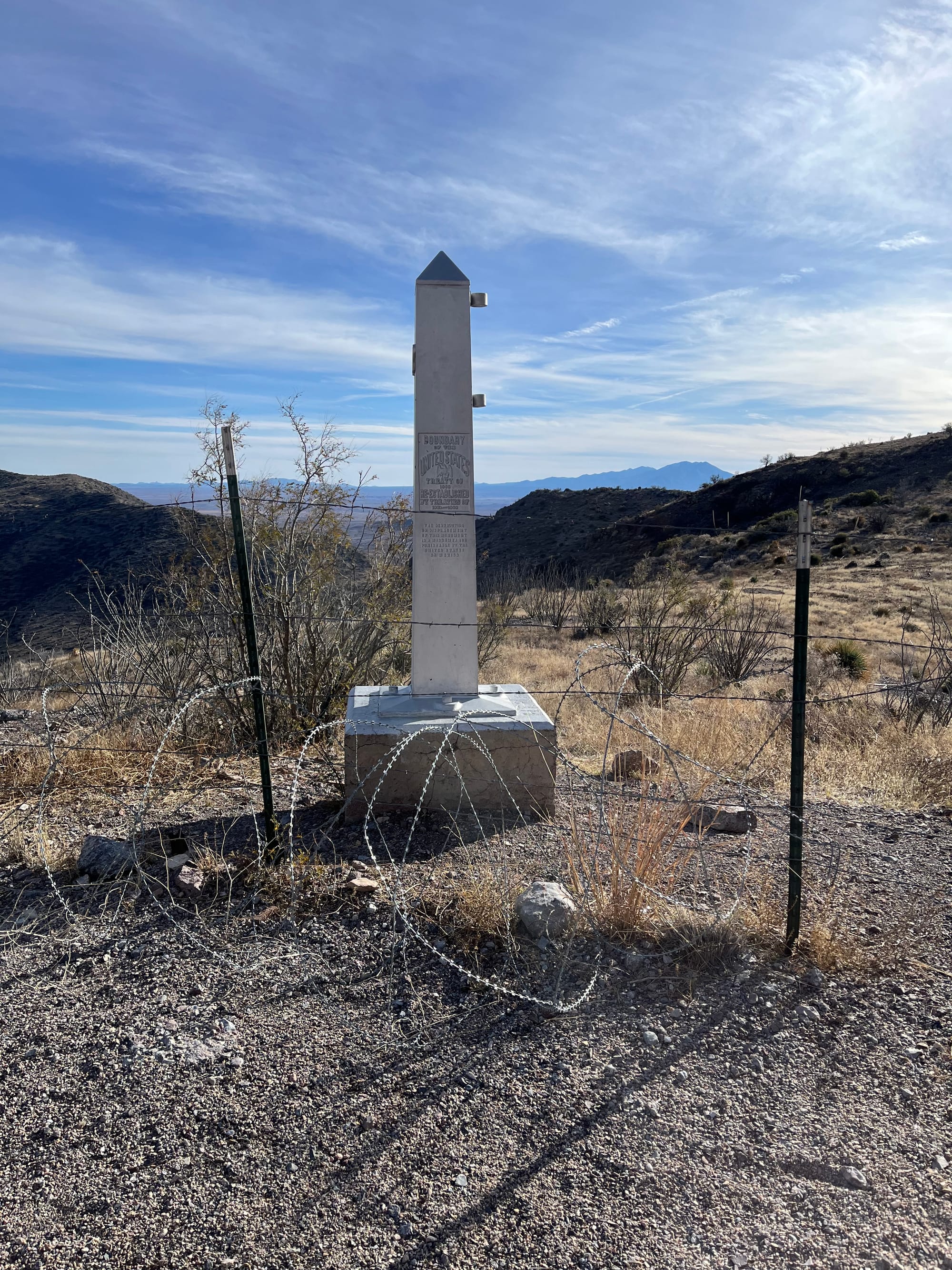
Two months later, I’m driving down a two-lane highway flanked by the Baboquivari Mountains southwest of Tucson, Arizona. Twenty-seven miles from the border, I stop at an interior immigration checkpoint—a series of temporary speed bumps and a trailer. I roll down my window and smile at the young Border Patrol officer.
“How’s the border?” I ask.
He returns my smile, straying from the stock stoic response.
“Safe, and great weather for a visit,” he replies.
I continue south beneath the watchful eyes of an unmanned $8.9 million surveillance blimp, part of the Tethered Aerostat Radar System. Eyes are everywhere along this stretch of earth, and at mile 3, I catch my first glimpse of the wall. It stretches far across the desert ridges and valleys like a black coachwhip snake. In the distance, it fades into shadow, a fitting symbol of illusory differences. The trees on that side are the same. The surrounding mountains are the same. The rocks, same. Someone divided this place. Where nature has made whole, man has put asunder. In our scientific efforts to understand and categorize the world we inhabit; we have created differences where we should have been fostering similarities. This is the border, yet the line that separates one side from the other is blurred. Unsure of what lies ahead, I trust my GPS navigation to lead me onward.
As I approach Mexico, I weave my car around the orange plastic barriers and stop in front of the Mexican customs office. The Sasabe border crossing sees little traffic, but the area has a reputation for cartel and smuggling activity. The immigration agent approaches, and I offer my passport. He waves it aside and asks about my plans. In my best Spanish, I manage to convey that I am a writer.
“Where is your writer’s ID?” he asks.
Busted but undeterred, I show him my crude notebooks and sketches.
“I want to observe Mexico. The mountains, the birds, the people,” I explain.
“Observe?” the agent asks, his eyes half cocked.
“Sí, sí,” I reply, shaking my head, overconfident in both my answer and pronunciation.
I continue, explaining that I am actually an attorney, but I am not working. I smile. He grins, takes a deep breath, and scans the landscape.
He returns his gaze and looks directly at me. “To observe is your passion.”
Wow, he understands me. “Sí, sí. My passion.”
We smile, and the agent confirms that I intend to “observe” in Mexico for only an hour. He lets me pass with a nod and a flick of his hand.
The plaza in Sasabe, Sonora, is clean but empty. A cool breeze blows from the south. Dusty pickup trucks leave the main paved road and head south over the gravel. Here, a pickup truck with high clearance and ample carrying capacity is essential. I notice a hint of wood smoke in the air, simple cinderblock houses, and a few horses climbing the hill that overlooks the United States. A police truck drives past the barbershop and stops in front of the town plaza where I sit. “Don’t let the stories of the bad obscure the good,” I think, and return to my observations as the police truck pulls away. The town is quiet, but if I listen carefully, I can hear chickens in someone’s yard and dogs scampering in search of shade. A woman sweeps her front patio; homes here are topped with air-conditioning units and satellite dishes. The sun overhead brightens the tans and browns of this quiet border town.
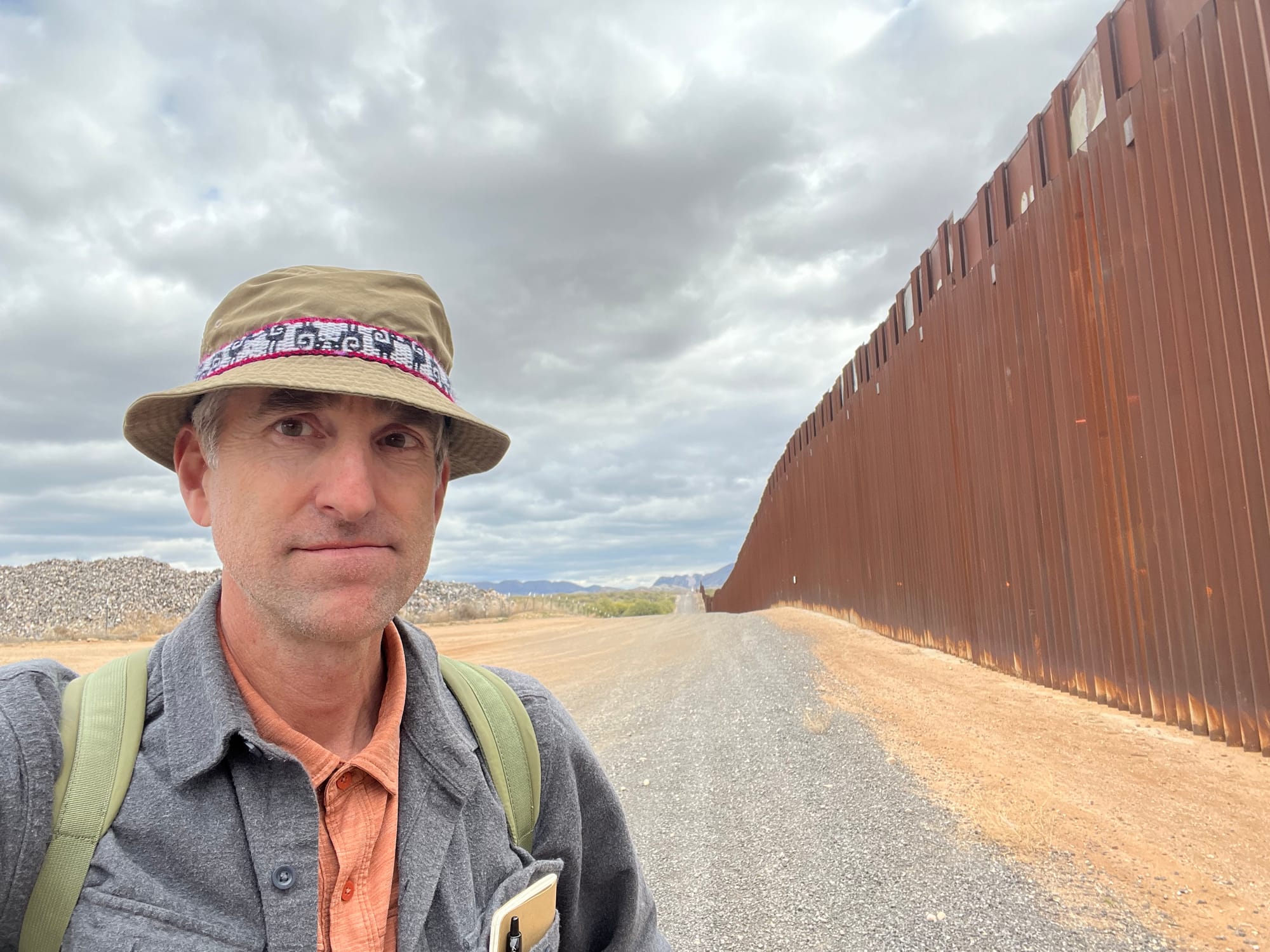
After a few more minutes of observation, I return to the United States. Back on the U.S. side, I turn right, guiding my rental car down the gravel road, past a schoolhouse, and head to the wall. There, I come to a stop, turn the car off, and step outside. There are no agents, officers, or officials—only concrete and steel. The stillness is broken only by the sound of horses neighing on the Mexican side. The wall seems so impenetrable, so imposing. I look up and down the slats, my mouth agape in wonder. But as I step back, I see evidence that the wall is not as impassable as it seems. Discarded water bottles circle the thorny shrubs on the Mexican side like presents under a Christmas tree. On the U.S. side, clothes and backpacks litter the ground. People have journeyed through this very spot.
I think of my last day in courtroom 24. Perhaps it was a family—refugees, a mother and father protecting their two children from the biting wind. The rocks look the same on both sides; I crouch down to get a closer look. Just then, a Border Patrol agent barrels down the road in a standard white-and-green truck. I stand up and give a goofy, full-arm wave. I think I see a grin on the officer’s face as his truck drives on.
The next day, I head to Arivaca, Arizona, a border town with a mixed population of ranchers, artists, and do-gooders. I trade the rental car for a ride in an old pickup truck. The gas gauge doesn’t work, but the truck’s bed is full of water bottles and cans of food. It looks like a Costco run in the desert, but our goal is to unload, not stock up. I am volunteering with the nonprofit organization No More Deaths.
In the Sonoran Desert, hundreds of people die each year from dehydration and exposure to extreme heat. No More Deaths provides humanitarian aid, addressing thirst with water, hunger with food, and suffering with refuge. It’s that simple. Our driver, a longtime volunteer, navigates the back roads from memory, coaxing the truck up dirt paths that would otherwise leave my midsize SUV stranded. At our first stop, we open the tailgate, and I load my backpack with liters of water and cans of Vienna sausages for the hike to the drop site.
As we set out, I begin to grasp what it might be like to walk these paths as so many migrants and refugees have. I’m greeted by field sandbur, a spiny burr grass, followed by goatheads and spurweed. We spot a desert cardinal and then a shrike. It’s hot and dry, difficult and draining. I am carrying only a few liters of water and tin cans. Our shoes crunch and shuffle on the rocky desert floor; here, a slip can end dreams and hopes with a sudden fall. Just above the rocky ground, thorns crowd the trail—grass and sticks reach out to snag a passing sock, sleeve, or cheek. A few years ago, my companion tells me, there were hundreds of bonfires along the wall, as hundreds of people waited on the U.S. side for Border Patrol to pick them up—people waiting day and night for aid, protection, kindness, and connection. Now a golden eagle sits atop a tree as a kestrel dive-bombs repeatedly. A kingbird flies overhead, but there are no people as we drive back to town.
The next day, I visit a shelter in Nogales, Sonora, that practices “radical hospitality” and holistic support for migrants. I walk through the port of entry and make my way through the neighborhoods to the Kino Border Initiative shelter. In the past, I’m told, it was often at capacity, bursting with mothers and their children. Today, the shelter primarily houses single men recently deported from the United States. When I enter, there’s a vibrancy I didn’t expect. Children smile, proudly showing off their artwork to proud parents. The smiles continue as I meet staff and volunteers—social workers, lawyers, therapists, and medical professionals. Here, I am no longer the immigration judge, in control of his courtroom. I am simply an outsider, greeted with warmth and unconditional welcome.
My visit to the shelter allows me to step into another’s shoes for a moment and experience their words of welcome. After touring the facility, I sit down to share lunch with some of the residents. Across the table is Jaime, who was deported three days ago, having traded the cages of Alligator Alcatraz for a bunk and a meal at the shelter. Well-groomed and wearing thick horn-rimmed glasses, he tells me that coyotes charge thousands of dollars to cross, and that the fee does not include accompanying you into the United States. Smugglers simply point to a gap in the fence, and then you’re on your own. It’s too dangerous to travel to the United States, Jaime says, and too expensive. I tuck into the pork and peppers, and we all share warm corn tortillas. Jaime tells me he will not attempt to return; he has had enough of the United States. The man to my right says he has crossed the border many times. He admits he is scared, but says, “I must go.”
“You will try again?” I ask him.
“Perhaps,” he replies, taking another bite of the folded tortilla.
I nod, trying to show I understand. But do I? We finish our meal and wash our plates at the communal sink. We shake hands and pat each other on the back, embodying both uncertainty and possibility.
But what comes next doesn’t always need to be so uncertain. Sometimes, what follows is as familiar as a cup of coffee. The next day, I wake up early in Douglas, Arizona, a former copper smelter town. I cross into Mexico and walk east along the art-infused border wall to Café Justo, a worker-owned cooperative coffee shop in neighboring Agua Prieta, founded in 2002. The coffee is grown, harvested, and roasted “in the spirit of justice,” with the goal of providing incentives for people to remain on their family lands in Mexico.
At the café, I order a coffee and a large slice of carrot cake for breakfast. I’m joined by Carmina, a member of the Café Justo family. We sip hot coffee from our mugs and chat. Our stories and lives are so different, and as we share, I begin to realize that together we know more about immigration than any policy or legal expert. Although we speak different languages, we know that the mountains and desert are beautiful, while the wall creates sadness. Our hearts ache over the violence and suffering. But then we talk about mountain biking and trail running, sharing hope and joy. Soon, we’re joined by her daughter, a young Mexican lawyer taking a break to meet the American judge who has stopped by the café to understand what’s next. The two become three; uncertainty becomes possibility.
Back in Douglas, I head to the weekly Tuesday prayer vigil to remember the migrants who have died trying to cross the border. “I don’t want to do this,” I tell myself as I search the parking lots for a group of humanitarians carrying white wooden crosses. The smell of Carl’s Jr. mingles with the exhaust of idling cars waiting to enter Mexico. I spot them, and as I join the others, I remind myself that I am here to remember, to bear witness, and to understand. We begin the vigil with prayer, then walk along the street leading to Mexico, calling out the names inscribed on the white crosses representing the deceased. We shout “presente!” and place each cross on the curb, turn by turn. A line of white crosses leads to the imposing black wall of concrete and steel. Afterward, we gather in a circle, each holding a single white cross.
I look down at the cross I am holding and read aloud the name: “Oscar Herrera.”
I place Oscar’s cross on the ground, in a patch of scrubby grass and dirt that looks no different from the earth I saw earlier that day in Mexico. A tear falls from my face and lands next to the cross.
I address the gathered crosses: “I came here to see humanity and beauty. I recognize the beauty and humanity in each of you. I will share your beauty. Your journey was difficult. I pray you now have rest.”
On my final day at the border, I realize that what comes next is not so much a question with a clear answer but a perspective on where we find ourselves. No longer in courtroom 24, I find myself among refugees, immigration officers, migrants, and humanitarians. In a world of others, there is always one another—someone to shake hands with, to break bread with, or just to have coffee with. Maybe what comes next can be that simple.

He saved numerous lives by winning Mexican asylum cases that many said would be impossible to win.

ICE raids and detentions, together with a high-profile killing, have led Rio Grand Valley residents to mobilize—including even some local Republicans.


Walking from a blasted mountain top--a planned site for new border wall construction--to a makeshift military camp along the border in a remote part of southern Arizona led to a tense yet revelatory moment.


"I understand what people are going through because I lived it myself."
Independent news, culture and context from the U.S.-Mexico border.