Residents Fight to Save the Binational Friendship Park: A Q&A with Pedro Rios
As 30-foot walls go up, U.S. residents lose another important symbol of binational solidarity between the two countries.
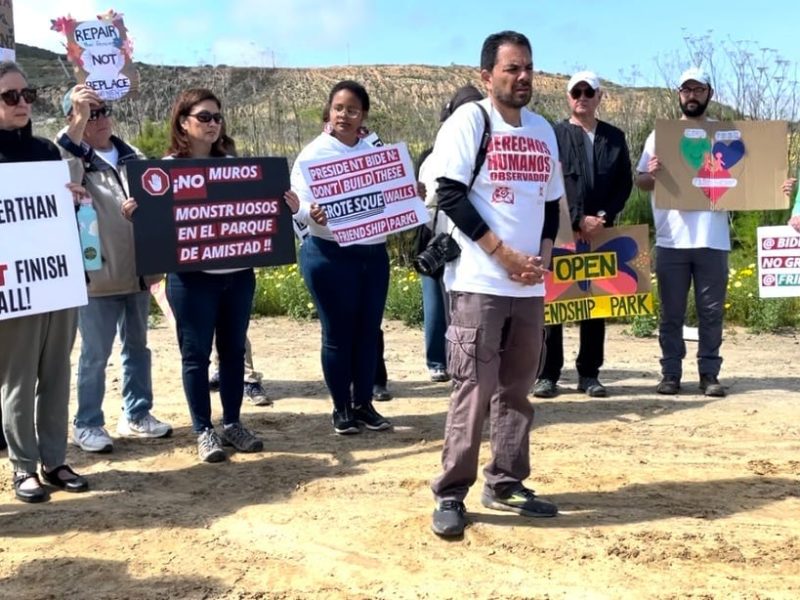
For decades, Friendship Park, which straddles Tijuana, Mexico, and San Diego, California, has been home to family reunions, binational art projects, and acts of solidarity between the two neighbors.
In January, the Biden administration began constructing two 30-foot walls through the park, which is the only federally designated meeting place on the U.S.-Mexico border for families unable to reunite for immigration reasons. Historically, the Border Patrol has allowed friends and families to enter the park area between the two walls, so that they can speak with their loved ones in Mexico through the primary border wall. The walls will replace 18-foot barriers already running through Friendship Park. The funding for the new 30-foot walls was approved by Congress in 2018, despite protests by residents and social justice and immigrant rights organizations. Pedro Rios, director of the U.S.-Mexico border program for the American Friends Service Committee, has spent decades attending events at Friendship Park. Rios explains what’s at stake for communities on both sides with construction of these 30-foot walls.
What is the historical importance of Friendship Park? What does it mean to communities on both sides of the border?
Friendship Park is situated within a California state park known as Border Field State Park. Former first lady Pat Nixon named it Friendship Park in 1971. She was on a tour, naming parks, and it was the last stop on her tour. At the time there was only a barbed-wire fence there that divided the U.S. and Mexico. She walked into Mexico and shook the hands of the many Mexicans who were there, awaiting her arrival.
Since then, Friendship Park has become a place where many families visit their loved ones. At the end of the 1990s, and into the 2000s, you would see families that would gather there and share meals. They were divided by the primary border barrier but were still able to share items and sit for hours and visit with each other. At the same time, community-based organizations held events there. One of them I’ve been involved in for a couple of decades now is the Posada sin Fronteras, which is the retelling of the story of the birth of Jesus through a migration lens. Community organizations from the U.S. and Mexico gather and hold that event every December.
There’s also been other activities including binational salsa lessons and poetry sessions. I’ve even witnessed people playing volleyball and using the primary border wall as a makeshift net to toss the volleyball over. Once, a U.S. citizen, carrying his passport, had himself shot from a cannon in Mexico into the United States.
In another artivist-style event, artists built a large cloud made of white balloons that was held by ropes on both the U.S. and Mexican side and hovered over the primary border wall. Again, as a way to suggest that this large cloud could pass from one side to the other without a problem, yet people are continuously controlled and not allowed to cross.
Why is Friendship Park such a focal point for making political and artistic statements?
One reason is that it’s been so accessible. It’s a beach area, and many people enjoy spending the day at the beach. The infrastructure also has these lookout areas, or miradores [in Mexico], where people can stand and look into the United States. You can see all the way to downtown San Diego. On the U.S. side, the state park also has unique flora and fauna. Visitors will come to bird-watch and see Friendship Park.
What does the park look like now?
There are two parallel border barriers that are 18 feet high. The secondary barrier has a large gate that Border Patrol included in 2008, when it was built with the intention of opening for events to take place there. That was one of the accommodations made for residents: to allow for community events to continue to take place.
Does it look very different depending on what side of the wall you’re on?
On the Mexican side, the primary border wall is covered with murals. That’s an interesting feature that you don’t see on the U.S. side. On the U.S. side of Friendship Park, it’s much more militaristic. Between the primary and secondary barriers, you’re in what CBP calls the “enforcement zone.” It’s a very cage like sensation. On the U.S. side, there’s an extremely tall pole that has a set of three different cameras on top of it. And then, three years ago, there were two additional poles with cameras placed adjacent to that one. One has a large scope that appears to be there to detect maritime crossings.
The other pole has a radar that is continuously moving. And then they’ve affixed a sign on the post that says people shouldn’t be around it for at least 25 feet, which is concerning because these two posts are right at the entrance of the space in between the primary and the secondary barrier where people normally would go to see their family or friends.
So what happens now with these new 30-foot walls that are being built?
The primary border wall will also be 30 feet with the exception that it will dip down to 18 feet where the historic marker is [designating the U.S.-Mexico border in the 19th century]. Then it will increase back up to 30 feet. That’s the only modification that was made after more than 1,000 comments were submitted during their 30-day comment period in September of last year.
What is the official reason for replacing these walls with 30-foot walls?
A month before the pandemic began, Border Patrol stopped allowing people to enter Friendship Park. They provided no reason. Since then, their reasons for not allowing people in has shifted. First because of COVID. Then they said because of the violence in Mexico. Another one was that the primary border wall was unsound structurally, and that anyone could easily tip it over, which is as ridiculous as it sounds.
The Border Patrol chief for the San Diego sector said that the rationale for a 30-foot border wall is that it’s the same height that has been constructed elsewhere. And that it’s part of the “force multiplier” they need in order to ensure that people don’t scale it.
These walls mean there will be more injuries and deaths. Trauma units are filled with patients who have fallen from 30-ft border walls in the San Diego and Calexico sectors. The Mexican Consulate in San Diego recently released staggering figures related to border wall falls. At least 80 percent of repatriations of Mexican nationals with injuries, were a result of border wall falls.
During Joe Biden’s campaign, he promised that not another foot of wall would be built. How has the Biden administration addressed this issue? I suppose the funding for these walls is coming from what Congress approved during the Trump administration.
Yes, it comes from appropriations funding from 2018. The Biden administration really has not responded. The only response was last year when CBP Commissioner Chris Magnus put a pause on the construction. That led the CBP to open what it called a “stakeholder comment period” for 30 days. I can’t tell you if President Biden even knows about this. It’s hard to know. When he was in San Diego on Monday, a small but mighty group of us with signs were standing in front of the naval base when his convoy arrived. So we’re hoping that maybe he saw those. But it’s clear to us that Border Patrol’s San Diego sector is driving how the discussions around the border wall construction at Friendship Park occur within the administration.
What is lost for communities on either side of the border if these walls get built? Will Friendship Park be closed?
At first, Border Patrol said it would open Friendship Park when the state opened Border Field Park again. But when the state eventually did open the park, the Border Patrol went back on their word and didn’t open it. What will be lost at this point are several things: one is the visual landscape, which will be decimated from both the U.S. and Mexican sides. On the Mexican side, the height of the wall will completely obstruct the views that people currently are able to enjoy. The type of materials being used for the walls will also make it difficult for interactions to occur between people speaking to each other on both sides. There’s also the threat to the binational garden of native plants. For them to replace the primary border wall, they will need to uproot and destroy the binational garden.
To learn more or get involved contact the nonprofit Friends of Friendship Park.
Author
Related Articles
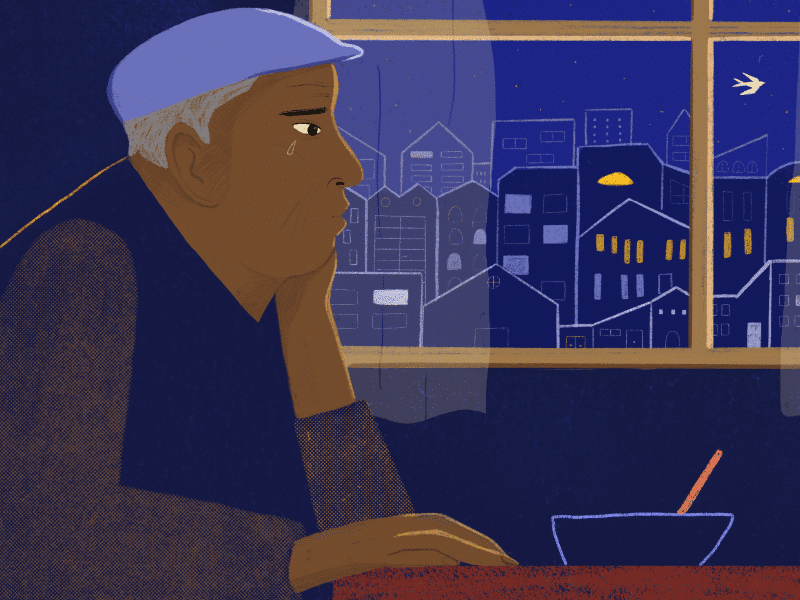
Banishing the Elders: How Southern México Has Become Part of the U.S. Deportation Regime
The United States is deporting Cuban seniors by the hundreds to southern México where they have little hope of return.
Introducing the Wall Watch Project and Contractor Database
Explore the companies, contracts, and construction projects reshaping the U.S.–Mexico border—and get ready for a new series of Wall Watch Dispatches.
Before the Wall: The Last Stand at Lochiel
As a double border wall rises through Lochiel, protesters gather to defend the ancient cottonwoods and the San Rafael Valley.