
Just Another $50 Million Brick in the Wall
A Q&A with Scott Nicol on his New Report on the Expansion of Border Wall in Texas.
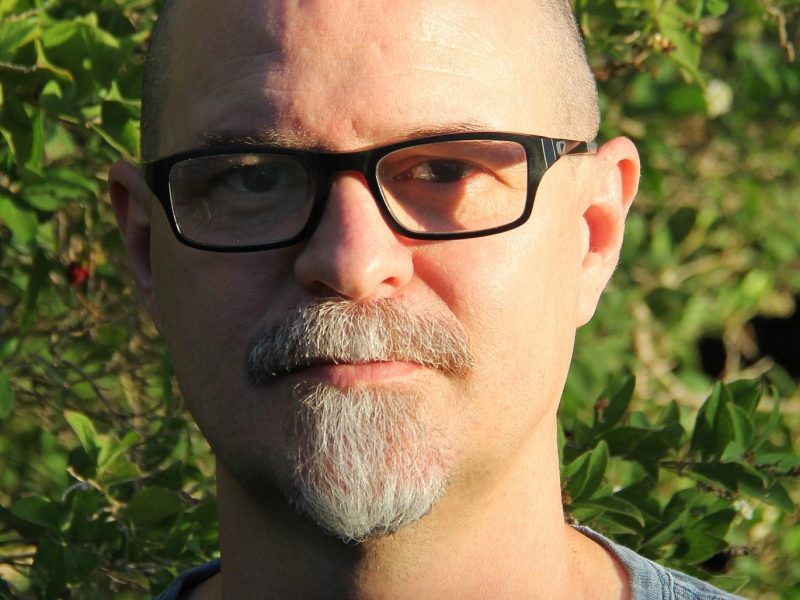
When Todd and I first launched The Border Chronicle in September, one of our very first Q&As was with Scott Nicol, who lives in the border city of McAllen, Texas, and who has been a tireless researcher of all things border wall–related in Texas since 2007.
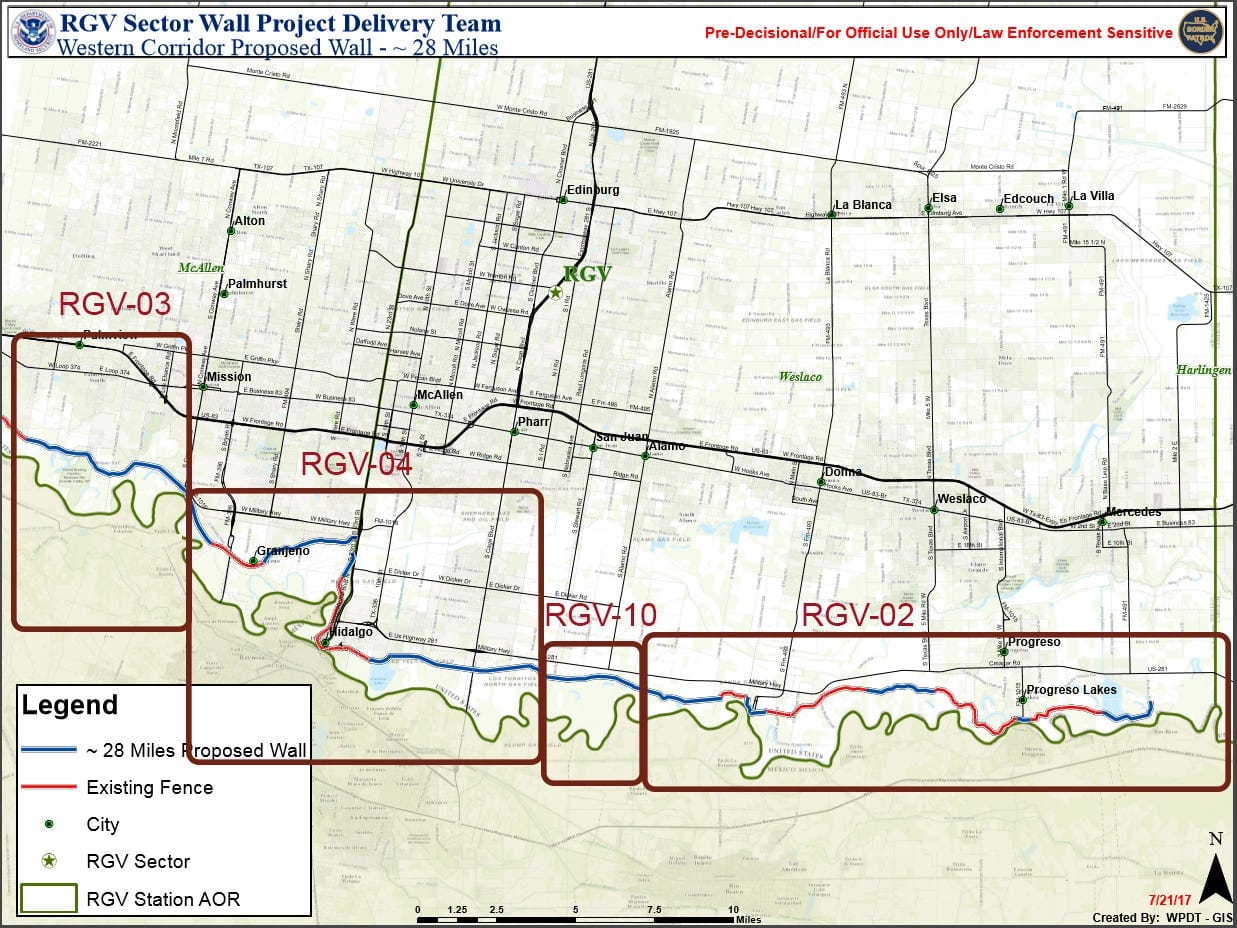
Under Trump, it became increasingly difficult to access government documents or obtain information from the administration about where walls were being built and the impact construction would have on wildlife and communities. Unfortunately, in the last year, under the Biden administration, transparency and community outreach have not improved. There’s been some recent good news regarding Texas residents Pamela Rivas and Reynaldo “Rey” Anzaldua Cavazos, whose cases we’ve highlighted in The Border Chronicle. They have had their land returned by the government after it was seized to make way for border wall construction. But the Biden administration has continued building the wall along the Texas border and serving condemnation notices to landowners, despite pledging not to build another foot of wall. This makes for a confusing scenario for border residents and anyone, including myself, who follows this issue. For the last few months, Nicol has been traveling up and down Hidalgo County in the Rio Grande Valley, which is the four southernmost counties of the Texas-Mexico border, to document new wall construction. One of his discoveries, he says, is that one three-mile length of levee–border wall is costing an estimated $50 million a mile, which is the most expensive segment of wall he has ever documented in his 14 years of research.
Nicol’s 14-page document is a valuable resource in understanding the current situation with wall construction along the Texas border. I’ve uploaded the document (see below) so that you can read it in full. I’ve also included a short Q&A with Scott about his findings.
Report on Border Wall Construction in Hidalgo County by Scott Nicol8.73MB ∙ PDF fileDownloadDownload

What prompted you to do this report?
It’s been almost impossible to get any solid information out of Customs and Border Protection or the Army Corps of Engineers about what is happening right now. In June they restarted construction on levee–border walls in Hidalgo County, which is in the Rio Grande Valley sector. And the claim was that there were 13.4 miles of levee that had been damaged during the Trump administration that needed to be repaired. But now there’s construction going on in places where levees were not damaged in any way. So it really looks like this is just a loophole that’s being exploited, so that the contractor can get the full payout for the contract that the Trump administration awarded, instead of a partial payout for building part of the walls that were originally planned. So I’ve been going out and trying to establish which sections of levee wall were completed under Trump. What was left half finished? And what is being built now? It’s important to document where perfectly good levees are now being turned into levee–border walls.
Levee walls are unique to the Rio Grande Valley, right? Most people who have seen pictures of border walls or heard about them are not familiar with the levee walls.
Yes, the levee wall design is only in Hidalgo County, Texas (where the cities of McAllen and Mission are located). It involves taking an earthen levee, basically compacted dirt that ranges from 10 to 15 feet high and has a slope on either side of it. There’s a road on top. They take the levee and carve away the river-facing side and put in a sheer concrete slab. Under the Trump administration, that slab would be topped with 15-to-18-foot steel bollard posts with the goal of having a total of 30 feet combined concrete and steel.
The levee walls being built now, are they different from the Trump design?
The only difference is that the bollards on top, they cut them shorter. Instead of 15 feet, they’re six feet. But that’s on top of a 15-foot concrete wall. So you you’re still getting a 20-plus foot border wall. The levee wall design, from an environmental standpoint, is one of the most destructive, because it’s completely impassible for animals.
What are the most significant findings in your analysis?
In a lot of places, contractors, using the same design, just picked up where they left off. You see that in the wildlife refuge, just to the west of Bentsen State Park (in Mission, Texas). When Biden put the pause in effect, construction stopped on the levee wall that was going up there. And then in June, when the Army Corps announced that they were going to conduct repairs on about 13 and a half miles, it started back up again. And then it continued for another kilometer. So it wasn’t even, you know, right at the edge of construction, where there was some damage, and they were like, We need to, you know, remediate 50 feet or something like that, which were harmed. They were carving into the levee, where it hadn’t been touched. They basically filled in the space between the Trump wall and walls that were built in 2008 and 2009. And that’s the basic pattern in the other locations where construction has resumed.
This new six miles that was recently announced, where would that be built?
It’s unclear. CBP has refused for months to provide maps. And, you know, one of the ideas behind Biden’s pause was supposed to be that there would be consultation with local communities and stakeholders and NGOs. So that they could comply with environmental laws that had been ignored under the Trump administration. And that hasn’t happened at all.
Why do you think this is?
The people who are making these decisions at CBP weren’t put in place by the Biden administration. They’re the same people who have been building border walls since the Bush administration. I don’t think they’re paying any attention to what the Biden administration says the policy should be, you know, they’re just doing their thing. Biden’s still supposed to be the boss. So he should be able to say to the individual who runs tactical infrastructure for CBP, who’s been there since 2007, “You need to stop building walls. I’ve put in a pause. What are you doing?” But that doesn’t seem to be the case.
There’s another component, too, right, in which local elected officials have given their OK for the construction to happen?
That was the impetus, when contractors were told, “You’ve got to make everything safe with the levees,” and then the pause kicks in for real. Those were not very big places that needed repair. They were fixed within a couple of weeks. But after that, they announced, “Hey, we already fixed those places. And now we’re going to do another 13.4 miles of construction.” I think contractors recognized it provided a great loophole for them to continue.
One of the most startling things from this report is that, according to your estimate, one stretch of the new construction costs $50 million a mile.
Right. For one of the contracts, the original plan was 5.5 miles. And that 5.5 miles did not take into account that in the middle of it are Bentsen State Park, and the National Butterfly Center, which Congress exempted from border wall construction. So right there, you’re not hitting 5.5 miles. What is being built comes out to about three miles within that contract area. And according to the government’s website, they’ve obligated $150 million for those three miles of construction. So that comes down to $50 million a mile.
Is that the most expensive border wall you’ve seen built?
It’s the most expensive one that I know of. But, you know, the Army Corps of Engineers has refused to provide contract information to NGOs or members of Congress or anybody else. So in places like the Peloncillo Mountains in Arizona, where they blasted the tops off of mountains, we don’t know what the total costs are, only what the announced price was. Because the information isn’t being provided by CBP or the Army Corps of Engineers, there’s no effective oversight. And we can only guess at the total costs.
All this is coming from the $1.3 billion that congress designated for wall construction, which hasn’t been canceled.
That’s the big thing for construction in the Rio Grande Valley. It is congressionally funded, and the Government Accountability Office has ruled that for the congressionally funded border walls, which is, especially the Rio Grande Valley sector and the Laredo sector, Biden can pause the construction but not cancel it. Not only is it upsetting that there hasn’t been the kind of congressional oversight that needs to occur on these contracts. It’s even more upsetting that Congress hasn’t taken the necessary action to rescind that money and ensure that these walls don’t get built.
Author
Related Articles

Banishing the Elders: How Southern México Has Become Part of the U.S. Deportation Regime
The United States is deporting Cuban seniors by the hundreds to southern México where they have little hope of return.
Introducing the Wall Watch Project and Contractor Database
Explore the companies, contracts, and construction projects reshaping the U.S.–Mexico border—and get ready for a new series of Wall Watch Dispatches.
Before the Wall: The Last Stand at Lochiel
As a double border wall rises through Lochiel, protesters gather to defend the ancient cottonwoods and the San Rafael Valley.