
The Border Around the Negotiating Table: A Report from the UN Climate Summit
A bureaucratic wall determines who can and cannot participate in the world’s most important conference on climate change, and who has and doesn’t have a say in climate policy.
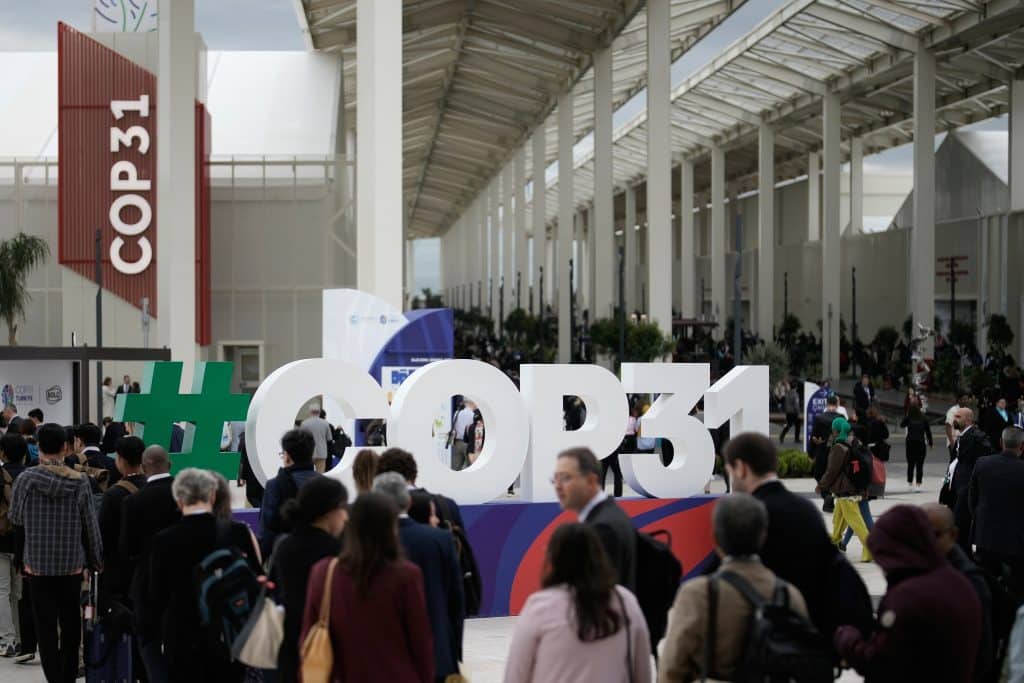
The 2026 UN climate talks are underway in Antalya, Türkiye, but not everyone has a say in the negotiations. A bureaucratic border wall is determining who has access and who doesn’t. The Conference of the Parties (COP) of the United Nations Framework Convention on Climate Change (UNFCCC) is the key meeting where the world comes together each year to find solutions to an existential problem facing humankind. At this year’s 31st conference, organizers seek to shift away from securing pledges from countries to lower their emissions and committing to increase climate finance. Instead, they are shifting to much-needed practical actions to combat the climate crisis, such as legally binding commitments to pull back from fossil fuels, provide grant-based finance to help countries recover from disasters, and urgently adapt to the crippling effects of a heating earth.
These annual climate negotiations affect billions of people, yet many from the Global South are not afforded a chance to attend, and that exclusion often begins well before the COP itself.
The COP, like most UN processes, can be opaque, technical, and deeply siloed. Conversations and decisions are shaped months ahead of the annual meeting, largely by who is included, and for far too long, climate-affected developing countries and communities have been shut out by border and visa regimes that privilege some while penalizing others. But why?
While the high-profile annual COPs receive most of the public and media attention, the midyear UN “intersessional” meetings, held each year in Bonn, Germany, at UNFCCC headquarters, are where the critical work happens, effectively determining whether the annual COP will succeed.
Bonn is where COP agendas are negotiated, draft texts are shaped, and key alliances are formed. But not everyone gets a seat at that table, and for many, that is the first hurdle of climate injustice, which includes those who can represent the 20 to 30 million people who are internally displaced each year by climate change—and who, when forced to move to safety, often run up against both literal and metaphorical border walls.
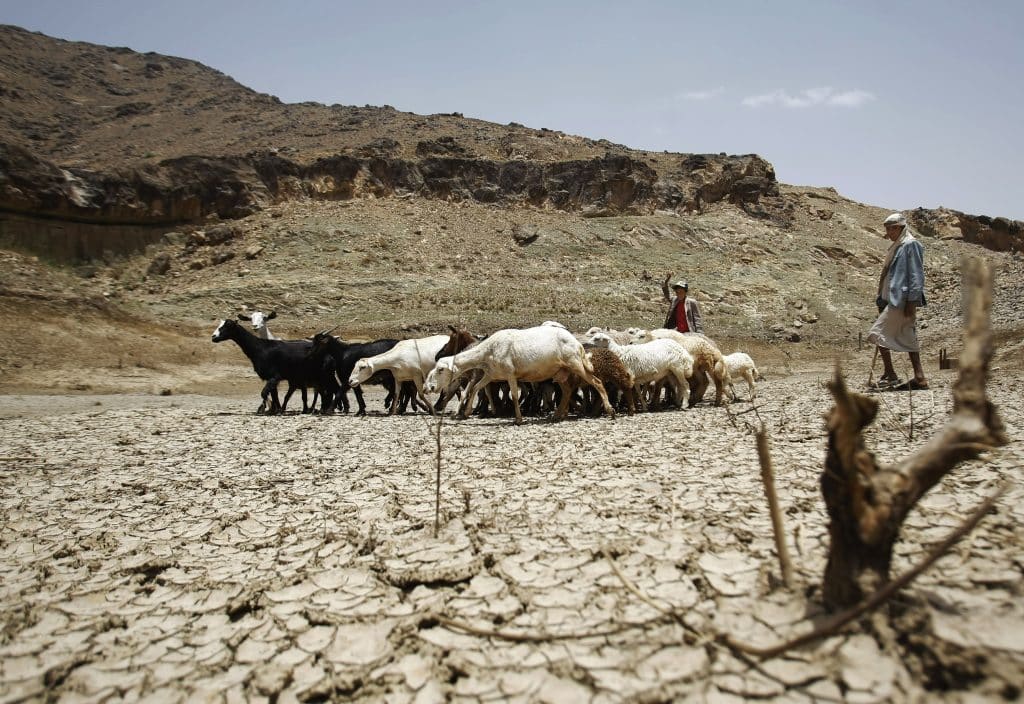
Typically, COP host governments provide expedited, free visas for UN-accredited delegates. But in Bonn, delegates face the same stringent visa systems as other travelers, putting delegates and civil society attendees from Global South countries—including countries such as Sudan and Yemen, which are in the throes of climate change—at a distinct disadvantage because of onerous visa requirements, limited institutional support, and last-minute visa decisions.
EU Border Policy Meets Climate Injustice
Germany says the visa requirements are outside its control, since it is EU law that regulates short-term Schengen visas for non-EU nationals who travel to Germany. Reflecting strict EU border and migration policy, a German Foreign Office spokesperson earlier this year pointed out that Schengen visa requirements also require applicants to “credibly demonstrate that their living circumstances provide sufficient incentives for return.” Thus, the EU, as host to the UN Climate Change headquarters, does not grant democratic access to all UN member states and accredited civil society. As a result, the climate talks have seen a shrinking of inclusive dialogue and civic space.
The very EU countries that uphold these strict visa policies are among the industrialized nations responsible for the colonial legacies and historic pollution that have caused the climate crisis. For example, excluding overseas colonial emissions, Germany is the largest historical emitter of carbon dioxide among European countries, followed by the UK.
These border and visa regimes shape who gets into the pre-COP rooms that set the agenda for the climate conference and then limit their involvement at the COP itself. Activists, advocates, affected communities, and potentially even negotiators have been shut out of these spaces for many years, and we all lose as a result.
In June, UN member states traveled to Bonn to negotiate the agenda for COP 31, though not every country was welcomed. International media reported that several developing countries on the front lines of the climate crisis, including Sudan, Yemen, Sierra Leone, Senegal, and The Gambia, faced significant visa barriers to accessing the climate change conference in Bonn, forcing them to send smaller delegations than originally planned.
Smaller delegations meant these countries had to narrow their focus and interventions, limiting their ability to influence key policy areas for discussion at COP 31, discussions that are crucial to their survival. Larger delegations allow countries to cover multiple negotiations, technical tracks, workshops, and, just as importantly, to liaise with civil society and the media. As a civil society member of several climate advocacy groups, I have seen how this asymmetry weakens developing countries’ negotiating positions, sometimes simply because they were not in the room to influence the discussion.
In June, most of the Sudan delegation, including its leader, were refused visas to attend the Bonn climate conference, while others could not get visa appointments at German embassies outside Sudan. Though sponsored for a German visa over the past two years, Yemen’s delegate, who leads on loss and damage—a key area of climate finance that requires developed countries to financially compensate developing countries for the irreversible damages sustained by climate change—has been twice denied a visa, despite fulfilling all requirements and traveling to both Jordan and Ethiopia, respectively, to apply for a visa. As a result, Yemen was forced to send a delegation of just two members to the Bonn climate talks.
Along with influencing negotiations, the Bonn meeting is a crucial space of learning and development for a new generation of Global South climate leaders—a point made clear to me by the lauded climate scientist Saleemul Huq, who attended every Bonn and COP meeting before his untimely passing in 2023. Early in my career, Huq insisted I attend every Bonn climate planning meeting, as he did, regardless of my funding challenges and other barriers. Despite having to self-fund, I sometimes heeded Huq’s advice, attending climate talks in Bonn and some COPs to help introduce and influence protections for people forced to move because of climate change.
Paper Walls
Visa inequity isn’t unique to climate talks. “Conference inequity” has also been flagged as a concern in the health sector, where some have suggested that moving conferences to visa-friendly countries could easily mitigate access issues as well as address inequities. One climate policy think tank has called these visa regimes “paper walls”—referring to the many bureaucratic hurdles one must overcome to obtain a visa—and effectively placing an “invisible border around the negotiating table.”
A Kenyan colleague of mine, who was trying to attend the Bonn climate talks, was granted a visa only after dealing with a months-long bureaucratic process of repeated visits to the German consulate. In addition to paying hefty visa fees and undergoing repeated interviews, she had to provide an invitation letter, proof of a bank account with a healthy balance, proof of her intent to return to Kenya, and proof of purchase of a round-trip flight with valid travel and health insurance. Moreover, because the visa is not guaranteed, she had to purchase more expensive airfare and insurance to ensure refunds if her visa was denied and she could not travel.
Unfortunately, her story is not unique. I have heard similar stories from colleagues in Africa, Asia, and small island states, who often have limited access to consulates in their home countries. For those who live in countries that lack a German consulate, the visa process to attend climate talks is even worse. In this scenario, participants must travel repeatedly to nearby countries at their own expense to apply, and they still face an arduous, expensive process. Meanwhile, they are not guaranteed a visa, nor can they recoup the additional expenses.
Some have called this “visa colonialism,” rightly denouncing the racial biases and colonial histories that underpin visa systems designed to privilege Global North countries while penalizing those in the Global South.
If the people most affected by climate change are barred from attending the yearlong climate talks, how democratic is the process? And what can we conclude about the quality of the COP’s climate mitigation and adaptation policies themselves?
The fight for more inclusive climate forums is long, one waged by Global South actors and allies, including UN country negotiators from the world’s poorest countries who often lack the funding, support, and country visas to access these spaces.
The simple fact is that access to these rooms and the opportunity to shape climate action is determined by the visa and border policies of the very countries responsible for the climate crisis. This is the harsh reality we must confront if we are to achieve lasting climate justice.
Related Articles
A Second Wall, Expanding Surveillance, and an Oasis Under Threat: A Dispatch from Arizona’s Organ Pipe National Monument
From bulldozed saguaros to new surveillance cameras, The Border Chronicle’s Wall Watch is tracking the expanding footprint of border militarization in the Sonoran Desert.
Introducing the Wall Watch Project and Contractor Database
Explore the companies, contracts, and construction projects reshaping the U.S.–Mexico border—and get ready for a new series of Wall Watch Dispatches.
Before the Wall: The Last Stand at Lochiel
As a double border wall rises through Lochiel, protesters gather to defend the ancient cottonwoods and the San Rafael Valley.


Comments (0)
There are no comments on this article.