
A History of Arizona Miners, Written on Gravestones: A Photo Essay about a Disappeared Borderlands Town
Mining operations have been in the center of borderland labor conflicts for more than a century. These photos tell the moving story of one such town, through its cemetery.
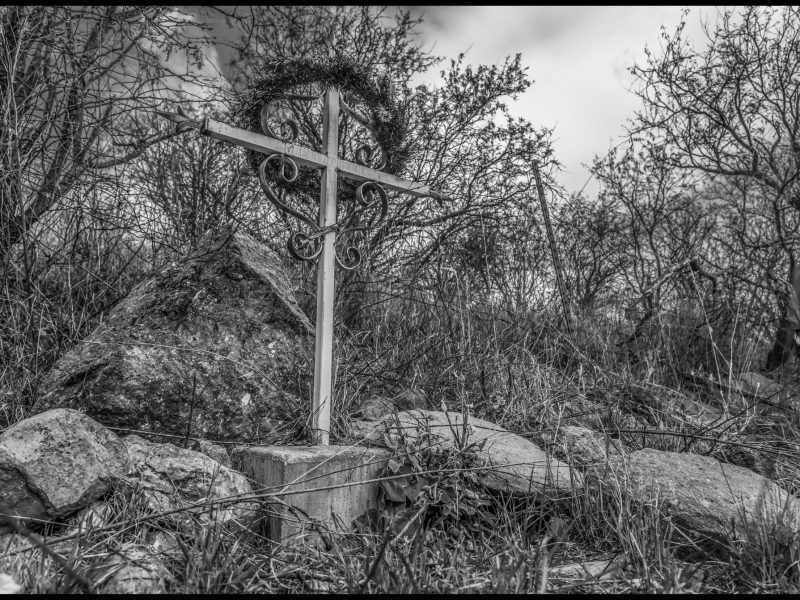
The Sotos and the Jimenezes must have been among the last families living in Harshaw. When the tiny Arizona mining town was incorporated into the Coronado National Forest in 1953, there were still over 70 residents. Because they never owned the land beneath their homes, the Forest Service called them squatters. In the language of the time, the service tried to “relocate” them, and by 1960, the census reported that there was no one left. Nevertheless, the expulsion wasn’t entirely successful; in the 1970s, seven people were still surviving in homes among the abandoned buildings.
When I met Samuel Jiménez last winter, he was setting up tents and a stove with his two children on a flat by Harshaw Creek. Although the water ran clear among the reeds and willows, it was still dangerous to drink. Zinc and copper still seep into the water from the long-closed Endless Chain Mine, which sits at the creek’s headwaters.
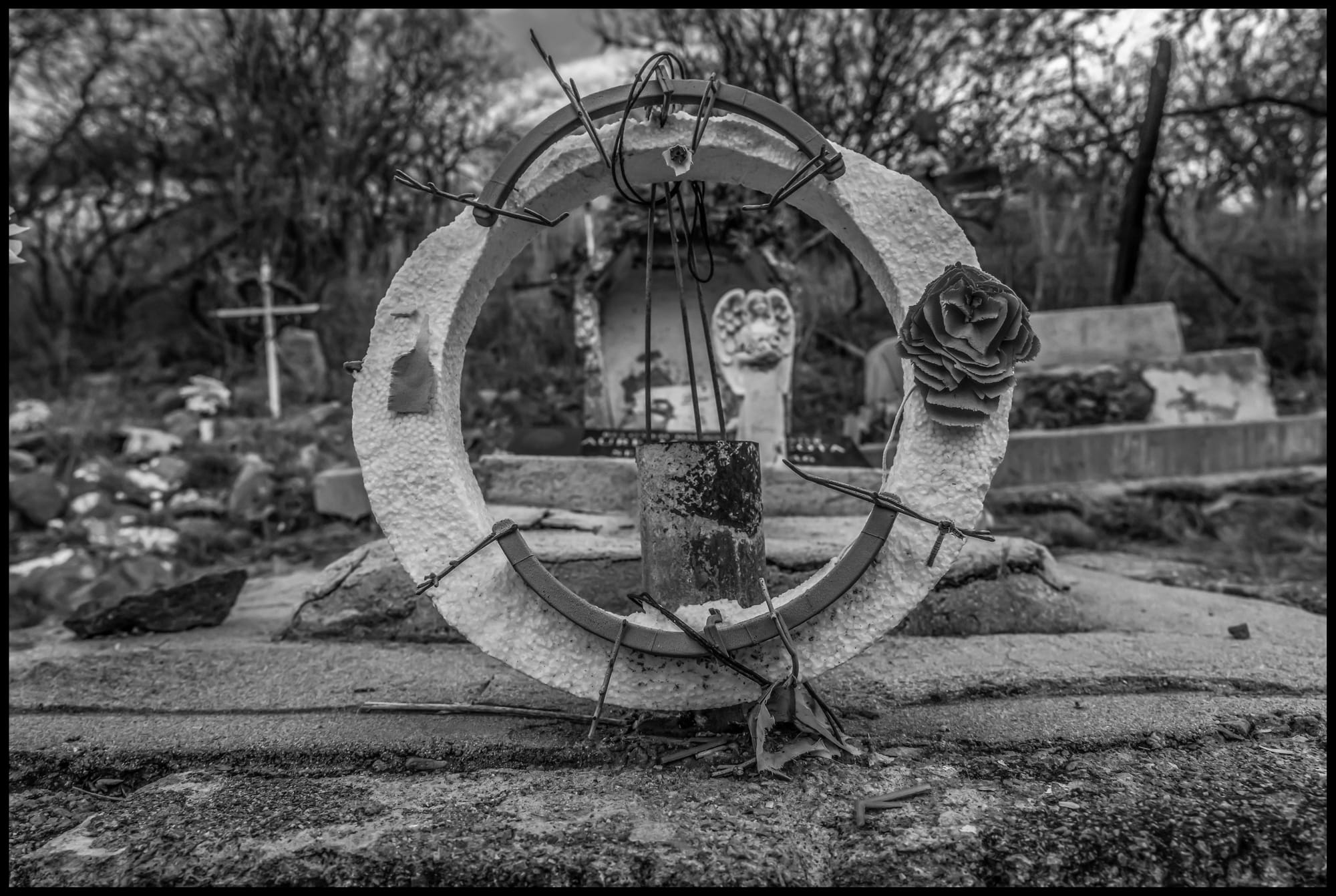
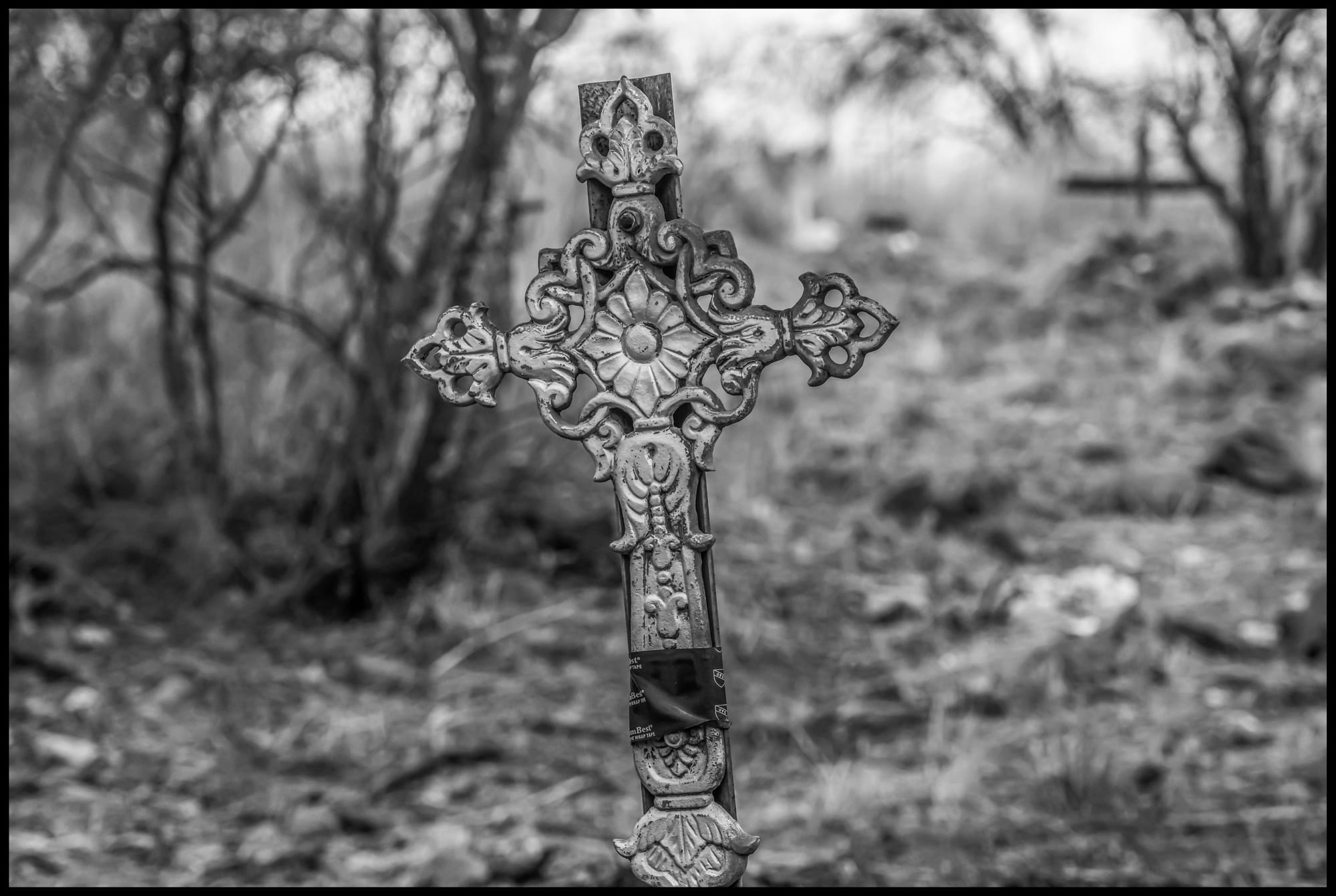
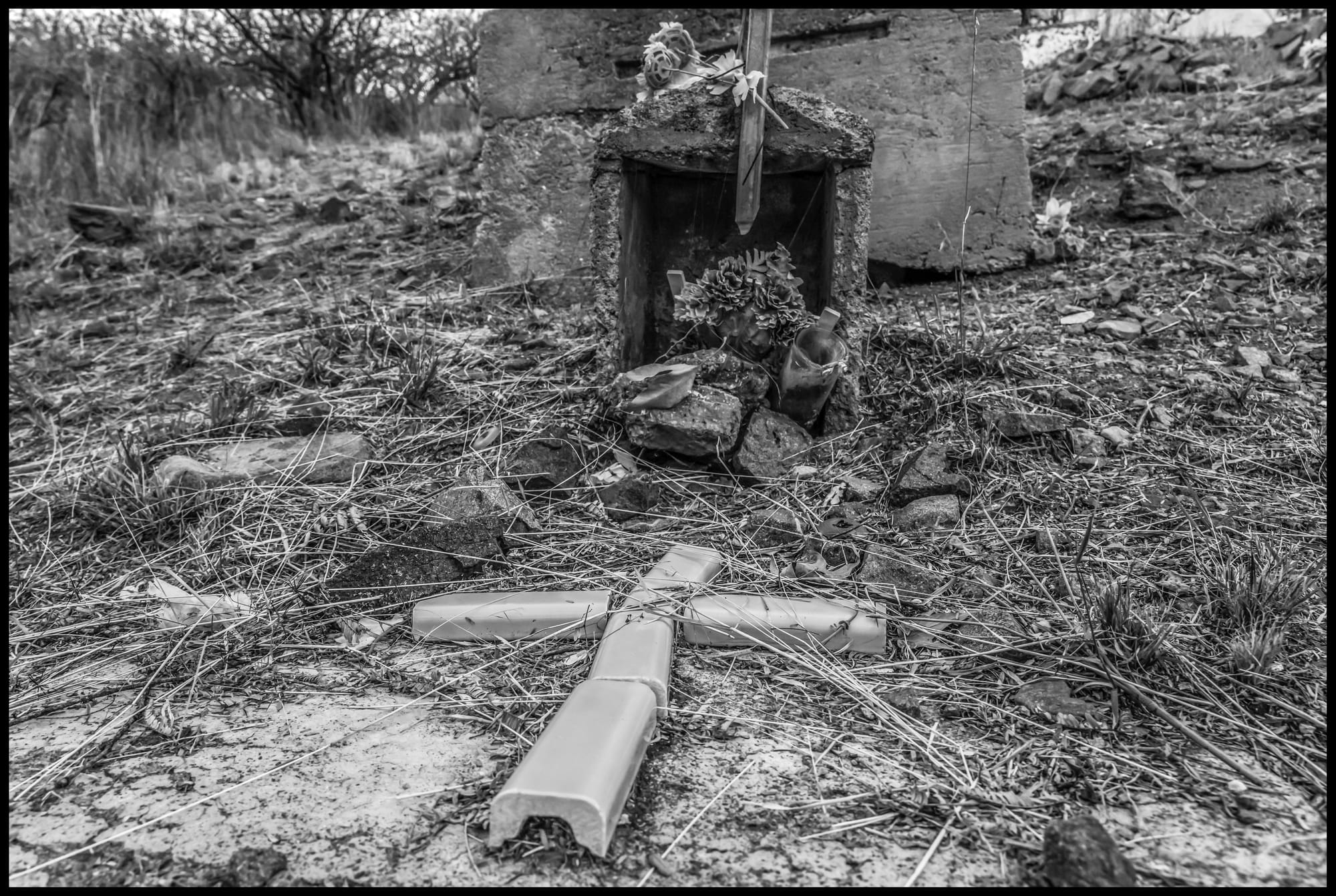
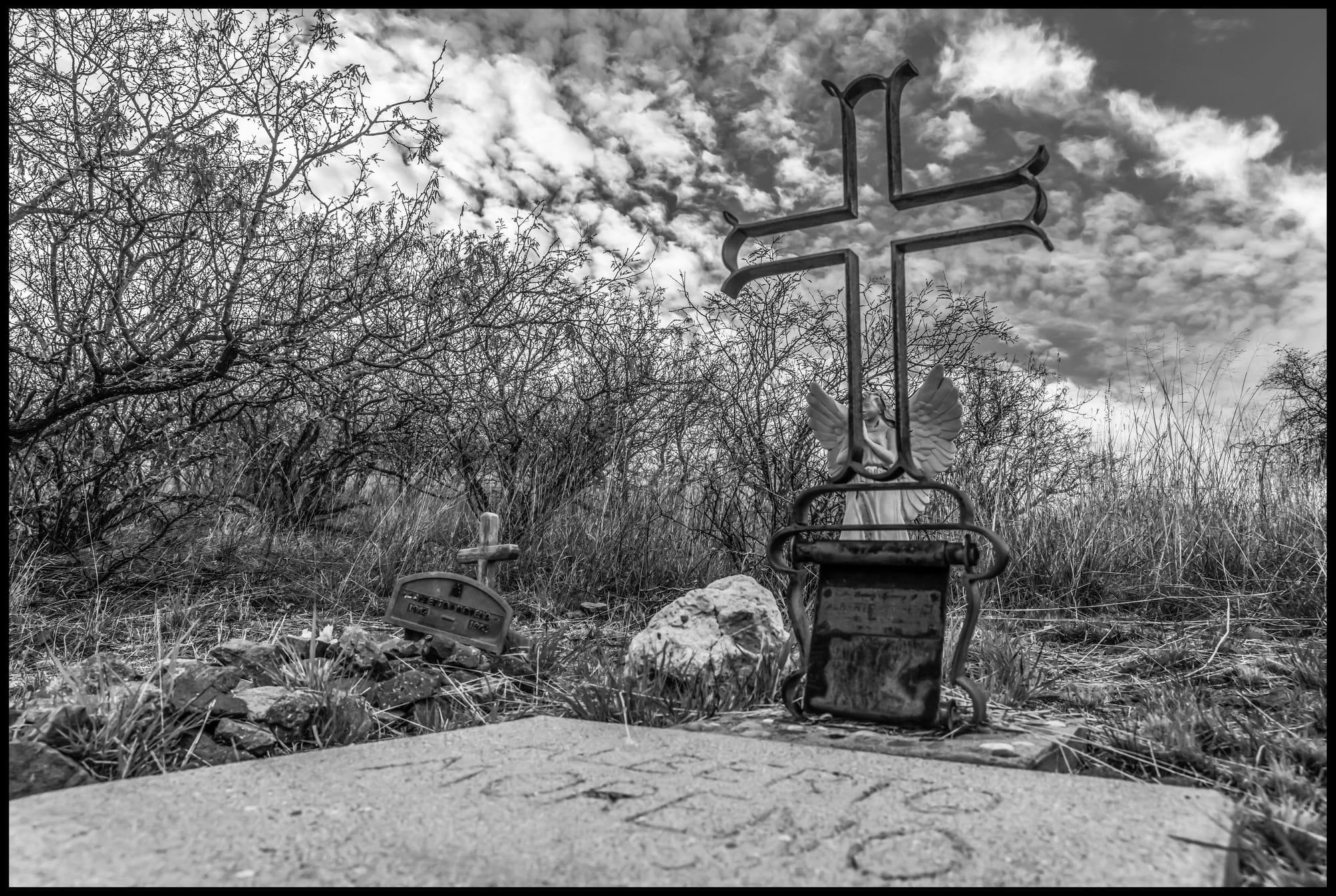
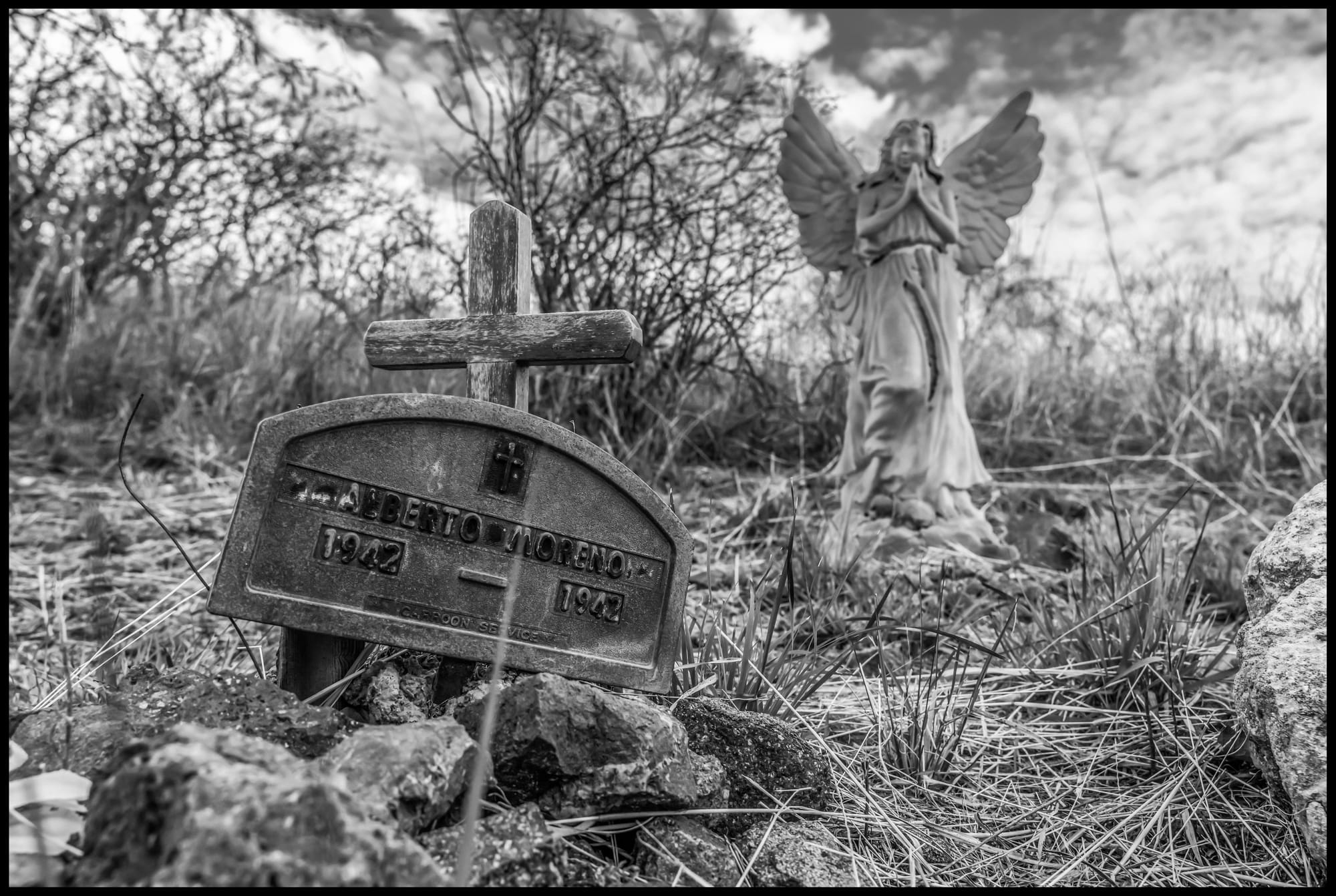
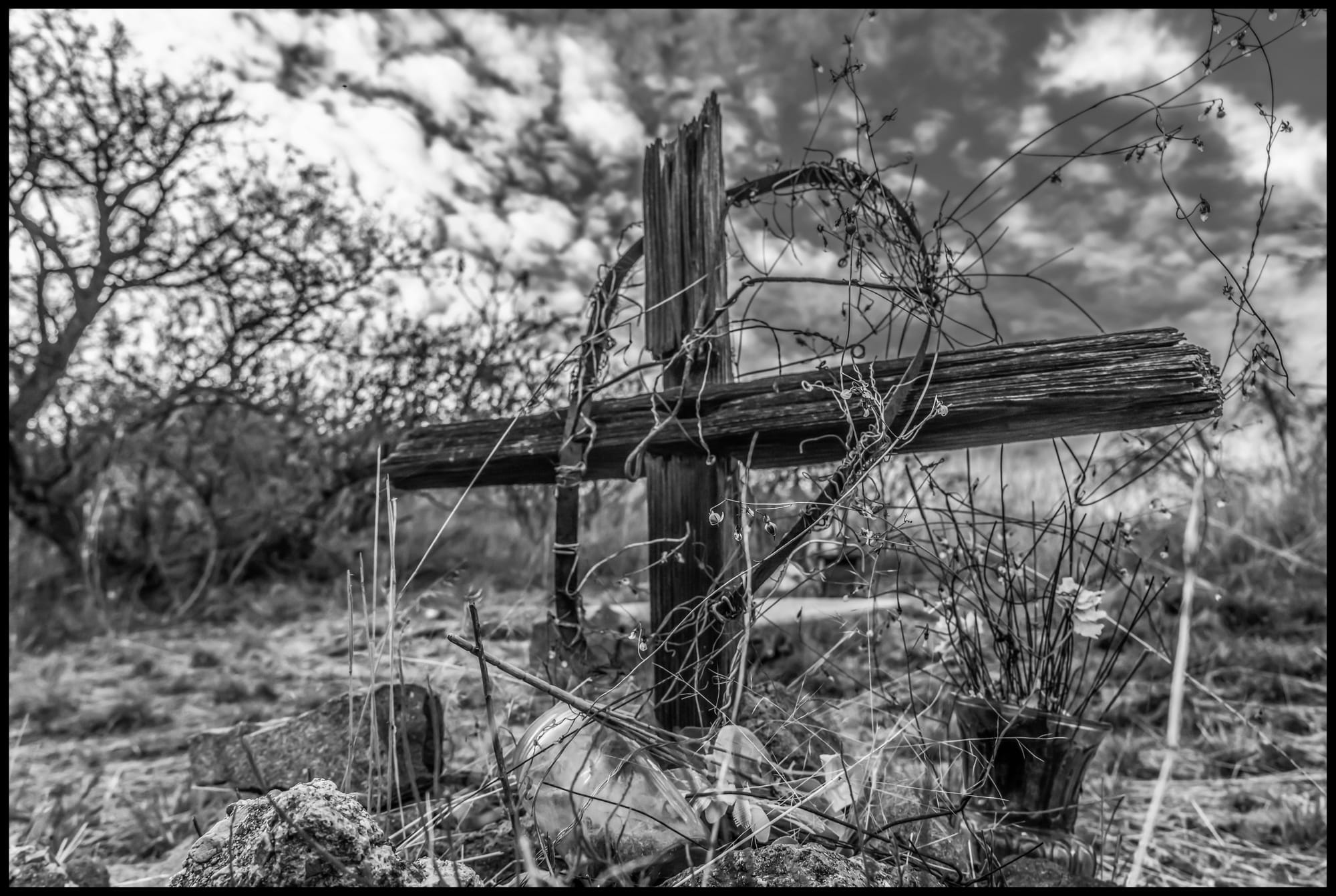
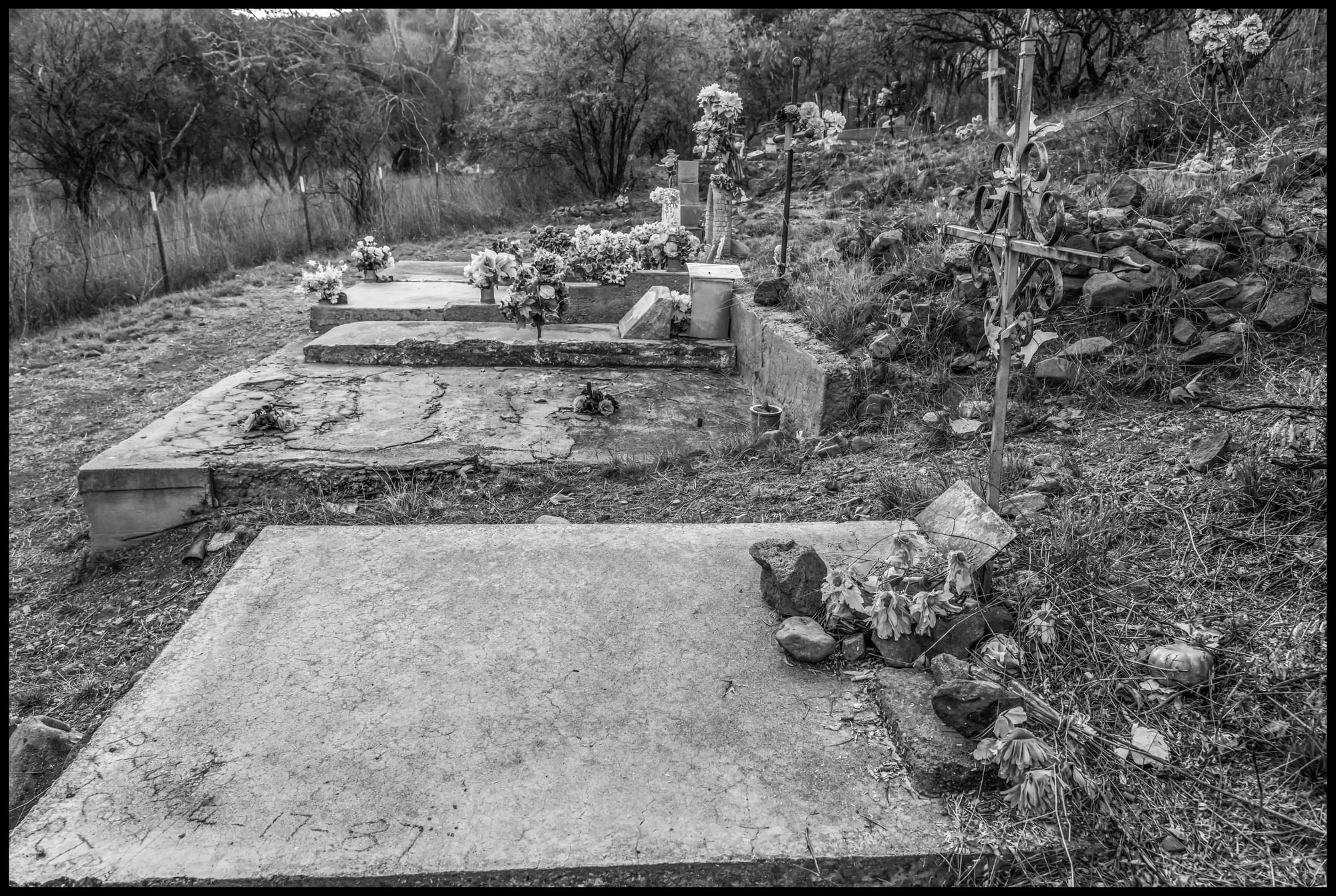
Jiménez looked forward to spending a few days wandering among the graves in the small cemetery on the hillside above. All the gravestones bear Spanish names. One of them is engraved with the name of Teresa de Acevedo, who was born May 18, 1877, and died February 14, 1941. “Recuerdo de hijos,” it says—a memorial from her children. Two sheet metal markers memorialize those interred with punctured holes that spell out their names: “Angel Robles nació 1878 falleció April 1930.” The death date of Manuel Robledo, born April 17, 1941, is obscured by a blue plastic wreath.
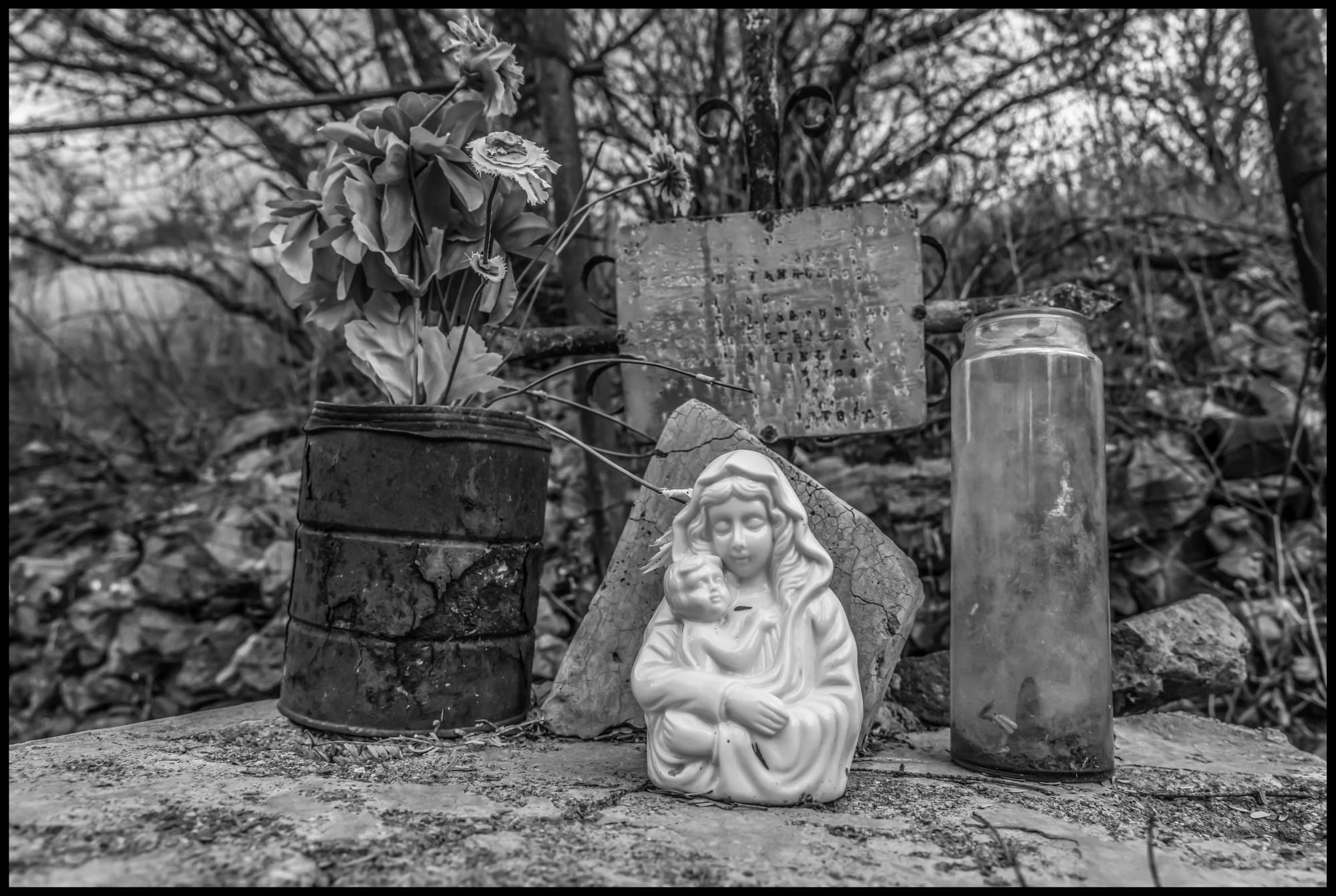
Nearby, the arms of welded iron crosses intersect, each adorned with four fanciful curlicues. The names on the metal plates have long since worn away. A metal mesh screen hangs on two iron poles between a pair of graves, adorned with sheet metal beaten into the shapes of leaves, flowers, a butterfly, and a tree. Ghostly figures appear in a faded photograph curled from sun and rain. There is no name—just two jars of dried plants, sealed with lids almost rusted through.
The people buried here were all families of miners—some were Mexicans who came when the mines opened, while others were born on this side of the border to Mexican families. The hills are dotted with mines, many of which also have Spanish names.
The largest was the Hermosa, whose miners wrested 68 tons of silver ore a day in 1880, working through five tunnels burrowing into the mountain above the town. Other mines included the Alta and the Salvador. Investors back east gave their mines English names like the American and the Hardshell. Both white and Mexican miners worked in the shafts, but for decades their wages were unequal. Mexican miners got the “Mexican wage”—much lower than that of their white coworkers.
Harshaw is only 15 miles north of the Mexican border, and the system of wage disparity was in place on both sides. It led to an uprising at the huge Cananea copper mine, just south of the line and not far from Harshaw. There, in 1906, miners fought the first battle of the Mexican Revolution against its U.S. owner, Colonel William Green, who brought in a contingent of Arizona Rangers to put the workers down. Over the years since, miners have repeatedly struck the Cananea, still one of the world’s largest copper mines. The last strike lasted 18 years and ended only last year.
Labor conflict has been part of the history of miners in southern Arizona from the beginning. In 1917, at the Bisbee mine, 75 miles from Harshaw, the Phelps Dodge Corporation kidnapped 1,300 strikers with a force of Arizona deputies. The miners were loaded into railroad cars and abandoned in the desert 200 miles away.
Alfredo Figueroa, who today lives in Blythe, just across the Colorado River from Arizona, recalls that his grandfather was a striker in Cananea and later his father in Bisbee. “He used to tell us that your biggest enemy was your boss,” Figueroa said. “When he saw any injustices, he would intervene and protest. My father died of silicosis, his lungs full of clots. Blood would come out when he spat. The average life of a miner is not that long. He never wanted us to work in the big mines. We were gambusinos, small mine operators.
“Mining gave us a lot of independence. But the workers who worked for the big mines were not this way. The company owned all the houses and stores. The people were just like property of the mine too. Still, they paid a lot better than working in the fields. On the farms, they were domestic slaves. There were 5,000 braceros in Blythe, and the contractor would charge them for everything. When they got their check, it was zero, zero, zero, zero. A miner always had a damn good shoe and a damn good hat.
“Joaquin Murrieta was a miner and the grandfather of our Chicano movement. In the early 1900s, my grandfathers were thrown in jail in Arizona because they sang the corrido of Joaquin Murrieta. The song was outlawed in California and Arizona, even on the radio. Murrieta didn’t succeed in achieving his ultimate goal, but he succeeded in organizing his people to fight for justice, and that’s what we wanted in the ’60s. We were fighting not to go into that damn army and to Vietnam.”
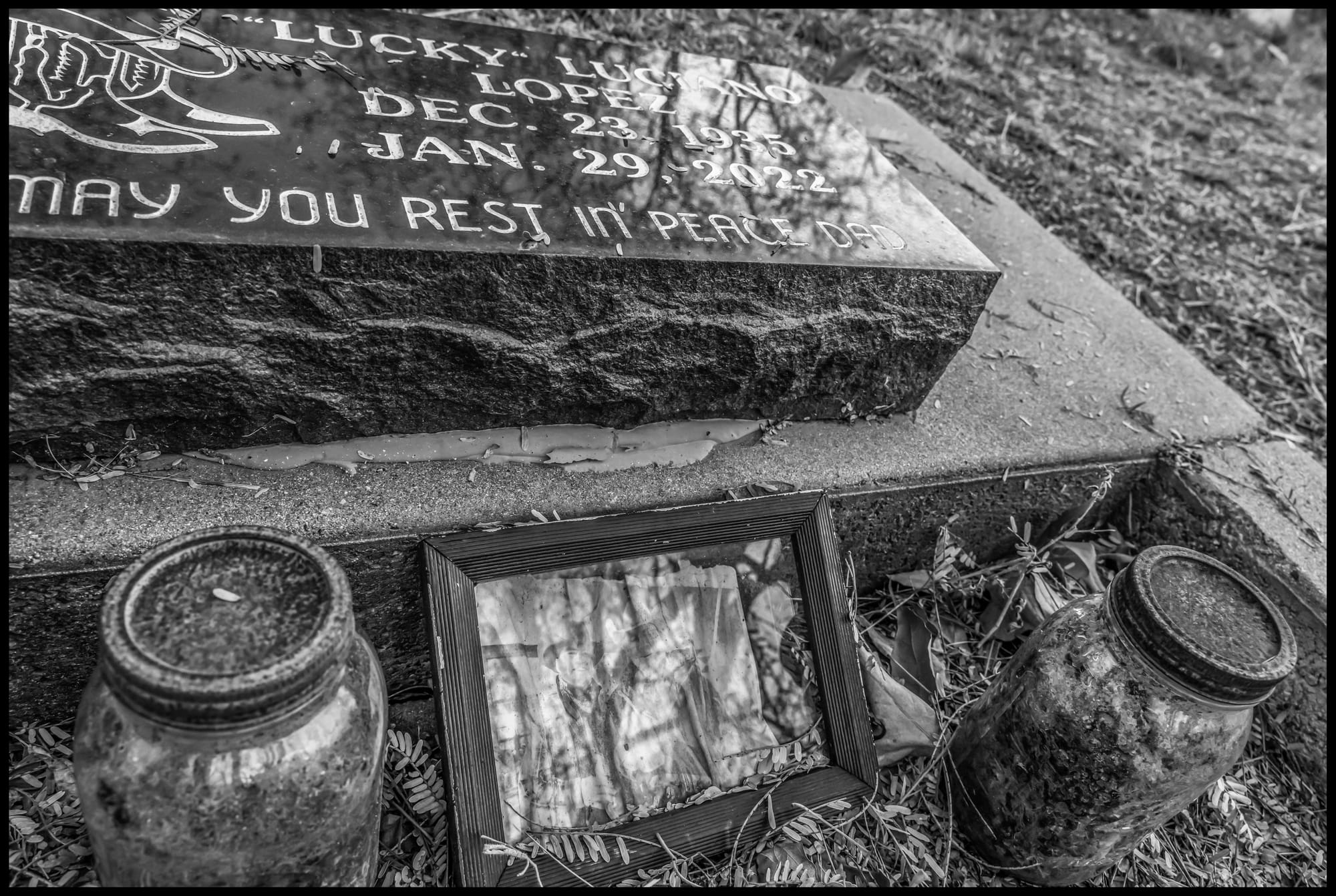
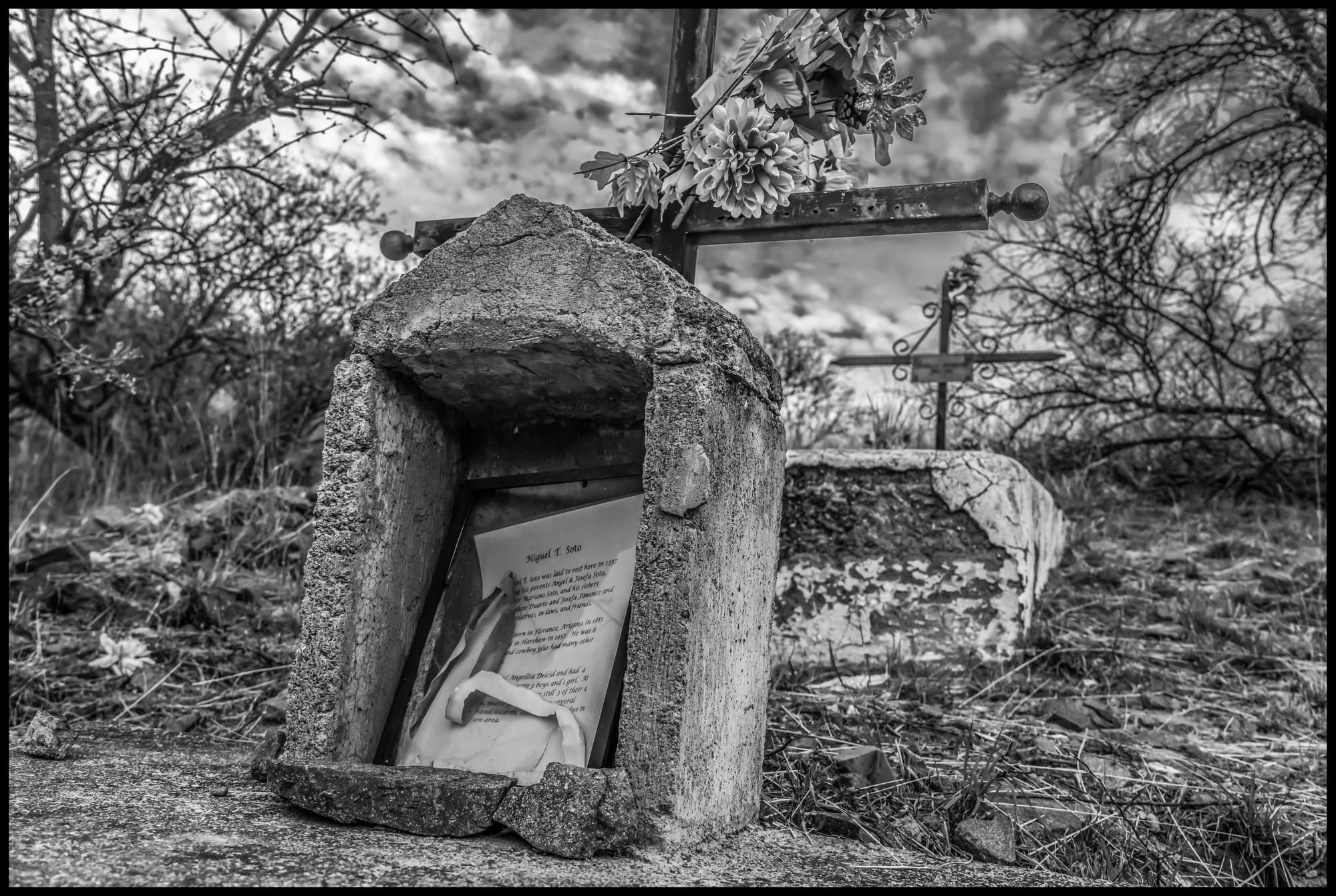
In Harshaw, the gritty memories of the past are sometimes written, framed, and incorporated into the gravestones themselves. In one, Ángel Soto’s descendants recall his murder in 1890 by thieves who tried to rob his cow near the Morning Glory Mine. “It wasn’t until late February 1900 that Ángel’s body was found by a woodcutter,” Figueroa said. “Having been covered by snow, the body was well preserved. This allowed the family to give him a Christian burial.” He was buried next to his wife, Josefa, who bore eight children, four of whom are also buried there.
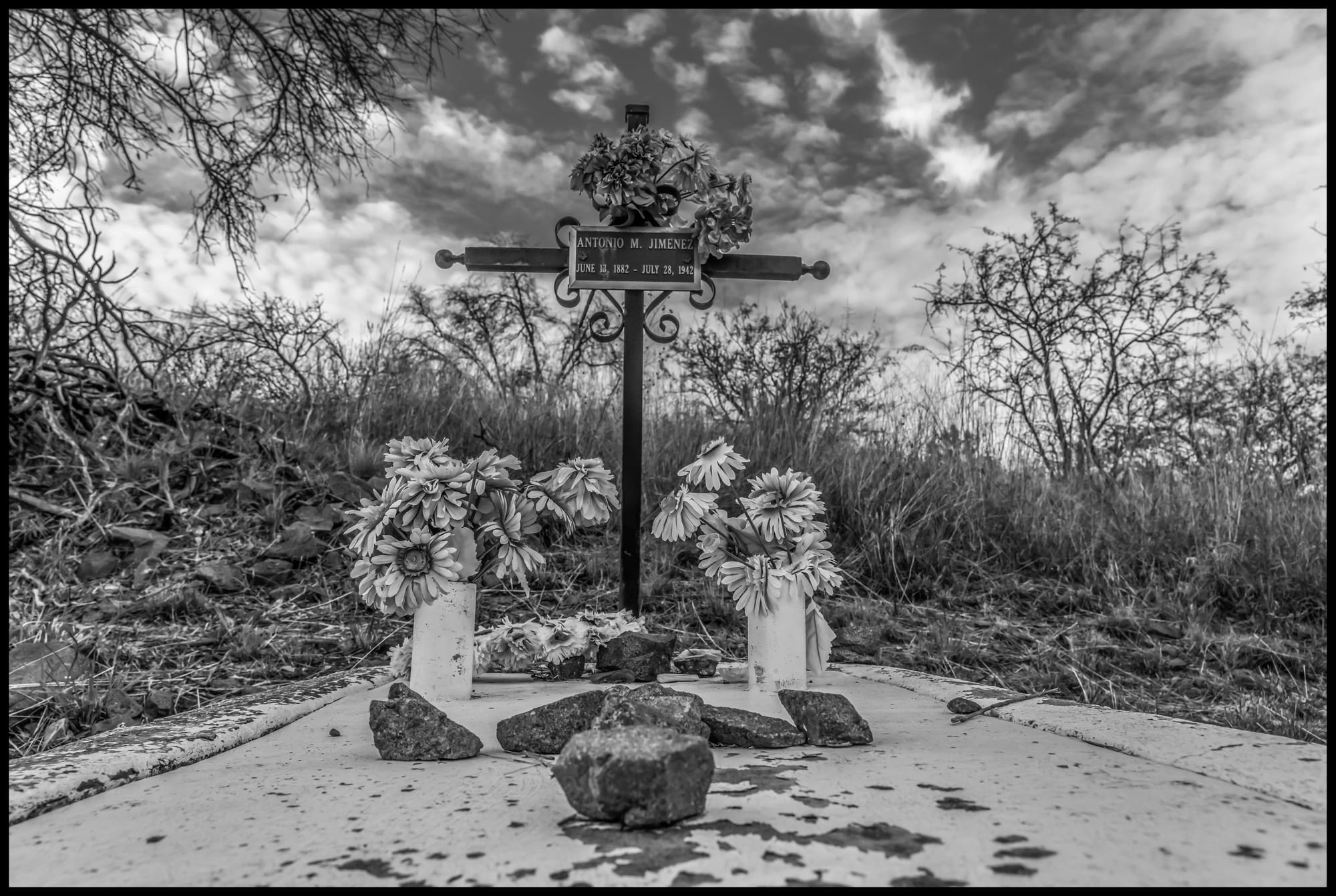
Their son, Miguel T. Soto, was born in Florence, Arizona, in 1883, and he died in Harshaw in 1957. “He was a miner and cowboy, plus had many other jobs,” Figueroa said. “[He] was laid to rest here in 1957 near his parents, Ángel and Josefa Soto, his brother Mariano Soto, his sisters Guadalupe Duarte and Josefa Jiménez, and other relatives, in-laws, and friends.”
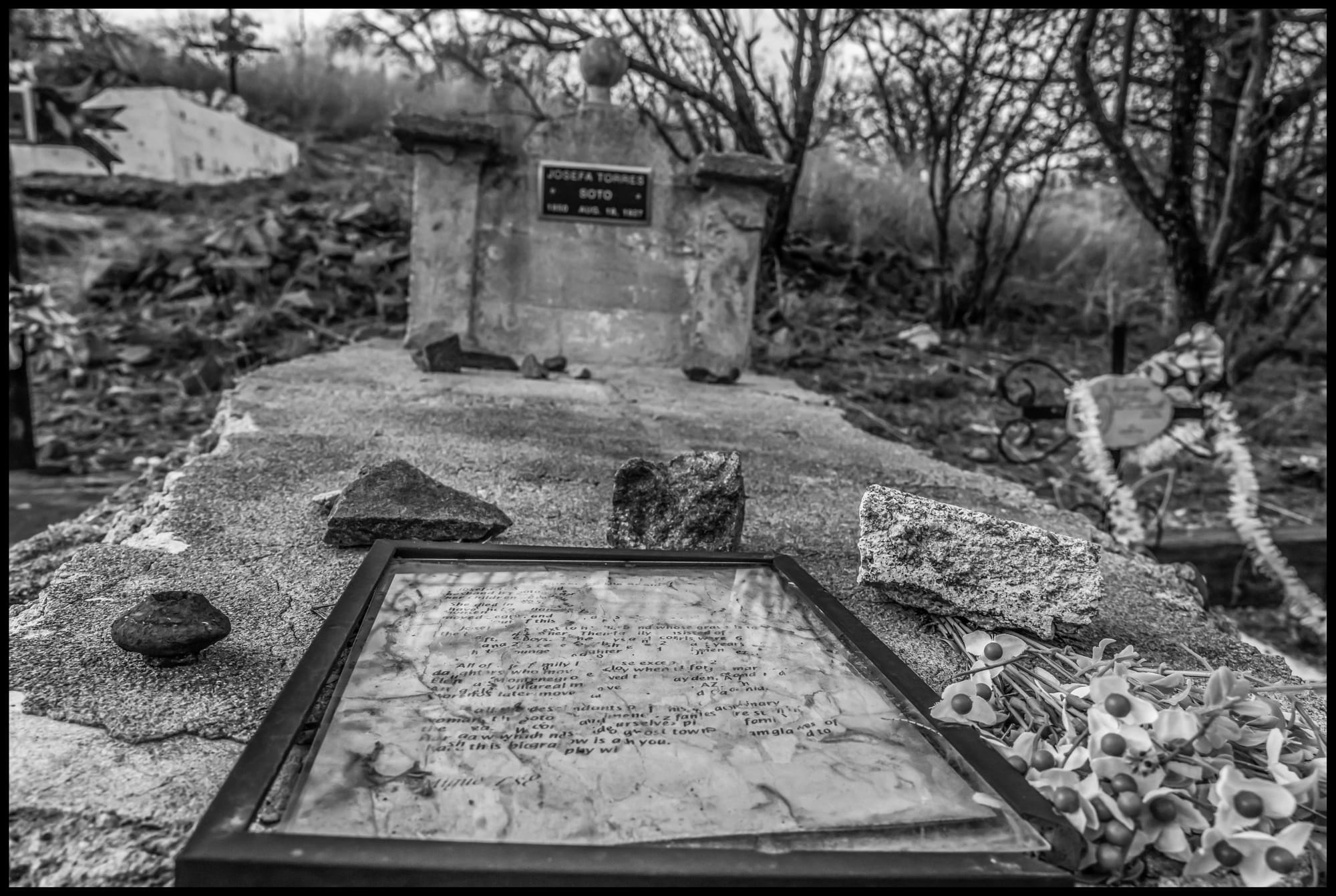
Buried next to him is Angelita D. Soto, born at the turn of the century near Tubac, who died in 1923. She married Miguel Soto at the age of 16 and had four children and 32 grandchildren. Her family inscribed on her grave, “Rest in peace mama and nana. Some of us don’t remember you and some of us never knew you. We all love you.”
You can find more of David Bacon’s photography and writing here.
Related Articles
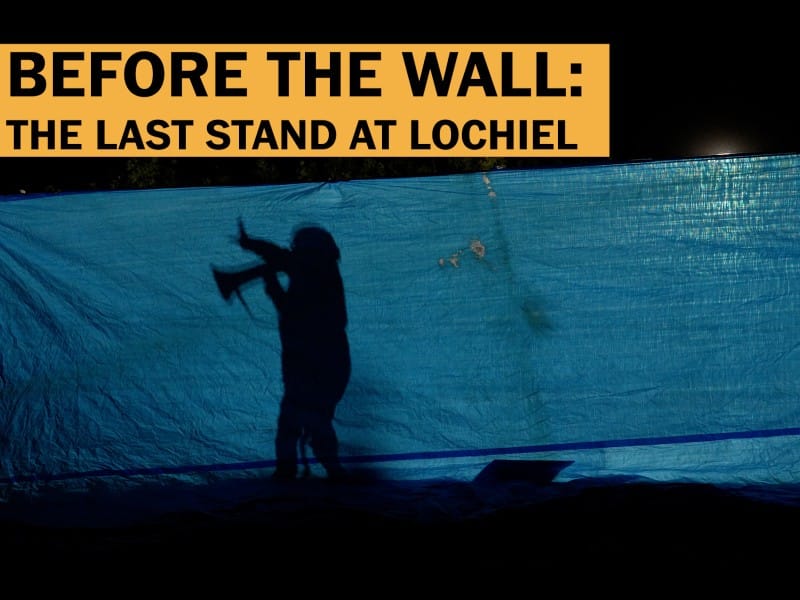
Before the Wall: The Last Stand at Lochiel
As a double border wall rises through Lochiel, protesters gather to defend the ancient cottonwoods and the San Rafael Valley.
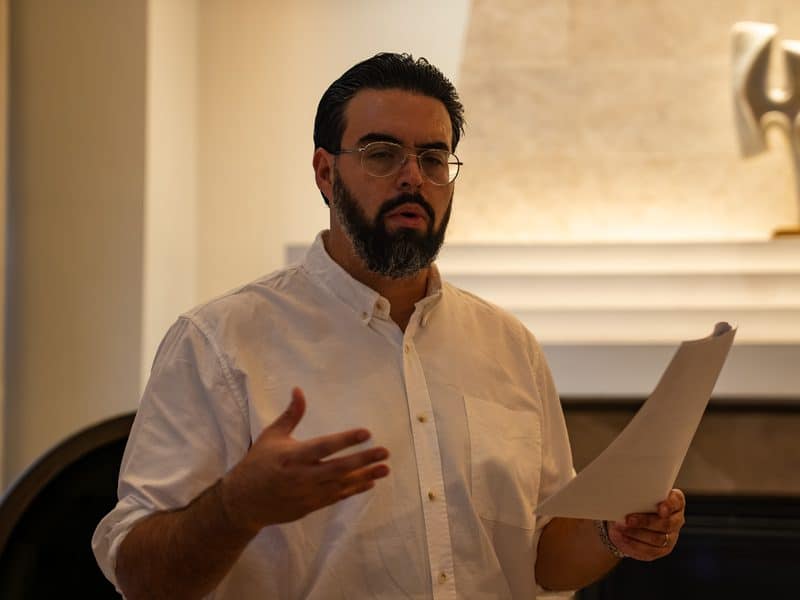
What Laredo Can Learn From El Paso and Tucson about Water Conservation: A Q&A with Martin Castro
“We believe Laredo is setting the stage to potentially become the next pioneer in resilient water management for South Texas,” says Castro.
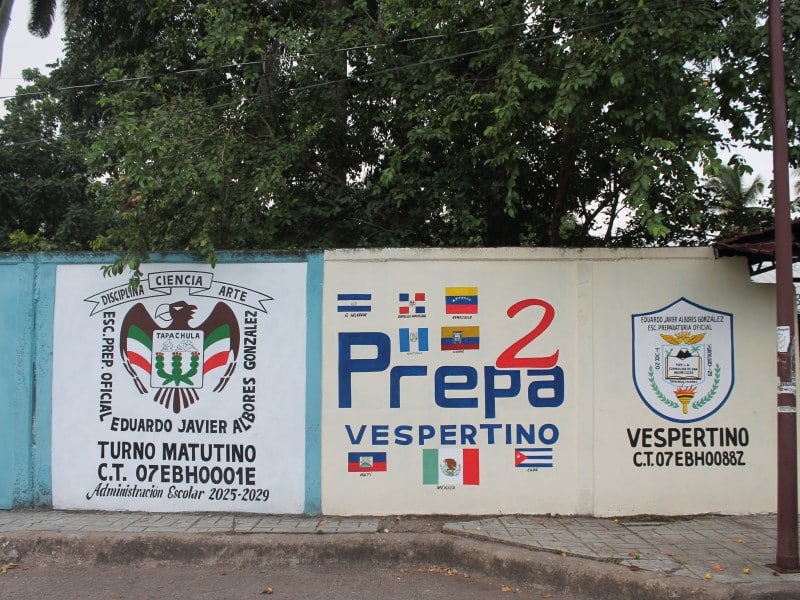
School of Welcome: Doors Open for Immigrant Students on Mexico’s Southern Border
Prepa 2 in Tapachula, Chiapas, has become a model of inclusive education by helping immigrant students overcome barriers, find community, and pursue their futures with dedicated educators.