
Arizona Governor’s Shipping Container Wall Grinds to a Halt as Protesters Settle in for Christmas
Since protests began in earnest on November 29, a multi-generational group of Arizonans have managed to halt construction on the governor’s border wall made of double-stacked shipping containers.
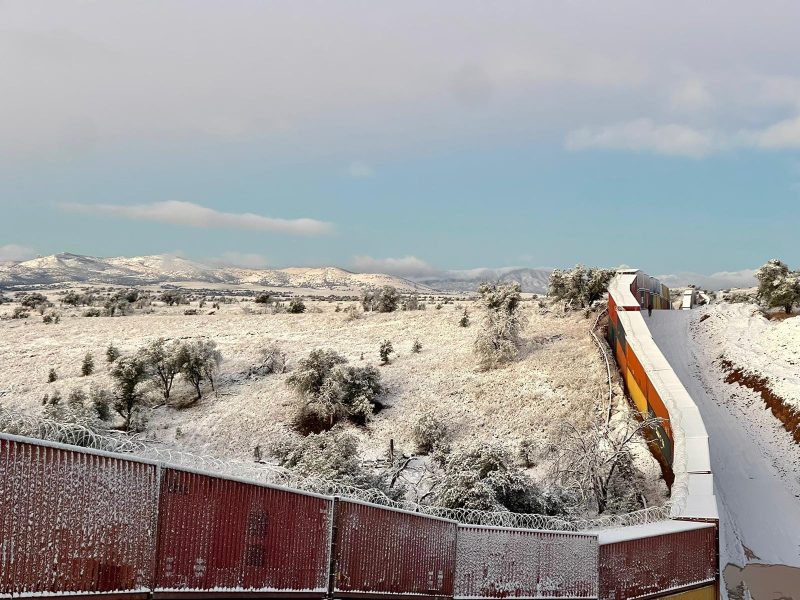
Even as snow and temperatures fell Monday evening, protesters didn’t budge at Arizona governor Doug Ducey’s shipping container wall site at the border, south of Sierra Vista.
Citing an “invasion” at the border, Ducey issued an executive order in August to fill in gaps of a federal border wall in Yuma with double-stacked shipping containers and another 10-miles through the Coronado National Forest in Cochise County. Construction began in Cochise in late October.
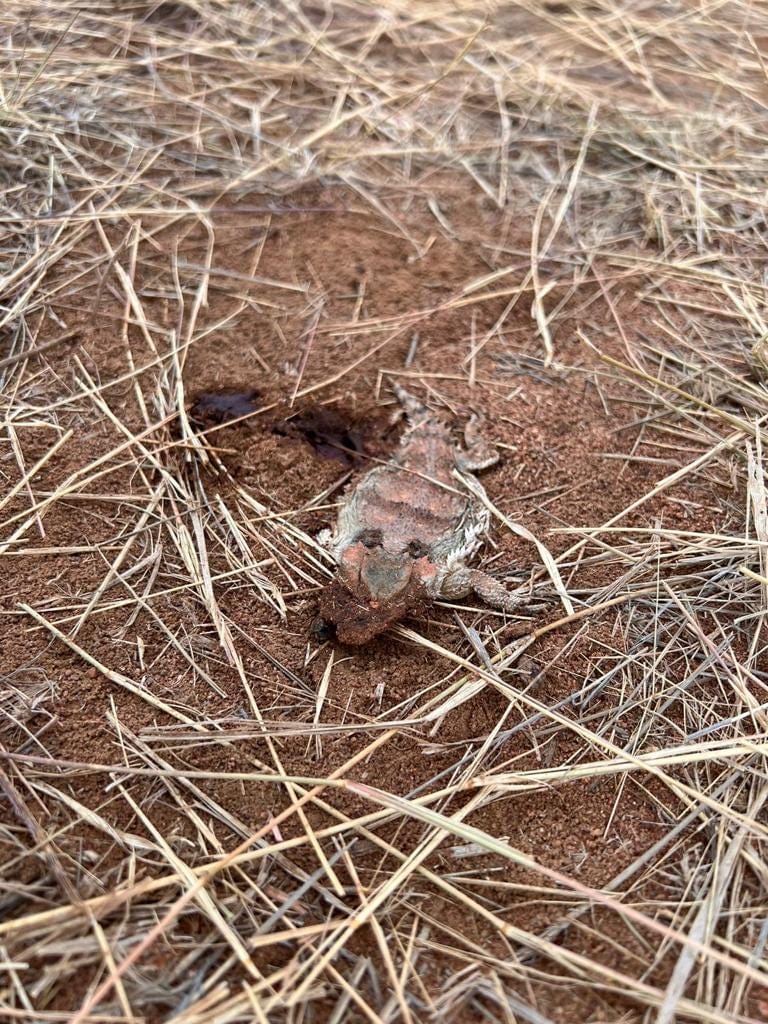
Federal officials have deemed the construction illegal. Environmentalists and wildlife conservationists also say the construction violates the Endangered Species Act and is devastating for wildlife in an important migratory corridor.
In response to the federal order to remove the containers, Ducey filed a lawsuit against the federal government, arguing that the federal land, including the Roosevelt Reservation, were under the jurisdiction of Arizona. Department of Justice attorneys filed a strongly worded response and asked that Ducey’s lawsuit be dismissed. The nonprofit Center for Biological Diversity has also joined the federal government as defendants, citing the state’s violation of the Endangered Species Act and other environmental damages, caused by the construction.
In the meantime, however, construction has continued on Ducey’s double-decker boxcar wall.
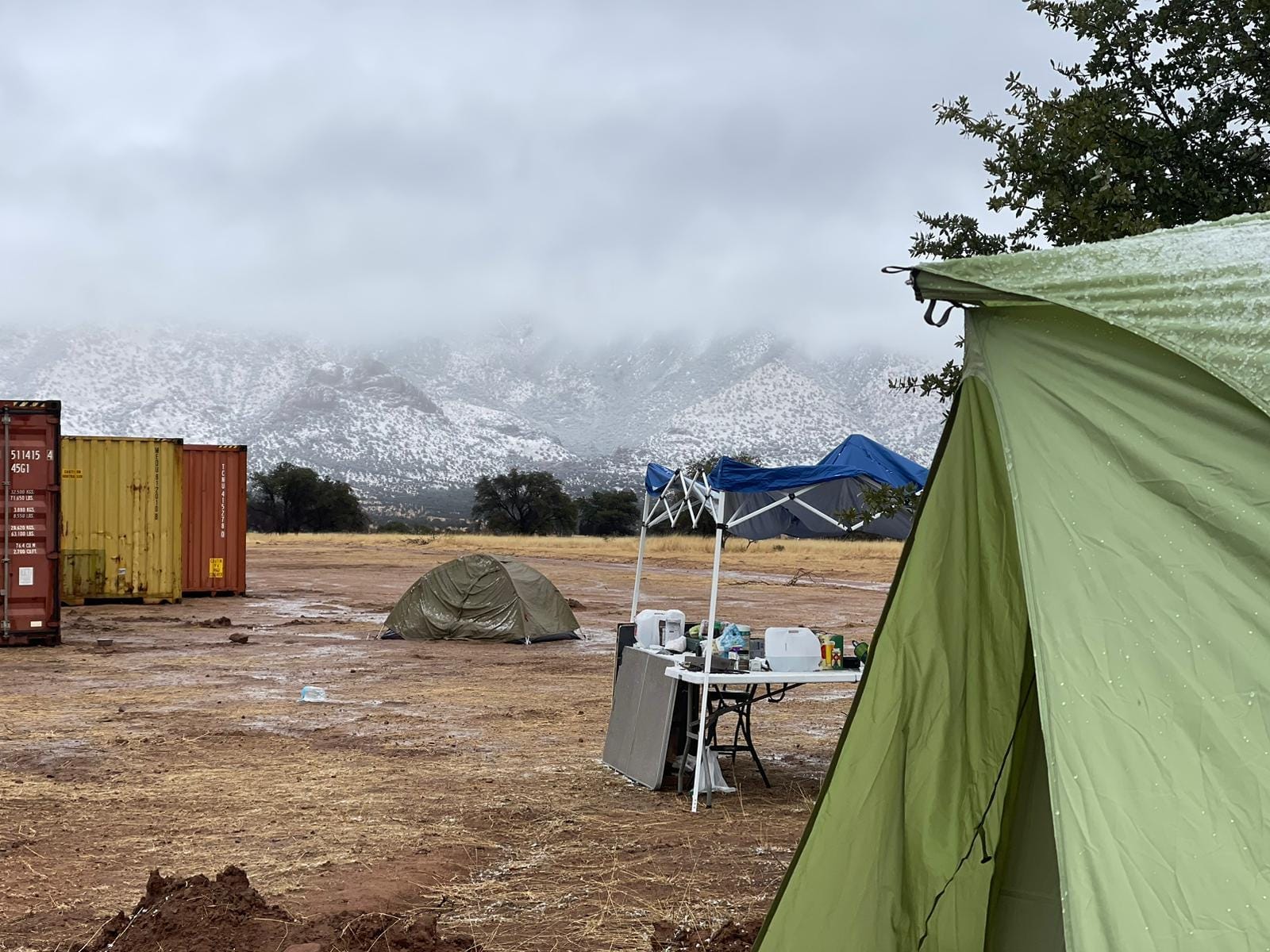
But not anymore, said Russ McSpadden, who spent last night camping in the snow at the construction site, which they call “Camp Ocelot” after one of the endangered species that relies on the migratory corridor for survival. “Not a single container has been placed in eight days,” he said.
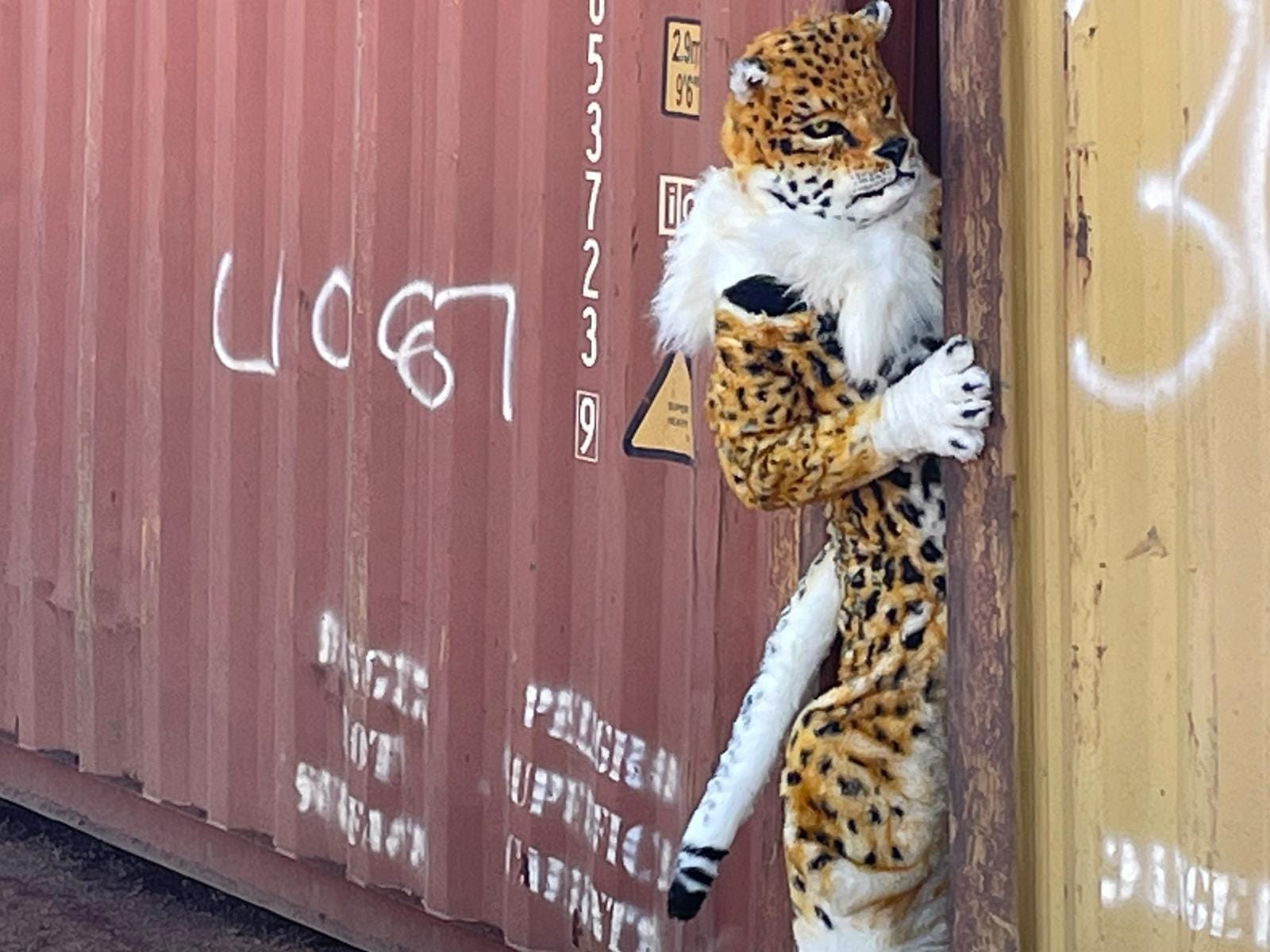
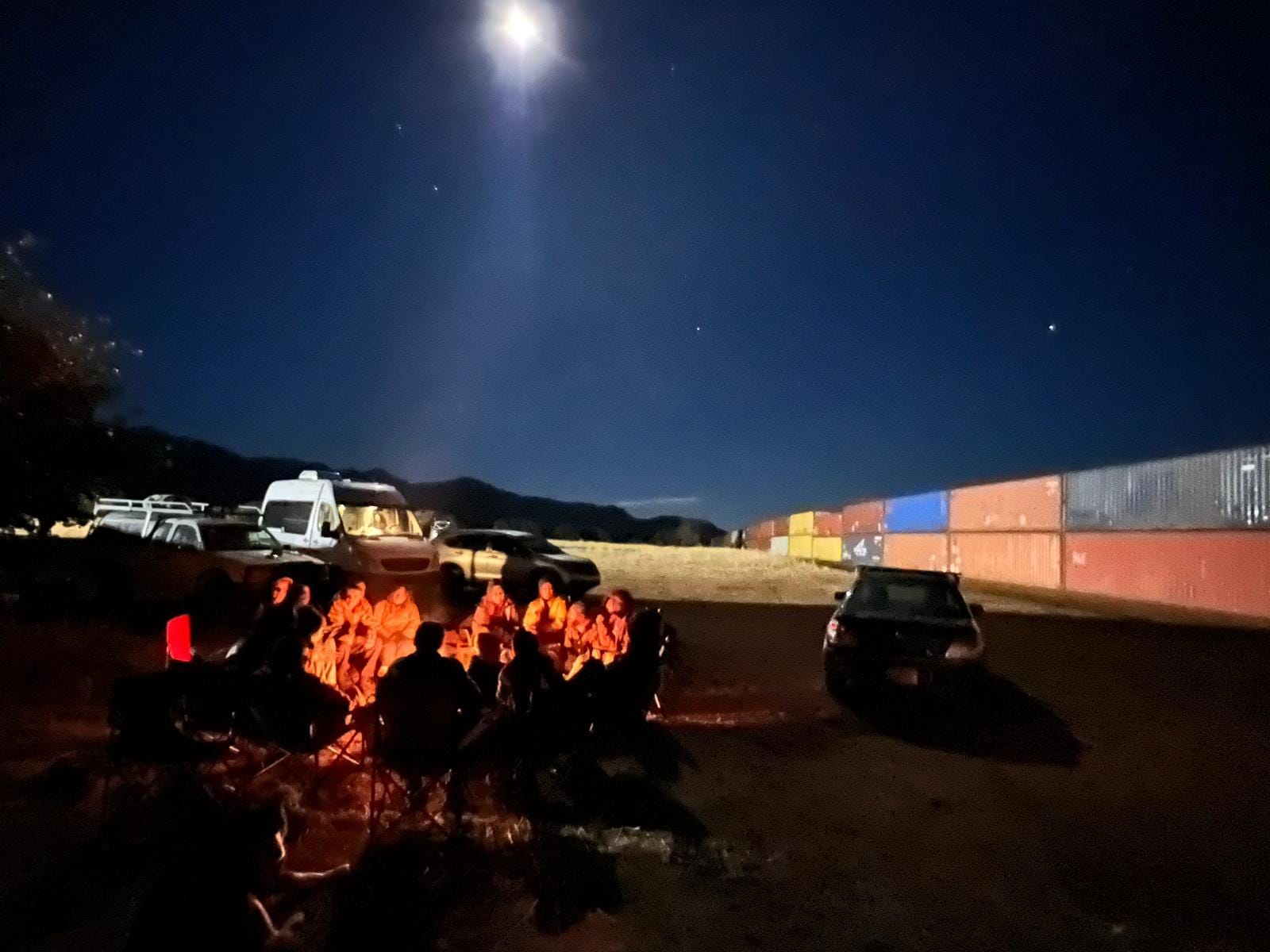
McSpadden, who is the southwest conservation advocate for the Center for Biological Diversity said he and a small group of six people are hunkered down with their dogs and expect more people on the way with supplies, tents, and warm sleeping bags. “The frozen rain was really pretty rough,” he said. “But we have a good set up out here.”
People have donated hand warmers, sleeping bags and other warm items, he said. And they are committed to camping out and settling in to make sure the three-and-a-half-mile wall doesn’t extend any further.
Andy Kayner, a retired mechanical engineer who lives not far from the construction, said they’ve even put up a Christmas tree on one of the containers. “Just to let the workers know that we’re not going anywhere,” he said.
Kayner was at home when it started to snow, but he has been camping on and off at the construction site since the protests began in November. He said he was compelled to come after he witnessed the destruction firsthand. “I’ve been in love with this area since I was in high school. The vista is probably one of the most spectacular in the whole state,” he said.
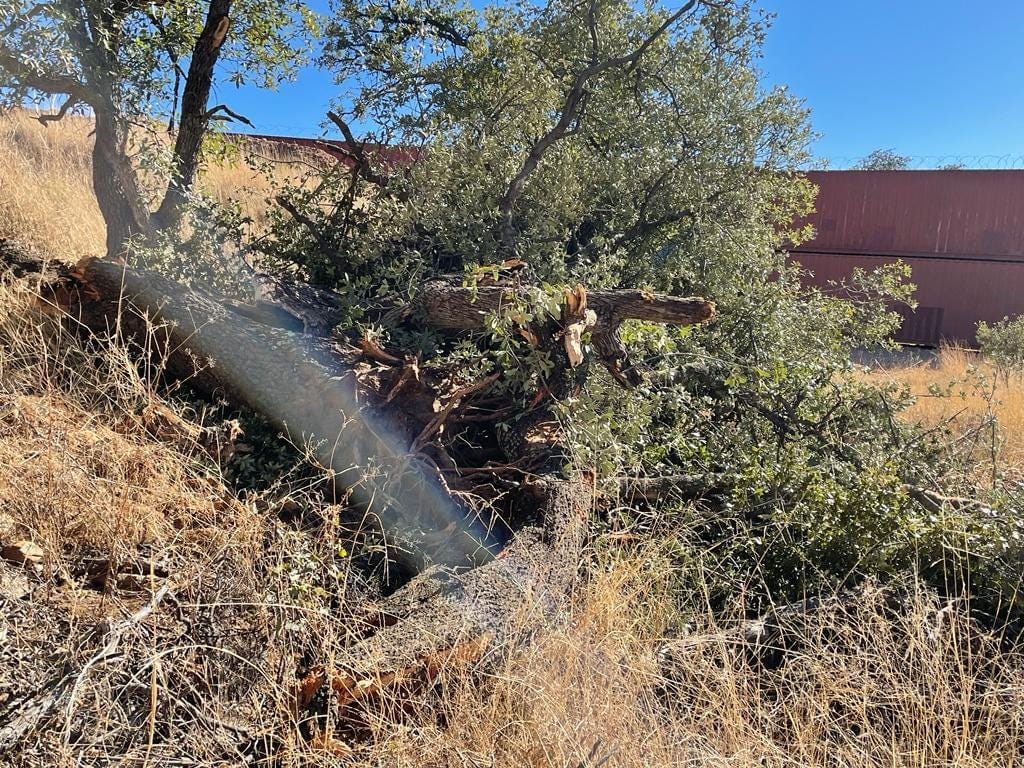
In October neighbors told him that construction had started at the national forest. So, Kayner went down to check it out himself. What he saw was grassland being razed and old oaks being bulldozed as massive trucks, trailing clouds of dust, hauled in shipping containers and arranged them on the land like Legos. “I was shocked by the savage brutality of what was happening to the landscape,” he said. “I started talking with neighbors and we organized a protest.”
That first day, on November 29, a handful of people showed up. “We thought we’ll hold up some signs and chant slogans,” he said. “But then the construction crews stopped. We were able to shut them down.”
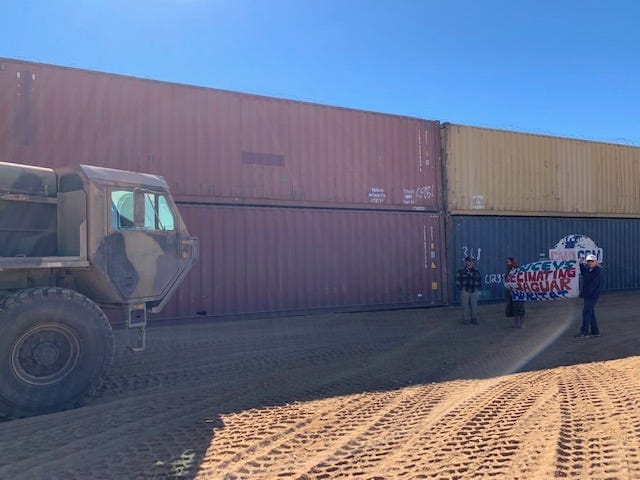
Encouraged, they continued. At first it was enough to protest during the day, he said, but then work crews showed up at 11 p.m. and worked until daylight. When Kayner and others returned the next morning, several dozen containers had been installed. “We knew then we had to be there 24/7,” Kayner said. “And they haven’t laid down a container since.”
The small group of neighbors has grown into dozens of people protesting on regular rotation around the clock at the construction site. “We’ve had about 20 to 25 people camping out at night,” Kayner said. “And all kinds of people are chiming in and saying, ‘Hey, I just found out about this, and I want to help.’”
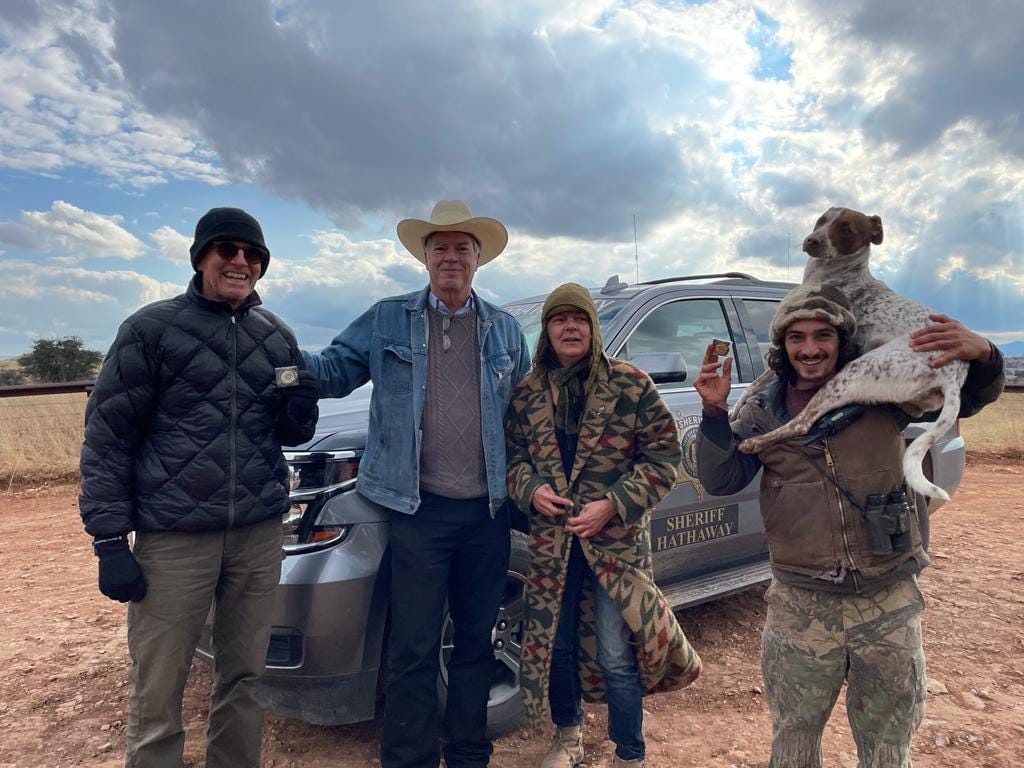
Last week, the protestors even received a visit from Sheriff David Hathaway, from neighboring Santa Cruz County, who offered words of support. In a recent interview with The Intercept, Hathaway said the heavy equipment should be seized for “illegal dumping on federal land.”
Hathaway also expressed frustration that federal officers with the Forest Service have not shut down the illegal construction. “They have the ability to seize vehicles that are being involved in illegal activity, illegal hunting, illegal whatever, and yet, nobody’s doing that,” he said.
Sheriff Mark Dannels, who presides over Cochise County where the container wall is being built supports the construction and told Fox News that it’s “making his county safer.”
Parker Deighan, who lives in Tucson, said she was motivated to drive down and participate after seeing photographs of the environmental destruction and to show solidarity with people crossing borders. “When you look at this shipping container wall up close, you want to laugh,” she said. “They’re trying to place shipping containers on mountainous terrain. It’s just so shoddy and ridiculous looking. But at the same time, the environmental destruction is real.”
Deighan, who camped overnight at the construction site last week, said she met people from different backgrounds and communities. “There are people doing migrant solidarity work and other people who just live locally and care a lot about the environmental destruction of the area.”
Deighan said she plans to return soon even as temperatures plummet and winter settles in. “Everybody’s bringing extra blankets, sleeping bags and meals to share,” she said. “And yeah, it’s starting to get cold, but I’m planning to go back down.”
Incoming governor Katie Hobbs will have her inauguration January 5 and has said she’ll stop the construction. But the protesters are worried that Ducey will finish the 10 miles of container wall before then. They’re intent on running out the clock until Hobbs takes office, which could ultimately save the state of Arizona millions of dollars. Ashbritt, a Florida disaster remediation firm, has an emergency contract with the state worth more than $123 million (to date) to erect shipping container walls. Another disaster response firm D&J Enterprises, Inc. from Alabama is also working at the site, but it’s unclear if the company is a subcontractor of AshBritt or has a separate contract. The company confirmed Monday to The Border Chronicle that it was working at the site but declined to answer any further questions.
It’s only a matter of a time, according to legal expert Dinah Bear, before a federal judge will likely order the state to remove the shipping containers. No doubt the removal and remediation will cost the state millions of dollars more. Ashbritt’s contract with Arizona states that the company is not responsible for removing the shipping containers.
Ary LaVizzo, spent a few nights at Camp Ocelot last week. As the temperature goes down, LaVizzo said, people have rallied to look after one another. “People are bringing tents, canopies, and supplies,” LaVizzo said. “Once you’re down there and you see it,” LaVizzo said of the shipping container wall and the environmental destruction, “it’s hard not to care.”
McSpadden said protestors plan to be there until Hobbs stops the illegal construction through federal public land. “We believe she’ll stop it,” he said. “And we’ll be here until she does.”
Author

Related Articles

Banishing the Elders: How Southern México Has Become Part of the U.S. Deportation Regime
The United States is deporting Cuban seniors by the hundreds to southern México where they have little hope of return.
Introducing the Wall Watch Project and Contractor Database
Explore the companies, contracts, and construction projects reshaping the U.S.–Mexico border—and get ready for a new series of Wall Watch Dispatches.
Before the Wall: The Last Stand at Lochiel
As a double border wall rises through Lochiel, protesters gather to defend the ancient cottonwoods and the San Rafael Valley.