
If President Biden Pledged ‘Not Another Foot’ of Border Wall, Why Is DHS Still Seizing Land?
Rey Anzaldua and his family spent four years fighting off the Trump administration only to have their land in South Texas seized by the Biden administration to build a border wall.
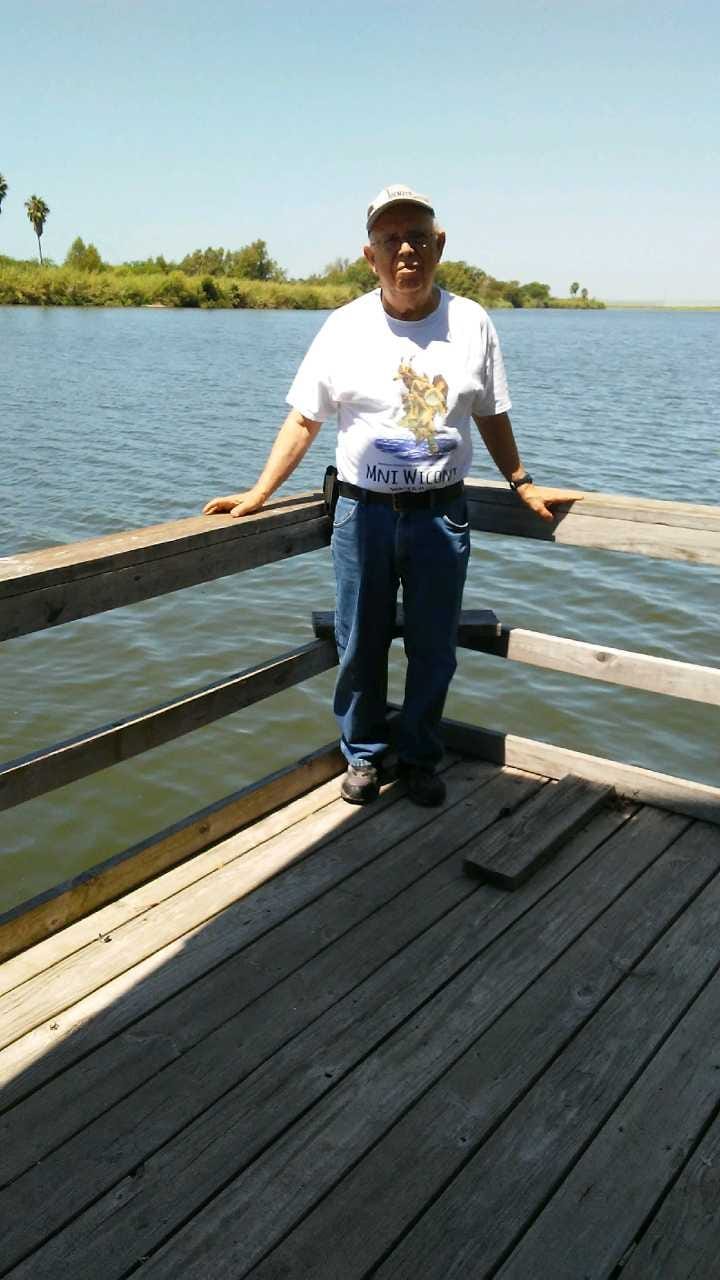
Reynaldo “Rey” Anzaldua Cavazos spent years in federal court fighting the Trump administration’s attempts to take his family’s riverside property in South Texas, near the city of Mission. “Our goal was to delay, delay, delay until Trump left office,” he said. “But now it looks like it didn’t do any good.”
A former U.S. customs inspector and a military veteran, Anzaldua, along with his cousin Jose Alfredo “Fred” Cavazos, are trying to save their family’s farm and several riverside cabins that they rent out. Mesquite and huisache trees shade the old farmhouse and the pens that hold a few head of cattle and other farm animals just north of the Rio Grande. The property, which was bought by his grandmother Eloisa Cavazos in the 1950s, extends nearly a half mile from the earthen levee down to the riverbanks.
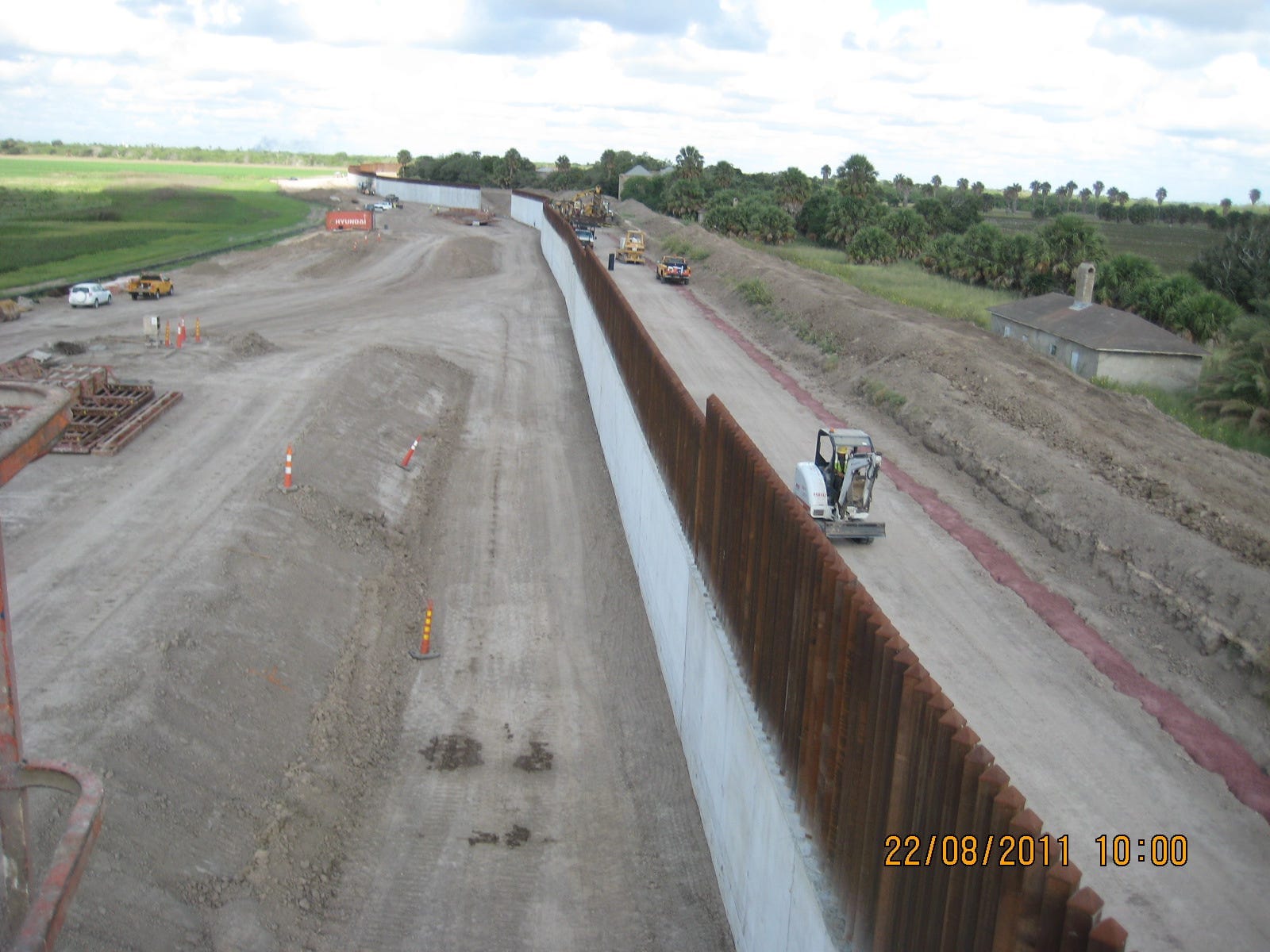
During the Trump administration, up to 30-foot concrete and steel bollard levee walls were built on both sides of the property, but in court the Cavazos were able to keep the government at bay. In April their luck changed, and the Biden administration seized six and a half acres of their property. If the earthen levee, which is at the entrance of their property, is converted into a wall, they will be cut off from the United States. (DHS has said that it cannot promise them a gate.)
Especially frustrating for Anzaldua is that the Biden administration has said repeatedly, most recently on October 8, that it won’t build any more border wall. “The Biden administration comes and says they’re going to cancel all the contracts,” said Anzaldua. “But they’re still moving forward on the land forfeiture with our property. Biden says one thing, then does something else.”
It turns out that stopping wall construction is much more convoluted than you would imagine. In April, the Department of Homeland Security said it would fix breaches in the Rio Grande Valley’s earthen levee created by border wall contractors under Trump. The agency pledged to do so without “expanding the border barrier.” With hurricane season fast approaching, local elected officials had lobbied DHS to fill in the gaps, which it did by the end of May.
A month later, however, DHS announced it would again “close breaches in the Rio Grande Valley levee system … that face threats of serious flooding after the previous administration excavated the flood barrier system to make way for the border wall.”
DHS said the work would include more than 13 miles of levee in the Rio Grande Valley. But much of this levee was not damaged, according to Anzaldua and others. Now, ironically, it’s being turned into border wall. And some of it appears to include Anzaldua’s family farm. (DHS has released no maps showing where the construction will occur. But in 2019, Congress exempted five areas in the Rio Grande Valley from border wall construction: La Lomita Chapel, The National Butterfly Center, Santa Ana National Wildlife Refuge, Bentsen-Rio Grande Valley State Park and Elon Musk’s SpaceX, which only leaves areas such as the gap where Anzaldua’s family owns property.)
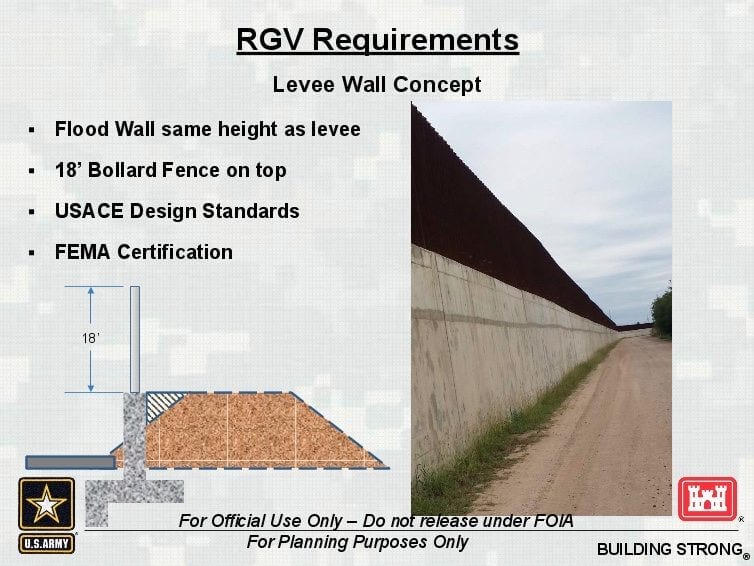
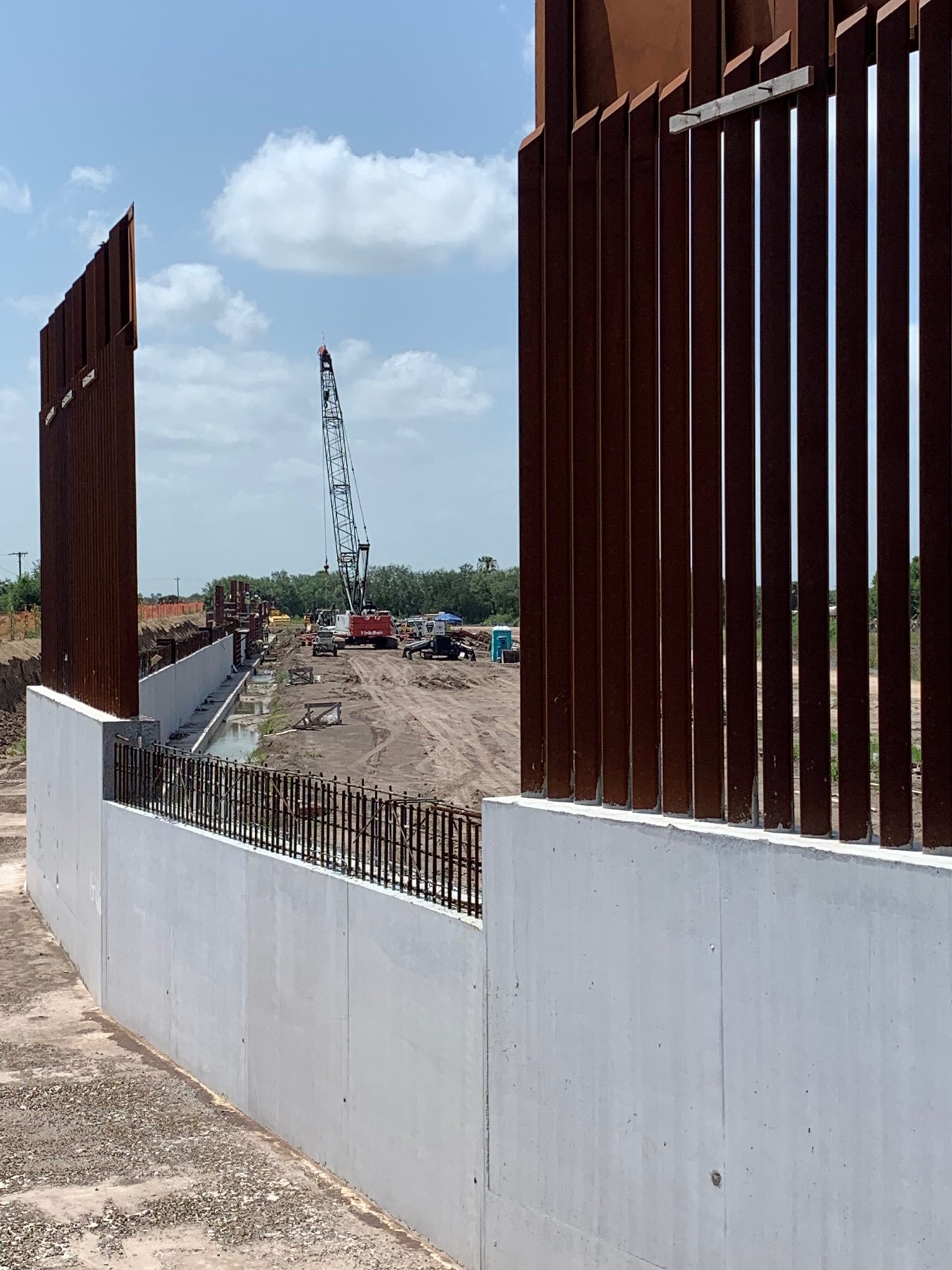
In 2011 the Obama administration spent $19 million upgrading the earthen river levee to FEMA standards. Under the new scheme, the earthen levee is replaced with a 15 to 18-foot concrete barrier topped with six-foot-tall steel bollards, which the government is calling a “guardrail,” since Border Patrol, farmers, and other landowners will be driving on the levee to access their land south of the wall.
Anzaldua’s roots run deep in South Texas. His ancestors were deeded land by the king of Spain in the 1700s, when the region was still part of Mexico. Over the centuries, he said, his ancestors lost most of their land to unscrupulous developers, in many cases with the help of government officials, to build the valley’s towns and cities. Additional acres were also claimed by the federal government to build a massive floodway and levee system for the Rio Grande. The building of the border wall under the Bush administration took much of what was left. In many parts of South Texas, the wall is built up to a mile inland from the river, because of flooding concerns and international treaties with Mexico. The historic village of El Rincon, for instance, where many of Anzaldua’s relatives still own land, is south of the levee-wall.
“Some of our relatives still have probably 100 to 200 acres in El Rincon, but they have problems going to their land now because they’re always hassled by the Border Patrol,” he said.
Anzaldua said he’s been to Washington, DC, twice to testify in Congress against wall construction. But he said neither Republicans nor Democrats really want to listen to what border residents have to say. The forces pushing people to migrate need to be addressed, and a wall won’t help, he said. “There are push and pull factors,” he said. “In Central America, and Haiti, there are hurricanes, earthquakes, and violence. They’re running for their lives. A wall isn’t going to stop that.”
Attorney Ricky Garza, who is with the nonprofit Texas Civil Rights Project, is representing Anzaldua and Cavazos in federal court. Garza said the existing earthen levee “worked perfectly well for almost a century. Why waste millions of dollars to redo something that is only going to be worse than what already exists?”
In mid-July I encountered workers from SLSCO, a construction company from Galveston, Texas, digging out the earthen levee and filling it with concrete and steel bollards. The construction just east of the Santa Ana National Wildlife Refuge took me by surprise. I was confused by the sight of heavy machinery tearing up the levee, because I, like most, had thought that wall construction had ceased. Hurricane season had also begun, so it seemed like the worst possible time to tear up a flood-control levee. Garza said the messaging around the construction has been deliberately vague. “The government keeps saying it’s a ‘safety issue’ and that they are just repairing the levees,” he said, “when they are actually constructing border wall.”
Garza also represented Pamela Rivas, and the government giving her back her land in late September made him feel hopeful, he said. But it’s still unclear who is making decisions about where the wall gets built and who gets their land back. “The only information we get is from staff lawyers for the administration on the individual cases,” he said. “But who is making decisions about the wall in Washington? Is it DHS and [DHS secretary Alejandro] Mayorkas, is it CBP or the Border Patrol? We have no idea, which is troubling.” (A June 11 fact sheet from the White House says DHS “will review the status of all pending border wall land eminent domain actions,” but it gives no timeline.)
The government could move to build on the land belonging to Anzaldua’s family at any moment, he said. “Until we get an actual order of revestment for the property, there is no way to feel that it’s going to be safe.”
After taking office, Biden ordered the Department of Defense to cancel remaining wall projects funded with DOD money. According to the administration, it returned $2 billion in military construction funds.
But for fiscal year 2021, Congress had already directed $1.375 billion to DHS for more wall construction. And the Biden administration said it has no choice but to move ahead with the construction—as directed by Congress—after environmental, hydrology, and other studies are conducted.
Scott Nicol, an artist and longtime activist against the border wall in South Texas, said the Biden administration’s announcement that it would stop building the wall was a “good statement of intent.” But he added that there’s not much the administration can do unless Congress reverses the funding that has already been earmarked for more border wall construction. “That would be everything in the Rio Grande valley and the congressionally funded wall in Laredo,” Nicol said. “If congressional Democrats don’t want to see all of South Texas walled off, then they need to step up to the plate and rescind those funds.”
Anzaldua said he still hopes that the Biden administration will return their land. But he knows the chances are becoming increasingly slim. “I’m frustrated with all of this,” he said. “The government is keeping us in the dark. Still, we have to keep fighting for our land. It’s all we have left.”
Author
Related Articles
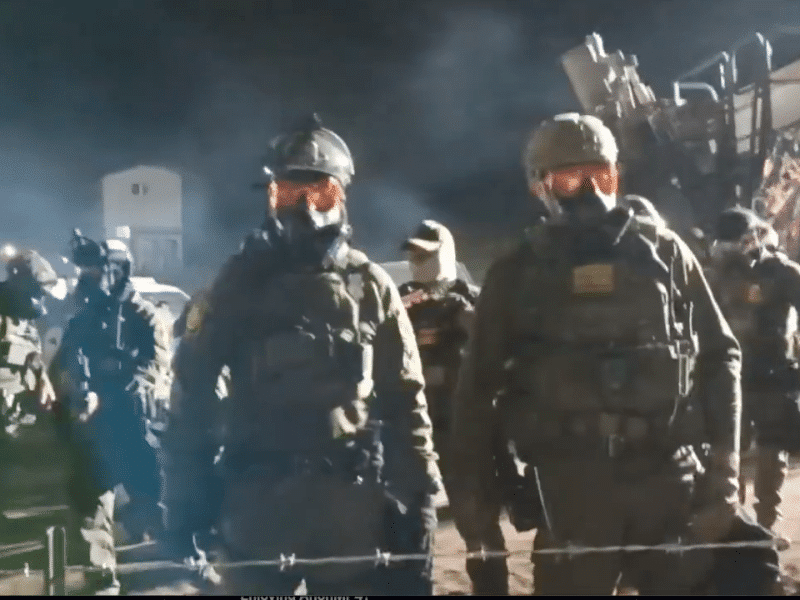
Border Patrol Deploys Tactical Unit Against Protesters Blocking Arizona Border Wall
“I said, with due respect, sir, they are standing here with pepper spray artillery and gas masks on. They are not talking to us; they are assaulting us.”
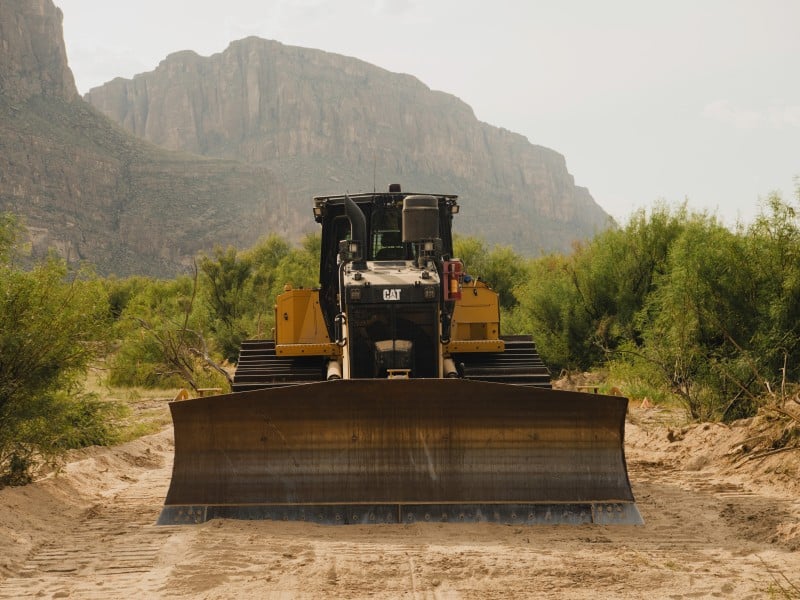
Border Walls Devastating Arizona Are a Warning for Seminole Canyon and Big Bend
Vehicle barriers are just the first step in the march to 30-foot border walls. San Bernardino National Wildlife Refuge is seeing the brutal endpoint.
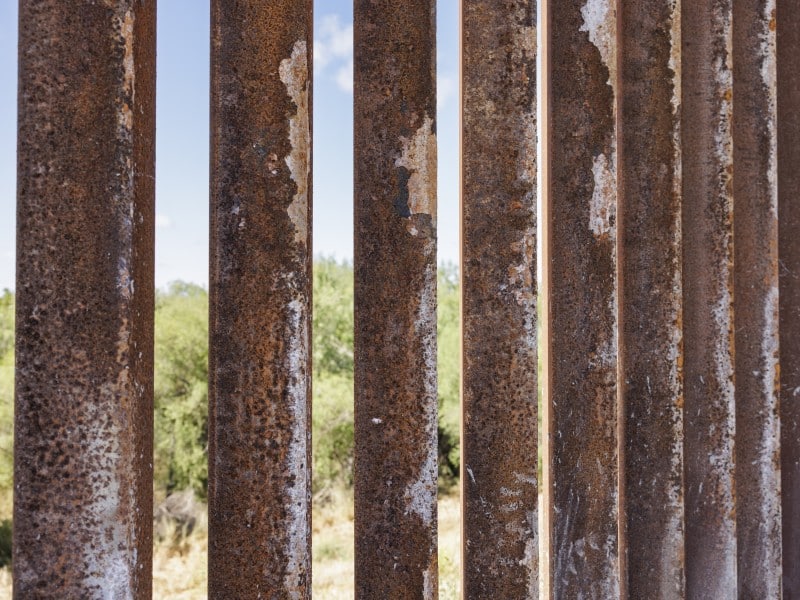
American Rust: The $1.1 Billion Border Wall Built with Salvaged Materials and Few Answers
A newly constructed wall built with old, salvaged material in South Texas is probably illegal; it’s also costing twice as much as previous walls. What are taxpayers paying for, exactly?
