The personal, financial, and environmental costs of a border wall in Big Bend, locals revive opposition after Trump's announcement of a refinery in Brownsville and the Rio Grande Valley fights back after ICE shooting and raids, plus The Border Chronicle is seeking new paid subscribers!
“We love Big Bend the way it is. It does not need to change. We do not feel any danger, and we don’t want it to look like other places. And nothing makes a person who lives out here more mad than the idea of looking at a damn fence.”
Environmental advocates and residents say the long-proposed refinery threatens air quality and public health in a region already ringed by heavy industry.
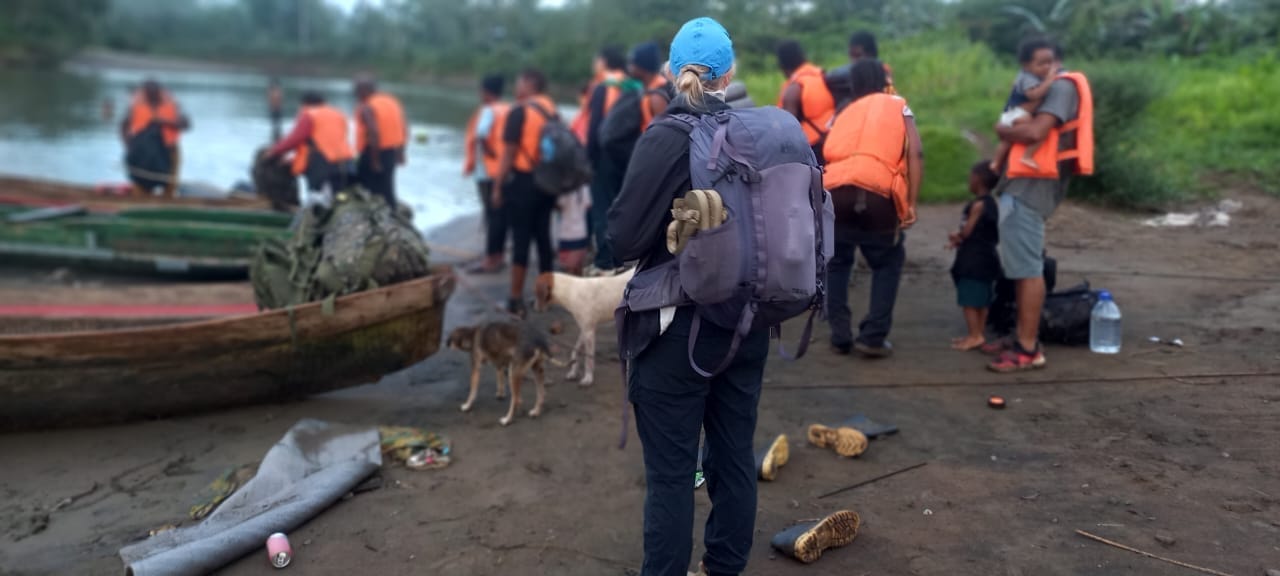
A View from the Darién Gap: A podcast with Caitlyn Yates
0:00
/12000
Last week, Panama’s government announced a new campaign to prevent people from taking the deadly journey through the Darién Gap, one of the world’s most dangerous migrant routes. In 2023, more than 300,000 people have already crossed through the jungle isthmus. Panamanian officials estimate the number will reach 400,000 by the end of the year, which is twice the number of people who made the trek in 2022.
An untold number of people on their journey north will never make it out of the Darién alive.
Why do people keep risking their lives in the Darién? Caitlyn Yates, a PhD student in socio-cultural anthropology at the University of British Columbia, has spent years researching this question. Yates has been traveling to the Darién Gap since 2018 to document changes in the region and interview hundreds of people who have chosen to take the risky journey. Her work has especially focused on Black migrants who face some of the worst prejudice and treatment on their journeys north. “They risk being robbed, kidnapped or detained repeatedly, which other migrants don’t face to the same degree,” says Yates.
Logan Phillips was born in Tombstone, Arizona—a town best known for Old West-themed gunfight tourism. In his new book, Reckon, Phillips explores his relationship to the unusual setting of his childhood through themes of masculinity, history, and land.