
Reporter’s Notebook: Arivaca’s Mundane Killing Field
A reportage about summer in the rural Arizona borderlands through the eyes of hawks, humanitarians, migrants, and migra.
This is the third piece The Border Chronicle has published this summer about life and death in the borderlands under the prevention through deterrence strategy, including With Migrant Deaths Mounting, Border Residents Organize to Save Lives and Reporter’s Notebook: Entering the Season of Death at the Border. Since 1994, prevention through deterrence has fortified border enforcement in cities, pushing people into more remote, often dangerous and isolated places. As the border continues to be militarized and asylum blocked to many, deaths have skyrocketed including the most recent news of two children dead and a baby in critical condition in Texas, after their families attempted to cross the Rio Grande to request asylum.

Reporter’s Notebook: Arivaca’s Mundane Killing Fields
A reportage about summer in the rural Arizona borderlands through the eyes of hawks, humanitarians, migrants, and migra.
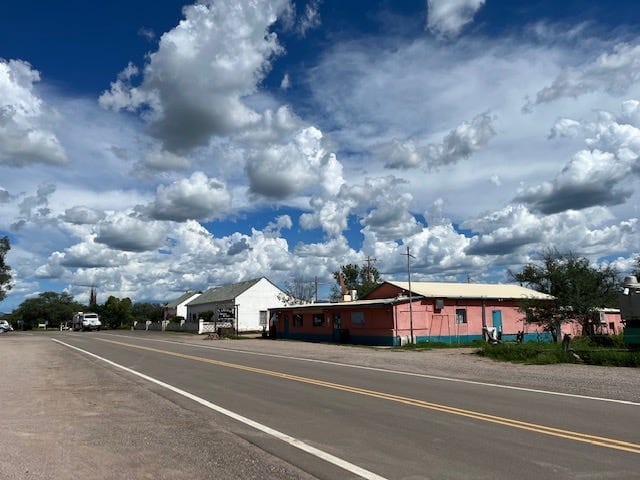
When I travel the rural roads in southern Arizona, I often count Border Patrol vehicles. The 10th one I saw had a medical insignia on its back window. The agent drove into the parking lot of the Arivaca Cienega, where I sat at a picnic table jotting down some notes on August 23. The cienega (a word derived from Spanish meaning “100 waters” or “wetlands”) is part of the Buenos Aires National Wildlife Refuge and is located near the small unincorporated town of Arivaca, 10 miles north of the U.S.-Mexico boundary. According to my tallies, Border Patrol vehicles outnumbered everyone else on Arivaca Road (a stretch that amounted to around 20 miles of my trip from Tucson), a trend that would continue for the rest of the day. I came to get a glimpse of what has been happening in the rural Arizona borderlands this summer, amid another year of prevention through deterrence. In this sense, a roving Border Patrol medic was not a surprise, given how many people who get injured, sick, or die crossing the border this time of year, a direct consequence of this strategy.
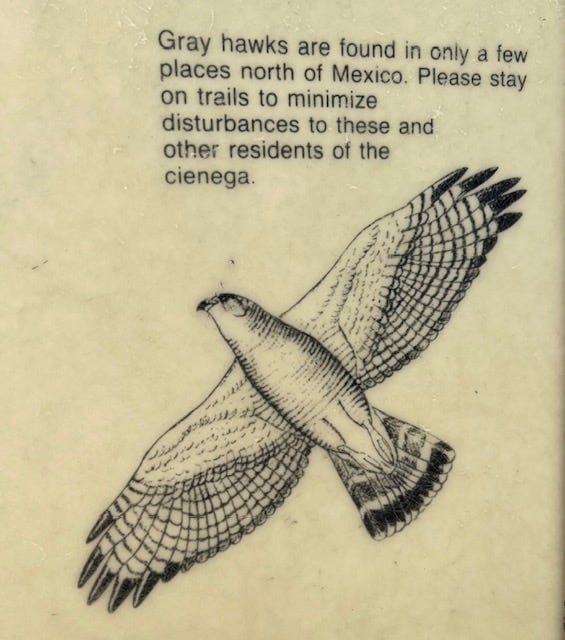
Part of this glimpse of summer was the vibrant and verdant landscape left by monsoon rains, which I hoped to see at the cienega before meeting with volunteers from the humanitarian aid group People Helping People in town. I also was hoping to see a gray hawk, a bird that mostly resides in Mexico and Central America but regularly moves back and forth across the border and nests in the cottonwood and mesquite groves in the area. The cienega is a natural bird sanctuary, and as soon as I started walking, I heard dozens chattering and singing. The only thing that disturbed the song were the growling vehicles on the Border Patrol–dominated road, but the sound slowly subsided as I got deeper into the wilderness.
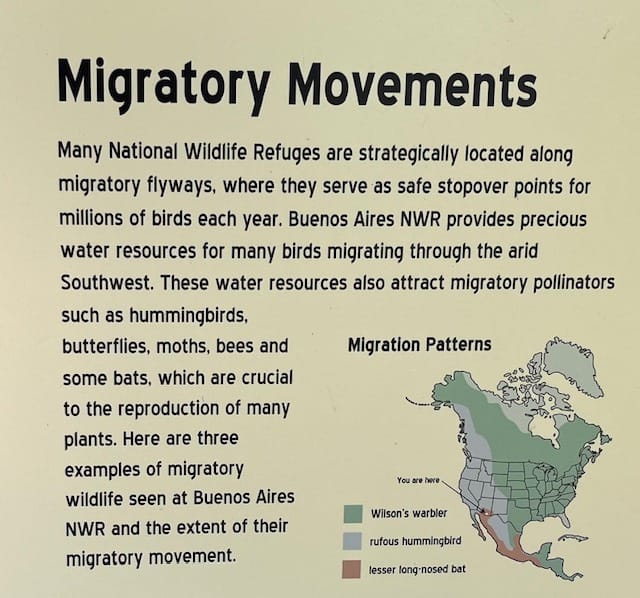
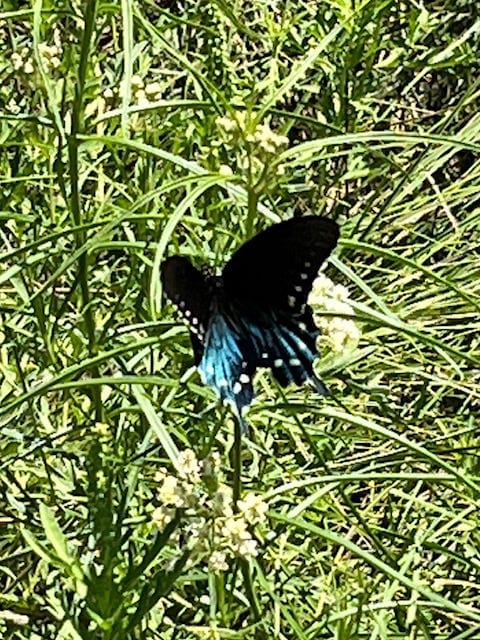
At first I didn’t see the hawk, only meadows where blue and black migratory butterflies fluttered above white wildflowers, diving down in regular intervals for nectar. A mule deer surprised me when it rustled in the tall grass at my back and then ran off when I turned around.
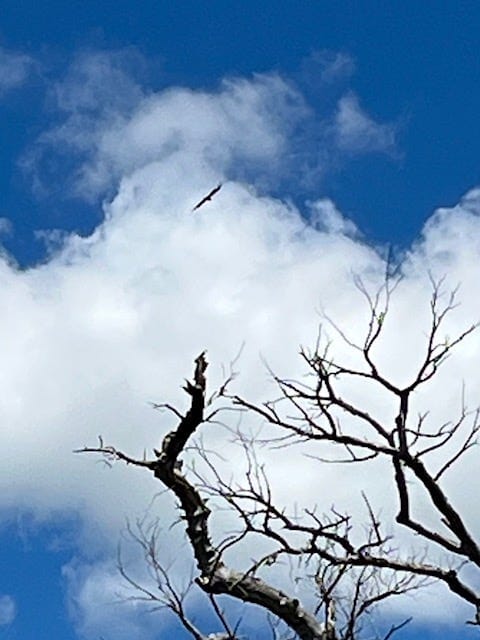
Then I looked into the sky and saw the hawk. It soared above, revealing its gray and black feather patterns and orange talons, and landed on a branch of a dead cottonwood that came out of the wetlands like the bones of a skeletal hand. I admit, I was mesmerized. One minute later a CBP helicopter flew overhead, drowning out all other sounds. The gray hawk squawked, as if in a bitter argument with the overbearing helicopter. While small, this collision of the protected wildlife refuge and a militarized border zone conjured an image typical of the southern Arizona summer, the simultaneous embrace and violation of life, both human and nonhuman, often in the most mundane ways.
Leesa Jacobsen of the humanitarian aid organization People Helping People said that the Border Patrol helicopter was flying around Arivaca the night before for an hour. After coming out of the wetlands, I met with her and another volunteer, Carlota Wray. Founded in 2012, PHP is a community-based organization that works “together for the protection of human life, regardless of immigration status.” Its website also says, “We organize to stop Border Patrol abuse and the militarization of the borderlands,” which includes protesting, monitoring, and asking for the removal of nearby checkpoints. As I suspected, the Arivacan humanitarians (both elders over 65) lived a reality of the border that few U.S. citizens know about, and they could depict it like nobody else. When I asked if they had heard about any people dying this summer, Carlota shared a story about a 25-year-old Guatemalan man who came into town in July. He was in distress. He was traveling with four other people but got lost. He was disoriented. He hadn’t drunk water in two days. He hadn’t had food in three days. He had been walking for five days. PHP is a part of a network of humanitarian aid groups in southern Arizona that give water, food, and sometimes medical aid to people in need. The Guatemalan man told Carlota that he had seen three bodies during the five days he was walking. Two almost looked like they were still alive, but they weren’t. The animals had already gotten to the third person.
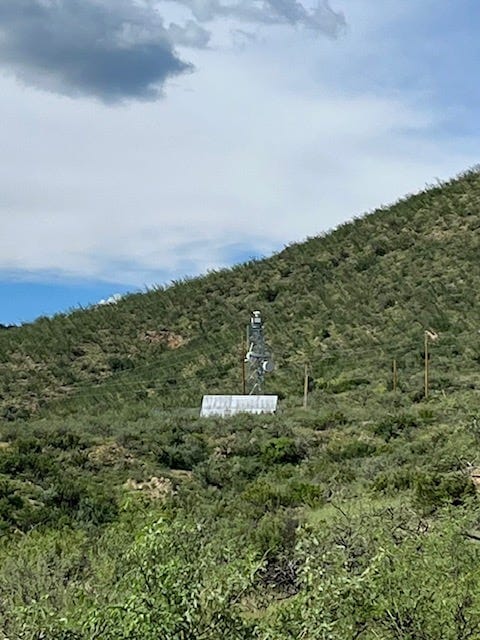
After my meeting with Leesa and Carlota, I went to the Arivaca Creek Trail, just west of town. To get there you have to pass by an Elbit Integrated Fixed Tower that hovers above Arivaca, much to the disdain of many of its residents who moved there to be off the grid. Now much of the town of 700 is under DHS surveillance.
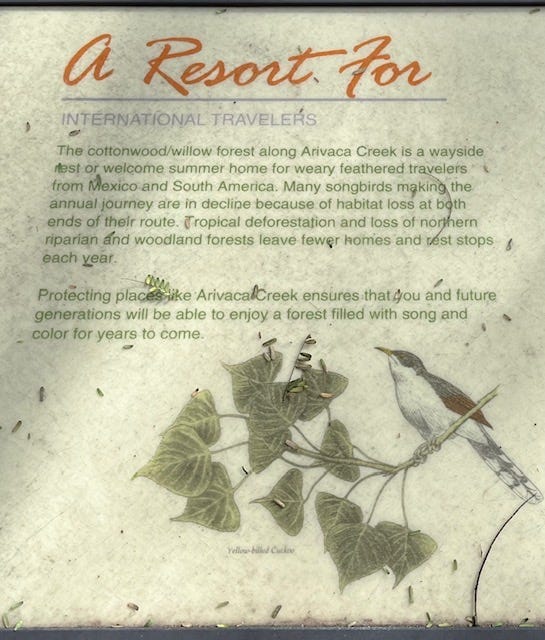
It was now past 3 p.m., and thick, dark clouds were gathering in the sky, as they so often do during the monsoon season. The air felt heavy and humid. I walked down the path. One informational sign said, “The cottonwood/willow forest along Arivaca Creek is a wayside rest or welcome summer home for weary feathered travelers from Mexico and South America.” Among these “international visitors” were migrating songbirds such as the Summer Tanager, the Varied Bunting, the Yellow breasted Chat, Hooded Oriole, Lucy’s Warbler, and Blue Grosbeak.
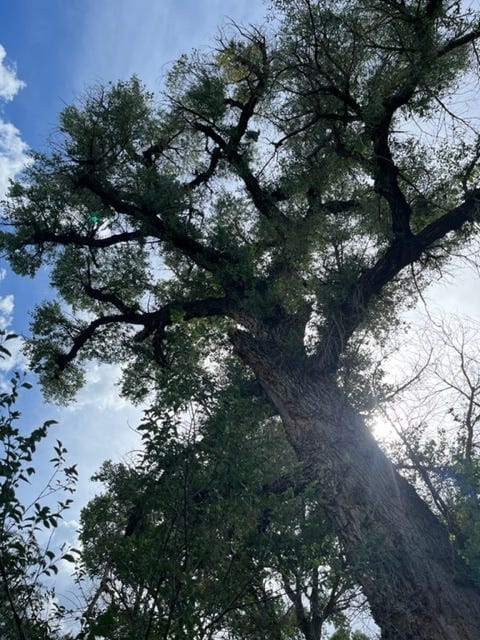
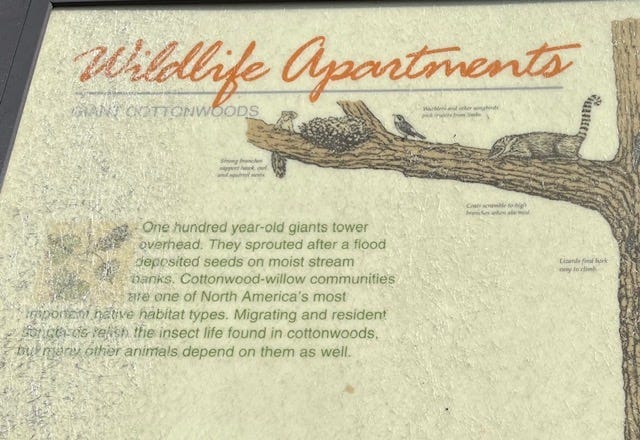
The next sign described the 100-foot Cottonwood trees as “Wildlife Apartments” where “migrating and resident birds relish the insect life found in the cottonwood” and I was reminded of the gray hawk I saw in the morning.
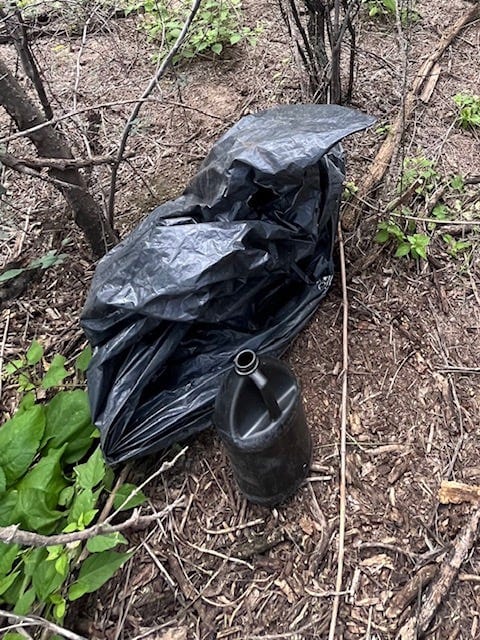
A little later along the same semi-muddy path, in a small clearing under a mesquite grove, I came across a gallon-sized painted black water bottle—used by people going north—and a garbage bag that looked like it had been cut in several places to create a makeshift rain jacket. There were pooled droplets of water still on the garbage bag and a small amount in the water jug, which I figured were from the rain, though it was possible that the person or people were recently here. I thought about other stories that Carlota and Leesa shared from the summer. Carlota’s brother-in-law, who was a cowboy, found a body just south of Arivaca, already torn up by animals. Leesa met a man who fled persecution in the state of Guerrero; he said he found a dead body after crossing the border. Author Margaret Regan had described the borderlands as a “killing field” in her book The Death of Josseline, and 2022 was proving that true yet again. By Arivaca Creek, I imagined the person who left the black bottle in the pouring rain with thunder roaring and bolts of lightning cracking the branches.
When I asked Carlota and Leesa if they thought the deaths had increased this year, they responded that they didn’t know. Leesa referred me to the Humane Borders statistics on recovered remains, which show that an increasing percentage of people are dying during their journey across the border. But the reality, as she put it, was “same ole, same ole.” Indeed, deaths had become normal, banal, not newsworthy, barely discussed. Distressed people arriving in Arivaca has become predictable and has been happening for two decades. Outside the rural borderlands, the prevention through deterrence policy can seem amorphous or theoretical, but in Arivaca it is real and deadly; it has the feel of war. Carlota said the humanitarian aid work was so hard, constant, and relentless that she had taken a break since December, her first in many years, to rejuvenate.
“Part of the stress is just the fact that nothing ever improves,” Leesa said. “The only changes are for the worse. As many or more people are dying. When’s the last time you heard anyone talk about immigration reform? Nothing gets better, and it really takes a toll.”
“No hay esperanza,” Carlota concurred in Spanish.
“But we just keep on slogging away because people are still suffering.”
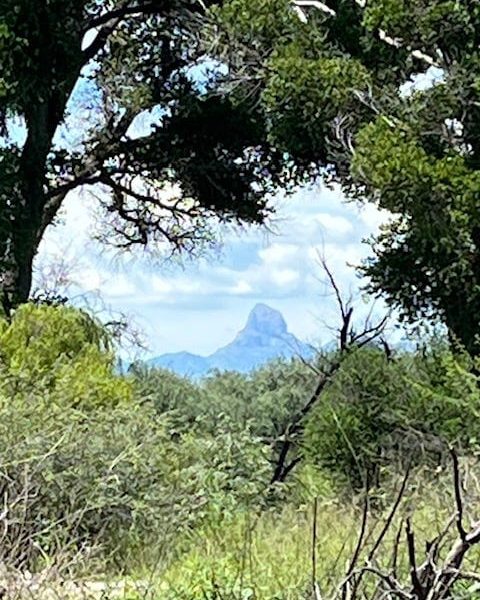
As I left Arivaca Creek and drove west, I saw the Baboquivari mountain range and its peak, a sacred site for the Tohono O’odham people. On the curvy road I counted only Border Patrol, four more vehicles. I rode by another tower that was constructed by the Boeing corporation around 2006 that didn’t look like it was in use. I expected to see the G4S company’s vans—used to transport arrested migrants to Tucson—parked on the gravel where Arivaca road ends at Highway 286 (which runs north–south from the border at Sasabe up to the small town of Three Points), but I was surprised to discover that on that corner the Border Patrol had set up a makeshift checkpoint. There were four vehicles, all with their lights flashing. A lanky agent stood in the middle of the cones, questioning any vehicle that passed through.
I avoided the checkpoint by turning north on Highway 286. Ten miles later, I saw more flashing lights and Border Patrol vehicles along the side of the road. They were behind a gray minivan that looked like it had come to a screeching stop. Its two front tires were flat. The driver and passenger side doors were wide open, and its rear stuck into the road a little bit. Two agents were examining the empty car, empty as if the occupants had fled into the desert. I drove on. I didn’t know what happened, but it could have been another high-speed chase, which so often results in crashes and more death. Instead, I tried to steer my thinking toward the gorgeous gray hawk soaring with its wings spread and landing on the dead cottonwood, an emblem of the naturalness of migration and artificiality of the border; I thought about the birds described as international visitors who brought song and color to the area; and I wondered if maybe Carlota and Leesa didn’t see the hope as clearly because they themselves embodied it and were its example.
The Border Chronicle is an ad-free, reader-supported publication. If you often find yourself reading these posts and sharing them, please consider supporting our work with a paid subscription.
Author

Related Articles
Swarm Intelligence: A Reporter’s Notebook on the Freedom of Movement in the Maasai Borderlands
Could solutions to climate woes such as drought be found in the freedom of mobility? This on-the-ground report from the Kenya-Tanzania border examines that question and more.
Wall Watch: Mapping Trump’s $46 Billion Border Mega-Project
In this week’s podcast, Melissa del Bosque and Geographer Dugan Meyer explain how the Border Chronicle’s new project, Wall Watch, helps residents document and understand the massive construction project underway at the U.S.-Mexico border.
Protecting the Last Grandmother Cottonwood: A Podcast with Kate Scott
A vivid depiction of what has been happening during the last eight weeks of resistance against border wall construction in southern Arizona’s San Rafael Valley.