
Dispatch from Eagle Pass, Texas: Local Filmmakers Confront the Militarization of Their Hometown
“The floating barrier is horrific. Texas needs to do better, and the U.S. government needs to do better. Both governments have failed us.”
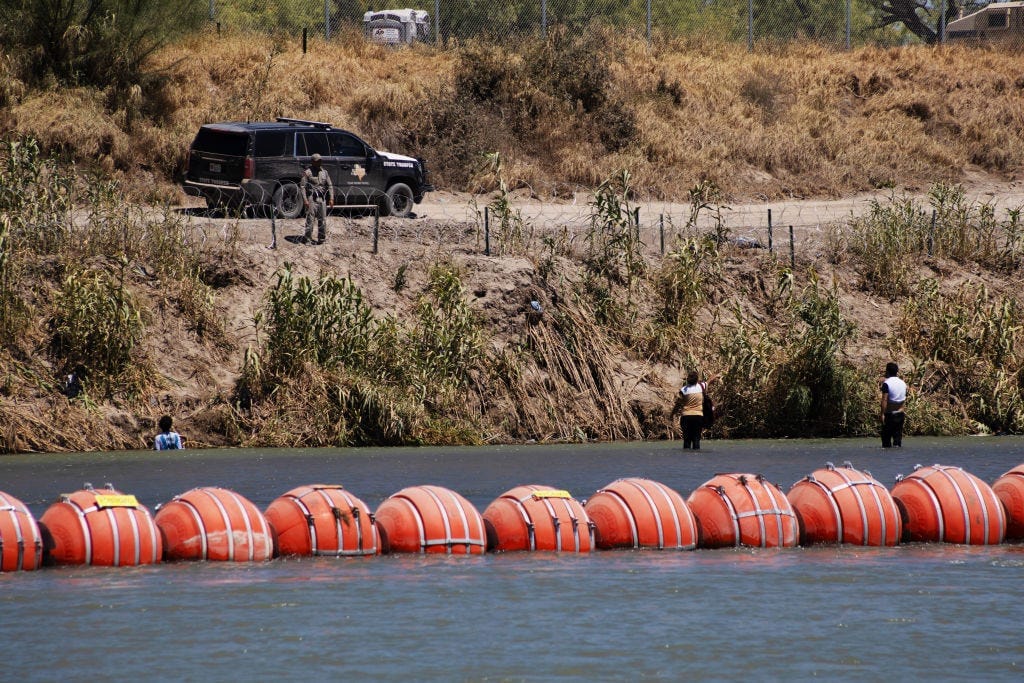
For more than two years, Texas governor Greg Abbott has been converting the small town of Eagle Pass into a militarized zone, lining the banks of the Rio Grande with razor wire, shipping containers, and National Guard Humvees. Most recently, he installed a 1,000-foot-long barrier of buoys in the river, to prevent asylum seekers from reaching the United States. Texas Department of Public Safety troopers have been instructed to push people back into the river, even if they are wounded by razor wire or suffering from heat exhaustion. And last week, the bodies of two people—a 20-year-old man from Honduras, and another person still unidentified—were found floating near the barrier.
They’re the kind of horrific headlines that Robie Flores, 36, and her younger brother Alex Flores, 31, could never have imagined for Eagle Pass, their hometown of fewer than 30,000 residents, located on the border two hours west of San Antonio.
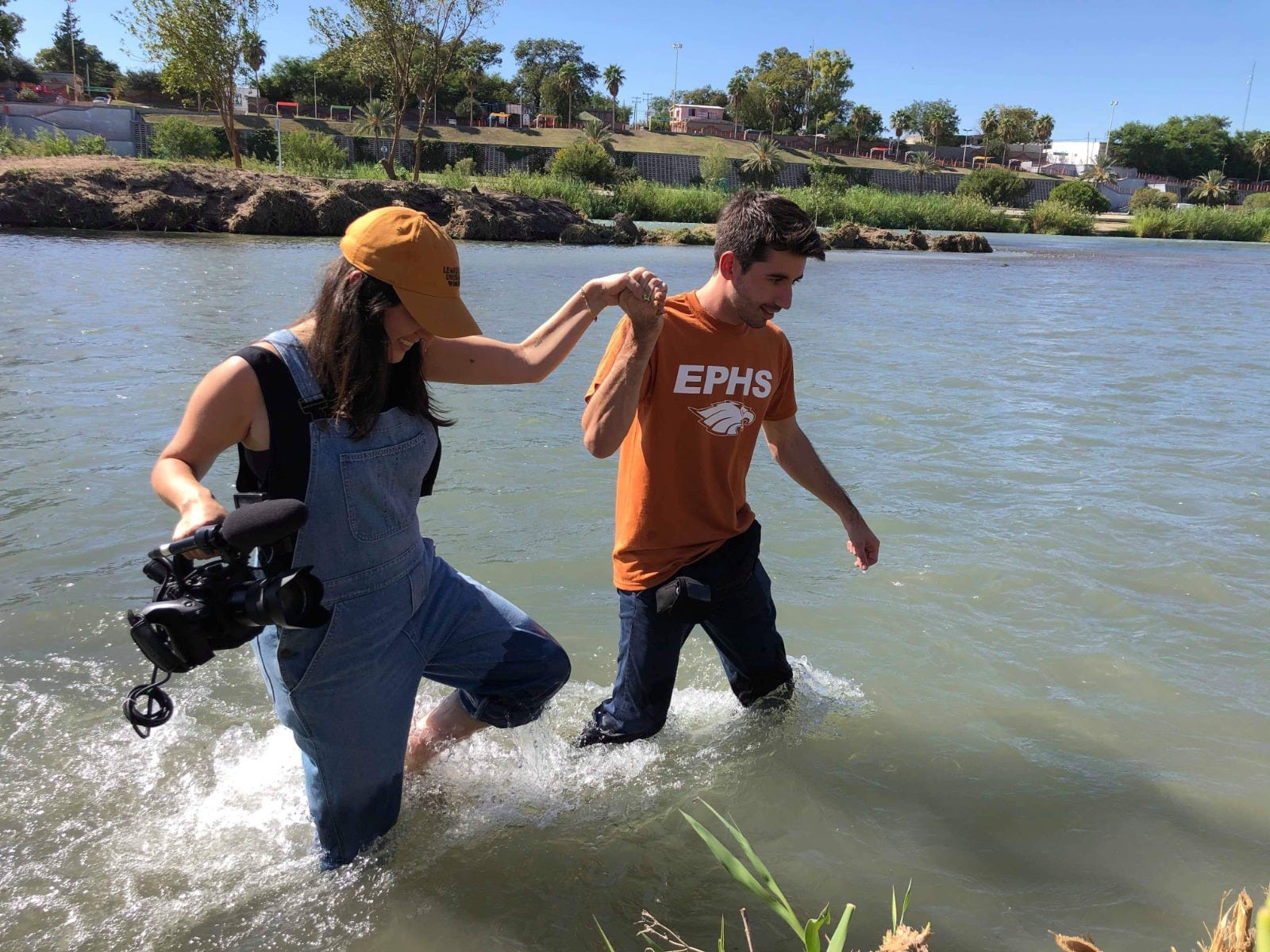
The two filmmakers are finishing a documentary called El In Between, (due in 2024) about Mexican American identity and coming of age in Eagle Pass, where “nothing much ever happened,” says Robie. Like other residents, the Floreses see neighboring Piedras Negras in Mexico as an extension of their own community. Families are united by the river rather than divided by it. “We want to reclaim our narrative, because what you see on the news—trauma, crime—is not our reality,” says Robie.
But increasingly, their hometown is turning into a place they no longer recognize, she says, as it’s caught in the middle of polarizing political battles over the management, or rather mismanagement, of the asylum system. “We’re like frogs in a boiling pot of water,” says Robie. “Every year our town becomes more militarized—and the last two years have just been insane.”
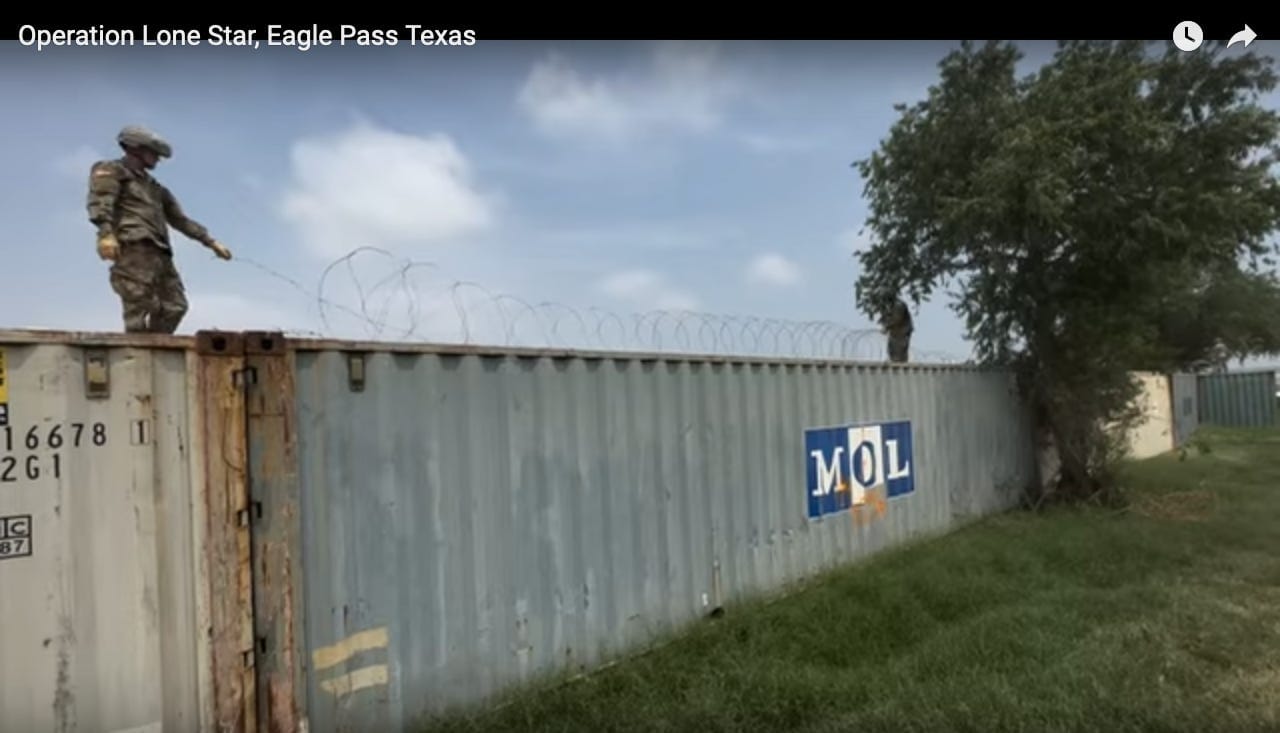
In June, as part of Operation Lone Star, Abbott pressured the mayor to hand over the town’s public park, Shelby Park—a 47-acre stretch along the Rio Grande—which includes a soccer field and boat ramp. The mayor signed an affidavit declaring the public park his private property so that state police and the National Guard could charge asylum seekers with criminal trespass as soon as they touched land after crossing the river. The soccer field’s goalposts came down, and the boat ramp was declared off limits as the razor wire went up.
Then the deadly floating barrier was installed in mid-July. The town’s residents, including the Flores siblings, who had formed the Eagle Pass Border Coalition to fight off border wall construction under Trump, gathered again to save their town. First, they successfully lobbied the mayor and city council to take back Shelby Park. A local business owner has also filed a lawsuit against Abbott and the state of Texas. “We want the shipping containers, the razor wire, and the floating barrier removed as soon as possible,” says Alex. “As a community, we don’t want blood on our hands from the people who are dying as a result of these measures.”
In this Q&A, the filmmakers talk about making their documentary and Eagle Pass’s efforts to push back against Abbott’s Operation Lone Star and the fearmongering narrative it promotes about the border and their community.
How has Operation Lone Star impacted life in Eagle Pass?
Robie Flores: In the beginning, it was all happening far away, so it was just kind of like, OK, we’re making our movie. We’re combating the single-story narrative. We’re reclaiming our identity and what it’s like to be from the border. And then Operation Lone Star came to Eagle Pass. The real invasion is from the north. It’s Texas. It’s like Texas is invading this town.
It’s a war zone set that they’ve created. In Piedras Negras you see murals and playgrounds, people jogging and fishing, and then you look at Eagle Pass, and it’s Humvees and razor wire. It’s a set. It’s obvious once you’re down there, and for me as a filmmaker, I see right through it and have since the beginning, which is why we’re making the documentary.
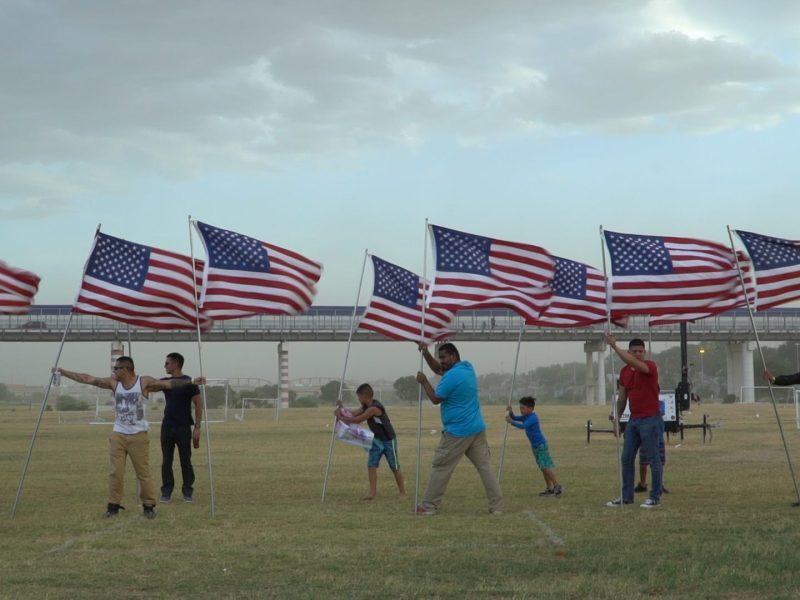
Alex Flores: We’ve been filming since 2017, so we’ve had a firsthand experience of documenting the impact and change. Before Operation Lone Star was initiated in 2021, every year we would film the Fourth of July celebration, at Shelby Park, which is right below the international bridge and gives a good sense of where we are at as a binational community. At the Fourth of July celebration, the Mexican side also comes out to celebrate with the fireworks and music. People are waving at each other across the river.
The first line of barriers installed were the shipping containers. Suddenly we couldn’t get close to the riverbank anymore. Then they installed concertina wire. I wanted to record the sound of the river with a microphone, and I got stuck in the concertina wire, and it tore up my clothes, and I got scratched. It impacts your psychology in a way that makes you feel like you always have to explain what you’re doing and where you’re going.
It’s like when you cross back into Texas from Mexico, and you go through Border Patrol, and state your citizenship and have to explain why you were visiting Mexico. We’re already used to surveillance and being on the defensive. And so to have that extra Texas military presence, it just makes people more uncertain of what they’re able to do or not do. A lot of people don’t ask questions. They just assume they no longer have access to the park or the river. It’s not only denying us access to physical spaces that belong to the community, and which we pay taxes for. It’s also a psychological impact that makes us feel we are being hypersurveilled in our own home.
Is the town divided politically over Operation Lone Star? Are some residents in support of it?
Alex Flores: I think a good measure of how the community feels was at the city council meeting we had last Tuesday. Members of the community spoke out against the impacts of Operation Lone Star, and this went on for about two hours. Hardly anyone spoke in support of it, just the county attorney, and DPS, including the director of prosecutions for Operation Lone Star, who is from San Antonio.
The count attorney said that ranchers were for it because their fences were being cut and property damaged. But not a single rancher was there to testify in favor of Operation Lone Star.
What was their argument for needing the razor wire, floating barrier, and everything else?
Alex Flores: That the people crossing the river are criminals. Nelson Barnes, the director of prosecutions for Operation Lone Star, said if people are going to seek asylum, they should do so lawfully and come across the bridge. But migrants are stopped on the bridge and sent back immediately, so that they don’t ever step on American soil, where they would have a legal basis for seeking asylum.
The Biden administration rolled out the CBP One app as the only way asylum seekers can apply from Mexico. Is the app being used by asylum seekers in Piedras Negras?
Robie Flores: There’s been all kinds of problems with the app, including that it doesn’t recognize the faces of darker-skinned people. There’s also this long wait period where people are forced to stay in Mexico, where they’re extorted and targeted with violence. It puts a terrible strain on the migrants who have already endured treacherous journeys to get to the U.S. It also puts a strain on our communities.
Alex Flores: It makes sense that people are crossing the river because it’s their only option. That’s one of the asks from our community coalition for the Biden administration. There are pathways for legal asylum. Open those back up, so that migrants can cross the bridge and get processed. There needs to be more infrastructure, more personnel allocated for processing centers. Put the focus on opening the bridges back up and allocating more resources to those processing centers.
Why did you decide to make a documentary about coming of age in your hometown?
Robie Flores: I was working as an editor in New York on a show for Bloomberg, and this was during the 2016 election, with Trump and this crazy fearmongering about the border. And they’d be talking about it in editorial meetings, and I was like, “Are you serious? I’m from the border and this is not my experience at all.”
Sure, things go on, like illegal crossings and drug trafficking, as they do at any border. But people assume that’s all there is. There’s crime in New York City, but it’s not like people all the time are saying, “But what about the crime?” And it really hit me once Trump came into office. Within days he was signing a declaration to build a wall. And it was like, people actually believe this [fearmongering]. There was this sense of urgency that we need to reclaim our narrative about our home.
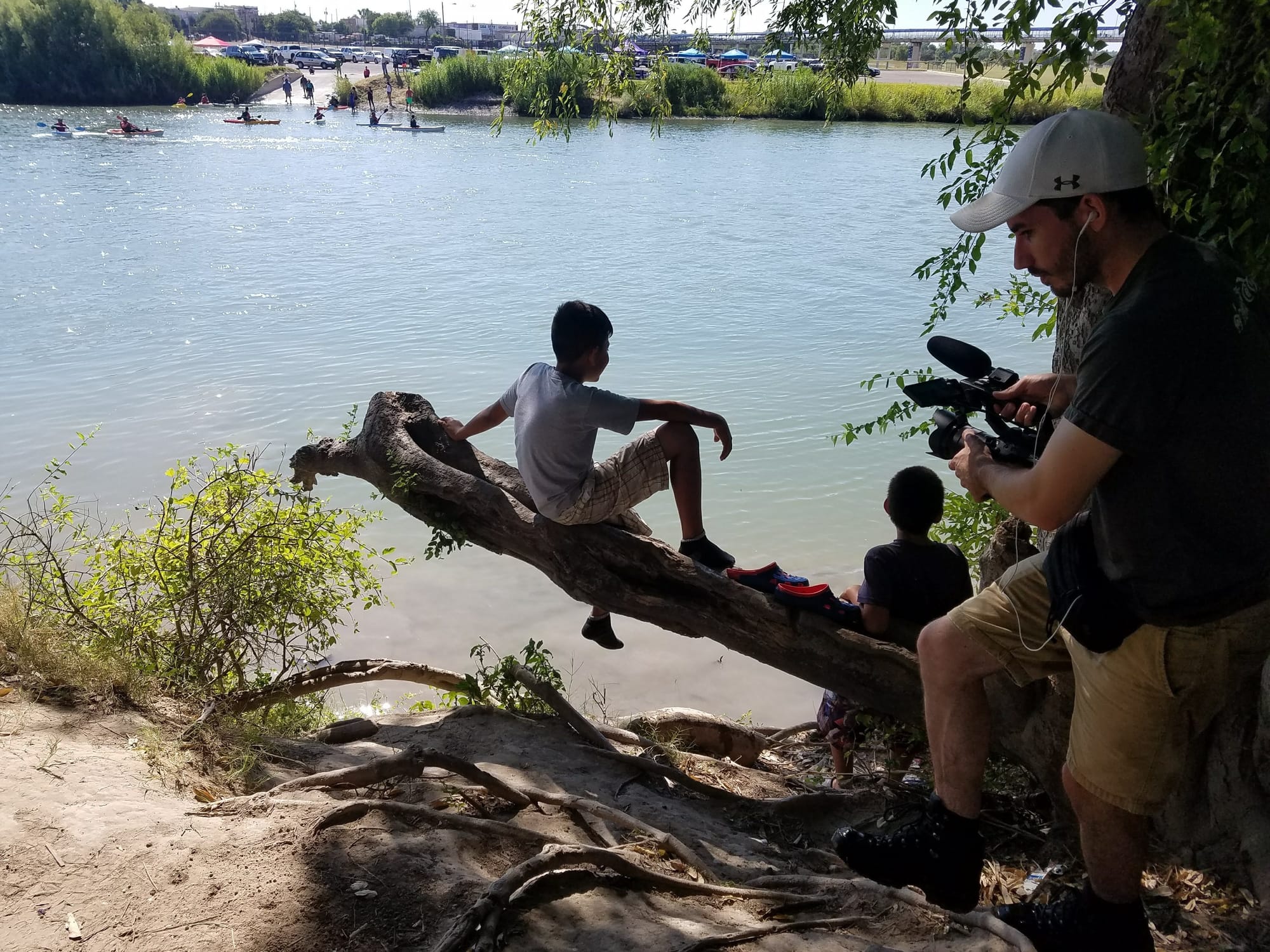
Alex Flores: So often our stories are painted by trauma and attached to the drug trade and immigration. But this isn’t our only reality that we experience. And so we wanted to show a side of the border that is joyful, and that people who are from here can identify with.
Robie Flores: As soon as we got back to Eagle Pass, there was the Abrazos ceremony, where the mayors from both sides meet in the middle of the bridge, and they throw a daylong party celebrating the renewal of economic and cultural ties with each other. It was like business as usual back home. And that was the movie we wanted to make.
It’s been a seven-year journey. And throughout the seven years, we’ve been very protective of making this a kind of Richard Linklater–esque movie where nothing really happens. It’s just a portrait of a town and a way of life. Because that’s exactly what it felt like to grow up here. You know, not much happened. And so that’s what we wanted to reflect, but, like, in the last seven years, especially with Trump, there was more militarization that you’d see. And we would always try to keep it out of the movie, because I’m like, “This is not what it’s like.” But at this point, it’s hard to keep it out. This is part of the backdrop now, part of what we have to deal with.
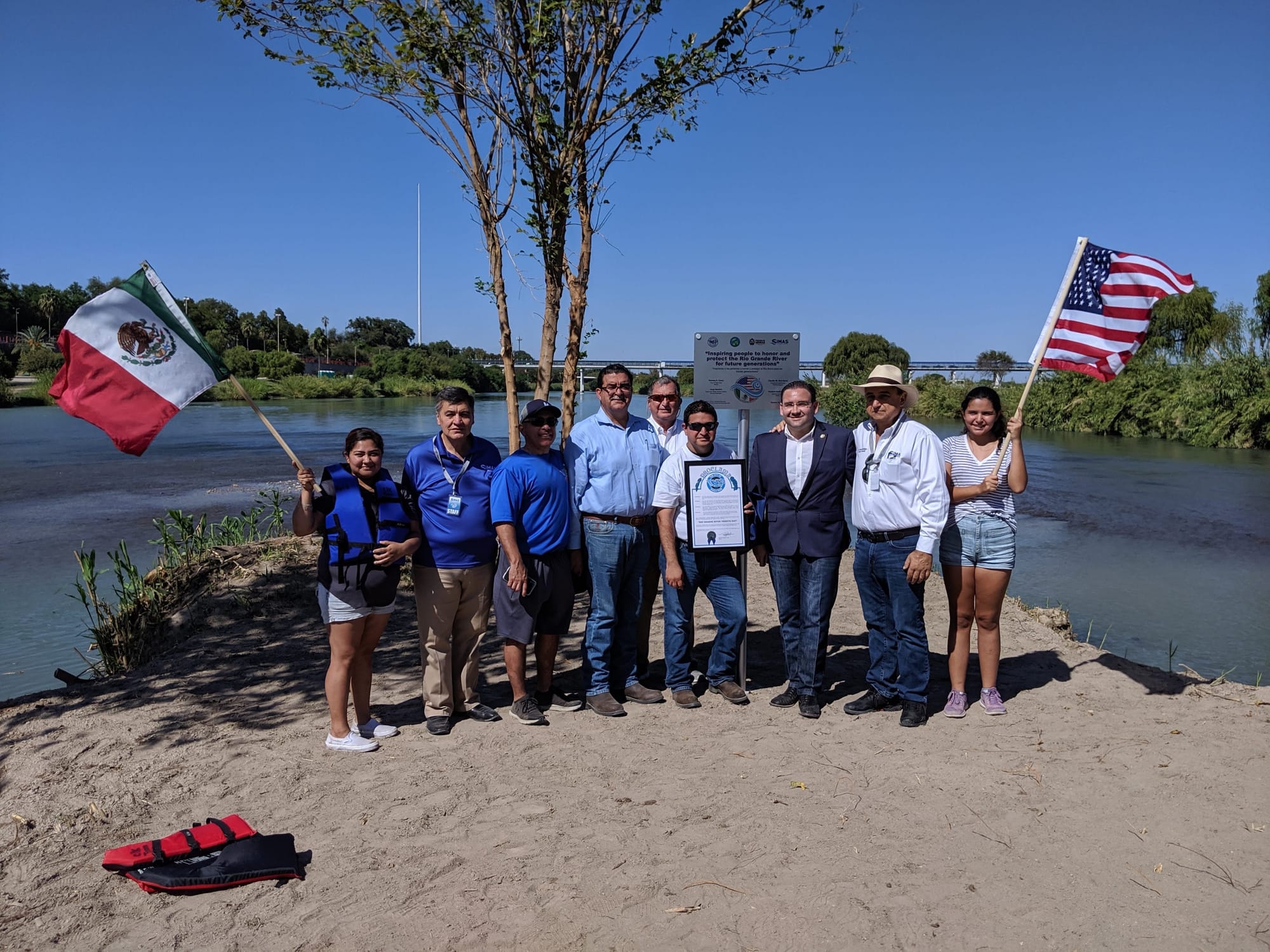
Do you see a lot of right-wing content creators in Eagle Pass using the floating barrier, the shipping containers, and Operation Lone Star to create anti-immigrant propaganda?
Alex Flores: I think that’s why feelings about the border are so polarized, because for so long, we’ve had these politicians that use our home as a political prop, like as a literal staging ground, for their agendas. If you go back to the Bush administration, the wall that came up, that continued into the Obama administration. It doesn’t close anything off. You can go around it. And then during the Trump era, he wanted to build a wall that was double the height. It’s all to show their base that they are doing something, that they should send more money. And Abbott is no different. All the militarization that’s happening, it’s in a little area right under the bridge. It’s a perfect place for news teams to bring their cameras,
Robie Flores: The day Abbott installed the buoy barrier, there were a bunch of DPS guys filming and getting their content. It was just so obvious—they’re playing war down there. At the same time, DPS, all this law enforcement, is caught in the middle, like our town is. And the poor migrants are too. We’re all pawns in this political theater. And the federal government isn’t doing anything. At the same time, Republicans are trying to take over these small counties that were historically blue by throwing money at them. Our county, Maverick County, is one of the poorest in the entire state. And that [Operation Lone Star] money is needed, so the leadership take it. Then they realize they invited the vampire into their home, and they’re just being sucked dry.
What do you wish elected officials would do to help asylum seekers and border communities?
Alex Flores: All these barriers have been put in place for decades. And we’re in the same place, if not worse. The solution isn’t throwing money at the border and at barriers to keep people from coming in. The solution is to fix the immigration system, fix the pathways that allow people to seek asylum legally. And then, also, let’s look at what is actually going on in these countries. And what can we do to stabilize the economies in the countries that people are migrating from? That’s the real solution.
We want to be included in deciding the future of our home. We’re the ones who are experiencing the impact of decisions that are made. So we need to be at the decision-making table whenever these conversations happen. Texas needs to do better, and the U.S. government needs to do better. Both governments have failed us. We’ve been put in the middle of this situation when they’re the ones that are supposed to be managing the border and immigration.
Author
Related Articles
The Accidental Revival of José Revueltas
How a prolific Mexican writer, all but unknown in the United States, became the patron saint of some of this year’s most important borderlands books.
In a Mexicali Novel, a Secret and an Unraveling Childhood Friendship
Elma Correa’s award-winning Donde termina el verano follows two girls from the working-class outskirts of Mexicali whose friendship, guilt and memories are shaped by a childhood disappearance and the borderlands around them.