
Drought and Doubt on the Rio Grande: A Q&A with Watershed Scientist Martin Castro
As the Rio Grande dries up, Laredo, Texas, could run out of water by next spring. Communities downstream are already going dry.
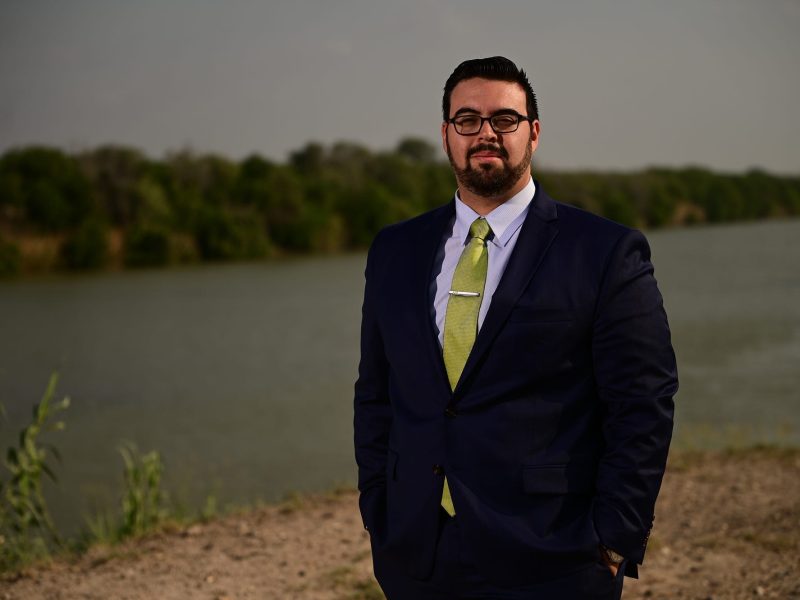
The Texas-Mexico border is experiencing a historic drought, one in which the Rio Grande, already one of the world’s most endangered rivers, is dwindling at an alarming rate. In the southernmost stretch of the Rio Grande watershed, more than 3 million people in Mexico and the United States rely on the river. The city of Laredo, Texas, which has a population of more than 260,000 and the largest inland port on the border, relies solely on the Rio Grande for its water, as do many other cities in the region.
If nothing changes, Laredo will run out of water by next spring, according to Martin Castro, watershed science director for the Laredo-based nonprofit Rio Grande International Study Center. Last week, Castro gave a presentation to Laredo’s city council in which he also noted that communities downstream, such as Zapata, are already nearly dry.
Despite Castro’s warnings and recommendation that the city adopt Stage 3 mandatory conservation efforts, including restricting irrigation, prohibiting the construction of new swimming pools, and turning off outdoor fountains, city council members adopted less restrictive conservation measures, much to the frustration of their downstream neighbors.
In this Q&A, Castro talks about the difficulties of managing a binational water resource and how elected officials consistently fail to act, even though drought, driven by climate change, is worsening.
What is the current state of the drought in South Texas, and how is it affecting the Rio Grande watershed?
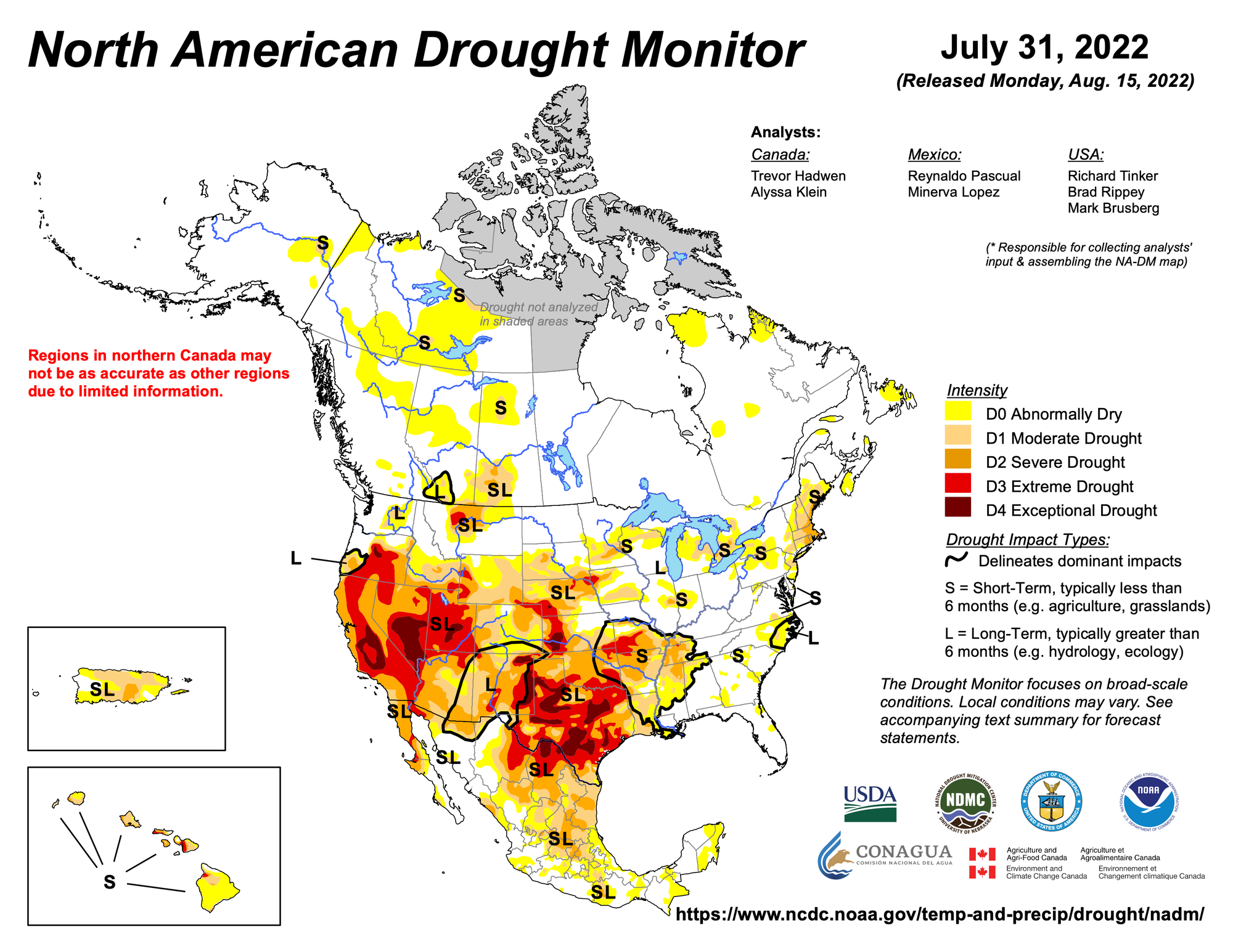
Before some rains last week, Laredo had not seen a drop of rainfall in months. The reservoirs that supply water to about 3 million people from Del Rio all the way to Brownsville, the Gulf, and, of course, on the Mexican side are at alarmingly low levels. Some of the lowest levels we’ve seen in the last 20 years. And that’s really due to the effects of climate change and the lack of rainfall that we’ve seen the last couple of years. It’s just exacerbated the conditions of the crises that we find ourselves in. Because on top of that, the Rio Grande is one of the top 10 most endangered rivers in the world. It’s a highly stressed river with highly managed flows that are controlled by state and federal agencies, so that when a drought like this does come, and in a semiarid area like South Texas, you know, it really just doubles or triples the effects on our water resources, to say the least.
Laredo still has water for now, but it’s the people downstream who are in a very critical state.
Yes, exactly. The reservoir that provides water to Laredo, Texas, is the Amistad reservoir, which has dwindled down to about 30 percent. If we consider that both the U.S. and Mexico share water, because water is allocated to each country for their users, it’s about 22 percent. So very low levels.
And then, of course, downstream from us in Zapata we have the Falcon reservoir, which has suffered even more in the last couple of months. Right now it currently finds itself at about 9 to 10 percent capacity. So those are alarmingly low levels. Many cities in the Rio Grande Valley already have stage 2 or stage 3 water restrictions. Brownsville and McAllen, those are the two largest cities in the valley. And, you know, they just instituted these restrictions, because the water at Falcon is so low. The town of Zapata, which is right on the lake, has for several weeks now been struggling to get enough water to its water-treatment plant to supply the community. Because the water is receding to a point where their water intake can no longer effectively access it.
The Rio Grande Valley is very dependent on agriculture, but the infrastructure to carry irrigation water is really outdated, right? There’s a lot of waste.
The irrigation districts supply water not only to the farmers but also to municipalities. A lot of those irrigation districts are very old. Some of them nearly 100 years old. They use open canals to channel water from one point to another. And those present a huge loss in resources when they’re transferred from one user to another, including evaporation losses, seepage, and leakage. It’s a very outdated system of water delivery that’s caused resources to be even more stressed, as we continue to enter this era of drought intensification.
Our projections are showing that if things continue with lack of rainfall, continued evaporation losses, conveyance losses, and minimal inflows into the reservoirs, by October 1 we will pass the first threshold of alarmingly low levels of storage for the U.S. share of about 400,000-acre feet. At that point, only enough water will be allocated to municipalities and no other usage, which is really going to affect agriculture in the valley next year, when there’s no water left for allocations for those uses.
By April, if we drop below 200,000-acre feet in storage for the U.S., that’s critically low. If you’ve heard of the situation right now in Monterrey, Mexico, that’s probably what we’ll be going through, with strict water rationing. Water will be available only on certain days, to certain neighborhoods. Then there’s the black market that’s now popped up of selling and hauling in water at like three times the price. These are projections that we’ve put together with hard data and science backing them up. And so, yeah, as strange as it sounds, we’re all wishing for a hurricane or tropical storm to come and really replenish our reserves.
Scientists have been making these types of predictions for a long time. Do you think elected officials are doing enough to plan for this new future of water scarcity?
Going back to the Rio Grande Valley, it has very outdated water delivery methods. That’s something that officials have known about for years. They also had a warning 11 years ago, when we saw the last drought. But there’s the mindset of many of the communities in South Texas that when rains do come, when a tropical storm or hurricane comes through and replenishes our reserves, we kind of wipe our hands clean, and we tend to celebrate too soon and say, “Well, we’re out of the clear. We’ve got nothing to worry about now.” So, talk about water conservation practices and long-term sustainability gets put on the back burner until the situation gets bad again.
Earlier this past week, we were at a city council meeting here in Laredo to present our projections and give our immediate short-term and long-term recommendations to get us through this drought. And it came on the heels of, you know, almost record-breaking amounts of rainfall that Laredo got within 72 hours. I opened my presentation by saying, “Look, guys. Yes, we were blessed by recent rains, but by no means is it an indicator that this is over as, as you know, as promising as it may look, we still need sustained rainfall for weeks on end to really replenish reserves.”
How has the drought affected relations between the U.S. and Mexico, which share the Rio Grande?
We’re entering year two of the five-year debt cycle that Mexico owes the United States, and to date they’ve paid very little of their overall share. The last time Mexico tried to repay its debt to the United States there was a riot of farmers in Mexico that basically halted those releases. I would assume that would probably happen again because they’re under the same situation.
The management of this shared resource, the Rio Grande, is very difficult. Unfortunately, what another country does with its water, all we can do is monitor it and hope for the best.
Wouldn’t border communities be much safer and more resilient if money were invested in water infrastructure instead of border walls? If there’s no water, it’s game over.
That’s right. In July, DHS Secretary Alejandro Mayorkas terminated the remaining border wall construction funding for Laredo and Zapata, which combined was $2.4 billion. The Rio Grande Valley and other places, like Arizona have not seen this cancellation from DHS. [DHS has said that this money will go to wall building in those areas.] Much of that money was going to be spent building a border wall that was going to destroy 71 river miles of private and public riverfront land in Webb and Zapata counties.
We want to see if any of these funds can be reallocated for projects like the Binational River Park Project, which includes so many facets that we believe would be worthy of funding, including environmental ecological restoration, for one. The money removed from the border wall should be reallocated for those uses, not for destructive border wall construction.
Author

Related Articles
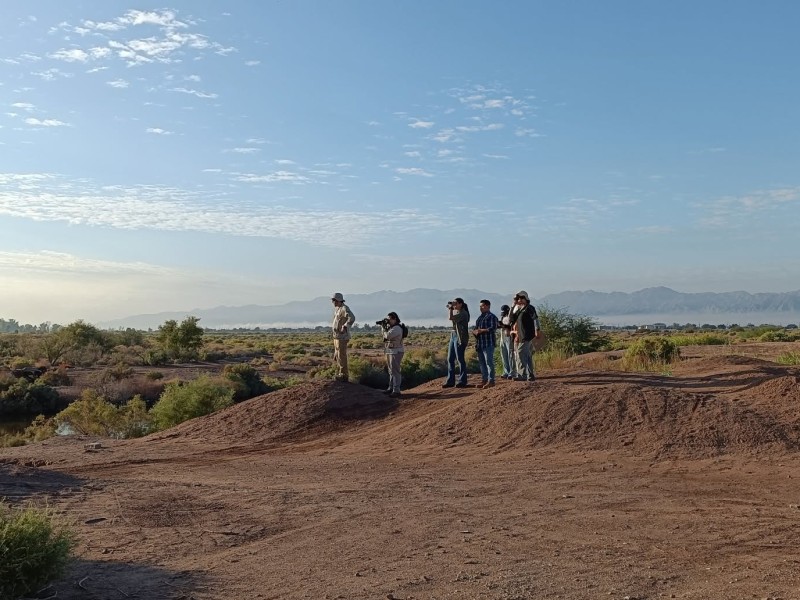
Salvemos Las Lagunas: A Morning with the Collective Working to Save Mexicali’s Last Urban Wetlands
The New River flows north across the US-Mexico border, where its lagoons provide vital habitat for hundreds of birds. For a decade, a community organization has worked to protect these crucial waterways.

Immigration Policy Is Maternal Health Policy
Research in Texas confirms what border communities already know: that harsh immigration policies harm maternal health. As border-style enforcement spreads across the United States, its consequences for mothers and infants will spread with it.
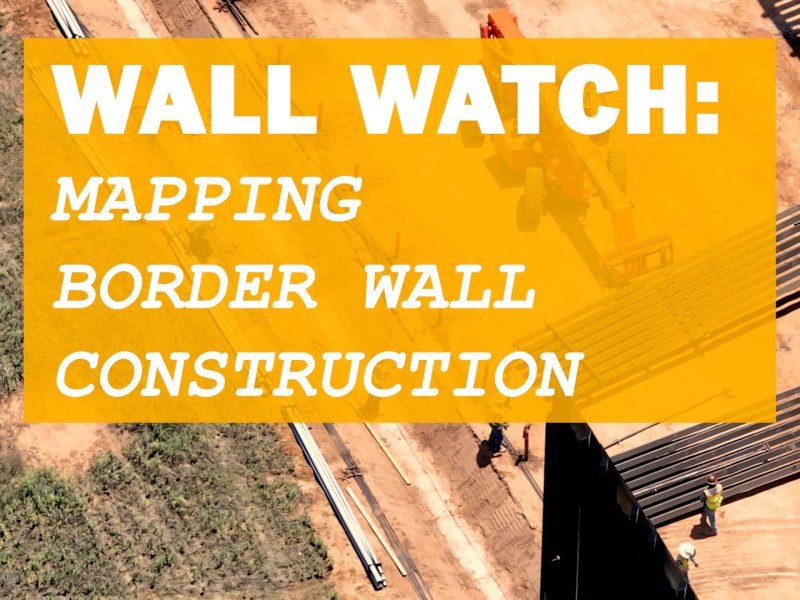
Wall Watch: Mapping Trump’s $46 Billion Border Mega-Project
In this week’s podcast, Melissa del Bosque and Geographer Dugan Meyer explain how the Border Chronicle’s new project, Wall Watch, helps residents document and understand the massive construction project underway at the U.S.-Mexico border.
