
Beyond the Border Trap: A Review of Amelia Frank-Vitale’s “Leave If You Can”
Frank-Vitale says we must stop “seeing migration as the problem.” Instead, she insists, “the problem … lies in all the attempts to stop human mobility, to contain, detain, and deport people.”
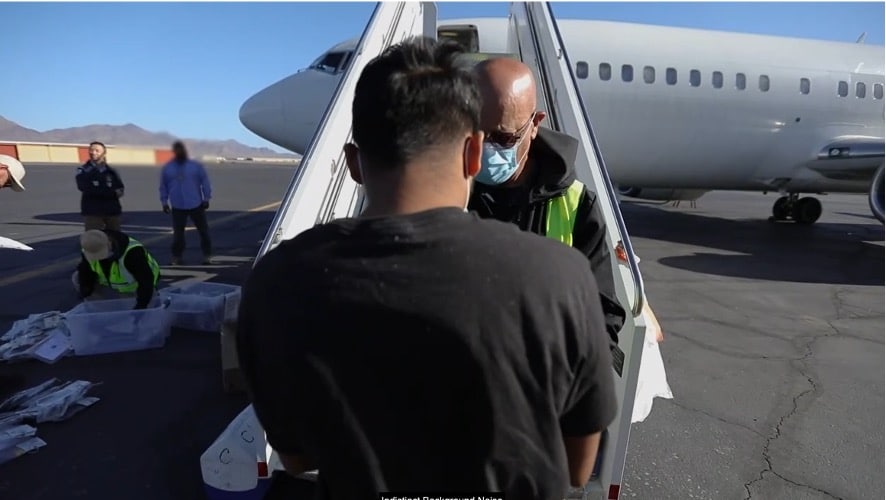
Amelia Frank-Vitale opens her insightful book Leave If You Can: Migration and Violence in Bordered Worlds by recounting an afternoon spent hanging out with some young men in a neighborhood she calls La Libertad. She describes the area as sitting “on the edge of the sprawling Rivera Hernández section of San Pedro Sula, the economic and industrial capital of Honduras.” The Princeton University anthropologist stresses that La Libertad is “not a particularly out-of-the-ordinary neighborhood” among the cities in Honduras’s Sula Valley and on the country’s northern coast. Nor are the young men she is with that afternoon out of the ordinary: all but one of them have experienced deportation.
At the heart of this empirically and analytically rich book is the ordinary nature of deportation—at least in Honduras—together with the everyday experiences of mainly “poor, urban young men.” From 2014 to 2024, the author reports, more than 600,000 people were deported to Honduras, almost all of them from Mexico and the United States. In a country of about 9 million people, this makes deportation “an important social phenomenon.” By exploring this phenomenon, Leave If You Can illustrates how the ever-expanding dragnet of policed borders does not deter migration but instead forces people to be continually on the move; in doing so, the book exposes both the violence and absurdity of efforts to control human mobility.
Based on in-depth fieldwork in the San Pedro Valley that took place largely in 2017–19, the book introduces the reader to many young people who experience migration, detention, and deportation. One is named Antony. He came under suspicion from the gang that controls his neighborhood and thus had to flee. When Frank-Vitale first met him, he was in a new neighborhood, one controlled by a different gang. Antony was thus an outsider once again—and, by extension, suspect. He survived by rarely venturing beyond the confines of the room he rented.
Antony’s experience speaks to how the power to navigate what Frank-Vitale calls the ever-present “geographies of violence in urban neighborhoods” is key to survival. Many can do exactly that. That capacity depends, among other factors, on one’s relationships. It also hinges on “knowing who controls what neighborhoods and who is allied,” she writes. “Especially for the young, especially for the boys,” she writes, as adolescent males and young men face the greatest dangers from both gangs and the police. For them, their neighborhood, or colonia, “is one of the most important points of reference” in their lives. It “determines where you can and cannot go.”
In this regard, to be out of place—or even to be perceived as such in a country that has had one of the world’s highest murder rates—is to risk one’s life. Such risks and the associated brutal violence that, for many in Honduras, is an everyday threat, are what led Antony (a few years after Frank-Vitale met him) and many others to emigrate. In 2010 people reported poverty and insufficient economic opportunity as the main factors driving their migration from Honduras. For the last 15 years or so, people have cited fear of violence as the primary factor, while “poverty and scarcity and hunger” have “emerged as secondary, connected reasons.”
In focusing on the danger of being out of place, the book reveals that Hondurans contend with several “hard” borders—and the violence associated with them. And here is, perhaps, the most original contribution of Frank-Vitale’s important work. She powerfully demonstrates that many Hondurans are “stuck between internal borders [those dividing the territories of one gang from another, for instance] and forced movement across international borders.”
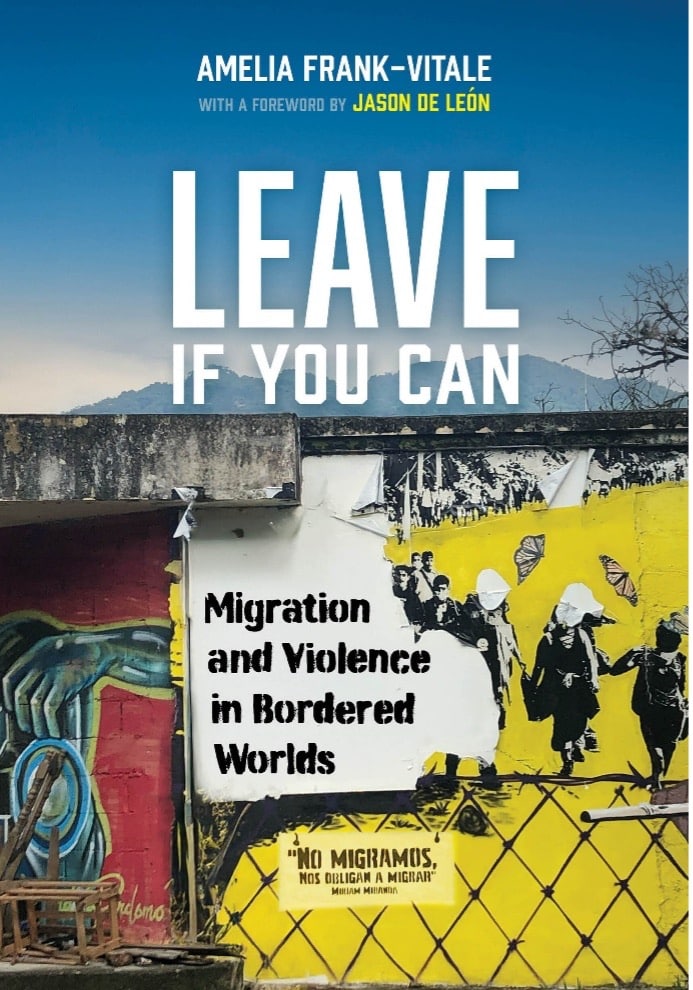
That movement is related to the rise of ever-greater efforts by the United States and Mexico to stymie Honduran mobility, deportation being a key tool. What strikes Frank-Vitale is how casually the people she speaks to respond to the violence of deportation and border policing—jailing, mistreatment by authorities, separation from loved ones, among others. This illustrates that what they experience as “illegals” or deportees is “familiar”: it replicates the constrained mobility and multiple forms of abuse—not least by state authorities—that they are regularly subjected to in Honduras. There is, then, a continuity of experience across life before, during, and after deportation. This is why efforts to dissuade people from reemigrating—by the Honduran and U.S. governments (and the NGOs they work with)—are largely useless.
In the book’s third chapter, Frank-Vitale looks at reintegration programs that encourage deportees to stay put in Honduras—through education initiatives that cultivate life or marketable skills and foster entrepreneurship. She finds them “inappropriate at best and harmful at worst.” Given that many deportees are returned to Honduras only weeks or months after having fled the country, the programs do nothing to address the structural or “root” problems that led to their leaving in the first place. They can also be harmful when, for example, they encourage deportees to start small businesses that, once established, make them targets for extortion by gangs.
Large numbers of young Hondurans feel “structurally outside of society, outside of its institutions,” which is why it is easy for so many of them to get up and leave and try their luck elsewhere. In so doing, they encounter what Frank-Vitale refers to as the “shifting terrain of border enforcement”—a key manifestation being the spread and intensification of immigration policing throughout Mexico (developments pushed by the U.S. government)—and a weakened, already woefully inadequate system of asylum. In the face of such obstacles, migrants from Honduras (and elsewhere) have responded by organizing and participating in caravans, the focus of chapter 4.
Since 2011, Frank-Vitale has been part of various migrant caravans as “some combination of observer, volunteer, activist, accompanier, researcher, and ethnographer.” She sees caravans as important because they reflect the creativity of migrants, their collective and visible refusal to accept what others seek to impose upon them, and an insistence that they “be included in the world.” While participants do not seek to “upend the system”—all they want perhaps is “to get to a place where they can work, to participate more fully in the world’s economy”—she sees their demand for a right to migrate as radical because it “challenges the socio-spatial organization on which the system is built.”
And challenging that organization—central to which are nation-states and their hard borders—is clearly what Frank-Vitale wants to do.
The need to do so is made apparent by what the anthropologist ominously foresees as the further intensification of “criminalization and displacement … both inside and outside a person’s country of citizenship.” It is evident today in how “people in different parts of the world continue to find life at home unlivable while borders expand and militarize and the basic idea of seeking refuge from persecution is undermined and attacked.” To counter this present and would-be future requires that we stop seeing migration as the problem. Instead, Frank-Vitale insists, “the problem … lies in all the attempts to stop human mobility, to contain, detain, and deport people.”
Underlying this assertion—and the great sensitivity with which Frank-Vitale treats and writes about the people she encounters, who are often reduced to caricatures of menacing criminals—is a deep concern for humanity. This concern applies to those who are the supposed beneficiaries of violent borders, since efforts to expel the noncitizen “will eventually also ensnare the dissident, deemed undesirable, citizen.” (The book was written before ICE agents killed two U.S. citizens in Minneapolis.)
In her conclusion, Frank-Vitale pushes the reader to imagine and work toward a different world, one in which mobility—whether in one direction or back and forth—is an accepted fact of life. Achieving such acceptance will create room for efforts to remedy the conditions that drive out-migration and “make people feel that they have no choice but to move.” It will also facilitate the development of “policies that are not designed around deterring migration or forcing people to stay put but that instead start from recognizing migration as a fundamental feature of the world”—as it always has been.
Related Articles
Immigration Policy Is Maternal Health Policy
Research in Texas confirms what border communities already know: that harsh immigration policies harm maternal health. As border-style enforcement spreads across the United States, its consequences for mothers and infants will spread with it.
Why Local Pressure is Key to Impacting National Immigration Politics: A podcast with John Washington, author of “How to Close a Camp.”
In February, the country broke an ominous record: over 68,000 people were being held in detention by Immigration and Customs Enforcement, more than ever before.

From Fear to Hope: At a Tucson Summer Camp, Asylum-Seeking Children Find Joy Again
As immigrant families face detention, shrinking legal protections and the threat of deportation, Camp Hope offers children a rare chance to play, heal and dream. One former camper is headed to an opera conservatory in Italy.

Comments (0)
There are no comments on this article.