Do you have questions about the recent buoy debacle on the Rio Grande? Our reporting has you covered, plus an important new hire at The Border Chronicle, and our new project Wall Watch.
As floodwaters swept hundreds of one-ton border buoys downstream, international bridges closed, commerce slowed, and officials struggled to get answers from DHS about a project advancing despite local opposition, environmental concerns, and treaty questions.
Hundreds of massive orange buoys staged for a controversial DHS floating barrier project broke free near Eagle Pass and are now drifting toward Laredo, threatening bridges, commerce, drinking water supplies and downstream communities.
A View from the Darién Gap: A podcast with Caitlyn Yates
0:00
/12000
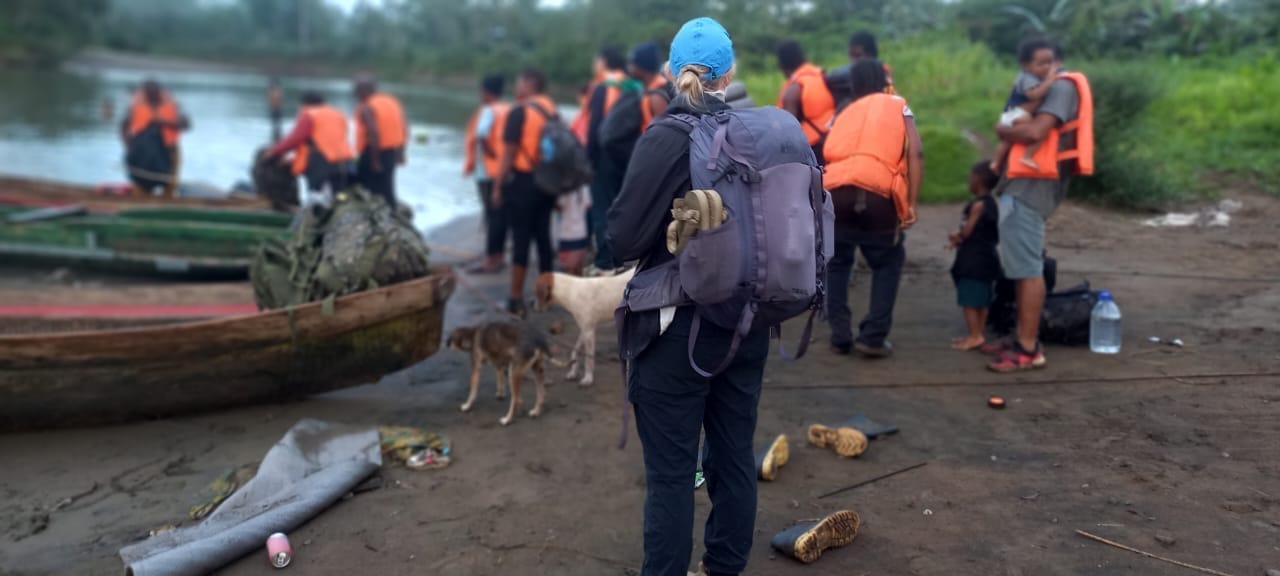
Last week, Panama’s government announced a new campaign to prevent people from taking the deadly journey through the Darién Gap, one of the world’s most dangerous migrant routes. In 2023, more than 300,000 people have already crossed through the jungle isthmus. Panamanian officials estimate the number will reach 400,000 by the end of the year, which is twice the number of people who made the trek in 2022.
An untold number of people on their journey north will never make it out of the Darién alive.
Why do people keep risking their lives in the Darién? Caitlyn Yates, a PhD student in socio-cultural anthropology at the University of British Columbia, has spent years researching this question. Yates has been traveling to the Darién Gap since 2018 to document changes in the region and interview hundreds of people who have chosen to take the risky journey. Her work has especially focused on Black migrants who face some of the worst prejudice and treatment on their journeys north. “They risk being robbed, kidnapped or detained repeatedly, which other migrants don’t face to the same degree,” says Yates.
In February, the country broke an ominous record: over 68,000 people were being held in detention by Immigration and Customs Enforcement, more than ever before.
As immigrant families face detention, shrinking legal protections and the threat of deportation, Camp Hope offers children a rare chance to play, heal and dream. One former camper is headed to an opera conservatory in Italy.
Border Chronicle founders, Todd and Melissa, talk about how law enforcement surveillance, high-speed chases instigated by Border Patrol, unwarranted searches and seizures, and other heavy-handed policing that border communities have endured for decades has now moved into the interior of the country.
With interior Border Patrol checkpoints to the north, and the border to the south, DACA recipients in border communities feel under threat by multiple layers of law enforcement, from ICE to local police. Nowhere more so than in Texas.