
The Southwest’s Ellis Island: A Q&A with Jazmine Ulloa, author of El Paso
“The history of migration through El Paso is one that’s been forgotten and overlooked, even though these workers—and not just workers but intellectuals, activists, and poets—helped shape the American Southwest as we know it today.”
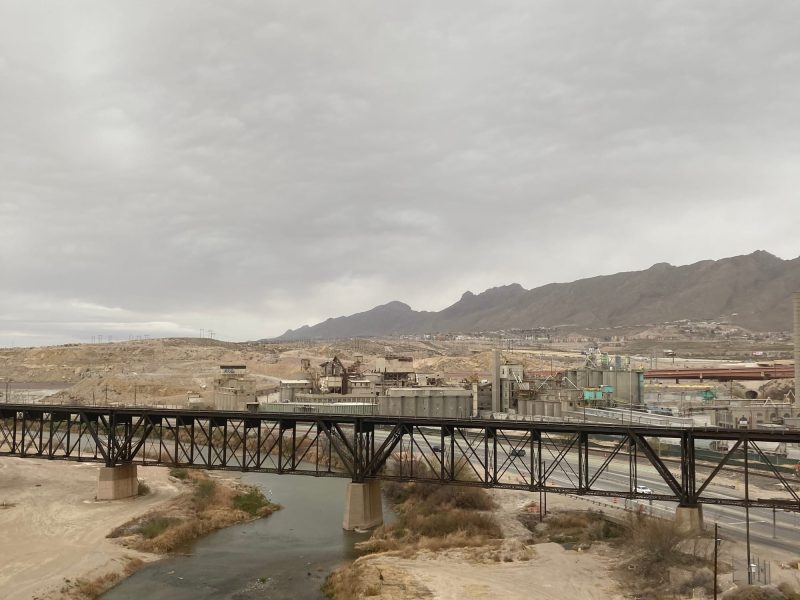
When a gunman opened fire at an El Paso Walmart in August 2019, Jazmine Ulloa, then a national reporter for The Boston Globe, was sent to the city to cover the crime. For Ulloa, unlike most of her colleagues, it was a homecoming: she grew up in El Paso. This year, Ulloa’s debut book, El Paso: Five Families and One Hundred Years of Blood, Migration, Race, and Memory, was published by Dutton. The book aims to bring “El Chuco” to the foreground of U.S. immigration history and present-day culture. It jumps between the past and the present, highlighting the resonances in migration patterns, nativist rhetoric, border enforcement, and community resistance. The Border Chronicle’s arts and culture reporter, Caroline Tracey, spoke with Ulloa about El Paso’s unique history and what it has to share with the world.
How did this book come about?
I wanted to tell a different story about my hometown. I was a national political reporter for The Boston Globe, and we were entering a very heated 2020 presidential election cycle. My hometown was becoming the backdrop to this really emotional and dramatic debate over immigration. The images that we were getting out of my hometown included migrants getting penned up under the border bridge and children being separated at the border. And just as we’re seeing these images, a self-proclaimed white supremacist drives from the Dallas area into El Paso and opens fire at a Walmart after posting an online screed decrying the Hispanic invasion of Texas.
So I went back to cover that crime. It affected a lot of the people I knew and loved. My best friend’s dad was in the parking lot when the shooting happened. I was covering the breaking news but at the same time going to this makeshift memorial on site and reflecting on the descriptions of El Paso as Ellis Island. I really wanted to go back and explore that—what it really said about us—and to capture this violence, not just as a onetime rupture in our history but as part of a much larger sordid legacy.
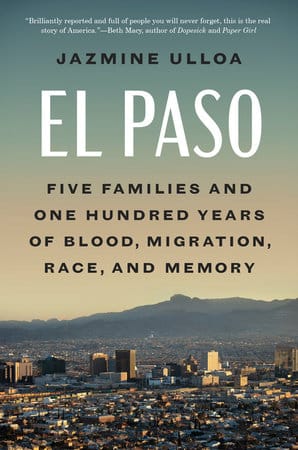
Going to the beginning of the history that you describe in the book, why is El Paso located where it is? How did the city come to be created in that particular place?
El Paso and Ciudad Juárez were originally one city deep in the heart of Mexican territory. After the U.S.-Mexico War, the countries signed the Treaty of Guadalupe Hidalgo, which established a new, jagged border—a southern border for the United States and Mexico.
That split the city in two. That’s when El Paso became a critical gateway into the United States. You can see that this is a gateway that’s been here even longer than Ellis Island existed. There is no such thing as a Hispanic invasion of Texas, because this was Mexican land. Mexican land, Mexican culture, Mexican identity have always been part of American identity and American culture.
What similarities and differences do you see between Ellis Island and El Paso?
You can see a lot of the same sorting of immigrants that took place at Ellis Island: people being categorized as good and bad, desirable and undesirable. But Ellis Island was a place where people crossed oceans. In El Paso you see much more of this ebb and flow across the desert. It’s a migration of mostly Mexican and Latino workers who are called to the United States and sacrifice themselves and their identities for much-needed labor, only to be cast out during these very harsh nativist periods. I think the history of migration through El Paso is one that’s been forgotten and overlooked, even though these workers—and not just workers but intellectuals, activists, and poets—really helped shape the American Southwest as we know it today.
Your book focuses on five families. How did you find and choose them?
I was trying to find families that were emblematic of that migration through El Paso and that captured not only the region’s bicultural flavor but also its Mexicanness, as well as the diversity within that Mexicanidad and Latinidad. So I needed to find families who were very open with me. Some interviews lasted five, six, or seven hours in the living room.
I had been covering immigration for more than a decade at that point. Some of the families were ones I had covered in past stories, like the Rubio sisters, who were born in Ciudad Juárez and deported as children, then went on to become the first sisters to serve in the California legislature. I covered them as the statehouse reporter for the Los Angeles Times.
How did you approach the rest of the book’s research?
I worked on this book over three election cycles: the 2020 presidential election, the 2022 midterm, and then the 2024 presidential election. With each one, immigration became more salient. I was crisscrossing the country interviewing voters in many different states—you name it, New Hampshire, South Carolina, Iowa, Alaska. At the same time, I was going to archives in Texas, New Mexico, California, Chihuahua, and Guatemala. It was a very interesting contrast to dig into the past and read about the rhetoric we were hearing in previous nativist periods, whether it was the 1930s or the 1950s, and then to hear it echoed on the present-day campaign trail. It felt like I was blurring space and time. I wanted the book to feel that way too, so readers could really see the ebb and flow of these nativist periods over time and also the pushback against them. It was a very grueling process, but also a very enriching one.
One of the interesting and surprising connections between the past and present was the line riders tasked with enforcing the Chinese Exclusion Act after 1882. How did that force influence the Border Patrol as we know it today?
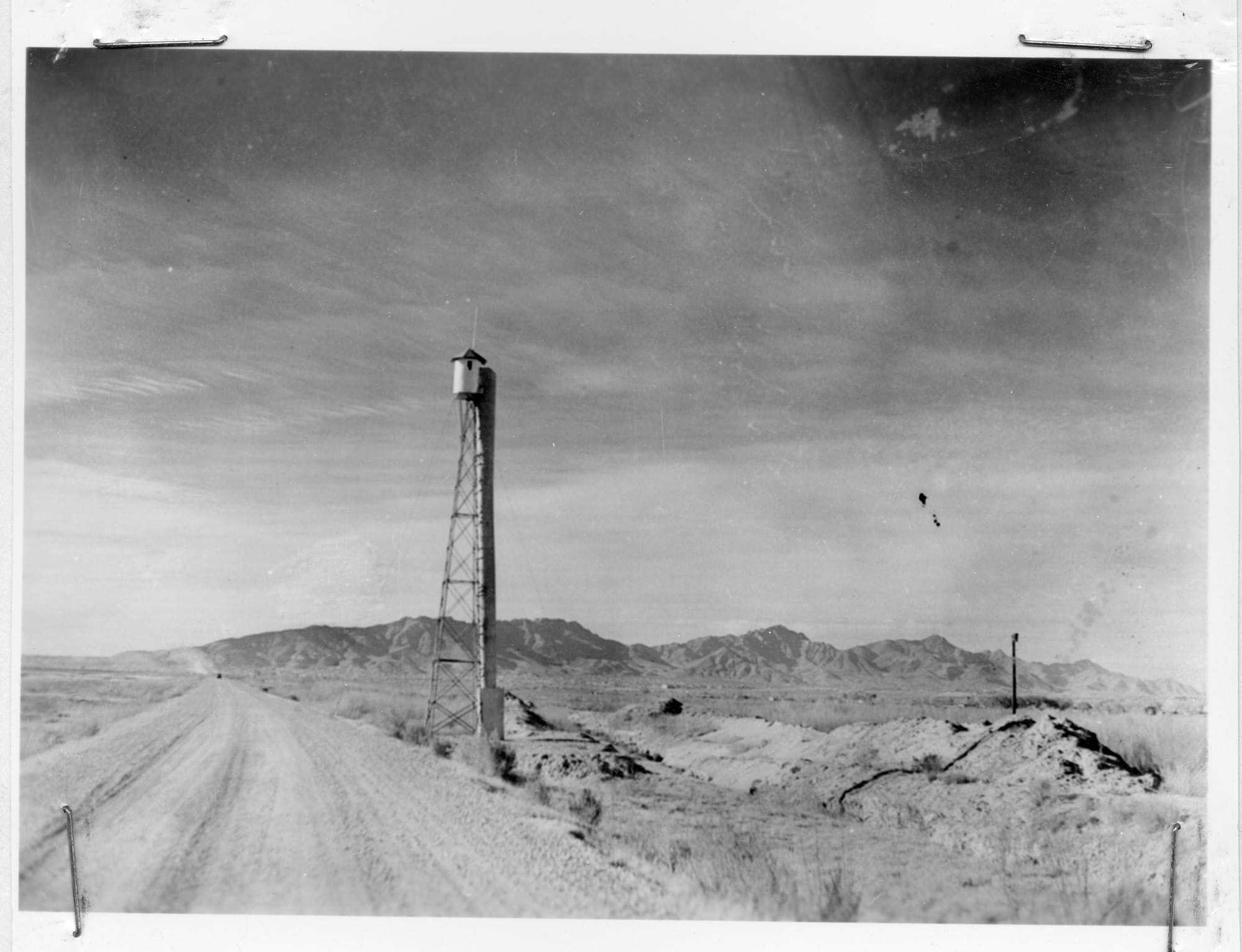
The line riders were a small force that existed along both borders—the U.S.-Mexico border and the U.S.-Canada border. They were supposed to detect Chinese laborers who were not supposed to be admitted into the United States under the Chinese Exclusion Act, which was the first immigration law explicitly barring people based on race. The first recruits to the Border Patrol [founded in 1924] included these line riders, as well as members of the KKK and men who had been part of aggressive campaigns to “tame” the West. You can see that in the tactics they would later use to corral Mexican and Latino workers.
In the wake of events like the mass shooting that took place in El Paso and increases in detention and border enforcement, what dynamics in El Paso right now give you hope for a better future?
I was trying to lean into the complexity of the region at every turn and into the complexity of people’s emotions on immigration. I was trying to position the city at the center of the forces not only of division but also of unity and connection. Not only the white supremacist violence but also the pushback against it. I see many of the same dynamics we’ve seen over time in El Paso now playing out nationally: these sprawling federal immigration agencies’ tactics to round up and surveil people aren’t new. In many ways, they originated on the southern border in places like El Paso. They went unchecked in the southern border and in places like El Paso. Very early on, you see residents filing lawsuits against these aggressive tactics. You see people filming actions to provide an accurate record of what’s happening. I find hope in the resilience of people during these difficult periods.
This interview has been edited for length and clarity. El Paso: Five Families and One Hundred Years of Blood, Migration, Race, and Memory is available from The Border Chronicle’s Bookshop.org storefront.
Support independent news, art and culture from the U.S.-Mexico border. Become a paid subscriber today for just $6 a month or $59 a year. Help us become sustainable.
Author
Related Articles
In a Mexicali Novel, a Secret and an Unraveling Childhood Friendship
Elma Correa’s award-winning Donde termina el verano follows two girls from the working-class outskirts of Mexicali whose friendship, guilt and memories are shaped by a childhood disappearance and the borderlands around them.
The Sonoran Desert’s Endemic Psychedelic: A Q&A with Writer Kimon de Greef
A new book tells the scandal-ridden tale of Sonora’s toad-smoking neo-shaman.
Reporter’s Notebook: NAFTA, Tijuana Art Week, and the Built Environment of the Baja Borderlands
A road trip through Baja California reveals how free trade, migration, and border policy have reshaped Tijuana’s landscape, and why the uncertain future of the USMCA invites new questions about what comes next.