Do you have questions about the recent buoy debacle on the Rio Grande? Our reporting has you covered, plus an important new hire at The Border Chronicle, and our new project Wall Watch.
As floodwaters swept hundreds of one-ton border buoys downstream, international bridges closed, commerce slowed, and officials struggled to get answers from DHS about a project advancing despite local opposition, environmental concerns, and treaty questions.
Hundreds of massive orange buoys staged for a controversial DHS floating barrier project broke free near Eagle Pass and are now drifting toward Laredo, threatening bridges, commerce, drinking water supplies and downstream communities.
A Q&A with Human Rights Archaeologist Gabriella Soto
“For a long time, a big proportion of the American public said that border security was their most important issue. People are starting to realize what that means in terms of the violence entailed.”
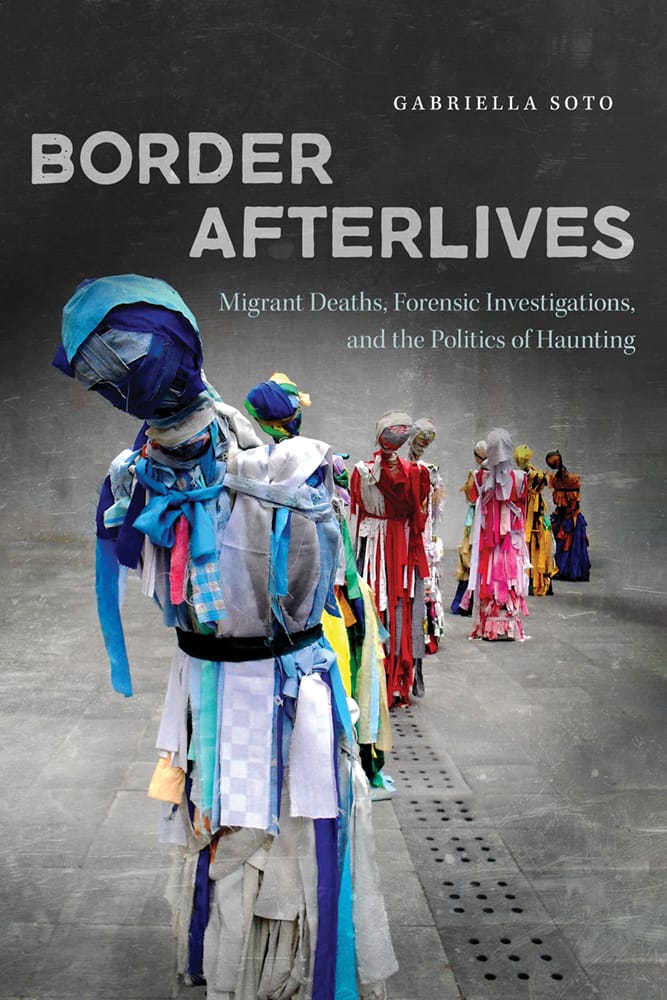
Archaeologist Gabriella Soto views migrant deaths at the U.S.-Mexico border as haunting a society that incorporates death into its immigration policy. Once you become aware of these deaths and disappearances in the borderlands, they linger in your mind, preventing you from feeling at peace. Soto has dedicated much of her career to identifying and articulating what many Americans are reluctant to confront about their government’s deadly policies toward migrants. Her recent book, Border Afterlives: Migrant Deaths, Forensic Investigations, and the Politics of Haunting (University of Arizona Press, 2026), chronicles the efforts of local officials and others in the borderlands to respond to migrant deaths in Arizona and Texas. It also proposes new ways of understanding these deaths and our treatment of them as a society. Soto, who teaches at Arizona State University’s Barrett Honors College, spoke with The Border Chronicle about the complicated concept of “best practices” in forensics and death investigation, as well as what the system’s fissures and failures mean for society at large.
You have referred to yourself as a contemporary archaeologist. Could you describe what that job entails?
My master’s degree is in 20th-century conflict archaeology, from the University of Bristol, in the UK. A lot of it comes down to the connection between human rights and archaeology, including mass graves and exhumation. In my case, I came back to the border, where I’m from. I’m an Arizona native. In the early 2000s, as migration was being funneled into Arizona, I realized there was a contemporary archaeology conflict landscape happening here.
Border Afterlives is available from the University of Arizona Press. (Image courtesy of Gabriella Soto)
I started with BMI in 2012, but they have been around since 2004. They are a direct outgrowth of border activism and response through Coalición de Derechos Humanos in Tucson and other NGOs. In the early 2000s, Coalición had been dealing with civil rights issues on behalf of the immigrant community in Arizona, and then found themselves fielding phone calls from families looking for missing persons. They felt a need to understand what was happening. BMI was the scholarly outgrowth of that. They started working with the Pima County Medical Examiner, trying to understand what was happening. How many people are dying? How many people are going missing? Why? Can we explain this?
At the time, we knew that the Border Patrol had shifted its strategy to a deterrence-based enforcement regime. We [the U.S.] weren’t just responding to migration but trying to prevent it. And in that prevention, the Border Patrol blocked off urban centers to push people into more hostile terrain. By the early 2000s, migration had moved to Arizona. That was something new. So when I joined the BMI, they had been working with the Pima County Medical Examiner and had defined the “funnel effect”—the idea that this deterrence-based border strategy was increasingly funneling people into more dangerous territory.
Then, in the late aughts, early 2010s, this funnel effect seemed to be moving to other places. BMI’s goal was to develop relationships with other jurisdictions that were investigating these deaths. The study that I was involved in, that’s really the jumping-off place for the book, was interviewing medical examiners, coroners, justices of the peace, sheriffs, and local people who were involved in investigating border crossing deaths.
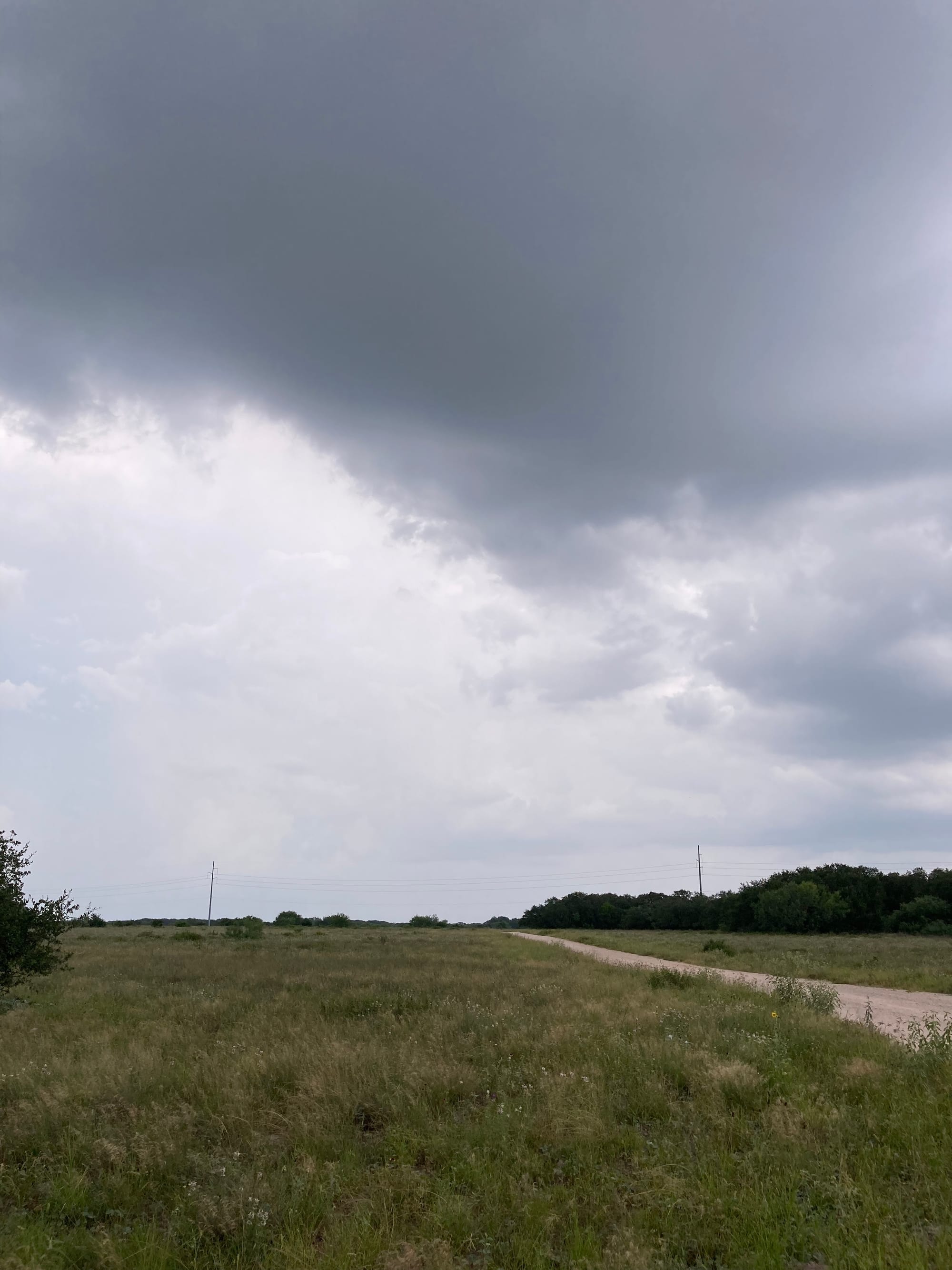
A ranch in Brooks County, Texas, which saw a spike in migrant deaths during the 2000s and 2010s. (Image: Caroline Tracey)
How did you transition to working in Texas? How did the situation there differ?
During BMI’s survey, the team conducted interviews in Brooks County, Texas, which had seen a larger spike of deaths than anywhere else in the region. It’s 60 miles north of the border, but it’s on this major north–south highway that goes all the way to Canada, so people were traveling on that route and dying. And we realized that there was no effort to identify them.
After we did that study, I thought, this is the place to go, because it epitomized the conditions we’ve been observing of the cracks in U.S. forensic infrastructure—how it’s underfunded, underresourced. So how does a place like Brooks County reform its practices while these constraints are still in place and there’s not really any systemic or federal support? I spent six years then in Brooks, on and off, watching what had happened and seeing a lot of struggle, coming to terms with genuine efforts and attempts and people working above and beyond anything they’re compensated for, to try to reach some version of best practices. And the fact that it was just so hard spoke volumes, which is a big part of the story of my book.
You use a term from the National Academy of Sciences, “extreme disaggregation,” to describe the fragmented nature of the medical-legal system that responds to unidentified remains. For those of us who will likely never encounter an unidentified death—since our family members would typically be available to identify and claim a loved one—this concept is difficult to grasp. Why is the system so fractured?
This has been a product of criticism for a century. In the 1920s, the National Academy of Sciences is already saying this system is anachronistic. An important thing to know is that 60 percent of the U.S. population is served by an elected official [in death investigations]. Coroners—and in Texas, justices of the peace, who assume coroner responsibilities—don’t necessarily require any medical background or training. And yet they’re the ones making decisions.
Importantly, too, these decisions impact people other than migrants. So when Antonin Scalia, the Supreme Court Justice, died, it was in Presidio County, Texas, at a local hunting lodge. He was found in the morning. He didn’t come down to breakfast. He was in his room. The sheriff who came to the scene just called the local justice of the peace and said, I think this looks natural. And that’s how they filed the death certificate. That was the investigation, even though he was an unattended death, and that should count as a death that deserves investigation, as defined by the CDC. There are standards. They’re just not regulated or overseen. So people don’t realize that even though we have so many CSI shows and there’s such public fascination with forensics, in practice, there’s not resources there. It doesn’t get a lot of funding, a lot of interest even. There’s a national shortage of doctors who want to become forensic pathologists.
I guess counties prioritize spending their limited resources on the living rather than on the dead.
Yes, but in so many different ways, how we care for the dead defines us as a society. How we care for the dead also helps the living. In theory, accurate death records should help direct public policy and funding. So if there is a trend in how people are dying, it can be adequately addressed.
For a long time, a big proportion of the American public said that border security was their most important issue. And I think people are starting to realize, in this moment, what that means in terms of the violence entailed in that. I think the American public has a responsibility of care for the people who die as a product of our policies. We are in a kind of reciprocal relationship with the dead, and we have been failing in that relationship of care. At the very least we owe people the right to be returned home to their families.
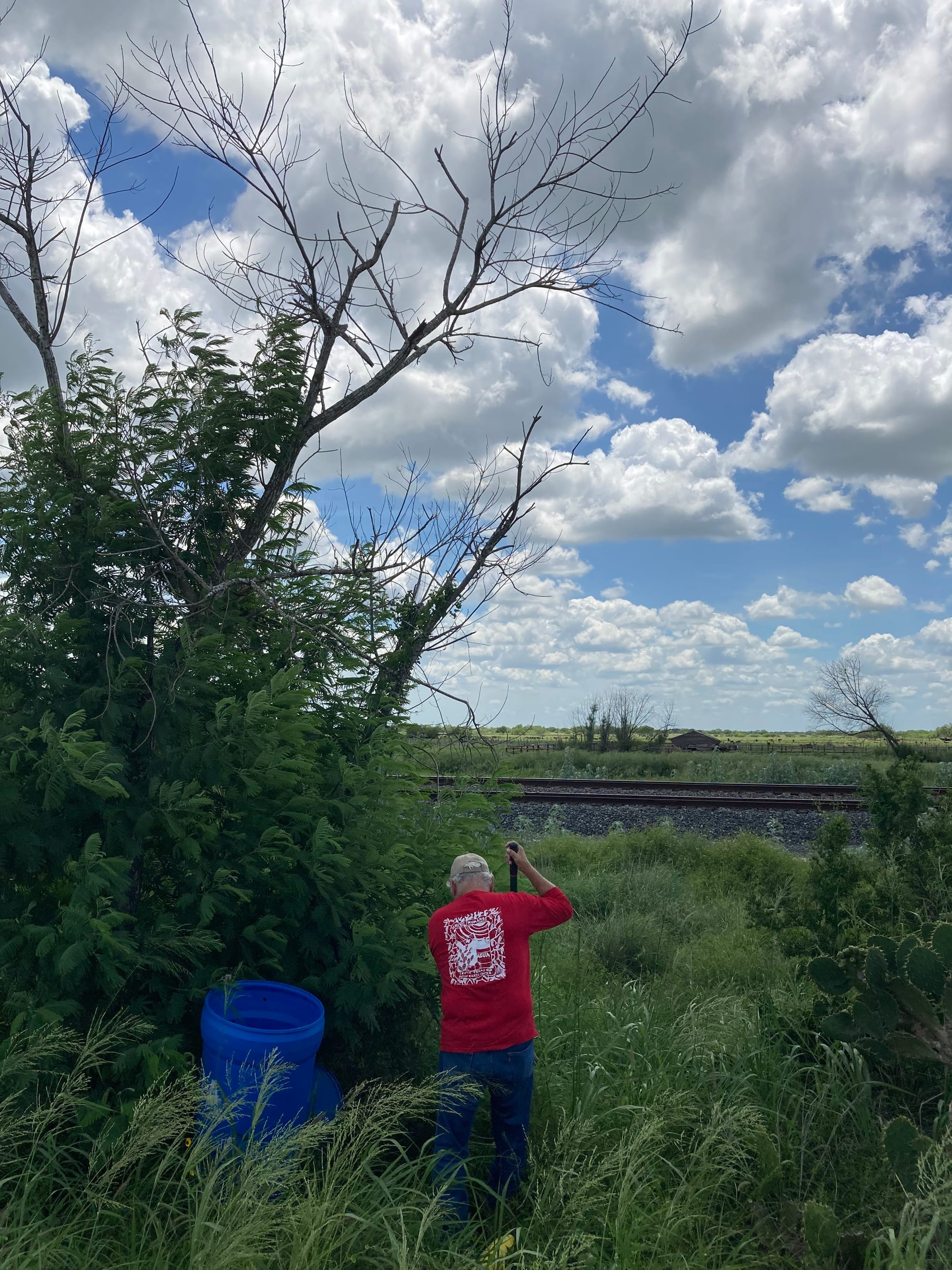
The late Eddie Canales, founder of the South Texas Human Rights Center, sets up a water station. (Image: Caroline Tracey)
During your research, how did you see things change in Brooks County?
In 2013 the county standardized autopsies for people who died on the border, under a contract with a forensic pathologist in Webb County. It was expensive. The way the system works in Texas is that most places have justices of the peace, but then they contract either with private autopsy facilities or with one of the 14 medical examiner’s offices in the state. For 30 million people in Texas, there are 14 medical examiner’s offices. Webb County was the closest of those, but still a three-hour drive from Brooks County. And because they’re the only medical examiner in that region, they are backlogged all the time. So it was taking a really long time for these investigations to proceed.
So Brooks ended up ending their contract with Webb County because it was expensive, it was taking so long, and because in 2021 Border Patrol decided to open up the fingerprint databases available through the Department of Homeland Security [called IAFIS/IDENT], which include anyone who has been involved in an encounter with DHS, whether that is applying for a visa or having been detained before. This database ended up being really good at identifying migrants. Those identification times were like two weeks, which was based not only on advances in fingerprint technology but also on the fact that many people were in that database. So if an autopsy and investigation are taking months, but the people are already identified, why not just send them home? So the county is now prioritizing identification with humanitarian motives. It returns people home to their families. But there’s no investigation.
In your last chapter, you discuss these deaths as homicides. How does seeing border deaths that way help us better understand them?
I think it’s more accurate than calling them accidents. An accident is a death without any clear intent to cause harm. And we know from border policy, from when prevention through deterrence was first articulated—it was written into a 1994 strategy document—that the goal was to increase the cost of migrating to deter people’s entry. And that “cost” seemed to be a euphemism for mortal risk. They talked about hostile terrain. They talked about the desert surrounding urban centers that was being closed off in the U.S. Southwest as places where people could find themselves in mortal danger. And certainly that’s what immediately played out as the strategy went into effect.
So I think you have very clear and articulated intent. Just recently, there was a man, a Rohingya refugee, who was released from a detention center in Erie County, New York. And although his family was waiting for him to be released, Border Patrol opted instead to drop him off late at night at a closed doughnut shop, of all things. He was nearly blind. He was an older man, and he disappeared from that site. He was found five days later of complications related to hypothermia. The medical examiner issued her findings and ruled the death a homicide. In that case, it’s one person left in hostile terrain by agents, but when people are funneled into hostile terrain by the millions, by policy, intentionally, it’s an accident. That’s, I think, absurd. So I think because we so clearly have intent, accident is inappropriate. These deaths are not accidents.
You also discuss the concept of haunting. Why is that a powerful idea for you?
Something I struggle with is, how do we talk about these deaths? What are the stories you can tell? How do we make people care? I was really inspired by the theory that accompanies this idea of ghosts and hauntings. It gets into maybe dangerous academic philosophical terrain. But the idea is, whether or not you believe in actual ghosts, there are many people on the border dealing with haunting in the sense of an unresolved issue. And once you recognize yourself as being haunted, it follows you, and you have to act. We have an obligation of care. If you’re haunted, you have an obligation to respond. You can’t just ignore the ghosts. A haunting is nagging and persistent and keeps us from being able to feel fully quiet.
This interview has been edited for length and clarity. Border Afterlives can be purchased from The Border Chronicle’s Bookshop.org storefront.
Support independent news with context from the U.S.-Mexico border. Become a paid subscriber today for just $6 a month or $59 a year. Help us become sustainable.
As floodwaters swept hundreds of one-ton border buoys downstream, international bridges closed, commerce slowed, and officials struggled to get answers from DHS about a project advancing despite local opposition, environmental concerns, and treaty questions.
Hundreds of massive orange buoys staged for a controversial DHS floating barrier project broke free near Eagle Pass and are now drifting toward Laredo, threatening bridges, commerce, drinking water supplies and downstream communities.
In February, the country broke an ominous record: over 68,000 people were being held in detention by Immigration and Customs Enforcement, more than ever before.
As immigrant families face detention, shrinking legal protections and the threat of deportation, Camp Hope offers children a rare chance to play, heal and dream. One former camper is headed to an opera conservatory in Italy.