
Exclusive Documentary Short Premier: What Do Argentina’s Disappeared Have to Do With Unidentified Migrants on the U.S.-Mexico Border?
A Q&A and exclusive screening of a documentary short by award-winning filmmaker Bernardo Ruiz.
If viewing in email, please click on this browser link to view the documentary.
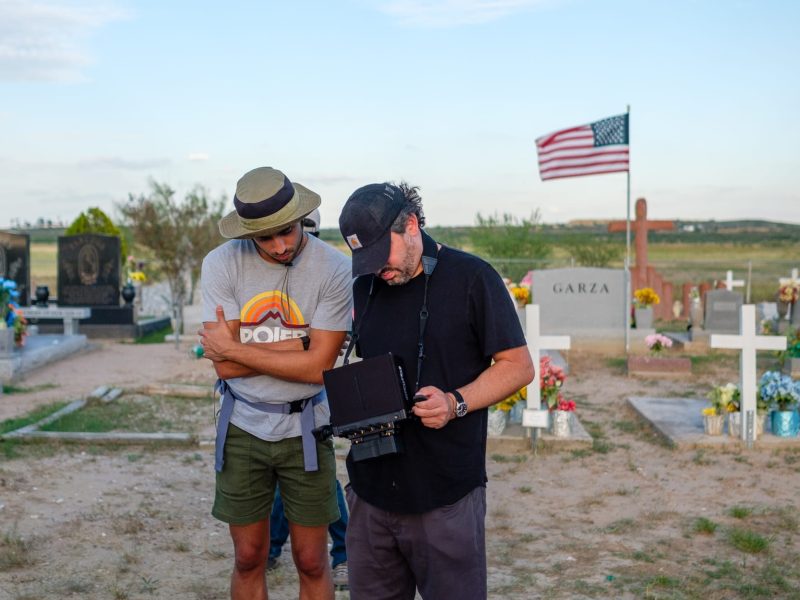
For two decades, Bernardo Ruiz has crafted nuanced social documentaries for public media, focusing on people often overlooked in mainstream narratives, including Mexican and Mexican American farmworkers, migrants, human rights activists, and, in the case of today’s premiere documentary short, the U.S. forensic anthropologists who work to identify missing migrants in the borderlands.
Throughout his career, Ruiz, 53, has imbued his films with careful attention to detail, empathy, and investigative rigor. Today’s premiere is a seven-minute documentary from the footage Ruiz filmed for his award-winning 2023 documentary El Equipo on Dr. Clyde Snow, a pioneering forensic scientist from Texas, and the young Argentine anthropologists who together founded the Argentine Forensic Anthropology Team in the 1980s to identify the disappeared in Argentina’s Dirty War. Since then, the team has worked to identify victims of some of the world’s toughest human rights atrocity cases, including the massacre at El Mozote, El Salvador, and the disappearance of the 43 students in Mexico.
In the United States, the Argentine forensic team has played a vital role in assisting and training forensic anthropologists to identify missing migrants and work compassionately with families searching for their lost relatives. The following short focuses on the work of Dr. Kate Spradley and her team at Operation Identification at Texas State University, who have worked extensively to identify missing migrants in South Texas. The footage was never released in El Equipo because during editing, Ruiz couldn’t make it fit into the larger narrative. “Whether you’re kidnapped and disappeared or whether you’re dying as the result of a policy that is trying to disappear you, I was trying to make that connection,” he said of the U.S. footage. “There’s so many parallels between the contemporary work that happens on the U.S.-Mexico border and what the Argentine students were doing in the 1980s.”
In addition to debuting his documentary short, Ruiz spoke with The Border Chronicle about the state of public broadcast funding and documentary filmmaking in the Trump era, what motivates his work, and the rapidly changing landscape of Latinx and independent filmmaking.
Many of your documentaries have taken place at the U.S.-Mexico border. What keeps drawing you back here?
First and foremost, I think of the border as everywhere. I live in Queens, New York, and Roosevelt Avenue—a seven-mile corridor that runs through Queens—I think of it as its own borderlands. You have arrivals from Venezuela, from Haiti, certainly from Mexico, from China. It’s surveilled, it’s policed, and the communities ebb and flow and change.
In terms of filmmaking, part of it is personal. I was born in Guanajuato, Mexico, to a Mexican mestizo father and a white American mother, and spent my first six years in Mexico, and then grew up in the U.S. So any story that explores that love-hate relationship between the U.S. and Mexico, or Latin America more broadly, has always been compelling to me. But it’s also just an endless source of dramatic and compelling stories that reveal something bigger.
In El Equipo, you focus on the history of the Argentine Forensic Anthropology Team and enforced disappearances. When you were seeking funding for the documentary, you were told that the story wasn’t relevant—yet it feels incredibly current now.
When I started that project, I got feedback like, “This is old history. Why does it matter now?” But as the film was released, more people started making connections between enforced disappearances in Argentina or Chile and what’s happening now with immigrant communities in the U.S.
Even the language—”disappearance”—and the visuals: masked agents, unmarked cars, people taken off the street. I spent years looking at footage from Argentina’s dictatorship, and there are clear parallels between what happened there and what we’re seeing now.
Especially living in an immigrant community like Queens, where people are living under the shadow of enforcement that’s chaotic, violent, and sudden. Fortunately, what we’ve also seen is community-based mutual aid and organizing. These pockets of resistance where communities are pushing back.
In El Equipo, it’s alarming to see how the Argentine team is treated in Mexico as they try to investigate the disappearances of the 43 students from the Ayotzinapa Rural Teachers’ College.
It is. And what’s powerful is that it’s the same people doing that work across decades.
Here you have Mercedes Doretti, who is 20 or 21 when she began doing forensic work during the postdictatorship period in Argentina. It’s that same woman running one of the most high-profile investigations into disappeared students in the last decade or two in Mexico. It’s very telling when you see Mercedes and the others at the beginning of the film as these young, idealistic, fresh-faced students, and then by the end, they’ve just really had the shit kicked out of them, and yet they continue to do this work.
And as you know from working in Mexico, it’s the flooding the zone with bad information around the disappeared 43 students. You get a headache just thinking about the very many twists and turns of that case, and how anybody investigating it was subject to spying and harassment, as Mercedes was.
You’ve made what feels like a border trilogy—Reportero, Kingdom of Shadows, and El Equipo. I was reporting during that time too, during the President Calderón era in Mexico when the military was deployed and the violence exploded. I found it very difficult to articulate exactly what was happening, because the nature of the violence is very, and still is, very complex, and as you said, there’s a lot of disinformation. Did you set out to do a sort of trilogy to try to get to the bottom of things?
It was intentional in some ways and then very unintentional in other ways. With Reportero I stumbled into the story. When we would do public screenings with Sergio Haro, the journalist featured in the documentary, I would always embarrass him with the story of how we met. I would say, you know, when I first met Sergio, it was like a good first date. I don’t know where this is going to go, but I want to follow him and his story, if he’ll let me.
I knew that through Sergio, I could tell the story of this stretch of Baja and the history of Zeta magazine and be able to tell a larger story about a group of people caught up in a bigger conflict.
When the opportunity to make Kingdom of Shadows presented itself, I thought, you know, I’d like to build a bigger story. I now think Kingdom of Shadows is probably the weakest film I’ve made. It was done on a short timeline. It’s a very fragmented film, and I think there are individual pieces that work quite well, but I was trying to make connections between things where I didn’t really have enough time to build out those connections.
The lesson you learn in filmmaking, and I believe it’s true of reporting as well, is that sometimes by focusing on one thing, you can actually tell a lot more, whereas if you try to gather too many narratives, you can crowd the field.
You mentioned it was difficult to get documentaries like El Equipo about Latin America and the border funded. Have the attitudes of funders changed over time?
When I started, I was mostly pitching to white American executives from the Boomer generation. You end up doing double duty. It’s not enough to do the work—you also have to do cultural translation. You have to contextualize it and connect it to something funders can understand.
There’s been some shift. But what’s really changed is in Mexico and Latin America. There’s an expansion of the market for documentaries and low-budget fiction. They don’t need to cater to U.S. tastes anymore.
What’s interesting now is that U.S. filmmakers are realizing they have to make do with limited resources. And in Latin America, that’s always been the case. So in a way, the U.S. independent community has been “Latin Americanized.”
With the defunding of public media, what happens to the kind of in-depth social justice documentaries that you do?
In 2025 we saw the defunding of public media and the closing of the Corporation for Public Broadcasting. That stripped away even the limited support for public-interest documentaries. The kind of documentaries I make can take two or three years to develop and film over time. Those were all funded by the Independent Television Service, which is one of the largest funders of independent documentaries on PBS, and with that also came access to infrastructure and some kind of editorial protection. For instance, I own the copyrights to those films that were funded through that mechanism.
The public media infrastructure is vital. Those films are free to the public, to schools, universities, and prisons. They were distributed through a public system that had such a broad reach. Right now, there are a lot of conversations in the filmmaking community about how to reinvent the wheel and how to do audience distribution, but we have lost this vital piece. And I think one of the more disheartening aspects of this was when the writing was on the wall that there were going to be bad-faith attacks on public media. You saw some public media leaders capitulating. The perfect example is scrubbing DEI language from websites and distancing themselves from more seemingly edgy material. Once that happened, we realized there wasn’t going to be a big fight to defend public media on journalistic or freedom of expression grounds. Instead, it was going to be a quiet capitulation, which we have seen across the board. Media entities have just decided to pay up and be quiet rather than stand their ground.
What advice would you give younger filmmakers considering how difficult things are now?
All the good things I’ve been able to do came out of organized community. It’s not enough to just make films—you have to organize, advocate, build infrastructure.
Independent filmmakers in the 1980s organized for nearly a decade to create ITVS. That lasted 40 years. So for younger filmmakers: find your community and build with them. Making the work and organizing go hand in hand.
Any organizations you recommend?
The Writers Guild of America East is doing important organizing. The International Documentary Association is doing more connecting and advocacy.
And cultural organizations matter too—spaces that exhibit films. That’s where you learn, where you see work, where you meet people.
Are there younger filmmakers you’re watching?
Yeah, definitely—Joe Bill Muñoz, Isabel Castro. There’s a group that’s blending journalism and cinema in interesting ways. What I like is they’re not worried about convincing anyone that these stories matter. They’re just doing what they want to do.
With the collapse of public media funding, what are you working on now?
So I started developing something more creatively risky. At this point, I have nothing to lose.
What I’m working on is a hybrid fiction-documentary set on Roosevelt Avenue. People don’t want to go on camera right now. They don’t want their identities released. So I thought, how can I still tell a story in this world? That’s when I started thinking about a fictional through line—something that protects people but still engages with the fear, the raids, the rhetoric.
Also, I think a lot of us feel like we’re living in fiction at this point. There’s no dystopian sci-fi that we’re not already rivaling.
This Q&A has been condensed and edited for clarity.
Support independent arts and culture reporting from the U.S.-Mexico border. Become a paid subscriber today for just $6 a month or $59 a year to sustain our work.
Author
Related Articles
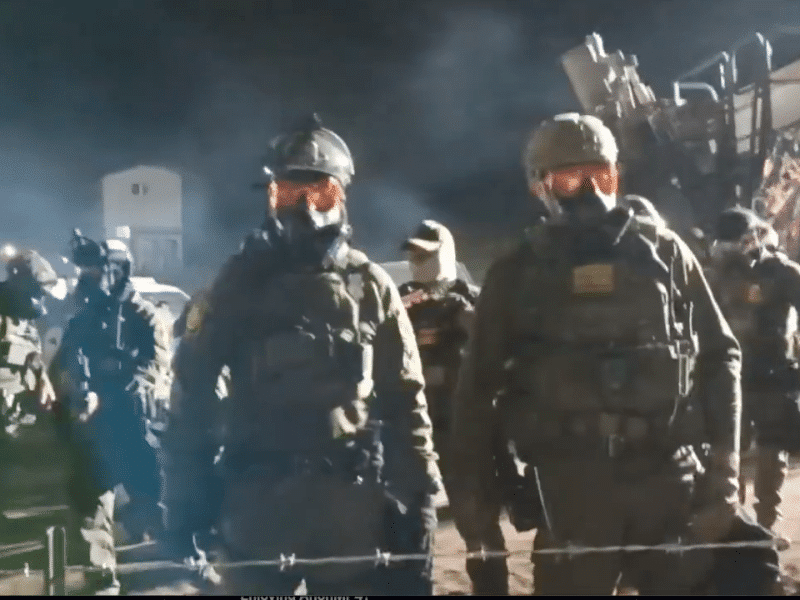
Border Patrol Deploys Tactical Unit Against Protesters Blocking Arizona Border Wall
“I said, with due respect, sir, they are standing here with pepper spray artillery and gas masks on. They are not talking to us; they are assaulting us.”
Border Walls Devastating Arizona Are a Warning for Seminole Canyon and Big Bend
Vehicle barriers are just the first step in the march to 30-foot border walls. San Bernardino National Wildlife Refuge is seeing the brutal endpoint.
American Rust: The $1.1 Billion Border Wall Built with Salvaged Materials and Few Answers
A newly constructed wall built with old, salvaged material in South Texas is probably illegal; it’s also costing twice as much as previous walls. What are taxpayers paying for, exactly?
